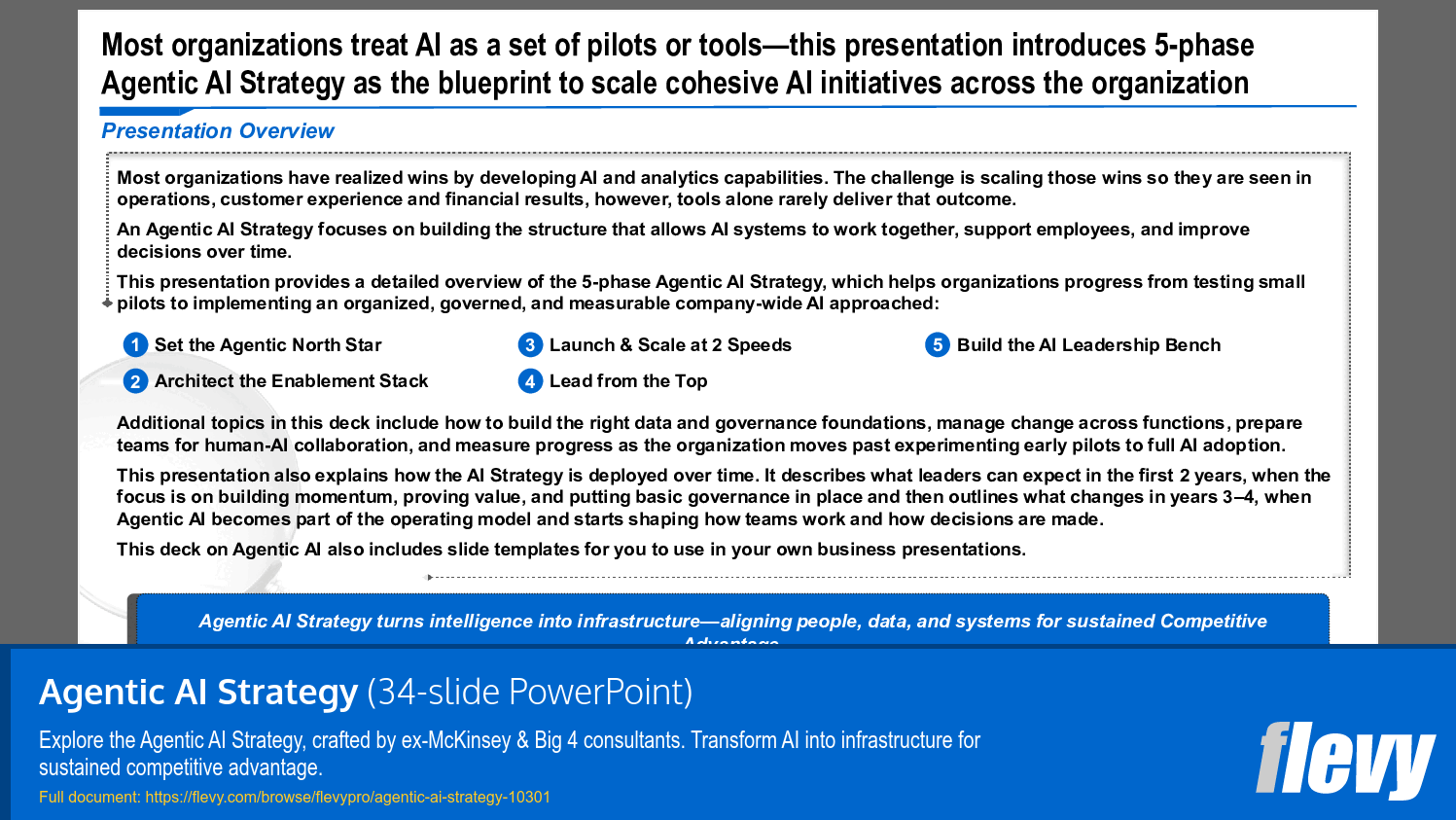

Most organizations have realized wins by developing AI and analytics capabilities. The challenge is scaling those wins so they are seen in operations, customer experience and financial results, however, tools alone rarely deliver that outcome.
An Agentic AI Strategy focuses on building the structure that allows AI systems to work together, support employees, and improve decisions over time. Agentic AI Strategy turns intelligence into infrastructure—aligning people, data, and systems for sustained Competitive Advantage.
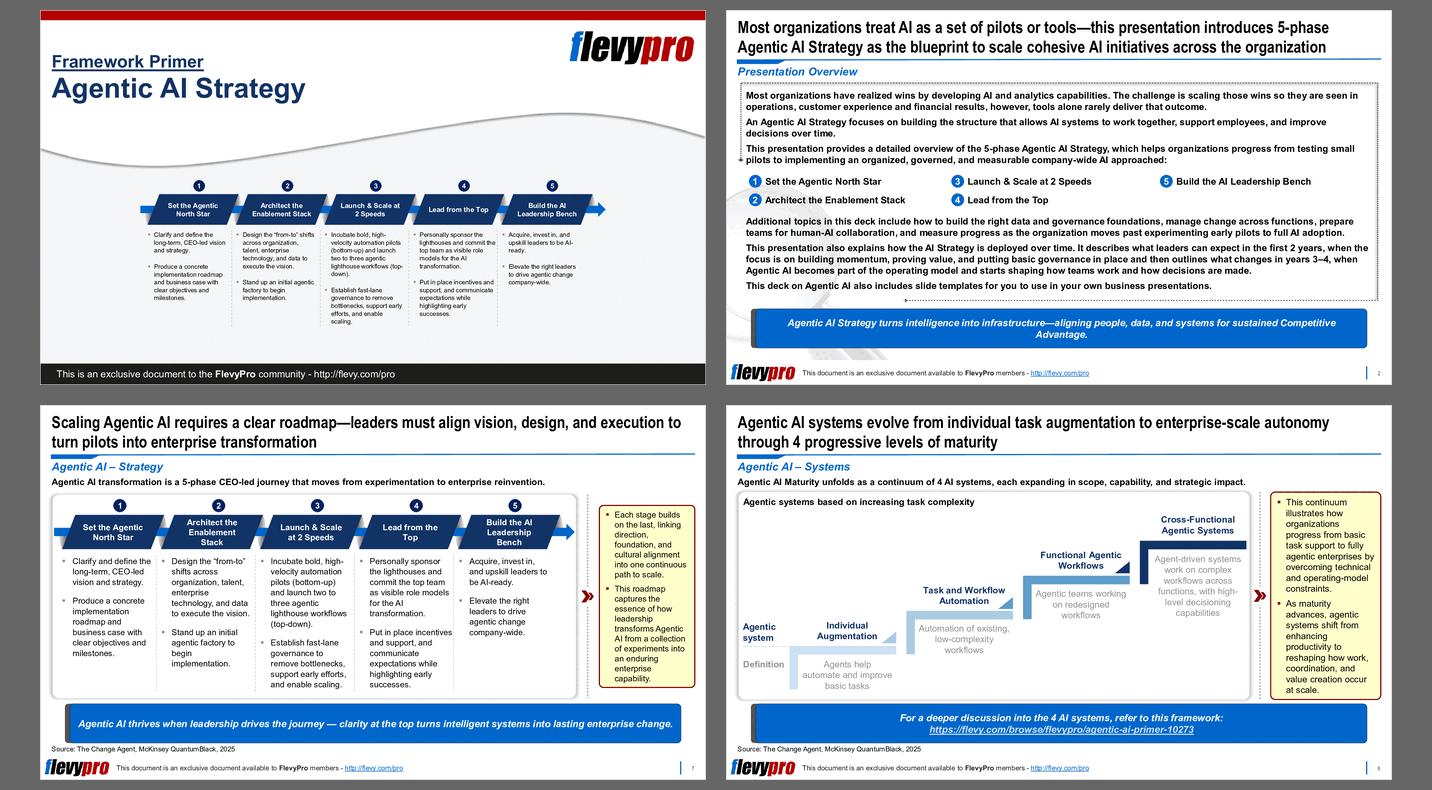
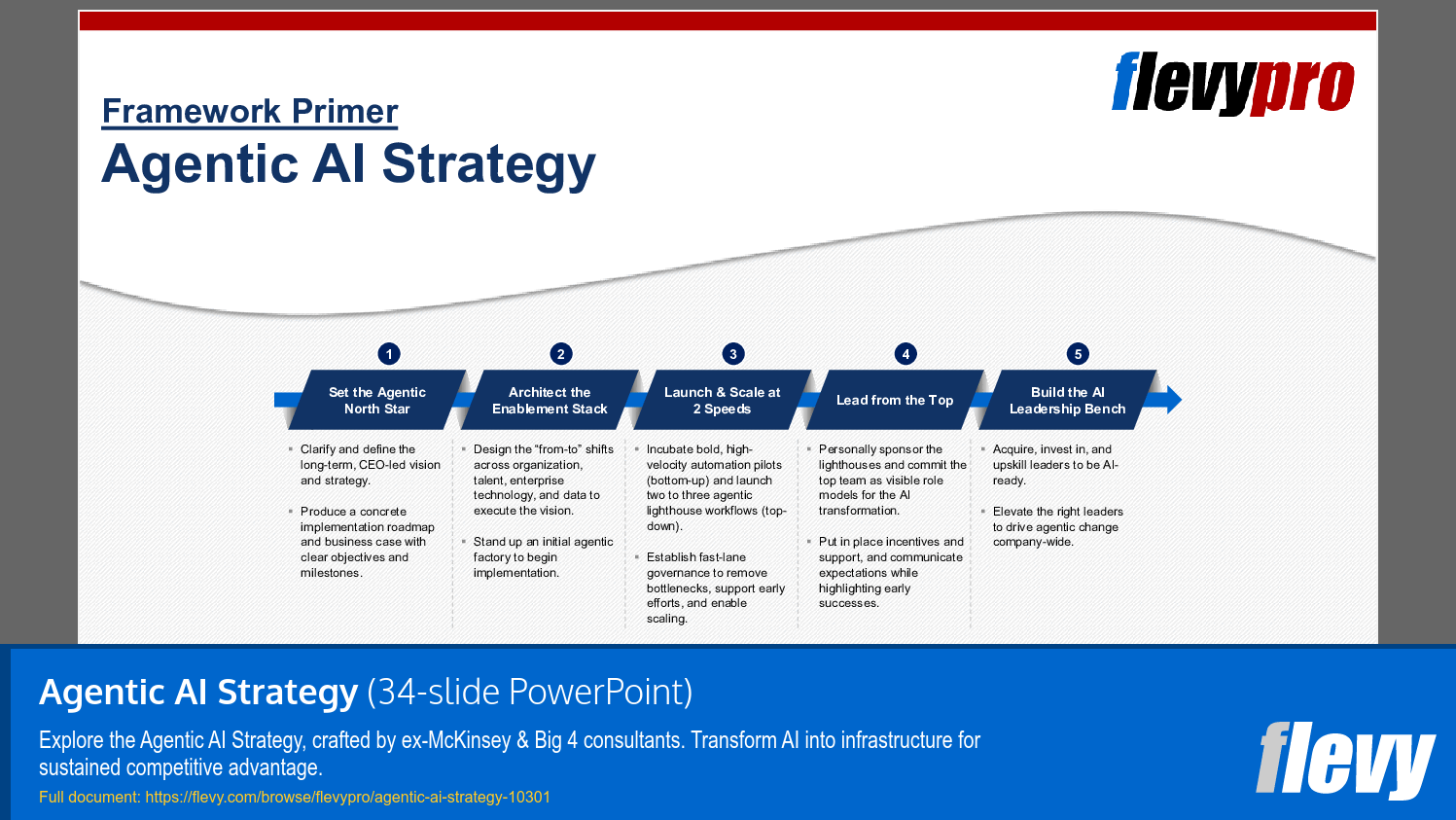
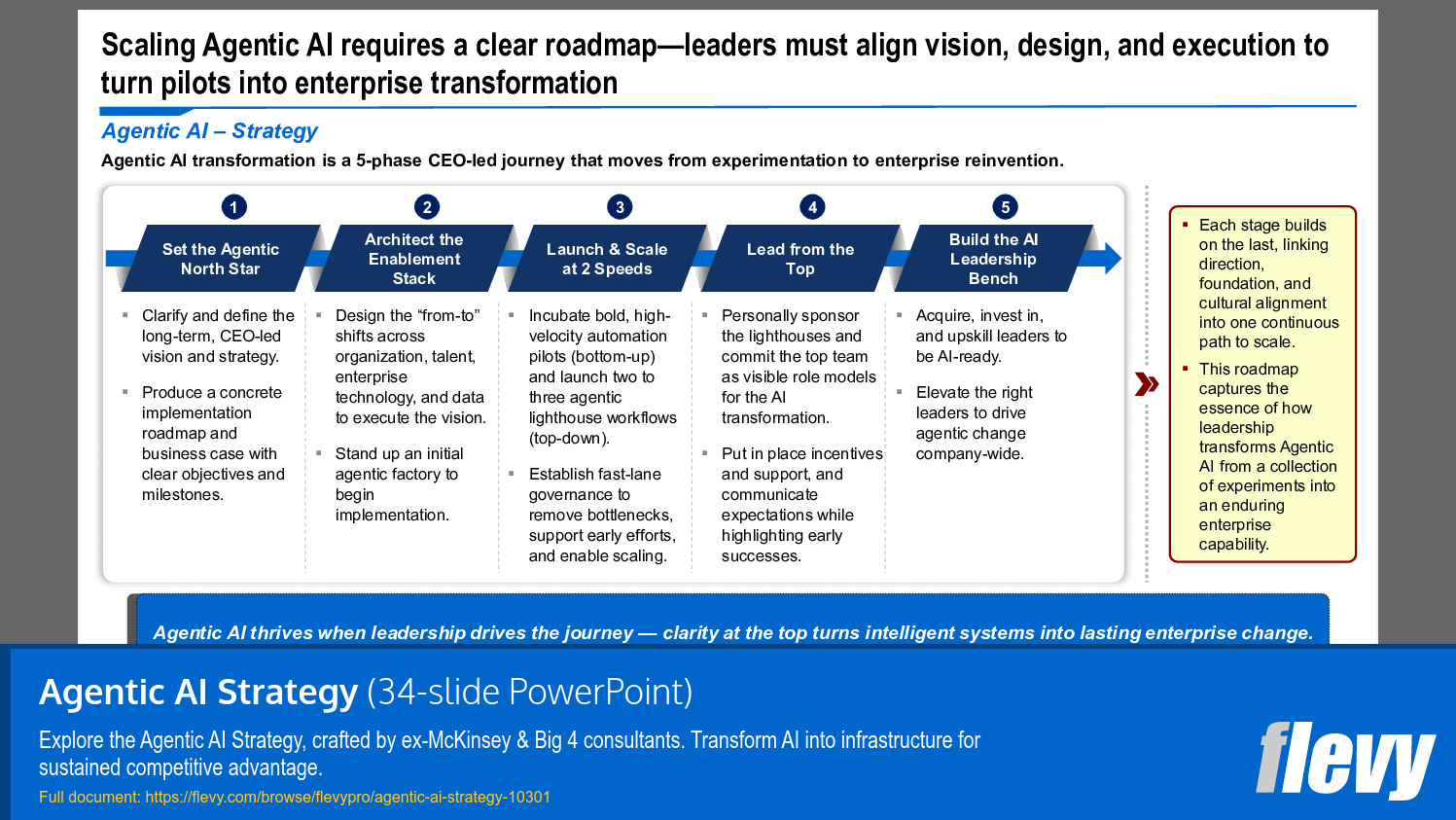
This PowerPoint presentation provides a detailed overview of the 5-phase Agentic AI Strategy, which helps organizations progress from testing small pilots to implementing an organized, governed, and measurable company-wide AI approached:
1. Set the Agentic North Star
2. Architect the Enablement Stack
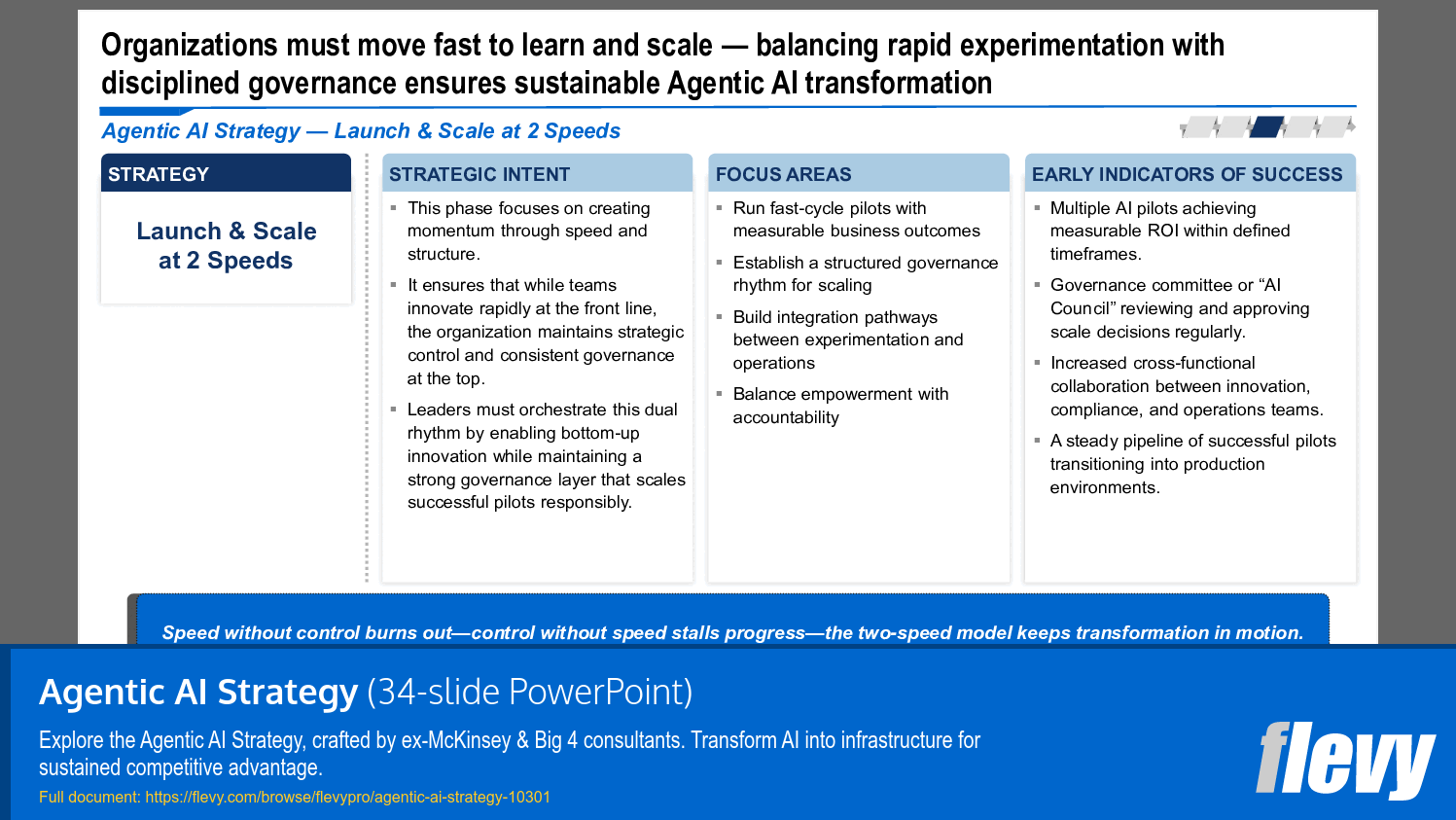
3. Launch & Scale at 2 Speeds
4. Lead from the Top
5. Build the AI Leadership Bench
Additional topics in this deck include how to build the right data and governance foundations, manage change across functions, prepare teams for human-AI collaboration, and measure progress as the organization moves past experimenting early pilots to full AI adoption.
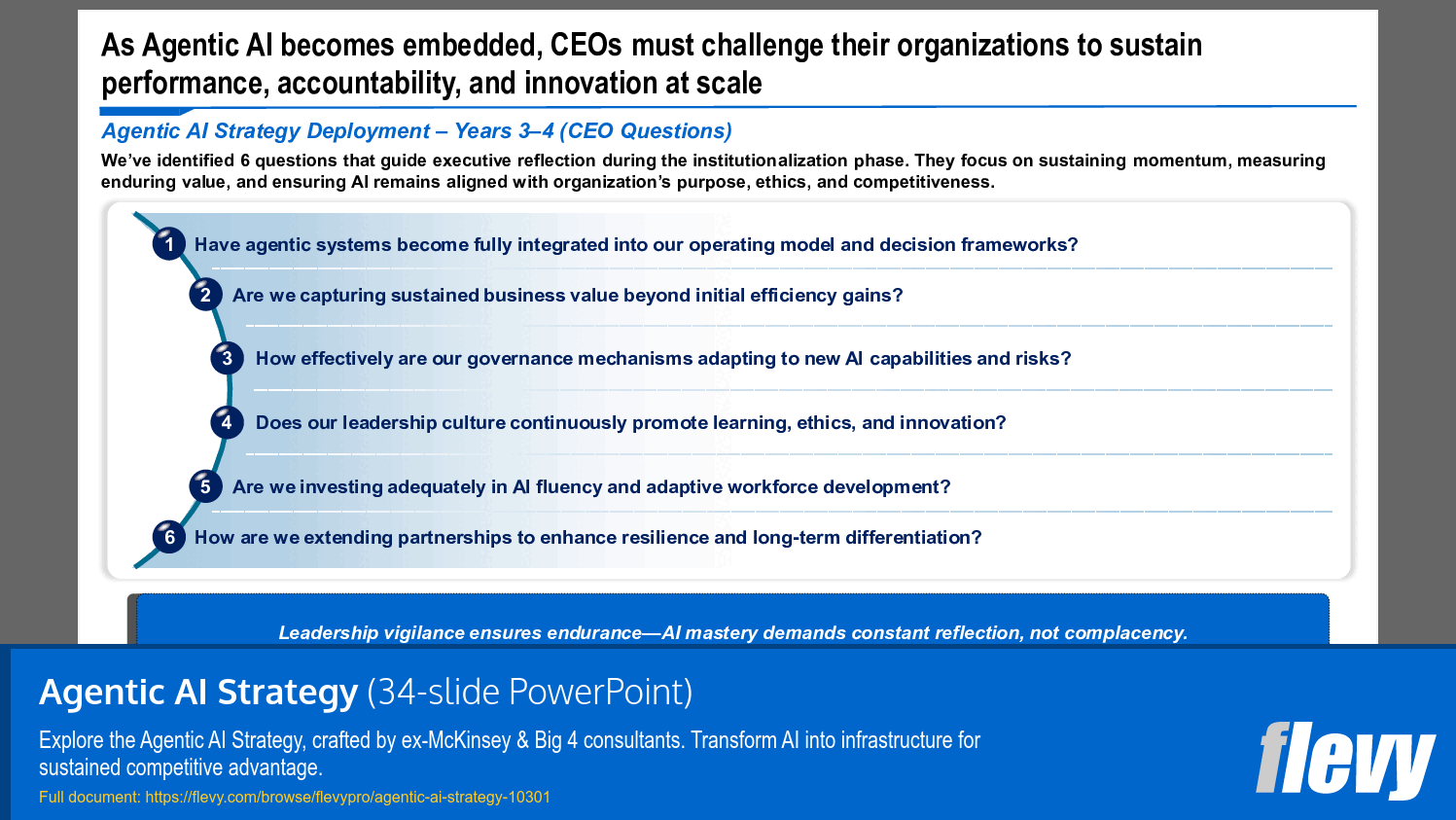
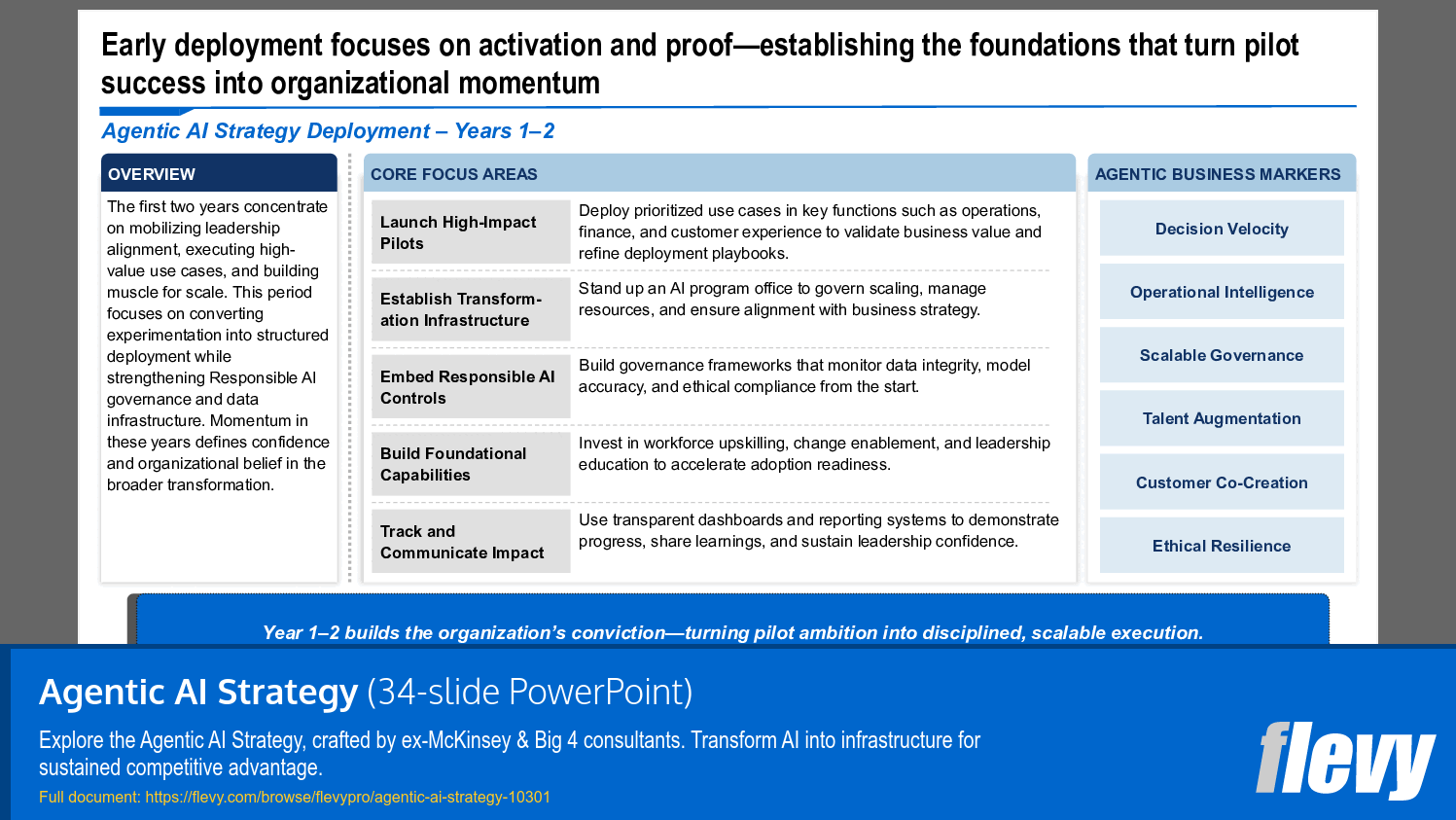
This PPT presentation also explains how the AI Strategy is deployed over time. It describes what leaders can expect in the first 2 years, when the focus is on building momentum, proving value, and putting basic governance in place and then outlines what changes in years 3–4, when Agentic AI becomes part of the operating model and starts shaping how teams work and how decisions are made.
This deck on Agentic AI also includes slide templates for you to use in your own business presentations.
Got a question about this document? Email us at flevypro@flevy.com.
Executive Summary
The Agentic AI Strategy presentation is a comprehensive framework designed to help organizations transition from isolated AI pilot projects to a cohesive, enterprise-wide AI implementation. Developed by ex-McKinsey and Big 4 consultants, this strategy emphasizes a structured approach, focusing on building a robust foundation for AI integration across various business functions. The presentation outlines a five-phase roadmap that includes setting a clear vision, architecting the necessary technology stack, launching and scaling initiatives, leading from the top, and building a capable AI leadership team. By following this framework, organizations can effectively harness AI as a transformative infrastructure, driving sustained competitive advantage.
Who This Is For and When to Use
• Corporate executives seeking to implement AI strategies across their organizations
• Integration leaders responsible for aligning AI initiatives with business objectives
• Consultants advising clients on AI adoption and transformation
• Change management teams aiming to facilitate AI integration within their organizations
Best-fit moments to use this deck:
• During strategic planning sessions focused on AI integration
• When launching new AI initiatives or scaling existing pilots
• In workshops aimed at aligning leadership around AI transformation goals
Learning Objectives
• Define the Agentic AI Strategy and its significance in organizational transformation
• Build a comprehensive implementation roadmap that aligns with business objectives
• Establish governance structures to support AI initiatives and ensure ethical compliance
• Develop a culture of collaboration between human and AI systems
• Measure and track progress towards AI adoption and integration
• Create a leadership pipeline equipped to drive AI initiatives company-wide
Table of Contents
• Overview (page 2)
• Agentic AI (page 4)
• Agentic AI Strategy (page 7)
• Agentic AI Strategy Deployment (page 15)
• Slide Design Structure & Templates (page 22)
Primary Topics Covered
• Agentic AI Overview - An introduction to Agentic AI, emphasizing its ability to make autonomous decisions and its impact on various industries.
• Five-Phase Strategy - A structured approach to implementing AI, detailing each phase from vision setting to leadership development.
• Governance and Accountability - Frameworks for ensuring ethical AI deployment and accountability across the organization.
• Cultural Transformation - The importance of leadership commitment and cultural change in driving AI initiatives.
• Performance Metrics - Establishing KPIs to measure the success of AI integration and its impact on business outcomes.
• Leadership Development - Strategies for building a leadership bench capable of guiding AI initiatives and fostering a culture of continuous learning.
Deliverables, Templates, and Tools
• Implementation roadmap template for aligning AI initiatives with business objectives
• Governance framework for monitoring AI deployment and ensuring ethical compliance
• Performance tracking dashboards for measuring AI impact and progress
• Leadership development program outline focused on AI fluency and governance
• Change management toolkit for facilitating AI integration across teams
• Communication plan template for engaging stakeholders in AI initiatives
Slide Highlights
• Overview of the Agentic AI Strategy, outlining the 5 phases of implementation
• Visual representation of the governance framework for AI initiatives
• Case studies showcasing successful AI integration across various industries
• Metrics dashboard examples for tracking AI performance and impact
• Leadership commitment slides emphasizing the role of executives in driving AI transformation
Potential Workshop Agenda
AI Strategy Kickoff Session (90 minutes)
• Discuss the Agentic AI Strategy and its relevance to the organization
• Identify key stakeholders and their roles in AI initiatives
• Establish initial goals and objectives for AI integration
Governance Framework Workshop (60 minutes)
• Review the proposed governance structures for AI initiatives
• Align on accountability measures and ethical considerations
• Develop a communication plan for engaging stakeholders
Leadership Development Session (90 minutes)
• Identify leadership capabilities needed for successful AI integration
• Outline a development program for building AI fluency among leaders
• Discuss strategies for fostering a culture of continuous learning
Customization Guidance
• Tailor the implementation roadmap to reflect specific organizational goals and timelines
• Adjust governance frameworks to align with existing organizational structures
• Incorporate industry-specific examples and case studies to enhance relevance
• Modify performance metrics to align with organizational KPIs and strategic objectives
• Adapt communication plans to fit the organization's culture and stakeholder preferences
Secondary Topics Covered
• Ethical considerations in AI deployment
• Change management strategies for AI integration
• Cross-functional collaboration in AI initiatives
• The role of data governance in AI success
• Future trends in AI and their implications for organizations
Topic FAQ
Document FAQ
These are questions addressed within this presentation.
What is the Agentic AI Strategy?
The Agentic AI Strategy is a structured framework designed to help organizations transition from isolated AI pilots to a cohesive, enterprise-wide AI implementation, focusing on governance, leadership, and measurable outcomes.
How can this strategy benefit my organization?
By implementing the Agentic AI Strategy, organizations can effectively integrate AI into their operations, enhance decision-making, and drive sustainable competitive advantage.
What are the key phases of the Agentic AI Strategy?
The strategy consists of 5 phases: Set the Agentic North Star, Architect the Enablement Stack, Launch & Scale at 2 Speeds, Lead from the Top, and Build the AI Leadership Bench.
How does governance play a role in AI deployment?
Governance is critical for ensuring ethical AI implementation, monitoring compliance, and establishing accountability across AI initiatives.
What metrics should be used to measure AI success?
Organizations should establish KPIs that align with their strategic objectives, focusing on decision velocity, operational intelligence, and customer co-creation.
How can leadership support AI initiatives?
Leadership can support AI initiatives by modeling commitment, communicating progress, and fostering a culture of collaboration and continuous learning.
What resources are available for implementing this strategy?
The presentation includes templates, frameworks, and tools to assist organizations in developing their AI strategy and governance structures.
How can I customize the provided templates for my organization?
Templates can be tailored to reflect specific organizational goals, industry contexts, and existing structures to ensure alignment and relevance.
What are the common challenges in AI integration?
Common challenges include resistance to change, lack of leadership commitment, and insufficient governance structures to support AI initiatives.
Glossary
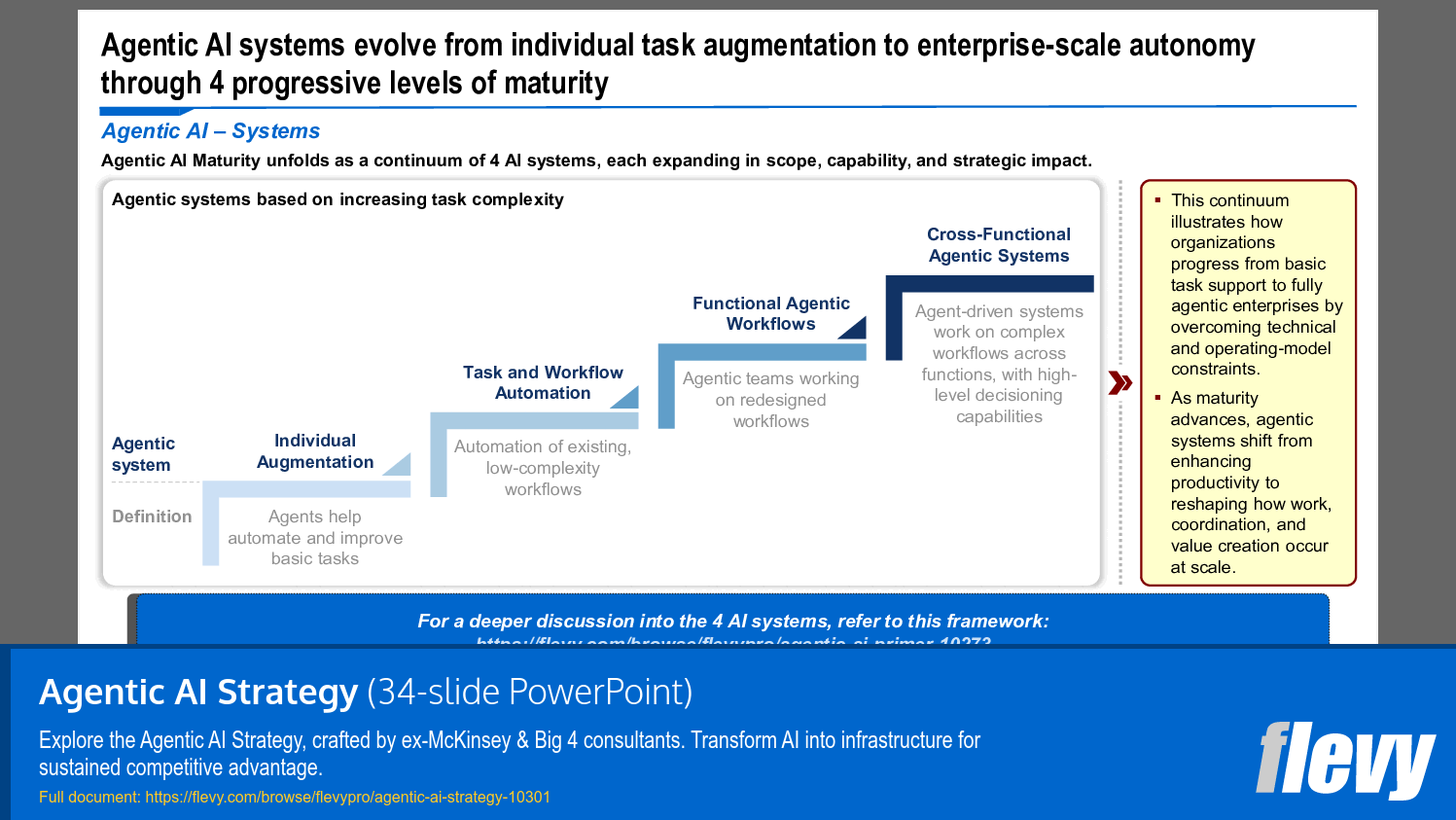
• Agentic AI - AI systems capable of making autonomous decisions and taking actions to achieve specific goals.
• Governance Framework - A structure for ensuring ethical compliance and accountability in AI initiatives.
• KPI (Key Performance Indicator) - A measurable value that demonstrates how effectively an organization is achieving key business objectives.
• Change Management - The process of managing organizational change to ensure successful implementation of new initiatives.
• Leadership Development - Programs designed to enhance the skills and capabilities of leaders to drive organizational transformation.
• Data Governance - The management of data availability, usability, integrity, and security in an organization.
• Continuous Learning - An ongoing process of learning and development to adapt to changing environments and improve performance.
• Cross-Functional Collaboration - Cooperation among different departments or teams within an organization to achieve common goals.
• Ethical AI - The practice of ensuring that AI systems are designed and implemented in a manner that is fair, transparent, and accountable.
• Operational Intelligence - The ability to analyze data in real-time to improve decision-making and operational efficiency.
• Customer Co-Creation - Engaging customers in the development of products or services to enhance value and satisfaction.
• Transformation Mastery - The stage where organizations fully embed AI capabilities into their core business processes.
• Decision Velocity - The speed at which decisions are made based on data-driven insights.
• Enterprise Autonomy - The ability of an organization to operate independently and efficiently through AI systems.
• Sustainable Value Creation - The process of generating long-term value for stakeholders while ensuring ethical and responsible practices.
• Feedback Loop - A system that uses the outputs of a process to inform and improve future actions.
• Hybrid Roles - Positions that require a blend of traditional skills and new capabilities related to AI and technology.
• AI Fluency - The ability to understand and effectively leverage AI technologies in decision-making processes.
• Ecosystem Collaboration - Working with external partners, suppliers, and customers to enhance AI capabilities and outcomes.
• Predictive Governance - The proactive management of AI systems to ensure compliance and mitigate risks.
Source: Best Practices in Artificial Intelligence, Automation, Agentic AI PowerPoint Slides: Agentic AI Strategy PowerPoint (PPTX) Presentation Slide Deck, LearnPPT Consulting
Did you need more documents?
Consider a FlevyPro subscription from $39/month. View plans here.
For $10.00 more, you can download this document plus 2 more FlevyPro documents. That's just $13 each.
|
Download our FREE Digital Transformation Templates
Download our free compilation of 50+ Digital Transformation slides and templates. DX concepts covered include Digital Leadership, Digital Maturity, Digital Value Chain, Customer Experience, Customer Journey, RPA, etc. |