Agentic AI Assessment Framework   31-slide PPT PowerPoint presentation slide deck (PPTX)
$29.00

Agentic AI Assessment Framework (31-slide PPT PowerPoint presentation slide deck (PPTX)) Preview Image
Flevy is the marketplace for business best practices.
Agentic AI Assessment Framework (31-slide PPT PowerPoint presentation slide deck (PPTX)) Preview Image
Arrow   Click main image to view in full screen.

Agentic AI Assessment Framework (PowerPoint PPTX Slide Deck)

PowerPoint (PPTX) 31 Slides FlevyPro Document

$29.00
FlevyPro price: FREE (included in subscription)
This framework is developed by a team of former McKinsey and Big 4 consultants. The presentation follows the headline-body-bumper slide format used by global consulting firms.
Add to Cart


Immediate download
Free lifetime updates

ARTIFICIAL INTELLIGENCE PPT DESCRIPTION

Editor Summary The Agentic AI Assessment Framework is a 31-slide PowerPoint (PPTX) by LearnPPT Consulting that evaluates AI agents across 6 critical capabilities: Reasoning and Planning; Task Autonomy and Execution; Memory and Knowledge; Reliability and Safety; Integration and Interoperability; and Social Understanding. Read more

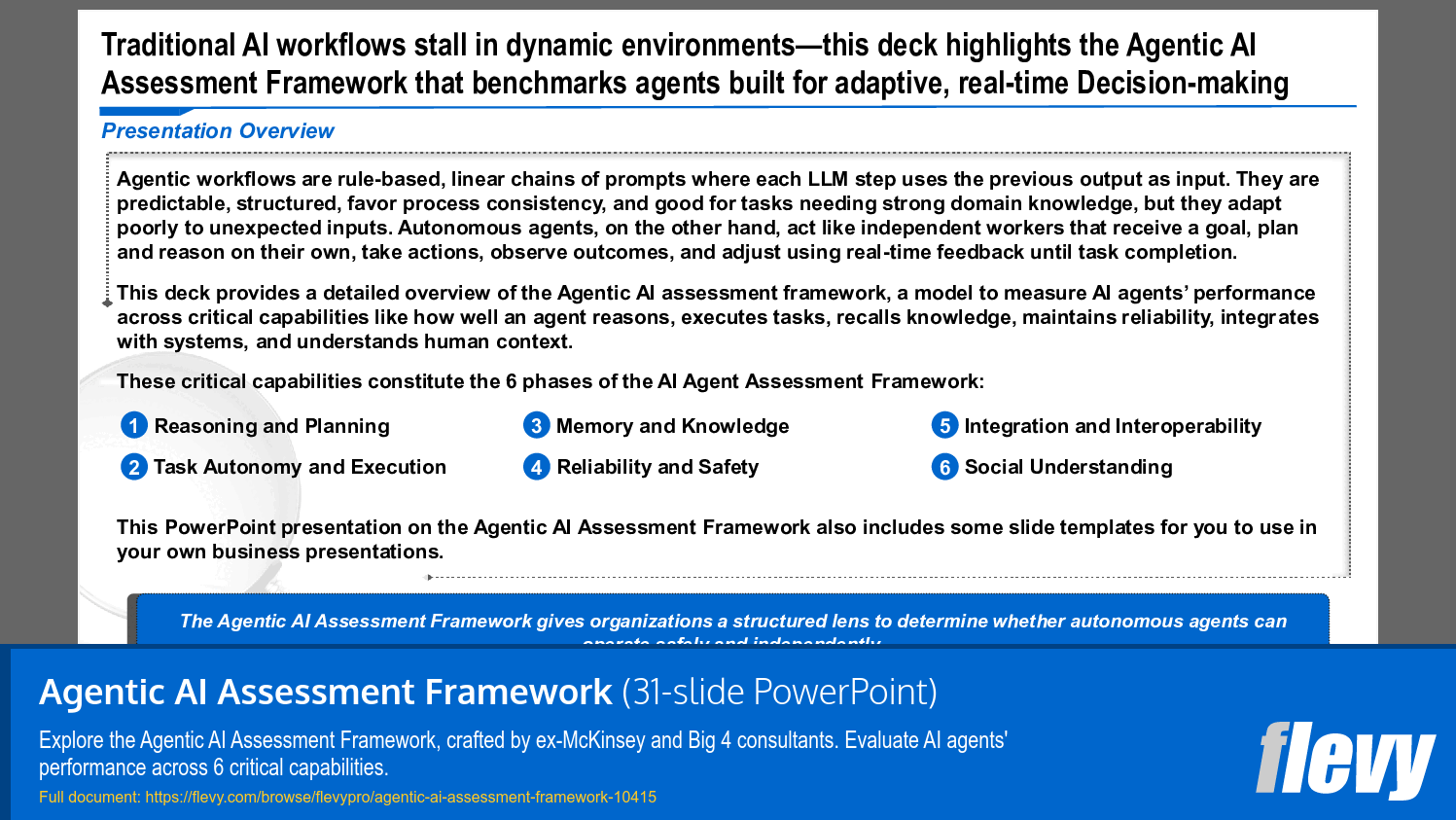
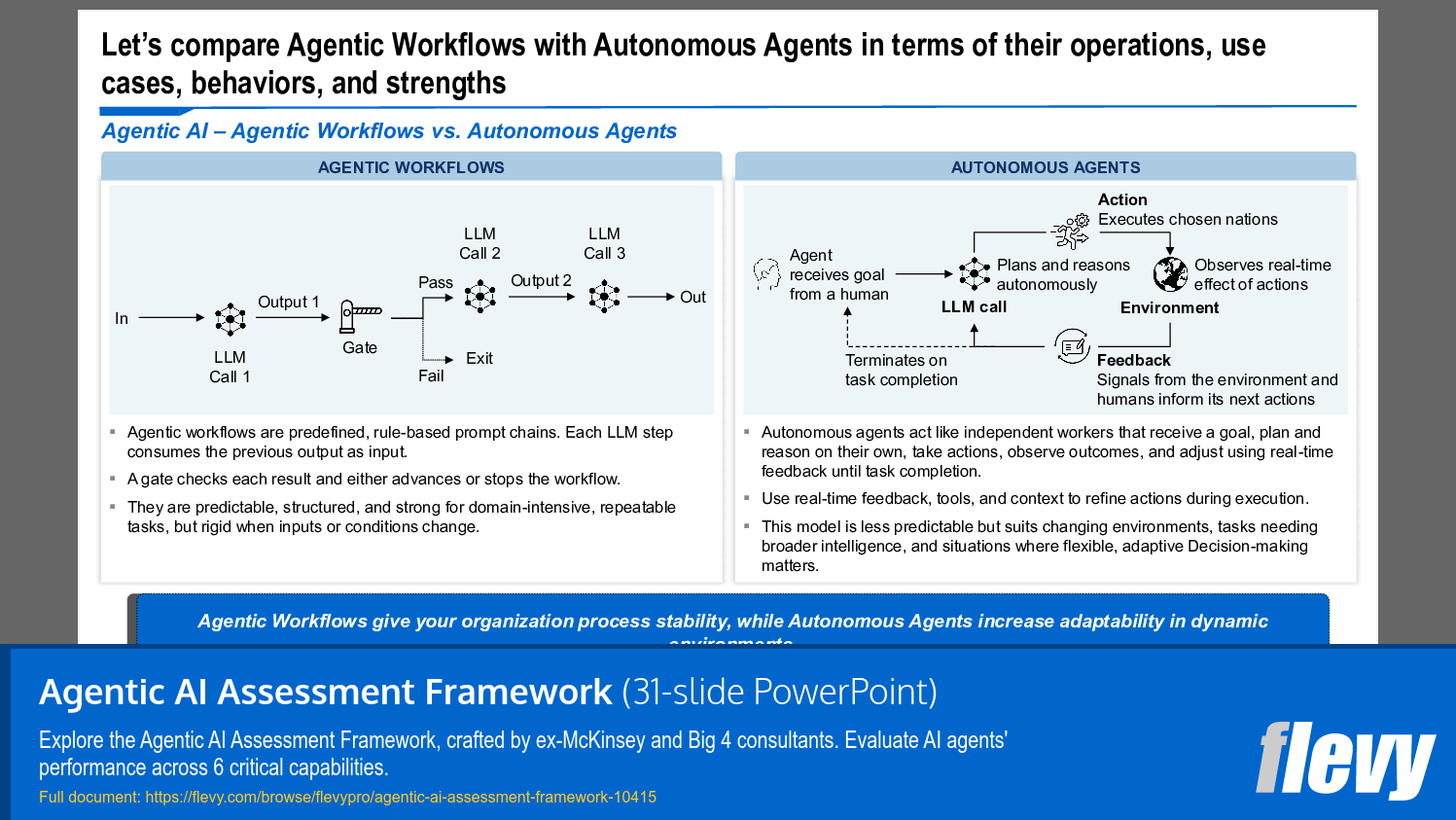
Agentic workflows are rule-based, linear chains of prompts where each LLM step uses the previous output as input. They are predictable, structured, favor process consistency, and good for tasks needing strong domain knowledge, but they adapt poorly to unexpected inputs.

Autonomous agents, on the other hand, act like independent workers that receive a goal, plan and reason on their own, take actions, observe outcomes, and adjust using real-time feedback until task completion.

This deck provides a detailed overview of the Agentic AI assessment framework, a model to measure AI agents' performance across critical capabilities like how well an agent reasons, executes tasks, recalls knowledge, maintains reliability, integrates with systems, and understands human context.

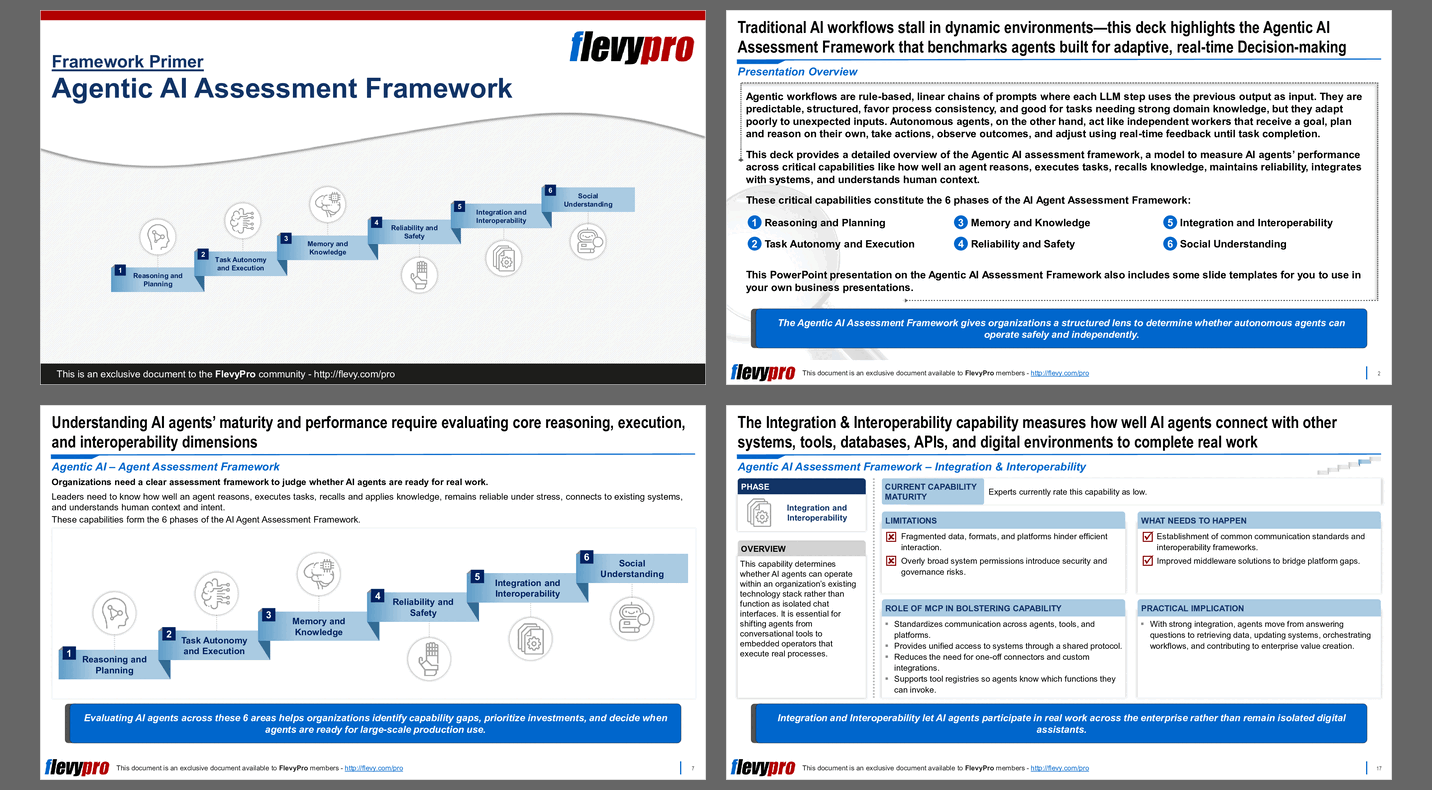
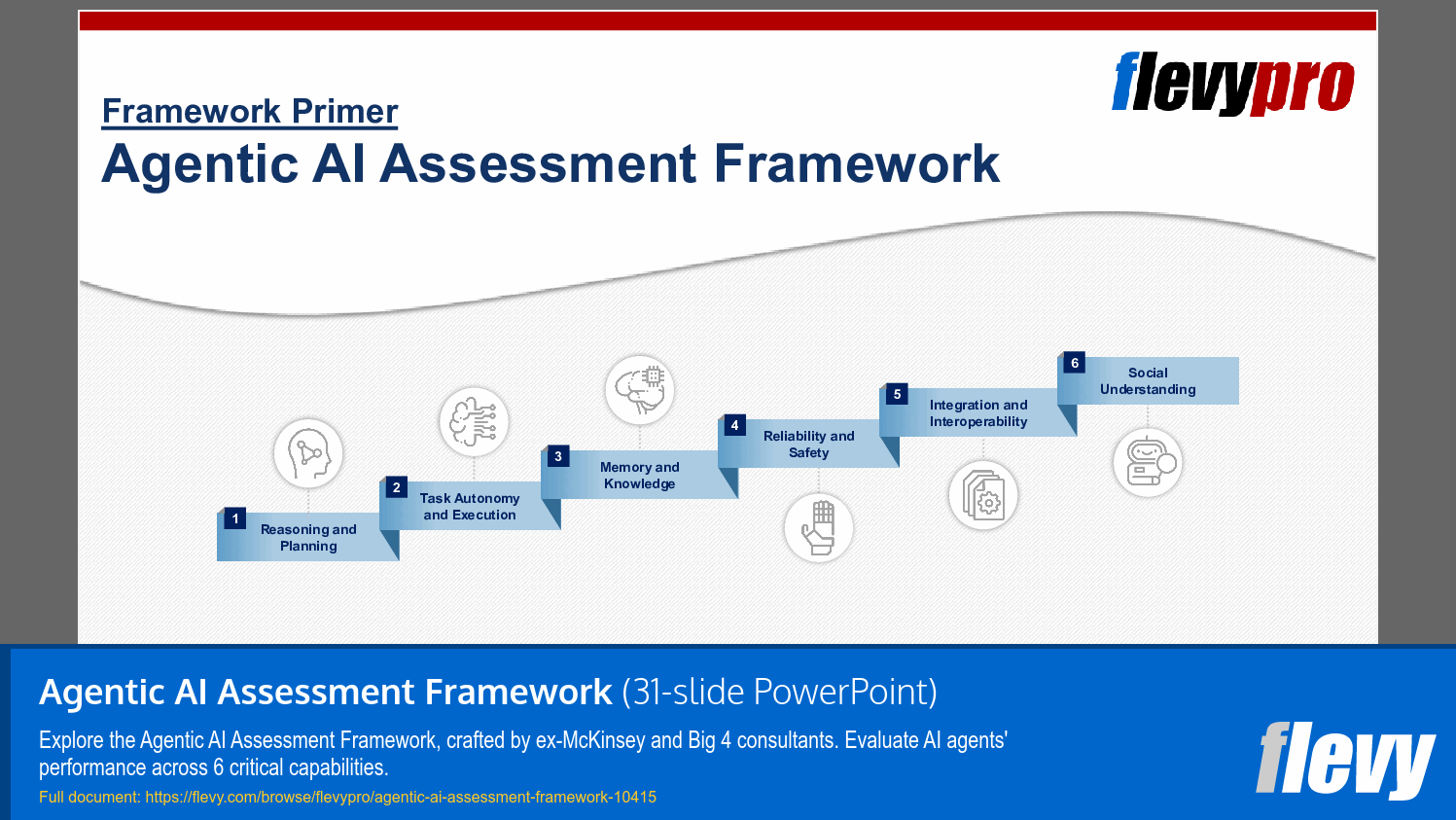
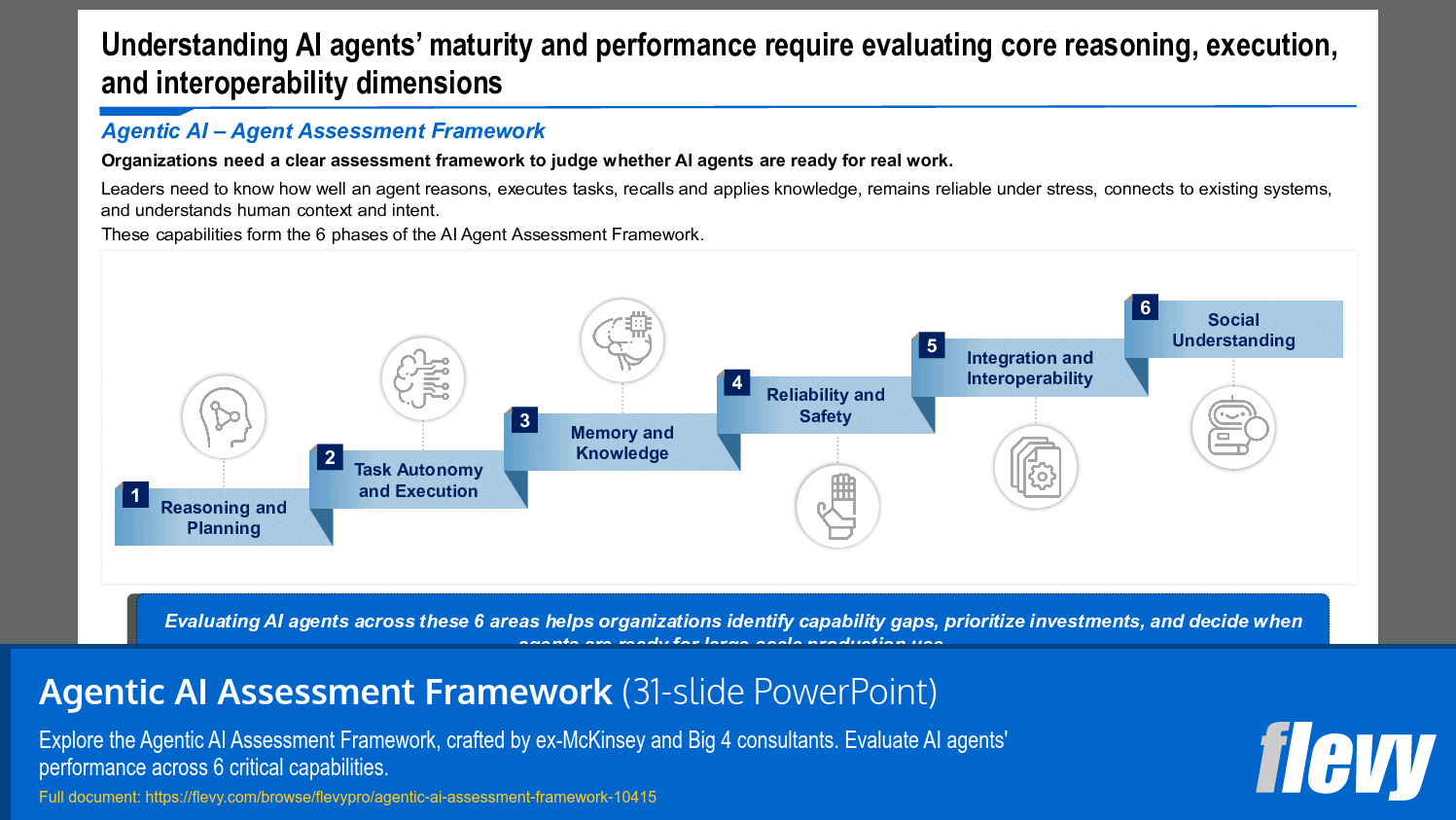
These critical capabilities constitute the 6 phases of the AI Agent Assessment Framework:

1. Reasoning and Planning
2. Task Autonomy and Execution
3. Memory and Knowledge
4. Reliability and Safety
5. Integration and Interoperability
6. Social Understanding

The Agentic AI Assessment Framework gives organizations a structured lens to determine whether autonomous agents can operate safely and independently.

This PowerPoint presentation on the Agentic AI Assessment Framework also includes some slide templates for you to use in your own business presentations.

Got a question about this document? Email us at flevypro@flevy.com.

MARCUS OVERVIEW

This synopsis was written by Marcus [?] based on the analysis of the full 31-slide presentation.


Executive Summary
The Agentic AI Assessment Framework is a structured tool designed to evaluate the performance of AI agents across 6 critical capabilities: Reasoning and Planning, Task Autonomy and Execution, Memory and Knowledge, Reliability and Safety, Integration and Interoperability, and Social Understanding. This framework, developed by experts with backgrounds in top consulting firms, offers organizations a comprehensive approach to assess whether their AI agents can operate autonomously and effectively in dynamic environments. By utilizing this framework, organizations can identify capability gaps, prioritize investments, and make informed decisions regarding the deployment of AI agents in real-world applications.

Who This Is For and When to Use
•  Corporate executives overseeing AI strategy and implementation
•  Integration leaders responsible for AI deployment and performance tracking
•  Consultants advising organizations on AI capabilities and assessments
•  Technology teams developing or integrating AI solutions

Best-fit moments to use this deck:
•  During the evaluation phase of AI agent capabilities
•  When assessing readiness for large-scale AI deployment
•  For strategic planning sessions focused on AI investments

Learning Objectives
•  Define the 6 critical capabilities of the Agentic AI Assessment Framework
•  Evaluate AI agents’ performance across each capability
•  Identify gaps in AI agent capabilities and prioritize areas for improvement
•  Develop a roadmap for enhancing AI agent performance
•  Understand the implications of AI agent capabilities on organizational strategy
•  Apply the framework to real-world AI deployment scenarios

Table of Contents
•  Overview (page 1)
•  Agentic AI (page 4)
•  Model Context Protocol (MCP) (page 9)
•  Agentic AI Assessment Framework (page 13)
•  Slide Design Structure & Templates (page 20)

Primary Topics Covered
•  Agentic AI Overview - A comprehensive introduction to AI systems capable of autonomous decision-making and action-taking with minimal human intervention.
•  Model Context Protocol (MCP) - A framework that facilitates the integration of AI agents with existing tools and data sources, enhancing their operational capabilities.
•  Reasoning and Planning - The ability of AI agents to comprehend goals, interpret context, and create actionable plans autonomously.
•  Task Autonomy and Execution - Evaluates whether AI agents can independently carry out tasks once a goal is defined.
•  Memory and Knowledge - Reflects the capacity of AI agents to store, retrieve, and apply information over time, improving their effectiveness.
•  Reliability and Safety - Measures the consistency and accuracy of AI agents' outputs while ensuring they operate within safe boundaries.
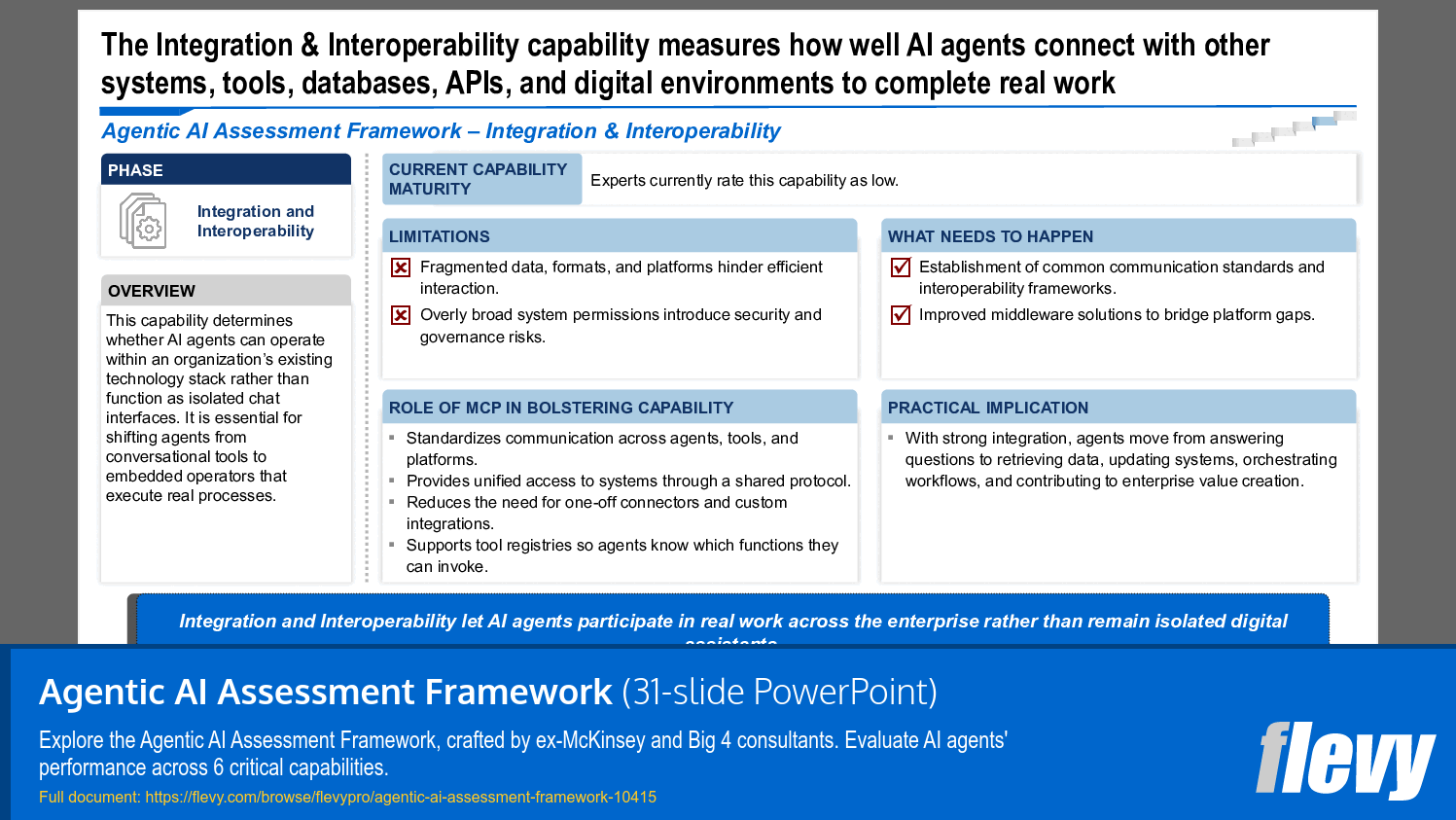
•  Integration and Interoperability - Assesses how well AI agents connect with other systems and tools to execute real processes.
•  Social Understanding - Evaluates AI agents' ability to interact in ways that are intuitive and respectful of human expectations.

Deliverables, Templates, and Tools
•  Assessment templates for evaluating AI agent capabilities
•  Roadmap templates for enhancing AI performance
•  Slide templates for presenting findings and recommendations
•  Framework documents detailing the 6 critical capabilities
•  Guidelines for integrating AI agents with existing systems
•  Best practice documents for deploying AI agents safely

Slide Highlights
•  Overview of the Agentic AI Assessment Framework, outlining its purpose and structure.
•  Detailed breakdown of each capability, including current maturity levels and necessary improvements.
•  Visual representation of the Model Context Protocol (MCP) and its role in enhancing AI agent performance.
•  Case studies illustrating the application of the framework in real-world scenarios.

Potential Workshop Agenda
Introduction to Agentic AI (30 minutes)
•  Overview of the Agentic AI Assessment Framework
•  Discussion on the importance of evaluating AI capabilities

Capability Assessment Workshop (60 minutes)
•  Breakout sessions to evaluate AI agents against the 6 capabilities
•  Group discussion on identified gaps and improvement strategies

Roadmap Development Session (45 minutes)
•  Collaborative session to create a roadmap for enhancing AI performance
•  Assign responsibilities and set timelines for implementation

Customization Guidance
•  Tailor the framework to align with specific organizational goals and AI strategies.
•  Adjust assessment criteria based on industry-specific requirements and challenges.
•  Incorporate organizational terminology and metrics to enhance relevance and applicability.

Secondary Topics Covered
•  Ethical considerations in AI deployment
•  Best practices for integrating AI agents into existing workflows
•  Future trends in AI capabilities and their implications for organizations
•  Strategies for ensuring compliance and safety in AI operations

Topic FAQ

What are the core capabilities to assess when evaluating an autonomous AI agent?

Evaluating autonomous AI agents focuses on 6 core capabilities: Reasoning and Planning; Task Autonomy and Execution; Memory and Knowledge; Reliability and Safety; Integration and Interoperability; and Social Understanding — the framework’s 6 critical capabilities.

How do agentic workflows differ from autonomous agents?

Agentic workflows are rule-based, linear chains where each step uses the previous output, offering predictability, but limited adaptability to unexpected inputs. Autonomous agents receive a goal, plan and reason, take actions, observe outcomes, and adjust via real-time feedback — a distinction described across 2 models.

What is the Model Context Protocol (MCP) and why does it matter?

The Model Context Protocol (MCP) standardizes how AI agents connect to tools and data sources, reducing integration complexity and improving operational capability by enabling agents to access context and external systems; it is described as the framework for agent-system integration.

When should an organization run an agent capability assessment before deployment?

Organizations should run an assessment during the evaluation phase, prior to large-scale deployment, and as part of strategic planning for AI investments to identify gaps and priorities — especially before readiness for large-scale deployment.

What should I look for when buying an agent assessment toolkit?

Key checklist items include clear capability definitions, assessment templates, roadmap templates, integration guidance such as MCP, slide templates for stakeholder reporting, and suggested workshop agendas; the Agentic AI Assessment Framework includes assessment templates and roadmap templates.

How long does a typical assessment workshop take and what agenda works?

A common session structure in the deck runs about 2–2.5 hours: Introduction to Agentic AI (30 minutes), Capability Assessment with breakouts (60 minutes), and Roadmap Development (45 minutes). The Agentic AI Assessment Framework provides this suggested workshop agenda.

Which capability areas matter most when improving agent safety and reliability?

Improving safety and reliability typically focuses on the Reliability and Safety capability, plus Memory and Knowledge to ensure consistent context retention, and Integration and Interoperability to validate secure, correct system connections — specifically Reliability and Safety, Memory and Knowledge, and Integration and Interoperability.

Are template-based toolkits worth buying versus building in-house for agent assessment?

Template toolkits can provide ready-made assessment templates, roadmap templates, slide templates, MCP guidance, and best-practice documents that accelerate assessment setup and reporting; the Agentic AI Assessment Framework packages these materials into a 31-slide PPTX.

Document FAQ
These are questions addressed within this presentation.

What is the Agentic AI Assessment Framework?
The Agentic AI Assessment Framework is a structured tool for evaluating AI agents across 6 critical capabilities to determine their readiness for autonomous operation.

Who can benefit from this framework?
Corporate executives, integration leaders, consultants, and technology teams can utilize this framework to assess and enhance AI agent capabilities.

How does the Model Context Protocol (MCP) enhance AI agents?
MCP standardizes how AI agents connect to tools and data sources, improving their operational efficiency and reducing integration complexity.

What are the 6 critical capabilities assessed in this framework?
The framework assesses Reasoning and Planning, Task Autonomy and Execution, Memory and Knowledge, Reliability and Safety, Integration and Interoperability, and Social Understanding.

How can organizations use the findings from the assessment?
Organizations can identify capability gaps, prioritize investments, and develop strategies for enhancing AI agent performance based on assessment results.

What limitations do current AI agents face?
Current AI agents often struggle with multi-step reasoning, long-range task dependencies, and integration with external systems.

What practical implications arise from the assessment?
Without reliable AI agents, organizations may face challenges in delegating tasks, integrating AI into workflows, and ensuring customer-facing interactions are effective.

How can organizations ensure ethical AI deployment?
Organizations should establish guidelines for ethical AI use, focusing on transparency, accountability, and compliance with regulations.

What is the role of Memory and Knowledge in AI agents?
Memory and Knowledge allow AI agents to retain and apply information over time, improving their consistency and effectiveness in task execution.

Glossary
•  Agentic AI - AI systems capable of autonomous decision-making and action-taking.
•  Model Context Protocol (MCP) - A framework for integrating AI agents with existing systems and tools.
•  Task Autonomy - The ability of AI agents to perform tasks independently.
•  Memory and Knowledge - The capacity of AI agents to store and retrieve information over time.
•  Reliability and Safety - Measures of the consistency and accuracy of AI agents' outputs.
•  Integration and Interoperability - The ability of AI agents to connect with other systems and tools.
•  Social Understanding - The capability of AI agents to interact in intuitive and respectful ways.
•  Assessment Framework - A structured tool for evaluating capabilities and performance.
•  Capability Gaps - Areas where AI agents lack the necessary skills or performance.
•  Ethical AI - The responsible use of AI technologies in alignment with ethical guidelines.
•  Autonomous Agents - AI systems that operate independently to achieve defined goals.
•  Real-time Feedback - Immediate information that informs AI agents' actions and decisions.
•  Multi-Agent Orchestration - The coordination of multiple AI agents to achieve complex tasks.
•  Decision-making - The process by which AI agents determine actions based on data and context.
•  Operational Efficiency - The effectiveness of AI agents in executing tasks and processes.
•  Human-like Reasoning - The ability of AI agents to mimic human decision-making processes.
•  Data-driven Decisions - Choices made by AI agents based on data analysis and insights.
•  Guardrails - Safety measures that ensure AI agents operate within defined boundaries.
•  Contextual Awareness - The understanding of situational factors that influence AI agents' actions.
•  Performance Metrics - Standards used to measure the effectiveness of AI agents.

ARTIFICIAL INTELLIGENCE PPT SLIDES

AI Agent Maturity and Performance Evaluation Framework

Assessment of AI Agent Connectivity and Interoperability Capabilities

Comparison of Agentic Workflows and Autonomous AI Agents in Operations

Source: Best Practices in Artificial Intelligence, Agentic AI PowerPoint Slides: Agentic AI Assessment Framework PowerPoint (PPTX) Presentation Slide Deck, LearnPPT Consulting


$29.00
FlevyPro price: FREE (included in subscription)
This framework is developed by a team of former McKinsey and Big 4 consultants. The presentation follows the headline-body-bumper slide format used by global consulting firms.
Add to Cart
  

Did you need more documents?

Consider a FlevyPro subscription from $39/month. View plans here.

For $10.00 more, you can download this document plus 2 more FlevyPro documents. That's just $13 each.

ABOUT FLEVYPRO

This document is part of the FlevyPro Library, a curated knowledge base of documents for our FlevyPro subscribers.

FlevyPro is a subscription service for on-demand business frameworks and analysis tools. FlevyPro subscribers receive access to an exclusive library of curated business documents—business framework primers, presentation templates, Lean Six Sigma tools, and more—among other exclusive benefits.

Click here to learn more about FlevyPro and its benefits.

Did you know?
The average daily rate of a McKinsey consultant is $6,625 (not including expenses). The average price of a Flevy document is $65.


Trusted by over 10,000+ Client Organizations
Since 2012, we have provided business templates to over 10,000 businesses and organizations of all sizes, from startups and small businesses to the Fortune 100, in over 130 countries.
AT&T GE Cisco Intel IBM Coke Dell Toyota HP Nike Samsung Microsoft Astrazeneca JP Morgan KPMG Walgreens Walmart 3M Kaiser Oracle SAP Google E&Y Volvo Bosch Merck Fedex Shell Amgen Eli Lilly Roche AIG Abbott Amazon PwC T-Mobile Broadcom Bayer Pearson Titleist ConEd Pfizer NTT Data Schwab


Read Customer Testimonials

 
"I have used FlevyPro for several business applications. It is a great complement to working with expensive consultants. The quality and effectiveness of the tools are of the highest standards."

– Moritz Bernhoerster, Global Sourcing Director at Fortune 500
 
"Flevy is now a part of my business routine. I visit Flevy at least 3 times each month.

Flevy has become my preferred learning source, because what it provides is practical, current, and useful in this era where the business world is being rewritten.

In today's environment where there are so "

– Omar Hernán Montes Parra, CEO at Quantum SFE
 
"As a niche strategic consulting firm, Flevy and FlevyPro frameworks and documents are an on-going reference to help us structure our findings and recommendations to our clients as well as improve their clarity, strength, and visual power. For us, it is an invaluable resource to increase our impact and value."

– David Coloma, Consulting Area Manager at Cynertia Consulting
 
"I have used Flevy services for a number of years and have never, ever been disappointed. As a matter of fact, David and his team continue, time after time, to impress me with their willingness to assist and in the real sense of the word. I have concluded in fact "

– Roberto Pelliccia, Senior Executive in International Hospitality
 
"Flevy is our 'go to' resource for management material, at an affordable cost. The Flevy library is comprehensive and the content deep, and typically provides a great foundation for us to further develop and tailor our own service offer."

– Chris McCann, Founder at Resilient.World
 
"As a consulting firm, we had been creating subject matter training materials for our people and found the excellent materials on Flevy, which saved us 100's of hours of re-creating what already exists on the Flevy materials we purchased."

– Michael Evans, Managing Director at Newport LLC
 
"The wide selection of frameworks is very useful to me as an independent consultant. In fact, it rivals what I had at my disposal at Big 4 Consulting firms in terms of efficacy and organization."

– Julia T., Consulting Firm Owner (Former Manager at Deloitte and Capgemini)
 
"Last Sunday morning, I was diligently working on an important presentation for a client and found myself in need of additional content and suitable templates for various types of graphics. Flevy.com proved to be a treasure trove for both content and design at a reasonable price, considering the time I "

– M. E., Chief Commercial Officer, International Logistics Service Provider


Customers Also Like These Documents

Explore Templates on Related Management Topics


Your Recently Viewed Documents
Download our FREE Digital Transformation Templates

Download our free compilation of 50+ Digital Transformation slides and templates. DX concepts covered include Digital Leadership, Digital Maturity, Digital Value Chain, Customer Experience, Customer Journey, RPA, etc.









