
Measurement System Analysis (MSA) is an experimental and mathematical method of determining how much the variation within the measurement process contributes to overall process variability.
There are 5 parameters to investigate in an MSA: bias, linearity, stability, repeatability, and reproducibility. MSA analyzes the collection of equipment, operations, procedures, software, and personnel that affects the assignment of a number to a measurement characteristic.
These documents provide a solid foundation to a Lean Six Sigma training course. These presentations can be modified to your own business needs. It is suitable for independent study or formal classroom training.
This presentation covering the following topics:
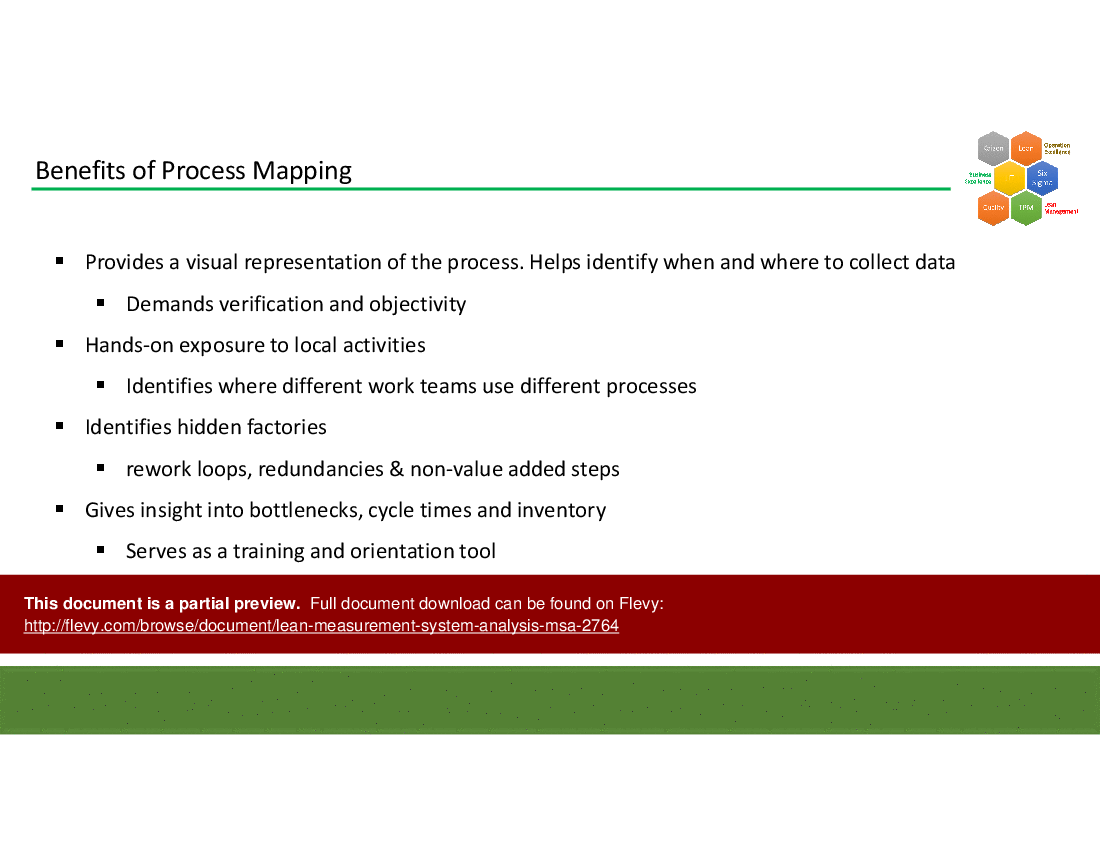
Benefits of Process Mapping
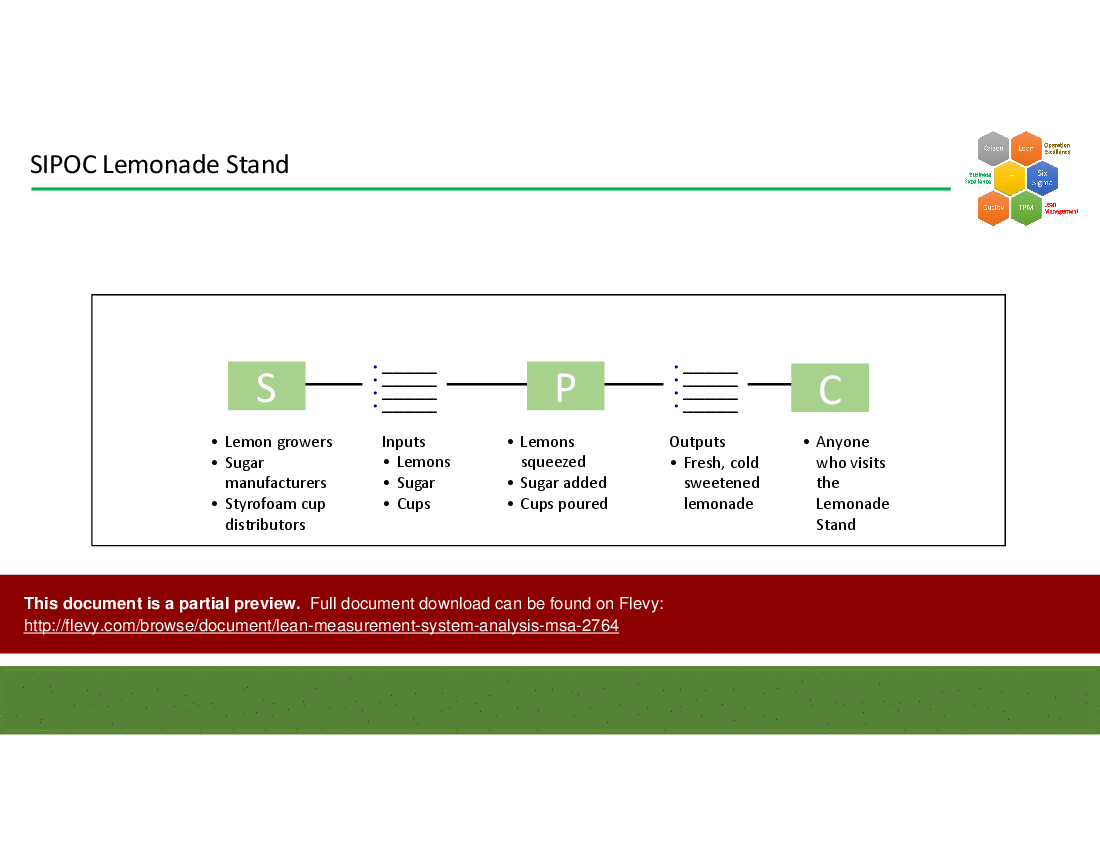
SIPOC
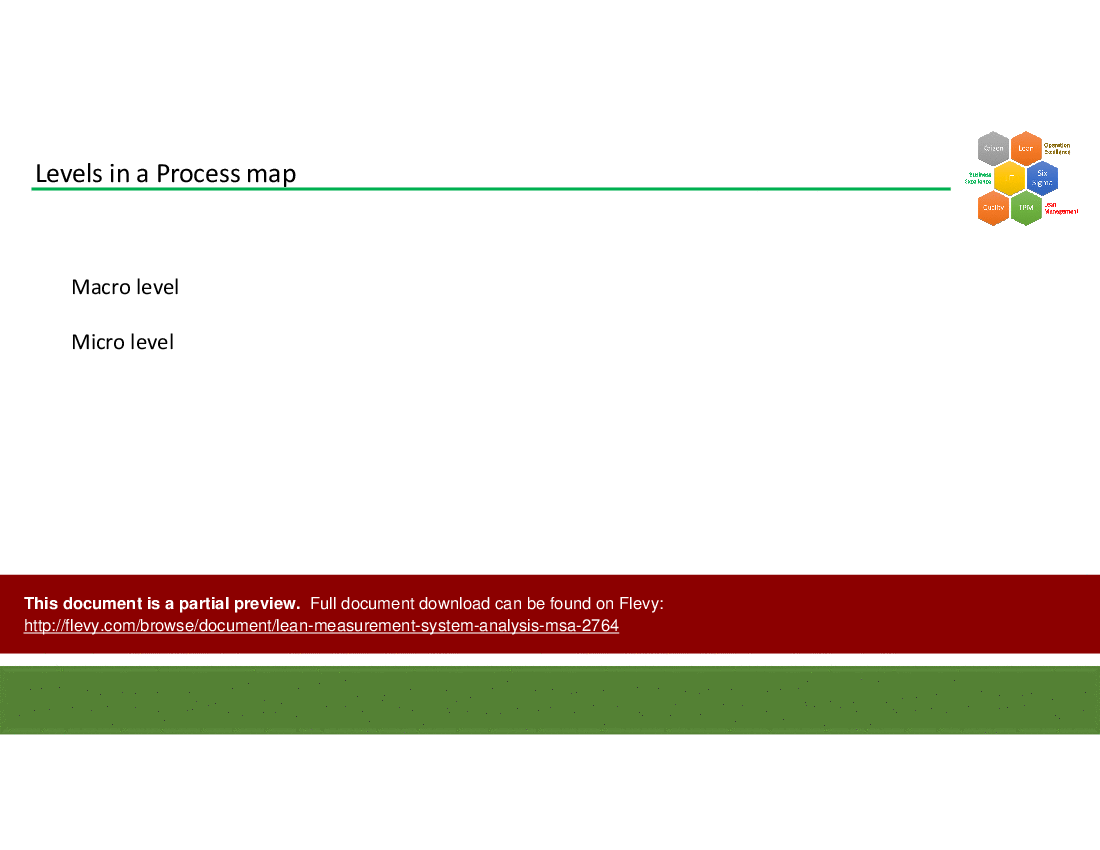
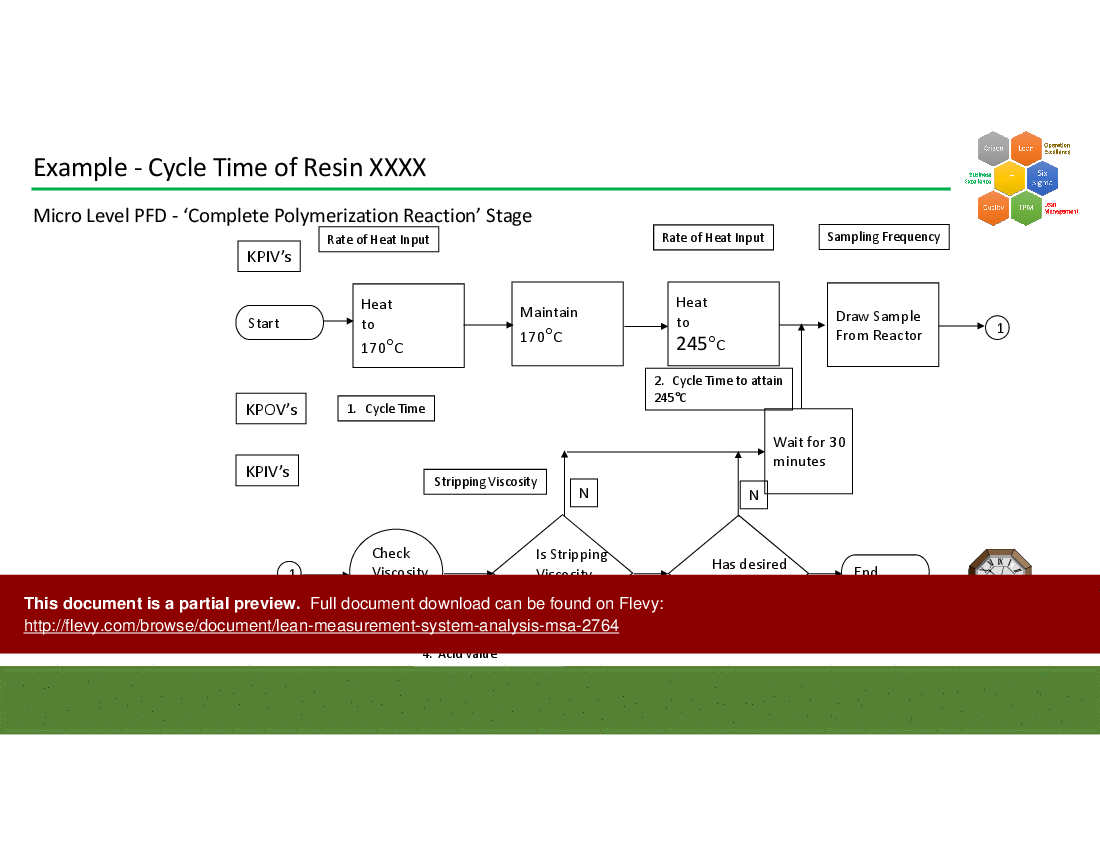
Levels in Process Map
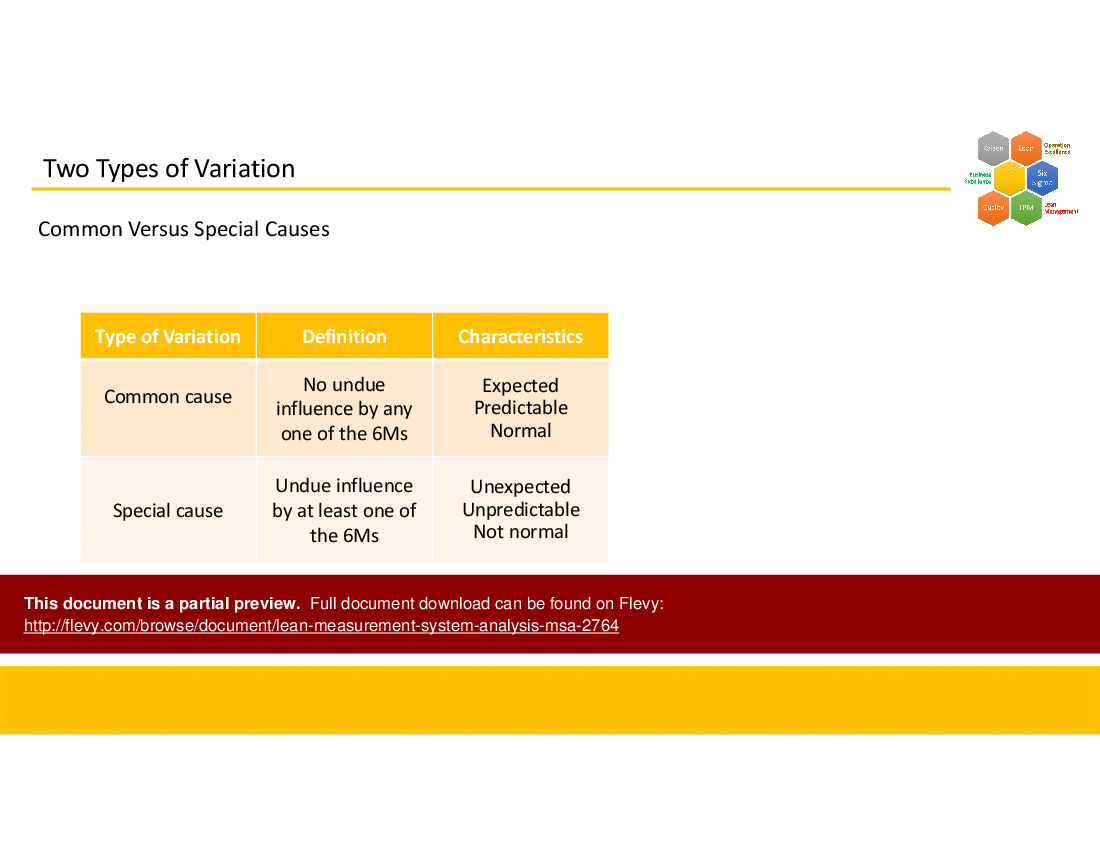
Types of Variations
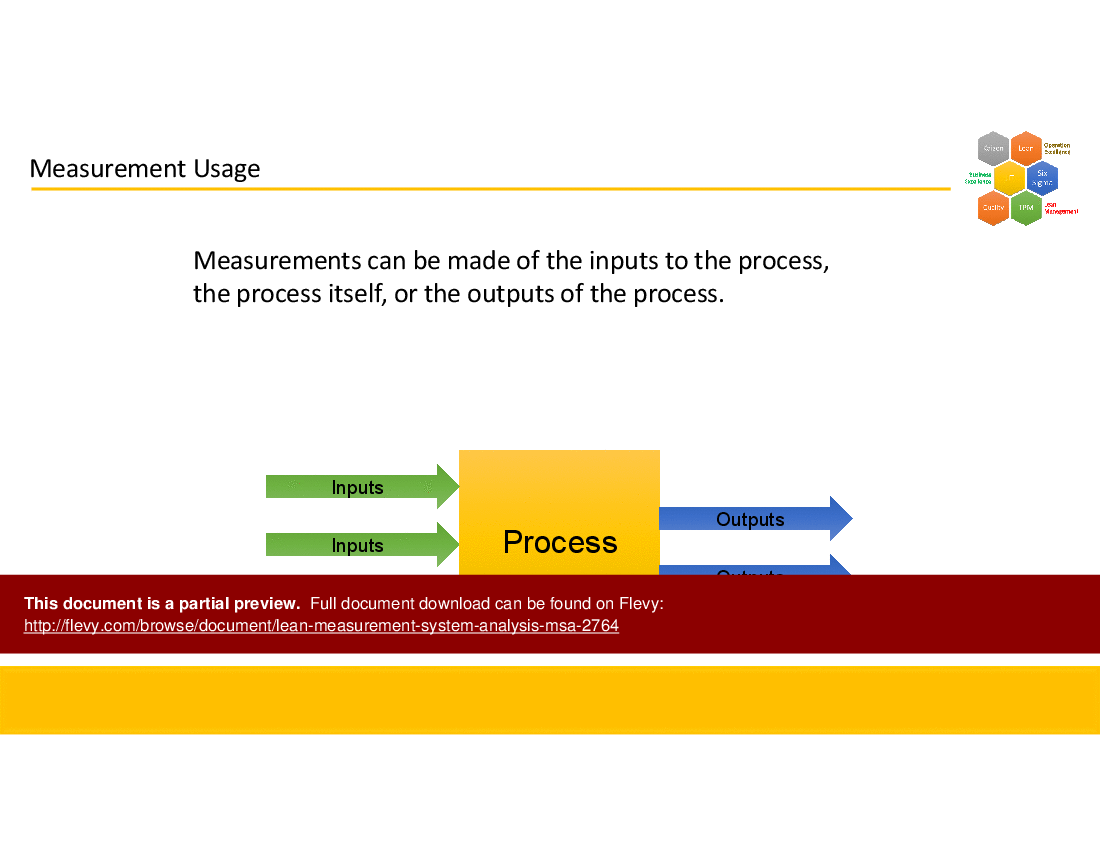
Measurement Usage
Purpose of Data collection plan
MSA ? Starting point
Components of Measurement Error
Attribute Measurement Studies
Minitab Method
Variables Measurement Studies
Measurement system evaluation Questions
Got a question about the product? Email us at support@flevy.com or ask the author directly by using the "Ask the Author a Question" form. If you cannot view the preview above this document description, go here to view the large preview instead.
Executive Summary
The Lean Measurement System Analysis (MSA) presentation is designed to equip professionals with the essential tools and methodologies for conducting effective measurement system analysis within Lean operations. This comprehensive deck covers critical aspects such as process mapping, data collection, and the identification of measurement variations, enabling users to enhance quality and operational efficiency. By utilizing this presentation, executives and consultants can systematically analyze measurement systems, ensuring that data collected is accurate and actionable, ultimately driving continuous improvement initiatives.
Who This Is For and When to Use
• Quality Assurance Managers focused on enhancing measurement accuracy.
• Lean Practitioners implementing continuous improvement strategies.
• Operations Executives looking to streamline processes and reduce waste.
• Data Analysts responsible for collecting and interpreting operational data.
• Consultants advising organizations on Lean methodologies and quality management.
Best-fit moments to use this deck:
• During training sessions for teams implementing Lean methodologies.
• When developing or revising measurement systems in operational processes.
• In workshops aimed at identifying and mitigating measurement variations.
• For strategic planning sessions focused on quality improvement initiatives.
Learning Objectives
• Define key concepts related to Measurement System Analysis (MSA).
• Identify and prioritize input variables impacting measurement accuracy.
• Develop a comprehensive data collection plan tailored to operational needs.
• Perform a thorough Measurement System Analysis to evaluate data validity.
• Analyze collected data to assess process capability and identify areas for improvement.
• Utilize process mapping techniques to visualize and enhance operational workflows.
Table of Contents
• Introduction to Measurement Systems Analysis (page 3)
• Importance of Process Mapping (page 5)
• SIPOC Process Mapping Overview (page 7)
• Identification of Input Variables (page 10)
• Data Collection Plan Development (page 12)
• Measurement System Analysis Techniques (page 15)
• Capability Analysis and Data Interpretation (page 18)
• Common Sources of Variation (page 20)
• Measurement Error Components (page 22)
• Conclusion and Next Steps (page 25)
Primary Topics Covered
• Process Mapping - A visual representation of processes using standardized symbols to enhance understanding and communication among teams.
• SIPOC Model - A structured approach to identify Suppliers, Inputs, Processes, Outputs, and Customers, facilitating clarity in process mapping.
• Data Collection Plan - A detailed documentation strategy outlining what data will be collected, why, and how, ensuring effective analysis.
• Measurement System Analysis - A quantitative evaluation of tools and processes used in data collection, focusing on accuracy and reliability.
• Sources of Variation - Identification of common and special causes of variation that can affect measurement outcomes.
• Measurement Error Components - Analysis of resolution, accuracy, linearity, stability, repeatability, and reproducibility as factors influencing measurement reliability.
Deliverables, Templates, and Tools
• Process mapping templates for visualizing workflows.
• Data collection plan templates for structured data gathering.
• Measurement System Analysis checklists to evaluate measurement tools.
• Capability analysis frameworks for assessing process performance.
• Training materials for educating teams on MSA methodologies.
• Examples of SIPOC diagrams for effective process mapping.
Slide Highlights
• Overview of the SIPOC model illustrating the flow from Suppliers to Customers.
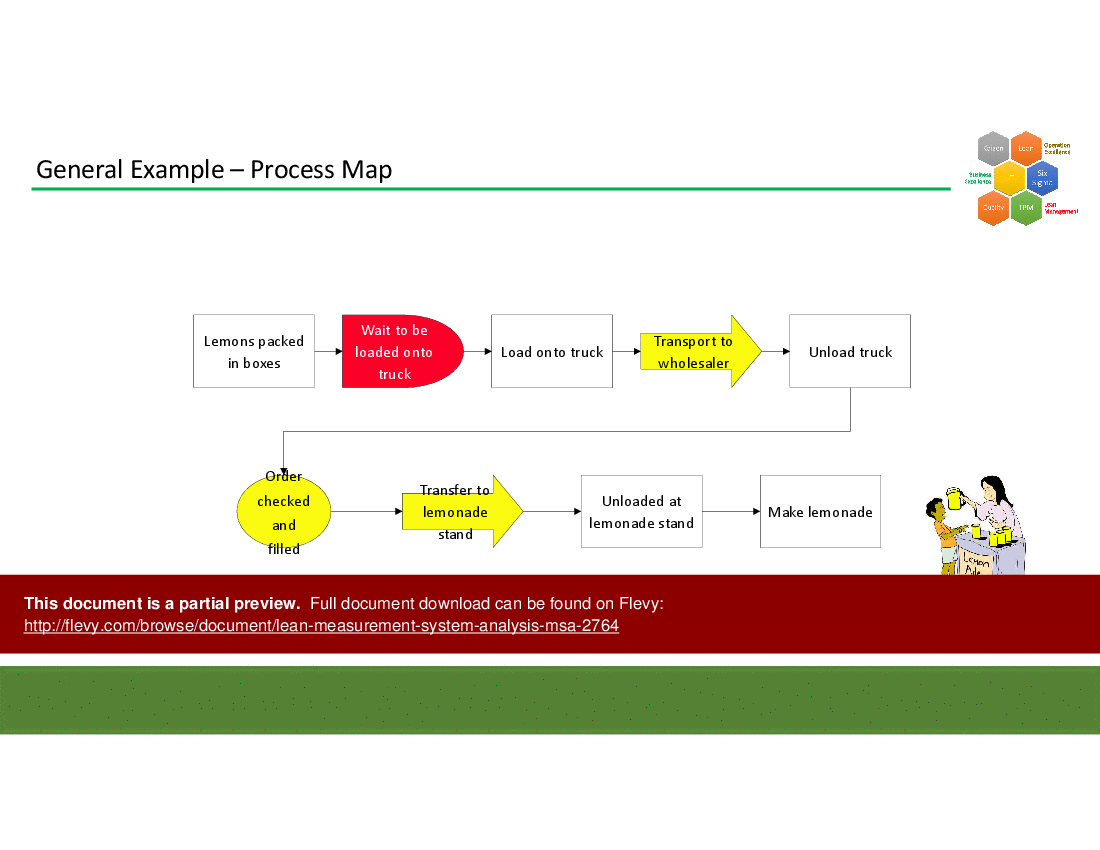
• Examples of process maps showcasing standardized symbols and formats.
• Visual representation of common sources of variation impacting measurement.
• Detailed breakdown of measurement error components and their implications.
• Graphical outputs from MSA demonstrating analysis results and recommendations.
Potential Workshop Agenda
Introduction to Measurement Systems (60 minutes)
• Overview of MSA concepts and importance in Lean operations.
• Discussion on the role of measurement in quality management.
Process Mapping Techniques (90 minutes)
• Hands-on session to create SIPOC diagrams.
• Group activity to develop process maps for specific workflows.
Data Collection Strategies (60 minutes)
• Workshop on designing effective data collection plans.
• Review of common pitfalls in data collection and how to avoid them.
Measurement System Analysis (90 minutes)
• Interactive session on conducting MSA and interpreting results.
• Case studies to illustrate successful MSA implementations.
Customization Guidance
• Tailor the data collection plan to reflect specific operational metrics and goals.
• Modify process maps to align with unique organizational workflows and terminology.
• Adjust training materials to address the specific needs and knowledge levels of participants.
• Incorporate real-world examples relevant to the audience's industry for enhanced engagement.
Secondary Topics Covered
• Continuous improvement methodologies related to Lean and Six Sigma.
• The role of quality management in operational excellence.
• Best practices for training teams on measurement systems.
• Advanced statistical techniques for analyzing measurement data.
• Case studies of successful MSA implementations in various industries.
Topic FAQ
Document FAQ
These are questions addressed within this presentation.
What is Measurement System Analysis (MSA)?
MSA is a quantitative evaluation of the tools and processes used in making data observations, ensuring the accuracy and reliability of collected data.
Why is process mapping important?
Process mapping provides a visual representation of workflows, helping teams identify inefficiencies, redundancies, and areas for improvement.
How do I develop a data collection plan?
A data collection plan should document what data will be collected, why it is needed, who is responsible, how it will be collected, when it will be collected, and where it will be collected.
What are common sources of variation in measurement?
Common sources of variation include machines, materials, methods, measurement techniques, environmental factors, and human error.
How can I ensure the accuracy of my measurement system?
Regular calibration, training for operators, and adherence to standardized procedures can help maintain measurement accuracy.
What is the difference between common cause and special cause variation?
Common cause variation is inherent to the process and predictable, while special cause variation is due to specific, identifiable factors that are not part of the normal process.
How do I interpret the results of a Measurement System Analysis?
Results should be analyzed to identify areas of improvement, assess measurement reliability, and determine the impact of measurement errors on overall process performance.
What tools can assist in conducting MSA?
Statistical software like Minitab can facilitate data analysis and provide graphical outputs for better interpretation of measurement system performance.
Glossary
• MSA - Measurement System Analysis
• SIPOC - Suppliers, Inputs, Process, Outputs, Customers
• CTQ - Critical to Quality
• Variation - Differences in measurement outcomes
• Calibration - Process of adjusting measurement tools for accuracy
• Repeatability - Consistency of measurements under identical conditions
• Reproducibility - Consistency of measurements across different conditions
• Common Cause Variation - Natural variation inherent to a process
• Special Cause Variation - Variation due to specific, identifiable factors
• Data Collection Plan - Strategy for gathering data effectively
• Process Mapping - Visual representation of workflows and processes
• Capability Analysis - Assessment of a process's ability to produce desired outcomes
• Measurement Error - Deviation of a measured value from the true value
• Lean - Methodology focused on minimizing waste and maximizing value
• Six Sigma - Data-driven approach for eliminating defects and improving quality
• JIT - Just-In-Time production strategy to reduce inventory costs
• TPM - Total Productive Maintenance aimed at improving equipment reliability
• Kaizen - Continuous improvement philosophy in operations.
Source: Best Practices in MSA PowerPoint Slides: Lean Measurement System Analysis (MSA) PowerPoint (PPTX) Presentation Slide Deck, Nishil Josh
This document is available as part of the following discounted bundle(s):
Save %!
Quality Management Tools
This bundle contains 6 total documents. See all the documents to the right.
Save %!
Lean Six Sigma Problem Solving Tools
This bundle contains 8 total documents. See all the documents to the right.
|
Receive our FREE presentation on Operational Excellence
This 50-slide presentation provides a high-level introduction to the 4 Building Blocks of Operational Excellence. Achieving OpEx requires the implementation of a Business Execution System that integrates these 4 building blocks. |