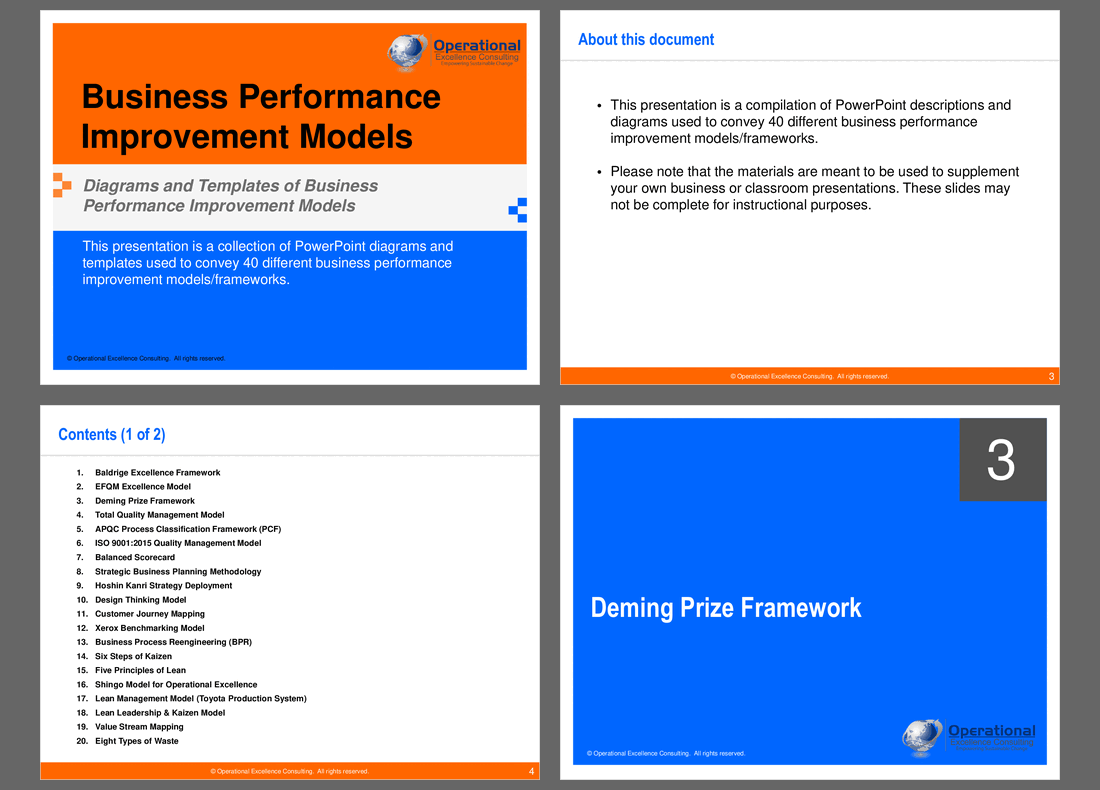

This presentation is a collection of PowerPoint diagrams and templates used to convey 40 different business performance improvement models/frameworks. (Please note that these are diagrams and charts that are to be used in your own business or classroom presentations. These are not instructional slides.)

INCLUDED MODELS/FRAMEWORKS:
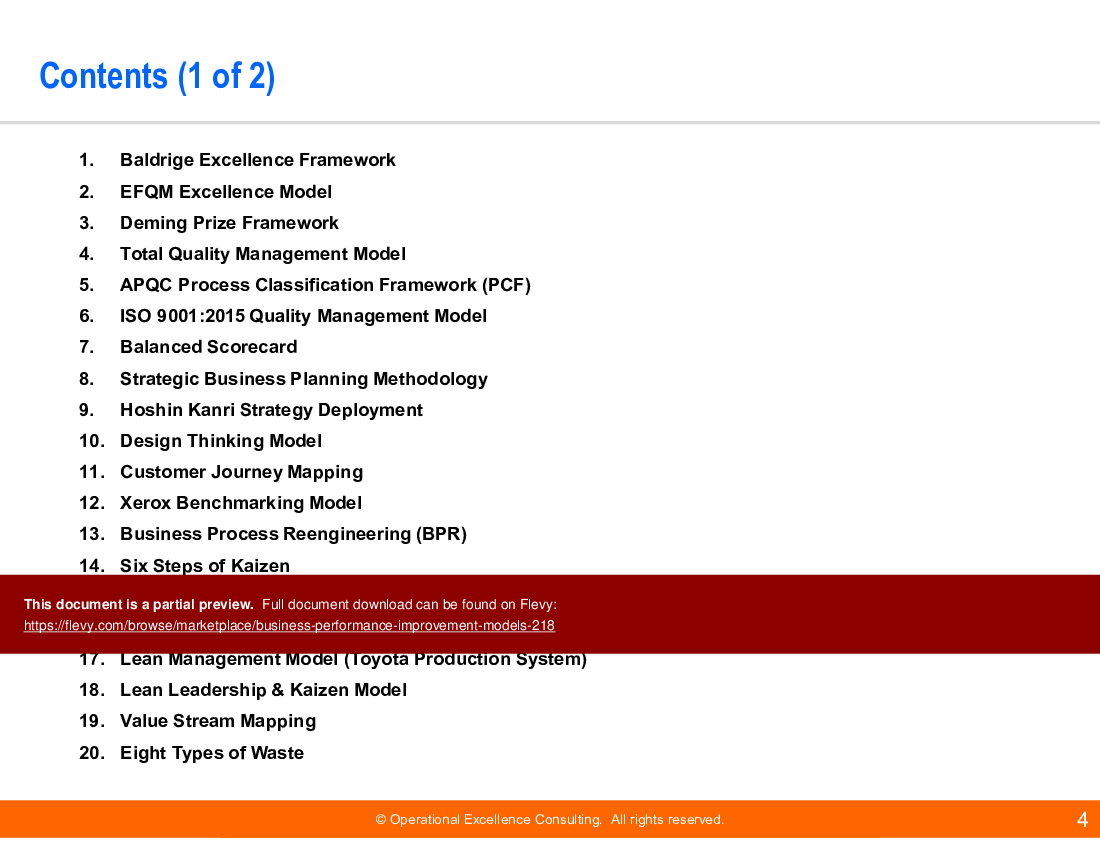
1. Baldrige Excellence Framework
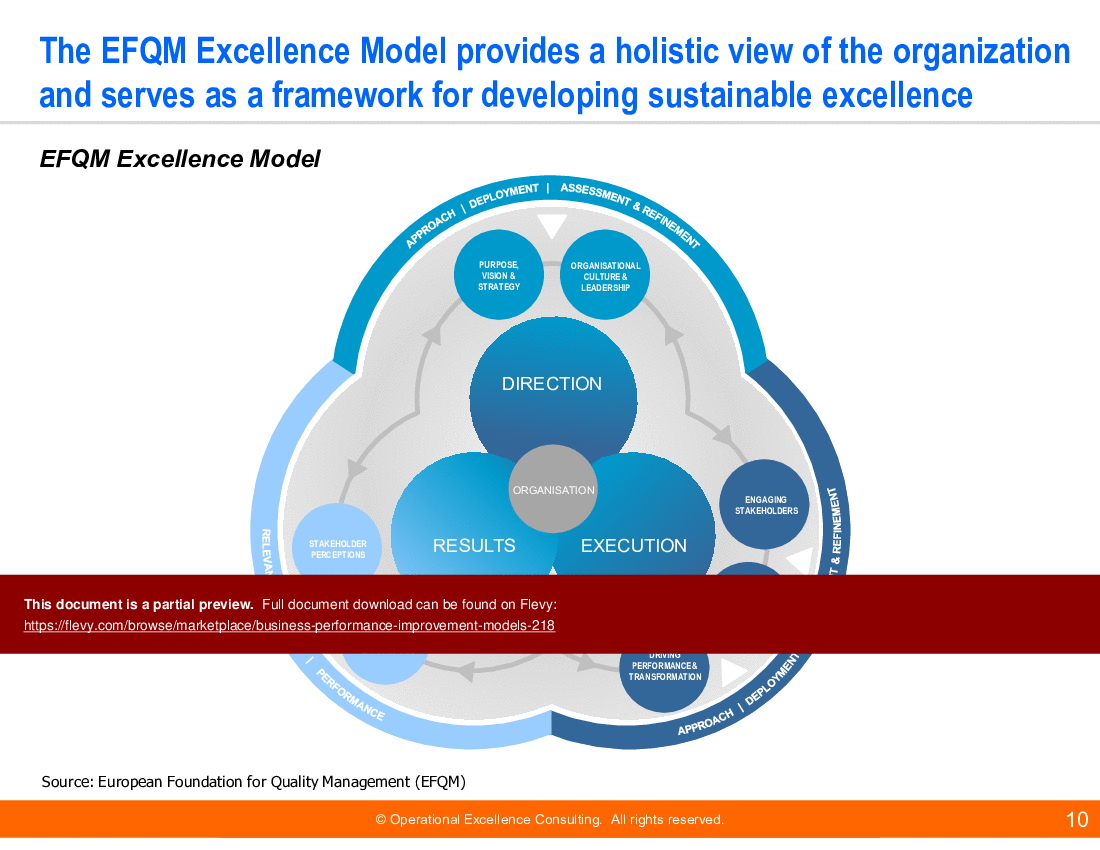
2. EFQM Excellence Model
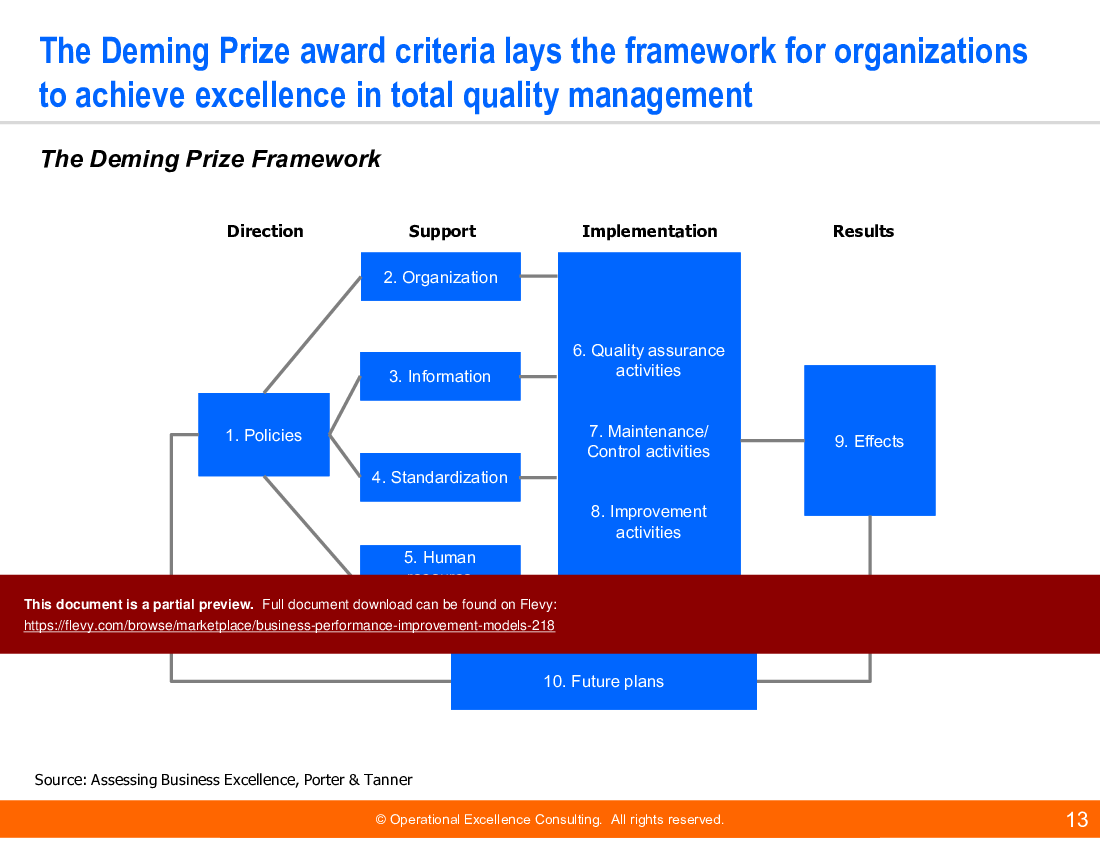
3. Deming Prize Framework
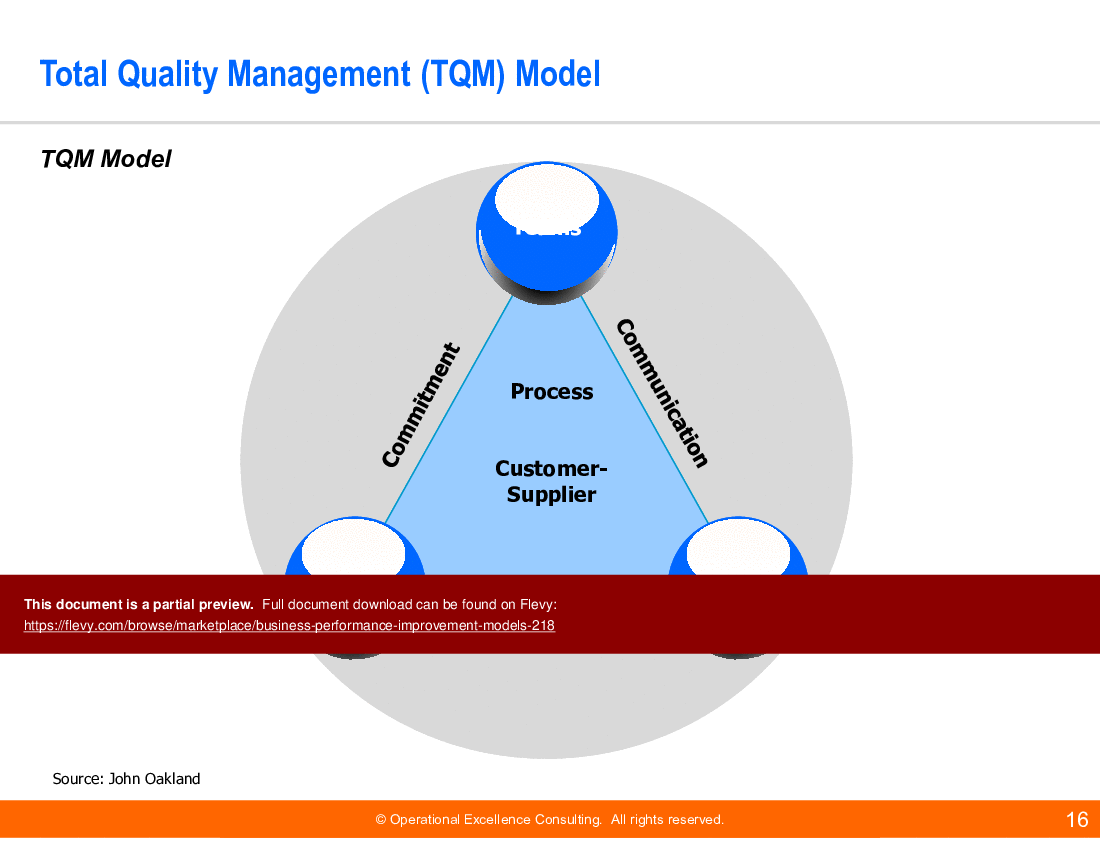
4. Total Quality Management Model
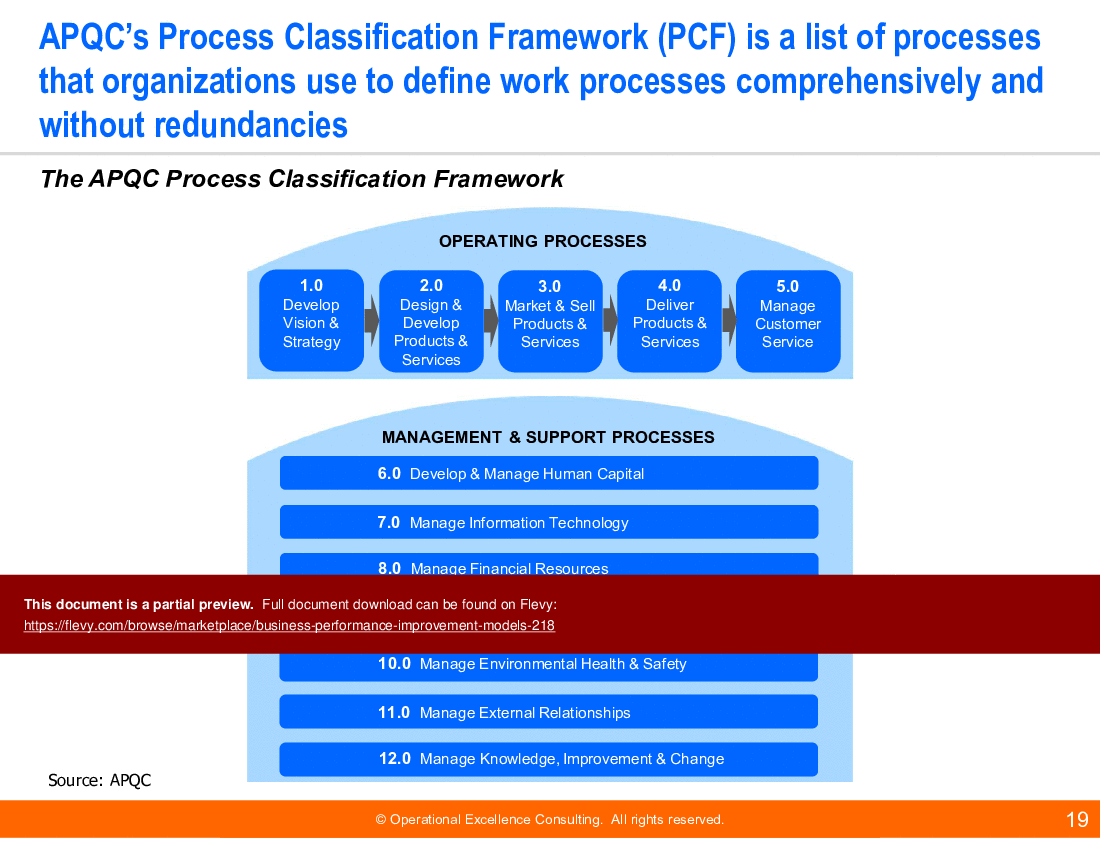
5. APQC Process Classification Framework (PCF)
6. ISO 9001:2015 Quality Management Systems
7. Balanced Scorecard
8. Strategic Business Planning Methodology
9. Hoshin Kanri Strategy Deployment
10. Design Thinking Model
11. Customer Journey Mapping
12. Xerox Benchmarking Model
13. Business Process Reengineering (BPR)
14. Six Steps of Kaizen
15. Five Principles of Lean
16. Shingo Model for Operational Excellence
17. Lean Management Model (Toyota Production System)
18. Lean Leadership & Kaizen Model
19. Value Stream Mapping
20. Eight Wastes of Lean
21. Lean Levers for Waste Elimination
22. House of Gemba
23. Gemba Framework
24. 5S Principles
25. Total Productive Maintenance (TPM)
26. Heinrich's Law on Safety
27. Deming Cycle
28. PDCA Problem Solving Process
29. 8D (Eight Disciplines) Problem Solving Process
30. Mistake Proofing Process
31. Cause & Effect Diagram
32. Six Sigma
33. Cost of Quality Model
34. Training Within Industry (TWI)
35. PACE Prioritization Matrix
36. Payoff Evaluation Matrix
37. Kano Model
38. RATER Model
39. ADKAR Change Model
40. Kotter's Eight Phases of Change
This comprehensive collection of diagrams and templates is designed for professionals seeking to implement robust business performance improvement strategies. The slides offer a visual representation of key models, facilitating easy integration into your presentations. Each model is meticulously crafted to provide clear, actionable insights.
The document includes detailed frameworks like the Baldrige Excellence Framework and the EFQM Excellence Model, which offer holistic views on organizational performance. The Deming Prize Framework and Total Quality Management Model emphasize quality assurance and continuous improvement. The APQC Process Classification Framework and ISO 9001:2015 Quality Management Systems provide structured approaches to process management. The Balanced Scorecard and Strategic Business Planning Methodology focus on aligning business activities with strategic objectives.
Got a question about the product? Email us at support@flevy.com or ask the author directly by using the "Ask the Author a Question" form. If you cannot view the preview above this document description, go here to view the large preview instead.
Executive Summary
The Business Performance Improvement Models presentation is an extensive collection of PowerPoint diagrams and templates designed to convey 40 distinct business performance improvement frameworks. Created by Operational Excellence Consulting, this resource equips organizations with the tools necessary to enhance operational efficiency and drive transformative change. Users can leverage proven methodologies such as the Baldrige Excellence Framework, Lean Management, and Six Sigma to streamline processes, optimize performance, and achieve sustainable excellence.
Who This Is For and When to Use
• Corporate executives seeking to implement performance improvement strategies
• Business consultants looking for frameworks to guide client engagements
• Operational leaders aiming to enhance process efficiency
• Training facilitators in need of instructional materials for workshops
Best-fit moments to use this deck:
• During strategic planning sessions to identify improvement opportunities
• In training programs focused on operational excellence methodologies
• When conducting workshops on process optimization and performance management
• For presentations aimed at aligning teams on improvement initiatives
Learning Objectives
• Define key business performance improvement models and their applications
• Build a comprehensive understanding of frameworks like Lean, Six Sigma, and TQM
• Establish a roadmap for implementing performance improvement initiatives
• Analyze current processes using benchmarking and value stream mapping
• Develop customized action plans based on specific organizational needs
• Evaluate the effectiveness of implemented frameworks through measurable outcomes
Table of Contents
• Baldrige Excellence Framework (page 7)
• EFQM Excellence Model (page 10)
• Deming Prize Framework (page 13)
• Total Quality Management Model (page 16)
• APQC Process Classification Framework (PCF) (page 19)
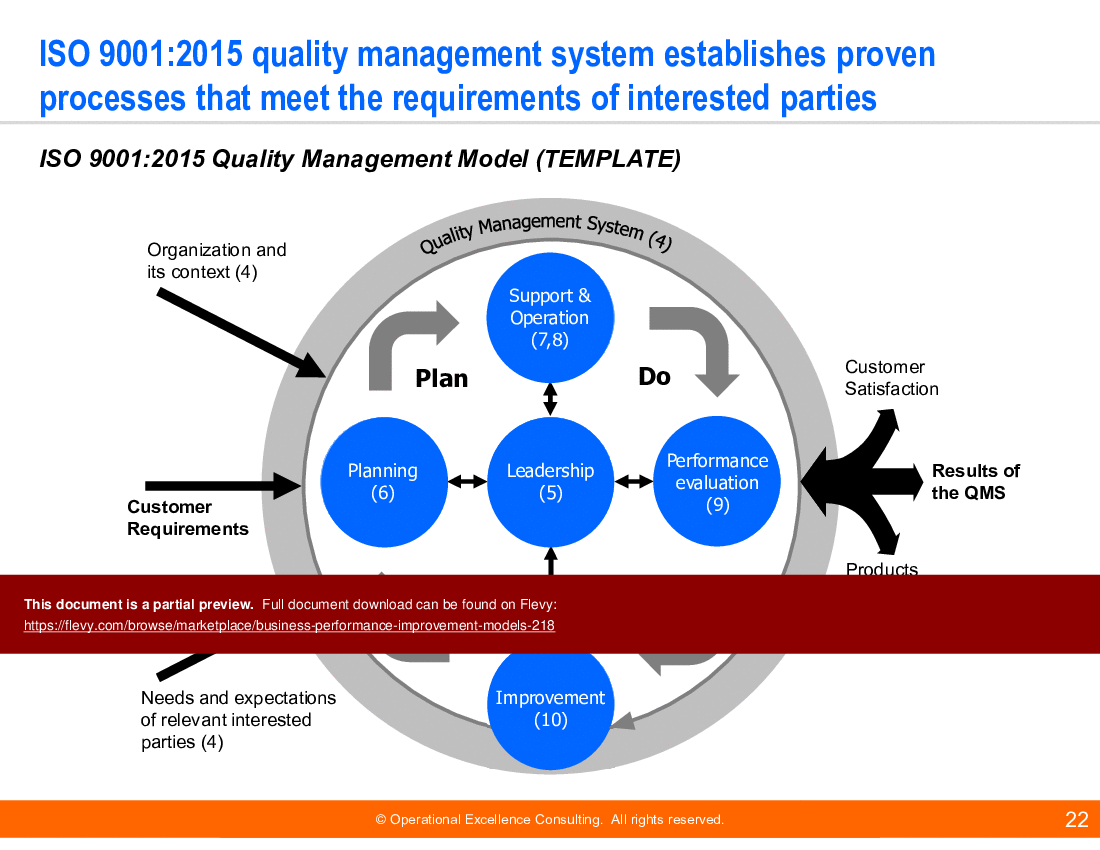
• ISO 9001:2015 Quality Management Model (page 22)
• Balanced Scorecard (page 25)
• Strategic Business Planning Methodology (page 31)
• Hoshin Kanri Strategy Deployment (page 37)
• Design Thinking Model (page 42)
• Customer Journey Mapping (page 48)
• Xerox Benchmarking Model (page 53)
• Business Process Reengineering (BPR) (page 56)
• Six Steps of Kaizen (page 60)
• Five Principles of Lean (page 65)
• Shingo Model for Operational Excellence (page 68)
• Lean Management Model (Toyota Production System) (page 74)
• Lean Leadership & Kaizen Model (page 79)
• Value Stream Mapping (page 82)
• Eight Types of Waste (page 88)
• Lean Levers for Waste Elimination (page 91)
• House of Gemba (page 94)
• Gemba Framework (page 97)
• 5S Principles (page 100)
• Cause & Effect Diagram (page 104)
• Total Productive Maintenance (TPM) (page 109)
• Heinrich’s Law on Safety (page 114)
• The Deming Cycle (page 117)
• PDCA Problem Solving Process (page 120)
• 8D (Eight Disciplines) Problem Solving Process (page 123)
• Mistake Proofing Process (page 126)
• Six Sigma (page 129)
• Training Within Industry (TWI) (page 139)
• Cost of Quality Model (page 145)
• PACE Prioritization Matrix (page 153)
• Payoff Evaluation Matrix (page 156)
• RATER Model (page 159)
• Kano Model (page 163)
• ADKAR Change Model (page 168)
• Kotter’s Eight Phases of Change (page 176)
Primary Topics Covered
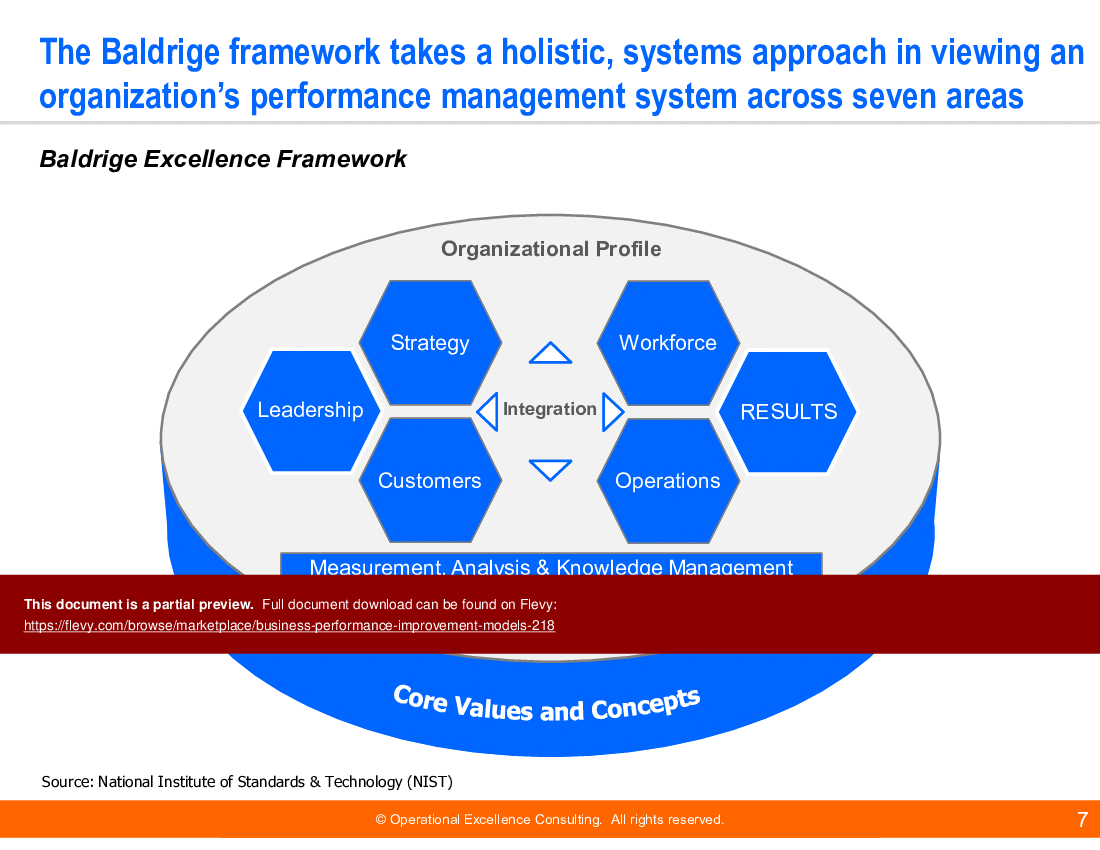
• Baldrige Excellence Framework - A holistic approach to performance management across leadership, strategy, and results.
• EFQM Excellence Model - A framework for developing sustainable excellence through stakeholder engagement.
• Deming Prize Framework - Criteria for achieving excellence in total quality management.
• Total Quality Management Model - Focuses on customer-supplier relationships and continuous improvement.
• APQC Process Classification Framework - A comprehensive list of processes to define work without redundancies.
• Balanced Scorecard - Aligns organizational activities to the vision and strategy through performance metrics.
• Lean Management Model - A system that emphasizes waste elimination and continuous improvement.
• Six Sigma - A data-driven approach to process improvement that reduces variation and enhances quality.
Deliverables, Templates, and Tools
• Framework diagrams for Baldrige, EFQM, and Deming Prize
• Templates for Balanced Scorecard and Value Stream Mapping
• Process classification models for APQC and ISO 9001:2015
• Problem-solving templates for PDCA and 8D methodologies
• Customer Journey Mapping tools for visualizing user experiences
• Kaizen and Lean templates for continuous improvement initiatives
Slide Highlights
• Overview of the Baldrige Excellence Framework emphasizing organizational performance areas.
• Visual representation of the EFQM Excellence Model illustrating stakeholder engagement.
• Detailed breakdown of the Deming Prize Framework criteria for total quality management.
• Comprehensive diagram of the Balanced Scorecard linking financial and non-financial outcomes.
• Step-by-step guide for the PDCA problem-solving process to enhance operational efficiency.
Potential Workshop Agenda
Introduction to Business Performance Improvement Models (30 minutes)
• Overview of frameworks and their applications
• Discussion on the importance of performance improvement
Framework Deep Dive (90 minutes)
• Explore key models: Lean, Six Sigma, TQM
• Group activities to analyze case studies
Implementation Strategies (60 minutes)
• Develop action plans using templates
• Identify metrics for measuring success
Wrap-Up and Q&A (30 minutes)
• Address participant questions
• Discuss next steps for applying frameworks in their organizations
Customization Guidance
• Tailor templates to reflect specific organizational terminology and metrics.
• Adjust case studies and examples to align with industry-specific challenges.
• Incorporate organizational goals into action plans and performance metrics.
Secondary Topics Covered
• Lean Levers for Waste Elimination
• 5S Principles for workplace organization
• Cause & Effect Diagrams for root cause analysis
• Total Productive Maintenance (TPM) for equipment effectiveness
• Heinrich’s Law on Safety for risk management
FAQ
What are the primary frameworks included in this presentation?
The presentation includes frameworks such as the Baldrige Excellence Framework, EFQM Excellence Model, Lean Management, and Six Sigma, among others.
How can these models be applied in my organization?
These models can be customized to fit your organization's specific needs, helping to streamline processes and improve overall performance.
Are there templates available for each model?
Yes, the presentation includes various templates and diagrams that can be utilized for implementation and training purposes.
What is the expected outcome of using these frameworks?
The expected outcome is enhanced operational efficiency, improved quality, and a culture of continuous improvement within the organization.
Can these models be used for training purposes?
Absolutely, the materials are designed to supplement training sessions and workshops focused on business performance improvement.
How do I customize the templates for my organization?
You can modify the templates to reflect your organization's specific terminology, metrics, and strategic goals.
Is there a specific order to implement these models?
While there is no strict order, it is recommended to start with foundational models like TQM and then build upon them with Lean and Six Sigma methodologies.
What resources are available for further learning?
Additional resources and training materials can be found on the Operational Excellence Consulting website.
Glossary
• Baldrige Excellence Framework - A model for performance excellence in organizations.
• Lean Management - A systematic method for waste minimization.
• Six Sigma - A set of techniques for process improvement.
• TQM - Total Quality Management, a management approach for long-term success.
• APQC - American Productivity & Quality Center, a resource for process classification.
• PDCA - Plan-Do-Check-Act, a cyclical model for continuous improvement.
• Kaizen - A Japanese term meaning "change for better," focusing on continuous improvement.
• Value Stream Mapping - A visual tool to analyze the flow of materials and information.
• 5S - A methodology for organizing and managing the workspace.
• Gemba - The real place where work is done, emphasizing direct observation.
• DMAIC - Define, Measure, Analyze, Improve, Control; a Six Sigma process improvement framework.
• Kano Model - A framework for understanding customer satisfaction and requirements.
• ADKAR - A change management model focusing on Awareness, Desire, Knowledge, Ability, and Reinforcement.
• Kotter’s 8-Step Process - A framework for implementing successful organizational change.
• Mistake Proofing - Techniques to prevent errors in processes.
• Cost of Quality - The total costs associated with ensuring good quality.
• RATER Model - A tool for assessing service quality based on 5 dimensions.
• Xerox Benchmarking Model - A method for identifying best practices through comparison.
• BPR - Business Process Reengineering, a strategy for redesigning business processes.
• Total Productive Maintenance (TPM) - A holistic approach to equipment maintenance.
Source: Best Practices in Business Framework PowerPoint Diagrams, Process Improvement PowerPoint Slides: Business Performance Improvement Models PowerPoint (PPTX) Presentation Slide Deck, Operational Excellence Consulting
|
Receive our FREE Primer on Lean Management
This 32-page presentation from Operational Excellence Consulting explains the Lean Management philosophy, based on the Toyota Production System (TPS). Learn to eliminate waste. |