Your AI assistant becomes a Flevy-powered consultant, with direct access to our full library of frameworks, templates, and case studies. Free to connect. No account, sign-in, or API key required.
STEP 1 · CHOOSE YOUR ASSISTANT
STEP 2 · CONNECT
1
No copying needed. Flevy is in the official Claude Connectors Directory.
2
Click the button below, then click Connect on the Flevy listing.
Designed by a firm of ex-consultants from McKinsey, E&Y, and Bearing Point, this presentation explains Kaplan and Norton's Balanced Scorecard, a classic framework on strategic management.
Editor Summary
34-slide Balanced Scorecard PowerPoint presentation (PPTX) by PPT Lab explaining Kaplan and Norton’s Balanced Scorecard as a strategy performance management tool.
Read moreCovers the 4 perspectives (Financial, Customer, Internal Business Processes, Learning & Growth), the 4 management processes (Translating the Vision; Communicating & Linking; Business Planning; Feedback & Learning), and the strategy map concept. Includes instructional slides, examples, and editable templates for a strategy map, implementation timeline, and personal scorecard. Developed by a firm of ex-consultants from McKinsey, E&Y, and BearingPoint; sold as a digital download on Flevy.
Use this Balanced Scorecard resource when an organization needs to translate strategy into measurable objectives, align day-to-day activities with long-term goals, and track non-financial drivers alongside financial results.
Strategy leaders building a strategy map that links strategic objectives in cause-and-effect relationships across the 4 perspectives.
Business unit managers converting corporate objectives into departmental KPIs and a personal scorecard for team members.
Performance management teams designing an implementation timeline and reporting structure for regular feedback and learning cycles.
The four-process approach (Translating the Vision through Feedback and Learning) follows structured, metrics-driven strategic planning practices associated with Kaplan & Norton and consulting work at McKinsey, E&Y, and BearingPoint.
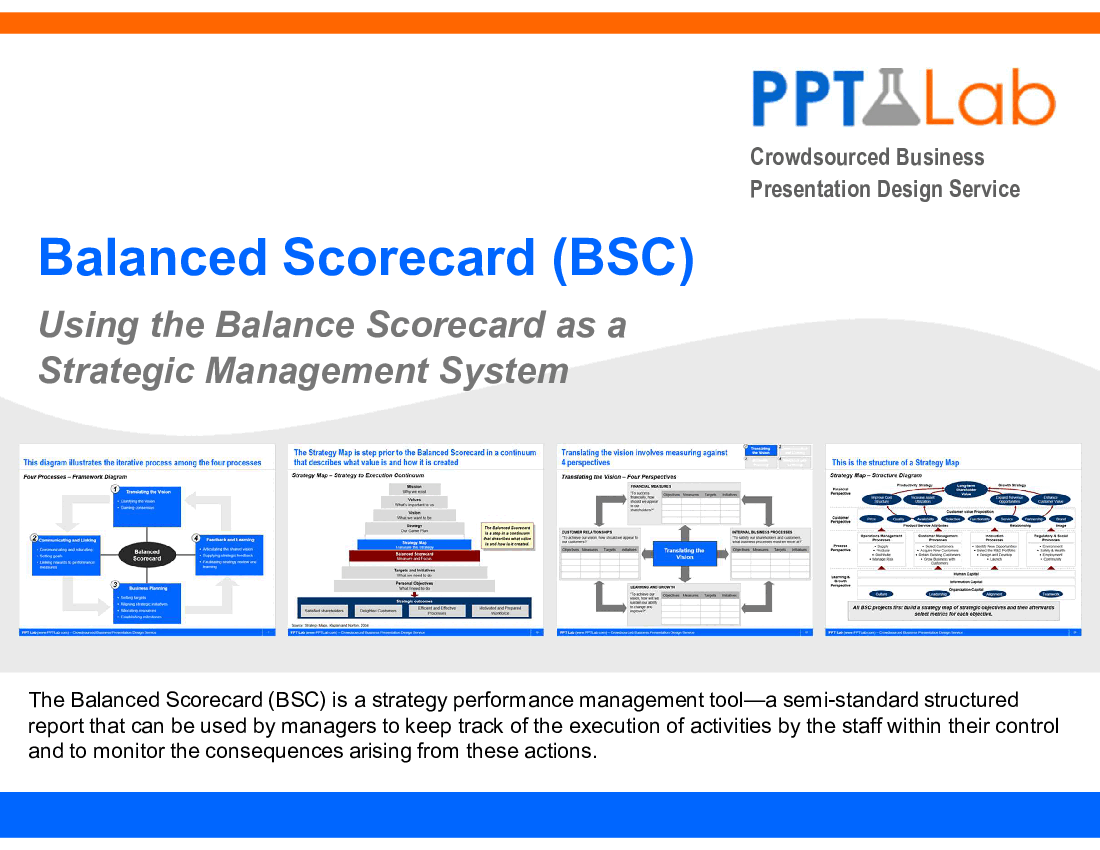
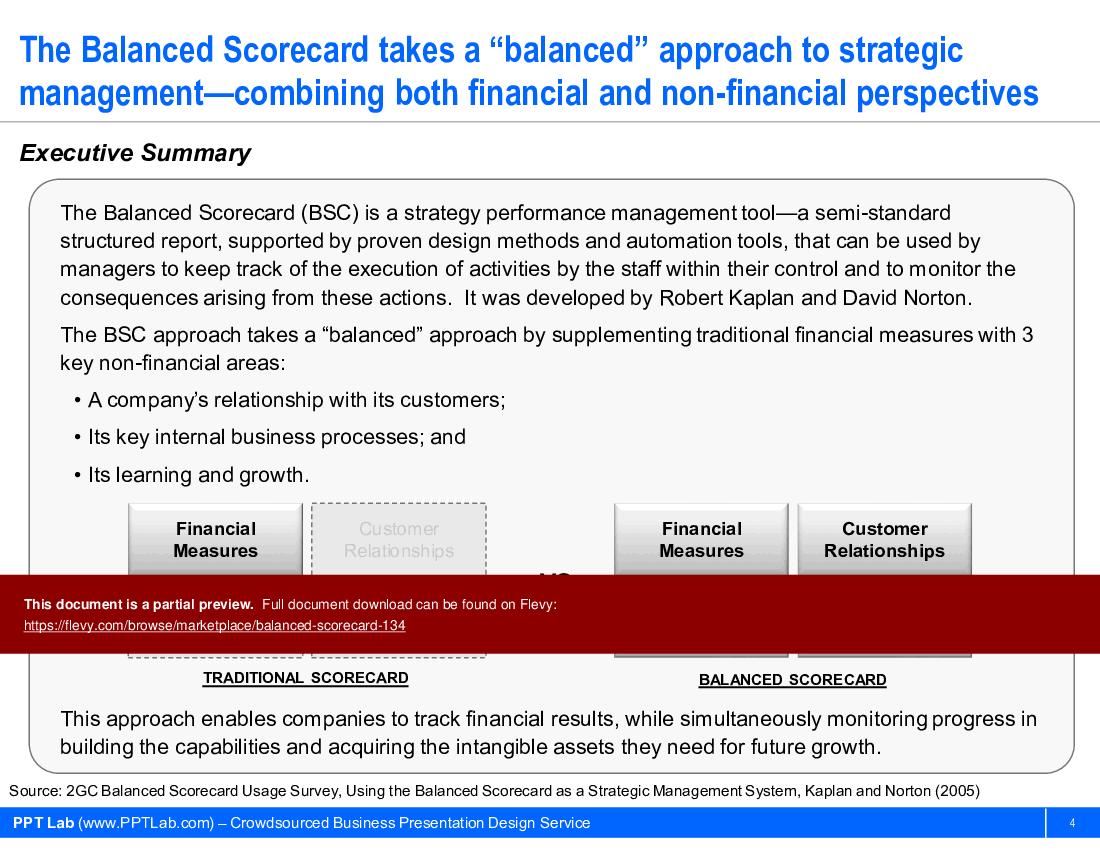
The Balanced Scorecard is a strategy performance management tool—a semi-standard structured report, supported by proven design methods and automation tools, that can be used by managers to keep track of the execution of activities by the staff within their control and to monitor the consequences arising from these actions. It was developed by Robert Kaplan and David Norton.
The BSC approach takes a "balanced" approach by supplementing traditional financial measures with 3 key non-financial areas:
• A company's relationship with its customers
• Its key internal business processes
• Its learning and growth
This 30+ slide Balanced Scorecard PowerPoint explains the BSC business framework and how to use it as a strategic management system. This Balanced Scorecard presentation is largely comprised of instructional slides explaining the methodology. Some of the topics covered include:
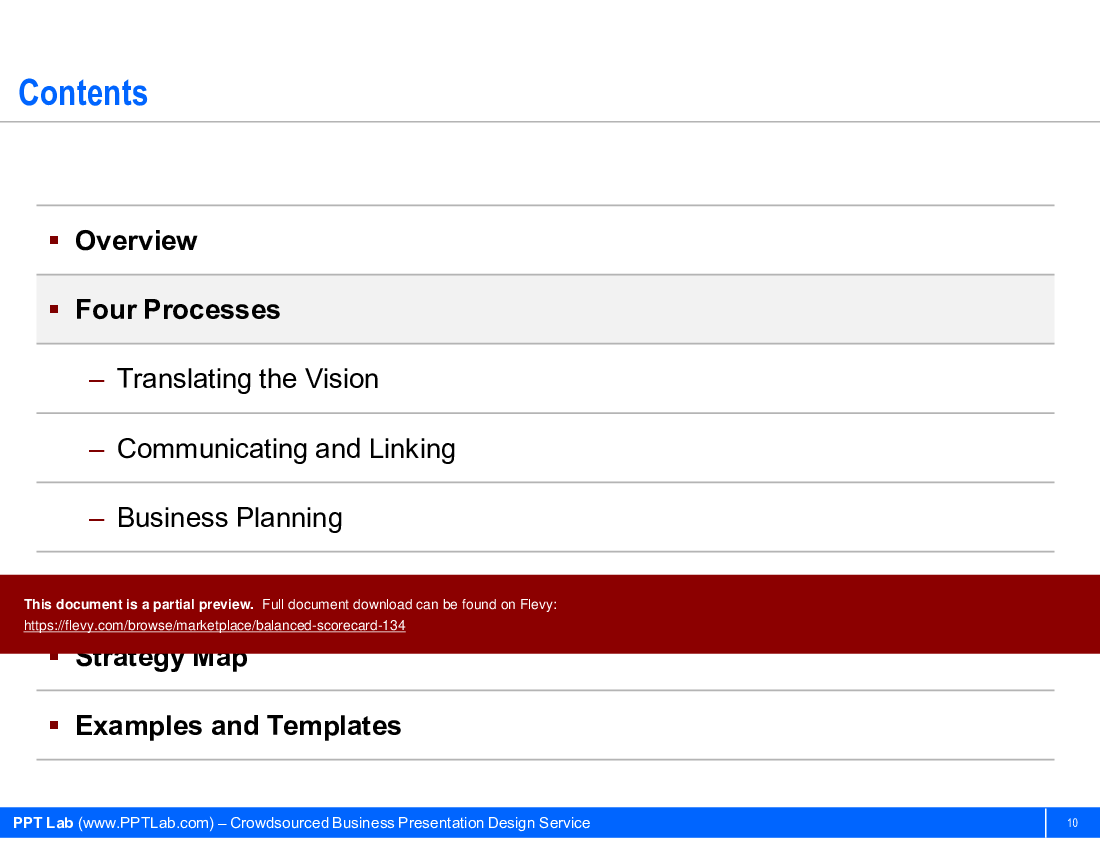
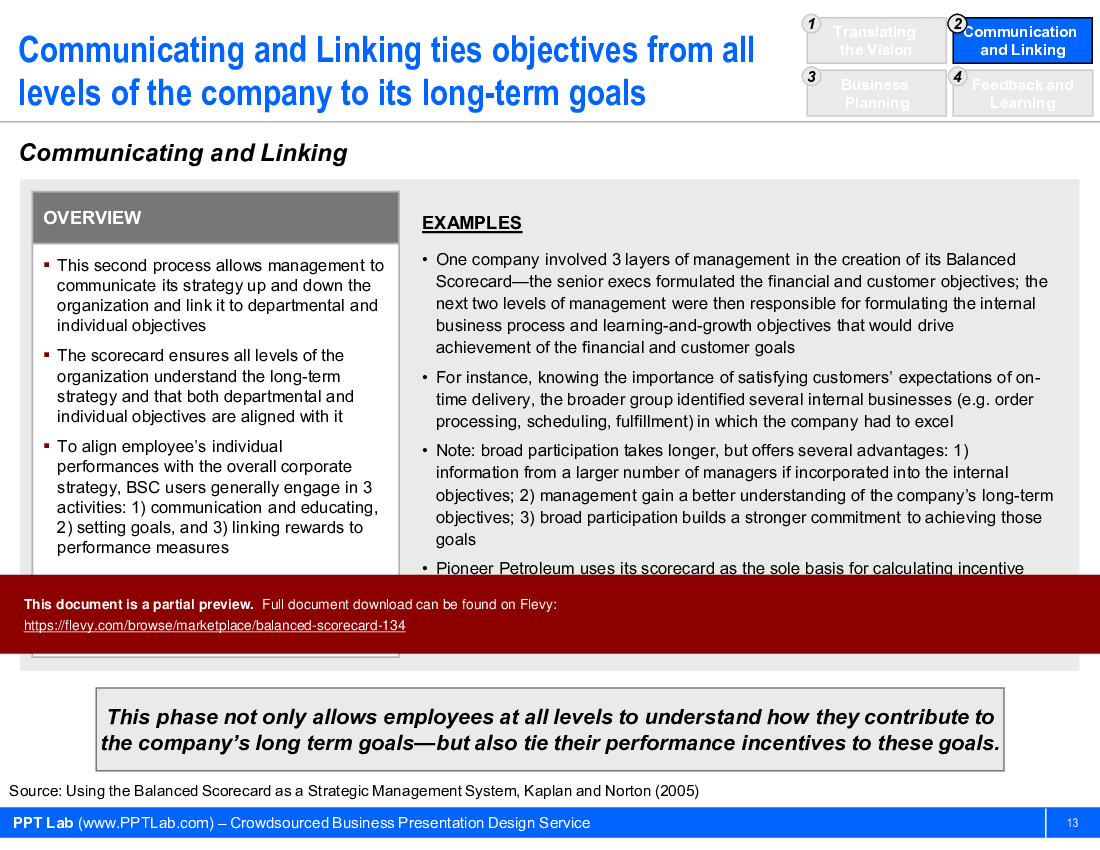
Four Processes – The Balanced Scorecard relies on 4 key management processes to tie short-term activities with long-term objectives: Translating the Vision, Communicating and Linking, Business Planning, and Feedback and Learning.
Four Perspectives – The BSC approach evaluates and measures an organization’s performance across 4 perspectives: Financial Measures, Customer Relationships, Internal Business Processes, and Learning & Growth.
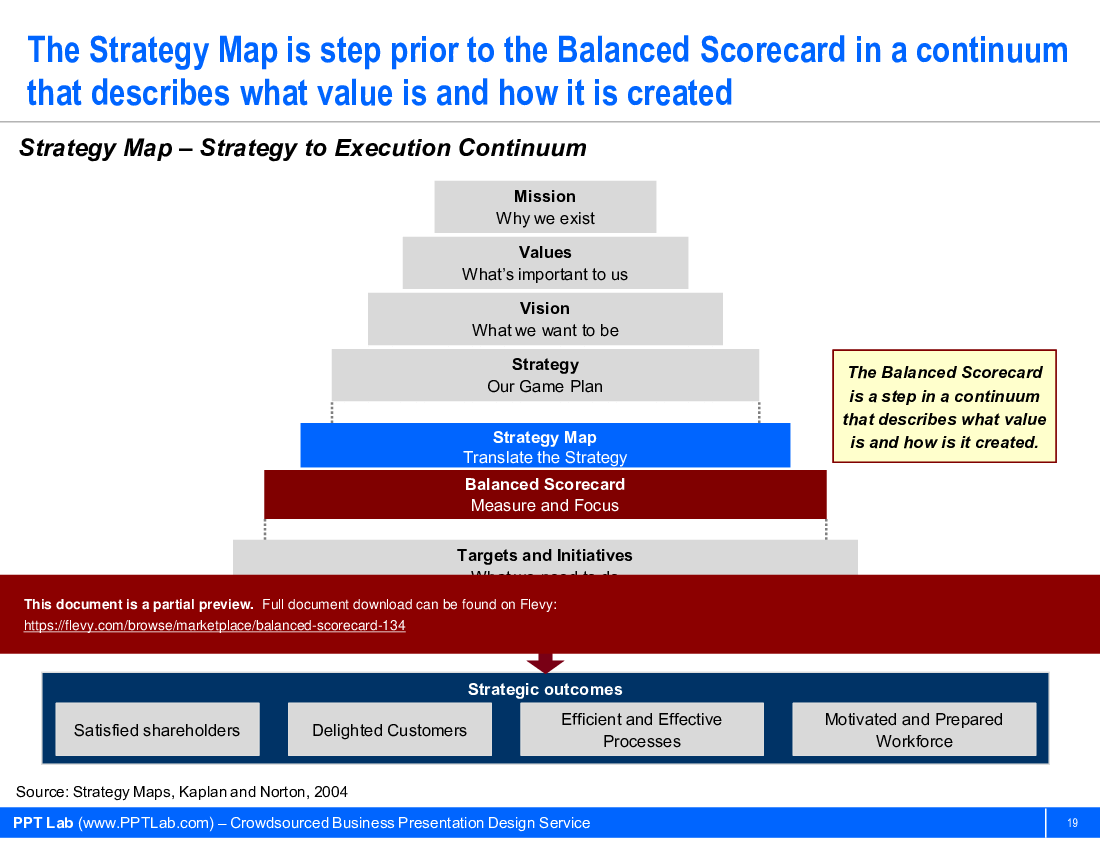
Strategy Map – The strategy map depicts the primary strategic goals being pursued by an organization. It is a strategic part of the BSC framework to describe strategies for value creation. More specifically, the strategy map captures how an organization creates value by connecting strategic objectives in explicitly cause-and-effect relationship with each other in the 4 BSC perspectives.
Additional topics discussed include strategic learning, BSC strategic management processes, personal BSC scorecard, among others.
Furthermore, this Balanced Scorecard PPT includes a section of BSC examples and templates. The Balanced Scorecard templates (PPT) depict the BSC implementation timeline, personal scorecard, and strategy map structure. You can easily customize and integrated these BSC slide templates into your own business presentations.
The document also details the iterative process among the four key management processes, ensuring alignment from vision to execution. It provides practical examples and templates to facilitate immediate application in your organization.
Got a question about the product? Email us at support@flevy.com or ask the author directly by using the "Ask the Author a Question" form. If you cannot view the preview above this document description, go here to view the large preview instead.
TOPIC FAQ
What are the core components of the Balanced Scorecard methodology?
The Balanced Scorecard is a strategy performance management tool that supplements financial measures with 3 non-financial areas: customer relationships, internal business processes, and learning & growth. It uses a strategy map to show cause-and-effect links and relies on 4 management processes for alignment, i.e., 4 perspectives and 4 key processes.
How does a strategy map create value in a Balanced Scorecard?
A strategy map captures an organization’s primary strategic goals and depicts how value is created by linking strategic objectives in explicit cause-and-effect relationships across the Balanced Scorecard’s 4 perspectives. Strategy maps are a strategic element used to describe and communicate how objectives connect to each other, often as a visual strategy map structure.
How can I link corporate vision to operational activities using the BSC?
The BSC links vision to execution through 4 management processes: Translating the Vision, Communicating & Linking, Business Planning, and Feedback & Learning. These iterative processes convert high-level vision into measurable objectives, KPIs, and reporting mechanisms, ensuring alignment from vision to daily activities via the 4 management processes.
What should I look for when choosing a Balanced Scorecard template or slide pack?
Look for editable templates that include a strategy map structure, an implementation timeline, and a personal scorecard so you can map objectives, schedule rollout, and assign individual metrics. Credible authorship and editable PowerPoint formats support integration into presentations; examples include personal scorecard or implementation timeline templates.
How should I think about cost versus value for Balanced Scorecard template packs?
Value typically depends on the depth of instructional content, number of editable templates, and ease of customization. For example, one available option is a 34-slide Balanced Scorecard PowerPoint (PPTX) by PPT Lab sold as a digital download on Flevy, which pairs instructional slides with editable templates.
Can the Balanced Scorecard help set individual performance targets aligned to strategy?
Yes. The BSC approach supports cascading strategic objectives into individual metrics by using personal scorecards that tie employee KPIs to the organization’s strategy map and the 4 perspectives. Practical implementations often include a personal BSC scorecard template for individual alignment.
How can the BSC be applied to align a merged organization’s priorities?
After a merger, use the BSC to define shared strategic objectives, map cause-and-effect relationships across the 4 perspectives, and establish common KPIs. Iterative Feedback and Learning processes help refine measures and align units; strategy maps and 4 perspectives are central to this alignment approach.
In what ways does the Balanced Scorecard differ from traditional financial reporting?
The Balanced Scorecard supplements traditional financial reporting by adding 3 non-financial perspectives—customer relationships, internal business processes, and learning & growth—so managers can monitor drivers of future performance alongside current financial results, emphasizing a balanced view across 3 non-financial areas.
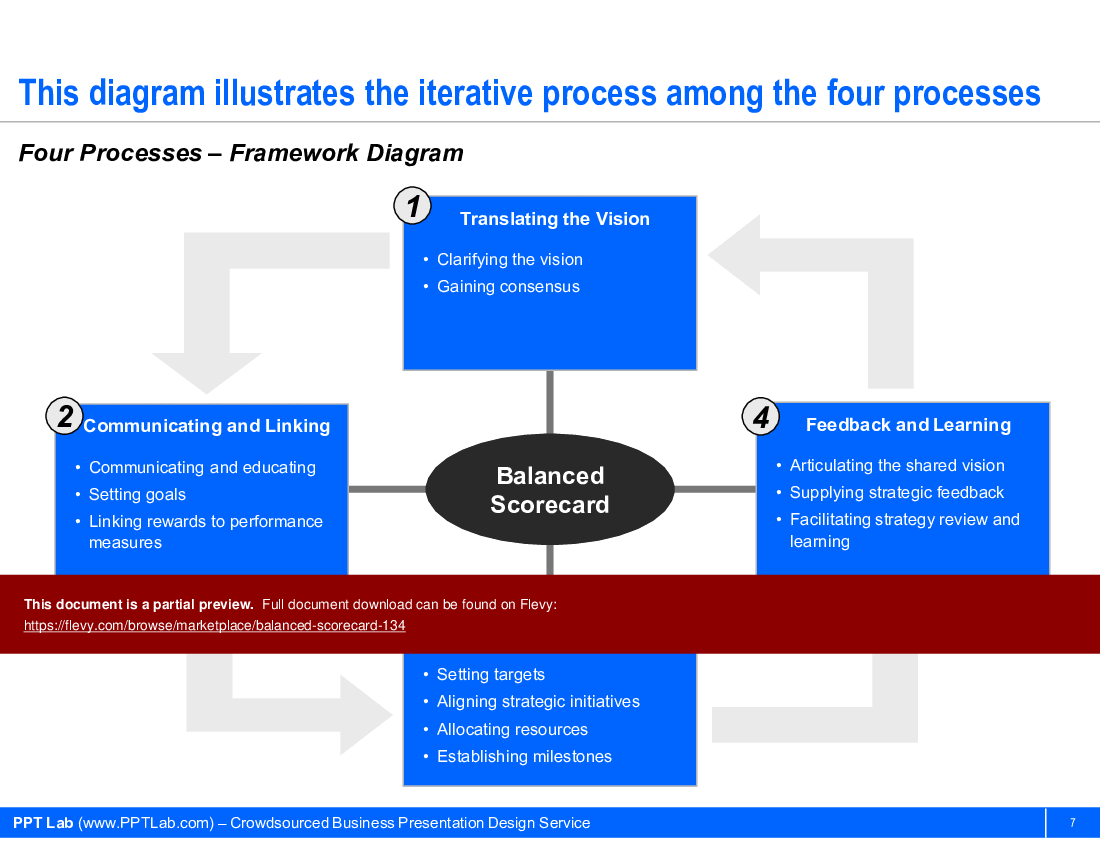
This PPT slide template outlines a framework with 4 interconnected processes for effective strategic management, centered around the Balanced Scorecard. "Translating the Vision" focuses on clarifying the organization's vision and achieving stakeholder consensus, which is essential for alignment. "Communicating and Linking" emphasizes effective communication, educating team members about the vision, setting specific goals, and linking performance measures to rewards, driving engagement and accountability. "Business Planning" involves setting targets and aligning strategic initiatives with resources, ensuring operational feasibility. Finally, "Feedback and Learning" highlights the iterative nature of the framework, involving strategic feedback and ongoing reviews to promote continuous learning and adaptability. These processes collectively enhance alignment with strategic goals and improve organizational performance.
This PPT slide template outlines a framework for translating an organization's vision into actionable measures across 4 key perspectives: Financial Measures, Customer Relationships, Internal Business Processes, and Learning and Growth.
The Financial Measures perspective focuses on presenting the organization to shareholders to achieve financial success, emphasizing financial health and investor confidence through clear objectives and metrics.
Customer Relationships centers on how the organization should engage customers to fulfill its vision, highlighting the need for customer-centric strategies that enhance satisfaction and loyalty.
Internal Business Processes address operational efficiency, questioning which processes must excel to meet shareholder and customer expectations.
Finally, Learning and Growth emphasizes sustaining innovation and adaptability, raising the question of how to maintain a competitive edge through continuous improvement and employee development.
This holistic approach aligns vision with measurable outcomes across business dimensions.
This PPT slide template illustrates a Personal Scorecard with defined corporate objectives, including doubling corporate value within 5 years, achieving a 20% annual earnings increase, and maintaining a return on capital exceeding the cost of capital by 2%. The scorecard measures financial metrics such as earnings, net cash flow, and operating expenses from 2012 to 2016, indicating a growth trajectory. It also addresses production and development costs per barrel, emphasizing operational efficiency. Team and individual measures suggest a tailored approach to performance management, aligning contributions with corporate objectives. This document serves as a tool for implementing a balanced performance management approach that integrates financial success and operational efficiency.
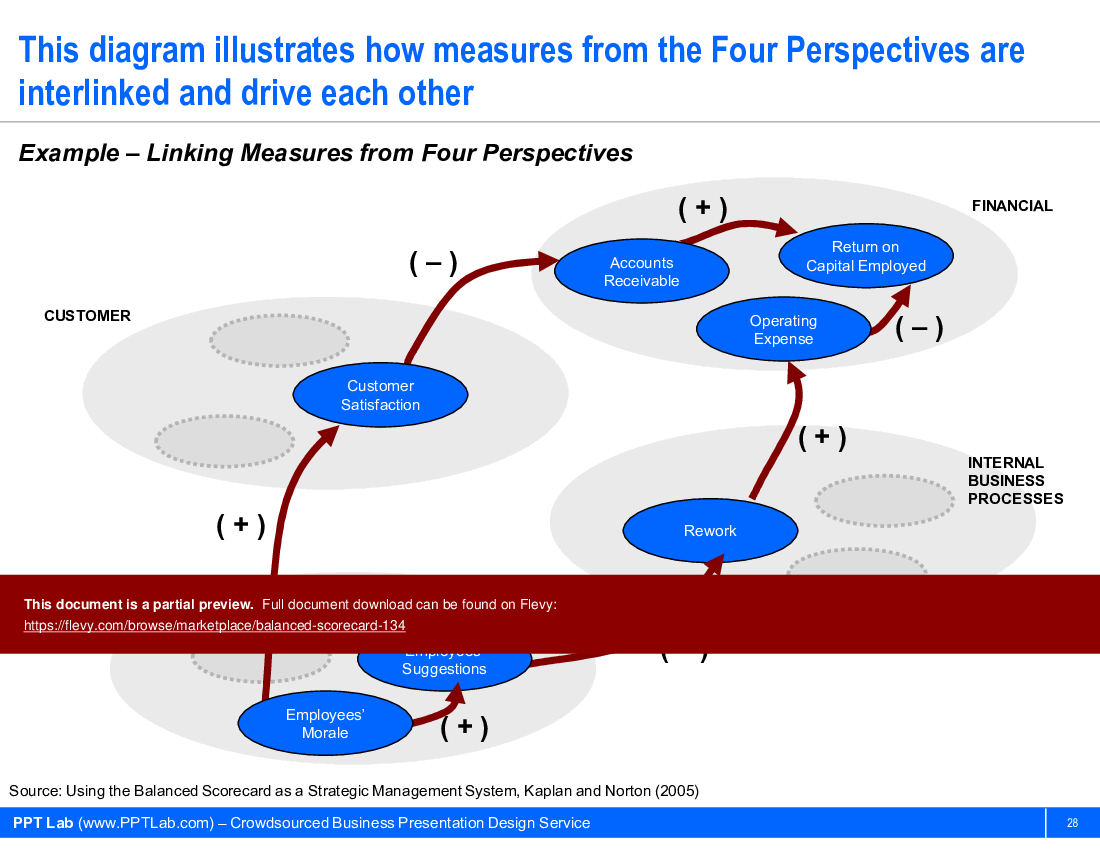
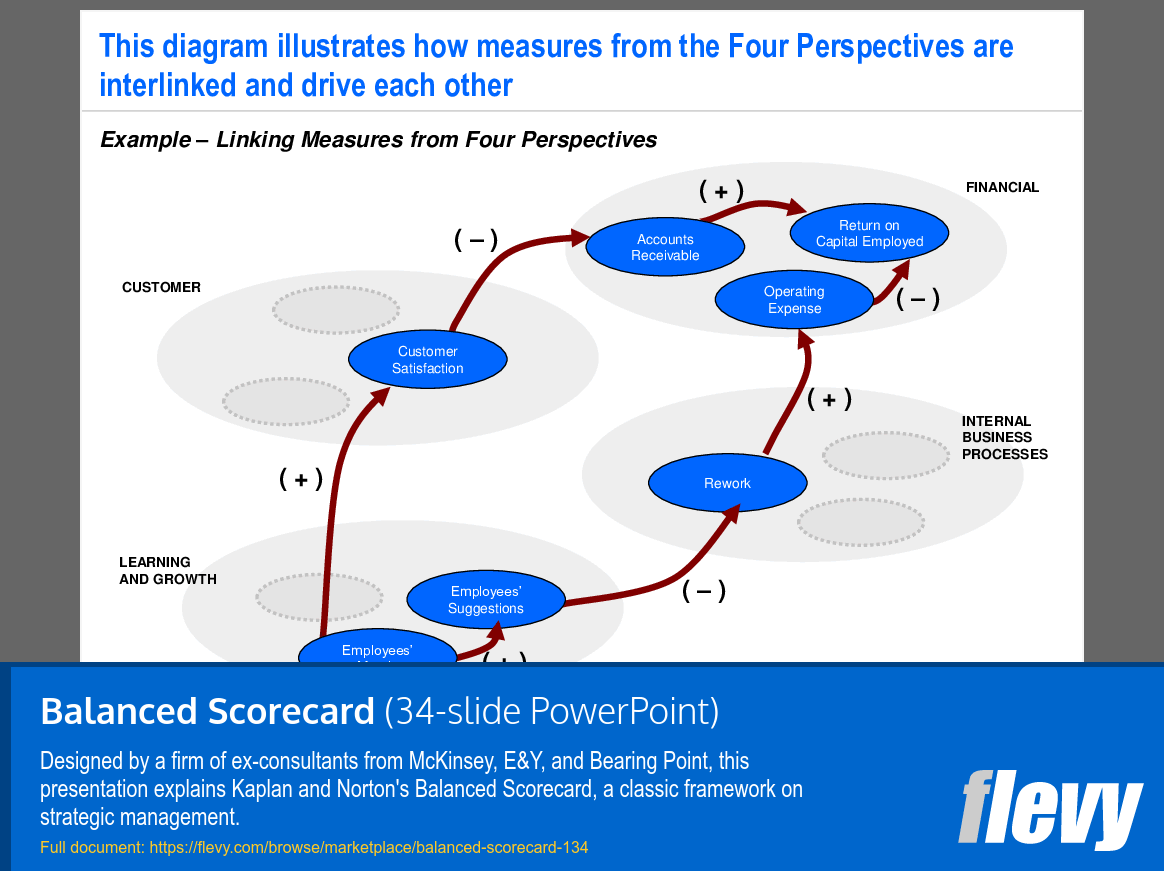
This PPT slide template illustrates the interconnections between 4 perspectives: Customer, Financial, Internal Business Processes, and Learning and Growth. The Customer perspective highlights Customer Satisfaction, which positively correlates with Accounts Receivable and negatively impacts Operating Expense. In the Financial perspective, Return on Capital Employed is positively affected by Accounts Receivable, while Operating Expense is negatively impacted by Customer Satisfaction. The Internal Business Processes perspective shows that reducing Rework enhances Customer Satisfaction and lowers Operating Expense. Finally, the Learning and Growth perspective emphasizes Employees' Suggestions, which negatively correlate with Rework, indicating that employee input can lead to fewer errors and improved processes. This highlights the need for a holistic management approach to optimize organizational performance.
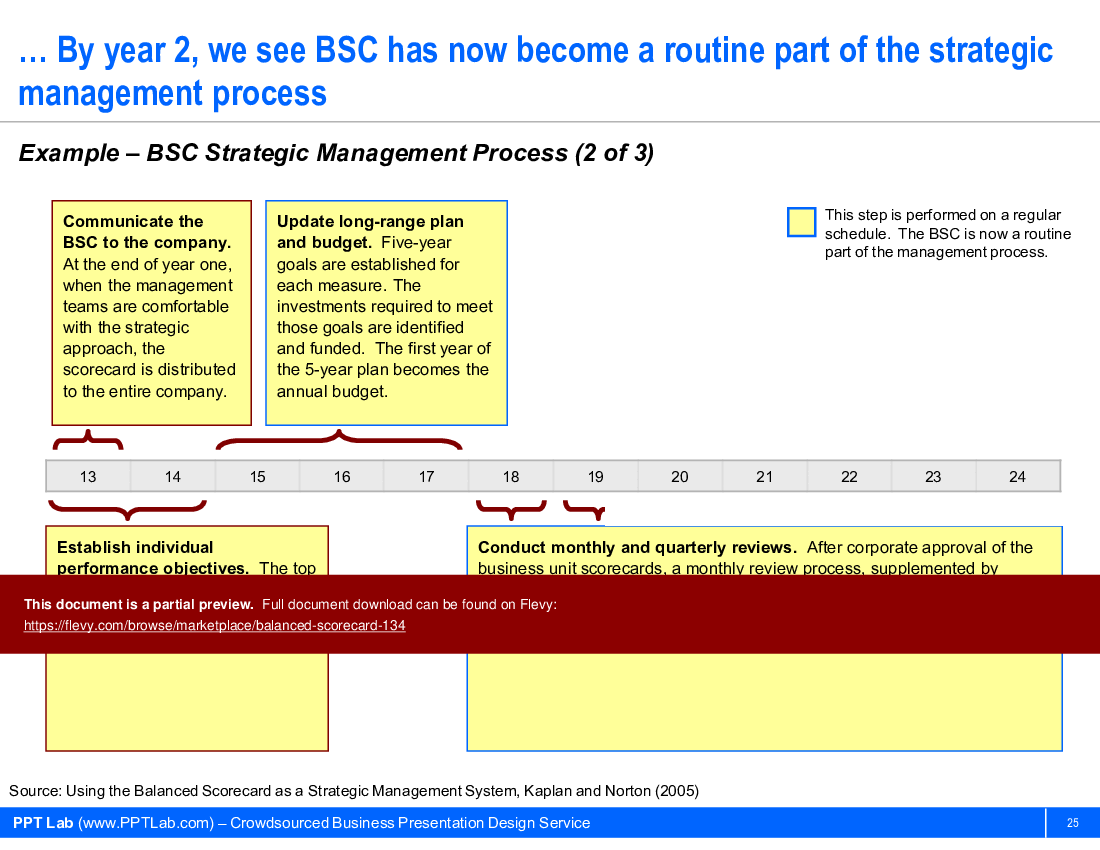
The Balanced Scorecard (BSC) is a foundational tool for implementing strategic management systems. It clarifies and updates corporate strategy, ensuring alignment across all organizational levels. The BSC promotes effective communication of strategy, fostering shared understanding and commitment among employees. It aligns departmental and individual goals with broader strategic objectives, linking these to long-term targets and annual budgets for optimal resource allocation and performance measurement. Additionally, the BSC identifies and aligns strategic initiatives, directing projects towards established goals. Conducting periodic performance reviews is essential for learning and refining strategies based on performance data and market changes, ensuring adaptability in a dynamic environment.
This PPT slide template outlines the process of translating a company's vision into operational terms, focusing on clarity and consensus among management. The initial step involves aligning the leadership team around a shared vision and strategy, converting abstract statements into actionable objectives. The case of Metro Bank illustrates challenges following a merger, where differing interpretations of key terms like "superior service" and "targeted customers" emerged among executives. The Balanced Scorecard process compelled executives to clarify their strategy, identifying specific measures and services necessary for delivering value to customers. It also revealed gaps in employee skills and systems needed for effective strategy execution, highlighting the need for clear articulation and understanding of the organization's mission and vision at every level.
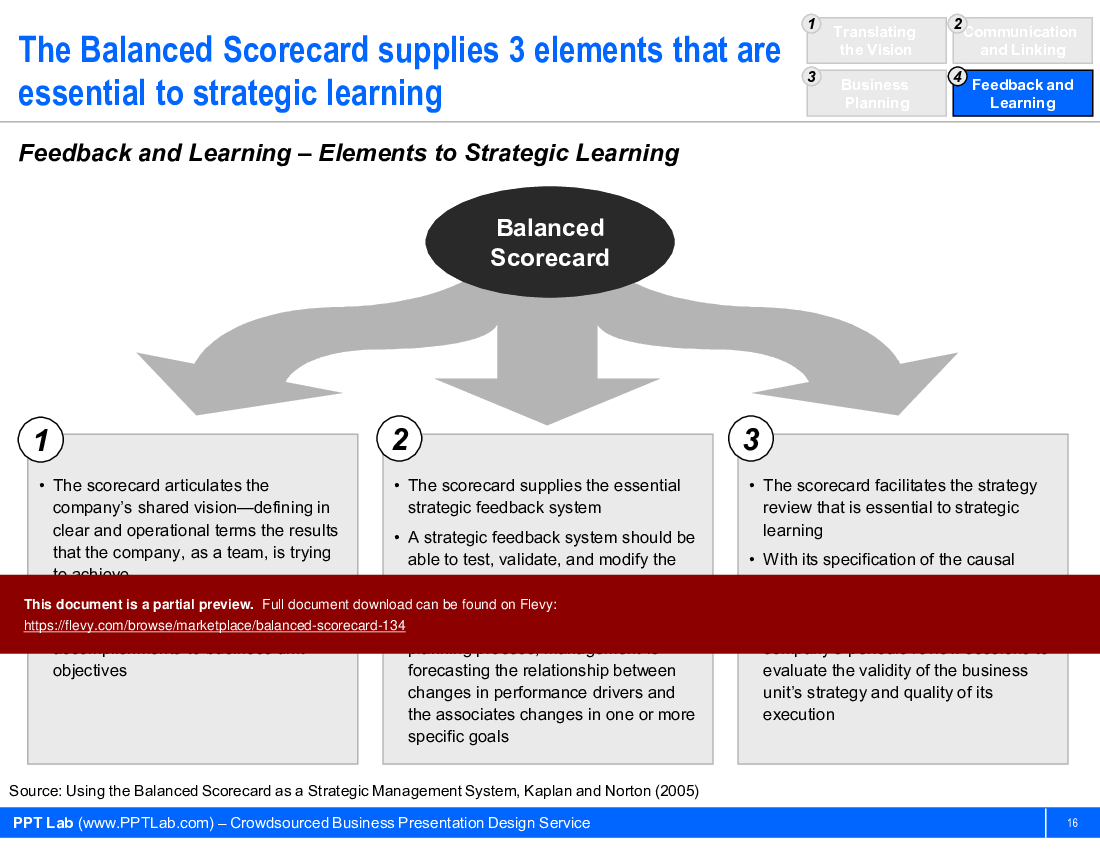
The Balanced Scorecard comprises 3 critical components that enhance strategic learning. First, it articulates the company's shared vision, aligning individual efforts with broader business unit objectives. Second, it serves as a strategic feedback system, testing and validating hypotheses within a business unit's strategy by establishing milestones that forecast performance drivers and outcomes. This allows management to make real-time adjustments, enhancing strategic agility. Third, it facilitates a strategy review process, specifying causal relationships between performance drivers and objectives, enabling executives to assess strategy validity and execution quality. This structured feedback loop supports continuous improvement and reinforces organizational accountability.
This PPT slide template outlines a 26-month implementation plan for the Balanced Scorecard (BSC) as a strategic management system. The process begins with a 3-month phase to clarify the vision, where the executive team translates a generic vision into a coherent strategy, building consensus among stakeholders. Next, business unit scorecards are developed using the corporate scorecard as a template to align strategies with overarching goals, fostering unified strategy execution. The plan includes eliminating non-strategic investments by identifying programs that do not support overall strategy, allowing for effective resource reallocation. A review phase assesses business unit scorecards by the CEO and executive team, enabling meaningful engagement in shaping unit strategies. Finally, the vision is refined based on insights from scorecard reviews, ensuring the corporate strategy remains relevant and responsive. This structured approach enhances strategic alignment and execution.
Designed by a firm of ex-consultants from McKinsey, E&Y, and Bearing Point, this presentation explains Kaplan and Norton's Balanced Scorecard, a classic framework on strategic management.
PPT Lab is a presentation design firm specializing in business frameworks and PowerPoint templates. Our team is comprised of ex-consultants from McKinsey, E&Y, Bearing Point, and boutique consulting firms. We have worked with hundreds of clients globally, ranging from mid-size manufacturing companies to global Fortune 500 conglomerates.
All of our documents are of the
... [read more] same quality produced by top-tier consulting firms and utilize the Consulting Presentation Framework.
The average daily rate of a McKinsey consultant is $6,625 (not including expenses). The average price of a Flevy document is $65.
Trusted by over 10,000+ Client Organizations
Since 2012, we have provided business templates to over 10,000 businesses and organizations of all sizes, from startups and small businesses to the Fortune 100, in over 130 countries.
"If you are looking for great resources to save time with your business presentations, Flevy is truly a value-added resource. Flevy has done all the work for you and we will continue to utilize Flevy as a source to extract up-to-date information and data for our virtual and onsite presentations!"
– Debbi Saffo, President at The NiKhar Group
"As a young consulting firm, requests for input from clients vary and it's sometimes impossible to provide expert solutions across a broad spectrum of requirements. That was before I discovered Flevy.com.
Through subscription to this invaluable site of a plethora of topics that are key and crucial to consulting, I
have been able to exceed expectations and deliver quality advice and solutions to my clients. The quality and expertise of the authors are exemplary and gives me great confidence to use as part of my service offerings.
I highly recommend this company for any consultant wanting to apply international best practice standards in their service offerings.
"
– Nishi Singh, Strategist and MD at NSP Consultants
"As an Independent Management Consultant, I find Flevy to add great value as a source of best practices, templates and information on new trends. Flevy has matured and the quality and quantity of the library is excellent. Lastly the price charged is reasonable, creating a win-win value for
the customer, Flevy and the various authors. This is truly a service that benefits the consulting industry and associated clients. Thanks for providing this service.
"
– Jim Schoen, Principal at FRC Group
"FlevyPro has been a brilliant resource for me, as an independent growth consultant, to access a vast knowledge bank of presentations to support my work with clients. In terms of RoI, the value I received from the very first presentation I downloaded paid for my subscription many times over! The
quality of the decks available allows me to punch way above my weight – it's like having the resources of a Big 4 consultancy at your fingertips at a microscopic fraction of the overhead.
"
– Roderick Cameron, Founding Partner at SGFE Ltd
"The wide selection of frameworks is very useful to me as an independent consultant. In fact, it rivals what I had at my disposal at Big 4 Consulting firms in terms of efficacy and organization."
– Julia T., Consulting Firm Owner (Former Manager at Deloitte and Capgemini)
"I like your product. I'm frequently designing PowerPoint presentations for my company and your product has given me so many great ideas on the use of charts, layouts, tools, and frameworks. I really think the templates are a valuable asset to the job."
– Roberto Fuentes Martinez, Senior Executive Director at Technology Transformation Advisory
"One of the great discoveries that I have made for my business is the Flevy library of training materials.
As a Lean Transformation Expert, I am always making presentations to clients on a variety of topics: Training, Transformation, Total Productive Maintenance, Culture, Coaching, Tools, Leadership Behavior, etc. Flevy
It is well worth the money to purchase these presentations. Sure, I have the knowledge and information to make my point. It is another thing to create a presentation that captures what I want to say. Flevy has saved me countless hours of preparation time that is much better spent with implementation that will actually save money for my clients.
"
– Ed Kemmerling, Senior Lean Transformation Expert at PMG
"As a consultant requiring up to date and professional material that will be of value and use to my clients, I find Flevy a very reliable resource.
The variety and quality of material available through Flevy offers a very useful and commanding source for information. Using Flevy saves me time, enhances my expertise and ends up being a good decision."

 Click main image to view in full screen. Unlock all 11 preview images: