
Lean Six Sigma DMAIC Storyboard Template   61-slide PPT PowerPoint presentation slide deck (PPTX)
$39.00

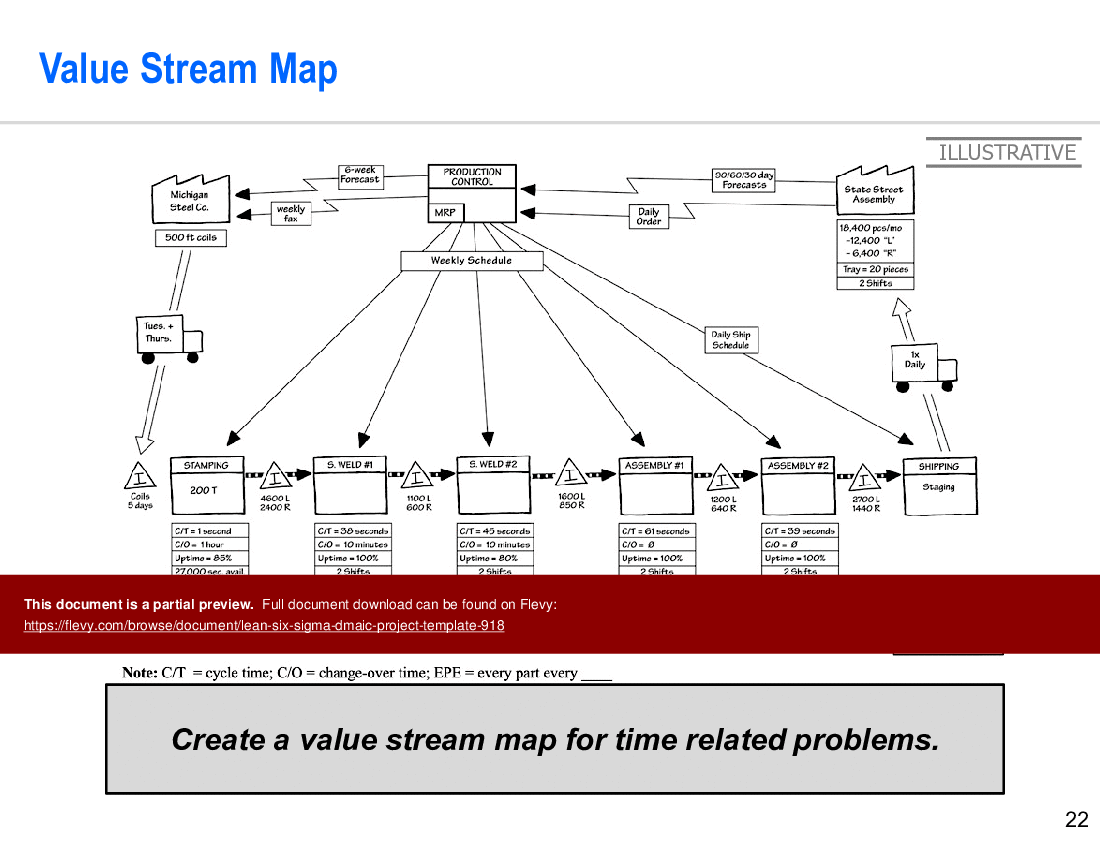
Lean Six Sigma DMAIC Storyboard Template (61-slide PPT PowerPoint presentation slide deck (PPTX)) Preview Image
Log in to unlock full preview.
Lean Six Sigma DMAIC Storyboard Template (61-slide PPT PowerPoint presentation slide deck (PPTX)) Preview Image
Arrow   Click main image to view in full screen.

Lean Six Sigma DMAIC Storyboard Template (PowerPoint PPTX Slide Deck)

PowerPoint (PPTX) + supplemental PDF 61 Slides

#2 in DMAIC $39.00
Developed by a seasoned Certified Lean Six Sigma Black Belt with a proven track record at Microsoft, IBM and Panasonic, this storyboard template is your pathway to achieving Operational Excellence through Lean Six Sigma Methodologies.
Add to Cart


Immediate download
Fully editable PowerPoint
Free lifetime updates

BENEFITS OF THIS POWERPOINT DOCUMENT

  1. Follow clear, step-by-step instructions for each DMAIC phase, ensuring thorough and effective problem-solving.
  2. Utilize built-in visuals and deliverables lists to improve team collaboration and stakeholder presentations.
  3. Save time with a ready-to-use template that reduces errors and streamlines project documentation.

DMAIC PPT DESCRIPTION

Editor Summary Lean Six Sigma DMAIC Storyboard Template is a 61-slide PowerPoint framework with a supplemental PDF poster, developed by a Certified Lean Six Sigma Black Belt with experience at Microsoft, IBM, and Panasonic. Read more

The Lean Six Sigma (LSS) DMAIC methodology is a structured problem-solving approach consisting of five steps: Define, Measure, Analyze, Improve, and Control.

•  Define: Establish the problem statement, project scope, objective statement, and project team.
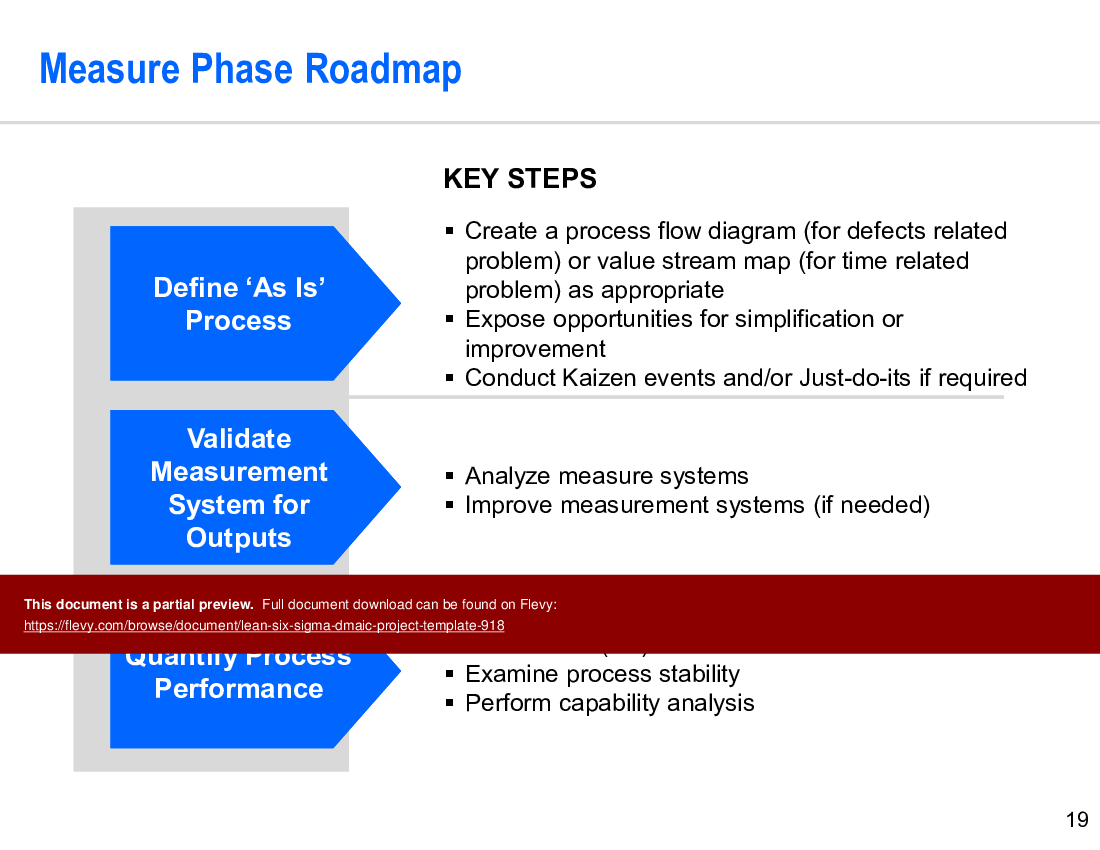
•  Measure: Collect and verify data to measure the current performance and capability of the process.
•  Analyze: Identify the root causes of the problem using tools such as cause-and-effect analysis and statistical analysis.
•  Improve: Implement potential solutions and evaluate their effectiveness.
•  Control: Standardize the solution and monitor performance to ensure sustained improvement.

Adopting an LSS DMAIC storyboard template offers several benefits to the improvement process:

1. Structured Approach: Ensures all necessary steps are taken, reducing the risk of overlooking critical issues.
2. Consistent Problem-Solving: Helps the project team stay focused on the problem and objectives throughout the process.
3. Enhanced Communication: Improves collaboration among team members by providing a common language and understanding of the process.
4. Time Efficiency: Saves time and reduces errors by providing a clear roadmap with defined deliverables and expectations for each phase.

POWERPOINT TEMPLATE OVERVIEW:

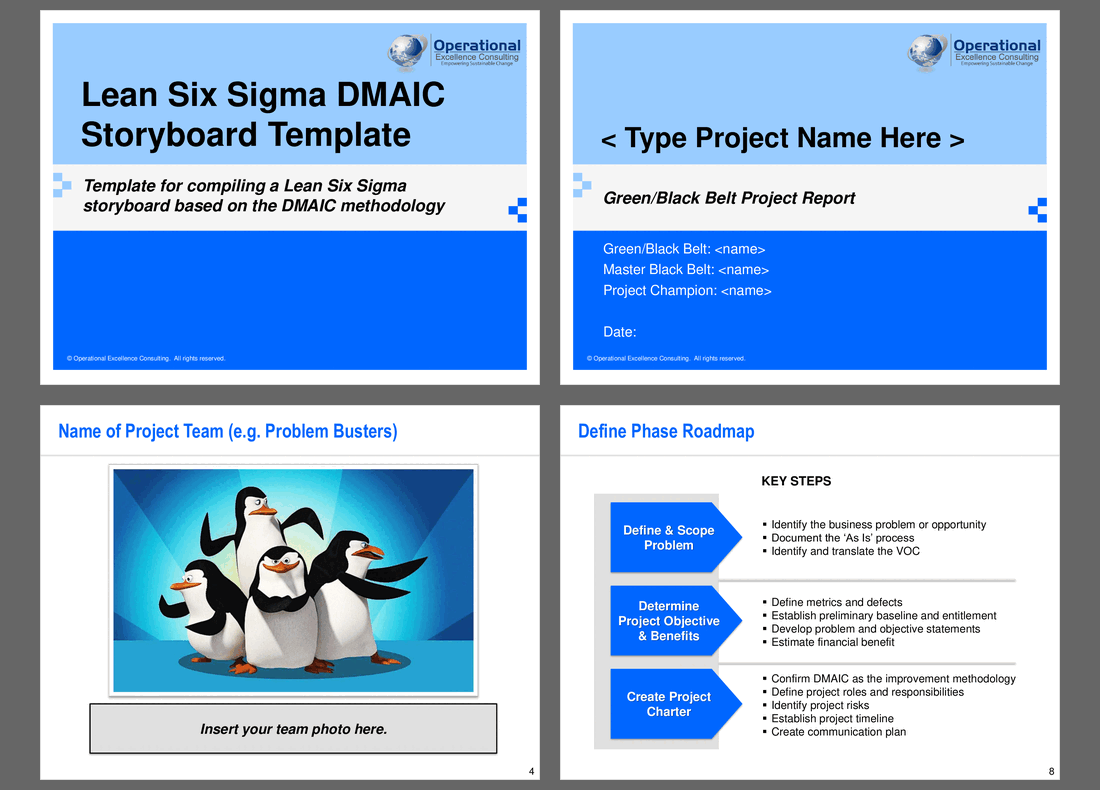
Our PowerPoint template is designed to help your project team compile a comprehensive report or storyboard for Green/Black Belt toll-gate reviews or stakeholder briefings based on the Lean Six Sigma DMAIC methodology.

•  Guidelines: Each slide includes headlines or guidelines on what content to insert, making it easy to follow.
•  Visuals: Images, diagrams, and charts are provided to quickly illustrate what is required under each phase of the DMAIC process.
•  Deliverables List: Each phase includes a list of deliverables to guide you on what to include in the report or storyboard.

Note: This template focuses on providing a structured framework and visual aids for reporting and presenting your DMAIC project. It does not include tools for creating visual representations. Users are encouraged to utilize existing resources within their organizations, such as Minitab, SigmaXL, Microsoft Visio, SmartDraw, and other available tools, for these purposes.

By using this template, you can ensure a thorough and effective presentation of your Lean Six Sigma project, streamlining the process and enhancing clarity and impact for all stakeholders.

|||||||||||||||||||||||||||||||||||||||||||||||||||||||||||||||||||||||||||||||||||||||||||||||||||||||||||||||||||||||||||||||||||||||||||||||||||||||
This package includes:
1. Lean Six Sigma DMAIC Storyboard template (PowerPoint format)
2. Lean Six Sigma DMAIC poster (PDF format, in color and monochrome, printable in A3 size)
|||||||||||||||||||||||||||||||||||||||||||||||||||||||||||||||||||||||||||||||||||||||||||||||||||||||||||||||||||||||||||||||||||||||||||||||||||||||

The five steps of LSS DMAIC are:

Step 1: DEFINE – Define the problem or opportunity.
Define Phase Deliverables:
1.1 Define business case
1.2 Define problem statement
1.3 Establish baseline project metrics
1.4 Define objective statement and scope
1.5 Form project team
1.6 Identify financial impact
1.7 Complete project charter
1.8 Approved project charter

Step 2: MEASURE – Measure the current performance and capability.
Measure Phase Deliverables:
2.1 Map the process
2.2 Collect process data
2.3 Verify data integrity
2.4 Document process behavior
2.5 Baseline process capability (Sigma level or DPMO)
2.6 Quick wins
2.7 List of potential X's

Step 3: ANALYZE – Analyze to identify root causes.
Analyze Phase Deliverables:
3.1 Cause and effect analysis
3.2 FMEA
3.3 Graphical analysis
3.4 Statistical analysis

Step 4: IMPROVE – Improve by implementing potential solutions.
Improve Phase Deliverables:
4.1 Generate solutions
4.2 Evaluate solutions
4.3 Pilot and implement solutions
4.4 Statement of Y = f(X)

Step 5: CONTROL – Control by standardizing solution and monitoring performance.
Control Phase Deliverables:
5.1 Control methods
5.2 Control plan
5.3 Clear indication of improved primary metric
5.4 Project transition action plan
5.5 Project approval
5.6 Financial validation
5.7 Lessons learned

Got a question about the product? Email us at support@flevy.com or ask the author directly by using the "Ask the Author a Question" form. If you cannot view the preview above this document description, go here to view the large preview instead.

MARCUS OVERVIEW

This synopsis was written by Marcus [?] based on the analysis of the full 61-slide presentation.


Executive Summary
The Lean Six Sigma DMAIC Storyboard Template is a structured presentation tool designed to facilitate the implementation of the DMAIC (Define, Measure, Analyze, Improve, Control) methodology. Created by Operational Excellence Consulting, this template provides a comprehensive framework for Lean Six Sigma projects, enabling users to define problems, measure current performance, analyze root causes, implement improvements, and control processes effectively. This ready-to-use PowerPoint template is essential for professionals aiming to enhance operational efficiency and drive continuous improvement initiatives within their organizations.

Who This Is For and When to Use
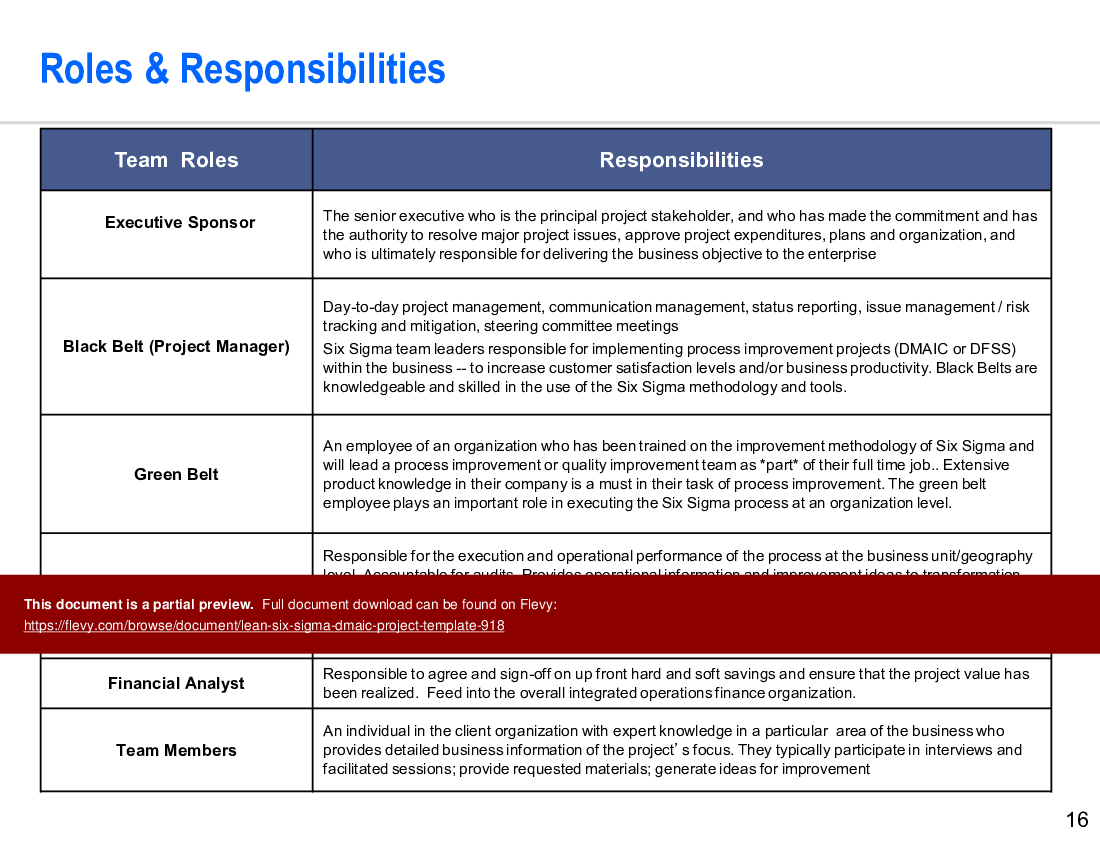
•  Lean Six Sigma practitioners (Green Belts, Black Belts)
•  Project managers overseeing process improvement initiatives
•  Quality assurance teams focused on operational excellence
•  Business analysts involved in performance measurement and analysis

Best-fit moments to use this deck:
•  During the initiation of a Lean Six Sigma project to outline objectives and scope
•  In project meetings to communicate progress and findings at each DMAIC phase
•  For training sessions aimed at educating team members on the DMAIC process

Learning Objectives
•  Define the DMAIC methodology and its application in process improvement
•  Develop a comprehensive project charter that outlines objectives and scope
•  Measure current process performance using relevant metrics
•  Analyze data to identify root causes of defects and inefficiencies
•  Implement effective solutions and monitor their impact on performance
•  Establish control measures to sustain improvements over time

Table of Contents
•  Introduction to DMAIC (page 5)
•  Define Phase Overview (page 8)
•  Measure Phase Overview (page 19)
•  Analyze Phase Overview (page 28)
•  Improve Phase Overview (page 39)
•  Control Phase Overview (page 51)
•  Project Charter Template (page 15)
•  Communication Plan Template (page 17)

Primary Topics Covered
•  Define Phase - Focuses on identifying the problem or opportunity, defining project objectives, and creating a project charter.
•  Measure Phase - Involves mapping the current process, collecting data, and validating measurement systems.
•  Analyze Phase - Centers on identifying potential causes of issues through data analysis and graphical methods.
•  Improve Phase - Emphasizes generating and testing potential solutions, including the development of a future state value stream map.
•  Control Phase - Establishes control methods to sustain improvements and monitor ongoing performance.
•  Project Charter - A template for documenting project objectives, scope, and team roles.

Deliverables, Templates, and Tools
•  Project charter template to define project objectives and scope
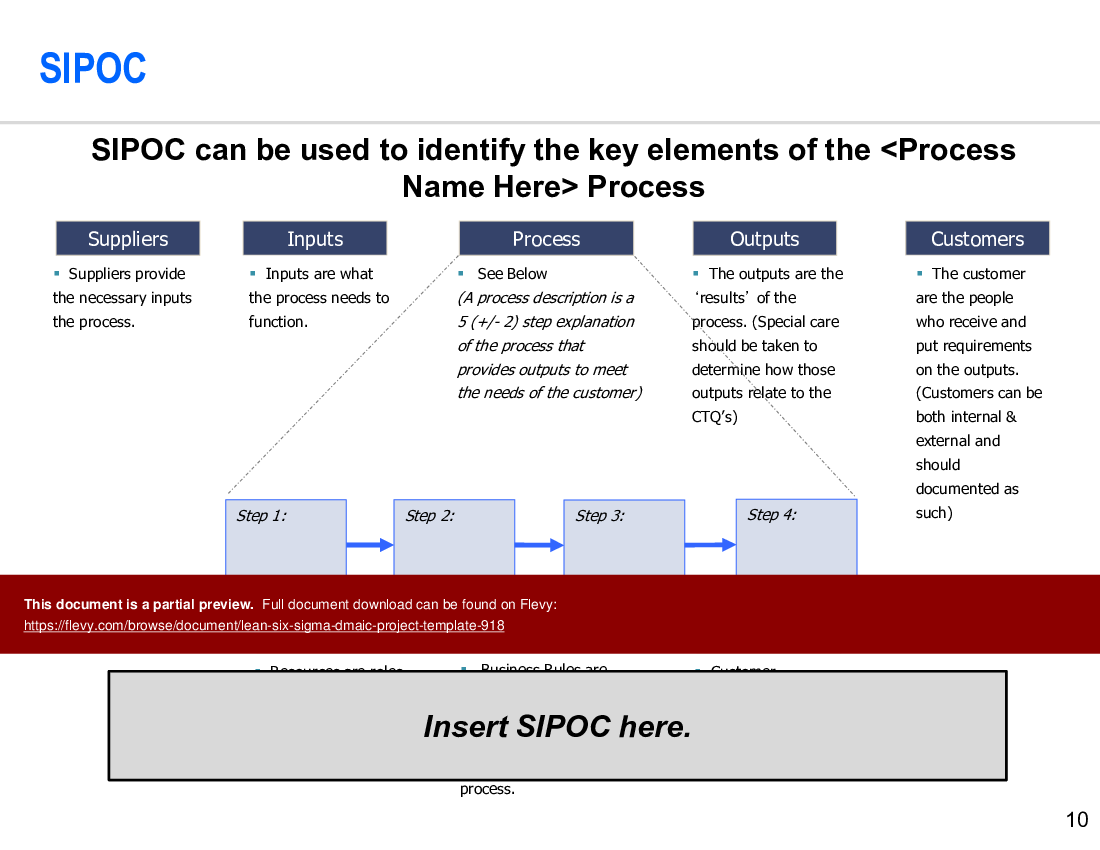
•  SIPOC diagram to identify key process elements
•  Process flow diagrams for current and future state mapping
•  Data collection plan template for measuring process performance
•  Control plan template for monitoring ongoing improvements
•  Communication plan to ensure stakeholder engagement

Slide Highlights
•  Overview of the DMAIC process with visual representations
•  Detailed steps for each DMAIC phase, including key deliverables
•  Templates for project charters and communication plans
•  Graphical analysis tools for identifying root causes
•  Control charts to track performance metrics over time

Potential Workshop Agenda
DMAIC Overview Session (60 minutes)
•  Introduce the DMAIC methodology and its importance
•  Discuss the roles of team members in each phase
•  Review the project charter and communication plan

Define Phase Workshop (90 minutes)
•  Identify the problem statement and project objectives
•  Create a SIPOC diagram to outline the process
•  Develop the project charter collaboratively

Measure and Analyze Session (120 minutes)
•  Map the current process and collect relevant data
•  Analyze data to identify root causes and areas for improvement
•  Discuss findings and implications for the project

Customization Guidance
•  Tailor the project charter to reflect specific project objectives and team members
•  Modify the SIPOC diagram to accurately represent the unique process being analyzed
•  Adjust the communication plan to fit the organizational structure and stakeholder needs
•  Update metrics and control plans based on the specific context of the project

Secondary Topics Covered
•  Voice of the Customer (VOC) analysis
•  Financial benefits estimation and validation
•  Risk assessment and management strategies
•  Lean techniques for waste reduction

Topic FAQ

What are the DMAIC phases and what deliverables should I expect at each stage?

DMAIC consists of Define, Measure, Analyze, Improve, and Control. Typical deliverables include a project charter and baseline metrics in Define; process maps, data collection plans, and baseline capability (Sigma level or DPMO) in Measure; cause-and-effect analysis, FMEA, and graphical/statistical analysis in Analyze; solution pilots and implementation plans in Improve; and control methods, control plans, and financial validation in Control, such as a project charter and control plan.

Which tools are commonly used in the Analyze phase to identify root causes?

The Analyze phase relies on cause-and-effect analysis, Failure Mode and Effects Analysis (FMEA), graphical techniques, and statistical analysis. Common graphical tools cited include fishbone (cause-and-effect) diagrams and Pareto charts, supported by statistical methods for hypothesis testing and relationship analysis, for example fishbone diagrams and Pareto charts.

How do teams measure process capability during the Measure phase?

Teams map the process, collect and verify data, document process behavior, and baseline capability using metrics such as Sigma level or DPMO. Measurement system verification and establishing baseline process capability are explicit Measure-phase activities, with baseline metrics recorded to compare against post-improvement performance like Sigma level or DPMO.

What should I look for when choosing a Lean Six Sigma storyboard or template for projects?

Look for coverage of all DMAIC phases, slide guidelines on required content, and included templates such as a project charter, SIPOC, process flow diagrams, data collection plan, control plan, and a communication plan. Confirm whether the package includes printable assets like a poster PDF and slide-level deliverables lists, for example a project charter template and SIPOC diagram.

How can a storyboard template be used to conduct Green/Black Belt toll-gate reviews?

A storyboard template structures content for toll-gate reviews by providing phase-specific slides with headlines/guidelines and deliverables lists, enabling teams to present objectives, current-state metrics, root-cause analysis, proposed pilots, and control plans. Flevy's Lean Six Sigma DMAIC Storyboard Template explicitly targets Green/Black Belt toll-gate reviews and stakeholder briefings with slide guidelines and deliverables lists.

My team lacks advanced statistical software—can a DMAIC storyboard still be useful?

Yes; the storyboard provides structured slides, guidance, and visuals for reporting DMAIC work, but does not include analysis software. Users are advised to leverage existing organizational tools for statistical and process visuals, such as Minitab, SigmaXL, Microsoft Visio, or SmartDraw, to produce the statistical outputs referenced.

How should I structure a short workshop to teach the DMAIC process to project teams?

A practical structure from the template's guidance starts with a 60-minute DMAIC overview session covering roles and the project charter, a 90-minute Define workshop to create a SIPOC and charter, and a 120-minute Measure and Analyze session for mapping, data collection, and root-cause analysis, using the template's phase slides and deliverables lists.

What metrics are useful to track the success of a Lean Six Sigma project?

Success is tracked through improvements in key performance metrics, financial savings, and stakeholder satisfaction. Measure-phase baseline metrics and ongoing Control-phase monitoring using control charts and baseline capability indicators such as Sigma level or DPMO are standard metrics to validate improvement and sustainability.

Document FAQ
These are questions addressed within this presentation.

What is the DMAIC methodology?
DMAIC is a data-driven quality strategy used for process improvement, consisting of 5 phases: Define, Measure, Analyze, Improve, and Control.

How can I customize the templates in this deck?
Templates can be modified to suit your organization’s specific processes, objectives, and team structures.

What types of projects is this template suitable for?
This template is ideal for any process improvement project within manufacturing, service, healthcare, and other industries focused on operational excellence.

Can this template be used for training purposes?
Yes, the template is designed to facilitate training sessions on Lean Six Sigma methodologies and can be adapted for educational workshops.

What deliverables can I expect from using this template?
Users can produce project charters, process maps, data collection plans, and control plans, among other deliverables.

How do I measure the success of my Lean Six Sigma project?
Success can be measured through improvements in key performance metrics, financial savings, and stakeholder satisfaction.

Is there a specific format for the project charter?
Yes, the project charter template included in the deck provides a structured format for documenting project objectives, scope, and team roles.

What tools can be used in the Analyze phase?
Tools such as fishbone diagrams, Pareto charts, and statistical analysis methods are recommended for identifying root causes.

Glossary
•  DMAIC - A structured problem-solving process used in Lean Six Sigma.
•  SIPOC - A tool that outlines Suppliers, Inputs, Process, Outputs, and Customers.
•  VOC - Voice of the Customer; feedback from customers about their experiences.
•  FMEA - Failure Mode and Effects Analysis; a systematic approach to identifying potential failure modes.
•  Control Chart - A statistical tool used to monitor process stability over time.
•  Kaizen - A Japanese term meaning "continuous improvement."
•  CTQ - Critical to Quality; the key measurable characteristics of a product or process.
•  Lean - A methodology focused on minimizing waste within manufacturing systems.
•  Six Sigma - A set of techniques and tools for process improvement.
•  Process Map - A visual representation of the steps in a process.
•  Stakeholder - An individual or group with an interest in the outcome of a project.
•  Baseline Metrics - Initial measurements used to compare against future performance.
•  Implementation Plan - A detailed plan for executing project solutions.
•  Standard Work - Documented best practices for performing tasks consistently.
•  Mistake-proofing - Techniques used to prevent errors in processes.
•  Financial Validation - The process of confirming the financial benefits of a project.
•  Lessons Learned - Insights gained from the project that can inform future initiatives.
•  Project Charter - A document that outlines the purpose, objectives, and scope of a project.
•  Control Plan - A document that outlines how to monitor and control process performance.

Source: Best Practices in DMAIC PowerPoint Slides: Lean Six Sigma DMAIC Storyboard Template PowerPoint (PPTX) Presentation Slide Deck, Operational Excellence Consulting


$39.00
Developed by a seasoned Certified Lean Six Sigma Black Belt with a proven track record at Microsoft, IBM and Panasonic, this storyboard template is your pathway to achieving Operational Excellence through Lean Six Sigma Methodologies.
Add to Cart
  

ABOUT THE AUTHOR

Author image
Additional documents from author: 257
Terms of usage (for all documents from this author)

Operational Excellence Consulting, founded in 2009 by Allan Ung, draws from extensive experience at Microsoft, IBM, and Underwriters Laboratories (UL). We specialize in strategy deployment, customer experience design, and operational excellence, applying Design Thinking, Lean, and Systems Thinking to maximize customer value and minimize waste.

Our ... [read more]

Ask the Author a Question

You must be logged in to contact the author.

Click here to log in Click here register

Did you know?
The average daily rate of a McKinsey consultant is $6,625 (not including expenses). The average price of a Flevy document is $65.



Trusted by over 10,000+ Client Organizations
Since 2012, we have provided business templates to over 10,000 businesses and organizations of all sizes, from startups and small businesses to the Fortune 100, in over 130 countries.
AT&T GE Cisco Intel IBM Coke Dell Toyota HP Nike Samsung Microsoft Astrazeneca JP Morgan KPMG Walgreens Walmart 3M Kaiser Oracle SAP Google E&Y Volvo Bosch Merck Fedex Shell Amgen Eli Lilly Roche AIG Abbott Amazon PwC T-Mobile Broadcom Bayer Pearson Titleist ConEd Pfizer NTT Data Schwab


Read Customer Testimonials

 
"I have found Flevy to be an amazing resource and library of useful presentations for lean sigma, change management and so many other topics. This has reduced the time I need to spend on preparing for my performance consultation. The library is easily accessible and updates are regularly provided. A wealth of great information."

– Cynthia Howard RN, PhD, Executive Coach at Ei Leadership
 
"As a young consulting firm, requests for input from clients vary and it's sometimes impossible to provide expert solutions across a broad spectrum of requirements. That was before I discovered Flevy.com.

Through subscription to this invaluable site of a plethora of topics that are key and crucial to consulting, I "

– Nishi Singh, Strategist and MD at NSP Consultants
 
"As a consultant requiring up to date and professional material that will be of value and use to my clients, I find Flevy a very reliable resource.

The variety and quality of material available through Flevy offers a very useful and commanding source for information. Using Flevy saves me time, enhances my expertise and ends up being a good decision."

– Dennis Gershowitz, Principal at DG Associates
 
"Last Sunday morning, I was diligently working on an important presentation for a client and found myself in need of additional content and suitable templates for various types of graphics. Flevy.com proved to be a treasure trove for both content and design at a reasonable price, considering the time I "

– M. E., Chief Commercial Officer, International Logistics Service Provider
 
"As an Independent Management Consultant, I find Flevy to add great value as a source of best practices, templates and information on new trends. Flevy has matured and the quality and quantity of the library is excellent. Lastly the price charged is reasonable, creating a win-win value for "

– Jim Schoen, Principal at FRC Group
 
"FlevyPro provides business frameworks from many of the global giants in management consulting that allow you to provide best in class solutions for your clients."

– David Harris, Managing Director at Futures Strategy
 
"FlevyPro has been a brilliant resource for me, as an independent growth consultant, to access a vast knowledge bank of presentations to support my work with clients. In terms of RoI, the value I received from the very first presentation I downloaded paid for my subscription many times over! The "

– Roderick Cameron, Founding Partner at SGFE Ltd
 
"[Flevy] produces some great work that has been/continues to be of immense help not only to myself, but as I seek to provide professional services to my clients, it gives me a large "tool box" of resources that are critical to provide them with the quality of service and outcomes they are expecting."

– Royston Knowles, Executive with 50+ Years of Board Level Experience


Customers Also Bought These Documents


Customers Also Like These Documents

Explore Templates on Related Management Topics


Your Recently Viewed Documents
Receive our FREE presentation on Operational Excellence

This 50-slide presentation provides a high-level introduction to the 4 Building Blocks of Operational Excellence. Achieving OpEx requires the implementation of a Business Execution System that integrates these 4 building blocks.