
 Click main image to view in full screen.
Firm Value Chain, Industry Value Chain, and Business Intelligence (PowerPoint PPTX Slide Deck)
PowerPoint (PPTX) 79 Slides


BENEFITS OF THIS POWERPOINT DOCUMENT
- Simple & easy to understand approach with illustrations.
- Can be used for presentation - step by step progress and use of animation.
- Slide notes provided (not visible in above preview).
VALUE CHAIN ANALYSIS PPT DESCRIPTION
This presentation discusses the concepts of firm value chain and industry value chain—and how the framework lends itself to generating business intelligence. It also uncovers the type of strategies that can be adopted in response. The broad coverage is as follows:
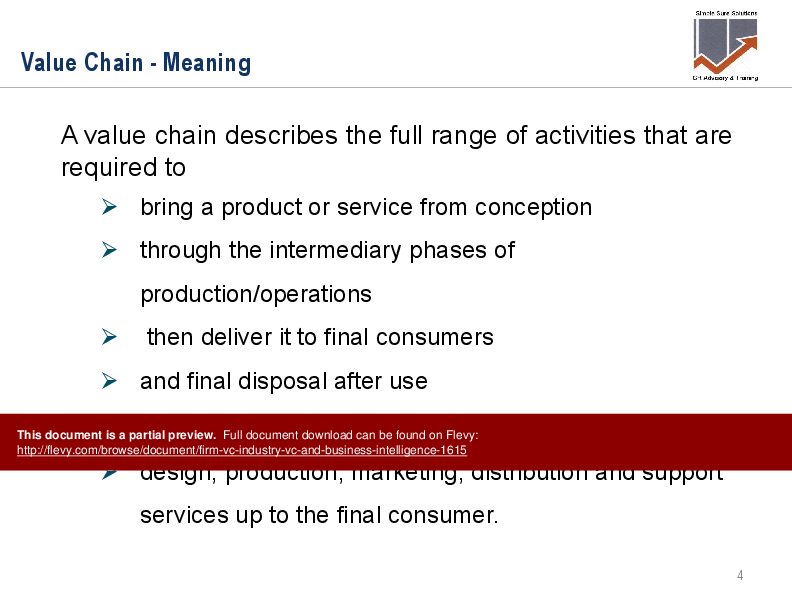
1. Value Chain – Meaning
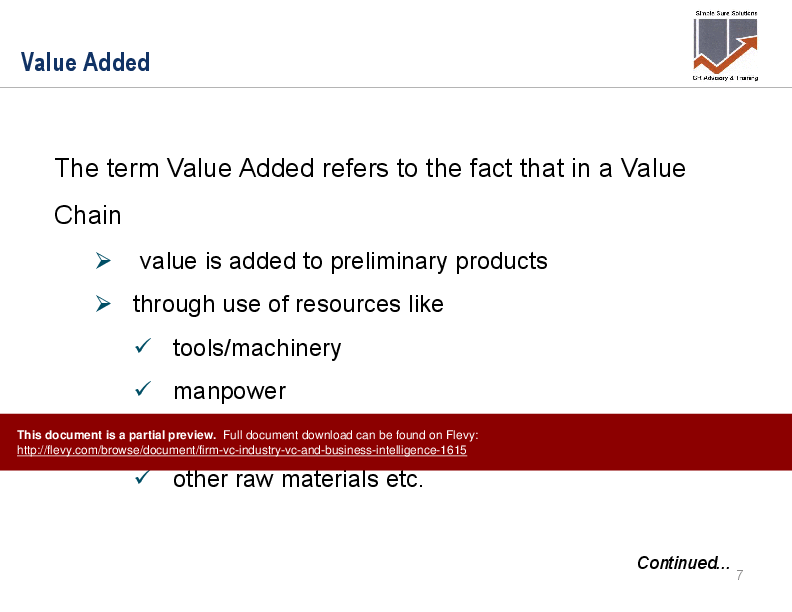
2. What is value added?
3. Value Chain & Value Added – Key Implications
4. Firm value chain
5. Determinants of firm margin
6. Firm efficiency dynamics
7. Industry value chain
8. Industry value chain – illustration
9. Business intelligence
10. Value chain model – Pros & Cons
The slide preparation has been done for direct presentation use – providing step by step progress and with use of animations.
Where required, slide notes have been provided (not visible in above preview).
This comprehensive presentation delves into the intricacies of value chains, both at the firm and industry levels, and their critical role in enhancing business intelligence. The PPT meticulously outlines the entire spectrum of activities involved in bringing a product or service from conception to final disposal, emphasizing the importance of value addition at each stage. By leveraging tools, machinery, manpower, and raw materials, firms can significantly enhance the value of preliminary products, thereby optimizing their value chain.
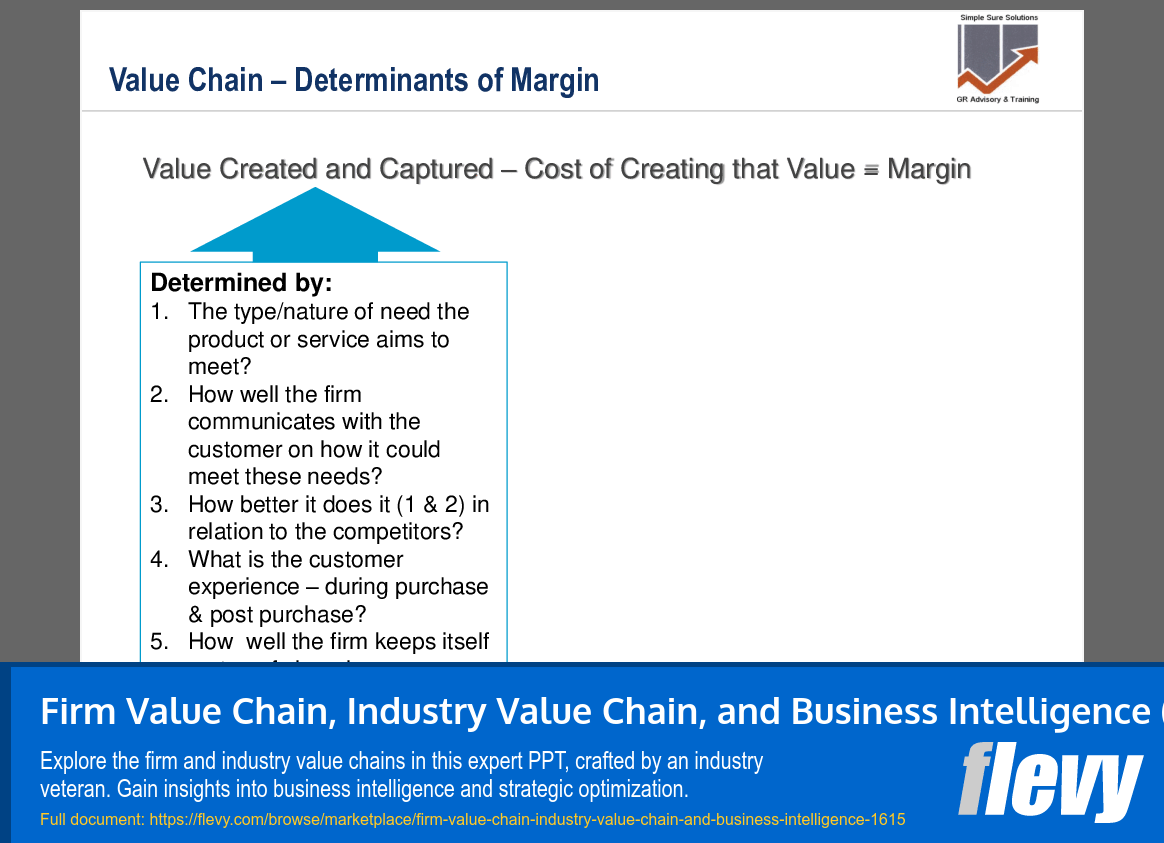
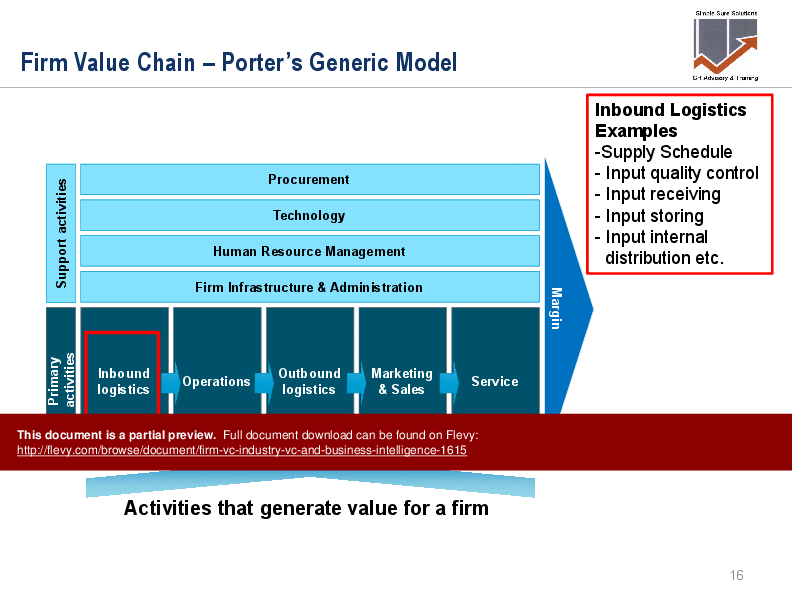
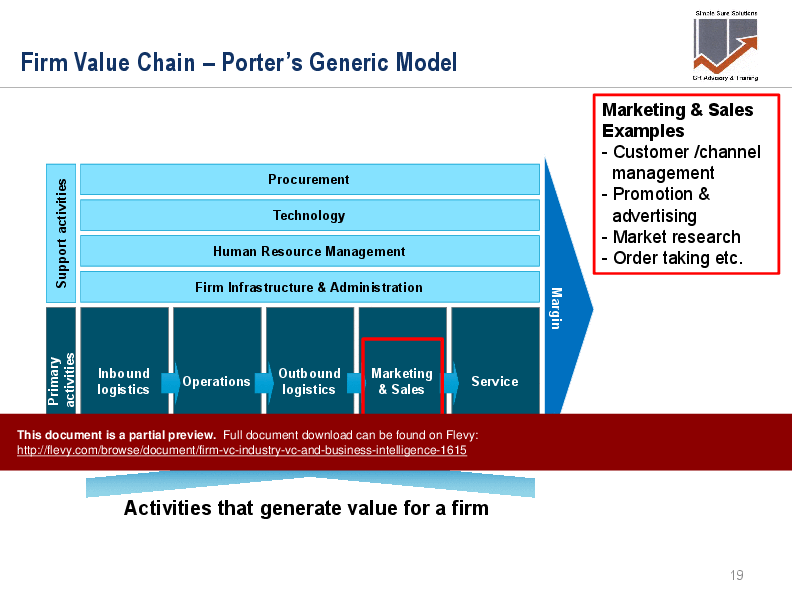
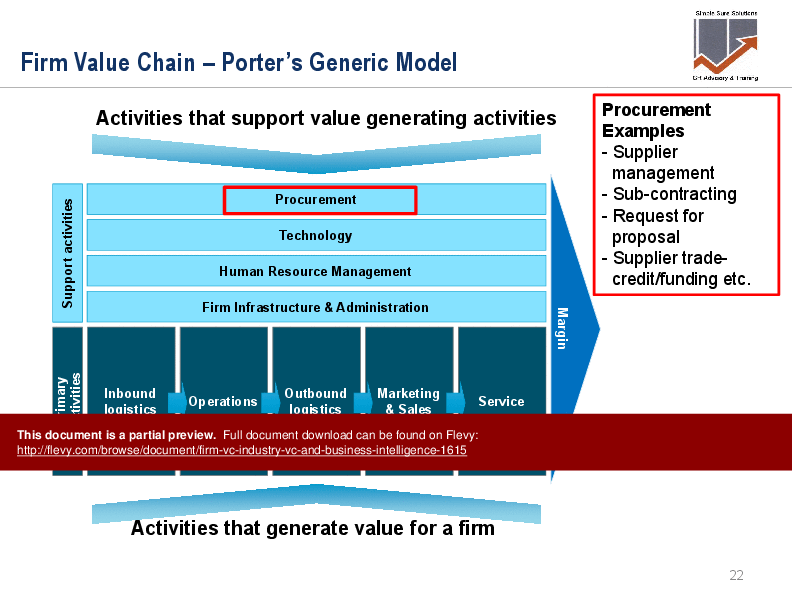
The presentation also provides a detailed analysis of Porter's Generic Model, illustrating how various primary and support activities contribute to a firm's margin. It highlights key examples of inbound logistics, marketing and sales, procurement, and firm infrastructure, offering actionable insights into how these activities can be managed more efficiently. The document underscores the importance of understanding the determinants of firm margin, including the nature of customer needs, communication effectiveness, and the firm's ability to adapt to changing market conditions.
In addition to firm-level analysis, the presentation extends its scope to the industry value chain, providing a holistic view of how different value chains interact within an industry. It includes detailed illustrations and examples, particularly focusing on the automotive sector, to elucidate the flow of raw materials, semi-finished goods, and finished products through various tiers of suppliers and manufacturers. The document also touches upon the significance of business intelligence, competitor analysis, and market intelligence in formulating strategies that align with a firm's core competencies and market dynamics.
Got a question about the product? Email us at support@flevy.com or ask the author directly by using the "Ask the Author a Question" form. If you cannot view the preview above this document description, go here to view the large preview instead.
MARCUS OVERVIEW
This synopsis was written by Marcus [?] based on the analysis of the full 79-slide presentation.
Executive Summary
This presentation provides a comprehensive overview of the concepts surrounding the Firm Value Chain, Industry Value Chain, and their integration with Business Intelligence. It is designed to equip corporate executives and consultants with strategic insights into how these frameworks can enhance operational efficiency and decision-making. Users will gain an understanding of how value is created and captured within a firm and across the industry, enabling them to formulate effective strategies in response to market dynamics.
Who This Is For and When to Use
• Corporate executives seeking to optimize operational strategies
• Business consultants focused on value chain analysis
• Strategic planners in industries reliant on supply chain management
• Analysts tasked with understanding competitive positioning
Best-fit moments to use this deck:
• During strategic planning sessions to align business objectives with operational capabilities
• When conducting competitive analysis to identify market opportunities
• In workshops aimed at improving cross-functional collaboration within organizations
• For training sessions on business intelligence and value chain methodologies
Learning Objectives
• Define the Firm Value Chain and Industry Value Chain concepts and their significance
• Analyze how value is added at each stage of the value chain
• Identify key determinants of firm margins and their implications on profitability
• Utilize business intelligence tools to gather competitive insights
• Develop strategies based on value chain analysis to enhance market positioning
• Assess the pros and cons of the value chain model in various industry contexts
Table of Contents
• Introduction to Value Chain Concepts (page 3)
• Understanding Value Added (page 6)
• Firm Value Chain Overview (page 12)
• Industry Value Chain Explanation (page 38)
• Business Intelligence Framework (page 63)
• Competitive Intelligence and Market Analysis (page 67)
• Value Chain Model Pros and Cons (page 75)
Primary Topics Covered
• Firm Value Chain - A structured approach to understanding how activities within a firm contribute to value creation and competitive advantage.
• Industry Value Chain - Analyzes the interconnectedness of various firms within an industry and how they collectively create value.
• Business Intelligence - Tools and methodologies for gathering, analyzing, and utilizing data to inform strategic decisions.
• Competitive Intelligence - Understanding market dynamics and competitor positioning through systematic analysis.
• Value Added - The incremental value generated at each stage of production, emphasizing the importance of resource utilization.
• Determinants of Firm Margin - Factors influencing profitability, including customer needs, communication effectiveness, and competitive positioning.
Deliverables, Templates, and Tools
• Value chain analysis template for mapping activities and identifying value-added processes
• Business intelligence framework for gathering and analyzing market data
• Competitive analysis checklist to evaluate key competitors and market dynamics
• Presentation slides for training sessions on value chain methodologies
• Case studies illustrating successful value chain implementations in various industries
• Workshop agendas for facilitating discussions on strategic alignment and operational efficiency
Slide Highlights
• Overview of the Firm Value Chain model illustrating primary and support activities
• Detailed breakdown of Value Added processes with real-world examples
• Visual representation of the Industry Value Chain, including supplier and buyer interactions
• Framework for Business Intelligence and its components, including competitor and market intelligence
• Pros and cons of the value chain model, providing insights into its applicability across industries
Potential Workshop Agenda
Understanding Value Chain Concepts (60 minutes)
• Introduction to firm and industry value chains
• Discussion on the importance of value added
• Group activity: mapping a value chain
Business Intelligence in Action (90 minutes)
• Overview of business intelligence tools
• Case study analysis of competitive intelligence
• Group discussion on insights gained
Value Chain Analysis Workshop (120 minutes)
• Hands-on session to create a value chain map
• Identifying key determinants of margin
• Developing actionable strategies based on analysis
Customization Guidance
• Tailor the value chain analysis template to reflect specific industry characteristics and operational nuances
• Adjust business intelligence frameworks to align with organizational data sources and reporting structures
• Incorporate company-specific metrics and terminology into the presentation slides for relevance
• Modify workshop agendas to focus on particular challenges faced by the organization
Secondary Topics Covered
• Market dynamics and their impact on value creation
• The role of technology in enhancing value chain efficiency
• Collaboration between firms within the industry value chain
• Environmental factors influencing market behavior and firm performance
• Adaptation of the value chain model for service-oriented industries
Topic FAQ
What are the main components of a firm value chain and how do they affect margin?
A firm value chain separates primary activities (inbound logistics, operations, outbound logistics, marketing and sales, service) and support activities (procurement, infrastructure). Each activity can add incremental value and influence costs and pricing; key determinants of margin include customer needs, communication effectiveness, and competitive positioning as described in the deck.How does the industry value chain differ from a firm-level value chain and why map it?
The industry value chain maps the interconnected activities of multiple firms—suppliers, manufacturers, distributors, and buyers—showing flows of raw materials, semi-finished goods, and finished products. Mapping it helps identify bottlenecks, strategic positions, and collaboration opportunities; the presentation illustrates this with an automotive-sector example.How should I apply business intelligence to value chain analysis?
Business intelligence is used to gather market and competitor data, analyze where value is created or eroded, and inform strategic choices. The presentation provides a Business Intelligence Framework and a competitive analysis checklist to operationalize this process, included in Firm Value Chain, Industry Value Chain, and Business Intelligence.What should I look for when buying a value chain toolkit for strategic planning?
Prioritize slide-ready materials, editable value chain templates, a BI framework, a competitive analysis checklist, case studies, workshop agendas, and customization guidance. These elements support presentation, training, and hands-on analysis; the product lists those deliverables and is structured across 79 slides.Are slide decks and templates worth buying compared to building them in-house?
Pre-built decks save time when you need ready-to-present slides, structured agendas, and slide notes for workshops. If timeline or facilitation capacity is limited, templates and agendas reduce set-up effort; this presentation is prepared for direct use and includes slide notes, editable templates, and customization guidance within 79 slides.I need to run a workshop to map our firm's value chain — what agenda and tools should I use?
Use a staged agenda: a 60-minute introduction to firm and industry value chains, a 90-minute Business Intelligence session, and a 120-minute hands-on value chain mapping workshop. Employ a value chain analysis template and the competitive analysis checklist for group activities; these are provided in Firm Value Chain, Industry Value Chain, and Business Intelligence.How can I combine Porter's models with value chain mapping to assess competitiveness?
Combine Porter's Five Forces or Porter's Generic Model to assess external competitive pressures with value chain mapping of internal activities to locate margin drivers and vulnerabilities. This dual view helps prioritize strategic moves that affect costs or differentiation; the presentation discusses Porter's Generic Model alongside value-chain analysis.Which internal roles should participate in a value chain and BI project and what should they do?
Include corporate executives aligning strategy and operations, business consultants mapping activities and margins, strategic planners modeling industry interactions, and analysts collecting market/competitor data and running the BI inputs. These roles map directly to deliverables such as the value chain analysis template and Business Intelligence Framework in Firm Value Chain, Industry Value Chain, and Business Intelligence.Document FAQ
These are questions addressed within this presentation.
What is the Firm Value Chain?
The Firm Value Chain is a model that outlines the full range of activities a firm engages in to create value for its customers, from production to delivery.
How does the Industry Value Chain differ from the Firm Value Chain?
The Industry Value Chain encompasses all firms involved in the production and delivery of a product or service, highlighting the interconnectedness of various players in the market.
What is the significance of Business Intelligence in this context?
Business Intelligence provides the tools and methodologies necessary for firms to gather and analyze data, enabling informed strategic decision-making based on market dynamics and competitive positioning.
How can firms effectively analyze their value chain?
Firms can analyze their value chain by mapping out all activities, identifying value-added processes, and assessing how these contribute to overall profitability.
What are the key determinants of firm margins?
Key determinants include the nature of customer needs, the effectiveness of communication, competitive positioning, and the overall customer experience.
What are the pros of using the value chain model?
The value chain model helps firms focus on customer needs, analyze cost behaviors, and identify key drivers of value, leading to improved competitive positioning.
What are the cons of the value chain model?
The model may be more suitable for manufacturing industries and can require significant data and analysis, making it less economical for some firms.
How can competitive intelligence be gathered effectively?
Firms can gather competitive intelligence by analyzing publicly available data, conducting market research, and utilizing frameworks like Porter’s Five Forces.
What role does technology play in the value chain?
Technology enhances efficiency and effectiveness in various value chain activities, from production to customer engagement, thereby increasing overall value creation.
How can this presentation be customized for specific industries?
Customization can include adjusting terminology, incorporating industry-specific examples, and tailoring frameworks to reflect unique operational challenges.
Glossary
• Firm Value Chain - A model outlining the activities a firm engages in to create value.
• Industry Value Chain - The interconnected activities of various firms in a market.
• Business Intelligence - Tools and methodologies for data analysis and strategic decision-making.
• Competitive Intelligence - Insights gathered about competitors and market dynamics.
• Value Added - The increase in value at each stage of production.
• Determinants of Margin - Factors influencing a firm's profitability.
• Porter's Five Forces - A framework for analyzing competitive forces in an industry.
• SWOT Analysis - A tool for assessing strengths, weaknesses, opportunities, and threats.
• Market Intelligence - Information about market trends and consumer behavior.
• Supply Chain - The network of organizations involved in producing and delivering a product.
• Operational Efficiency - The ability to deliver products or services with minimal waste and maximum effectiveness.
• Customer Experience - The overall perception of a customer based on their interactions with a firm.
• Resource Management - The strategic allocation and use of resources within a firm.
• Strategic Planning - The process of defining a firm's direction and making decisions on allocating resources.
• Cost Leadership - A competitive strategy aimed at becoming the lowest-cost producer in an industry.
• Differentiation - A strategy to offer unique products or services that provide value to customers.
• Market Trends - Patterns and tendencies in consumer behavior and market dynamics.
• Value System - The broader network of value chains that includes suppliers, distributors, and customers.
• Operational Model - The framework that defines how a firm operates and delivers value.
• Synergy - The interaction of multiple elements to produce a combined effect greater than the sum of their separate effects.
• Benchmarking - The process of comparing business processes and performance metrics to industry bests or best practices.
• Stakeholders - Individuals or groups with an interest in the performance and actions of a firm.
Source: Best Practices in Value Chain Analysis, Analytics PowerPoint Slides: Firm Value Chain, Industry Value Chain, and Business Intelligence PowerPoint (PPTX) Presentation Slide Deck, Ganesh Rajagopalan




























