
 Click main image to view in full screen.
Lean BRONZE Exam Training Series - ALL in 1 (PowerPoint PPT Slide Deck)
PowerPoint (PPT) + supplemental PDF 283 Slides


BENEFITS OF THIS POWERPOINT DOCUMENT
- Helps you to prepare for Bronze exam
- Practice the questions provided to gain confidence
PPT DESCRIPTION
Lean Bronze Certification is offered jointly by SME, AME, ASQ, and Shingo Prize. There are 2 parts to the certification, an exam and a portfolio. This package will help you to prepare for the exam portion. The exam pass mark is 75% and is administered by SME. This package will help you to prepare for the exam.
The author is a reviewer of the portfolios for Bronze certification.
There are 8 modules:
1. Identifying & Eliminating Waste
2. Managing Flow
3. Problem Solving
4. Developing Lean Culture
5. Product & Process Design
6. Measuring Lean
7. Achieving Business Results
8. Maintaining Lean Culture
This product contains a 283-slide training deck + a set of 174 practice questions with answers.
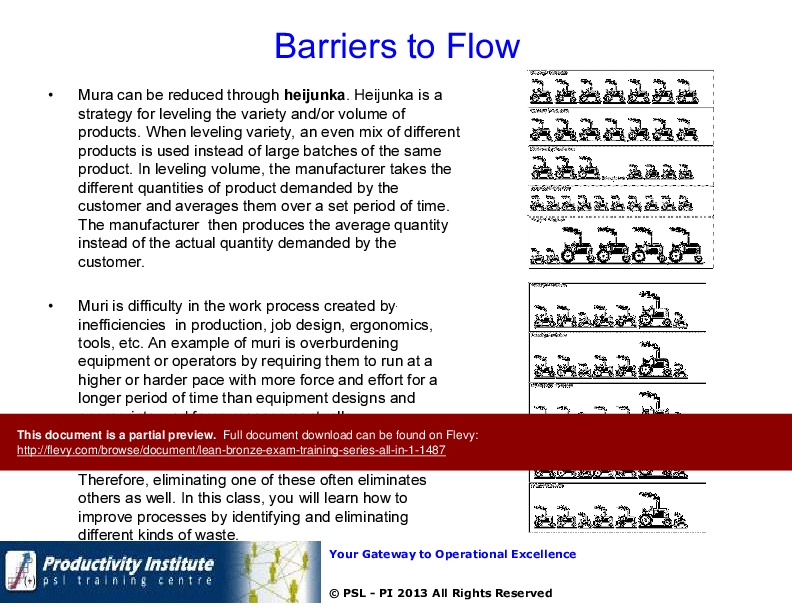
This comprehensive training series delves into the intricacies of lean methodologies, offering practical tools and techniques to identify and eliminate waste. The module on "Barriers to Flow" explores concepts like mura and muri, providing actionable strategies to streamline production processes. By understanding these barriers, you can enhance operational efficiency and reduce unnecessary strain on resources.
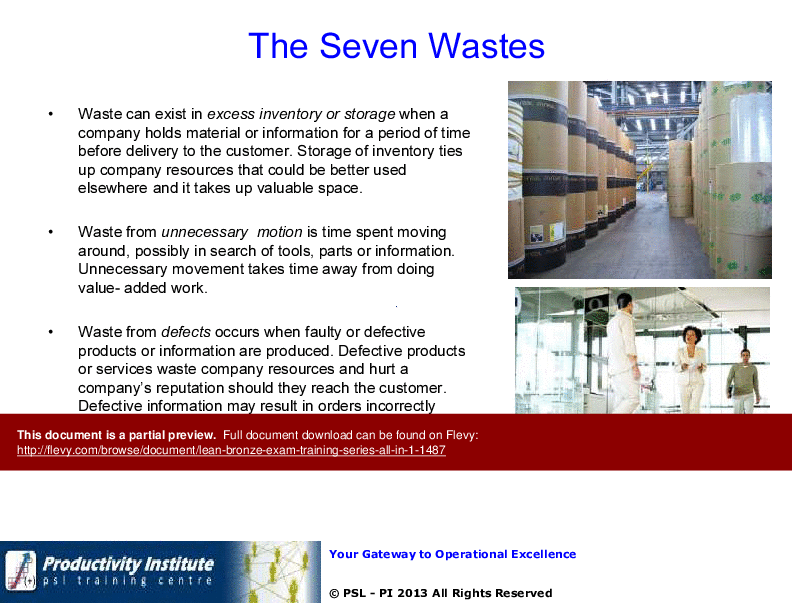
The section on "The Seven Wastes" is particularly insightful, breaking down common inefficiencies such as excess inventory, unnecessary motion, and defects. Each type of waste is explained with real-world examples, making it easier to relate to your own organizational challenges. This knowledge is crucial for anyone looking to optimize their production systems and improve overall workflow.
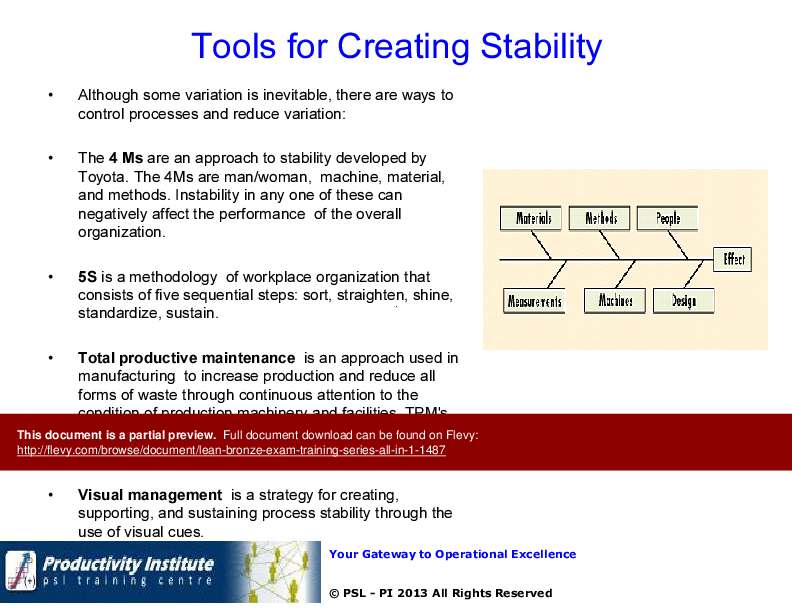
"Tools for Creating Stability" introduces methodologies like the 4Ms and 5S, which are essential for maintaining a stable and efficient work environment. The training also covers Total Productive Maintenance (TPM), emphasizing its role in maximizing equipment effectiveness. These tools are indispensable for sustaining long-term improvements and achieving operational excellence.
Got a question about the product? Email us at support@flevy.com or ask the author directly by using the "Ask the Author a Question" form. If you cannot view the preview above this document description, go here to view the large preview instead.
MARCUS OVERVIEW
This synopsis was written by Marcus [?] based on the analysis of the full 283-slide presentation.
Executive Summary
The Lean Bronze Exam Training Series is a comprehensive presentation designed to equip professionals with the knowledge and tools necessary for Lean Bronze Certification. Developed by a certified LSS Master Black Belt with extensive global training experience, this series covers essential Lean principles, including waste elimination, flow management, Total Productive Maintenance (TPM), and problem-solving methodologies. Participants will gain insights into Lean practices that enhance operational efficiency, reduce waste, and improve quality, ultimately preparing them for the Lean Bronze Exam.
Who This Is For and When to Use
• Corporate executives seeking to implement Lean methodologies in their organizations
• Integration leaders responsible for operational excellence and process improvement
• Consultants aiming to enhance their knowledge of Lean principles and practices
• Team leaders and managers looking to foster a culture of continuous improvement
Best-fit moments to use this deck:
• During Lean training sessions for new employees
• As a reference for teams preparing for Lean certification exams
• In workshops focused on process improvement and waste reduction
• For strategic planning sessions aimed at integrating Lean practices across departments
Learning Objectives
• Define key Lean concepts such as muda, mura, and muri
• Identify and eliminate the 7 types of waste in processes
• Build a stable production environment using tools like 5S and TPM
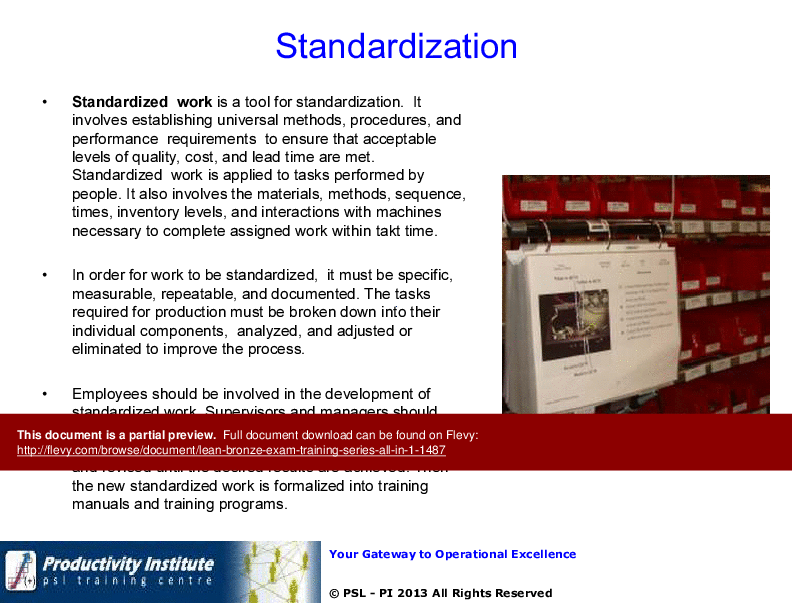
• Establish standardized work to ensure consistent quality and efficiency
• Implement problem-solving techniques such as A3 reports and PDCA cycles
• Foster a culture of continuous improvement through Kaizen events
Table of Contents
• Identifying and Eliminating Waste (page 5)
• Managing Flow (page 29)
• Problem Solving (page 55)
• Developing a Lean Culture (page 83)
• Product and Process Design (page 105)
• Measuring Lean (page 135)
• Achieving Business Results (page 155)
• Maintaining Lean Culture (page 175)
Primary Topics Covered
• Waste Identification - Understanding and categorizing waste (muda) to enhance value creation.
• Flow Management - Techniques to ensure smooth and efficient production processes.
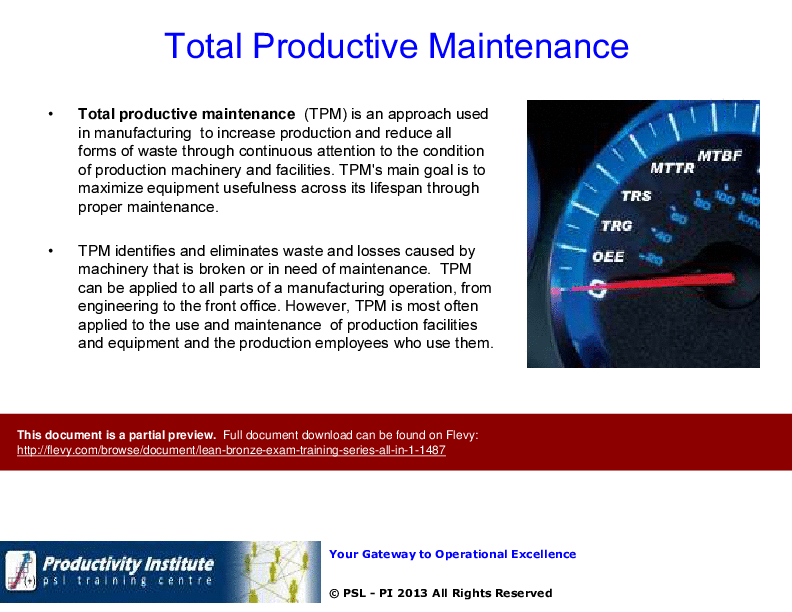
• Total Productive Maintenance (TPM) - Strategies for maintaining equipment and minimizing downtime.
• Problem Solving - Utilizing tools like A3 reports and the PDCA cycle for effective issue resolution.
• Kaizen - Implementing continuous improvement practices to foster a Lean culture.
• Value Stream Mapping - Analyzing processes to identify and eliminate waste effectively.
Deliverables, Templates, and Tools
• A3 problem-solving report template for structured analysis and resolution
• Value stream mapping template to visualize and improve process flows
• 5S implementation checklist for workplace organization
• TPM guidelines for maintaining equipment and ensuring operational efficiency
• Kaizen event planning template for organizing improvement initiatives
• Standardized work documentation format for consistent process execution
Slide Highlights
• Overview of the Seven Wastes and their impact on operational efficiency
• Visual representation of the Lean House of Quality and its components
• Flow charts illustrating the process of continuous improvement
• Case studies demonstrating successful Lean implementations
• Key metrics for measuring Lean effectiveness, including OEE and first pass yield
Potential Workshop Agenda
Introduction to Lean Principles (60 minutes)
• Overview of Lean concepts and their significance
• Discussion on the importance of waste elimination
Hands-On Value Stream Mapping (90 minutes)
• Participants create a current state map of a selected process
• Identify areas for improvement and develop a future state map
Problem-Solving Techniques Workshop (90 minutes)
• Introduction to A3 reports and PDCA cycles
• Group exercise on root cause analysis using the Five Whys
Kaizen Event Planning (60 minutes)
• Steps for organizing a successful Kaizen event
• Setting objectives and expected outcomes
Customization Guidance
• Tailor the presentation to include specific case studies relevant to your industry
• Adjust the workshop agenda to focus on particular Lean tools most applicable to your organization
• Incorporate company-specific metrics and performance indicators for measuring Lean success
Secondary Topics Covered
• Jidoka and its role in error prevention
• The significance of ergonomics in Lean practices
• Environmental sustainability within Lean frameworks
• The importance of leadership and communication in fostering a Lean culture
• Strategies for effective resource deployment and reallocation
Topic FAQ
What core topics does Lean Bronze certification training typically cover?
Lean Bronze training focuses on waste identification (muda/mura/muri), managing flow, problem solving, developing Lean culture, product and process design, measuring Lean (metrics like OEE), achieving business results, and maintaining Lean culture. The structure is organized into 8 modules.What problem-solving methods should I master for Lean Bronze preparation?
Core problem-solving methods include A3 report methodology, PDCA cycles, root-cause techniques such as the Five Whys, and the DMAIC structure used in Lean Six Sigma. These tools are emphasized in training materials like the A3 report template and PDCA examples.Which Lean tools help create a stable production environment?
Tools that create stability include 5S for workplace organization, Total Productive Maintenance (TPM) to minimize downtime, standardized work documentation, and the 4Ms analysis. Training resources typically provide a 5S implementation checklist and TPM guidelines.What should I look for in a Lean Bronze exam training package?
Look for coverage of the 8 core modules, alignment to the Bronze exam format, practical templates (A3, VSM, 5S, TPM), and sufficient practice questions with answers. The Lean BRONZE Exam Training Series - ALL in 1 includes 174 practice questions and templates.How can I assess the credibility of a Lean training author?
Credible authors often hold Lean Six Sigma credentials (for example, Master Black Belt), have extensive training experience (the author trained 5,000+ students), and may hold roles such as portfolio reviewer for certification programs. Such credentials support practical exam-aligned instruction.I need to run a half-day workshop on waste elimination — what agenda should I follow?
Use the suggested workshop modules and select core elements: an introductory Lean overview (from the provided 60-minute module) plus a hands-on Value Stream Mapping exercise (90 minutes) is a common half-day combination; the source agenda lists VSM as a 90-minute activity.How do practice questions help with Lean Bronze exam preparation?
Practice questions familiarize candidates with exam-style problems and reinforce core concepts; the Lean Bronze certification exam pass mark is 75% and is administered by SME. The Lean BRONZE Exam Training Series - ALL in 1 supplies 174 practice questions with answers.Can a Lean Bronze training presentation be customized for industry-specific cases?
Yes. The training advises tailoring content to include industry-relevant case studies, adjusting workshop agendas, and incorporating company-specific metrics and performance indicators; deliverables such as the A3 template and Kaizen event planning template support customization.Document FAQ
These are questions addressed within this presentation.
What is the Lean Bronze Certification?
The Lean Bronze Certification is a credential that recognizes individuals who have demonstrated a foundational understanding of Lean principles and practices.
Who should attend this training series?
This series is ideal for corporate executives, integration leaders, consultants, and team managers looking to implement Lean methodologies in their organizations.
How long is the training series?
The training series consists of multiple sessions, each focusing on different aspects of Lean principles and practices, typically spanning several hours to a full day.
What materials will participants receive?
Participants will receive access to presentation slides, templates for Lean tools, and additional resources for further learning.
Is there a certification exam?
Yes, participants can opt to take the Lean Bronze Exam after completing the training series to earn their certification.
What is the significance of Kaizen in Lean?
Kaizen refers to the practice of continuous improvement, encouraging all employees to identify and implement small, incremental changes to enhance processes and eliminate waste.
How can I implement Lean practices in my organization?
Start by assessing current processes, identifying waste, and engaging employees in training sessions focused on Lean tools and methodologies.
What role does leadership play in Lean culture?
Leadership is crucial in establishing a Lean culture, as it sets the vision, encourages employee involvement, and fosters an environment of continuous improvement.
Glossary
• Muda - Waste or any activity that consumes resources without creating value.
• Kaizen - Continuous improvement through incremental changes to processes.
• 5S - A methodology for workplace organization: Sort, Straighten, Shine, Standardize, Sustain.
• Jidoka - Automation with a human touch; error detection and prevention in processes.
• OEE - Overall Equipment Effectiveness; a metric for measuring the efficiency of production equipment.
• Value Stream Mapping - A visual tool for analyzing the flow of materials and information in a process.
• PDCA - Plan-Do-Check-Act; a cyclical process for continuous improvement.
• A3 Report - A structured problem-solving tool used in Lean practices.
• Takt Time - The rate at which a product must be produced to meet customer demand.
• DMAIC - Define, Measure, Analyze, Improve, Control; a structured problem-solving methodology.
• Heijunka - Leveling production to reduce variability and improve flow.
• Kanban - A visual signal used to trigger the production or movement of items in a Lean system.
Source: Lean BRONZE Exam Training Series - ALL in 1 PowerPoint (PPT) Presentation Slide Deck, OpEx Academy NZ
ABOUT THE AUTHOR
Vishnu Rayapeddi is an experienced management consultant and trainer specializing in implementing continuous process improvements. Vishnu is a pioneer in Lean Management which combines the power of Lean Thinking, TOC, Six Sigma, TQM, TWI, Balanced Scorecard, cGMP and other best-class methodologies such as, DMAIC, Value Stream Mapping, Root Cause Analysis, 5S, Quick Changeovers, Quality and ... [read more]
Ask the Author a Question
You must be logged in to contact the author.




























