 Click main image to view in full screen.
Sovereign Strategic Asset Playbook – PDF
PDF document 15 Pages


BENEFITS OF THIS DOWNLOADABLE PDF DOCUMENT
- Provides a structured framework for evaluating strategic infrastructure ownership beyond conventional investment attractiveness.
- Tests whether ownership provides meaningful governance, strategic influence, and credible ecosystem value capture.
- Converts strategic assessment into evidence gates and actionable ownership modes: Own, Partner, Structure, Observe, or Decline.
RISK MANAGEMENT PDF DESCRIPTION
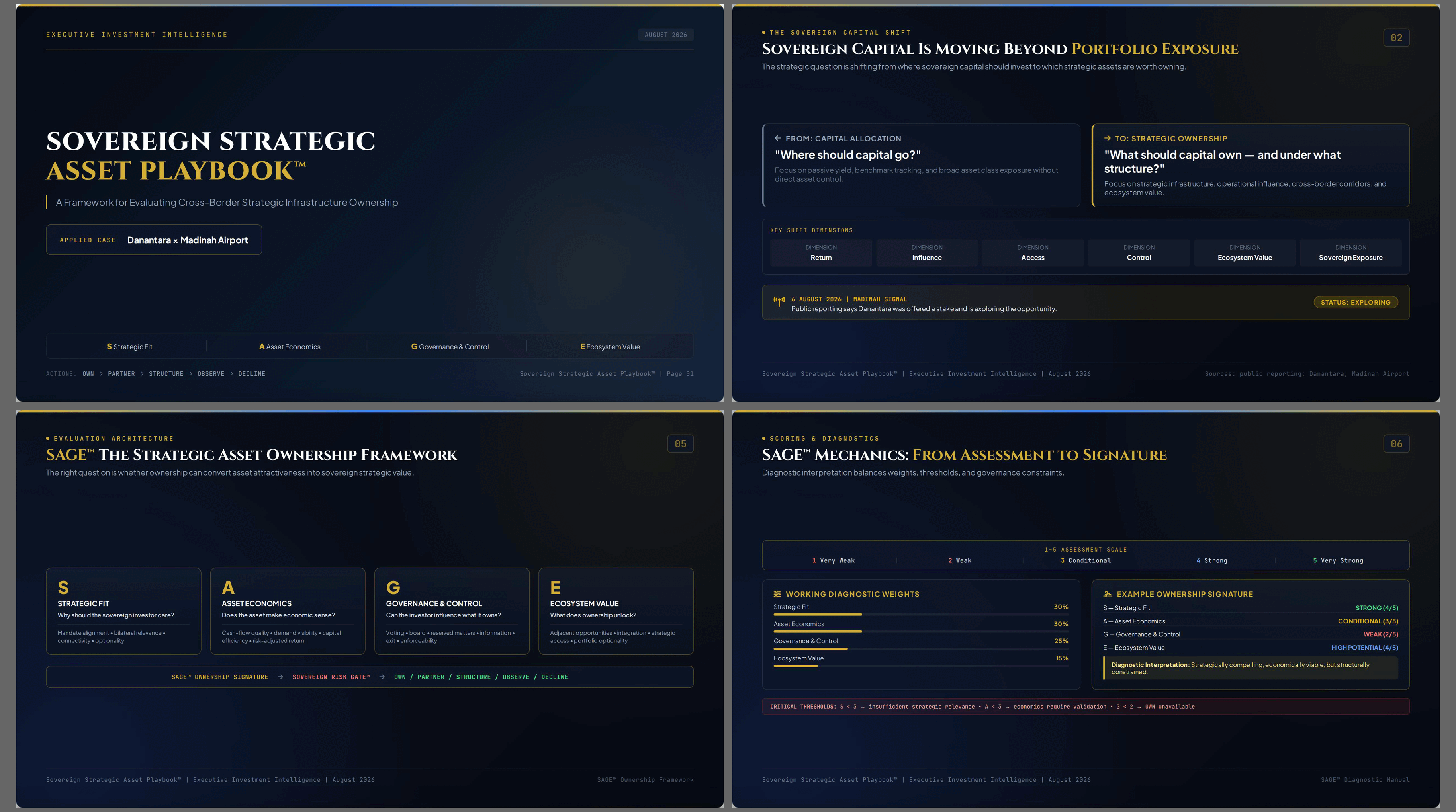
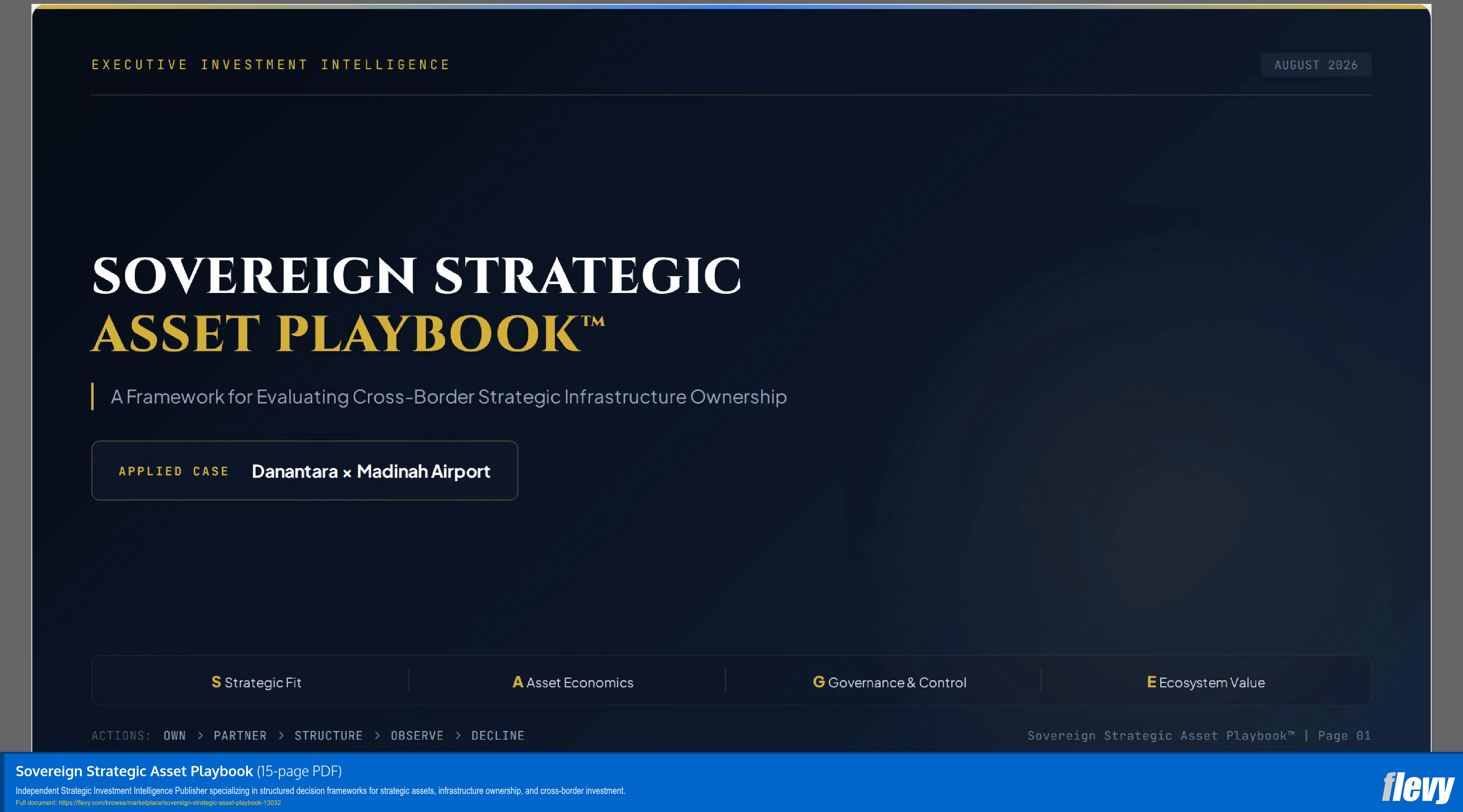
Sovereign Strategic Asset Playbook™ is an executive investment intelligence framework for evaluating whether strategic infrastructure assets are worth owning – and, critically, under what ownership structure.
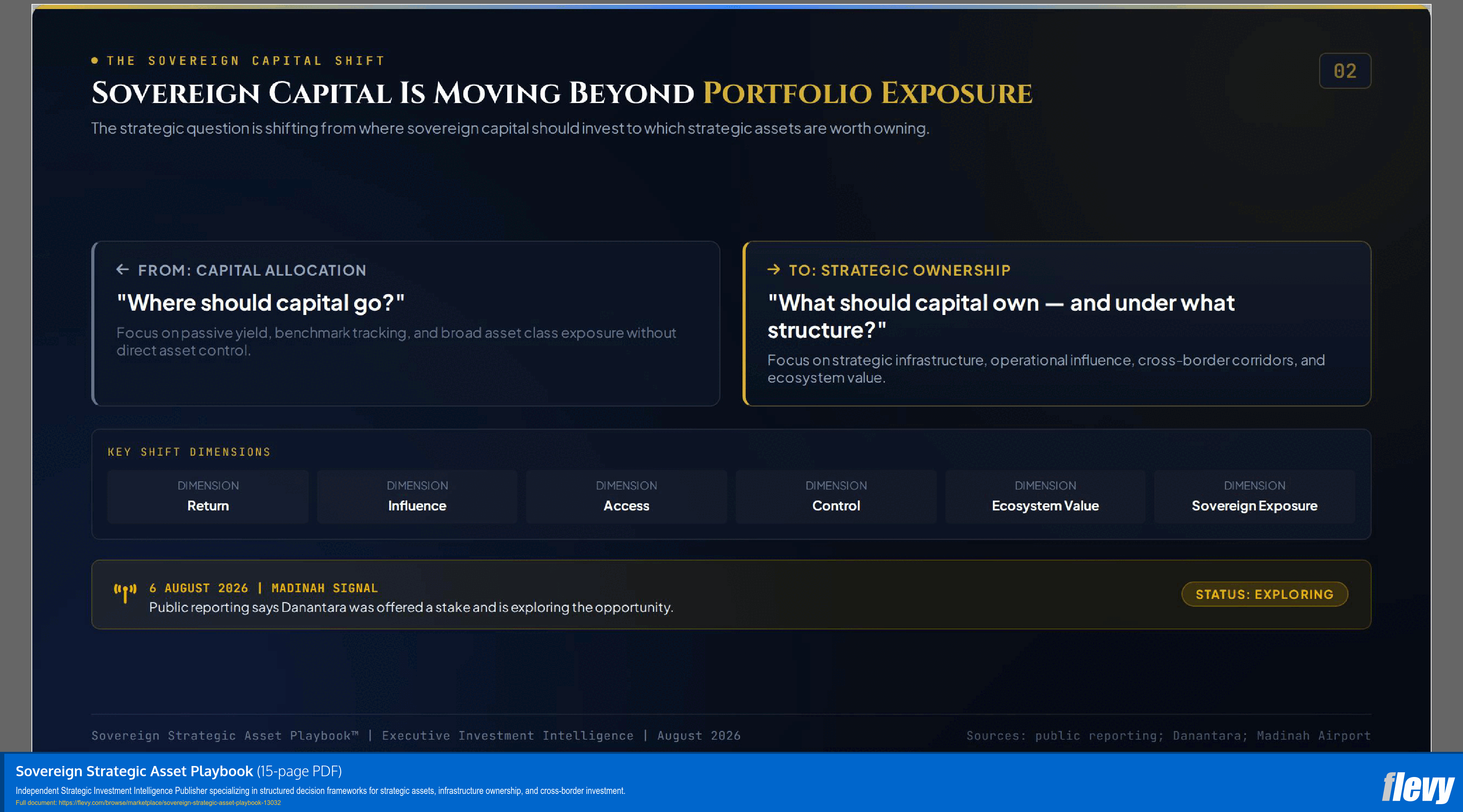
Traditional investment analysis often asks a straightforward question: "Is this asset attractive?" Strategic ownership requires a different decision architecture. Sovereign and institutional investors must also determine why an asset matters strategically, whether its underlying economics are defensible, what influence ownership actually provides, what ecosystem value ownership may unlock, and whether sovereign risks can be structurally contained.
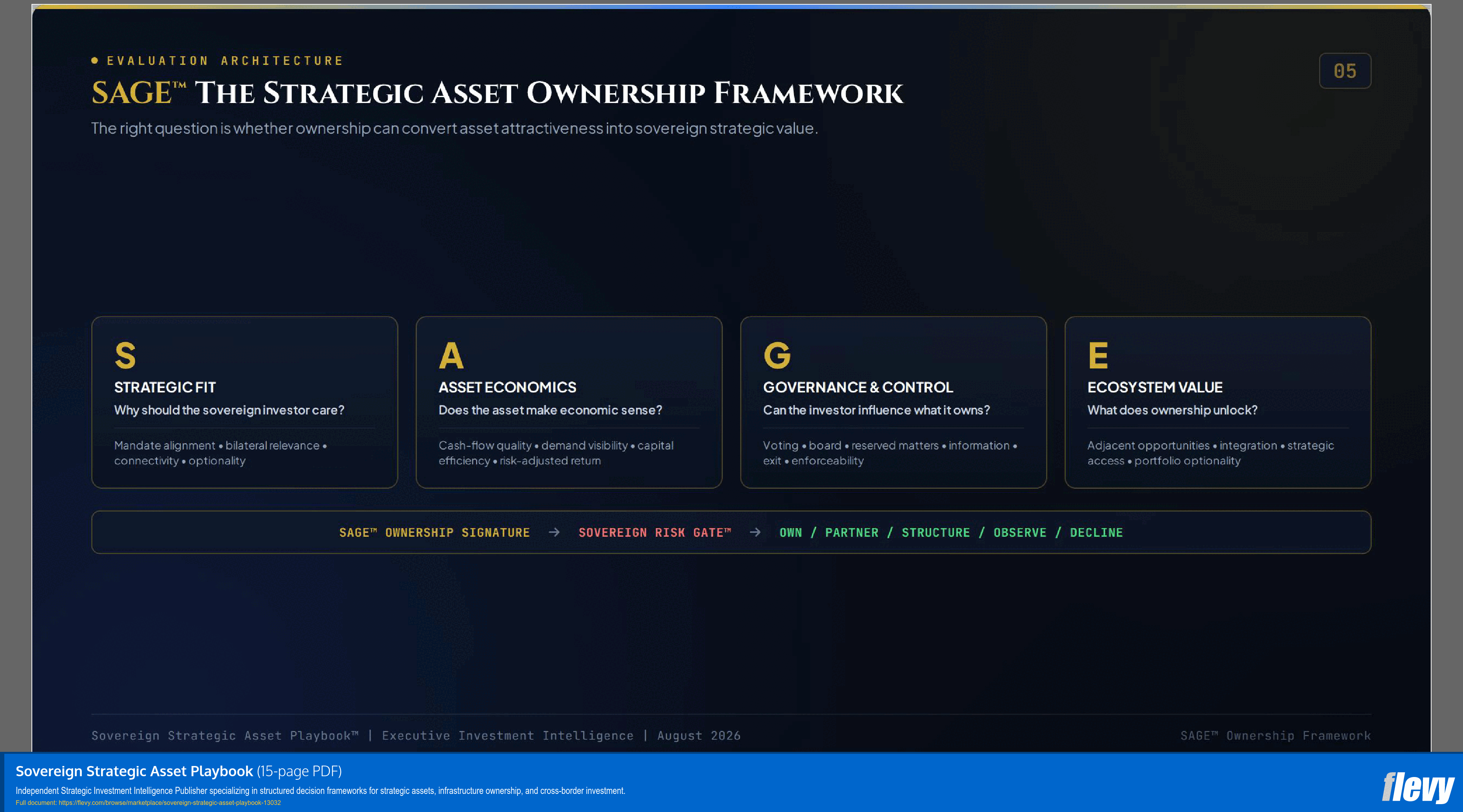
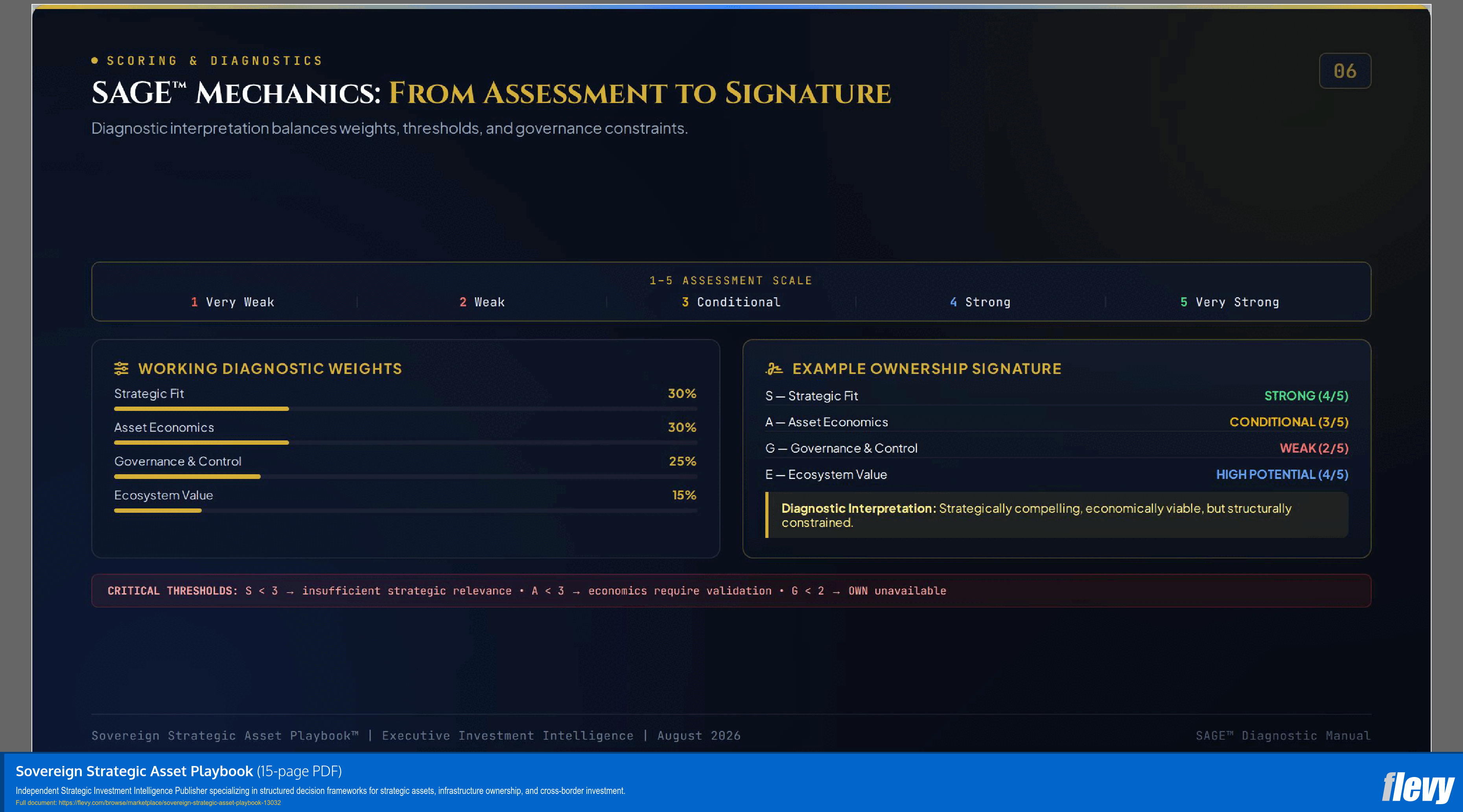
This Playbook introduces SAGE™, a Strategic Asset Ownership Framework built around four dimensions: Strategic Fit, Asset Economics, Governance & Control, and Ecosystem Value. SAGE™ converts strategic judgment into an evidence-led Ownership Signature rather than reducing the investment decision to a single score.
The framework is complemented by the Sovereign Risk Gate™, which classifies material risks into three levels: Dealbreaker, Structural, and Manageable. The Risk Gate can override an otherwise attractive SAGE™ profile when sovereign exposure is unacceptable.
A central concept is the Effective Ownership Power Test. Ownership percentage alone does not determine strategic influence. Voting rights, board representation, reserved matters, information rights, exit mechanisms, and practical enforceability can materially change the strategic value of a minority or joint-venture position.
The Playbook also distinguishes Ecosystem Potential from Value Captureability. An asset may sit at the center of an attractive ecosystem while the investor remains unable to capture that value without appropriate ownership rights, commercial agreements, governance mechanisms, or adjacent participation rights.
The applied case examines the publicly reported Danantara opportunity involving Prince Mohammad Bin Abdulaziz International Airport in Madinah. The case demonstrates how SAGE™ can be applied without assuming undisclosed transaction economics. Where public information does not establish stake size, valuation, governance rights, concession economics, or ownership terms, the framework identifies the information gap and converts it into a due-diligence requirement.
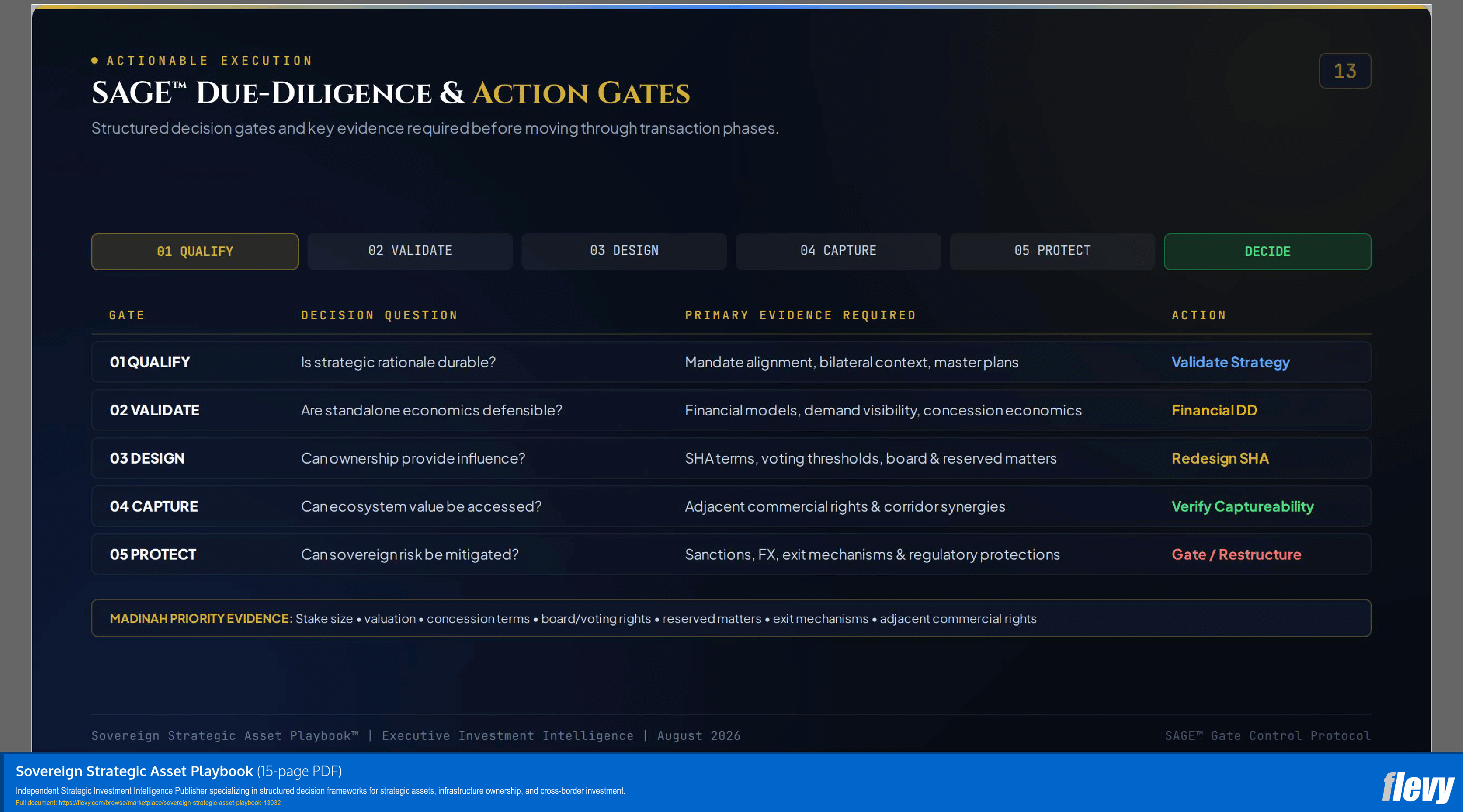
The Playbook then translates assessment into action through five evidence gates: Qualify, Validate, Design, Capture, and Protect – leading to an ownership mode of Own, Partner, Structure, Observe, or Decline.
Beyond the Madinah case, the framework is designed to be reusable across strategic infrastructure archetypes including airports, port terminals, hyperscale data centers, renewable energy infrastructure, logistics assets, and other cross-border strategic assets.
This is not a valuation model, IRR calculator, legal advisory product, transaction advisory mandate, or generic political-risk report. It is a strategic ownership decision system designed to help investment teams structure the questions, evidence requirements, governance considerations, and ownership choices that should precede a major cross-border infrastructure investment decision.
The Madinah application is based on publicly available information and does not represent Danantara's investment decision, transaction terms, valuation, ownership percentage, or official position. Undisclosed transaction-specific information is treated as an evidence gap rather than assumed fact.
Got a question about the product? Email us at support@flevy.com or ask the author directly by using the "Ask the Author a Question" form. If you cannot view the preview above this document description, go here to view the large preview instead.
Source: Best Practices in Risk Management, M&A (Mergers & Acquisitions) PDF: Sovereign Strategic Asset Playbook PDF (PDF) Document, Wisnu Pandega Wardana
ABOUT THE AUTHOR

I am an independent Industrial Intelligence and Strategic Innovation Publisher focused on developing structured business intelligence, innovation frameworks, and opportunity-oriented research for decision-makers.
My work focuses on translating emerging technologies, industrial transformation, sustainability, resource efficiency, and market shifts into structured intelligence assets that
... [read more]
Ask the Author a Question
You must be logged in to contact the author.




























