 Click main image to view in full screen.
Single-Asset Private Equity Waterfall Model – Excel XLSX
Excel (XLSX)


BENEFITS OF THIS DOWNLOADABLE EXCEL DOCUMENT
- Institutional-quality analysis for your single-asset and SPV (Special Purpose Vehicle) deals with this powerful, flexible, and intuitive Excel model. Designed for private equity professionals
PRIVATE EQUITY EXCEL DESCRIPTION
Unlock institutional-quality analysis for your single-asset and SPV (Special Purpose Vehicle) deals with this powerful, flexible, and intuitive Excel model. Designed for private equity professionals, this template provides a complete framework for analyzing an investment from acquisition to exit.
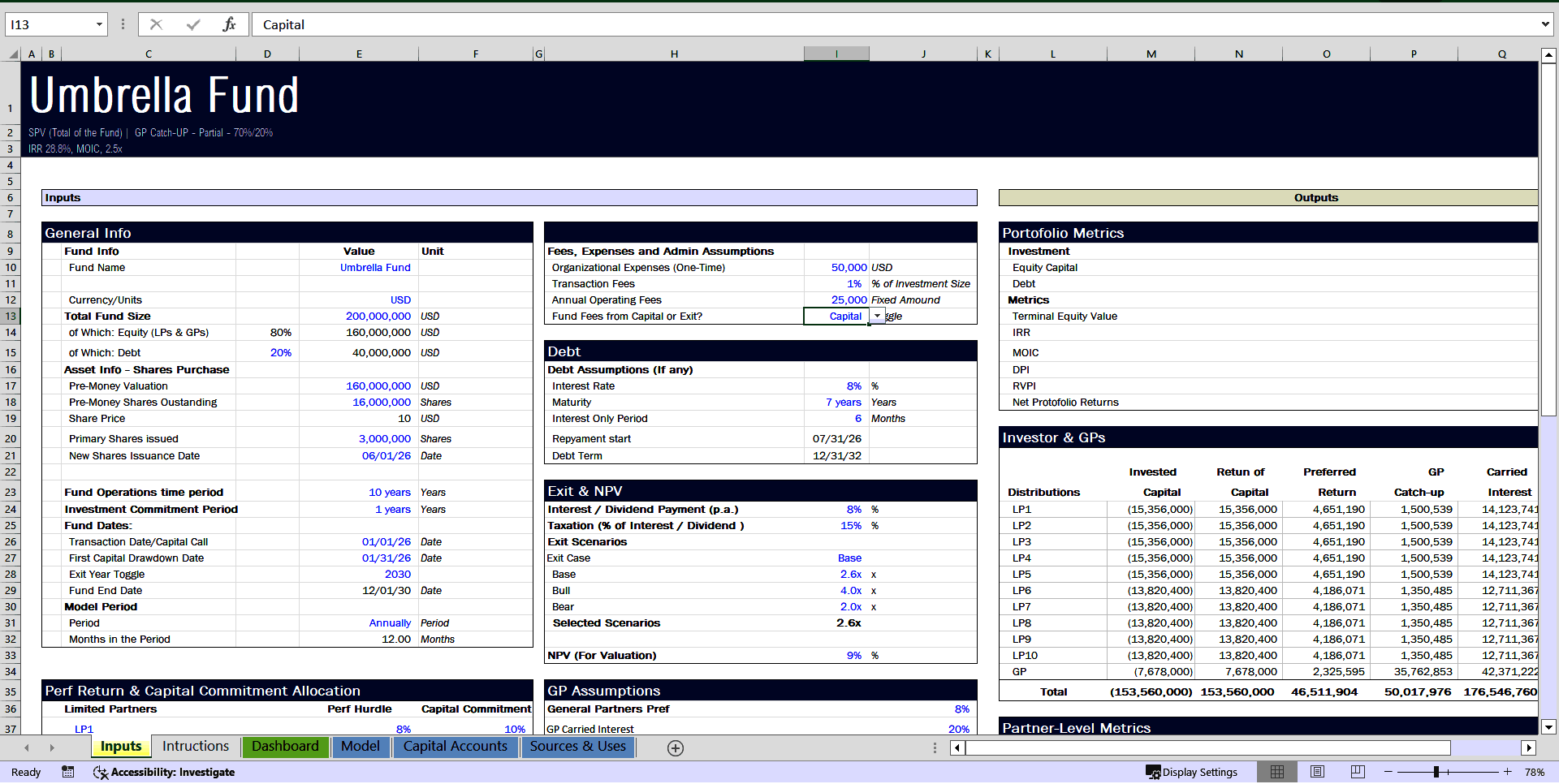
Whether you're a GP presenting a deal to investors or an LP conducting due diligence, this model gives you the clarity and sophistication needed to make informed decisions. The entire model is driven from a single, clean Inputs tab, making complex scenario analysis fast and simple.
Key Features
• This model is packed with features that are essential for professional private equity deal analysis:
• Dynamic Scenario Analysis:
-Instantly toggle between three user-defined scenarios: Bull Case, Base Case, and Bear Case.
-Each scenario drives its own unique assumptions for investment performance and exit valuation, allowing for a full range of potential outcomes.
-Flexible Timing & Exit Analysis:
-Use a simple dropdown to select the Exit Year, allowing you to instantly stress-test the impact of hold period on IRR and other metrics.
• The model is built to handle a Single Closing date for all partners, which is the standard for single-asset SPVs.
— Institutional 4-Tier Distribution Waterfall:
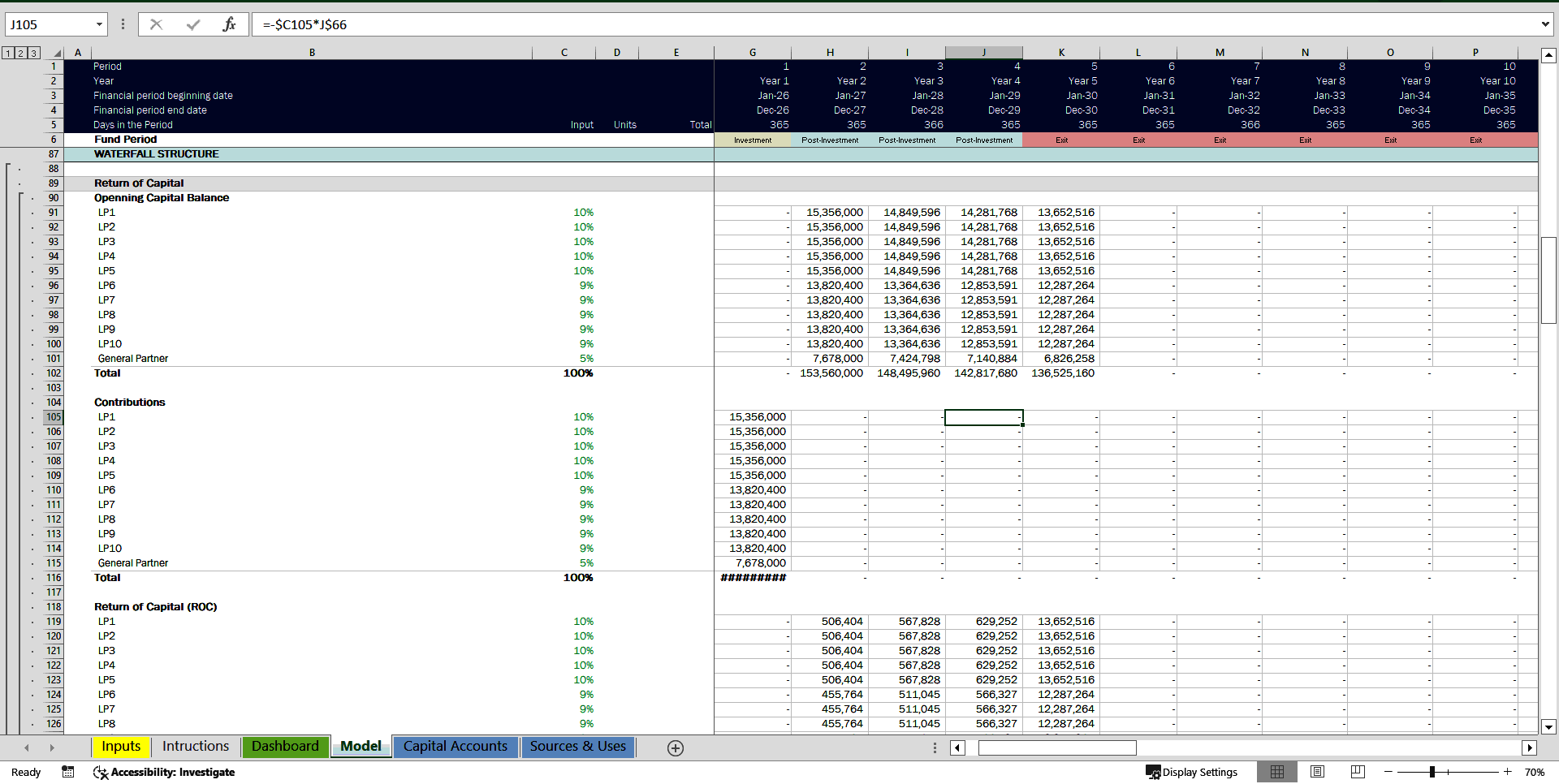
• A complete, automated waterfall that allocates all distributable cash according to the four standard tiers:
• Return of Capital (ROC)
• Preferred Return (Hurdle)
• GP Catch-Up
• Carried Interest Split
• Configurable Deal Terms:
• Preferred Return: Set any hurdle rate (e.g., 8%, 10%).
• GP Catch-up: Use a dropdown to select between 100% (Full) or Partial catch-up structures.
• Carried Interest: Set any carry percentage (e.g., 20%).
• Sophisticated Capital Structure Modeling:
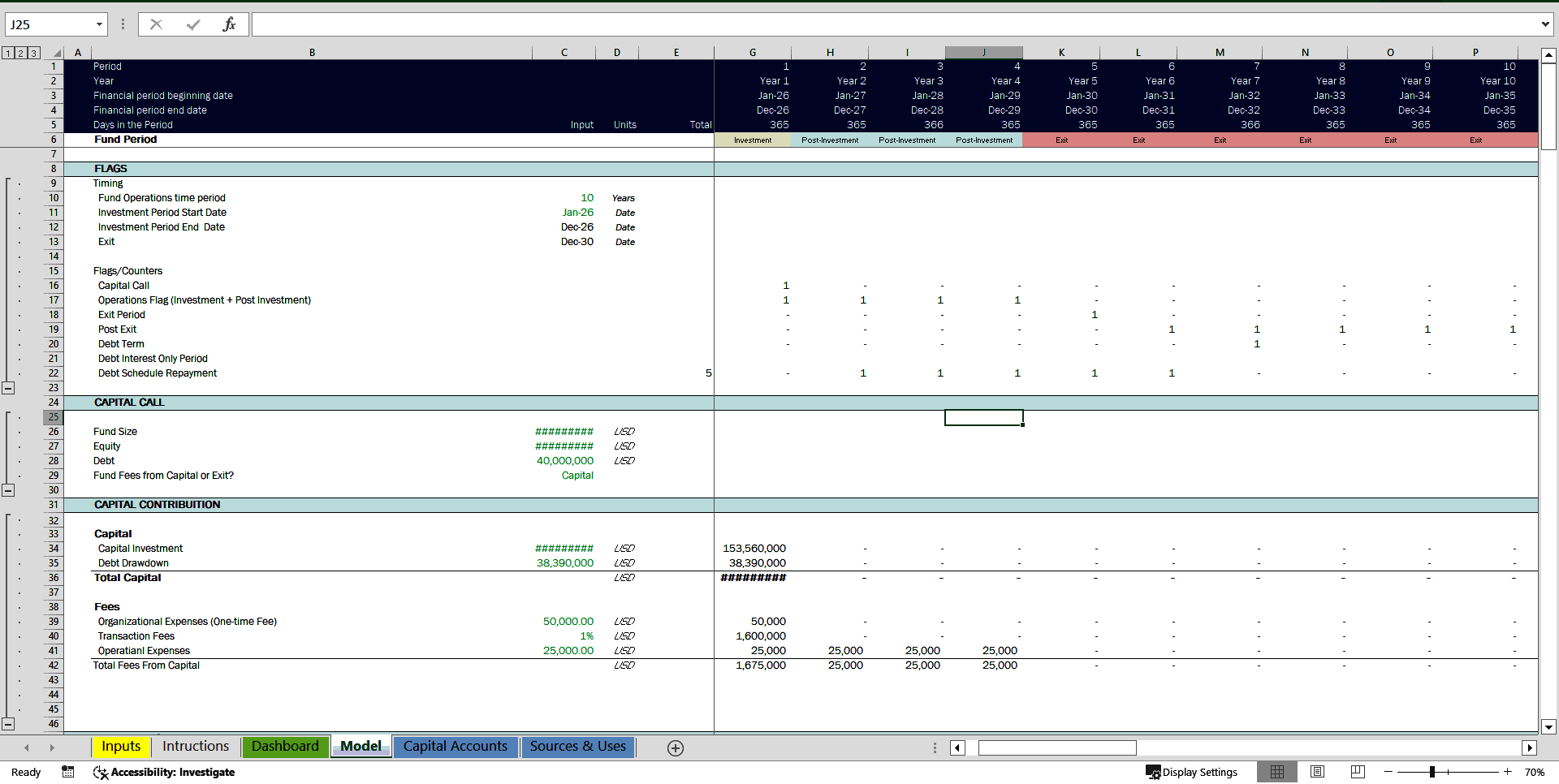
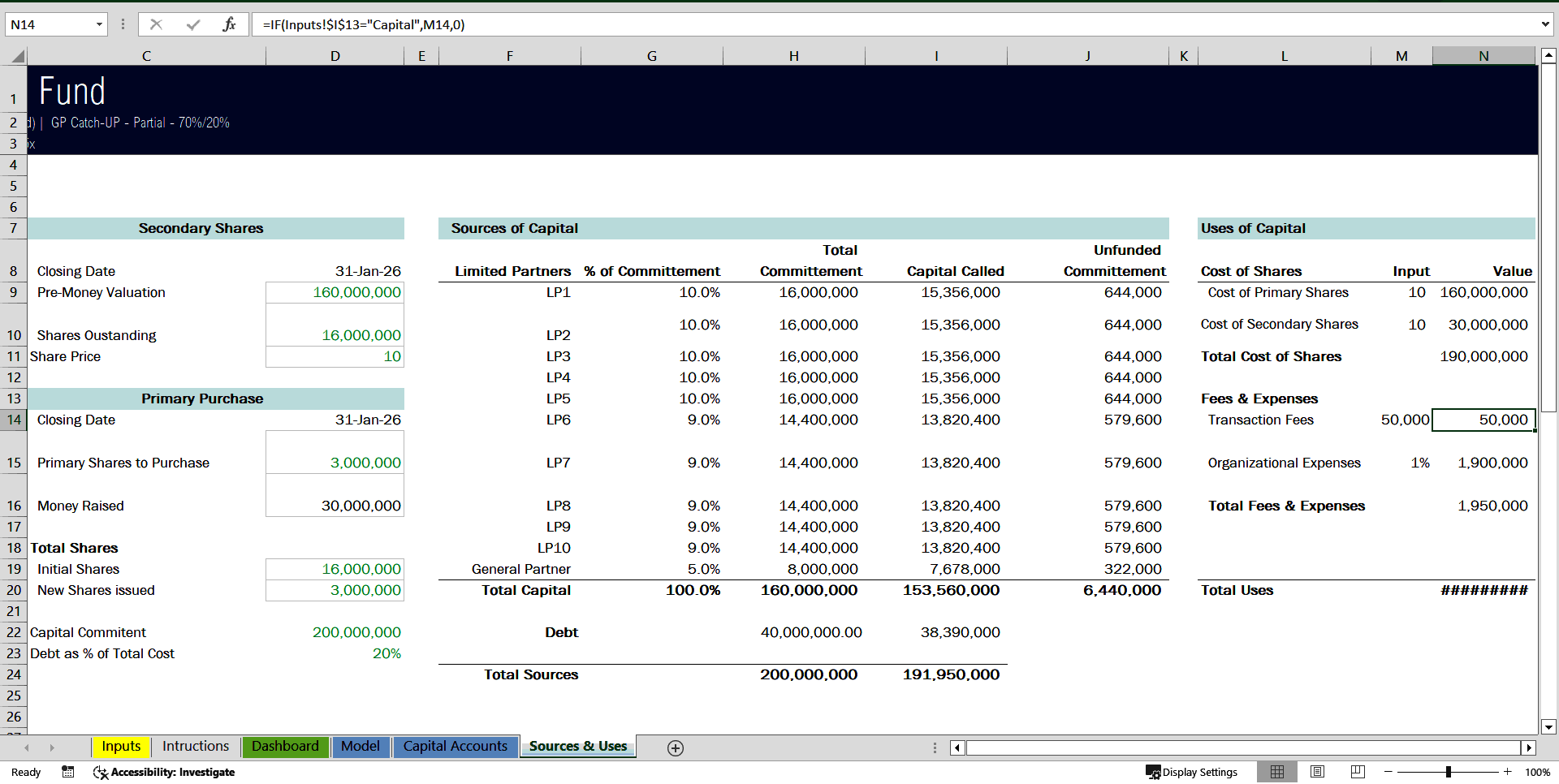
• Acquisition Debt: Easily toggle debt "on" or "off" to model a full leveraged buyout (LBO) structure. Input leverage amounts, interest rates, and repayment schedules.
• GP Co-Invest: The model properly accounts for a GP capital contribution, treating the GP as both a manager (earning carry) and an investor (earning a return on their capital).
Advanced Fund Mechanics:
• Detailed Partner & Commitment Tracking:
• Configure up to 10 Limited Partners and a General Partner with varying commitment amounts.
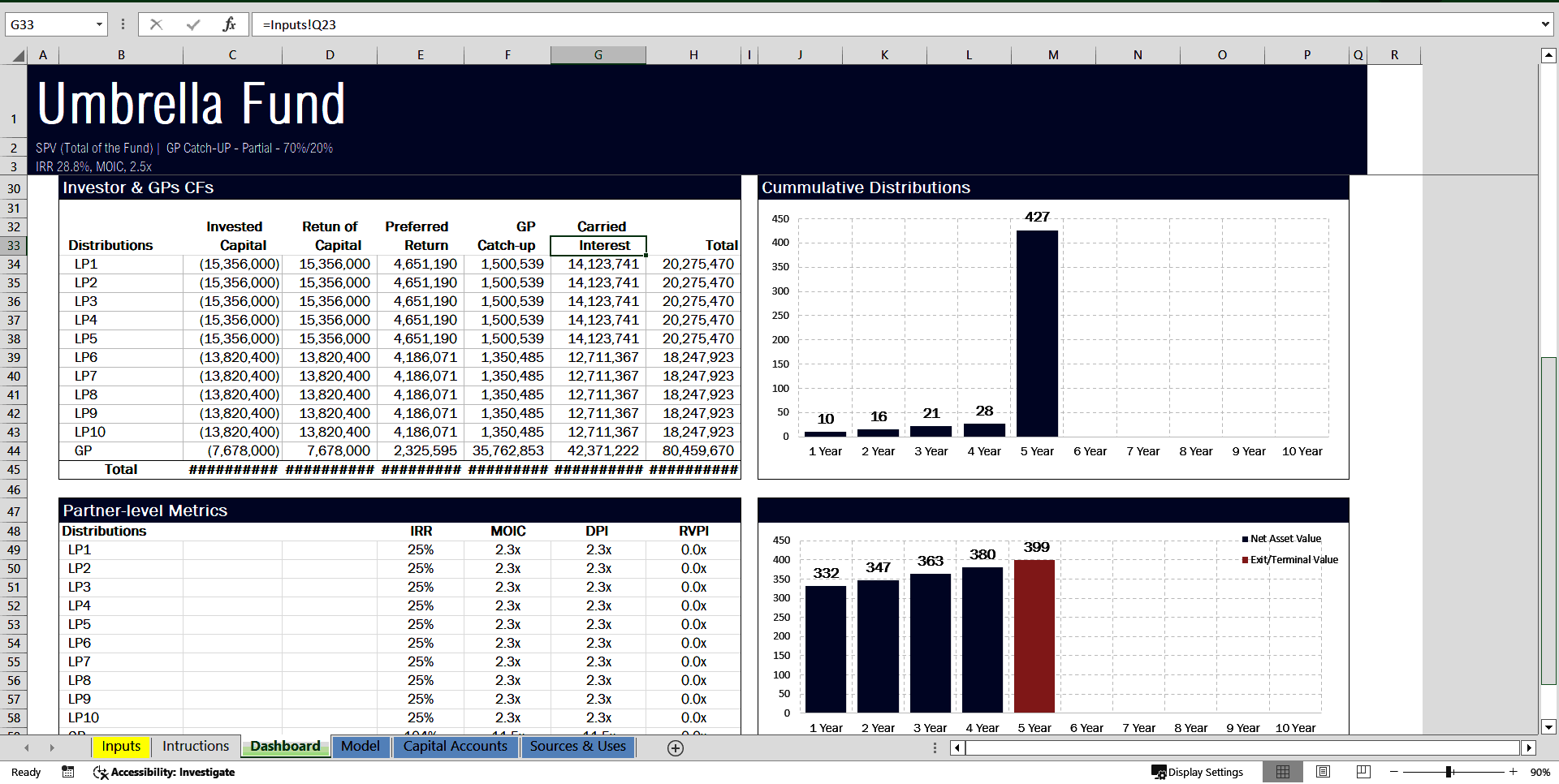
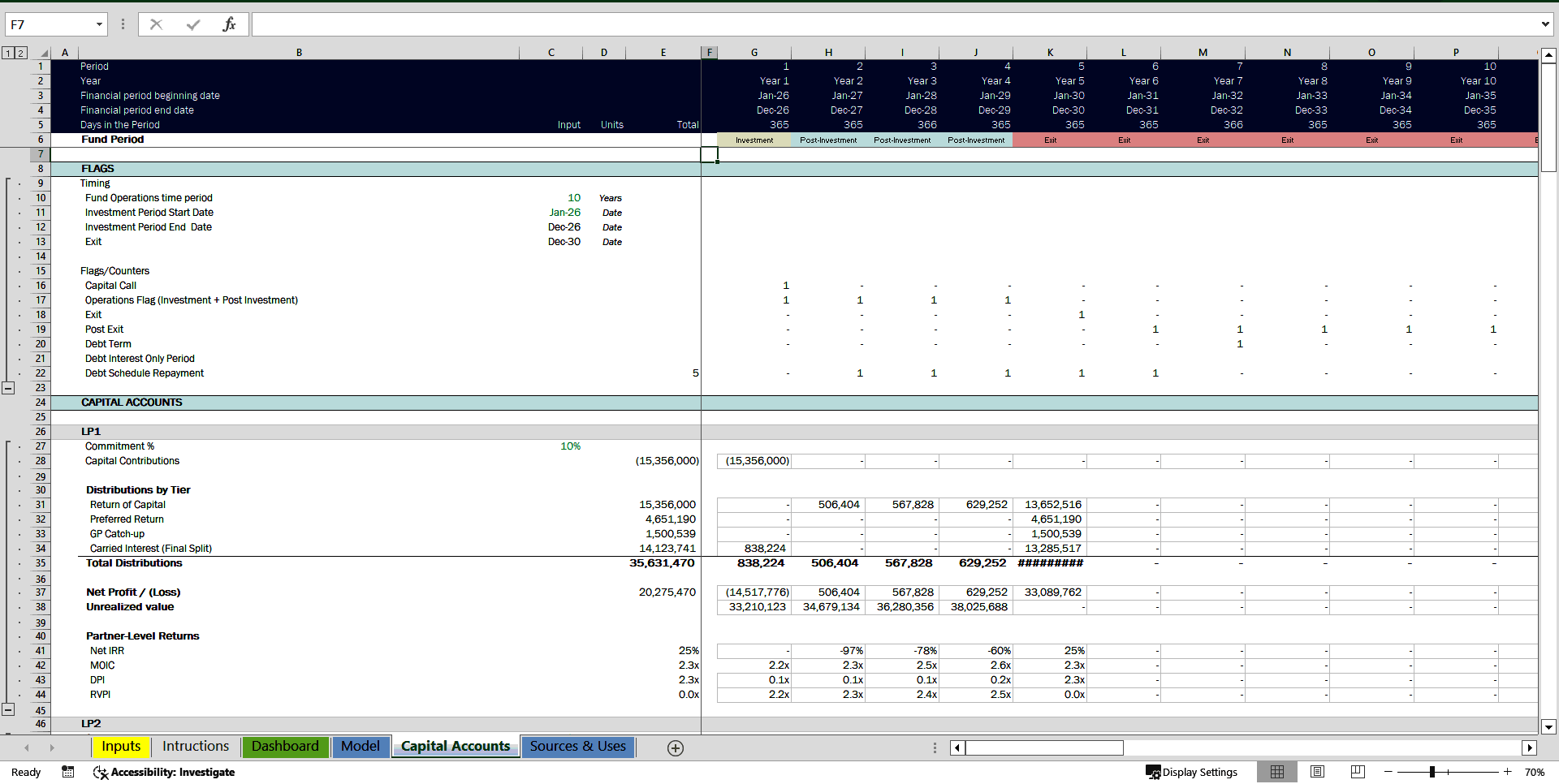
• The model provides a full capital account summary for each partner, tracking every dollar from beginning to end.
Comprehensive Returns Dashboard:
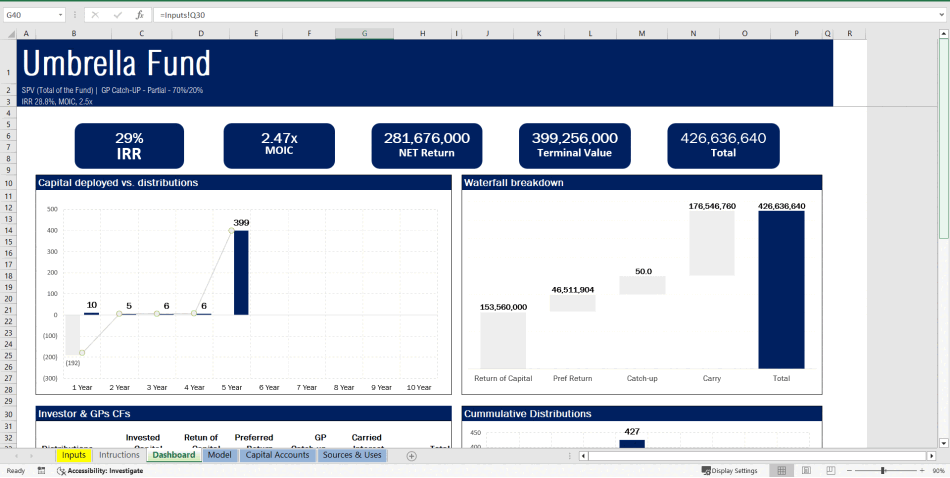
• The final output is a clean, professional dashboard that visually summarizes the entire investment.
• It clearly separates the three layers of returns: Gross (asset-level), Net of Fees (fund-level), and Net to LPs (the final take-home return).
• All key metrics are calculated and displayed: Net IRR, Gross IRR, MOIC, DPI, and RVPI.
• Includes visuals for Capital Deployed vs. Distributions (J-Curve), a Waterfall Breakdown, and a Partner-level cash flow summary.
How It Works
The model is designed for ease of use. All of the interconnected calculations are automated. The user only needs to provide assumptions on the 01_Inputs sheet in the designated cells formatted with a <font color="blue">blue font and yellow background</font>. The rest of the model populates automatically.
Who Is It For?
• General Partners & Independent Sponsors: To structure deals and present a clear, professional case to potential investors.
• Limited Partners & Family Offices: To conduct thorough due diligence and analyze potential investment opportunities.
• Investment Bankers & M&A Advisors: To model the equity returns for financial sponsors.
• Finance Students & Professionals: To learn and master the mechanics of private equity deal modeling.
What's Included?
A fully unlocked Excel (.xlsx) file with the following clearly structured tabs:
01_Inputs
02_S&U (Sources & Uses)
03_CF_Forecast
04_Waterfall
05_Partner_Accounts
06_Dashboard
Got a question about the product? Email us at support@flevy.com or ask the author directly by using the "Ask the Author a Question" form. If you cannot view the preview above this document description, go here to view the large preview instead.
TOPIC FAQ
What are the standard tiers in a private equity distribution waterfall?
A standard institutional distribution waterfall allocates distributable cash across 4 tiers: Return of Capital (ROC), Preferred Return (Hurdle), GP Catch-Up, and the Carried Interest Split. These 4 tiers define the sequencing and priority of cash flows in typical private equity SPV waterfalls.How can scenario analysis be structured in a single-asset private equity model?
Scenario analysis is commonly structured with user-defined cases that drive distinct performance and exit assumptions. The Single-Asset Private Equity Waterfall Model uses 3 user-defined scenarios (Bull, Base, Bear) fed from a single Inputs tab so each scenario produces its own cash flows and exit valuation, covering 3 scenarios.Which return metrics should I track for SPV investments to report to investors?
Key SPV return metrics include Net IRR, Gross IRR, MOIC, DPI, and RVPI. A useful dashboard separates gross (asset-level), net of fees (fund-level), and net to LPs to show the full investor outcome across those 5 metrics.What features should I expect in an Excel model that supports SPV waterfalls and LBOs?
Expect dynamic scenario analysis, an Exit Year dropdown to test hold periods, a debt on/off toggle with leverage and repayment inputs, configurable preferred return, GP catch-up options, carry percentage settings, GP co-invest treatment, partner-level accounting, and dashboard visuals. The Single-Asset Private Equity Waterfall Model includes these features and partner tracking for up to 10 LPs.How much customization does a professional single-asset waterfall template typically allow for deal terms?
A professional template lets you set preferred return rates, choose GP catch-up structure (full or partial), set carried interest percentage, toggle acquisition debt on or off, input leverage and interest schedules, and select Exit Year via dropdown, all driven from a single Inputs tab.I'm preparing a capital account summary for multiple LPs — what level of detail is useful?
Useful detail includes configurable commitments for up to 10 Limited Partners and one General Partner, a full capital account summary that tracks contributions, distributions, and ending balances per partner, and partner-level cash flow summaries for investor reporting. The Single-Asset Private Equity Waterfall Model provides that partner-level detail.How should GP co-invest be treated in waterfall modeling?
GP co-invest should be modeled so the GP is treated both as manager (earning carried interest) and as an investor (earning returns on contributed capital). The template should account for the GP capital contribution in partner accounts and reflect its effect on distributions, catch-up, and carry outcomes, including configurable carry percentage.How can I test the impact of hold period on IRR and other metrics?
Use an Exit Year selection to vary the hold period and recalculate cash flows and exit valuation; combining that with scenario toggles lets you stress-test IRR, MOIC, and other returns. The model’s Exit Year dropdown and scenario-driven inputs enable quick hold-period sensitivity testing.Source: Best Practices in Private Equity Excel: Single-Asset Private Equity Waterfall Model Excel (XLSX) Spreadsheet, Jair Almeida




























