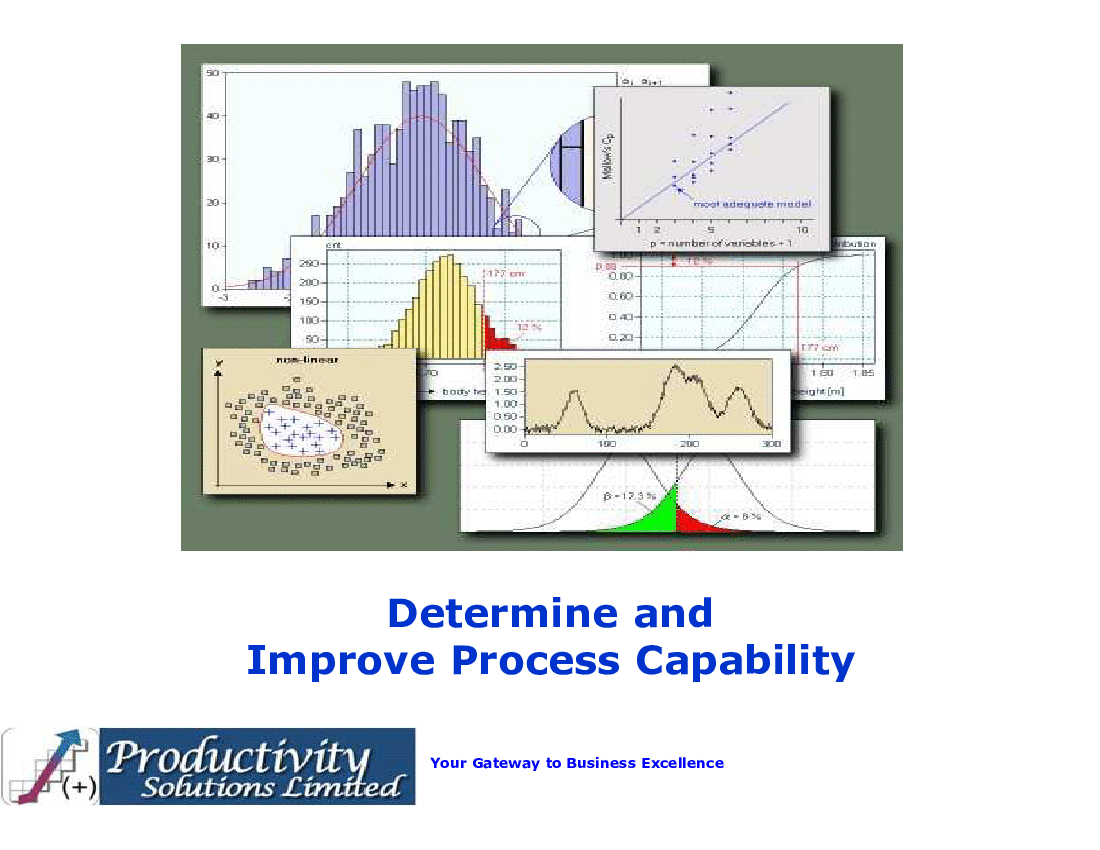

This is a 60-slide presentation for a workshop on how to determine and improve Process Capability using Six Sigma. It contains 3 sessions.

Session 1: Identifying Process for Capability Improvement
• Process Model
• Exercise: Catapult – Identifying Process Variables
• KPIV & KPOV relationship
• Measurements
• Exercise: Catapult – Collecting and Displaying Data
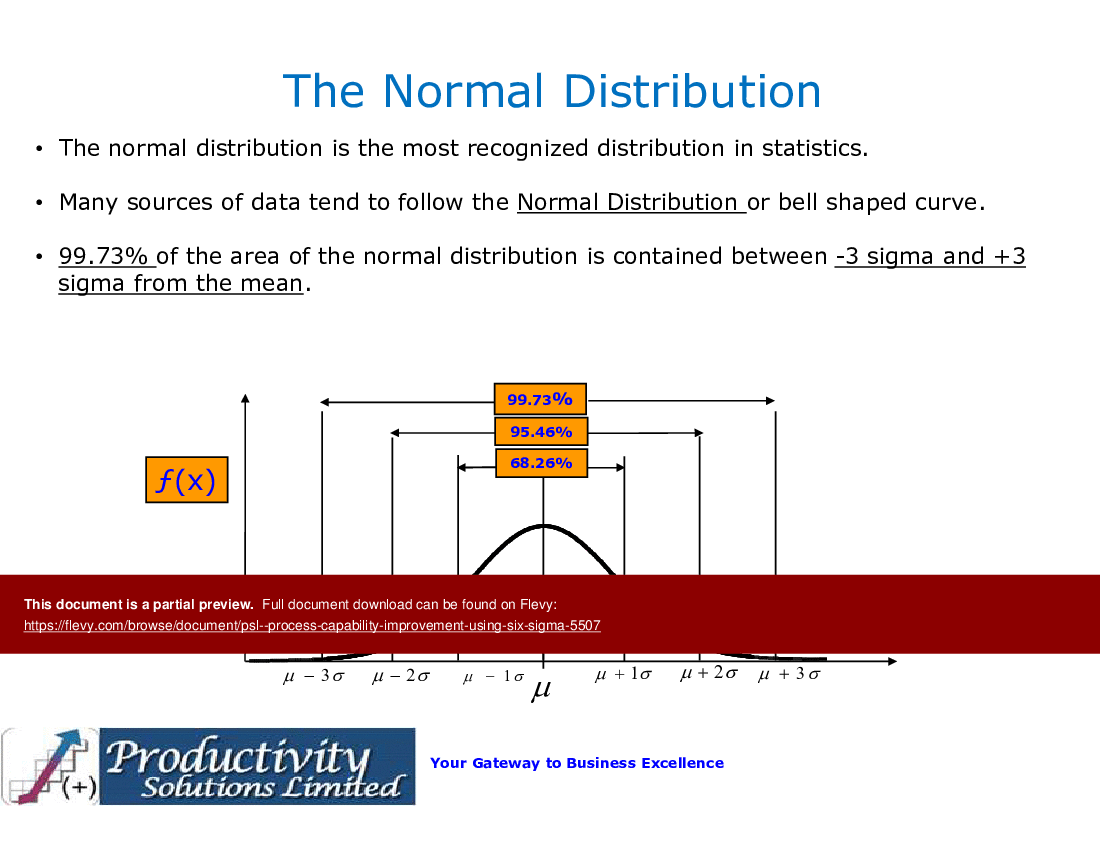
• Normal Distribution
• 3 Sigma vs 6 Sigma process performance
• Initiate workplace project
Session 2: Process Capability Analysis
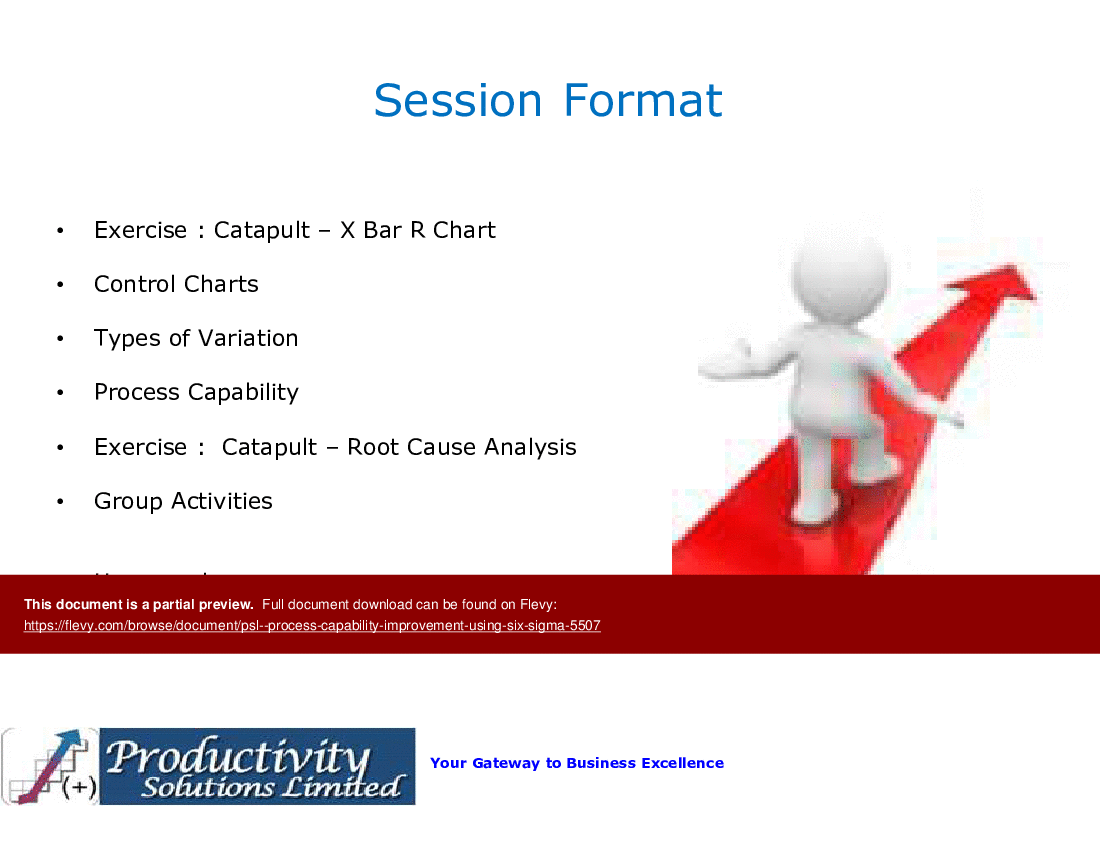
• Exercise: Catapult – X Bar R Chart
• Control Charts
• Types of Variation
• Process Capability
• Exercise: Catapult – Root Cause Analysis
• Group Activities
Session 3: Process Capability Improvement
• Root Cause Analysis (RCA)
• Improvement Action Plan
• Exercise: Catapult – Implement Improvement Plan (X bar R chart and Process Capability Analysis)
• Homework
• Project Closeout Checkpoints
• Project guidelines
Got a question about the product? Email us at support@flevy.com or ask the author directly by using the "Ask the Author a Question" form. If you cannot view the preview above this document description, go here to view the large preview instead.
Executive Summary
This presentation titled "PSL - Process Capability Improvement Using Six Sigma" serves as a comprehensive guide for professionals aiming to enhance process capabilities through the application of Six Sigma methodologies. Developed by a Lean pioneer and certified LSS Master Black Belt, this workshop equips participants with essential tools and techniques, including control charts, root cause analysis, and improvement plans. By engaging in practical exercises, attendees will learn to identify process variables, collect data, and analyze performance metrics, ultimately driving significant improvements in operational efficiency.
Who This Is For and When to Use
• Quality Managers and Process Improvement Leaders focused on enhancing operational efficiency
• Project Managers overseeing process optimization initiatives
• Data Analysts tasked with measuring and analyzing process performance
• Team Leaders involved in continuous improvement projects
Best-fit moments to use this deck:
• During team training sessions on Six Sigma methodologies
• When initiating workplace projects aimed at process improvement
• For workshops focused on data collection and analysis techniques
Learning Objectives
• Define key process input and output variables (KPIV & KPOV)
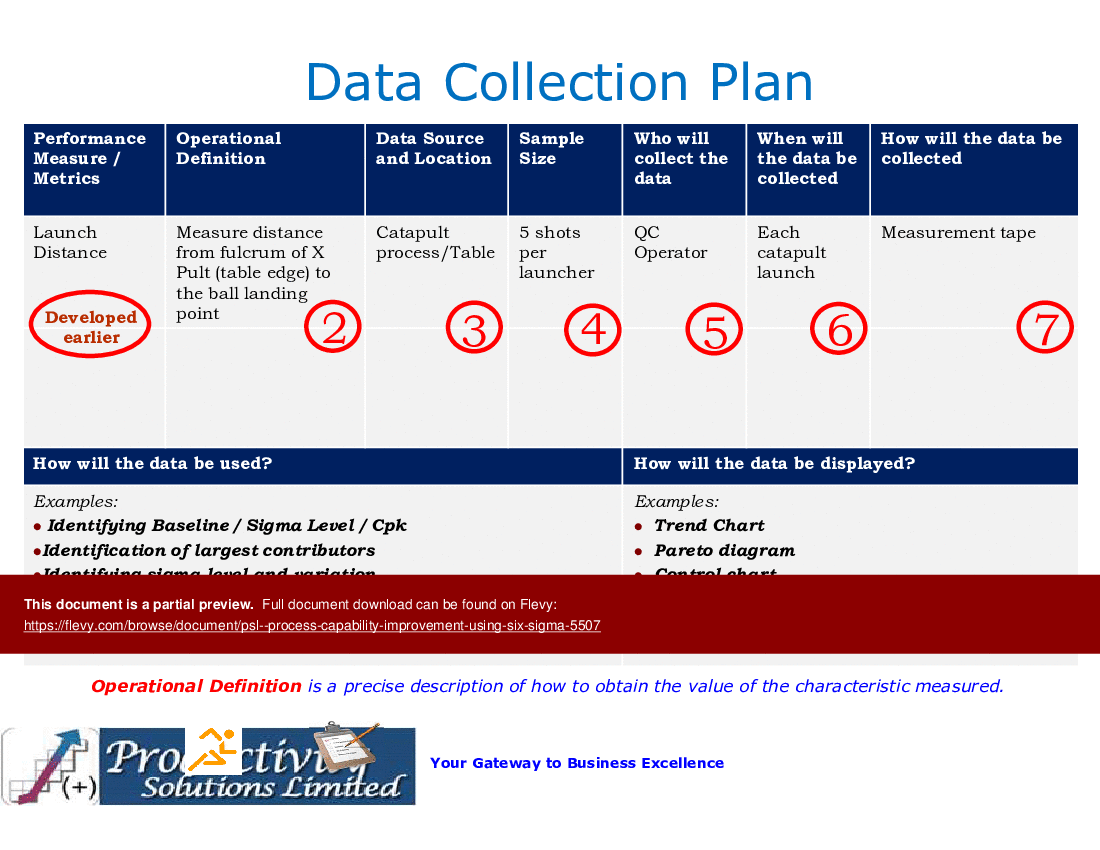
• Build a data collection plan to assess process capability
• Establish control charts to monitor process performance
• Analyze normal distribution and its implications for process capability
• Calculate process capability indices (Cpk) to evaluate performance
• Implement improvement action plans based on root cause analysis
Table of Contents
• Session Format (page 2)
• Process Model (page 3)
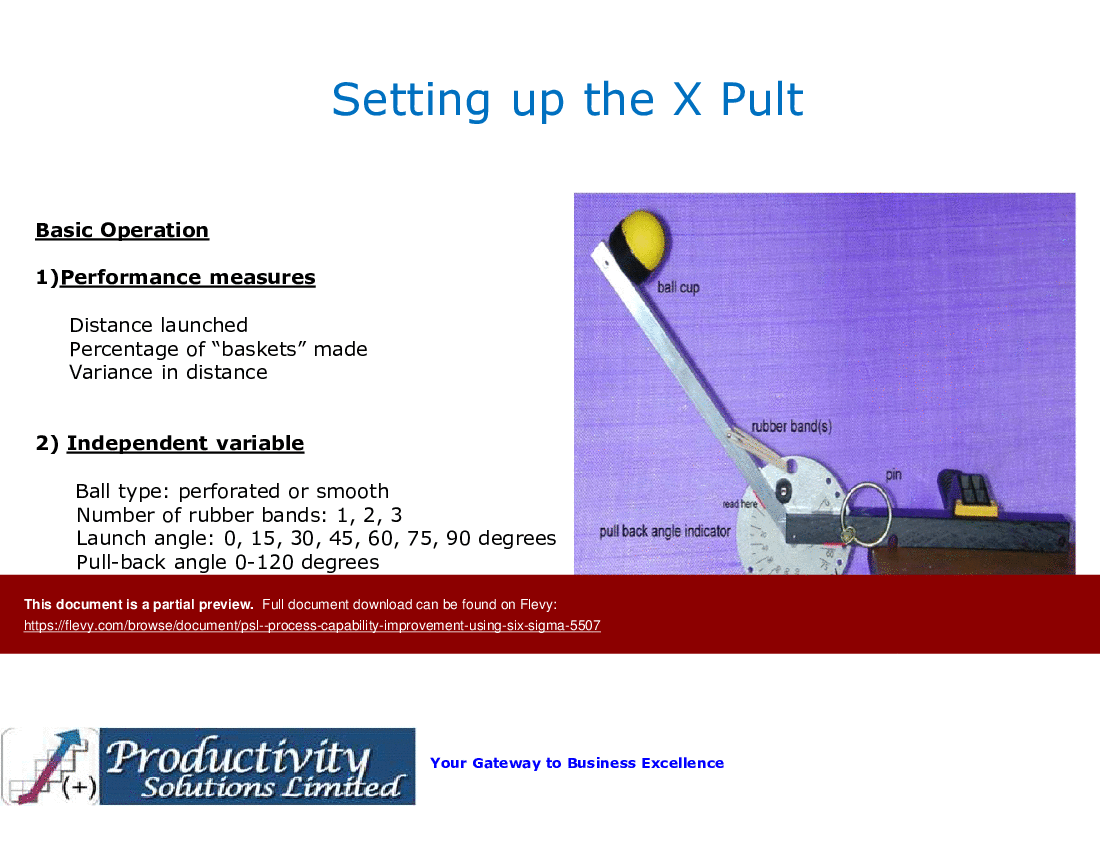
• Exercise: The X Pult (page 4)
• KPIV & KPOV (page 6)
• Why Measure? (page 8)
• Data Collection Plan (page 10)
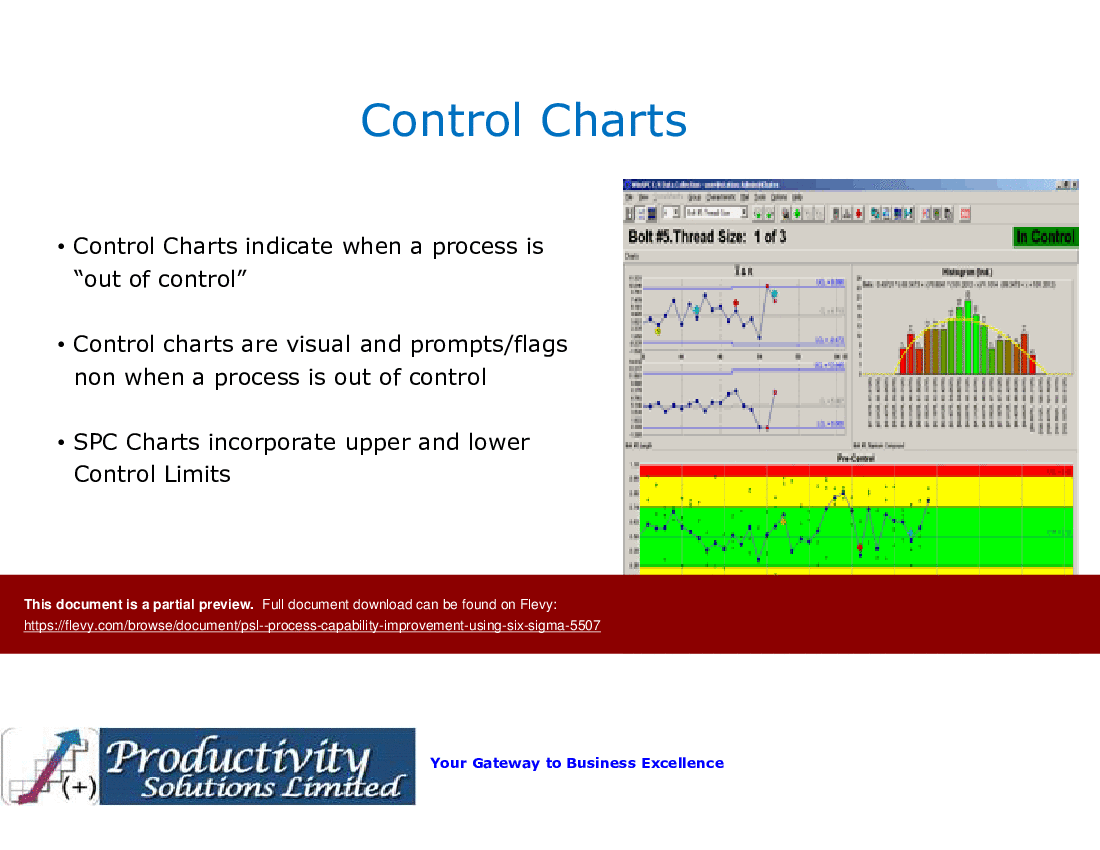
• Control Charts (page 20)
• Process Capability (page 25)
• Capability Improvement Action Plan (page 30)
• Tools and Templates (page 35)
• Recommended Reading and Resources (page 40)
Primary Topics Covered
• Process Model - A framework illustrating the relationship between controllable inputs and process outputs, highlighting the importance of managing variables to achieve desired outcomes.
• KPIV & KPOV - Key concepts that differentiate between input variables (causes) and output variables (effects) in process analysis.
• Data Collection Plan - A structured approach for gathering data on performance measures, ensuring accurate assessment of process capability.
• Control Charts - Visual tools used to monitor process stability and detect variations, helping teams maintain control over their processes.
• Process Capability - An evaluation of how well a process can meet specified limits, expressed through capability indices like Cpk.
• Improvement Action Plan - A strategic plan developed to address identified issues and enhance process performance based on data analysis.
Deliverables, Templates, and Tools
• X Pult tally checklist for data collection
• Frequency plot template for visualizing data distributions
• X bar R chart for monitoring process variations
• Process capability calculator for determining Cpk values
• Data collection plan template for structured data gathering
• Cause and effect diagram for root cause analysis
• Improvement action plan template for implementing changes
Slide Highlights
• Overview of the Process Model illustrating input-output relationships
• Exercise scenario for the X Pult, emphasizing practical application of concepts
• KPIV & KPOV chart detailing the cause-effect relationship in processes
• Control Chart examples demonstrating the identification of special cause variations
• Process Capability Index calculations showcasing the assessment of process performance
Potential Workshop Agenda
Introduction to Process Capability (30 minutes)
• Overview of Six Sigma principles and process capability
• Discussion on KPIV & KPOV and their significance
Data Collection and Analysis (60 minutes)
• Hands-on exercise: Collecting and analyzing data using the X Pult
• Generating control charts and calculating process capability indices
Improvement Planning (60 minutes)
• Conducting root cause analysis using cause and effect diagrams
• Developing an improvement action plan based on findings
Customization Guidance
• Tailor the data collection plan to specific process variables relevant to your organization
• Adjust the X Pult exercise parameters to reflect real-world scenarios faced by your team
• Incorporate company-specific terminology and metrics into the presentation materials
Secondary Topics Covered
• Types of variation in processes: common cause vs. special cause
• Statistical Process Control (SPC) fundamentals
• The significance of normal distribution in process analysis
• Techniques for effective data visualization and reporting
FAQ
What is the purpose of using control charts?
Control charts help monitor process stability and identify variations, allowing teams to take corrective actions when necessary.
How do I calculate the process capability index (Cpk)?
Cpk is calculated by assessing how much the process mean deviates from the target value, relative to the variability of the process.
What are KPIV and KPOV?
KPIV (Key Process Input Variables) are the factors that influence the process, while KPOV (Key Process Output Variables) are the measurable results of the process.
Why is measuring process capability important?
Measuring process capability helps organizations understand how well their processes can meet specifications, guiding improvement efforts.
How can I implement an improvement action plan?
An improvement action plan outlines specific steps to address identified issues, including responsible parties, timelines, and metrics for success.
What is the significance of normal distribution in process capability?
Normal distribution provides a statistical basis for understanding variability in processes, which is crucial for accurate capability assessment.
What tools can assist in data collection?
Tools such as tally checklists, frequency plot templates, and data collection plans are essential for systematic data gathering.
How can I ensure my process is in control?
Regularly monitor control charts and investigate any points that fall outside control limits to maintain process stability.
Glossary
• KPIV - Key Process Input Variable
• KPOV - Key Process Output Variable
• Cpk - Process Capability Index
• Control Chart - A statistical tool for monitoring process variations
• Normal Distribution - A probability distribution that is symmetric about the mean
• Root Cause Analysis - A method for identifying the underlying causes of a problem
• Data Collection Plan - A structured approach for gathering data
• Special Cause Variation - Variation due to identifiable factors
• Common Cause Variation - Variation inherent to the process
• X bar R Chart - A control chart for monitoring the mean and range of a process
• Statistical Process Control (SPC) - A method for monitoring and controlling processes
• Improvement Action Plan - A strategic outline for enhancing process performance
• Frequency Plot - A graphical representation of data distribution
• Tally Checklist - A tool for recording data during experiments
• Process Capability - The ability of a process to produce output within specified limits
• Variance - A measure of the dispersion of a set of data points
• Defect - A failure to meet a specified requirement
• Opportunity - The potential for producing a defect in a process
• Measurement System - The tools and methods used to collect data on process performance
Source: Best Practices in Six Sigma Project PowerPoint Slides: PSL - Process Capability Improvement Using Six Sigma PowerPoint (PPTX) Presentation Slide Deck, OpEx Academy NZ
|
Receive our FREE presentation on Operational Excellence
This 50-slide presentation provides a high-level introduction to the 4 Building Blocks of Operational Excellence. Achieving OpEx requires the implementation of a Business Execution System that integrates these 4 building blocks. |