

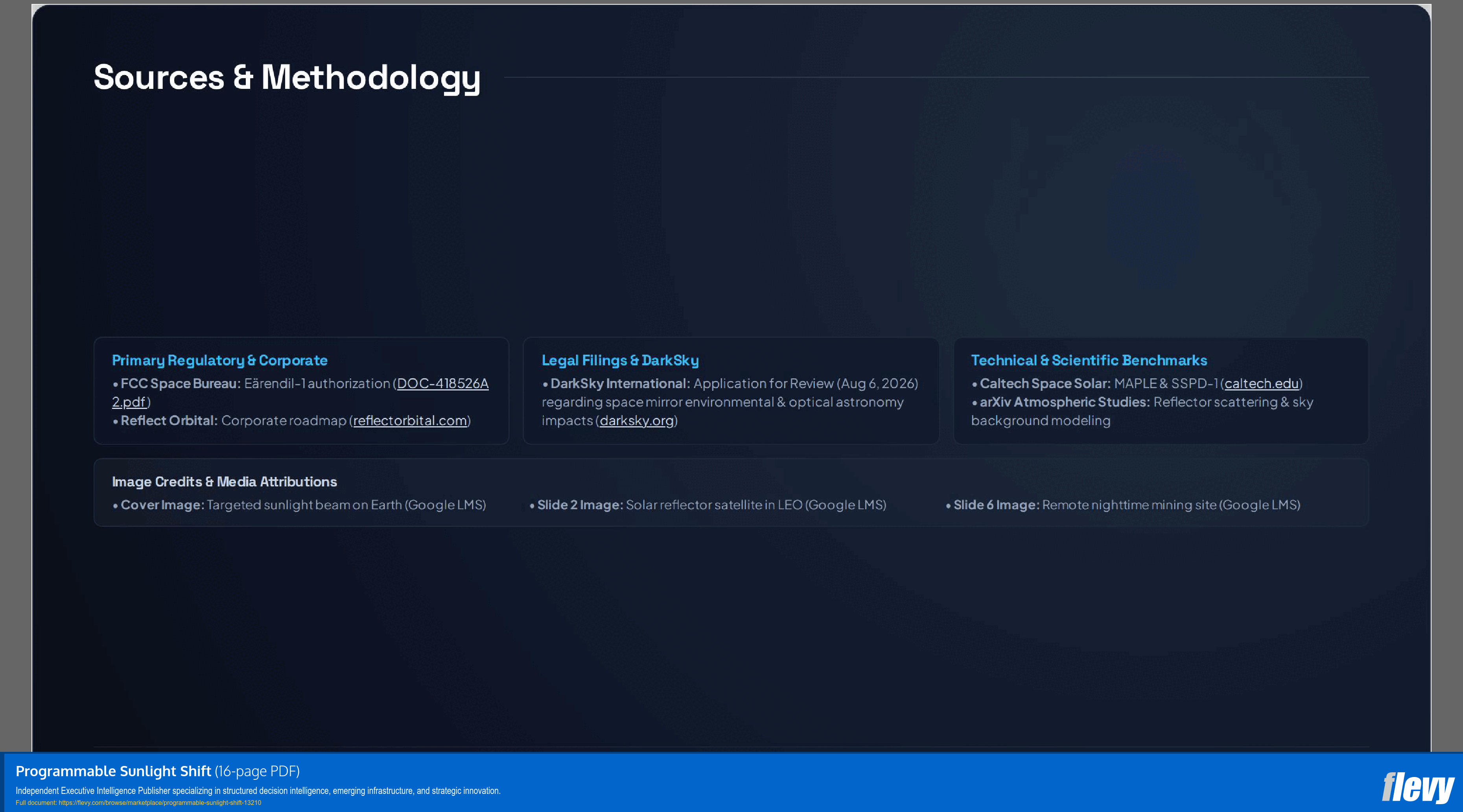
 Click main image to view in full screen.
Programmable Sunlight Shift – PDF
PDF document 16 Pages


BENEFITS OF THIS DOWNLOADABLE PDF DOCUMENT
- Provides a structured framework for identifying where programmable orbital illumination could create high economic or mission value.
- Enables executives to compare orbital illumination against established terrestrial alternatives using consistent strategic and operational criteria.
- Translates an emerging technology signal into actionable decisions through opportunity scoring, adoption gates, scenarios, and an executive response roadmap.
SOLAR ENERGY PDF DESCRIPTION
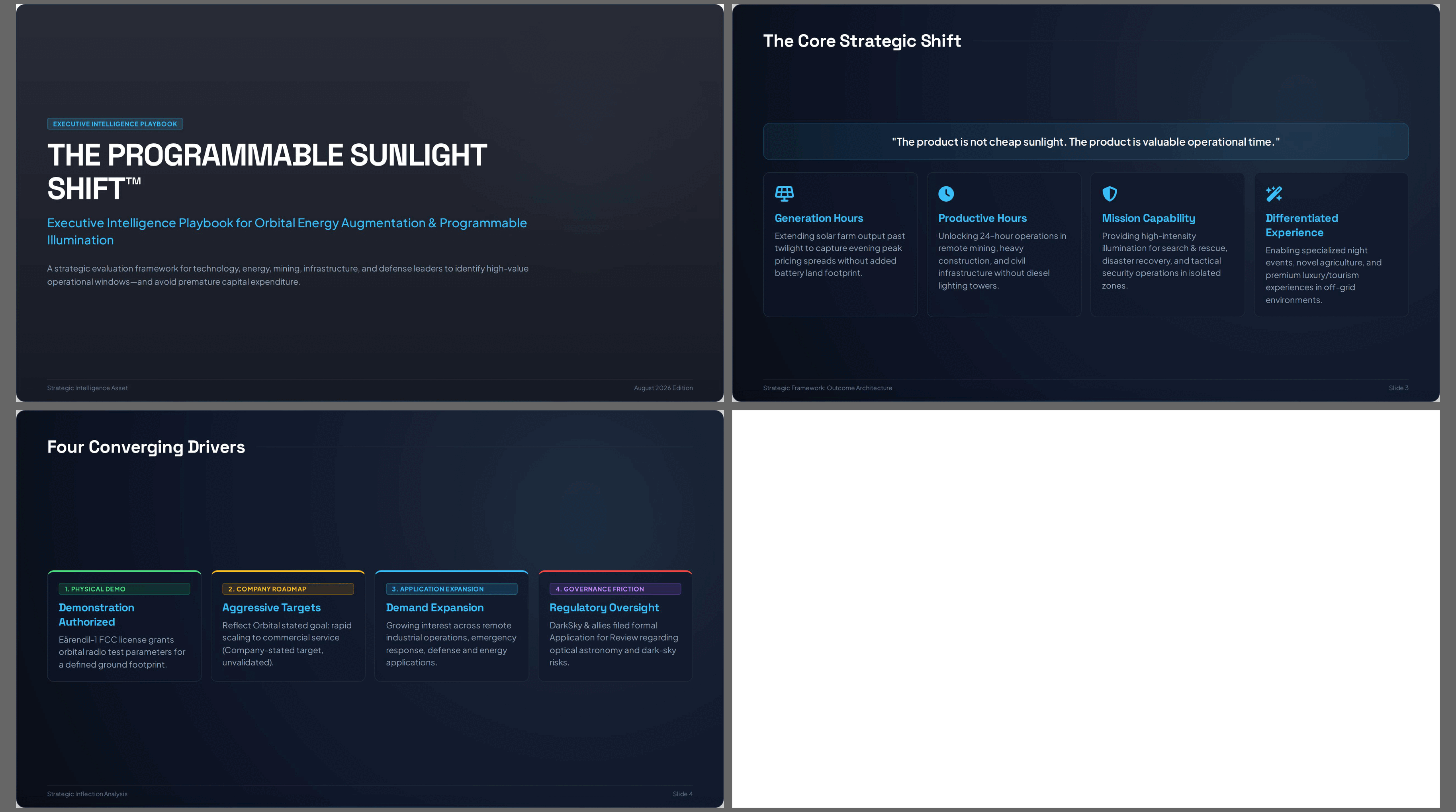
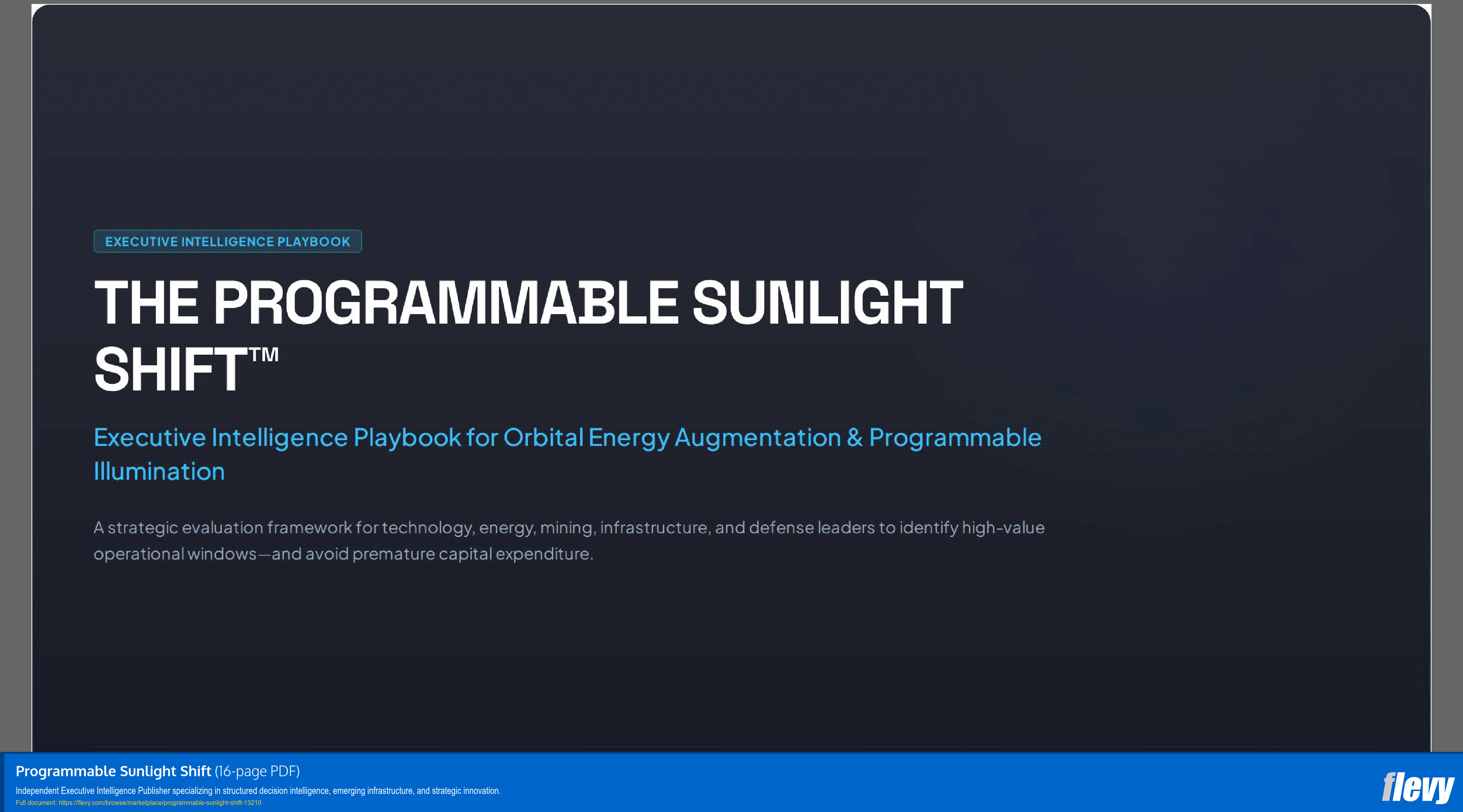
The Programmable Sunlight Shift™ is an Executive Intelligence Playbook for evaluating the strategic and commercial implications of orbital illumination: the emerging concept of using deployable orbital reflectors to redirect sunlight toward targeted locations on Earth after dark or during low-light periods.
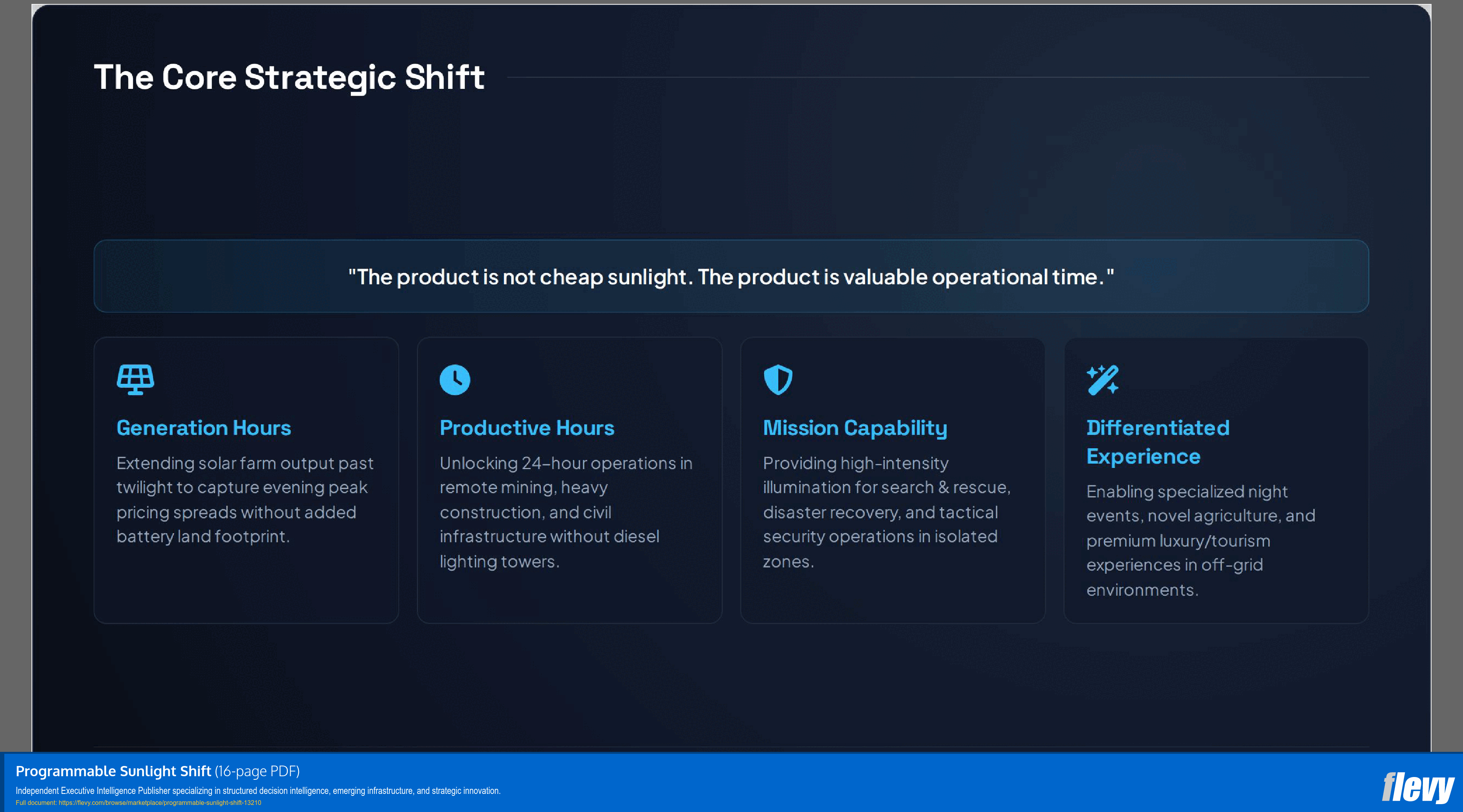
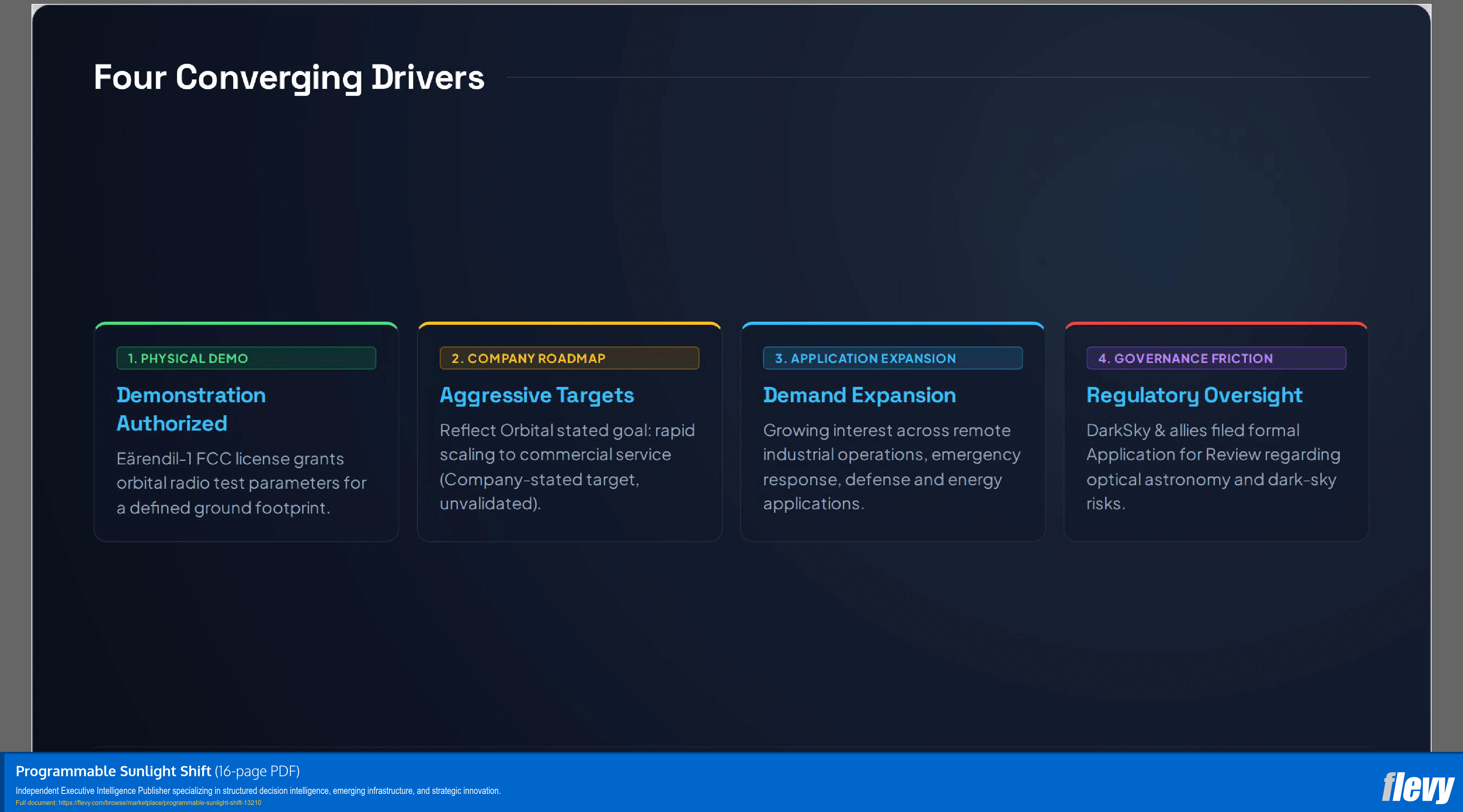
The technology is moving from conceptual discussion toward physical demonstration, creating a new strategic question for energy, mining, infrastructure, defense, emergency-response, and innovation leaders: where could controllable sunlight create enough economic or mission value to justify a new layer of orbital infrastructure?
Rather than presenting orbital illumination as an inevitable replacement for batteries, grid flexibility, conventional generation, or terrestrial lighting, this playbook treats it as an emerging capability whose value must be validated against customer outcomes, alternatives, operational constraints, regulatory requirements, environmental considerations, and willingness to pay.
The playbook introduces a structured decision architecture built around three proprietary frameworks. Illumination Value Density™ evaluates where economic or mission value is concentrated within an illuminated area and operating window. Programmable Sunlight Opportunity Score™ provides a structured method for prioritizing potential applications across value density, time criticality, infrastructure avoidance, alternative pressure, operational fit, externality exposure, and strategic optionality. Orbital Adoption Gate™ establishes seven conditions that must converge before an emerging technology can become scalable infrastructure: technical performance, availability, economics, operational integration, regulatory approval, environmental compatibility, and social license.
The playbook also provides an Orbital vs. Terrestrial Decision Matrix™ for comparing orbital illumination with batteries, additional generation, physical lighting, operational adaptation, and other alternatives. A Strategic Response Matrix translates the analysis into five executive actions: Invest, Pilot, Partner, Monitor, or Reject.
The analysis distinguishes verified facts, company-stated targets, independent evidence, strategic inference, and unresolved variables. This is particularly important because commercial orbital-service economics, guaranteed availability, customer willingness-to-pay, long-term environmental effects, and scaled constellation regulatory pathways remain insufficiently validated.
The playbook concludes with conditional 2030–2035 scenarios and an executive action roadmap designed to help organizations determine whether programmable sunlight represents a strategic opportunity, a specialized niche, or an economically inferior alternative to established infrastructure.
This is not a company profile of Reflect Orbital and not a prediction that orbital illumination will become mainstream. It is a decision-intelligence asset for determining where the technology may matter, what must be proven, and what executives should do next.
Got a question about the product? Email us at support@flevy.com or ask the author directly by using the "Ask the Author a Question" form. If you cannot view the preview above this document description, go here to view the large preview instead.
Source: Best Practices in Solar Energy PDF: Programmable Sunlight Shift PDF (PDF) Document, Wisnu Pandega Wardana
ABOUT THE AUTHOR

I am an independent Industrial Intelligence and Strategic Innovation Publisher focused on developing structured business intelligence, innovation frameworks, and opportunity-oriented research for decision-makers.
My work focuses on translating emerging technologies, industrial transformation, sustainability, resource efficiency, and market shifts into structured intelligence assets that
... [read more]
Ask the Author a Question
You must be logged in to contact the author.




























