 Click main image to view in full screen.
Productive Capital Conversion Shift – PDF
PDF document 19 Pages


BENEFITS OF THIS DOWNLOADABLE PDF DOCUMENT
- Provides a proprietary decision architecture for converting finite sovereign wealth into durable productive economic capacity.
- Translates fiscal, infrastructure, private-sector, and export challenges into practical capital-allocation and sequencing frameworks.
- Helps decision-makers evaluate investments by productivity impact, private-sector activation, export potential, and recurring economic value.
CAPITAL BUDGETING PDF DESCRIPTION
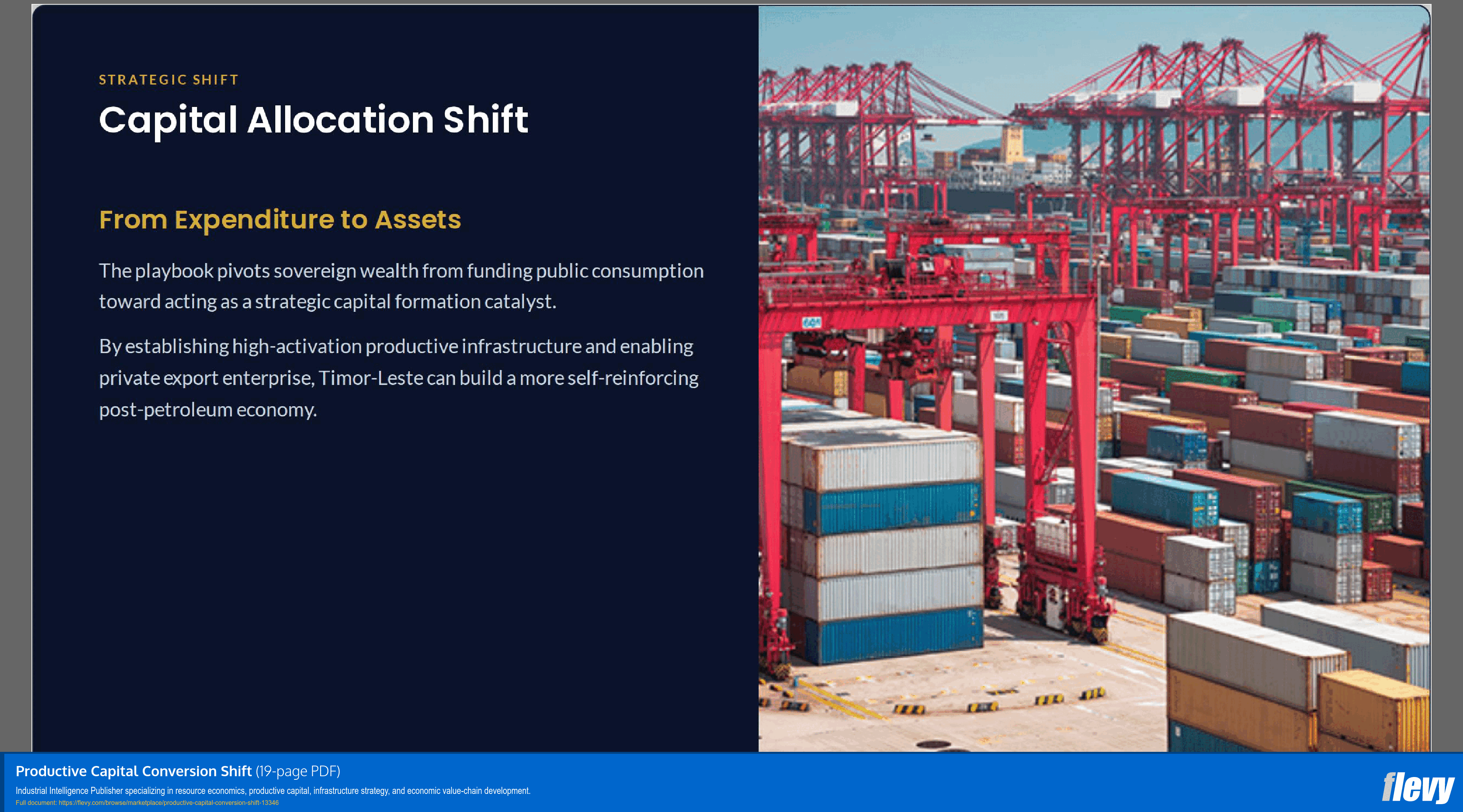
The Productive Capital Conversion Shift™ is an Executive Intelligence Playbook for decision-makers evaluating how finite petroleum wealth can be converted into durable productive economic capacity. Developed for Timor-Leste, the playbook reframes resource-wealth management from a question of financial preservation and public expenditure into a strategic capital-conversion challenge: how much productive capacity can be created per unit of scarce sovereign capital deployed.
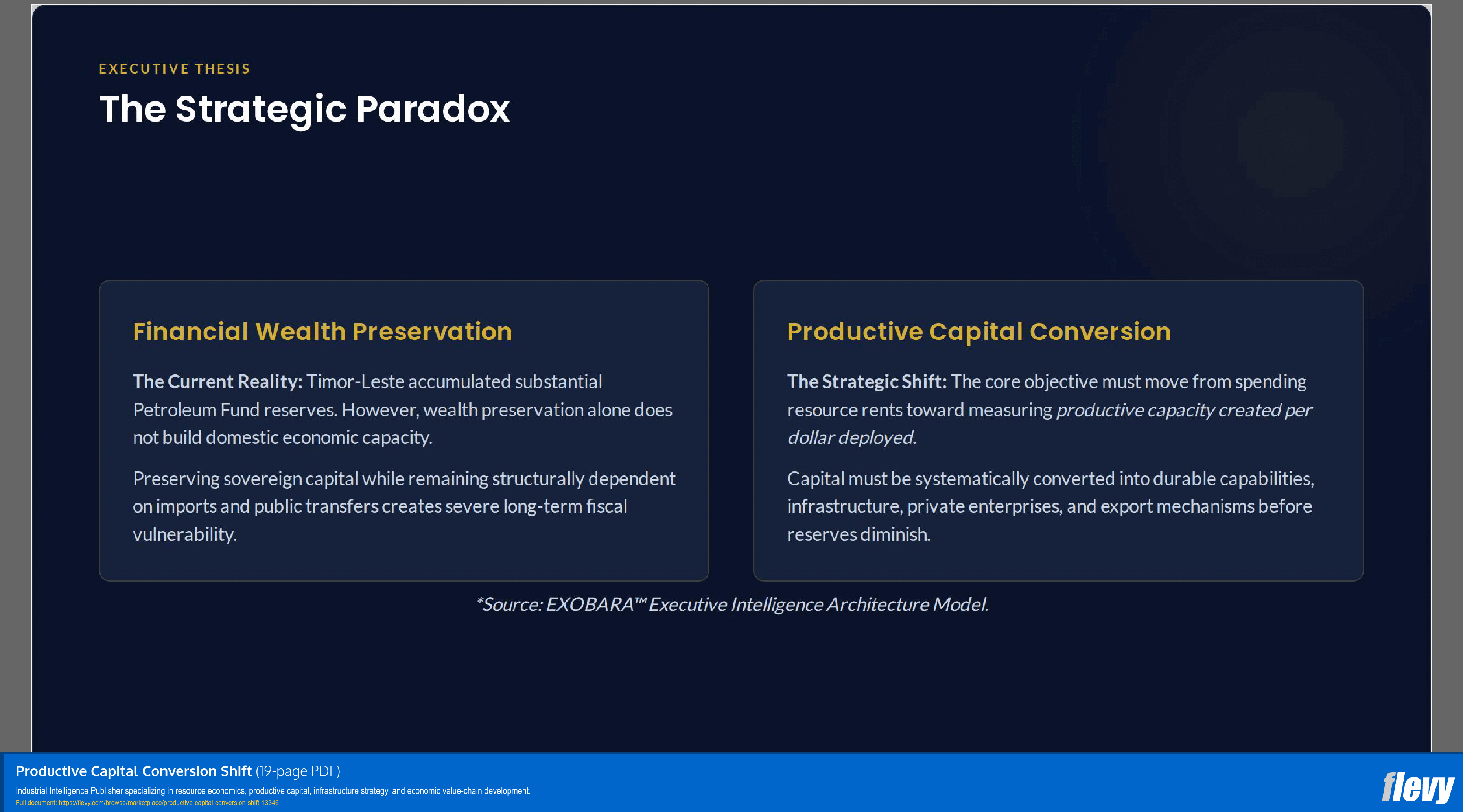
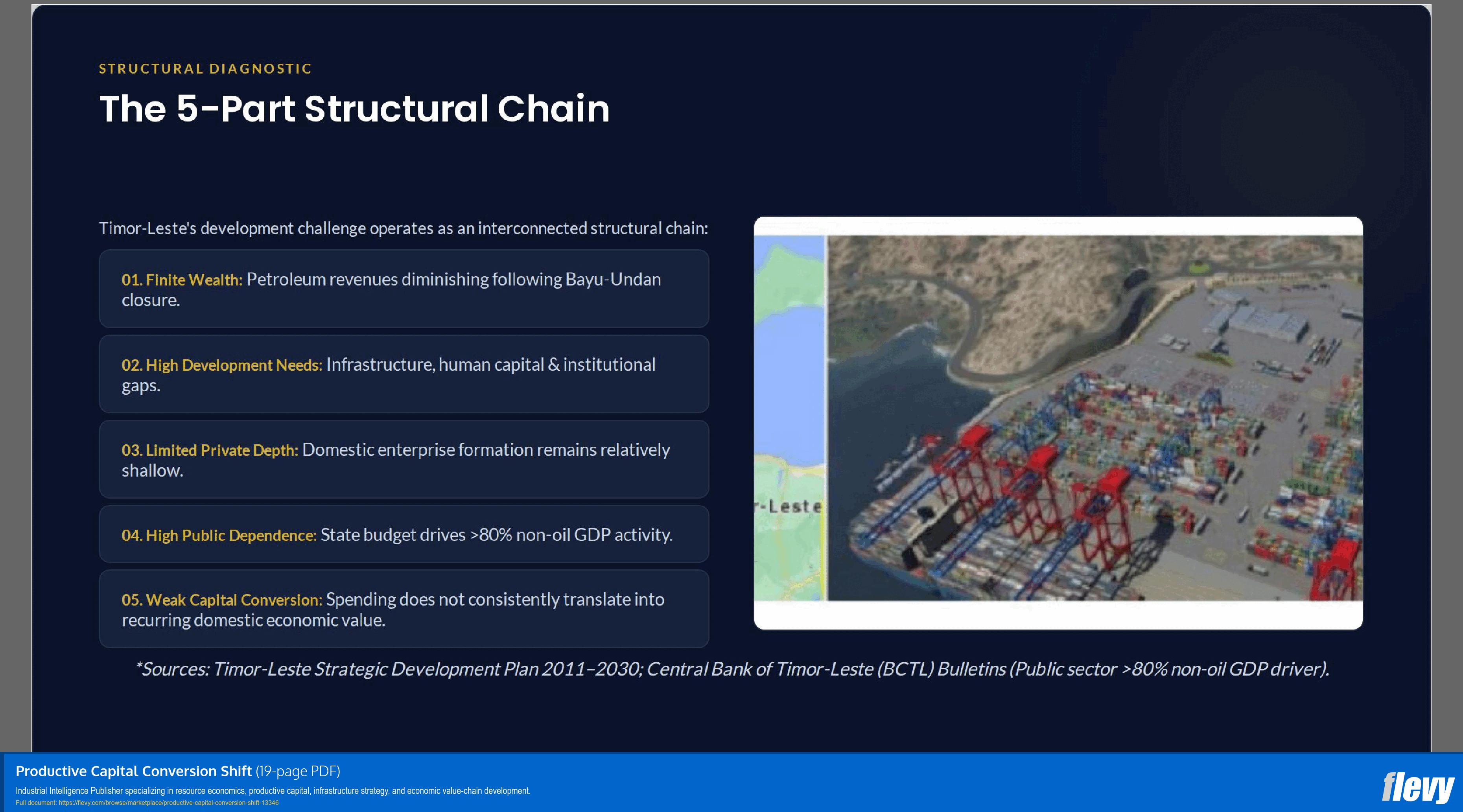
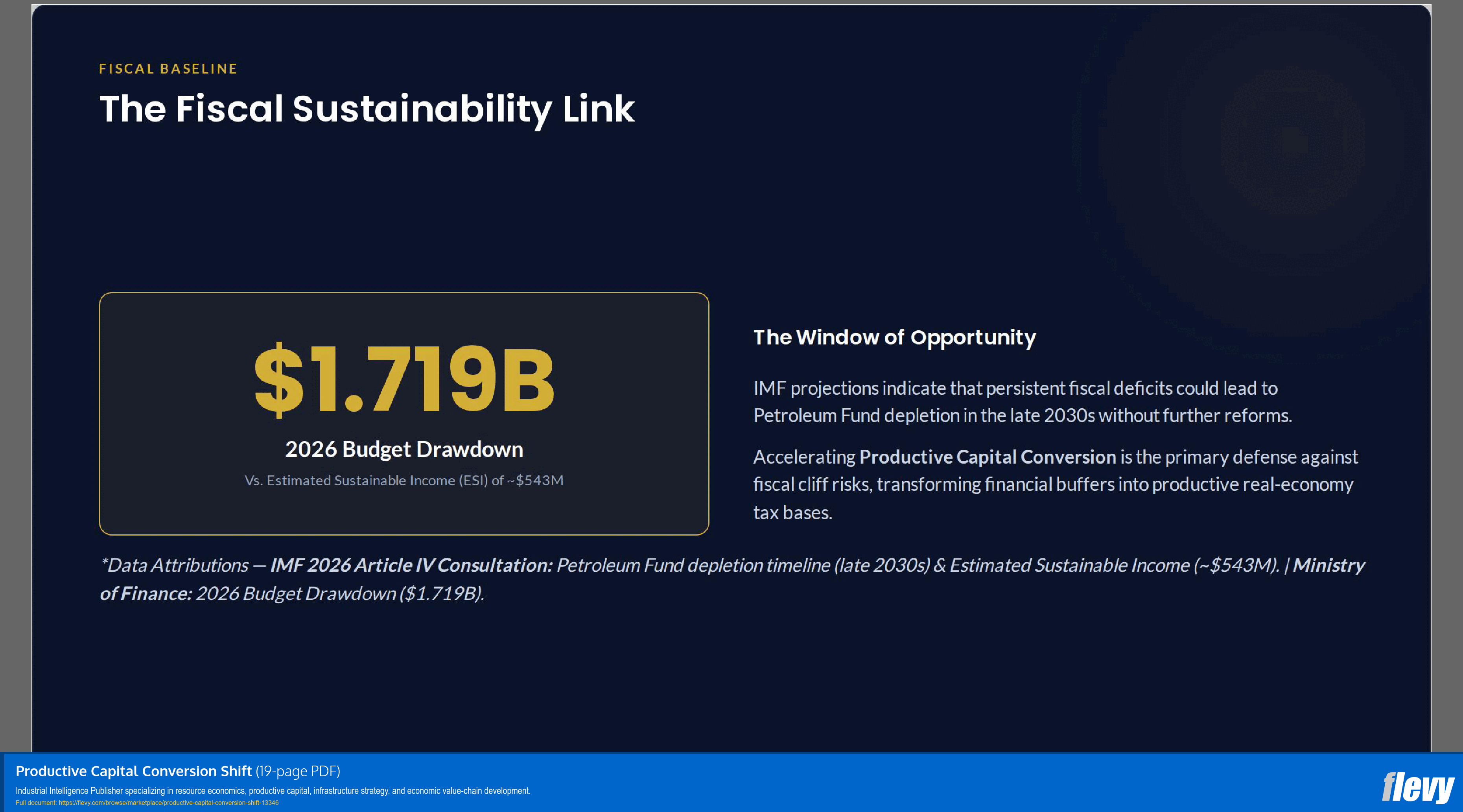
Timor-Leste faces a distinctive development paradox. It has accumulated substantial petroleum-derived financial wealth while operating within a small domestic market, limited private-sector depth, significant infrastructure requirements, and continued dependence on public expenditure. The strategic challenge is therefore not simply economic diversification. It is converting finite sovereign wealth into infrastructure, enterprise capability, export capacity, and recurring economic value before the financial buffer erodes.
Inside, you will find:
• The Productive Capital Conversion Shift™ – the core strategic shift from petroleum-funded expenditure toward productive capital formation.
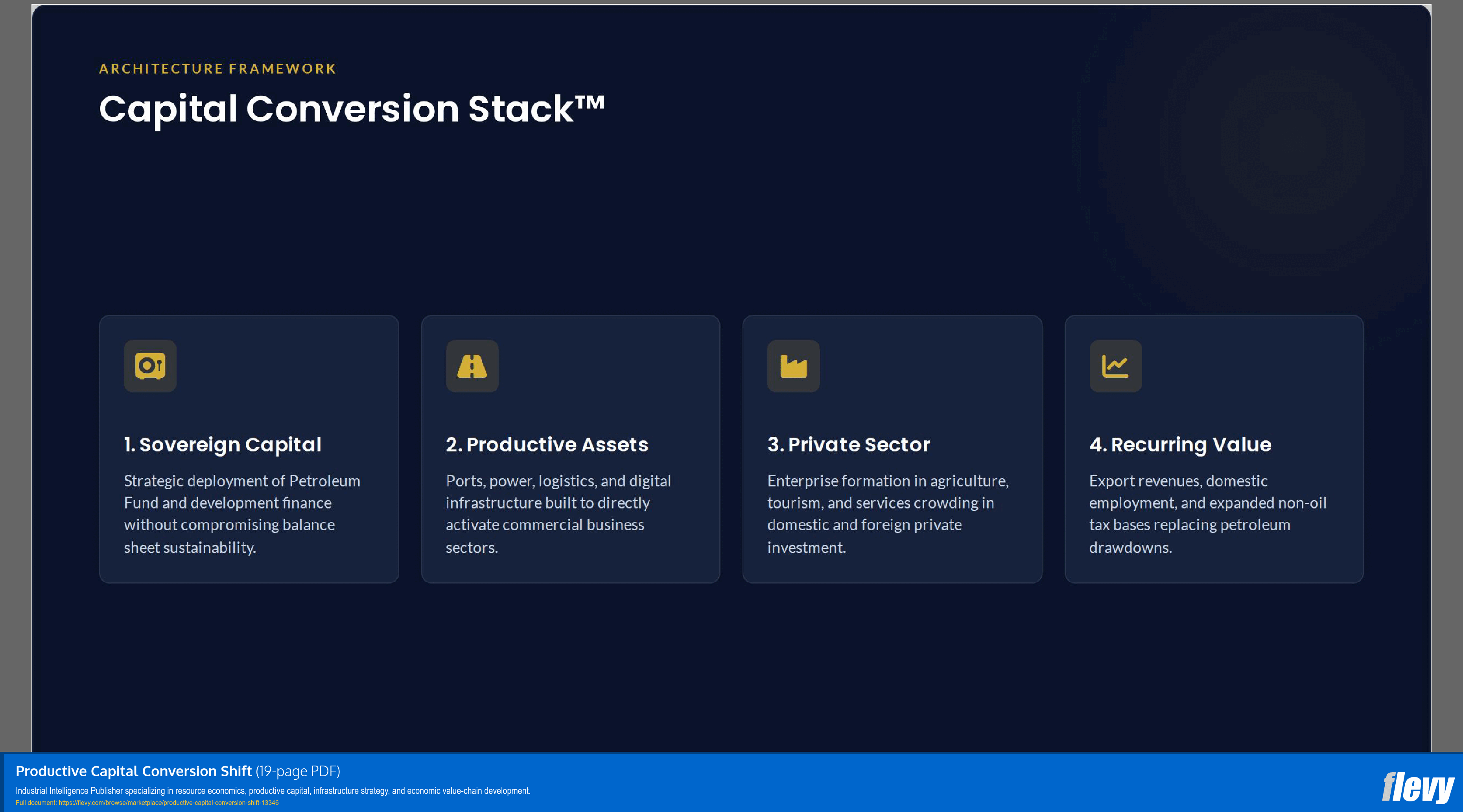
• The Capital Conversion Stack™ – a four-layer architecture connecting sovereign capital, productive assets, private-sector formation, and recurring economic value.
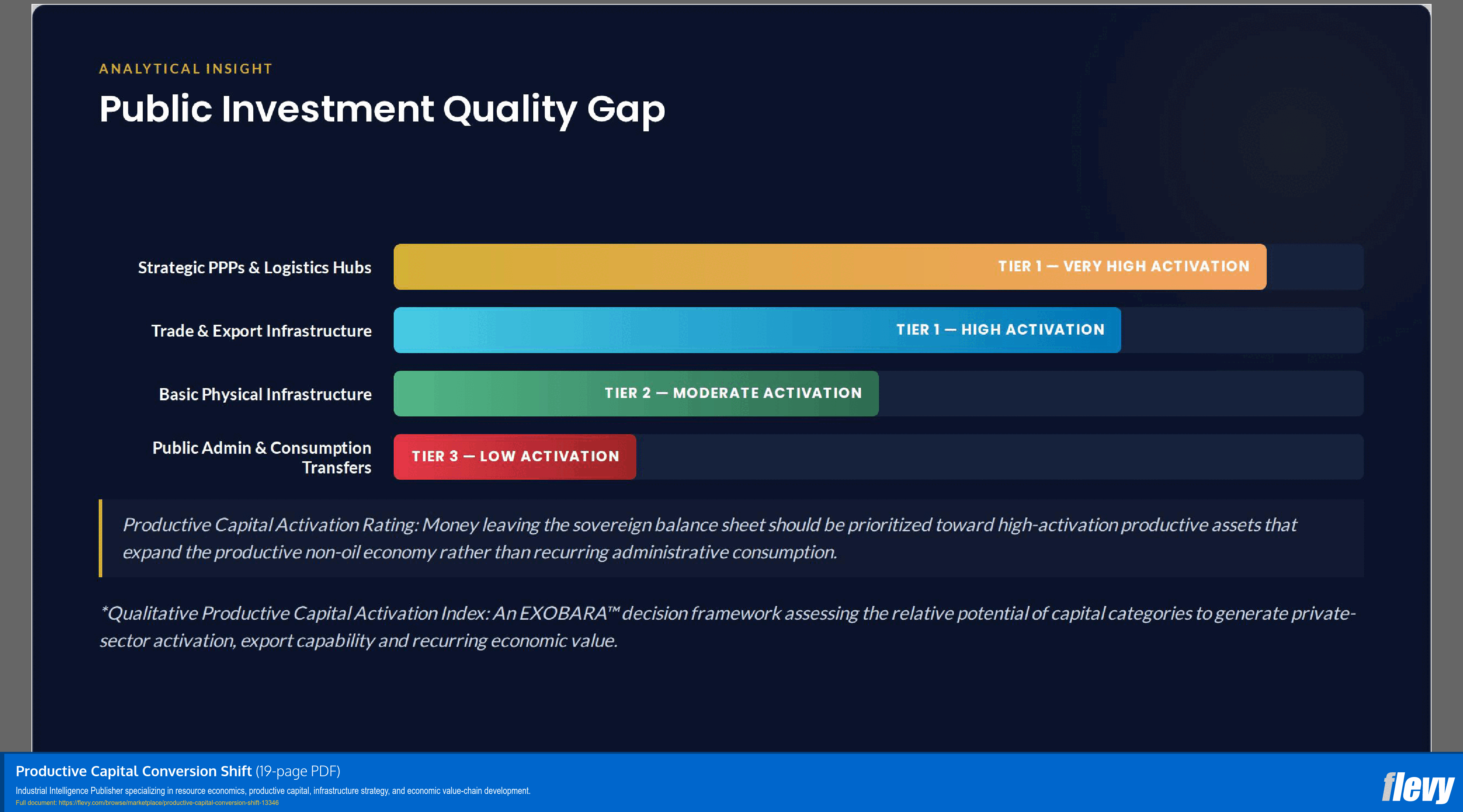
• The Qualitative Productive Capital Activation Index – an EXOBARA™ decision framework for assessing the relative activation potential of different capital categories.
• The Development Capital Ladder™ – a sequencing model from sovereign capital through infrastructure, private activation, and regional export.
• The Capital Allocation Matrix™ – a practical decision tool for comparing productivity impact, private activation, export potential, and recurring value.
• The Productive Sector Portfolio – a focused application lens covering higher-value agriculture, high-end eco-tourism, and clean infrastructure.
• The Capital Bottleneck architecture – identifying where capital fails to translate into private-sector activity, export capability, and recurring value.
• The ASEAN Scale Advantage – a framework for overcoming the structural constraint of a small domestic market through regional market access.
The playbook concludes with an executive decision architecture connecting finite petroleum wealth to productive capital, private-sector formation, export capability, recurring economic value, and long-term fiscal resilience.
This is not a petroleum outlook, generic diversification report, or country profile. It is a decision architecture for converting finite resource wealth into durable productive economic capacity.
Got a question about the product? Email us at support@flevy.com or ask the author directly by using the "Ask the Author a Question" form. If you cannot view the preview above this document description, go here to view the large preview instead.
Source: Best Practices in Capital Budgeting, Oil & Gas PDF: Productive Capital Conversion Shift PDF (PDF) Document, Wisnu Pandega Wardana
ABOUT THE AUTHOR

I am an independent Industrial Intelligence and Strategic Innovation Publisher focused on developing structured business intelligence, innovation frameworks, and opportunity-oriented research for decision-makers.
My work focuses on translating emerging technologies, industrial transformation, sustainability, resource efficiency, and market shifts into structured intelligence assets that
... [read more]
Ask the Author a Question
You must be logged in to contact the author.




























