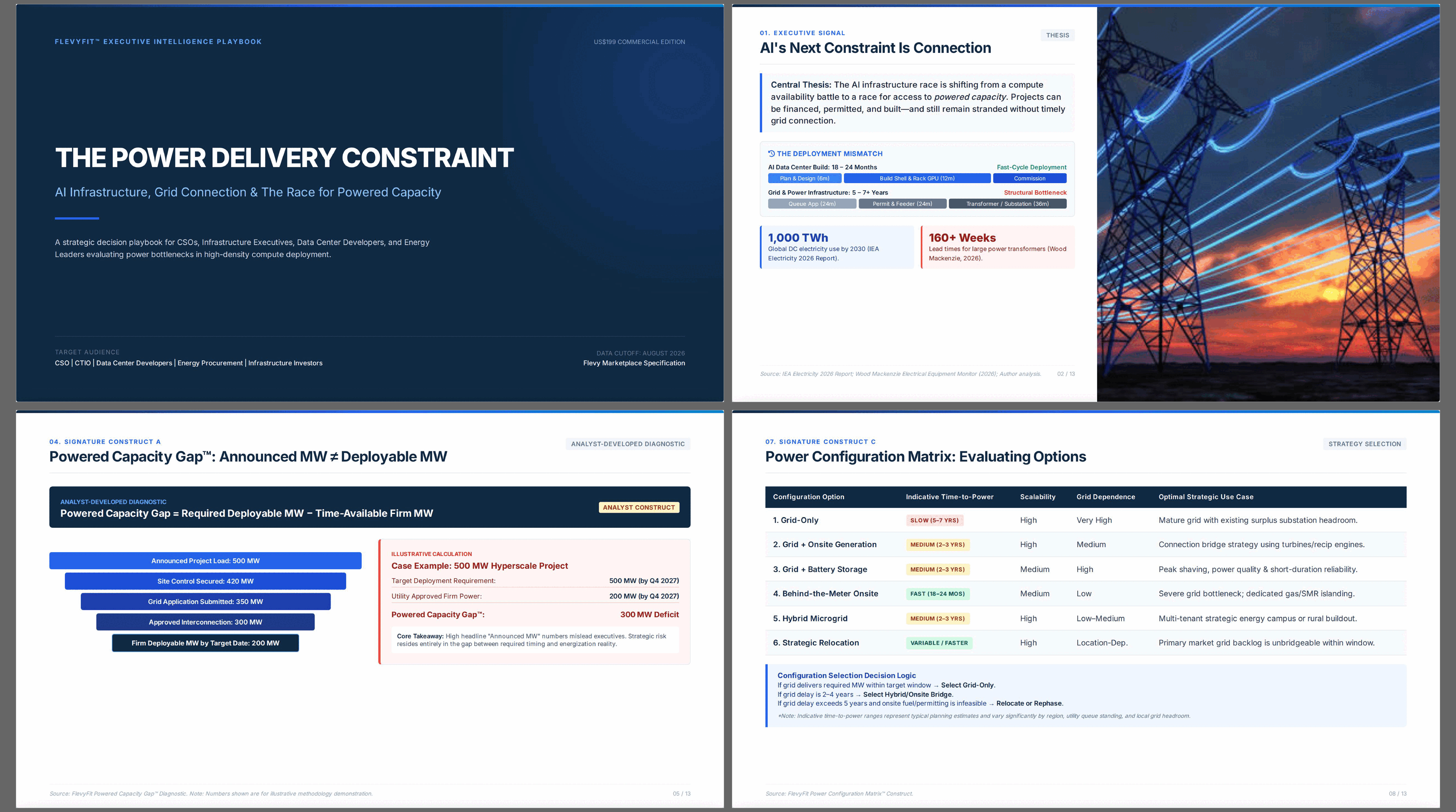
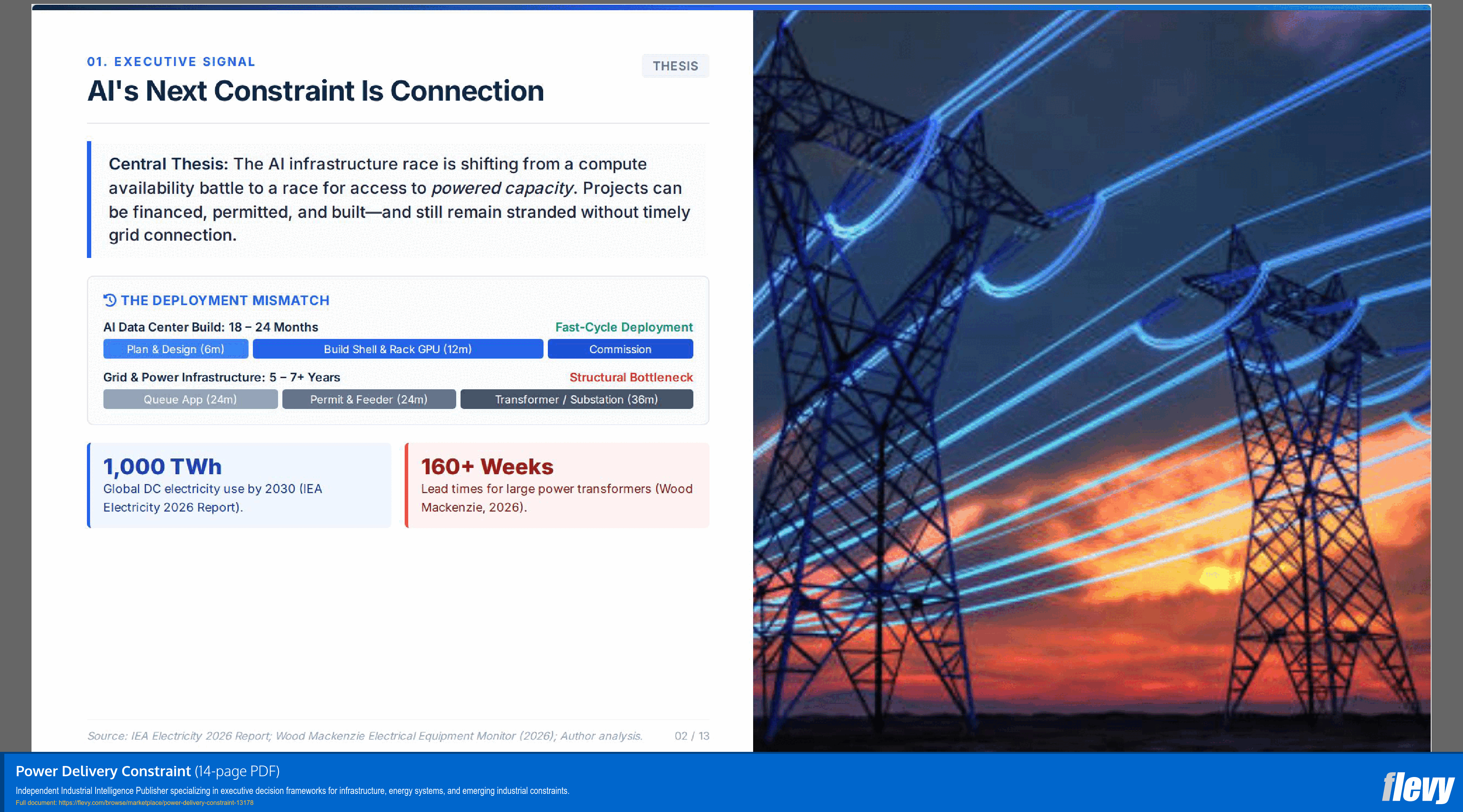
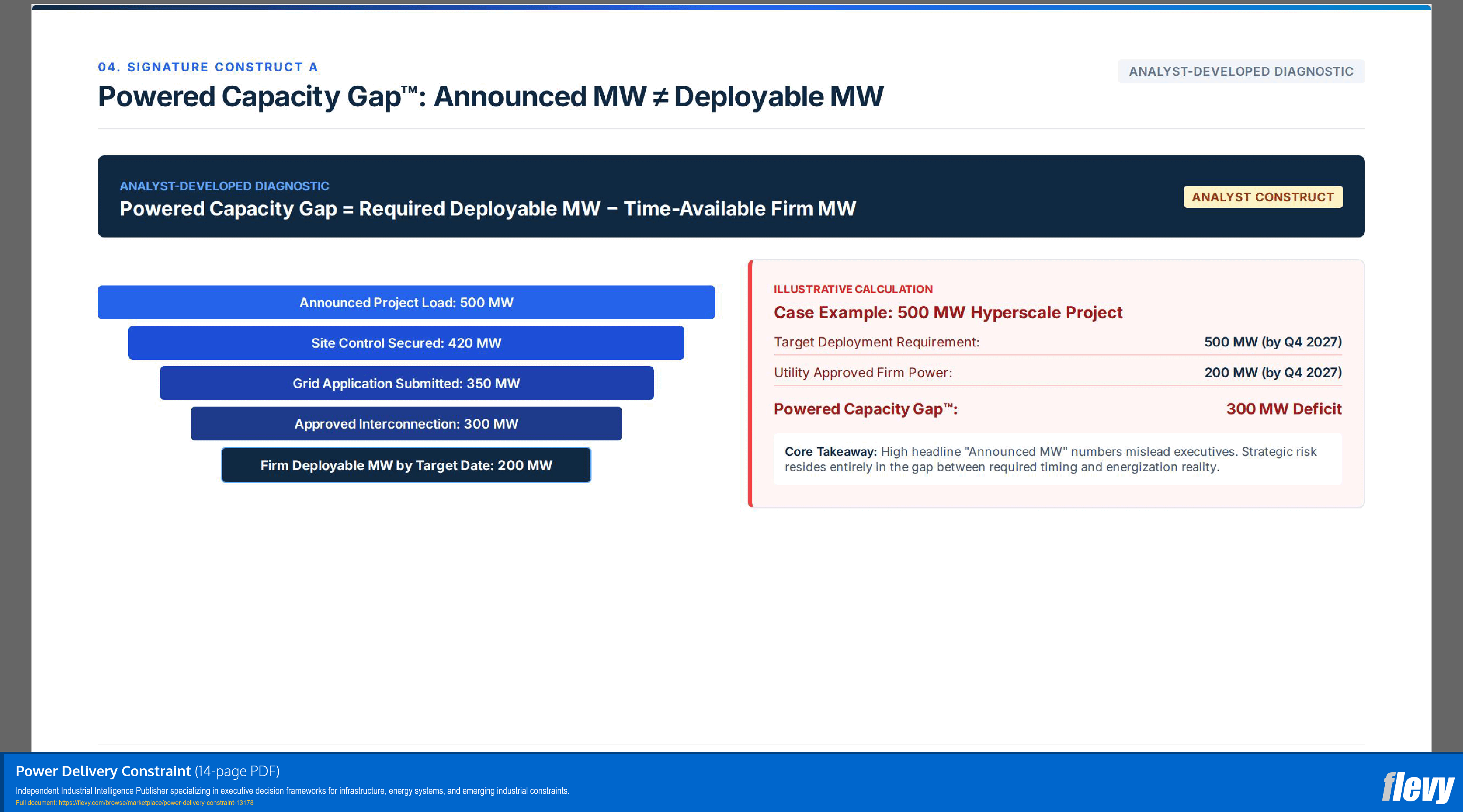
Power Delivery Constraint   14-page PDF document
$199.00

Power Delivery Constraint (14-page PDF document) Preview Image
Flevy is the marketplace for business best practices.
Power Delivery Constraint (14-page PDF document) Preview Image
Arrow   Click main image to view in full screen.

Power Delivery Constraint – PDF

PDF document 14 Pages

$199.00
Independent Industrial Intelligence Publisher specializing in executive decision frameworks for infrastructure, energy systems, and emerging industrial constraints.
Add to Cart


Immediate download
Editable with PDF editor
Free lifetime updates

BENEFITS OF THIS DOWNLOADABLE PDF DOCUMENT

  1. Diagnose whether announced electrical capacity is actually deployable by the required project date.
  2. Identify the binding power constraint and evaluate practical grid, onsite generation, storage, hybrid, or relocation responses.
  3. Translate power-delivery risk into executive decisions on project sequencing, infrastructure configuration, site selection, and capital allocation.

ENERGY INDUSTRY PDF DESCRIPTION

Power Delivery Constraint PDF: Download the executive playbook with the Powered Capacity Gap framework, Binding Power Constraint taxonomy, and power readiness diagnostics. Power Delivery Constraint is a 14-page PDF document available for immediate download upon purchase.

The Power Delivery Constraint is an Executive Intelligence Playbook for decision-makers evaluating AI infrastructure, data-center development, industrial electrification, and other electricity-intensive projects where access to reliable power can become the limiting factor to deployment.
The central thesis is simple: announced power capacity is not the same as deployable power capacity. A project can have financing, land, equipment, and a credible construction schedule and still remain commercially constrained because grid connection, transmission upgrades, generation availability, or site-level infrastructure cannot deliver firm power when the project needs it.
The playbook provides a structured method for diagnosing this problem before major capital commitments are made. It introduces the Powered Capacity Gap™, an analyst-developed diagnostic that distinguishes announced project capacity from the amount of firm power realistically available by the target deployment date. It then applies the Binding Power Constraint™ taxonomy to identify four potential failure points: grid-constrained, connection-constrained, generation-constrained, and site-constrained.
The playbook also provides a Powered Capacity Diagnostic Framework covering required MW, deployment timing, supply firmness, interconnection status, network upgrades, and expansion headroom. These dimensions help management determine whether a proposed site is genuinely power-ready or merely power-planned.
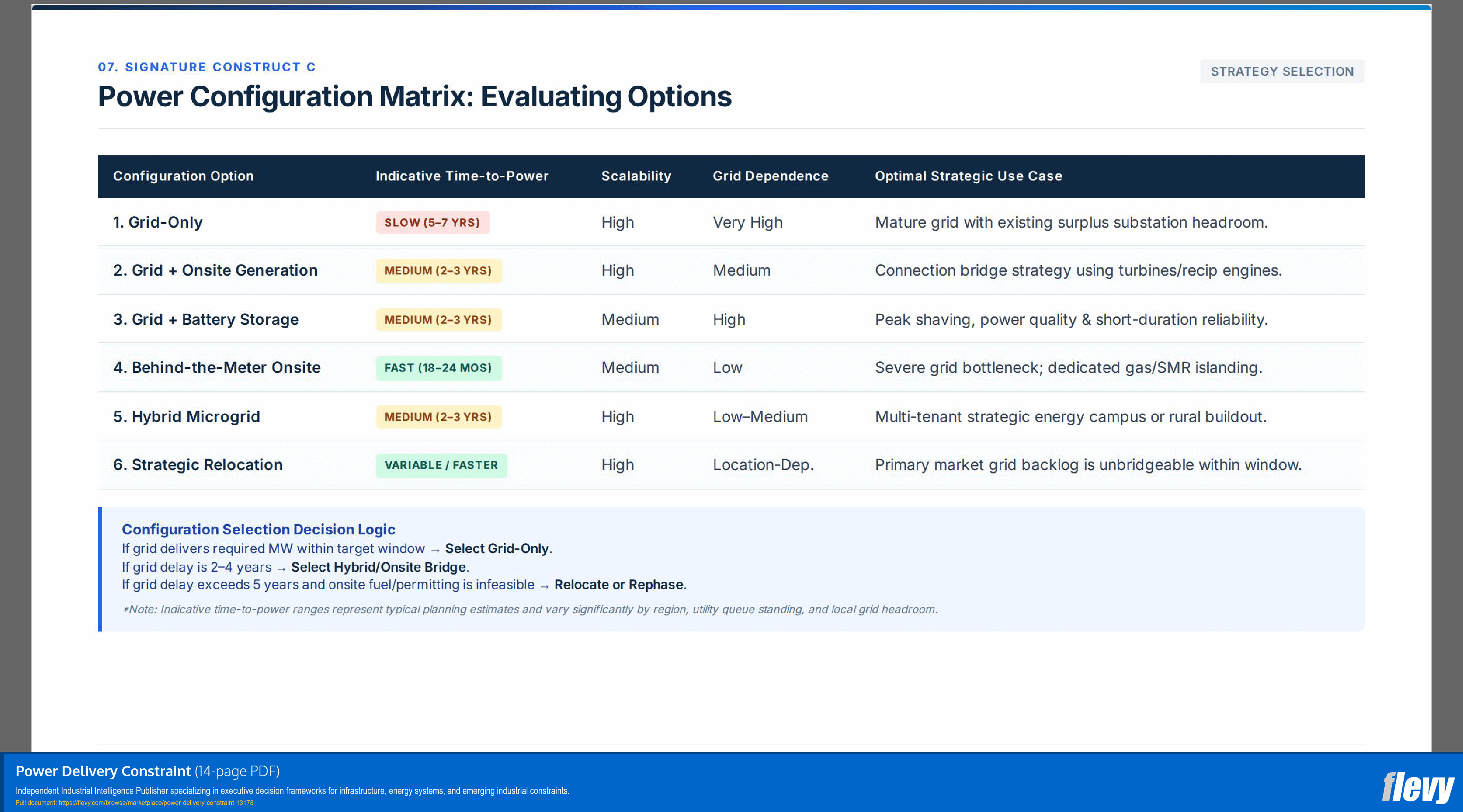
Once the constraint is identified, the Power Configuration Matrix™ compares strategic responses including grid-only supply, grid plus onsite generation, grid plus battery storage, behind-the-meter generation, hybrid microgrids, and strategic relocation. The framework is designed to support decisions about infrastructure configuration, project sequencing, supplier engagement, and site selection rather than simply describe electricity-market conditions.
The playbook further introduces a Power Delivery Exposure Map for comparing project vulnerability according to load intensity, time sensitivity, and grid dependency. A commercial decision model, Cost of Waiting vs. Cost of Custom Power, frames the economic trade-off between waiting for grid availability, deploying alternative power configurations, and relocating to a more favorable power environment.
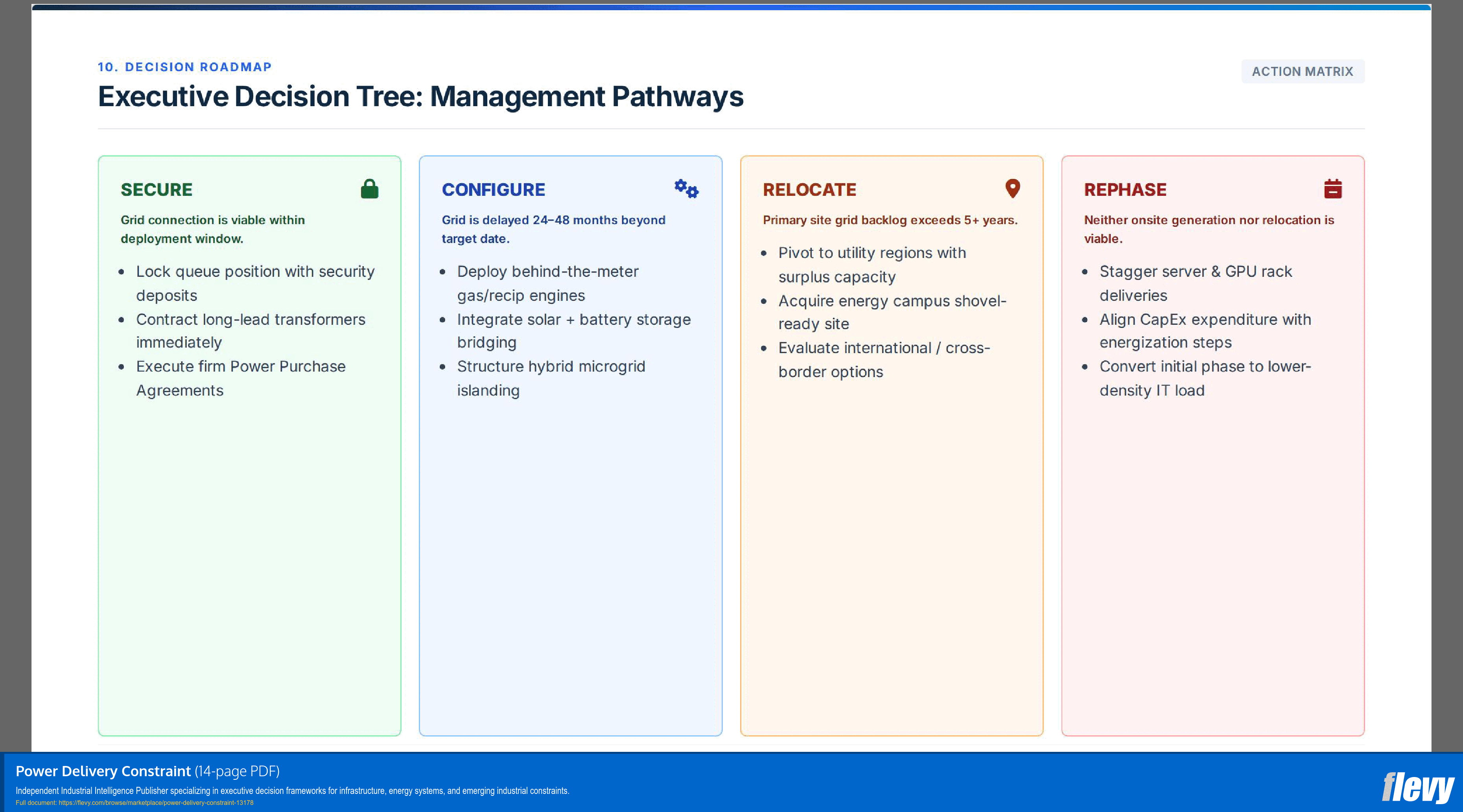
The final sections translate the analysis into an executive decision tree and implementation roadmap covering three horizons: Map & Diagnose (0–12 months), Secure & Bridge (12–36 months), and Restructure (3–7 years).
This intelligence is designed for CSOs, CIOs, data-center developers, energy and infrastructure executives, strategic procurement leaders, and infrastructure investors who need to determine whether electrical capacity is a manageable project input or a strategic deployment constraint.
The key decision principle is: Powered Capacity > Announced Capacity.
The playbook is based on a structured evidence hierarchy incorporating institutional, regulatory, industry, engineering, and market sources. Quantitative claims are separately mapped to their cited sources, with scope and validity considerations disclosed in the methodology section. Analyst-developed frameworks are explicitly identified as analytical constructs rather than industry-standard ratings.

Got a question about the product? Email us at support@flevy.com or ask the author directly by using the "Ask the Author a Question" form. If you cannot view the preview above this document description, go here to view the large preview instead.

Source: Best Practices in Energy Industry PDF: Power Delivery Constraint PDF (PDF) Document, Wisnu Pandega Wardana


$199.00
Independent Industrial Intelligence Publisher specializing in executive decision frameworks for infrastructure, energy systems, and emerging industrial constraints.
Add to Cart
  

ABOUT THE AUTHOR

Author image
Additional documents from author: 26

I am an independent Industrial Intelligence and Strategic Innovation Publisher focused on developing structured business intelligence, innovation frameworks, and opportunity-oriented research for decision-makers.

My work focuses on translating emerging technologies, industrial transformation, sustainability, resource efficiency, and market shifts into structured intelligence assets that ... [read more]

Ask the Author a Question

You must be logged in to contact the author.

Click here to log in Click here register

Did you know?
The average daily rate of a McKinsey consultant is $6,625 (not including expenses). The average price of a Flevy document is $65.



Trusted by over 10,000+ Client Organizations
Since 2012, we have provided business templates to over 10,000 businesses and organizations of all sizes, from startups and small businesses to the Fortune 100, in over 130 countries.
AT&T GE Cisco Intel IBM Coke Dell Toyota HP Nike Samsung Microsoft Astrazeneca JP Morgan KPMG Walgreens Walmart 3M Kaiser Oracle SAP Google E&Y Volvo Bosch Merck Fedex Shell Amgen Eli Lilly Roche AIG Abbott Amazon PwC T-Mobile Broadcom Bayer Pearson Titleist ConEd Pfizer NTT Data Schwab


Read Customer Testimonials

 
"I am extremely grateful for the proactiveness and eagerness to help and I would gladly recommend the Flevy team if you are looking for data and toolkits to help you work through business solutions."

– Trevor Booth, Partner, Fast Forward Consulting
 
"I have used FlevyPro for several business applications. It is a great complement to working with expensive consultants. The quality and effectiveness of the tools are of the highest standards."

– Moritz Bernhoerster, Global Sourcing Director at Fortune 500
 
"My FlevyPro subscription provides me with the most popular frameworks and decks in demand in today’s market. They not only augment my existing consulting and coaching offerings and delivery, but also keep me abreast of the latest trends, inspire new products and service offerings for my practice, and educate me "

– Bill Branson, Founder at Strategic Business Architects
 
"As a consulting firm, we had been creating subject matter training materials for our people and found the excellent materials on Flevy, which saved us 100's of hours of re-creating what already exists on the Flevy materials we purchased."

– Michael Evans, Managing Director at Newport LLC
 
"I have used Flevy services for a number of years and have never, ever been disappointed. As a matter of fact, David and his team continue, time after time, to impress me with their willingness to assist and in the real sense of the word. I have concluded in fact "

– Roberto Pelliccia, Senior Executive in International Hospitality
 
"I like your product. I'm frequently designing PowerPoint presentations for my company and your product has given me so many great ideas on the use of charts, layouts, tools, and frameworks. I really think the templates are a valuable asset to the job."

– Roberto Fuentes Martinez, Senior Executive Director at Technology Transformation Advisory
 
"[Flevy] produces some great work that has been/continues to be of immense help not only to myself, but as I seek to provide professional services to my clients, it gives me a large "tool box" of resources that are critical to provide them with the quality of service and outcomes they are expecting."

– Royston Knowles, Executive with 50+ Years of Board Level Experience
 
"I have found Flevy to be an amazing resource and library of useful presentations for lean sigma, change management and so many other topics. This has reduced the time I need to spend on preparing for my performance consultation. The library is easily accessible and updates are regularly provided. A wealth of great information."

– Cynthia Howard RN, PhD, Executive Coach at Ei Leadership


Customers Also Like These Documents

Explore Templates on Related Management Topics


Your Recently Viewed Documents
Download our FREE Strategy & Transformation Framework Templates

Download our free compilation of 50+ Strategy & Transformation slides and templates. Frameworks include McKinsey 7-S Strategy Model, Balanced Scorecard, Disruptive Innovation, BCG Experience Curve, and many more.