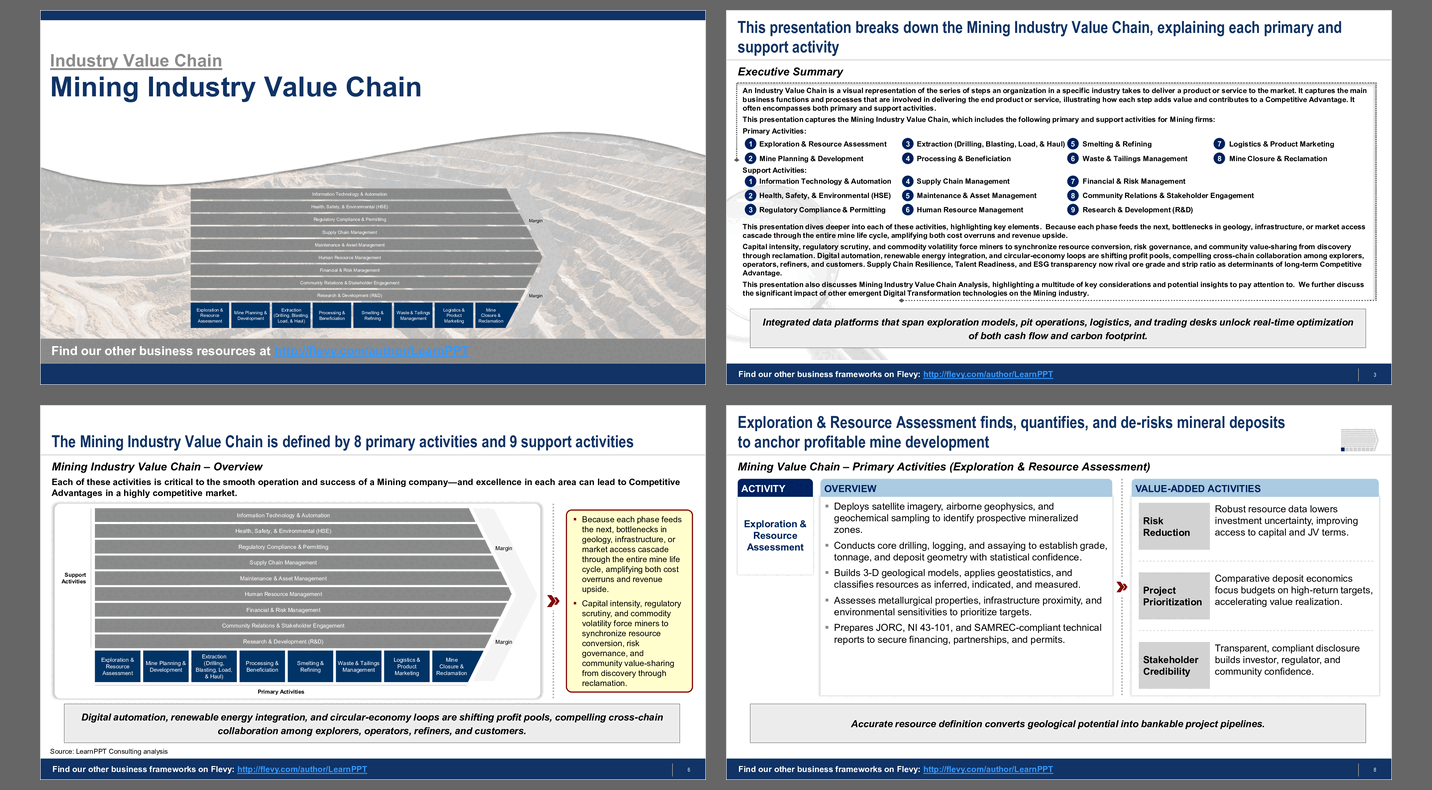
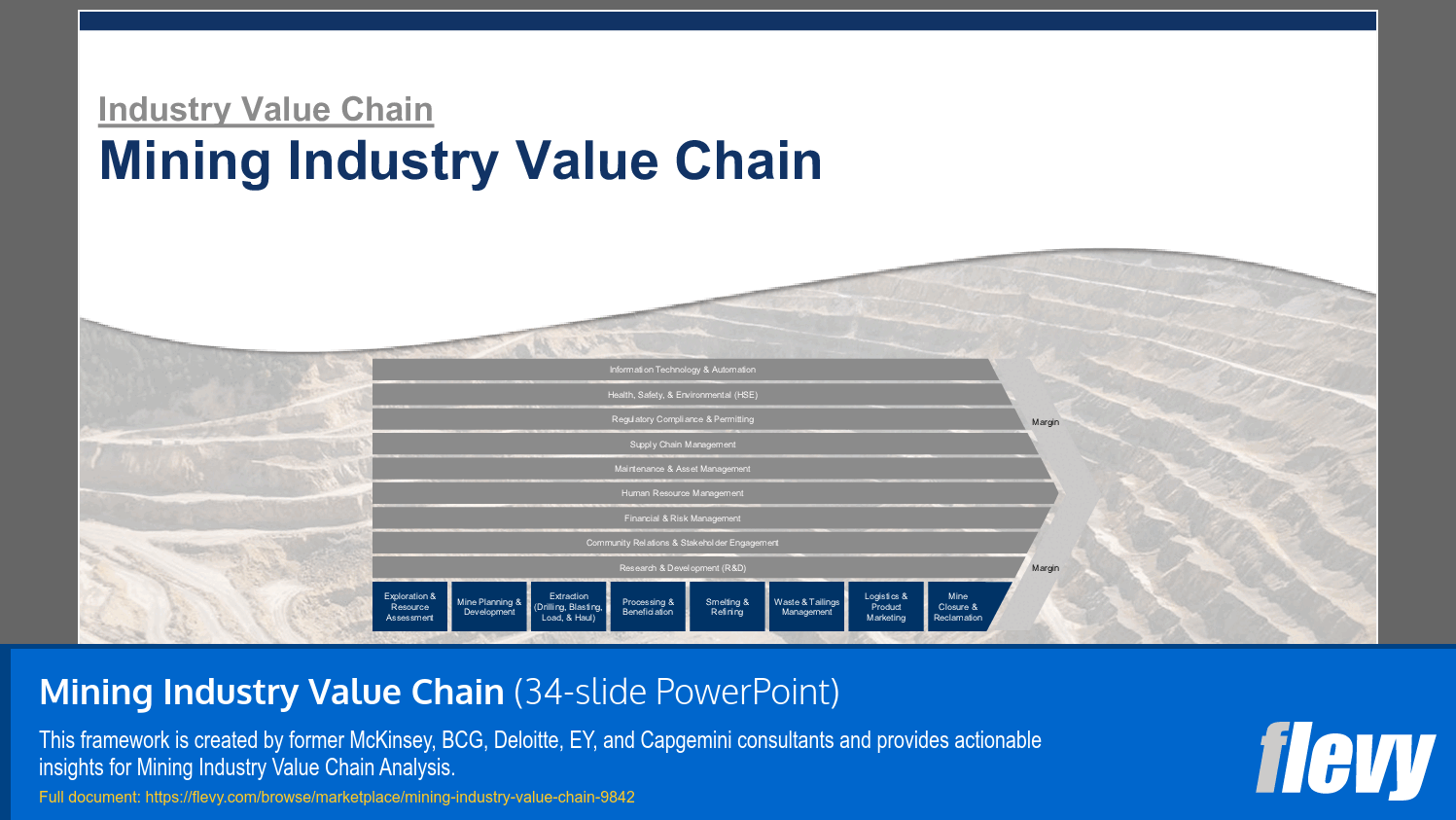
An Industry Value Chain is a visual representation of the series of steps an organization in a specific industry takes to deliver a product or service to the market. It captures the main business functions and processes that are involved in delivering the end product or service, illustrating how each step adds value and contributes to a Competitive Advantage. It often encompasses both primary and support activities.

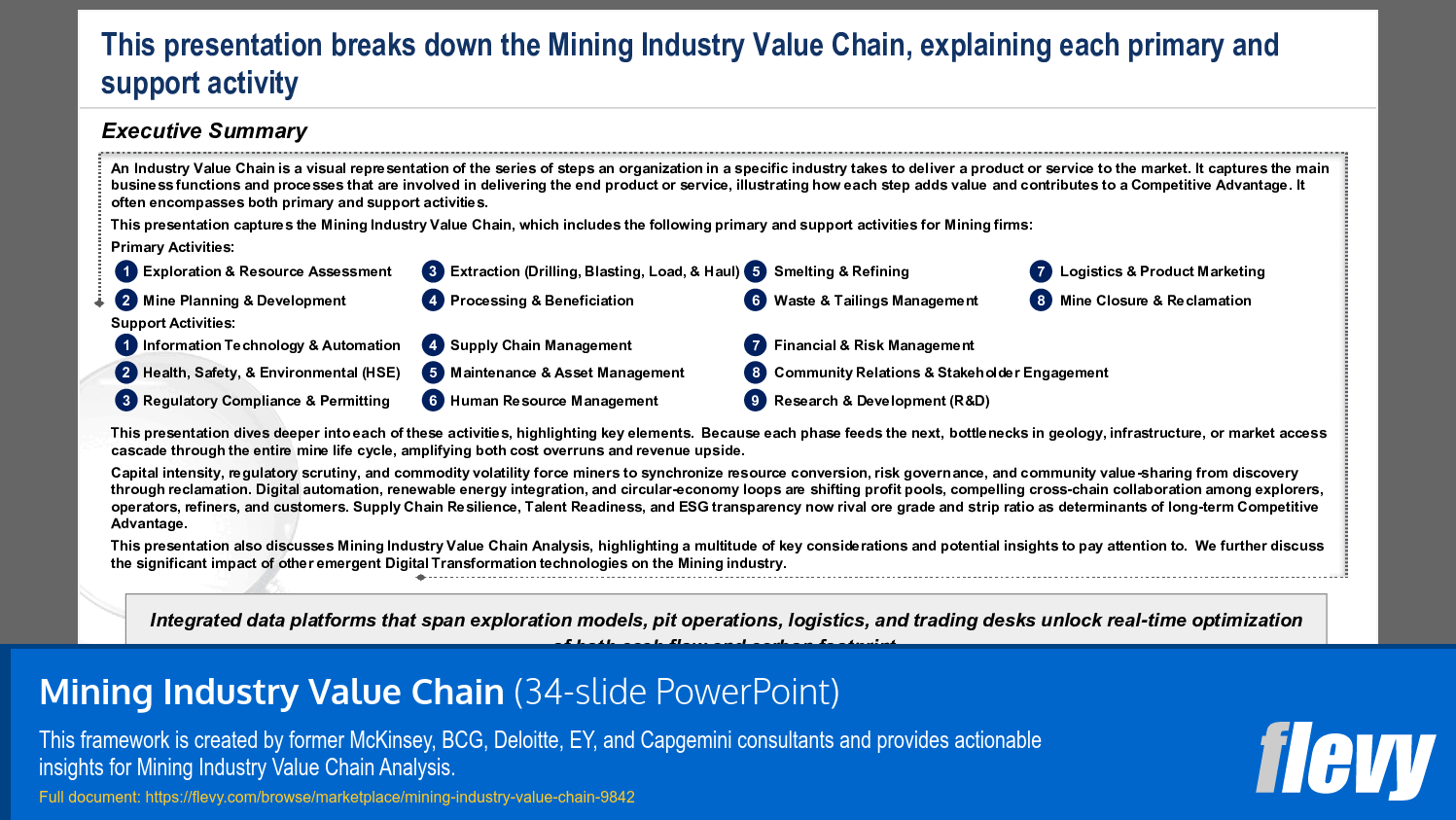
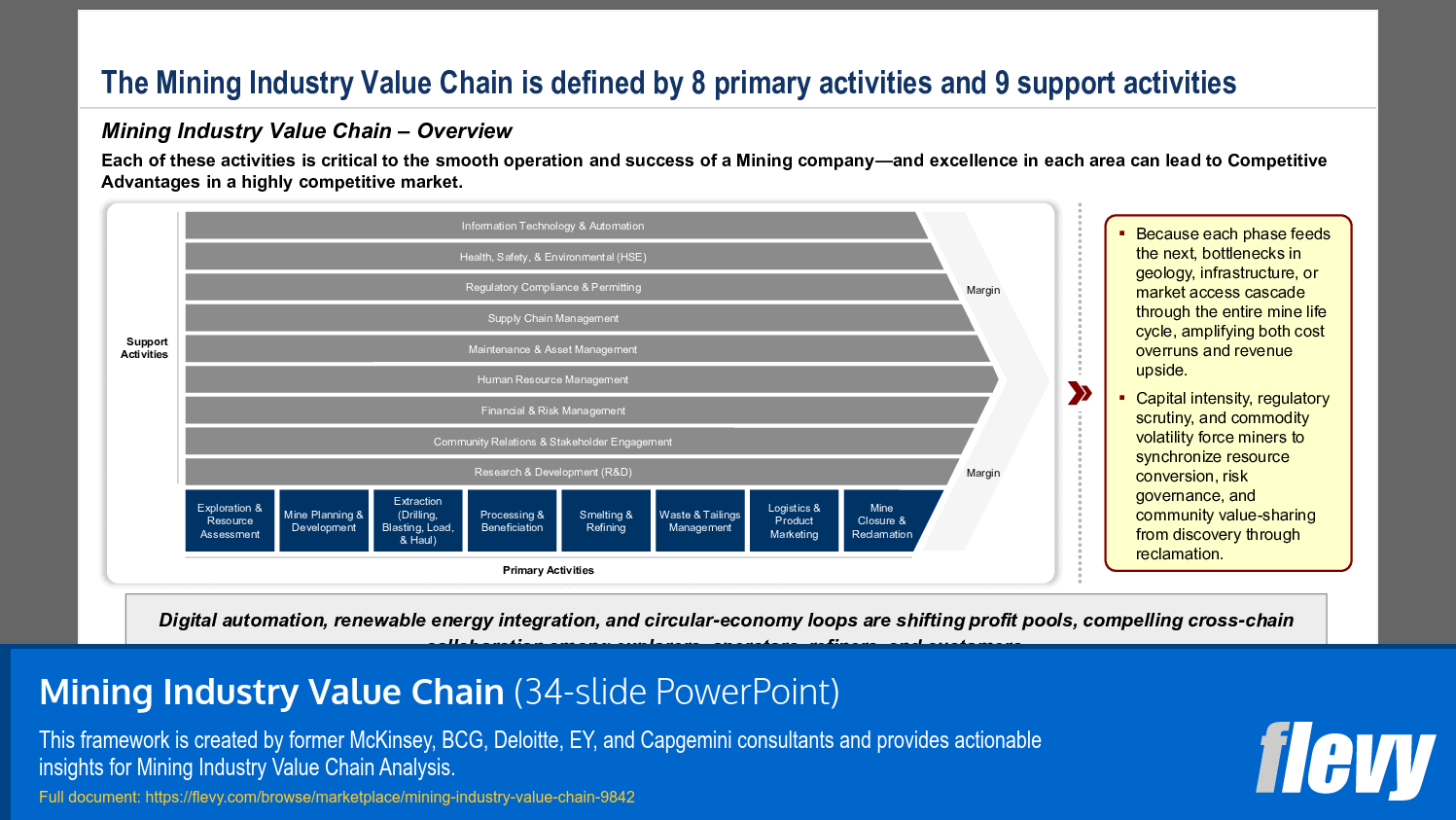
This presentation captures the Mining Industry Value Chain, which includes the following primary and support activities for Mining firms:
Primary Activities
1. Exploration & Resource Assessment
2. Mine Planning & Development
3. Extraction (Drilling, Blasting, Load, & Haul)
4. Processing & Beneficiation
5. Smelting & Refining
6. Waste & Tailings Management
7. Logistics & Product Marketing
8. Mine Closure & Reclamation
Support Activities
1. Information Technology & Automation
2. Health, Safety, & Environmental (HSE)
3. Regulatory Compliance & Permitting
4. Supply Chain Management
5. Maintenance & Asset Management
6. Human Resource Management
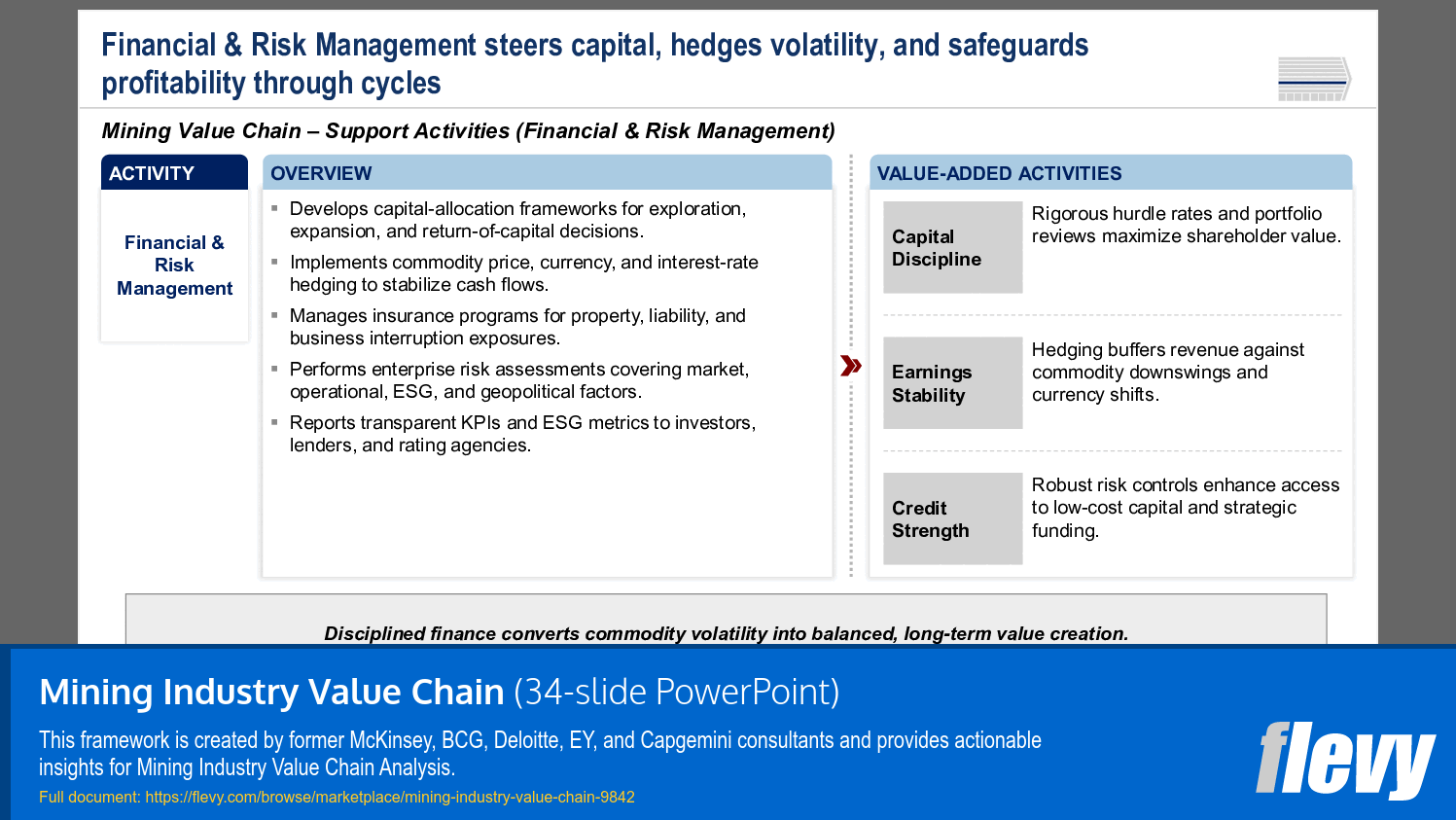
7. Financial & Risk Management
8. Community Relations & Stakeholder Engagement
9. Research & Development (R&D)
This presentation dives deeper into each of these activities, highlighting key elements. Because each phase feeds the next, bottlenecks in geology, infrastructure, or market access cascade through the entire mine life cycle, amplifying both cost overruns and revenue upside.
Capital intensity, regulatory scrutiny, and commodity volatility force miners to synchronize resource conversion, risk governance, and community value-sharing from discovery through reclamation. Digital automation, renewable energy integration, and circular-economy loops are shifting profit pools, compelling cross-chain collaboration among explorers, operators, refiners, and customers. Supply Chain Resilience, Talent Readiness, and ESG transparency now rival ore grade and strip ratio as determinants of long-term Competitive Advantage. Integrated data platforms that span exploration models, pit operations, logistics, and trading desks unlock real-time optimization of both cash flow and carbon footprint.
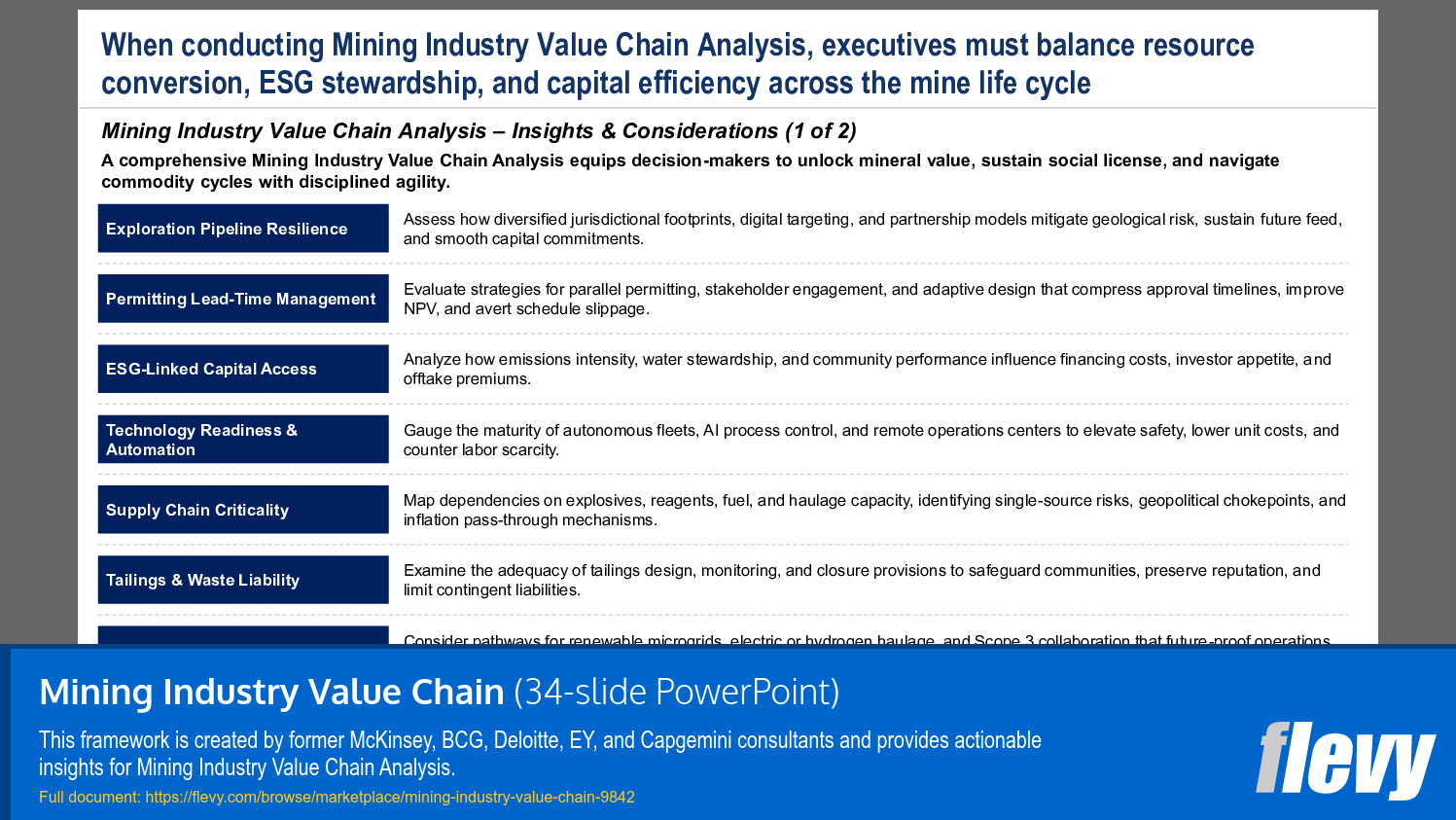
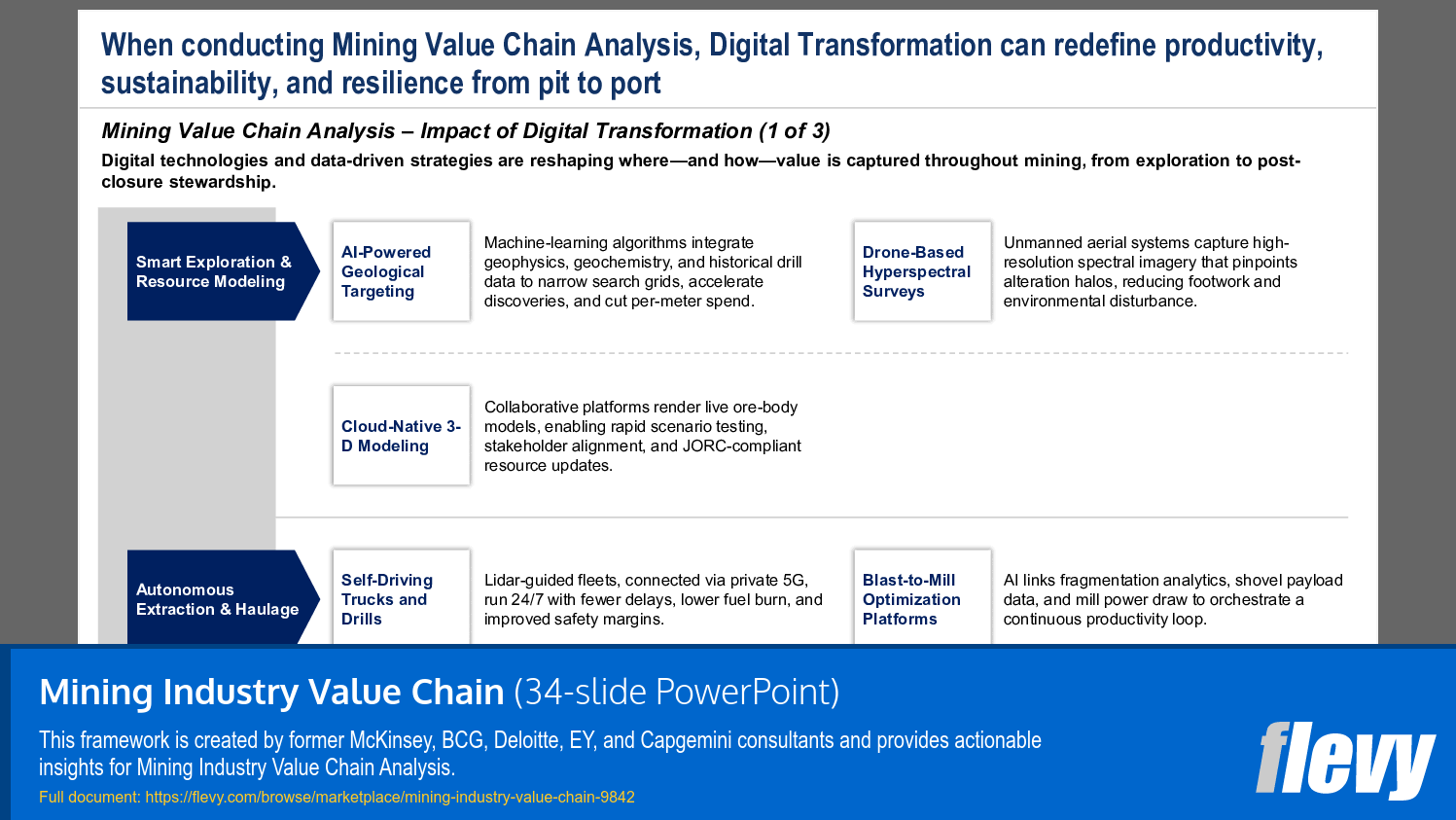
This presentation also discusses Mining Industry Value Chain Analysis, highlighting a multitude of key considerations and potential insights to pay attention to. We further discuss the significant impact of other emergent Digital Transformation technologies on the Mining industry.
Got a question about the product? Email us at support@flevy.com or ask the author directly by using the "Ask the Author a Question" form. If you cannot view the preview above this document description, go here to view the large preview instead.
Executive Summary
The Mining Industry Value Chain presentation provides a comprehensive framework for analyzing the mining sector's operations, from exploration to reclamation. It is designed to help executives and consultants understand how each phase of the mining process contributes to overall value creation and competitive advantage. The framework outlines eight primary activities—ranging from Exploration & Resource Assessment to Mine Closure & Reclamation—and nine supporting activities, including Information Technology & Automation and Community Relations & Stakeholder Engagement. By leveraging this framework, organizations can identify bottlenecks, optimize resource allocation, and enhance operational efficiency, ultimately driving profitability and sustainability in a volatile market.
Who This Is For and When to Use
• Mining executives and senior management teams focused on operational efficiency and strategic planning
• Consultants specializing in mining operations, supply chain management, and sustainability
• Project managers overseeing mining exploration, development, and closure phases
• Financial analysts evaluating investment opportunities in the mining sector
Best-fit moments to use this deck:
• During strategic planning sessions to align operational goals with market demands
• When assessing potential investments or partnerships in mining projects
• In workshops aimed at improving supply chain resilience and community engagement
• For training sessions focused on best practices in mining operations and ESG compliance
Learning Objectives
• Define the Mining Industry Value Chain and its significance in operational strategy
• Analyze each primary and support activity to identify areas for improvement
• Develop actionable insights for enhancing supply chain resilience and community relations
• Assess the impact of digital transformation on mining operations and sustainability
• Establish metrics for evaluating operational efficiency and stakeholder engagement
• Create a roadmap for implementing best practices in mining operations
Table of Contents
• Executive Summary (page 3)
• Mining Industry Value Chain (page 4)
• Primary Activities (page 6)
• Support Activities (page 17)
• Mining Industry Value Chain Analysis (page 27)
Primary Topics Covered
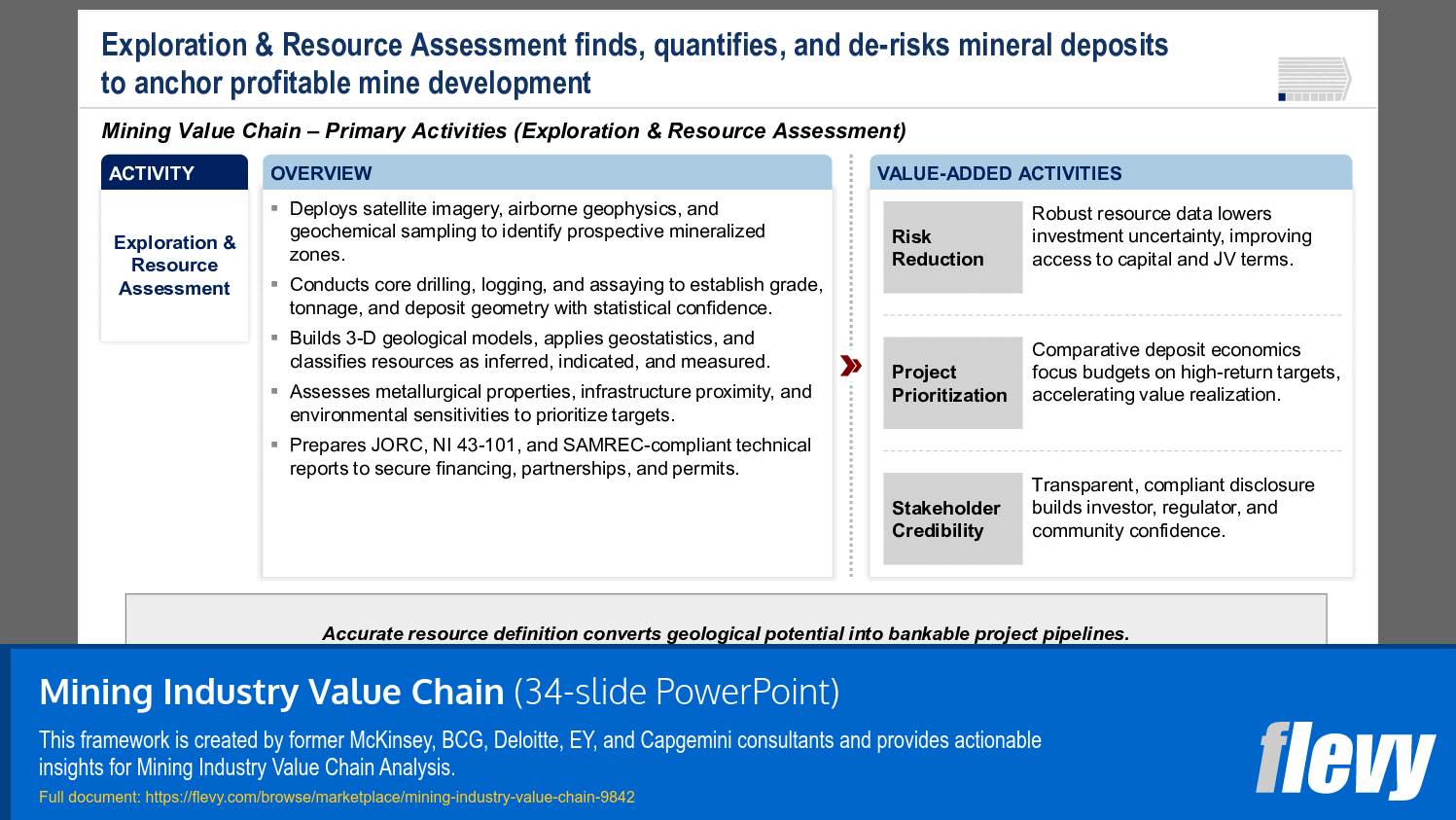
• Exploration & Resource Assessment - Identifies and quantifies mineral deposits to support profitable mine development.
• Mine Planning & Development - Translates geological potential into executable, capital-efficient mine blueprints.
• Extraction (Drilling, Blasting, Load, & Haul) - Orchestrates the safe and efficient movement of ore through advanced techniques.
• Processing & Beneficiation - Upgrades raw ore into saleable concentrates, enhancing market access and profitability.
• Smelting & Refining - Converts concentrates into pure metals that meet stringent customer specifications.
• Waste & Tailings Management - Safeguards communities and ecosystems while managing operational liabilities.
• Logistics & Product Marketing - Moves bulk commodities to buyers, capturing value and optimizing portfolio options.
• Mine Closure & Reclamation - Restores landscapes and mitigates liabilities for post-mining value.
Deliverables, Templates, and Tools
• Value chain analysis framework for assessing mining operations
• Templates for resource assessment and project prioritization
• Guidelines for stakeholder engagement and community relations
• Checklists for regulatory compliance and permitting processes
• Metrics for evaluating operational efficiency and ESG performance
• Case studies showcasing successful mining operations and best practices
Slide Highlights
• Overview of the Mining Industry Value Chain, illustrating primary and support activities
• Detailed breakdown of Exploration & Resource Assessment, emphasizing risk reduction and project prioritization
• Insights into Mine Planning & Development, focusing on capital efficiency and regulatory alignment
• Analysis of Extraction processes, highlighting cost reduction and safety improvements
• Overview of Waste & Tailings Management practices, emphasizing risk mitigation and community trust
Potential Workshop Agenda
Mining Value Chain Overview Session (60 minutes)
• Introduce the Mining Industry Value Chain framework
• Discuss the significance of each primary and support activity
• Identify key challenges and opportunities in mining operations
Stakeholder Engagement Workshop (90 minutes)
• Map stakeholders and their expectations
• Develop strategies for effective community relations
• Create a plan for ongoing dialogue and grievance mechanisms
Digital Transformation in Mining Session (60 minutes)
• Explore the impact of digital technologies on mining operations
• Discuss case studies of successful digital implementations
• Identify areas for technology adoption and process optimization
Customization Guidance
• Tailor the framework to specific mining operations by incorporating local regulatory requirements and community expectations
• Adjust metrics and KPIs based on organizational goals and industry standards
• Incorporate company-specific case studies and examples to enhance relevance
Secondary Topics Covered
• Digital transformation technologies impacting the mining sector
• Best practices in supply chain management and logistics
• Strategies for enhancing ESG performance and community engagement
• Risk management frameworks for navigating commodity volatility
Topic FAQ
Document FAQ
These are questions addressed within this presentation.
What is the Mining Industry Value Chain?
The Mining Industry Value Chain is a framework that outlines the series of steps involved in mining operations, from exploration to reclamation, and how each step adds value.
How can this framework help my organization?
This framework can identify bottlenecks, optimize resource allocation, and enhance operational efficiency, ultimately driving profitability and sustainability.
What are the primary activities in the Mining Industry Value Chain?
The primary activities include Exploration & Resource Assessment, Mine Planning & Development, Extraction, Processing & Beneficiation, Smelting & Refining, Waste & Tailings Management, Logistics & Product Marketing, and Mine Closure & Reclamation.
What are the support activities in the Mining Industry Value Chain?
Support activities include Information Technology & Automation, Health, Safety, & Environmental (HSE), Regulatory Compliance & Permitting, Supply Chain Management, Maintenance & Asset Management, Human Resource Management, Financial & Risk Management, Community Relations & Stakeholder Engagement, and Research & Development (R&D).
How does digital transformation impact mining operations?
Digital transformation enhances productivity, sustainability, and resilience by integrating technologies that optimize processes, improve safety, and reduce costs.
What metrics should be used to evaluate operational efficiency?
Metrics may include production rates, cost per ton, safety incident rates, and ESG performance indicators.
How can we improve stakeholder engagement in mining projects?
Developing clear communication strategies, establishing ongoing dialogue, and creating participatory monitoring committees can enhance stakeholder engagement.
What is the significance of waste and tailings management?
Effective waste and tailings management safeguards communities and ecosystems while mitigating operational liabilities and enhancing the company's reputation.
Glossary
• Mining Industry Value Chain - A framework outlining the steps in mining operations from exploration to reclamation.
• Exploration & Resource Assessment - The process of identifying and quantifying mineral deposits.
• Mine Planning & Development - The design and scheduling of mining operations to optimize efficiency.
• Extraction - The process of removing ore from the earth.
• Processing & Beneficiation - The upgrading of raw ore into saleable concentrates.
• Smelting & Refining - The conversion of concentrates into pure metals.
• Waste & Tailings Management - The management of mining waste to protect the environment.
• Logistics & Product Marketing - The movement of mined products to market.
• Mine Closure & Reclamation - The process of restoring land after mining operations cease.
• Digital Transformation - The integration of digital technologies to enhance operational efficiency.
• Stakeholder Engagement - The process of involving stakeholders in decision-making.
• ESG Performance - Environmental, Social, and Governance metrics used to evaluate sustainability.
• Supply Chain Management - The management of the flow of goods and services.
• Regulatory Compliance - Adhering to laws and regulations in mining operations.
• Community Relations - The management of relationships with local communities.
• Risk Management - The identification and mitigation of risks in mining operations.
• Financial Management - The management of financial resources and risks in mining.
• Human Resource Management - The management of workforce planning and development.
• Health, Safety, & Environmental (HSE) - The practices ensuring safety and environmental compliance in mining.
• Research & Development (R&D) - The process of developing new technologies and methods in mining.
Source: Best Practices in Value Chain Analysis, Mining Industry PowerPoint Slides: Mining Industry Value Chain PowerPoint (PPTX) Presentation Slide Deck, LearnPPT Consulting
|
Download our FREE Strategy & Transformation Framework Templates
Download our free compilation of 50+ Strategy & Transformation slides and templates. Frameworks include McKinsey 7-S, Balanced Scorecard, Disruptive Innovation, BCG Curve, and many more. |