Mastering Business Plan Financial Modeling   22-slide PPT PowerPoint presentation template (PPTX)
$42.00

Mastering Business Plan Financial Modeling (22-slide PPT PowerPoint presentation slide deck (PPTX)) Preview Image
Flevy is the marketplace for business best practices.
Mastering Business Plan Financial Modeling (22-slide PPT PowerPoint presentation slide deck (PPTX)) Preview Image
Arrow   Click main image to view in full screen.

Mastering Business Plan Financial Modeling – PowerPoint PPTX Template

PowerPoint (PPTX) 22 Slides

#1 in Financial Modeling $42.00

Add to Cart


Immediate download
Fully editable PowerPoint
Free lifetime updates

BENEFITS OF THIS DOWNLOADABLE POWERPOINT DOCUMENT

  1. Strategic Approach to Financial Modeling
  2. Provides a presentation that will save you much time and effort. We have the talking points if you need them.
  3. Customization should be minimal. Images within are AI generated and easy to upgrade if required.

FINANCIAL MODELING PPT TEMPLATE DESCRIPTION

Editor Summary Mastering Business Plan Financial Modeling is a 22-slide PowerPoint presentation by Gafford Consulting that guides users through building business-plan financial models. Read more

Mastering Business Plan Financial Modeling: A Strategic Approach
A well-structured Business Plan Financial Model is essential for making informed business decisions, securing investments, and ensuring long-term financial sustainability. This high-quality, fully editable presentation provides a step-by-step guide to building and analyzing financial models that drive business success. Designed with professional clarity and visual appeal, this presentation ensures a seamless learning experience with well-organized content, engaging visuals, and practical insights.

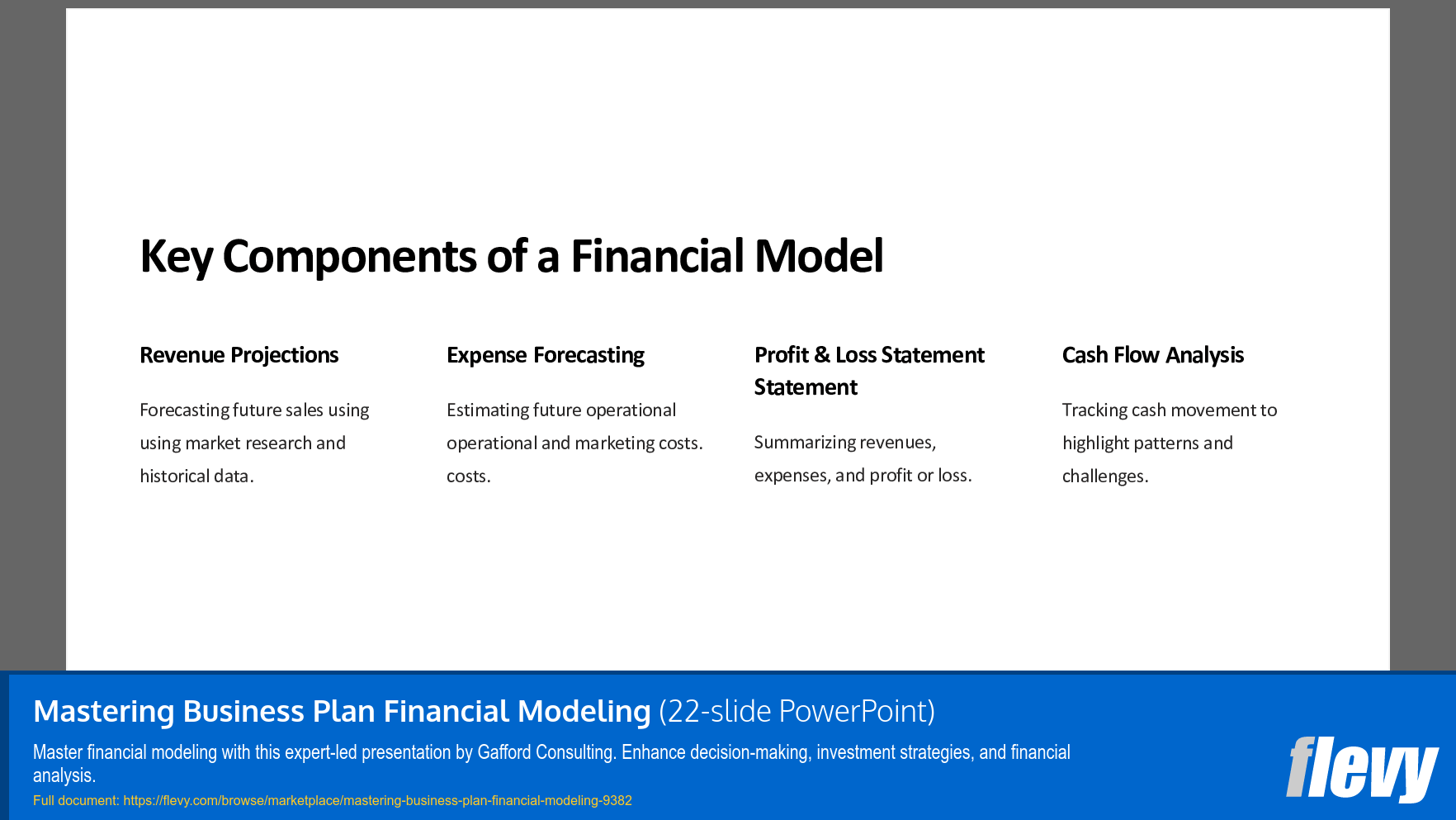
We begin with an introduction to financial modeling, highlighting its importance in business planning, forecasting, and strategic decision-making. The presentation covers the key components of a financial model, including revenue projections, expense forecasting, and the development of profit & loss statements, balance sheets, and cash flow analysis.

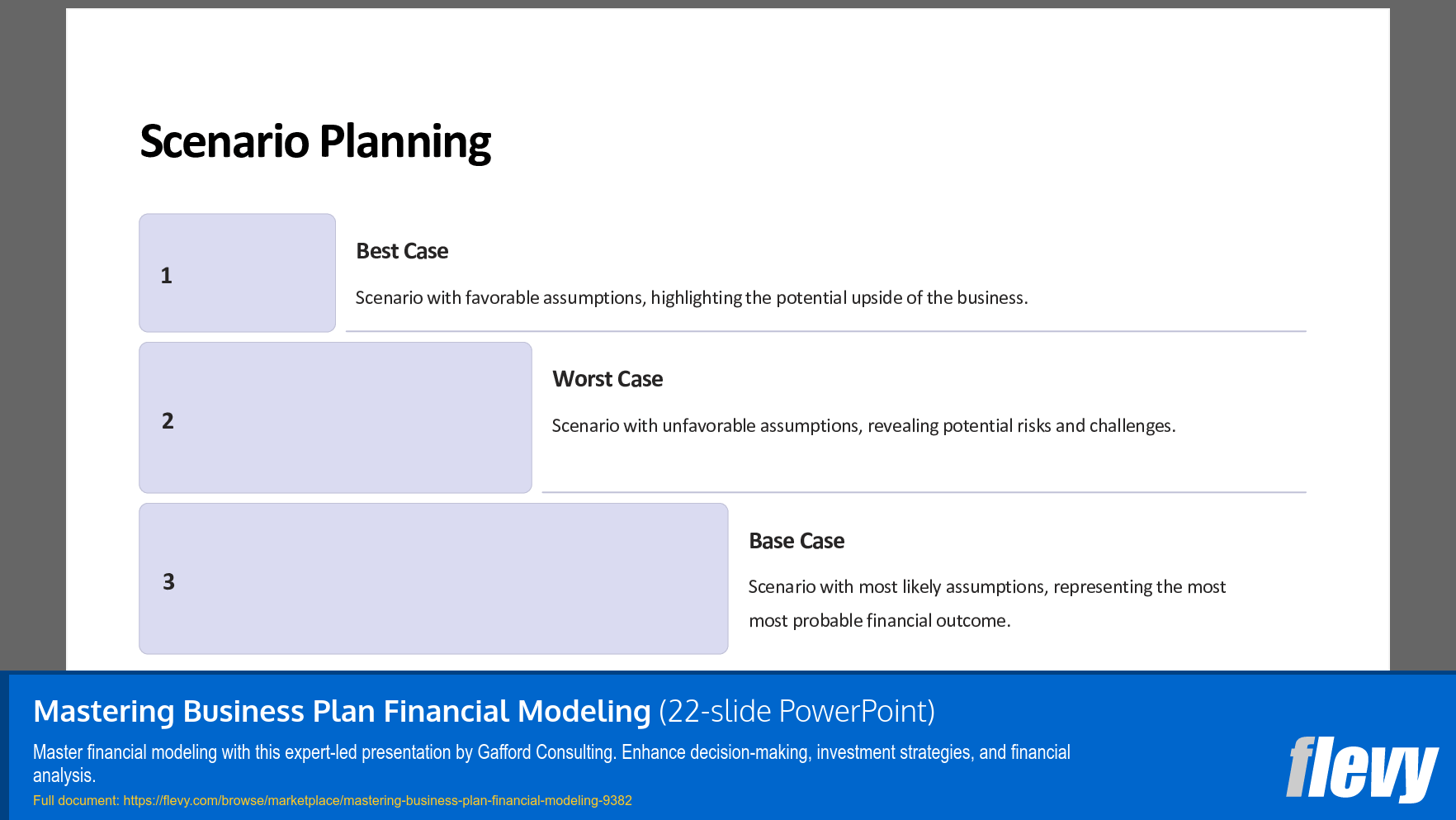
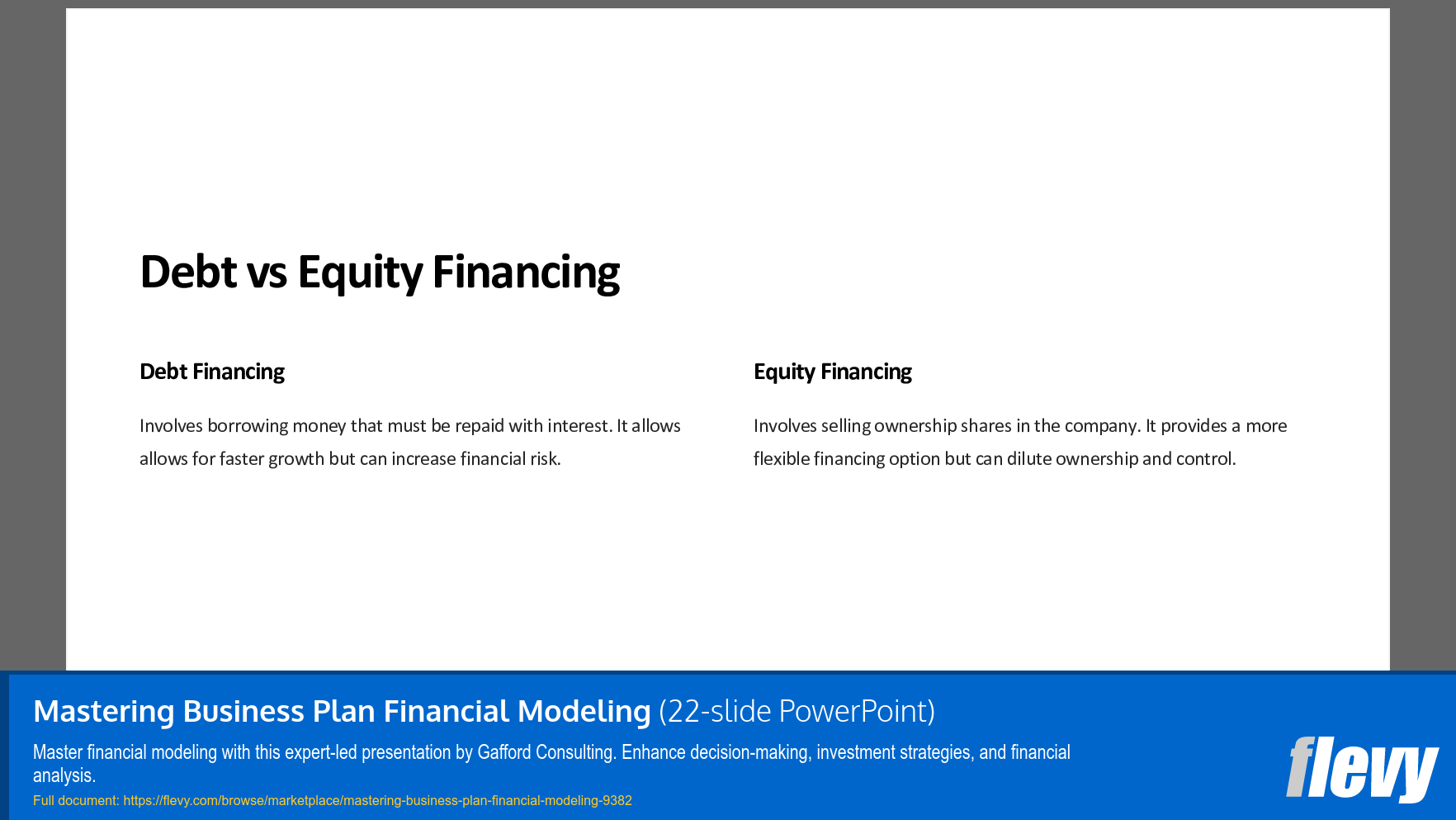
Attendees will gain insights into critical financial assumptions, break-even analysis, and sensitivity analysis, enabling them to evaluate various business scenarios effectively. The discussion extends to capital expenditure planning, funding sources, debt vs. equity financing, and financial ratios, ensuring participants understand how to assess a company's financial health and potential growth opportunities.

Through investment evaluation, ROI analysis, and risk mitigation strategies, we explore the best practices for ensuring financial stability. The session also delves into forecasting techniques, model validation, and automation tools, helping professionals enhance accuracy and efficiency in financial modeling.

A real-world case study demonstrates how financial models influence decision-making, and we address common mistakes and pitfalls to avoid. Attendees will also learn best practices for presenting financial models to stakeholders and continuously updating their models to reflect changing business conditions.

This visually compelling, fully customizable presentation allows for easy modifications, making it an ideal resource for finance professionals, entrepreneurs, and business leaders. Whether used for training, strategy sessions, or investor pitches, this professionally designed, high-impact presentation delivers clarity, depth, and actionable insights.

Try this and other Gafford Consulting documents. Search Gafford Consulting in the Author search box ...You will not be disappointed.

Got a question about the product? Email us at support@flevy.com or ask the author directly by using the "Ask the Author a Question" form. If you cannot view the preview above this document description, go here to view the large preview instead.

MARCUS OVERVIEW

This synopsis was written by Marcus [?] based on the analysis of the full 22-slide presentation.


Executive Summary
The "Mastering Business Plan Financial Modeling" presentation is an essential resource for professionals seeking to enhance their business planning capabilities through effective financial modeling. This deck provides a structured approach to understanding financial performance, enabling users to make informed decisions regarding investments, operations, and funding strategies. By utilizing this presentation, users will be equipped to develop comprehensive business plans, conduct revenue projections, analyze cash flows, and assess ROI, ultimately driving strategic planning and securing investor confidence.

Who This Is For and When to Use
•  Financial analysts and planners developing business plans and financial models
•  Entrepreneurs seeking to attract investors through robust financial projections
•  Corporate executives responsible for strategic decision-making and financial oversight
•  Consultants advising clients on business planning and financial strategy

Best-fit moments to use this deck:
•  During the initial phases of business planning to establish financial forecasts
•  When preparing for investor presentations to demonstrate business viability
•  In strategic meetings focused on evaluating financial scenarios and outcomes

Learning Objectives
•  Define the key components of financial modeling and its importance in business planning
•  Build comprehensive revenue projections based on market research and historical data
•  Analyze cash flow to identify patterns and financial health
•  Conduct break-even analysis to determine profitability thresholds
•  Develop sensitivity analyses to assess the impact of variable changes on financial outcomes
•  Present financial models effectively to stakeholders using visual aids and concise explanations

Table of Contents
•  Introduction to Business Financial Modeling (page 2)
•  Importance of Financial Models in Business Planning (page 3)
•  Key Components of a Financial Model (page 4)
•  Revenue Projections (page 5)
•  Expense Forecasting (page 6)
•  Profit & Loss Statement (page 7)
•  Cash Flow Analysis (page 8)
•  Balance Sheet Overview (page 9)
•  Key Financial Assumptions (page 10)
•  Break-even Analysis (page 11)
•  Sensitivity Analysis (page 12)
•  Capital Expenditure Planning (page 14)
•  Funding Requirements & Sources (page 15)
•  Valuation Methodologies (page 17)
•  Financial Ratios and KPIs (page 18)
•  Budgeting and Variance Analysis (page 19)
•  Presenting the Financial Model to Stakeholders (page 21)
•  Next Steps (page 22)

Primary Topics Covered
•  Financial Modeling Definition - Financial modeling is the structured representation of a business's financial performance, essential for analyzing data and making projections.
•  Revenue Projections - This involves forecasting future sales through market research and historical data, critical for establishing realistic financial expectations.
•  Expense Forecasting - Estimating future operational costs, including fixed and variable expenses, to ensure comprehensive financial planning.
•  Profit & Loss Statement - Summarizing revenues, expenses, and net income to provide insights into overall profitability.
•  Cash Flow Analysis - Tracking cash movement to highlight operational efficiency and identify potential financial challenges.
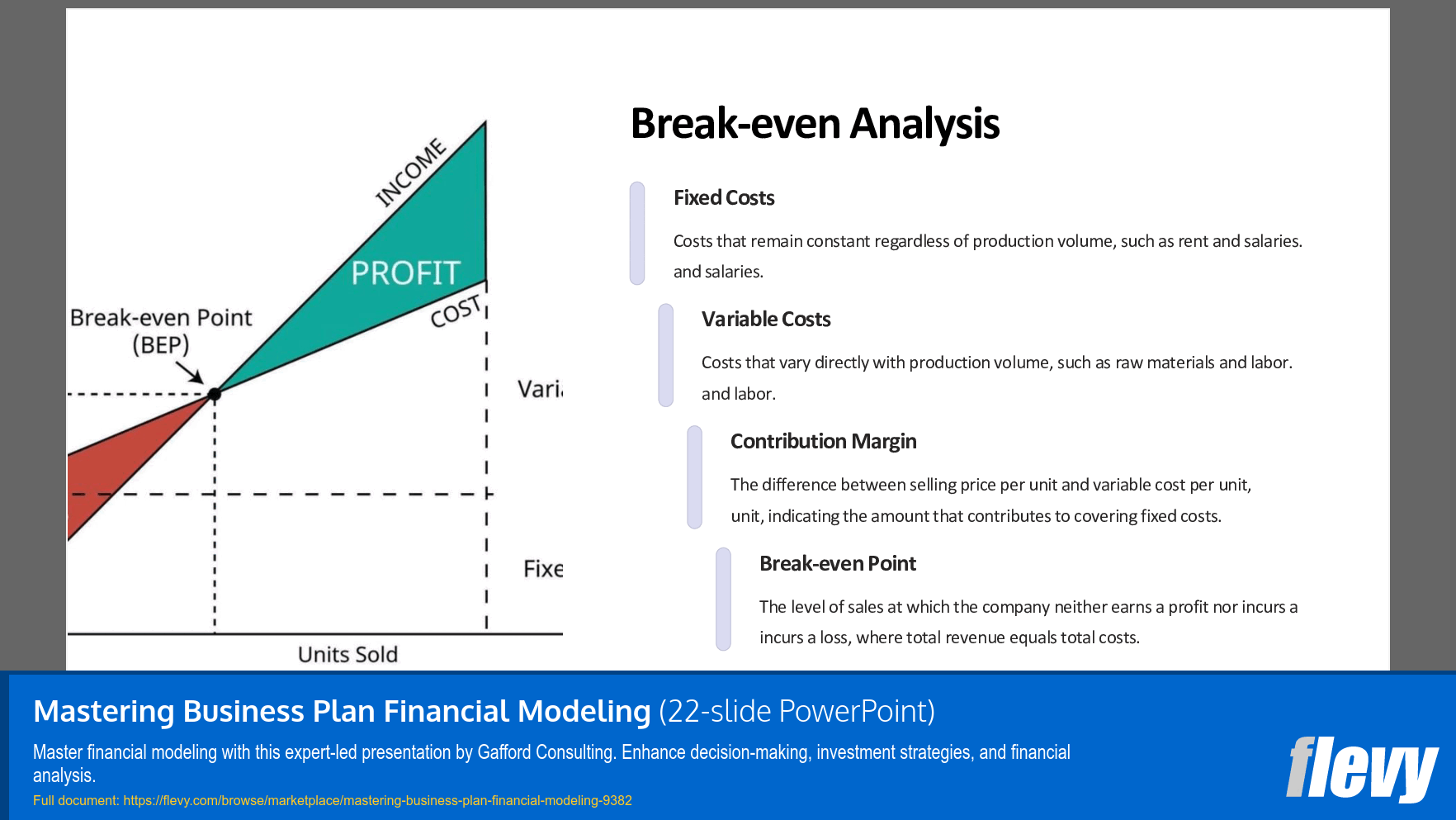
•  Break-even Analysis - Determining the sales level at which total revenue equals total costs, crucial for assessing business viability.

Deliverables, Templates, and Tools
•  Financial model template for revenue projections and expense forecasting
•  Profit & Loss statement format for summarizing financial performance
•  Cash flow analysis tool to track operational cash movements
•  Break-even analysis worksheet to determine profitability thresholds
•  Sensitivity analysis framework for evaluating financial assumptions
•  Capital expenditure planning template for budgeting future investments

Slide Highlights
•  Overview of financial modeling's critical role in business planning
•  Detailed breakdown of revenue projections and expense forecasting
•  Visual representation of cash flow analysis and its components
•  Clear explanation of break-even analysis with graphical illustrations
•  Framework for presenting financial models effectively to stakeholders

Potential Workshop Agenda
Introduction to Financial Modeling (60 minutes)
•  Discuss the importance of financial modeling in business planning
•  Review key components of a financial model

Revenue and Expense Forecasting (90 minutes)
•  Hands-on session for building revenue projections
•  Workshop on expense forecasting techniques

Cash Flow and Break-even Analysis (60 minutes)
•  Analyze cash flow patterns and their implications
•  Conduct break-even analysis exercises

Presenting Financial Models (60 minutes)
•  Strategies for effective stakeholder presentations
•  Practice session for presenting financial insights

Customization Guidance
•  Tailor revenue projections based on specific market research relevant to your business
•  Adjust expense forecasting templates to reflect actual operational costs
•  Modify the break-even analysis to align with your pricing strategies and cost structures
•  Update financial assumptions to reflect current market conditions and growth expectations

Secondary Topics Covered
•  Sensitivity analysis techniques for assessing financial risks
•  Capital expenditure planning and its impact on cash flow
•  Valuation methodologies for determining business worth
•  Financial ratios and KPIs for measuring operational efficiency
•  Budgeting processes and variance analysis for performance monitoring

Topic FAQ

What are the core components of a business plan financial model?

A business plan financial model typically includes revenue projections, expense forecasting, a profit & loss statement, cash flow analysis, balance sheet overview, key financial assumptions, break-even analysis, and sensitivity analysis. These elements provide the structured financial view required for planning and investor review, ending with a profit & loss statement.

How should I forecast revenue for a new product?

Revenue forecasting for a new product should combine market research, comparable historical data where available, clear growth and pricing assumptions, and scenario testing to capture uncertainty. Use tiered scenarios and document drivers so the forecast is traceable and adaptable, ideally implemented in a revenue projections template.

What is the purpose of a break-even analysis in a business plan?

Break-even analysis identifies the sales level at which total revenue equals total costs, helping assess pricing, cost structure, and viability. It informs when a business becomes profitable and supports pricing or volume decisions; many modeling toolkits include a break-even analysis worksheet to calculate this threshold.

How do sensitivity analyses improve a financial model?

Sensitivity analyses test how changes in key assumptions (sales growth, pricing, costs, capital) affect outcomes, revealing which inputs drive risk and value. They support scenario planning and investor discussions by quantifying downside and upside effects; the approach is typically implemented via a sensitivity analysis framework.

What should I look for in a downloadable financial modeling deck when choosing one on a tight timeline?

Prioritize editable slides, prebuilt templates for revenue, expense, P&L and cash flow, clear visuals for stakeholder presentation, and step-by-step guidance or a workshop agenda to speed adoption. These attributes reduce setup time and enable rapid iteration, as found in a 22-slide PowerPoint.

How do I assess the value of a financial modeling template relative to its cost?

Compare the included deliverables (revenue and expense templates, P&L, cash flow, break-even, sensitivity tools), customization guidance, presentation-ready slides, and whether it supports investor pitches or internal budgeting. Templates that cover those items and save development time offer measurable value, such as a cash flow analysis tool.

I need to prepare an investor pitch—what financial analyses should I include?

An investor pitch should present revenue projections, funding requirements and sources, valuation rationale (DCF or multiples), cash flow forecasts, break-even metrics, ROI expectations, and sensitivity scenarios to show risk. Visual, concise slides that highlight funding needs and outcomes help, such as a funding requirements & sources slide.

How can I use a financial model to plan capital expenditures and their cash-flow impact?

Model capital expenditures by scheduling outlays, applying depreciation and amortization effects, linking capex to asset and balance sheet changes, and projecting resulting cash-flow impacts and financing needs. Use a capital expenditure planning template to capture timing, amounts, and impacts on cash flow and ratios.

Document FAQ
These are questions addressed within this presentation.

What is financial modeling?
Financial modeling is the creation of a structured representation of a business's financial performance, used for analysis and projections.

Why is financial modeling important in business planning?
It provides a framework for evaluating different strategic scenarios and their potential financial impacts, aiding in informed decision-making.

What are the key components of a financial model?
Key components include revenue projections, expense forecasting, profit & loss statements, cash flow analysis, and break-even analysis.

How can I present financial models effectively to stakeholders?
Utilize visualizations, charts, and concise explanations to communicate key findings and insights clearly.

What is break-even analysis?
Break-even analysis determines the sales level at which total revenue equals total costs, indicating the point of profitability.

How do I conduct a sensitivity analysis?
Sensitivity analysis involves exploring the impact of changes in key assumptions on financial outcomes to assess potential risks.

What are the funding requirements typically included in a business plan?
Funding requirements outline the total capital needed, sources of funding, and the allocation of funds for business growth.

What valuation methodologies are commonly used?
Common methodologies include discounted cash flow (DCF), precedent transactions, and market multiples to assess business value.

Glossary
•  Financial Modeling - A structured representation of a business's financial performance.
•  Revenue Projections - Estimates of future sales based on market data.
•  Expense Forecasting - Estimations of future operational costs.
•  Profit & Loss Statement - A summary of revenues, expenses, and net income.
•  Cash Flow Analysis - Tracking of cash movements within a business.
•  Break-even Analysis - The calculation of sales needed to cover total costs.
•  Sensitivity Analysis - Assessment of how changes in assumptions affect outcomes.
•  Capital Expenditure - Funds used for acquiring or upgrading physical assets.
•  Funding Requirements - The total capital needed for business operations and growth.
•  Valuation Methodologies - Techniques for determining a business's worth.
•  Financial Ratios - Metrics used to evaluate financial performance.
•  Budgeting - The process of creating a financial plan for a specific period.
•  Variance Analysis - Comparison of actual performance to budgeted figures.
•  Performance Monitoring - Regular tracking of financial performance against goals.

Source: Best Practices in Financial Modeling, Business Plan Writing PowerPoint Slides: Mastering Business Plan Financial Modeling PowerPoint (PPTX) Presentation Slide Deck, Gafford Consulting


$42.00

Add to Cart
  

ABOUT THE AUTHOR

Author image
Additional documents from author: 46

Drawing from our deep professional network and years of experience, Gafford Consulting delivers the leadership and subject matter expertise you need to effectively navigate your organizational change. We partner with you to create a customized solution that helps mitigate risk, promote acceptance and accelerate performance.

Ask the Author a Question

You must be logged in to contact the author.

Click here to log in Click here register

Did you know?
The average daily rate of a McKinsey consultant is $6,625 (not including expenses). The average price of a Flevy document is $65.



Trusted by over 10,000+ Client Organizations
Since 2012, we have provided business templates to over 10,000 businesses and organizations of all sizes, from startups and small businesses to the Fortune 100, in over 130 countries.
AT&T GE Cisco Intel IBM Coke Dell Toyota HP Nike Samsung Microsoft Astrazeneca JP Morgan KPMG Walgreens Walmart 3M Kaiser Oracle SAP Google E&Y Volvo Bosch Merck Fedex Shell Amgen Eli Lilly Roche AIG Abbott Amazon PwC T-Mobile Broadcom Bayer Pearson Titleist ConEd Pfizer NTT Data Schwab


Read Customer Testimonials

 
"As a young consulting firm, requests for input from clients vary and it's sometimes impossible to provide expert solutions across a broad spectrum of requirements. That was before I discovered Flevy.com.

Through subscription to this invaluable site of a plethora of topics that are key and crucial to consulting, I "

– Nishi Singh, Strategist and MD at NSP Consultants
 
"As a consultant requiring up to date and professional material that will be of value and use to my clients, I find Flevy a very reliable resource.

The variety and quality of material available through Flevy offers a very useful and commanding source for information. Using Flevy saves me time, enhances my expertise and ends up being a good decision."

– Dennis Gershowitz, Principal at DG Associates
 
"FlevyPro provides business frameworks from many of the global giants in management consulting that allow you to provide best in class solutions for your clients."

– David Harris, Managing Director at Futures Strategy
 
"I am extremely grateful for the proactiveness and eagerness to help and I would gladly recommend the Flevy team if you are looking for data and toolkits to help you work through business solutions."

– Trevor Booth, Partner, Fast Forward Consulting
 
"I have used Flevy services for a number of years and have never, ever been disappointed. As a matter of fact, David and his team continue, time after time, to impress me with their willingness to assist and in the real sense of the word. I have concluded in fact "

– Roberto Pelliccia, Senior Executive in International Hospitality
 
"FlevyPro has been a brilliant resource for me, as an independent growth consultant, to access a vast knowledge bank of presentations to support my work with clients. In terms of RoI, the value I received from the very first presentation I downloaded paid for my subscription many times over! The "

– Roderick Cameron, Founding Partner at SGFE Ltd
 
"I have found Flevy to be an amazing resource and library of useful presentations for lean sigma, change management and so many other topics. This has reduced the time I need to spend on preparing for my performance consultation. The library is easily accessible and updates are regularly provided. A wealth of great information."

– Cynthia Howard RN, PhD, Executive Coach at Ei Leadership
 
"[Flevy] produces some great work that has been/continues to be of immense help not only to myself, but as I seek to provide professional services to my clients, it gives me a large "tool box" of resources that are critical to provide them with the quality of service and outcomes they are expecting."

– Royston Knowles, Executive with 50+ Years of Board Level Experience


Customers Also Like These Documents

Explore Templates on Related Management Topics


Your Recently Viewed Documents
Download our FREE Strategy & Transformation Framework Templates

Download our free compilation of 50+ Strategy & Transformation slides and templates. Frameworks include McKinsey 7-S, Balanced Scorecard, Disruptive Innovation, BCG Curve, and many more.