
 Click main image to view in full screen. Unlock all 12 preview images:
M&A Valuation & Deal Structuring SOP – Word DOCX
Word (DOCX) 20 Pages


BENEFITS OF THIS DOWNLOADABLE WORD DOCUMENT
- Provides a framework for conducting rigorous M&A valuation and deal structuring across the transaction lifecycle.
- Establishes a standardized methodology for DCF, trading comps, LBO, SOTP, purchase price, tax, and financing analysis.
- Supports optimized transaction structures by aligning valuation, after-tax proceeds, earn-outs, working capital, and certainty-of-close considerations.
M&A (MERGERS & ACQUISITIONS) WORD DESCRIPTION
Curated by McKinsey-trained Executives
M&A Valuation & Deal Structuring Standard Operating Procedure (SOP)
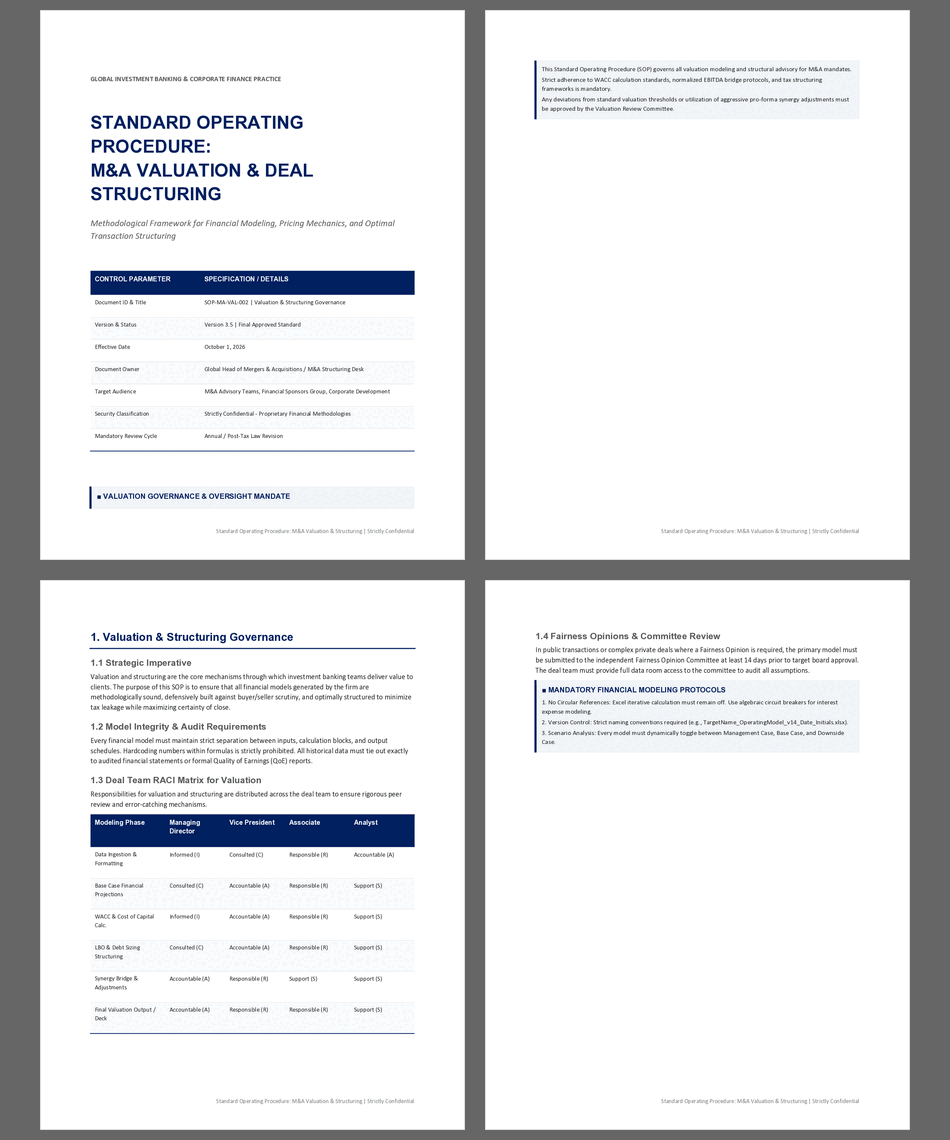
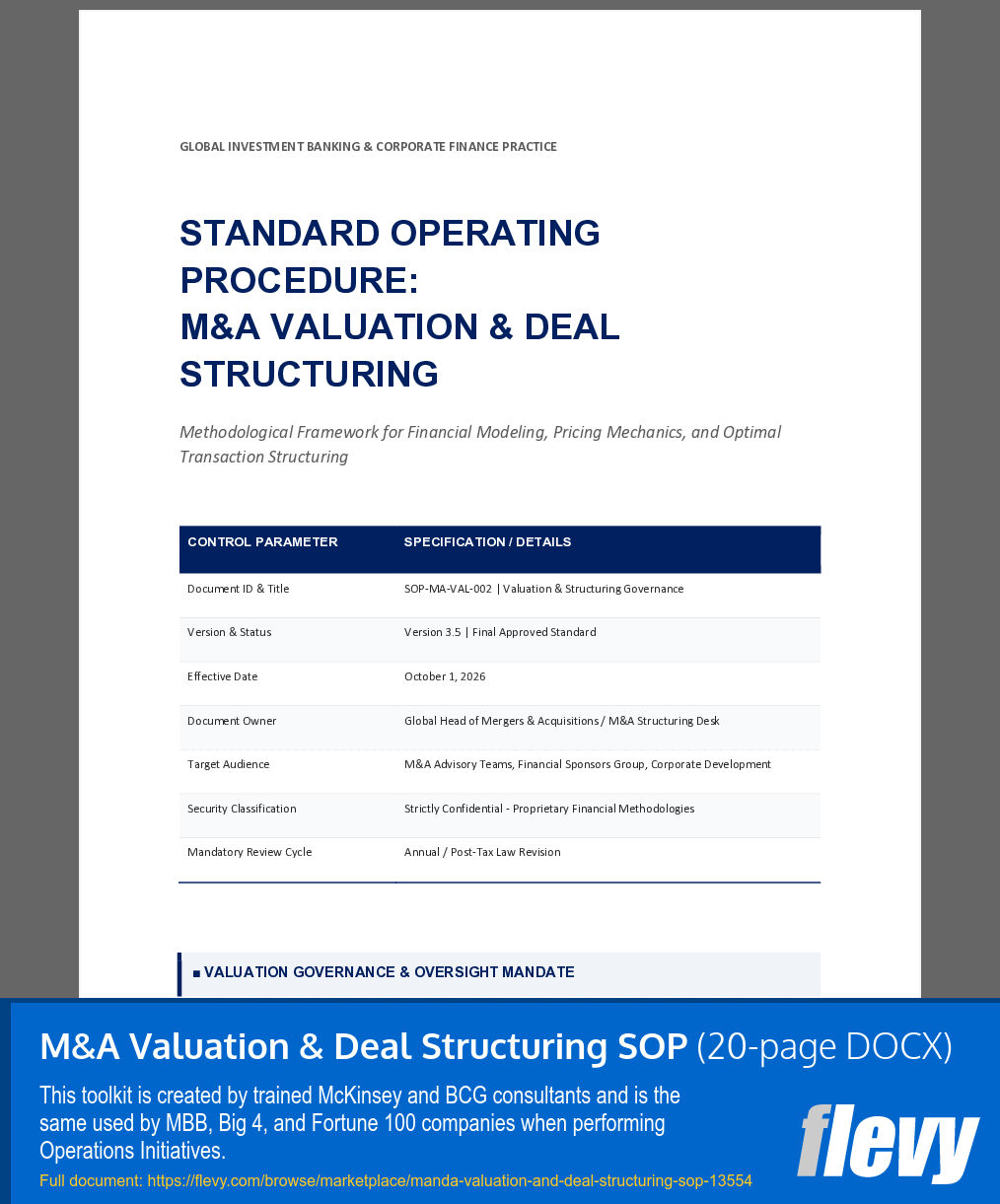
This downloadable Microsoft Word document provides an institutional-grade, end-to-end M&A Valuation & Deal Structuring Governance Framework covering DCF valuation, WACC, trading comparables, precedent transactions, LBO ability-to-pay analysis, SOTP valuation, purchase price mechanics, earn-outs, tax structuring, working capital adjustments, financing certainty, and transaction governance throughout the M&A lifecycle. Built specifically for M&A Managing Directors, Investment Banking Deal Teams, Corporate Development Leaders, Financial Sponsors Groups, M&A VPs, Associates, Analysts, Tax Structuring Teams, LevFin Professionals, and Transaction Committees, it establishes a controlled methodology for producing defensible valuations, bridging Enterprise Value to Equity Value, evaluating buyer ability-to-pay, optimizing consideration structures, quantifying tax leakage, and maximizing certainty of close.
Section 1 – Valuation & Structuring Governance, Model Integrity & RACI Framework
• Enterprise-wide M&A Valuation & Deal Structuring Governance Architecture designed to standardize valuation methodologies, structural analysis, model construction, review, and transaction approval.
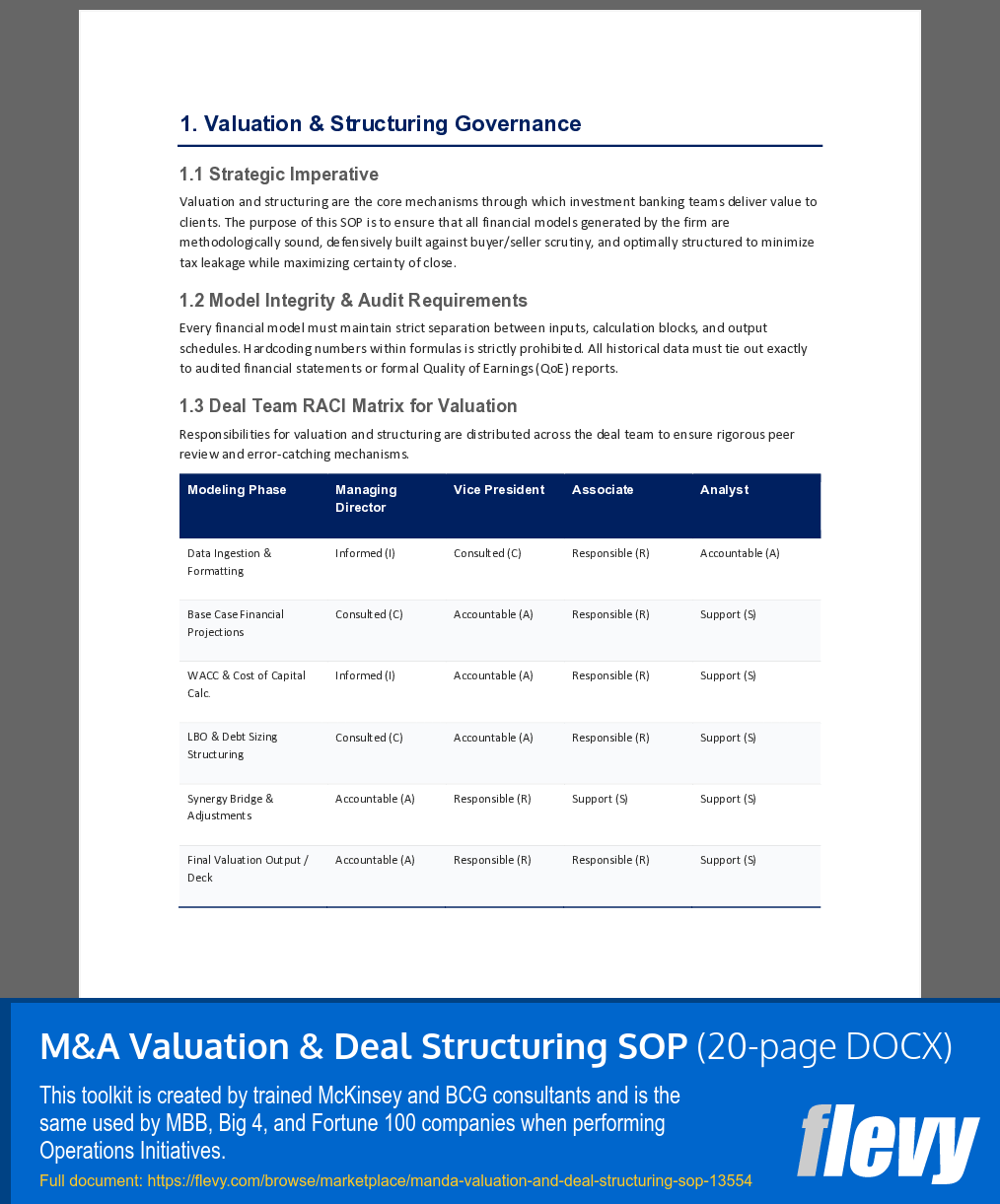
• Institutional Valuation Deal Team RACI Matrix assigning Managing Directors, VPs, Associates, and Analysts responsibility across data ingestion, financial projections, WACC, LBO analysis, synergy adjustments, valuation outputs, and final presentation materials.
• Mandatory Model Integrity & Auditability Protocol requiring strict separation of inputs, calculations, and outputs while prohibiting hardcoded values within formulas.
• Historical financial information must reconcile to audited financial statements or formal Quality of Earnings (QoE) reports, creating a defensible foundation for valuation analysis.
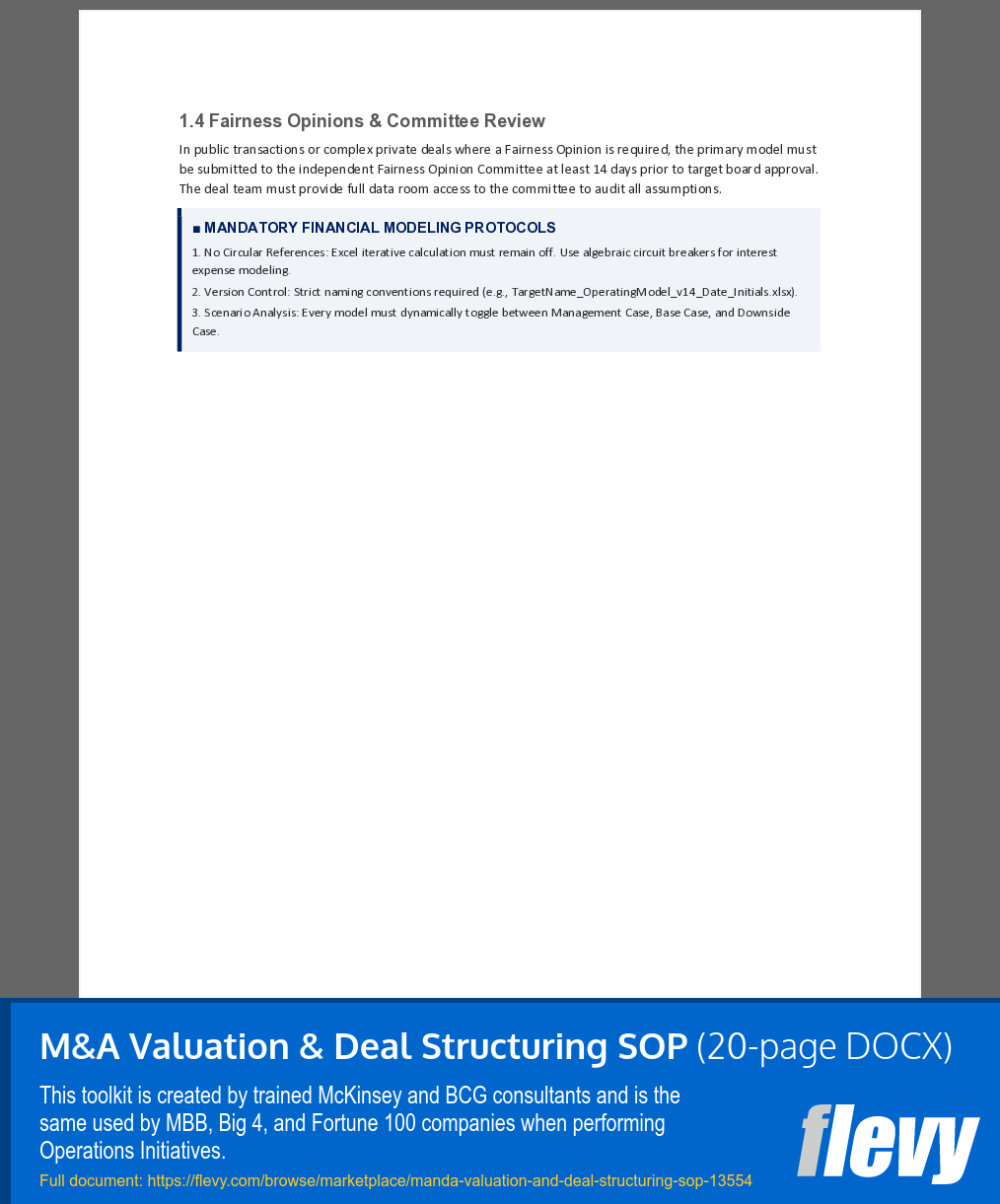
• Mandatory three-scenario modeling architecture dynamically toggling between Management Case, Base Case, and Downside Case assumptions.
• Strict no-circularity controls requiring Excel iterative calculation to remain disabled and interest/cash mechanics to utilize algebraic circuit breakers.
• Formal Valuation Review Committee escalation framework for deviations from standard valuation thresholds, aggressive pro-forma adjustments, and material methodological exceptions.
• Dedicated Fairness Opinion governance requirements for public and complex private transactions requiring independent model review and appropriate committee access before target board approval.
• Institutional version-control standards governing model naming, revision history, reviewer identification, and controlled distribution.
Section 2 – DCF Valuation, UFCF & WACC Framework
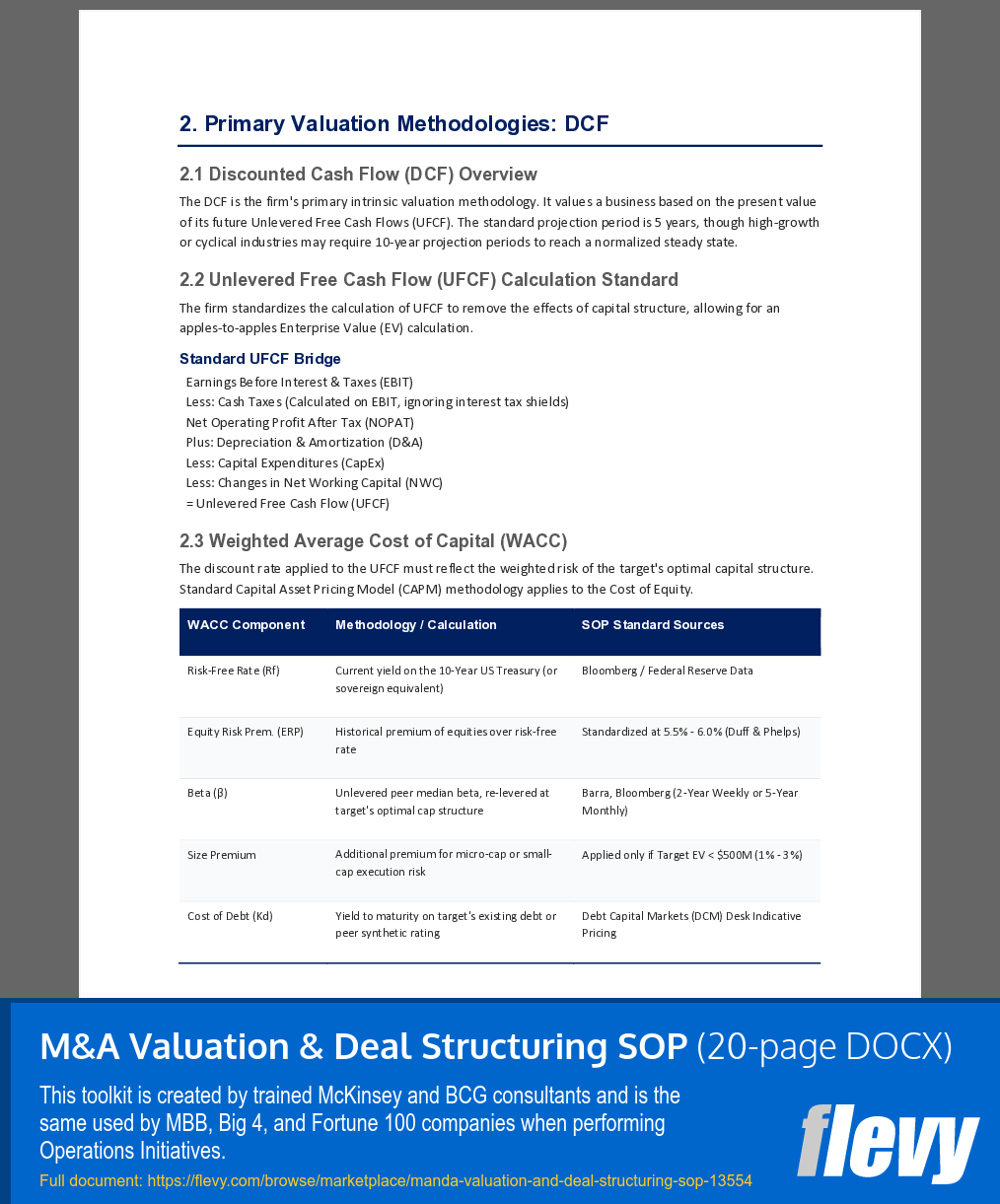
• Institutional Discounted Cash Flow (DCF) Valuation Framework establishing Enterprise Value based on the present value of projected Unlevered Free Cash Flow (UFCF).
• Standardized UFCF Calculation Bridge covering EBIT, cash taxes, NOPAT, D&A, CapEx, changes in Net Working Capital, and resulting Unlevered Free Cash Flow.
• Mandatory distinction between unlevered operating cash flows and financing effects, ensuring capital structure does not distort intrinsic Enterprise Value.
• Standard 5-year DCF projection methodology, with extended 10-year periods permitted for high-growth, cyclical, or businesses requiring a longer normalization period.
• Comprehensive WACC Calculation Framework covering Risk-Free Rate, Equity Risk Premium, peer-derived Beta, Size Premium, Cost of Debt, and target optimal capital structure.
• CAPM Cost of Equity Methodology requiring unlevered peer median beta to be re-levered using the target's appropriate capital structure.
• Standardized Risk-Free Rate and market-data update protocol requiring current sovereign yields and approved market-data sources.
• Formal Cost of Debt Assessment using target debt yields or peer synthetic-credit analysis supported by Debt Capital Markets indicative pricing.
• Controlled small-cap execution-risk premium framework applicable where target Enterprise Value falls below the defined threshold.
• Mandatory WACC sensitivity analysis designed to demonstrate valuation exposure to changes in discount-rate assumptions.
Section 3 – Terminal Value & DCF Sensitivity Governance
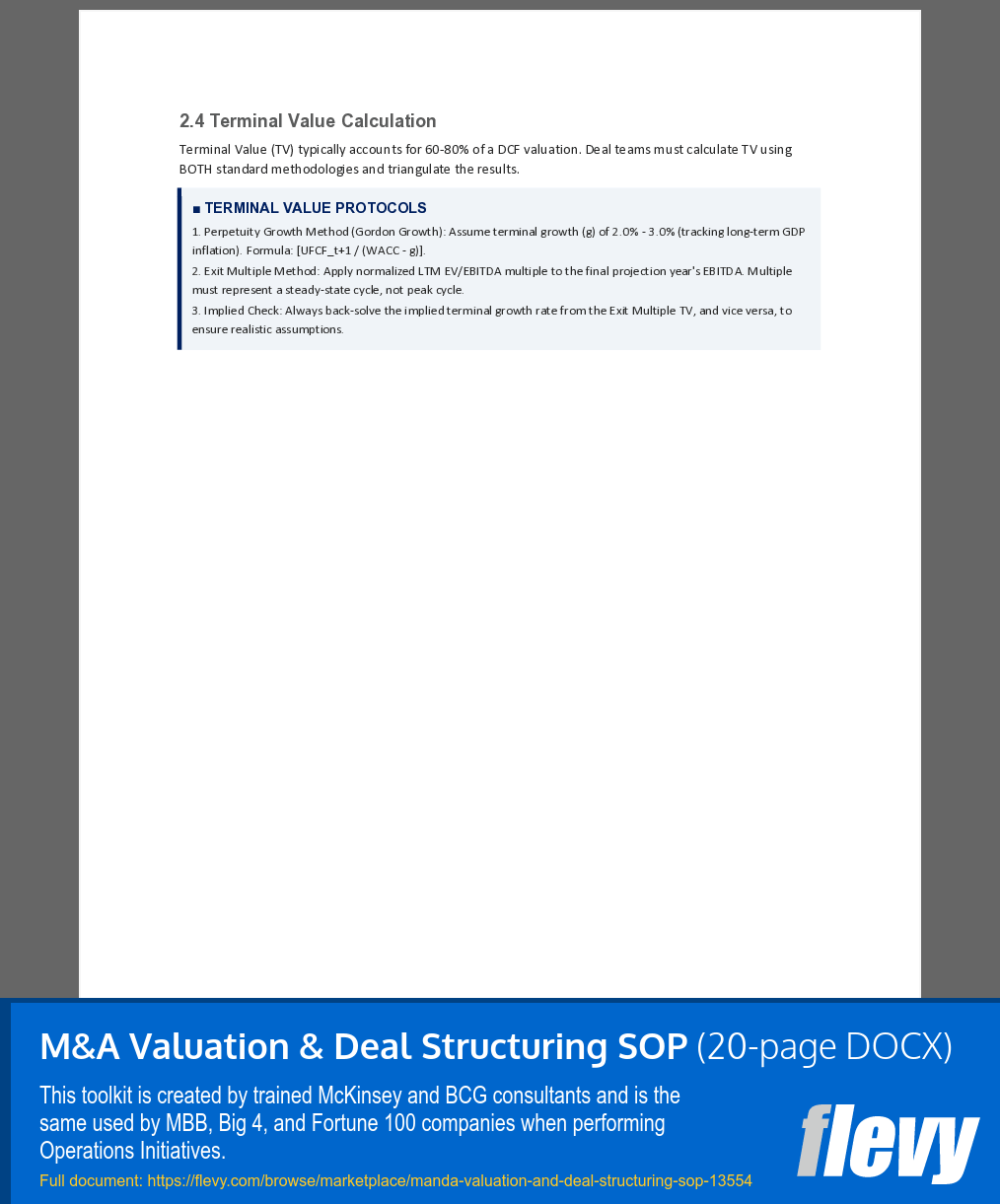
• Mandatory dual-method Terminal Value Framework requiring both Perpetuity Growth and Exit Multiple methodologies for every core DCF valuation.
• Gordon Growth Terminal Value Methodology using normalized terminal UFCF and sustainable long-term growth assumptions.
• Exit Multiple Terminal Value Methodology applying a normalized LTM EV/EBITDA multiple to final-period EBITDA rather than peak-cycle performance.
• Formal Implied Terminal Growth Rate Back-Solve from Exit Multiple valuation to test whether market multiples are consistent with sustainable long-term economics.
• Reciprocal Implied Exit Multiple Analysis from the Perpetuity Growth methodology to identify embedded valuation assumptions.
• Mandatory recognition that terminal value may represent a substantial proportion of total DCF Enterprise Value, requiring enhanced sensitivity and review procedures.
• Structured WACC / Terminal Growth Sensitivity Matrix for Board, Investment Committee, and transaction-process presentations.
• Mandatory downside testing designed to identify valuation vulnerability under higher discount rates, lower terminal growth, and normalized operating performance.
Section 4 – Trading Comparables & Precedent Transactions
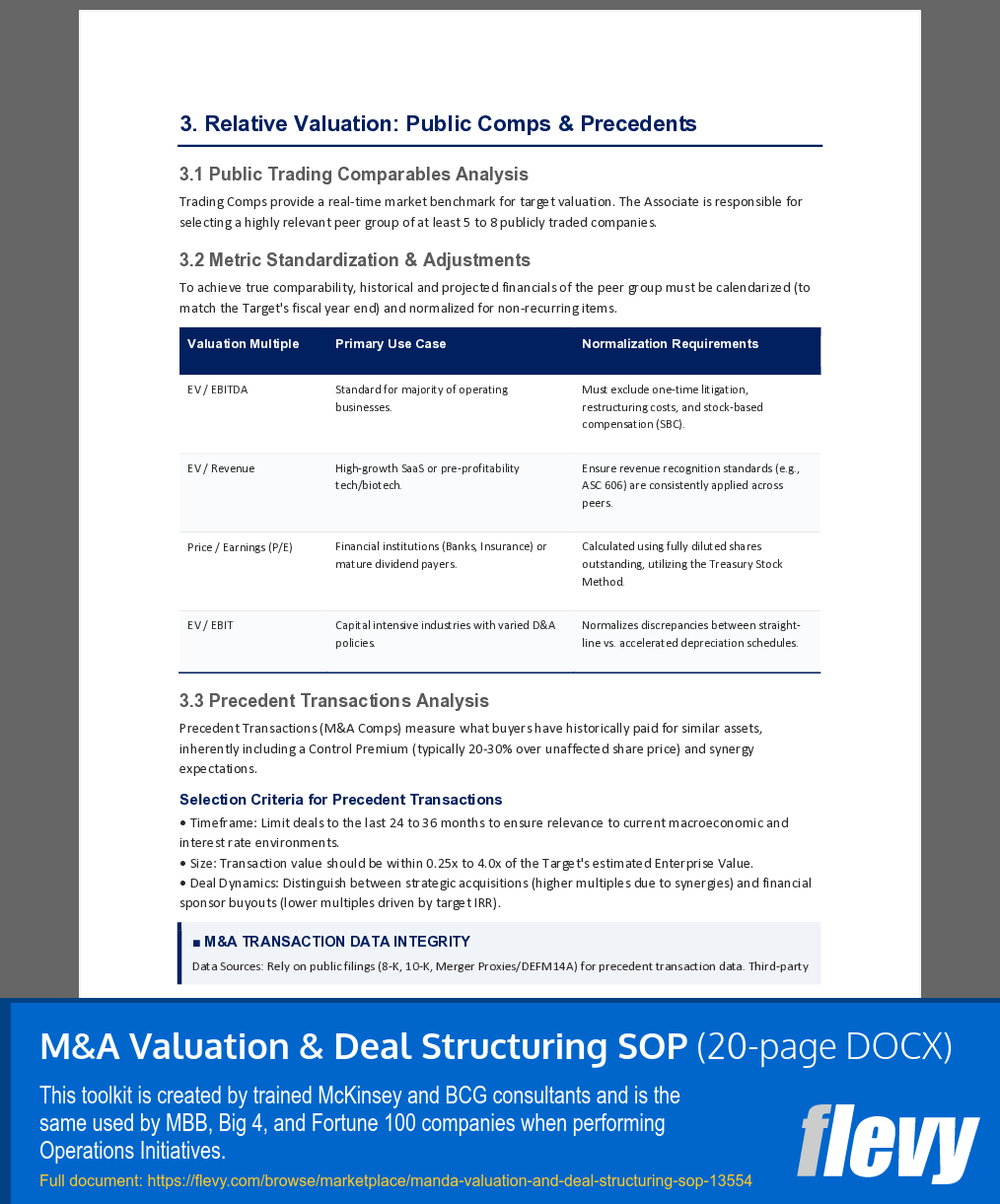
• Institutional Public Trading Comparables Framework requiring selection of a highly relevant peer group, generally consisting of at least 5–8 publicly traded companies.
• Formal Peer Selection Protocol evaluating business model, end markets, growth, margins, geography, scale, capital intensity, and relevant operating characteristics.
• Mandatory Financial Calendarization & Normalization Framework aligning peer financial periods with the target's fiscal year and removing material non-recurring items.
• Standardized valuation multiple framework covering EV / EBITDA, EV / Revenue, P / E, and EV / EBIT, with methodology tailored to sector and business model.
• EV / EBITDA Normalization Protocol addressing one-time litigation, restructuring, and other non-recurring operating items.
• EV / Revenue Framework for high-growth or pre-profit businesses requiring consistent revenue-recognition treatment and appropriate operating-metric context.
• Fully Diluted Share Count Framework incorporating options, RSUs, and other dilutive securities through the Treasury Stock Method where applicable.
• Institutional Precedent Transactions Analysis designed to measure historical control valuations and buyer willingness to pay for comparable assets.
• Mandatory precedent-selection criteria covering transaction recency, relative transaction size, strategic rationale, buyer type, financing environment, and transaction dynamics.
• Formal distinction between strategic acquisitions and financial sponsor transactions, recognizing differences in synergy capture, leverage capacity, and return requirements.
• M&A Transaction Data Integrity Protocol requiring third-party transaction data to be verified against primary public filings wherever applicable.
• Mandatory LTM methodology requiring transaction multiples to be calculated using the target's Last Twelve Months financial performance as of announcement.
Section 5 – LBO Ability-to-Pay, Sponsor Returns & SOTP Valuation
• Institutional Leveraged Buyout (LBO) Ability-to-Pay Framework designed to determine the maximum purchase price a financial sponsor can support while achieving its required return threshold.
• Explicit treatment of LBO analysis as an ability-to-pay / valuation-floor methodology, rather than a standalone intrinsic valuation technique.
• Standard sponsor return framework incorporating 20–25% target IRR, five-year holding periods, realistic leverage, debt pricing, amortization, and exit assumptions.
• Comprehensive Debt Capacity & Capital Structure Framework covering senior leverage, subordinated or mezzanine debt, sponsor equity, interest expense, mandatory amortization, and financing constraints.
• Mandatory No-Multiple-Expansion Base Case, requiring exit multiples to remain consistent with entry multiples unless explicitly justified.
• Downside analysis incorporating exit multiple compression, lower operating performance, reduced leverage, and higher financing costs.
• Institutional Sum-of-the-Parts (SOTP) Valuation Framework for conglomerates and businesses containing distinct segments with materially different growth, margins, risk profiles, or peer groups.
• Segment-level valuation methodology requiring separate Revenue, EBITDA, CapEx, peer groups, and valuation multiples for each operating business.
• Formal Corporate Overhead Allocation Framework addressing centralized SG&A, executive costs, headquarters expenses, and other unallocated corporate costs.
• Mandatory Conglomerate Discount Assessment where appropriate, with separate treatment for break-up, spin-off, or strategic separation scenarios.
• SOTP sensitivity analysis designed to identify the contribution of individual business units to overall Enterprise Value.
Section 6 – Purchase Price, Consideration Mechanics & Earn-Out Structuring
• Comprehensive Enterprise Value-to-Equity Value Purchase Price Bridge covering cash, debt, debt-like items, transaction expenses, working capital adjustments, and final equity consideration.
• Institutional Cash-Free / Debt-Free Transaction Framework establishing the economic basis for headline valuation and final shareholder proceeds.
• Standard consideration analysis covering Cash at Close, Buyer Stock, Seller Notes, and Rollover Equity.
• Mixed-Consideration Modeling Framework designed to quantify value certainty, financing requirements, seller participation, dilution, tax consequences, and buyer liquidity preservation.
• Rollover Equity Structuring Protocol supporting sponsor transactions where management reinvests a defined portion of proceeds into the post-closing HoldCo.
• Comprehensive Earn-Out Design Framework addressing performance metrics, duration, measurement methodology, operating covenants, payout scales, and dispute mitigation.
• Preferred earn-out metrics based on Revenue or Gross Profit where appropriate, reducing the ability for post-close buyer cost-allocation decisions to artificially suppress payouts.
• Mandatory 12–24 month earn-out duration framework designed to reduce prolonged operational misalignment and integration disputes.
• Linear Sliding-Scale Earn-Out Mechanics designed to reduce cliff effects and litigation risk.
• Institutional Probability-Weighted Earn-Out Valuation Protocol requiring contingent consideration to be appropriately discounted when comparing competing acquisition offers.
• Board-level scenario presentation covering Maximum Earn-Out, Probability-Weighted Earn-Out, and After-Tax Net Proceeds.
Section 7 – Tax Structuring, Asset vs. Stock Transactions & Gross-Up Analysis
• Institutional M&A Tax Structuring Framework designed to evaluate buyer and seller after-tax economics across alternative transaction structures.
• Comprehensive comparison of Stock Purchase versus Asset Purchase economics, including tax basis, liability transfer, depreciation and amortization benefits, and shareholder tax consequences.
• Buyer Tax Step-Up Analysis quantifying the present value of incremental depreciation and amortization deductions generated through an asset transaction or applicable tax election.
• Seller Tax Leakage Framework identifying corporate-level and shareholder-level tax consequences that can materially reduce net transaction proceeds.
• Dedicated analysis of Section 338(h)(10) and Section 336(e) election structures where applicable, including the distinction between legal stock-transfer mechanics and tax treatment.
• Tax Gross-Up Modeling Protocol designed to quantify incremental seller tax friction associated with tax elections and determine the consideration required to preserve agreed after-tax economics.
• Mandatory coordination framework between M&A deal teams, external tax advisors, and legal counsel for material transaction-structure decisions.
• After-Tax Proceeds Analysis linking transaction consideration, debt repayment, transaction expenses, tax liabilities, and shareholder proceeds into a single decision framework.
• Tax-structure sensitivity analysis designed to identify situations where buyer tax benefits can support additional purchase-price consideration.
Section 8 – Working Capital, Purchase Price Adjustments & Closing Mechanics
• Institutional Net Working Capital (NWC) Peg Framework designed to establish the normalized working capital required for the buyer to receive a fully operational business at closing.
• Standard NWC methodologies covering 12-month LTM averages, trailing 3–6 month analysis, and seasonality-adjusted historical benchmarks.
• Mandatory assessment of business growth, seasonality, inventory cycles, receivables aging, payables behavior, and operational requirements when establishing the NWC peg.
• Comprehensive Closing Balance Sheet & True-Up Framework utilizing estimated closing figures followed by a formal post-closing reconciliation.
• Standard 60–90 day post-closing adjustment process for preparation, review, dispute, and finalization of the Closing Balance Sheet.
• Strict NWC Definition Protocol requiring the SPA to identify the exact GAAP accounts included within Current Assets and Current Liabilities.
• Mandatory exclusion of cash, short-term debt, current maturities of long-term debt, and other financing items from the NWC calculation.
• Consistency-of-Accounting Framework requiring NWC to be calculated using methodologies consistent with historical practices to prevent post-closing manipulation.
• Formal identification of debt-like items, unpaid transaction expenses, capital leases, unfunded pensions, and other non-operating liabilities affecting final Equity Value.
• Purchase price adjustment sensitivity analysis designed to identify potential sources of closing-value leakage and buyer/seller disputes.
Section 9 – Deal Financing, Certainty of Funds & Buyer Credit Assessment
• Institutional Financing Certainty Framework designed to evaluate whether a buyer has sufficient committed capital and financing capacity to complete the transaction.
• Strategic-buyer financing assessment covering balance-sheet cash, revolver capacity, corporate debt issuance, equity issuance, liquidity, leverage, and publicly disclosed financing resources.
• Comprehensive Private Equity Financing Verification Protocol requiring review of Equity Commitment Letters, Debt Commitment Letters, fee letters, and relevant financing conditions.
• Equity Commitment Letter (ECL) Review Framework designed to confirm sponsor commitment, available dry powder, fund status, and investment-period capacity.
• Debt Commitment Letter (DCL) Assessment covering committed debt amount, pricing, leverage, conditions to funding, flex provisions, and limited conditionality.
• Dedicated Fee Letter Review Protocol assessing original issue discount, pricing flex, leverage flex, and other financing provisions that could impair transaction certainty.
• Mandatory identification and mitigation of financing contingencies before execution of definitive transaction documentation.
• Comprehensive Reverse Break Fee Framework addressing buyer failure to close arising from financing failure or specified regulatory circumstances.
• Evaluation of traditional syndicated financing versus private-credit alternatives, including differences in pricing, leverage, execution certainty, flexibility, and closing risk.
• Board-level Buyer Financing & Certainty-of-Close Assessment integrating valuation, financing commitments, regulatory exposure, and execution risk into offer evaluation.
Section 10 – Valuation Quality Control, Scenario Tracking & Governance Sign-Off
• Master Valuation Model Quality Control Checklist covering historical reconciliation, circularity, WACC inputs, share count, NWC methodology, formatting, and inter-sheet linkage.
• Mandatory verification that Beta, Risk-Free Rate, ERP, Cost of Debt, and other market-sensitive inputs are appropriately updated before final valuation distribution.
• Treasury Stock Method Share Count Review for options, RSUs, and other relevant dilutive securities where applicable.
• Formal Model Formatting Standard distinguishing inputs, calculations, and linked data to improve transparency and auditability.
• Institutional Structuring & Earn-Out Scenario Tracker presenting maximum consideration, probability-weighted contingent consideration, and after-tax shareholder proceeds.
• Comprehensive Valuation Sensitivity Framework covering DCF assumptions, trading multiples, precedent transactions, LBO returns, leverage, terminal value, and purchase price adjustments.
• Formal Valuation & Structuring Governance Sign-Off requiring approval from the Global Head of M&A, Lead Deal Managing Director, and Head of Tax Structuring.
• Final governance certification establishing the model and structural recommendations as the controlled analytical basis for client presentations, buyer/seller negotiations, Board materials, Investment Committee review, and transaction execution.
Designed as a complete M&A valuation and transaction-structuring operating standard—not simply a valuation model checklist—this SOP gives investment banking and corporate development teams a structured framework for moving from historical financial validation and operating forecasts through DCF and relative valuation, LBO ability-to-pay analysis, SOTP valuation, purchase price mechanics, earn-outs, tax elections, working capital adjustments, financing certainty, after-tax proceeds, and final governance approval. It is built to help deal teams produce valuation conclusions that are analytically defensible, structurally optimized, negotiation-ready, and capable of withstanding rigorous buyer, seller, Board, Investment Committee, tax, legal, and fairness-review scrutiny.
Keywords: Process Audit SOPs, Internal Audit Standard Operating Procedures, Process Audit Framework, Control Testing Procedures, Risk Assessment Methodologies, Audit Governance, Process Audit Strategy, Audit Evidence Collection, Compliance Audit SOPs, Continuous Auditing, Process Mapping, Audit Documentation Standards, Audit Quality Assurance, Process Risk Management, Operational Risk Audit, Enterprise Audit Management, Audit Committee Reporting, Audit Analytics, Process Mining, AI-Assisted Auditing, Audit Technology SOPs, Global Process Audit, Audit Playbooks, Audit Templates, Audit Training Programs, Audit Remediation Management, Audit Excellence, Process Audit Toolkit, McKinsey Audit Framework, Audit Best Practices, Enterprise Governance, Internal Control Assessment, Audit Procedures Manual, Audit Program Design, Audit Resource Planning, Audit Scheduling, Audit Efficiency, Audit Effectiveness, Audit Performance Metrics, Audit KPIs, Audit ROI, Audit Value Creation, Process Optimization, Operational Excellence, Business Process Audit, Functional Audit, Departmental Audit, Transactional Audit, Service Audit, Administrative Process Audit, Supply Chain Process Audit, Finance Process Audit, IT Process Audit, HR Process Audit, Procurement Process Audit, Sales Process Audit, Customer Service Audit, Production Audit, Quality Audit, Compliance Testing, Regulatory Audit, Policy Compliance, Procedure Audit, Documentation Audit, Audit Trail Review, Exception Management, Control Design, Control Effectiveness, Control Testing, Preventive Controls, Detective Controls, Corrective Actions, Root Cause Analysis, Finding Classification, Audit Report Writing, Executive Summaries, Audit Communication, Stakeholder Engagement, Process Owner Engagement, Management Accountability, Audit Committee Governance, Audit Charter, Audit Independence, Auditor Ethics, Professional Skepticism, Audit Competency, Audit Training, Audit Certification, Audit Standards (IIA, IAASB), Audit Best Practices, Audit Methodology, Audit Framework, Audit Operating Model, Process Audit Excellence, Audit Mastery, Fortune 500 Audit, Enterprise Audit Operations, Corporate Audit Function, Strategic Audit Planning, Transformation Audit, Digital Audit, Innovation Audit, Benchmarking Audit, Maturity Assessment, Audit Scaling, Audit Outsourcing, Co-Sourcing Models, Vendor Management, Audit Technology Stack, Audit Tools, Audit Software, Continuous Monitoring, Predictive Analytics, Anomaly Detection, Data Quality, Process Intelligence, Workflow Analytics, Business Process Management, Process Automation, RPA Audit, AI Governance, Responsible AI Audit, Cybersecurity Audit, Data Governance Audit, Privacy Audit, Information Security, Audit Evidence Standards, Working Papers, Audit Documentation, Audit File Management, Audit Records Retention, Audit Trail Integrity, Audit Report Confidentiality, Multi-Site Audit Coordination, Global Audit Strategy, International Audit Standards, Regional Audit Compliance, Cultural Considerations in Audit, Localization of Audit Procedures, Process Transformation Audit, Business Reengineering Audit, Change Audit, Operational Change, Audit Change Management, Audit Communication Plan, Audit Stakeholder Communication, Audit Performance Review, Audit Function Review, Strategic Review Process, Audit Leadership Development, Audit Team Development, Audit Coaching, Audit Supervision, Audit Career Progression, Audit Knowledge Management, Audit Playbook Development, Audit Template Library, Audit Standards Documentation, Audit Policy Manual, Lessons Learned Capture, Best Practice Sharing, Audit Continuous Improvement, Audit Methodology Enhancement, Audit Process Optimization, Audit Efficiency Improvement, Audit Effectiveness Enhancement, Audit Quality Improvement, Audit Risk Management, Audit Risk Register, Audit Issue Management, Audit Action Tracking, Audit Metrics Dashboard, Audit Performance Dashboard, Audit Scorecard, Audit Balanced Scorecard, KPI Framework for Audit, Audit Success Factors, Critical Success Factors in Audit, Audit Strategic Objectives, Audit Vision Statement, Audit Mission Statement, Audit Values and Ethics, Audit Culture, Audit Maturity Model, Audit Capability Model, Audit Competency Framework, Professional Development in Audit, Audit Certification Programs, Internal Audit Standards, Audit Best Practices Guide, Audit Reference Manual, Audit Operating Manual, Audit Procedures Manual, Audit Program Manual, McKinsey Audit Excellence, Deloitte Audit Framework, EY Audit Approach, KPMG Audit Methodology, Big 4 Audit Standards, Audit Industry Benchmarks, Audit Industry Standards, Audit Thought Leadership, Audit Innovation, Audit Transformation Program, Audit Digital Transformation, Audit Process Transformation, Audit Service Transformation, Audit Operating Model Transformation, Audit Function Evolution, Audit Future-Proofing, Emerging Trends in Audit, Audit 2025 Roadmap, Audit Strategic Priorities, Audit Strategic Planning, Audit Strategic Execution, Audit Implementation Plan, Audit Deployment Strategy, Audit Rollout Plan, Audit Quick-Start Guide, Audit Implementation Guide, Audit User Guide, Audit Handbook, Audit Manual, Audit Documentation Standard, Audit Work Standards, Audit Quality Standards, Audit Performance Standards, Audit Excellence Standards, Enterprise Audit Excellence, Audit Mastery Program, Audit Excellence Initiative, Audit Excellence Framework, Audit Excellence Culture, Audit Excellence Mindset, Strategic Audit Excellence, Operational Audit Excellence, Financial Audit Excellence, Compliance Audit Excellence, Quality Audit Excellence, Process Audit Excellence, Audit Excellence ROI, Audit Excellence Value Creation, Audit Excellence Competitive Advantage, Audit Excellence Strategic Advantage, Audit Excellence Performance Advantage, Audit Excellence Organizational Advantage, Inventory Management, Demand Planning, Inventory Optimization, Inventory Control, Supply Chain Management, Warehouse Operations, Replenishment Strategy, Inventory Analytics, WIP Reduction, Inventory Accuracy, Distribution Network, Inventory Forecasting, Supply Chain Excellence, Working Capital, Inventory KPIs, Procurement Strategy, Inventory Governance, Inventory SOPs, Continuous Improvement, Supply Chain Transformation, GenAI deployment SOPs, generative AI operating model, enterprise AI governance framework, AI Center of Excellence, responsible AI, AI risk management, AI use case prioritization, GenAI implementation roadmap, AI vendor selection, prompt engineering standards, AI compliance, AI adoption strategy, generative AI across value chain, AI strategy, enterprise transformation, AI implementation, AI scaling framework
Strategy & Transformation, Growth Strategy, Strategic Planning, Strategy Frameworks, Innovation Management, Pricing Strategy, Core Competencies, Strategy Development, Business Transformation, Marketing Plan Development, Product Strategy, Breakout Strategy, Competitive Advantage, Mission, Vision, Values, Strategy Deployment & Execution, Innovation, Vision Statement, Core Competencies Analysis, Corporate Strategy, Product Launch Strategy, BMI, Blue Ocean Strategy, Breakthrough Strategy, Business Model Innovation, Business Strategy Example, Corporate Transformation, Critical Success Factors, Customer Segmentation, Customer Value Proposition, Distinctive Capabilities, Enterprise Performance Management, KPI, Key Performance Indicators, Market Analysis, Market Entry Example, Market Entry Plan, Market Intelligence, Market Research, Market Segmentation, Market Sizing, Marketing, Michael Porter's Value Chain, Organizational Transformation, Performance Management, Performance Measurement, Platform Strategy, Product Go-to-Market Strategy, Reorganization, Restructuring, SWOT, SWOT Analysis, Service 4.0, Service Strategy, Service Transformation, Strategic Analysis, Strategic Plan Example, Strategy Deployment, Strategy Execution, Strategy Frameworks Compilation, Strategy Methodologies, Strategy Report Example, Value Chain, Value Chain Analysis, Value Innovation, Value Proposition, Vision Statement, Corporate Strategy, Business Development, Business plan pdf, business plan, PDF, Business Plan DOC, Business Plan Template, PPT, Market strategy playbook, strategic market planning, competitive analysis tools, market segmentation frameworks, growth strategy templates, product positioning strategy, market execution toolkit, strategic alignment playbook, KPI and OKR frameworks, business growth strategy guide, cross-functional strategy templates, market risk management, market strategy PowerPoint doc, guide, ebook, e-book ,McKinsey Change Playbook, Organizational change management toolkit, Change management frameworks 2025, Influence model for change, Change leadership strategies, Behavioral change in organizations, Change management PowerPoint templates, Transformational leadership in change, supply chain KPIs, supply chain KPI toolkit, supply chain PowerPoint template, logistics KPIs, procurement KPIs, inventory management KPIs, supply chain performance metrics, manufacturing KPIs, supply chain dashboard, supply chain strategy KPIs, reverse logistics KPIs, sustainability KPIs in supply chain, financial supply chain KPIs, warehouse KPIs, digital supply chain KPIs, 1200 KPIs, supply chain scorecard, KPI examples, supply chain templates, Corporate Finance SOPs, Finance SOP Excel Template, CFO Toolkit, Finance Department Procedures, Financial Planning SOPs, Treasury SOPs, Accounts Payable SOPs, Accounts Receivable SOPs, General Ledger SOPs, Accounting Policies Template, Internal Controls SOPs, Finance Process Standardization, Finance Operating Procedures, Finance Department Excel Template, FP&A Process Documentation, Corporate Finance Template, Finance SOP Toolkit, CFO Process Templates, Accounting SOP Package, Tax Compliance SOPs, Financial Risk Management Procedures.
NOTE: Our digital products are sold on an "as is" basis, making returns and refunds unavailable post-download. Please preview and inquire before purchasing. Please contact us before purchasing if you have any questions! This policy aligns with the standard Flevy Terms of Usage.
Got a question about the product? Email us at support@flevy.com or ask the author directly by using the "Ask the Author a Question" form. If you cannot view the preview above this document description, go here to view the large preview instead.
Source: Best Practices in M&A (Mergers & Acquisitions), Valuation Word: M&A Valuation & Deal Structuring SOP Word (DOCX) Document, SB Consulting
ABOUT THE AUTHOR

SB Consulting is dedicated to empowering businesses to communicate their ideas with impact. This consulting firm specializes in teaching organizations how to create effective corporate and management presentations. With training from top-tier global consulting firms, including McKinsey, BCG, and Porsche Consulting, extensive expertise in presentation design and ... [read more]
Ask the Author a Question
You must be logged in to contact the author.




























