
This framework is created by former McKinsey, BCG, Deloitte, EY, and Capgemini consultants and provides actionable insights for Logistics and Transportation Industry Value Chain Analysis.
Provides a framework for examining the Logistics and Transportation industry.
Identifies 19 important insights and considerations for Logistics and Transportation Value Chain Analysis.
Provides a detailed breakdown of the impact of Digital Transformation across the Logistics and Transportation Value Chain.
VALUE CHAIN ANALYSIS PPT DESCRIPTION
Editor Summary
The Logistics and Transportation Value Chain is a 31-slide PowerPoint (PPTX) framework developed by LearnPPT Consulting and created by former McKinsey, BCG, Deloitte, EY, and Capgemini consultants that maps primary and support activities across logistics operations.
Read moreIncludes a value chain analysis framework and 6 template types (inventory management system templates, order fulfillment process maps, performance metrics dashboards, compliance checklists, stakeholder collaboration frameworks, and process maps). Targeted at logistics and supply chain managers, operations executives, business analysts, and consultants; sold as a digital download on Flevy with immediate digital download.
Use this deck when an organization must analyze and optimize logistics processes — for example during strategic planning, operational reviews, digital transformation initiatives, or training on logistics best practices.
Logistics and Supply Chain Managers running network planning and optimization scenarios to right-size transport routes and hubs.
Operations Executives redesigning order fulfillment and distribution workflows to reduce lead times and improve on-time delivery.
Business Analysts performing value chain assessments to identify cost and process inefficiencies across warehousing and freight.
Consultants building digital transformation roadmaps that integrate IoT, automation, and analytics.
The approach segments operations into primary and support activities and emphasizes structured value chain analysis with measurable metrics, reflecting the diagnostic, hypothesis-driven style used at McKinsey and BCG.
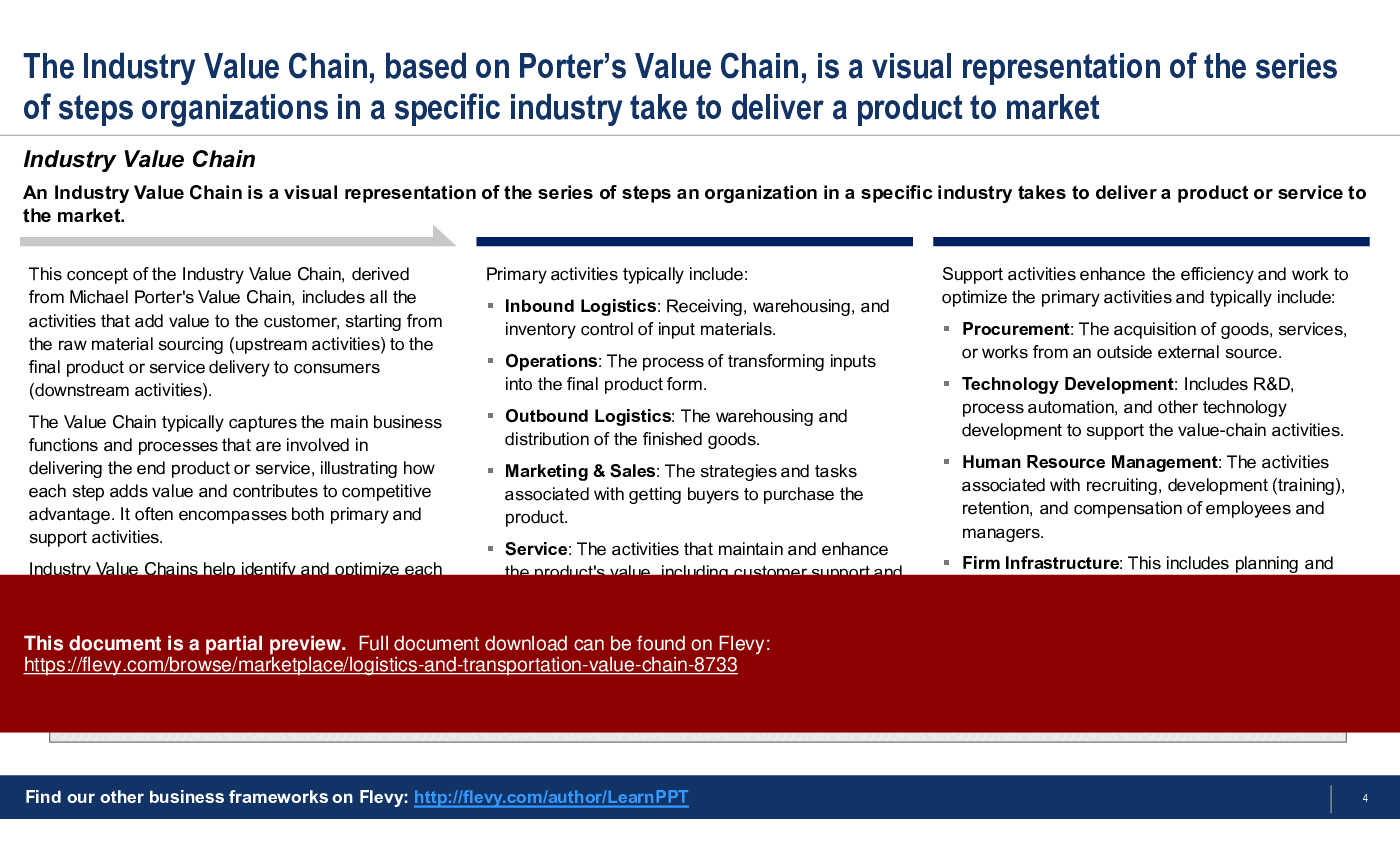
An Industry Value Chain is a visual representation of the series of steps an organization in a specific industry takes to deliver a product or service to the market. It captures the main business functions and processes that are involved in delivering the end product or service, illustrating how each step adds value and contributes to a Competitive Advantage. It often encompasses both primary and support activities.
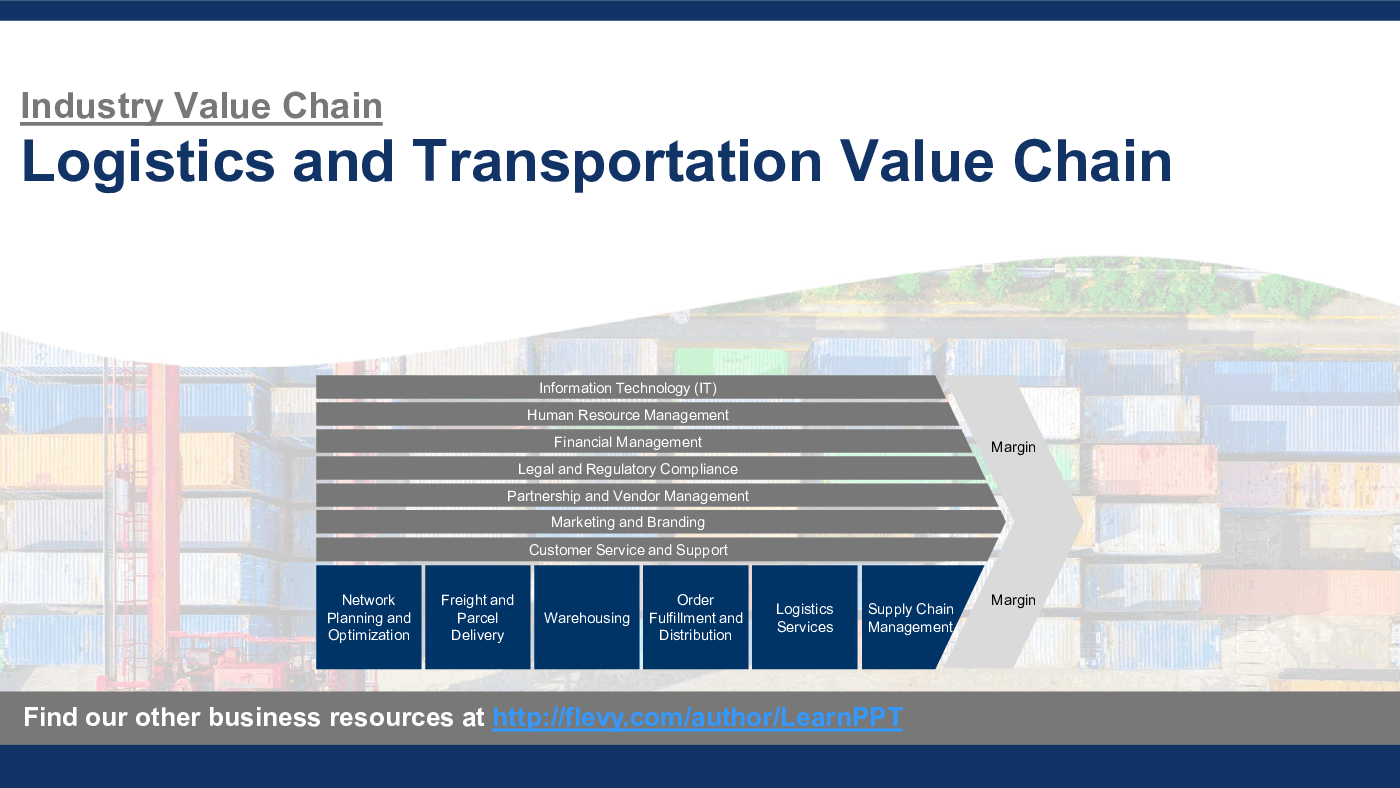
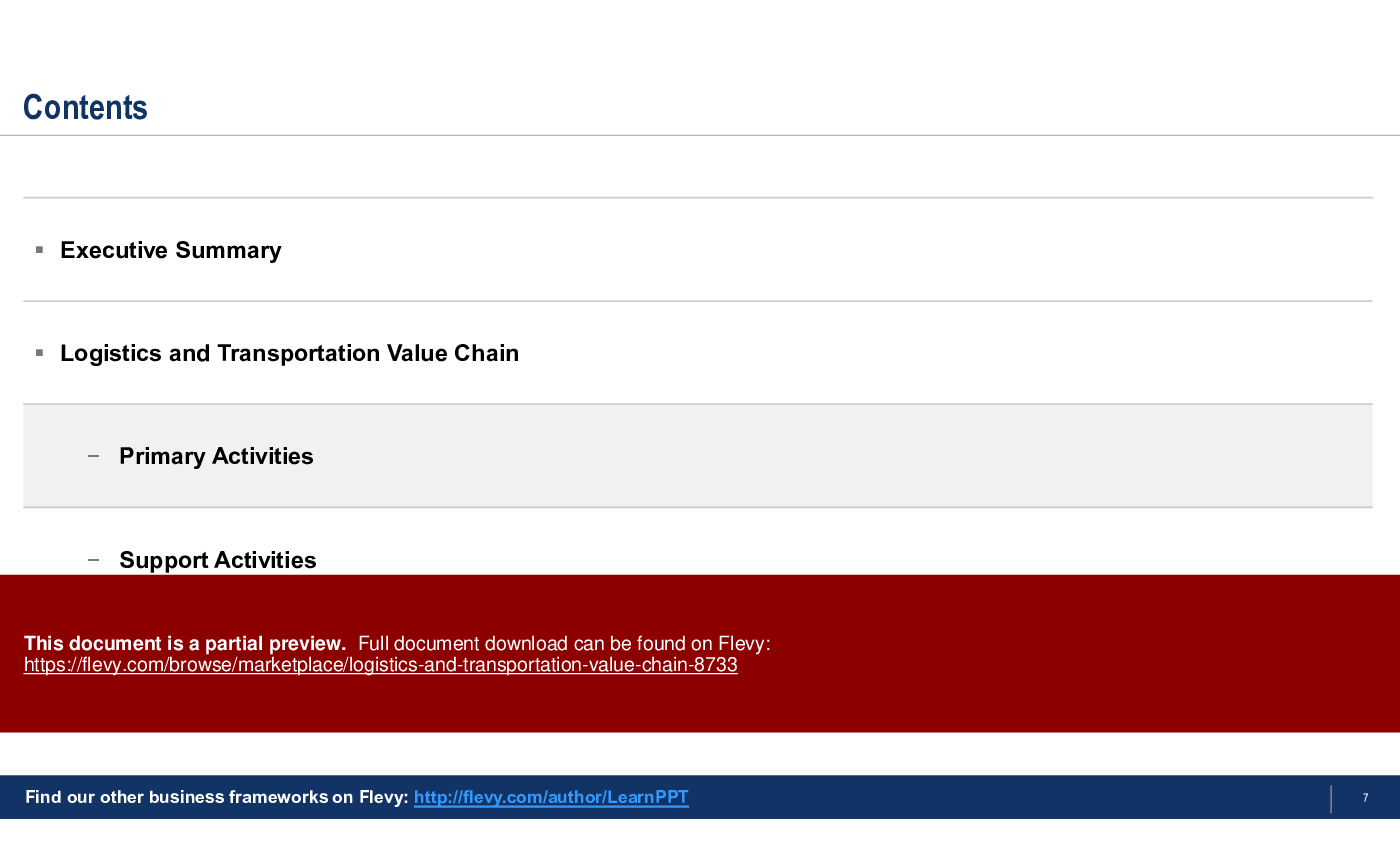
This PowerPoint presentation captures the Logistics and Transportation Industry Value Chain, which includes the following primary and support activities for Logistics and Transportation:
Primary Activities
1. Network Planning and Optimization
2. Freight and Parcel Delivery
3. Warehousing
4. Order Fulfillment and Distribution
5. Logistics Services
6. Supply Chain Management
Support Activities
1. Information Technology (IT)
2. Human Resource Management
3. Financial Management
4. Legal and Regulatory Compliance
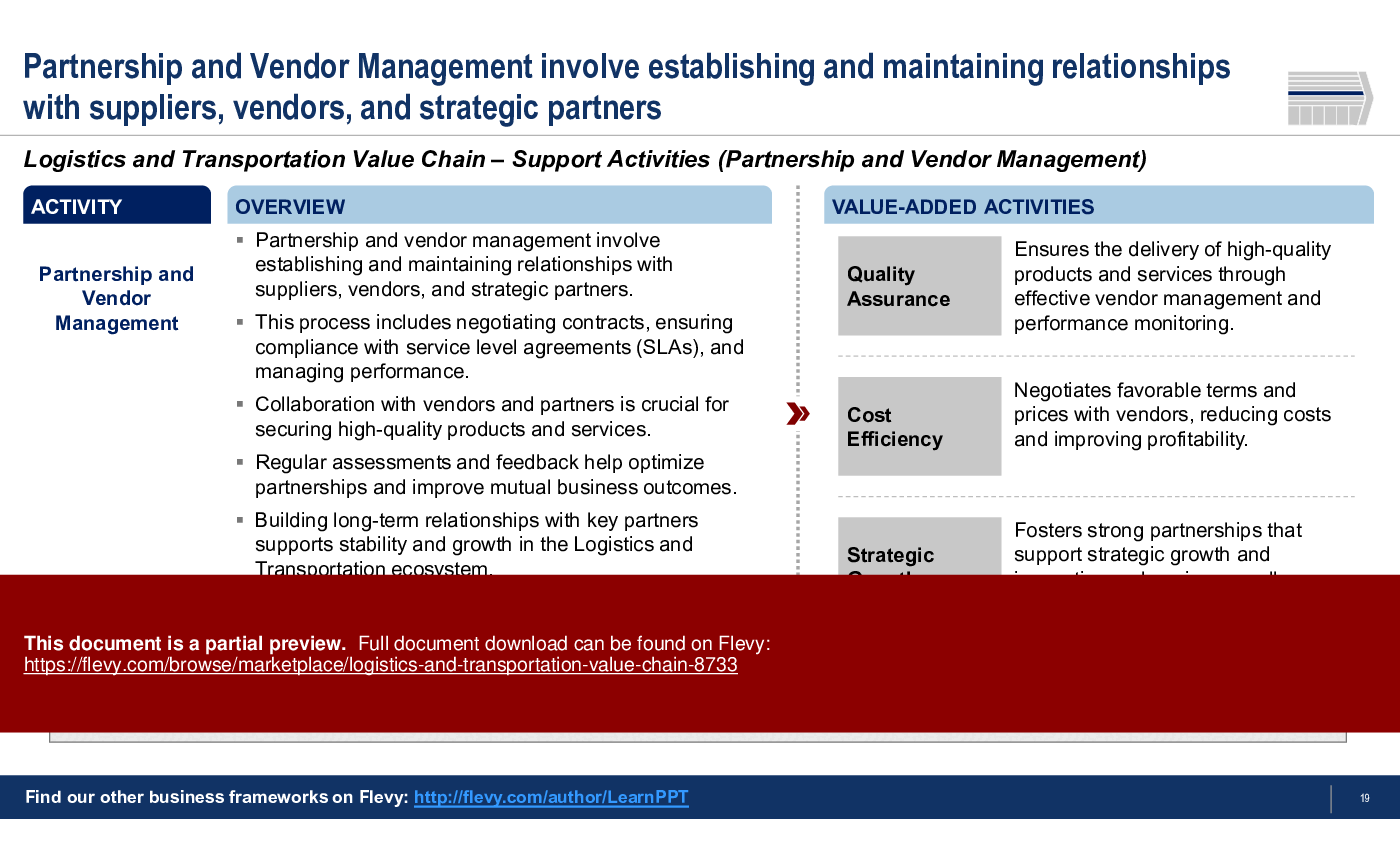
5. Partnership and Vendor Management
6. Marketing and Branding
7. Customer Service and Support
This PPT presentation dives deeper into each of these activities, highlighting key elements.
The Logistics and Transportation Value Chain integrates network planning, delivery, warehousing, and Supply Chain Management to provide efficient and reliable movement of goods. Optimized Logistics services and order fulfillment are critical for meeting customer demands and maintaining competitiveness in a rapidly evolving market. Continuous improvement and strategic partnerships enhance the Value Chain's ability to adapt to market changes and technological advancements. Value Chain Analysis helps identify opportunities for process optimization, cost reduction, and strategic investment, enhancing overall business performance.
This PowerPoint presentation also discusses Logistics and Transportation Value Chain Analysis, highlighting a multitude of key considerations and potential insights to pay attention to. We further discuss the significant impact of Digital Transformation and various specific emergent technologies on the Logistics and Transportation Industry.
This presentation equips executives with actionable insights into optimizing logistics operations, ensuring timely delivery and cost efficiency. By leveraging advanced technologies and strategic partnerships, organizations can enhance service quality and adapt swiftly to market demands.
Got a question about the product? Email us at support@flevy.com or ask the author directly by using the "Ask the Author a Question" form. If you cannot view the preview above this document description, go here to view the large preview instead.
MARCUS OVERVIEW
This synopsis was written by Marcus [?] based on the analysis of the full 31-slide presentation.
Executive Summary
The Logistics and Transportation Value Chain presentation offers a detailed framework for understanding the series of steps organizations take to deliver products and services within the logistics sector. Developed by former consultants from top firms like McKinsey and BCG, this consulting-grade resource provides actionable insights into primary and support activities that enhance operational efficiency, cost management, and customer satisfaction. Users will gain the ability to analyze their logistics operations, optimize processes, and leverage emerging technologies for a competitive advantage.

Who This Is For and When to Use
• Logistics and Supply Chain Managers seeking to optimize operations
• Operations Executives focused on improving delivery and fulfillment processes
• Business Analysts conducting value chain assessments
• Consultants advising clients in the logistics and transportation sector
Best-fit moments to use this deck:
• During strategic planning sessions to identify improvement areas
• When conducting value chain analysis for operational efficiency
• In workshops aimed at enhancing customer satisfaction and service delivery
• For training sessions on logistics best practices and emerging technologies
Learning Objectives
• Define the Logistics and Transportation Value Chain and its significance
• Analyze primary and support activities to identify optimization opportunities
• Implement strategies for enhancing customer satisfaction through effective logistics
• Evaluate the impact of digital transformation on logistics operations
• Develop actionable insights for cost management and resource allocation
• Foster collaboration among stakeholders to improve supply chain efficiency
Table of Contents
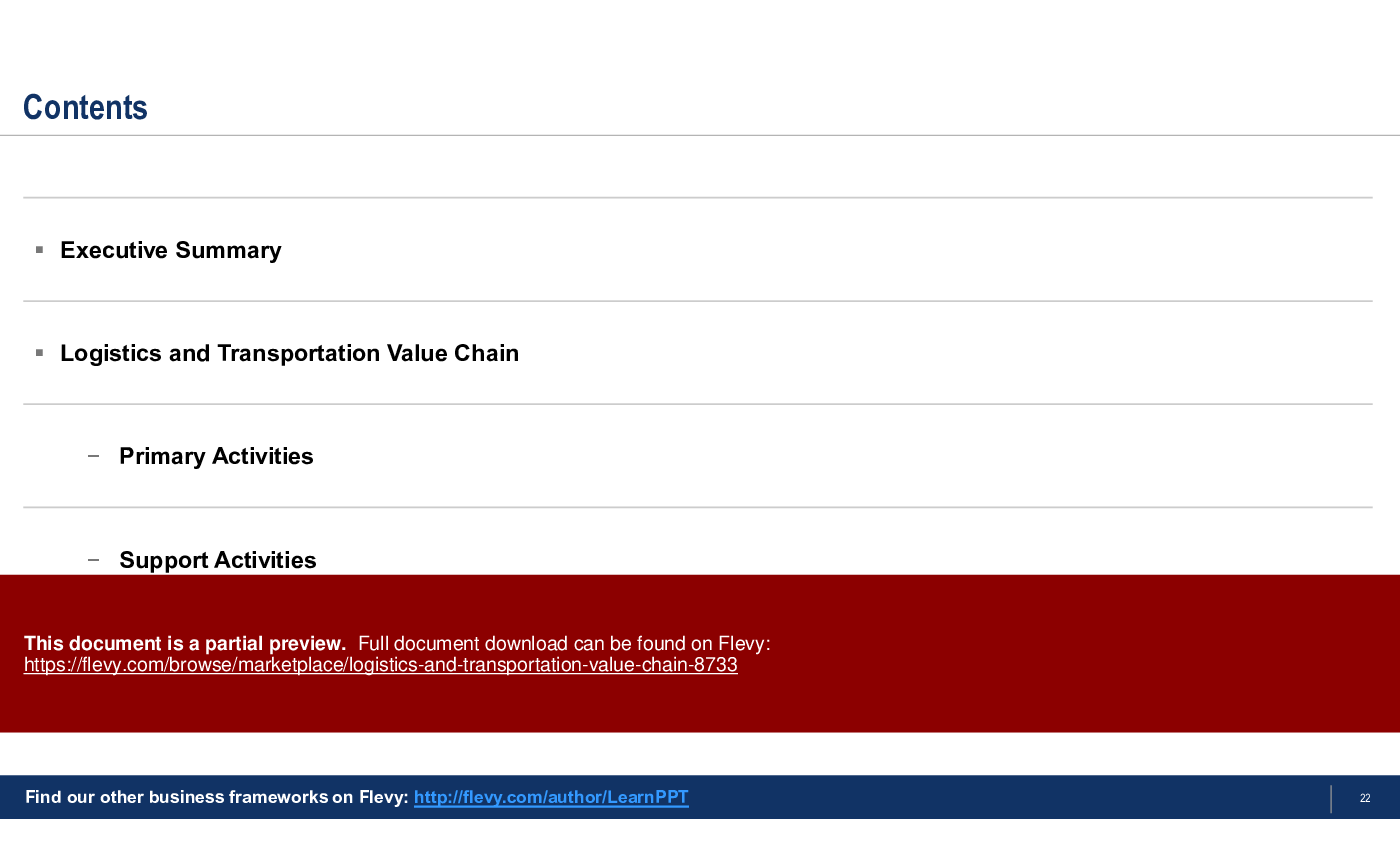
• Executive Summary (page 1)
• Logistics and Transportation Value Chain (page 2)
• Primary Activities (page 3)
• Support Activities (page 4)
• Logistics and Transportation Value Chain Analysis (page 5)
Primary Topics Covered
• Network Planning and Optimization - Focuses on designing efficient transportation networks to meet customer demand, utilizing advanced modeling tools for dynamic adjustments.
• Freight and Parcel Delivery - Involves managing the transportation of goods, ensuring timely and safe delivery through optimized routing and real-time tracking.
• Warehousing - Covers the storage and management of inventory, employing advanced systems to maintain accuracy and streamline operations.
• Order Fulfillment and Distribution - Encompasses processing customer orders and ensuring efficient picking, packing, and shipping to enhance customer satisfaction.
• Logistics Services - Involves coordinating the movement and storage of goods, focusing on compliance and operational efficiency.
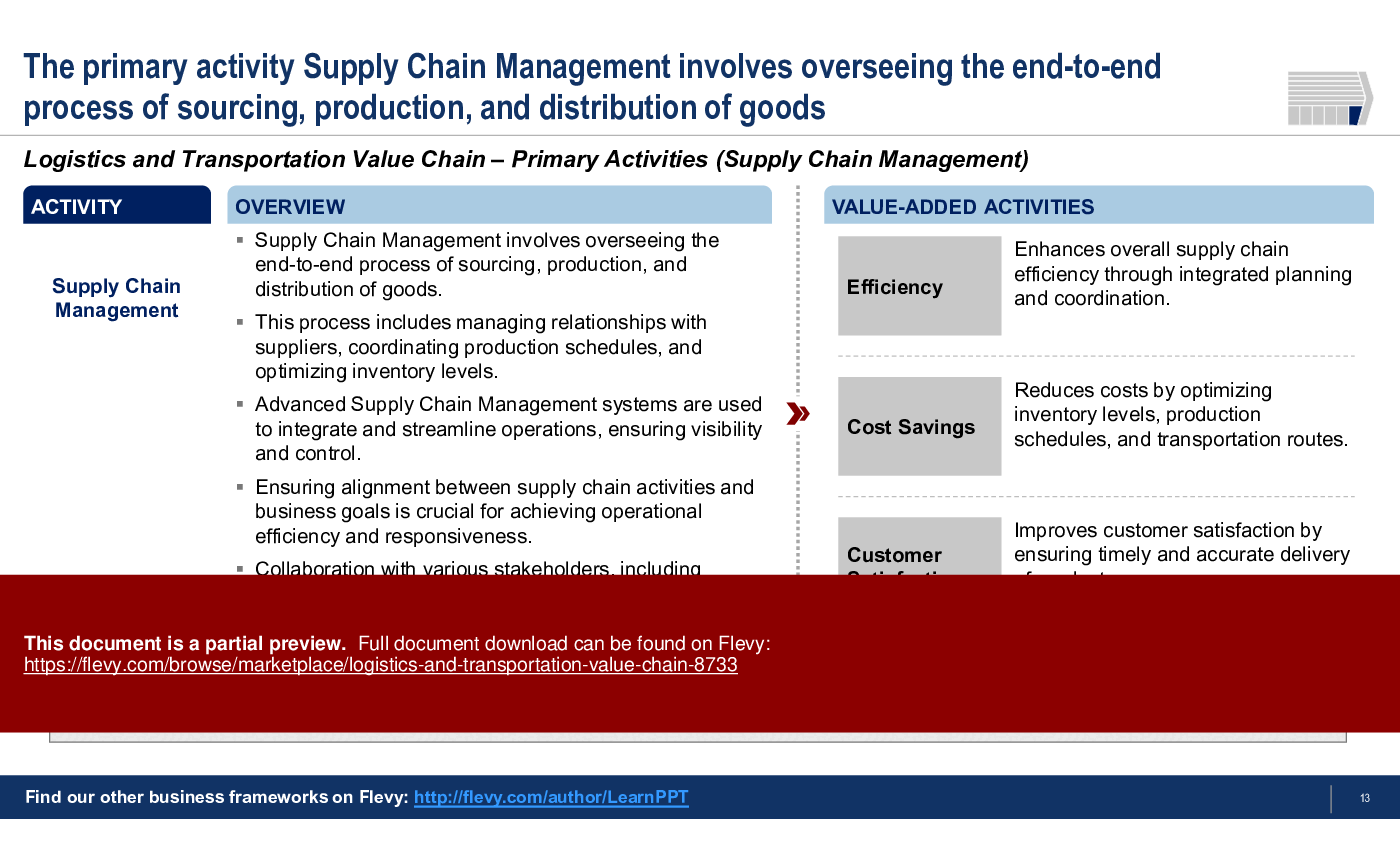
• Supply Chain Management - Oversees the end-to-end process of sourcing, production, and distribution, ensuring alignment with business goals.
Deliverables, Templates, and Tools
• Value chain analysis framework for logistics operations
• Inventory management system templates for optimizing stock levels
• Order fulfillment process maps to streamline operations
• Performance metrics dashboards for tracking logistics efficiency
• Compliance checklists for regulatory adherence
• Stakeholder collaboration frameworks for enhancing partnerships
Slide Highlights
• Overview of primary and support activities within the Logistics and Transportation Value Chain
• Detailed breakdown of the impact of digital transformation on logistics efficiency
• Visual representations of network planning and optimization strategies
• Case studies highlighting successful logistics operations and best practices
• Insights into customer experience improvements through effective logistics management
Potential Workshop Agenda
Logistics Optimization Workshop (90 minutes)
• Discuss current logistics challenges and opportunities for improvement
• Analyze the Logistics and Transportation Value Chain for operational insights
• Develop action plans for implementing best practices
Digital Transformation in Logistics (60 minutes)
• Explore emerging technologies and their impact on logistics operations
• Identify areas for automation and efficiency improvements
• Create a roadmap for integrating digital solutions into existing processes
Customization Guidance
• Tailor the framework to align with specific organizational goals and challenges
• Adjust performance metrics to reflect industry standards and benchmarks
• Incorporate company-specific case studies and examples for relevance
• Modify templates to fit unique operational workflows and processes
Secondary Topics Covered
• The role of information technology in logistics operations
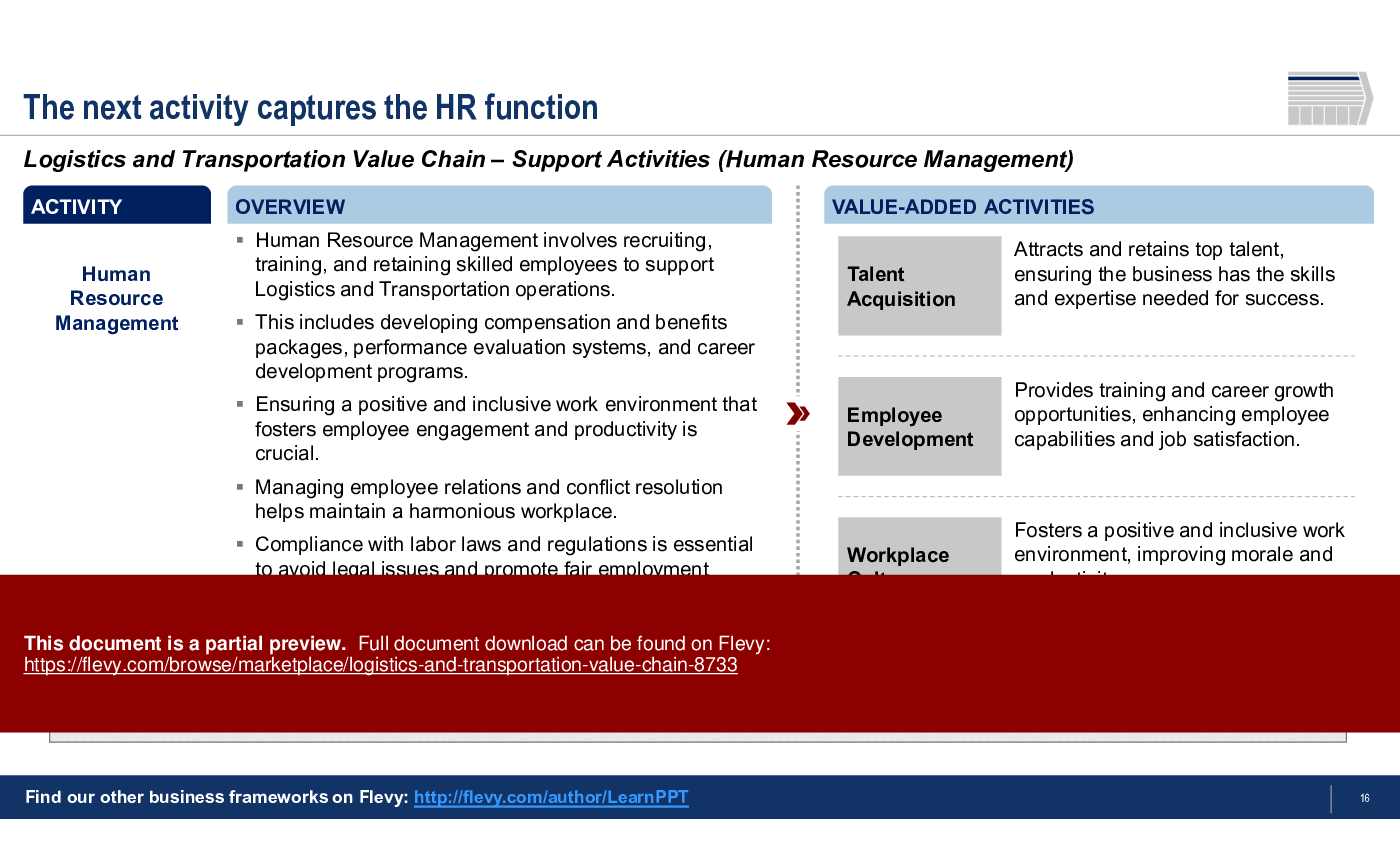
• Human resource management strategies for logistics teams
• Financial management practices for optimizing logistics costs
• Legal and regulatory compliance considerations in transportation
• Marketing and branding strategies for logistics services
Topic FAQ
What are the main components of a logistics and transportation value chain?
A logistics value chain separates primary activities (network planning and optimization; freight and parcel delivery; warehousing; order fulfillment and distribution; logistics services; supply chain management) from support activities (IT, HR, finance, legal/compliance, partnerships, marketing, customer service). The presentation organizes these into 6 primary and 7 support activities.
How do you conduct a logistics value chain analysis to identify cost savings?
Conduct a component-by-component diagnostic: map current processes, measure performance metrics, identify bottlenecks in warehousing, routing, or fulfillment, and prioritize interventions by potential cost impact. The analysis can use a value chain analysis framework and inventory management system templates to quantify opportunities.
What impact does digital transformation typically have on logistics operations?
Digital transformation introduces technologies such as AI, IoT, and automation that improve real-time tracking, enable data-driven decision-making, and support process automation, which can enhance operational efficiency and accuracy. The deck highlights the effects of these emergent technologies on logistics operations and service delivery.
How should I choose a logistics value chain toolkit for a short (3-month) project with a small team?
Prefer a toolkit that is slide- and template-based for fast customization, includes process maps and dashboards, and provides customization guidance to align with organizational goals. Also confirm file format and download speed; Flevy's Logistics and Transportation Value Chain is a 31-slide PPTX with templates and customization guidance.
What should finance leaders evaluate when considering the cost/value of logistics templates and dashboards?
CFOs should assess potential reductions in inventory carrying costs, decreases in lead times, improvements in on-time delivery, and better resource allocation enabled by clearer metrics. Look for performance metrics dashboards and inventory management templates that enable measurable comparisons.
I need to redesign order fulfillment after repeated speed issues—what practical steps should I follow?
Map current order fulfillment end-to-end, analyze warehousing processes and picking/packing workflows, optimize routing and distribution, and implement targeted process maps and KPIs to measure improvements. Use order fulfillment process maps and performance metrics dashboards to track before-and-after performance.
Can small regional carriers apply the same network planning approaches as large global carriers?
The core principles—demand-driven network design and dynamic optimization—apply across scales,, but modeling complexity, data granularity, and capital constraints differ. Smaller carriers should adapt network planning and optimization tools to their scale; the presentation includes visual representations of network planning and optimization.

What practical steps ensure regulatory compliance for international freight operations?
Establish documented compliance programs, maintain up-to-date checklists, conduct regular audits, and train staff on legal requirements for cross-border transport. Use compliance checklists and governance frameworks to maintain adherence to regulations and reduce operational risk.
Document FAQ
These are questions addressed within this presentation.
What is the Logistics and Transportation Value Chain?
The Logistics and Transportation Value Chain is a framework that outlines the primary and support activities involved in delivering logistics services, emphasizing how each step adds value to the overall process.
How can this framework improve operational efficiency?
By analyzing each component of the value chain, organizations can identify inefficiencies, streamline processes, and implement best practices that enhance overall performance.
What are the primary activities in the Logistics and Transportation Value Chain?
Primary activities include network planning and optimization, freight and parcel delivery, warehousing, order fulfillment and distribution, logistics services, and supply chain management.
How does digital transformation impact logistics operations?
Digital transformation introduces technologies such as AI, IoT, and automation, which enhance operational efficiency, improve real-time tracking, and enable data-driven decision-making.
What are some key considerations for conducting a value chain analysis?
Key considerations include understanding market demands, ensuring regulatory compliance, managing costs, and fostering strong supplier relationships.
How can organizations ensure compliance with legal regulations?
Implementing robust compliance programs, conducting regular audits, and educating employees about legal requirements are essential for maintaining adherence to regulations.
What role does customer service play in the logistics value chain?
High-quality customer service enhances customer satisfaction and loyalty, directly impacting repeat business and brand reputation.
How can organizations leverage technology in logistics?
Organizations can utilize advanced analytics, automation, and real-time tracking systems to optimize operations and improve service delivery.
Glossary
• Logistics Value Chain - A framework outlining the steps involved in delivering logistics services.
• Supply Chain Management - The management of the flow of goods and services from sourcing to delivery.
• Digital Transformation - The integration of digital technologies into all areas of business operations.
• Operational Efficiency - The ability to deliver services effectively while minimizing costs.
• Customer Satisfaction - The measure of how well a company's products or services meet customer expectations.
• Compliance - Adherence to laws, regulations, and industry standards.
• Inventory Management - The process of overseeing and controlling inventory levels.
• Performance Metrics - Measurements used to assess the efficiency and effectiveness of logistics operations.
• Automation - The use of technology to perform tasks with minimal human intervention.
• Stakeholder Collaboration - Working together with partners, suppliers, and customers to achieve common goals.
• Cost Management - The process of planning and controlling the budget of a business.
• Risk Management - The identification and mitigation of potential risks that could impact operations.
Logistics services play a critical role in the supply chain, coordinating the movement, storage, and handling of goods. Key activities include planning transportation routes, managing carriers, and ensuring regulatory compliance. Advanced logistics management systems leverage technology for tracking shipments, optimizing routes, and enhancing carrier relationships. Timeliness and cost-effectiveness are essential for meeting customer expectations and maintaining a competitive edge. Continuous improvement initiatives are vital for operational excellence, focusing on operational efficiency, cost reduction through technology, and service quality. Effective logistics management enhances customer satisfaction and contributes significantly to overall supply chain efficiency and cost management.
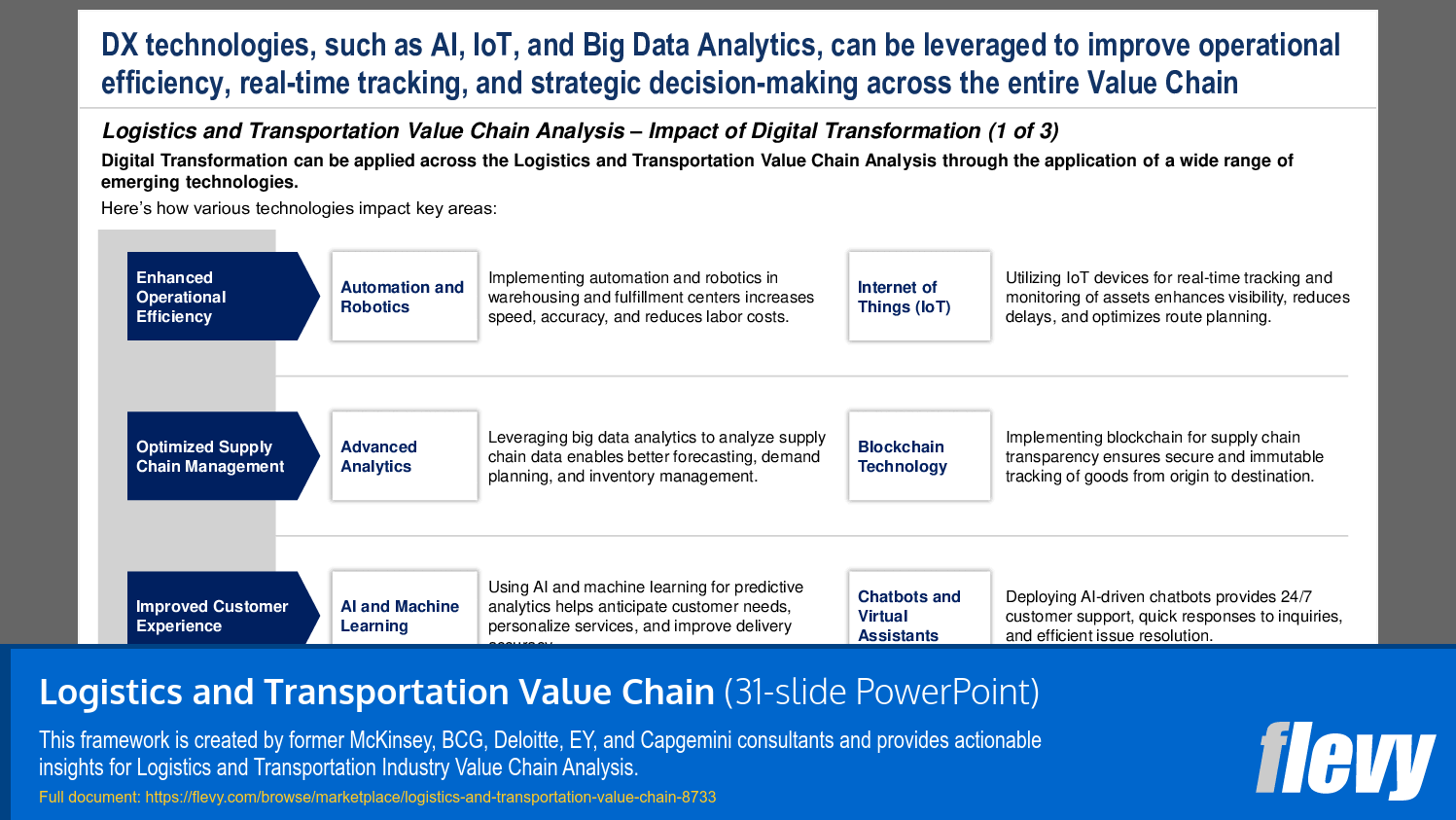
Digital transformation (DX) technologies, including AI, IoT, and Big Data Analytics, enhance the logistics and transportation value chain in 3 key areas: operational efficiency, supply chain management, and customer experience.
"Enhanced Operational Efficiency" highlights automation and robotics in warehousing, improving speed and accuracy while reducing labor costs, leading to streamlined operations and better resource allocation.
"Optimized Supply Chain Management" emphasizes advanced analytics leveraging big data for enhanced forecasting, demand planning, and inventory management, enabling informed decision-making and a responsive supply chain.
"Improved Customer Experience" discusses AI and machine learning for predictive analytics to anticipate customer needs and personalize services, along with chatbots and virtual assistants providing 24/7 support for quick responses and efficient issue resolution.
These technologies collectively transform logistics and transportation operations and customer engagement.
This PPT slide provides an overview of the Logistics and Transportation Value Chain, identifying 6 primary activities essential for operational success: Network Planning and Optimization, Freight and Parcel Delivery, Warehousing, Order Fulfillment and Distribution, Logistics Services, and Supply Chain Management. Supporting these activities are 7 key areas: Information Technology, Human Resource Management, Financial Management, Legal and Regulatory Compliance, Partnership and Vendor Management, Marketing and Branding, and Customer Service and Support. Continuous improvement and strategic partnerships are vital for adapting to market changes and technological advancements. A thorough Value Chain Analysis can identify opportunities for process optimization and cost reduction, enhancing overall business performance. Understanding this value chain is crucial for effective resource allocation and operational success in a rapidly evolving market.
This PPT slide outlines the core functions and benefits of Freight and Parcel Delivery within the logistics and transportation value chain. It highlights essential transportation modes—road, rail, air, and sea—for effective logistics management. Tracking and monitoring systems provide real-time shipment updates, enhancing operational transparency and enabling proactive management of delays. Compliance with regulatory requirements is vital for international deliveries to avoid legal complications and ensure smooth customs processes. Timely delivery is critical for customer satisfaction, while cost efficiency is achieved by optimizing delivery routes and schedules to lower fuel consumption and operational expenses. Service differentiation through reliable and trackable services sets companies apart from competitors, enhancing operational performance and customer satisfaction.
This PPT slide outlines critical considerations for conducting a Logistics and Transportation Value Chain Analysis. Key factors include understanding current and future customer demand and market trends to align logistics operations with customer expectations. Regulatory compliance with local, national, and international regulations is essential to avoid legal issues and penalties. Evaluating emerging technologies like automation, AI, and IoT can enhance logistics processes, improve efficiency, and foster continuous improvement. Cost management involves monitoring and controlling costs at each stage of the value chain to enhance profitability and operational efficiency. Lastly, incorporating sustainability practices reduces environmental impact and appeals to eco-conscious consumers. Each consideration drives operational success and meets customer expectations.
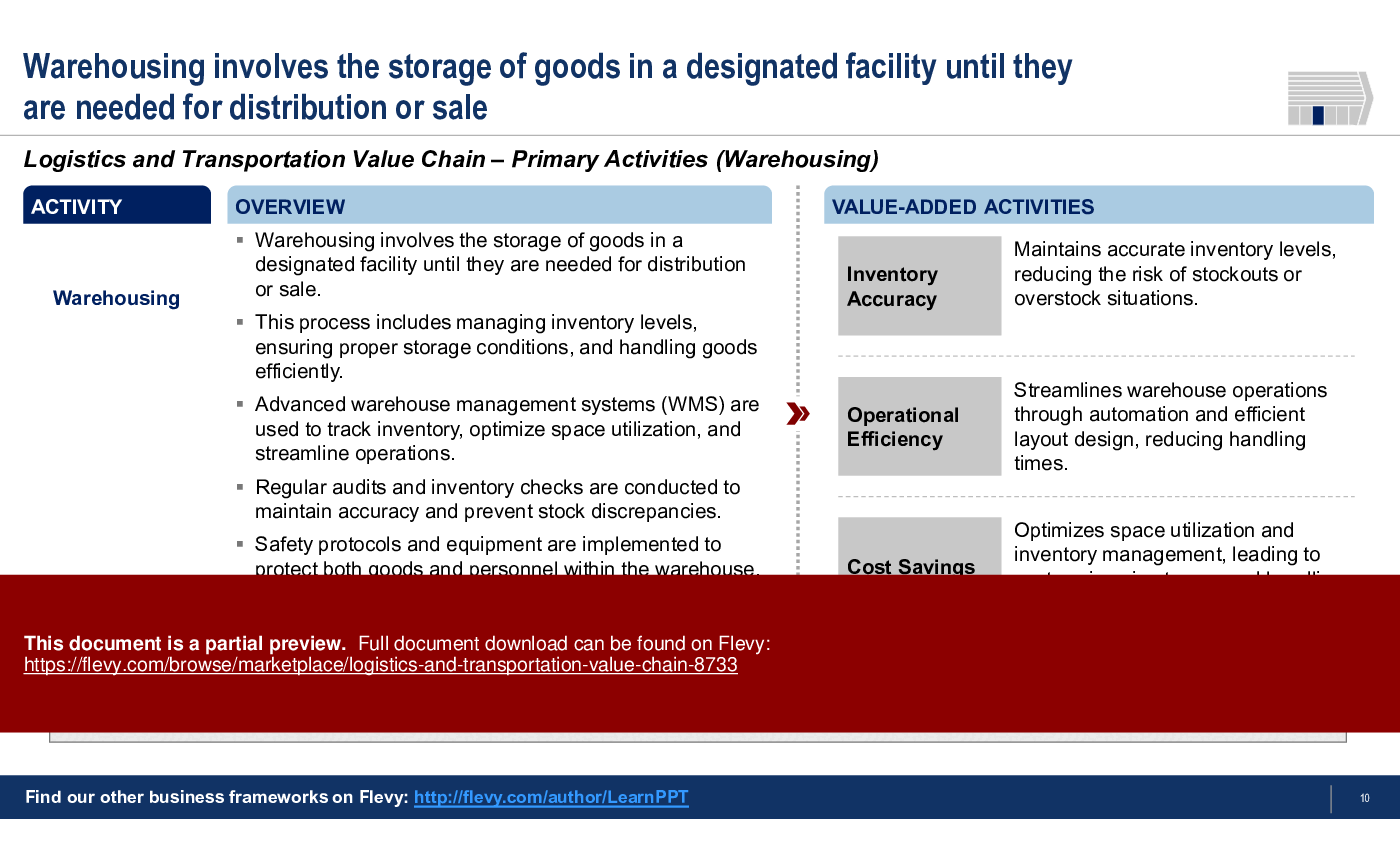
Warehousing is a critical component of the logistics and transportation value chain, defined as the storage of goods until required for distribution or sale. Key aspects include managing inventory levels, ensuring proper storage conditions, and efficient goods handling. Advanced warehouse management systems (WMS) track inventory, optimize space utilization, and streamline operations, enhancing operational effectiveness. Regular audits and inventory checks maintain accuracy and prevent stock discrepancies. Safety protocols protect goods and personnel, minimizing risks in warehousing operations. Three key value-added activities are inventory accuracy, operational efficiency, and cost savings. Accurate inventory levels prevent stockouts and overstock situations that disrupt supply chains. Streamlining operations through automation and efficient layout design enhances productivity, while optimizing space utilization leads to significant cost savings, making warehousing a strategic asset in the supply chain.
Source: Best Practices in Value Chain Analysis, Logistics, Transportation PowerPoint Slides: Logistics and Transportation Value Chain PowerPoint (PPTX) Presentation Slide Deck, LearnPPT Consulting
This framework is created by former McKinsey, BCG, Deloitte, EY, and Capgemini consultants and provides actionable insights for Logistics and Transportation Industry Value Chain Analysis.
We are a team of management consultants trained by top tier global consulting firms (including McKinsey, BCG, Deloitte, EY, Capgemini) with a collective experience of several decades. We specialize in business frameworks based on real-life consulting engagements.
We have served 100s of clients that range from Fortune 500 companies to tech startups to
... [read more] $1B+ private companies.
Utilize our consulting frameworks to apply structured thinking & analysis to address your business challenges, uncover strategic insights, and implement workable solutions. Our PowerPoint presentations follow traditional consulting slide design formats, starting with a clear slide headline. Easily customize and repurpose our slides for your own business presentations.
Beyond business frameworks & methodologies, we also offer PowerPoint templates and other business templates. Our templates are professionally designed and have been used in thousands of deliverables & work products across hundreds of clients.
The average daily rate of a McKinsey consultant is $6,625 (not including expenses). The average price of a Flevy document is $65.
Trusted by over 10,000+ Client Organizations
Since 2012, we have provided business templates to over 10,000 businesses and organizations of all sizes, from startups and small businesses to the Fortune 100, in over 130 countries.
"As a consultant requiring up to date and professional material that will be of value and use to my clients, I find Flevy a very reliable resource.
The variety and quality of material available through Flevy offers a very useful and commanding source for information. Using Flevy saves me time, enhances my expertise and ends up being a good decision."
– Dennis Gershowitz, Principal at DG Associates
"I am extremely grateful for the proactiveness and eagerness to help and I would gladly recommend the Flevy team if you are looking for data and toolkits to help you work through business solutions."
– Trevor Booth, Partner, Fast Forward Consulting
"One of the great discoveries that I have made for my business is the Flevy library of training materials.
As a Lean Transformation Expert, I am always making presentations to clients on a variety of topics: Training, Transformation, Total Productive Maintenance, Culture, Coaching, Tools, Leadership Behavior, etc. Flevy
It is well worth the money to purchase these presentations. Sure, I have the knowledge and information to make my point. It is another thing to create a presentation that captures what I want to say. Flevy has saved me countless hours of preparation time that is much better spent with implementation that will actually save money for my clients.
"
– Ed Kemmerling, Senior Lean Transformation Expert at PMG
"FlevyPro has been a brilliant resource for me, as an independent growth consultant, to access a vast knowledge bank of presentations to support my work with clients. In terms of RoI, the value I received from the very first presentation I downloaded paid for my subscription many times over! The
quality of the decks available allows me to punch way above my weight – it's like having the resources of a Big 4 consultancy at your fingertips at a microscopic fraction of the overhead.
"
– Roderick Cameron, Founding Partner at SGFE Ltd
"If you are looking for great resources to save time with your business presentations, Flevy is truly a value-added resource. Flevy has done all the work for you and we will continue to utilize Flevy as a source to extract up-to-date information and data for our virtual and onsite presentations!"
– Debbi Saffo, President at The NiKhar Group
"[Flevy] produces some great work that has been/continues to be of immense help not only to myself, but as I seek to provide professional services to my clients, it gives me a large "tool box" of resources that are critical to provide them with the quality of service and outcomes they are expecting."
– Royston Knowles, Executive with 50+ Years of Board Level Experience
"I like your product. I'm frequently designing PowerPoint presentations for my company and your product has given me so many great ideas on the use of charts, layouts, tools, and frameworks. I really think the templates are a valuable asset to the job."
– Roberto Fuentes Martinez, Senior Executive Director at Technology Transformation Advisory
"I have used Flevy services for a number of years and have never, ever been disappointed. As a matter of fact, David and his team continue, time after time, to impress me with their willingness to assist and in the real sense of the word. I have concluded in fact
that it is not at all just a repository of documents/resources but, in the way that David and his team manage the firm, it is like dealing with consultants always ready to assist, advise and direct you to what you really need, and they always get it right.
I am an international hospitality accomplished senior executive who has worked and lived during the past 35 years in 23 countries in 5 continents and I can humbly say that I know what customer service is, trust me.
Aside from the great and professional service that Flevy's team provide, their wide variety of material is of utmost great quality, professionally put together and most current.
Well done Flevy, keep up the great work and I look forward to continue working with you in the future and to recommend you to a variety of colleagues around the world.
"
– Roberto Pelliccia, Senior Executive in International Hospitality
Download our free compilation of 50+ Strategy & Transformation slides and templates. Frameworks include McKinsey 7-S, Balanced Scorecard, Disruptive Innovation, BCG Curve, and many more.