
 Click main image to view in full screen. Unlock all 32 preview images:
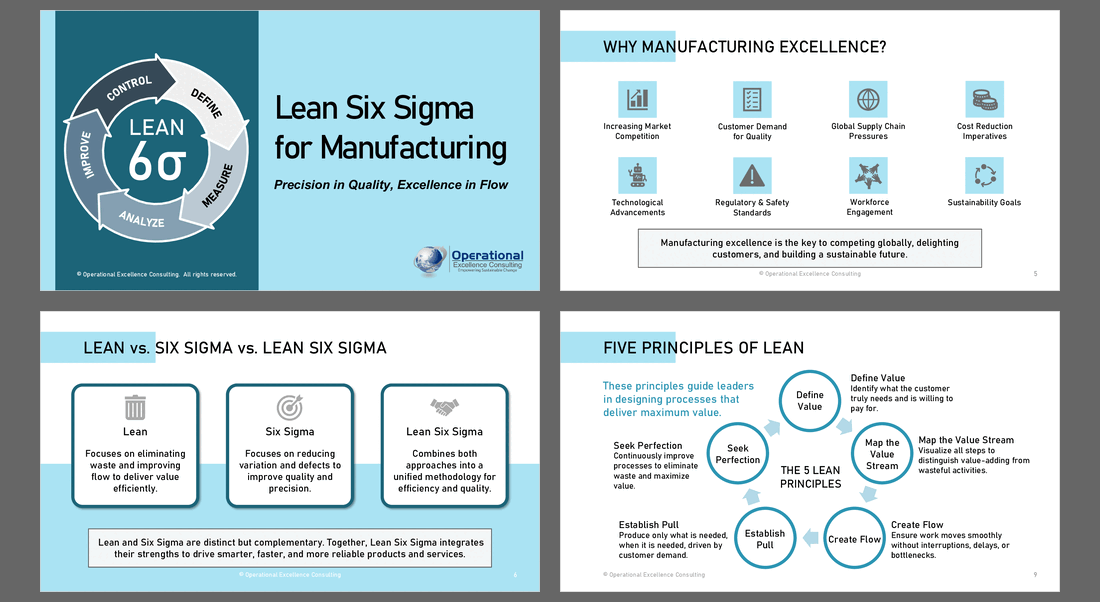
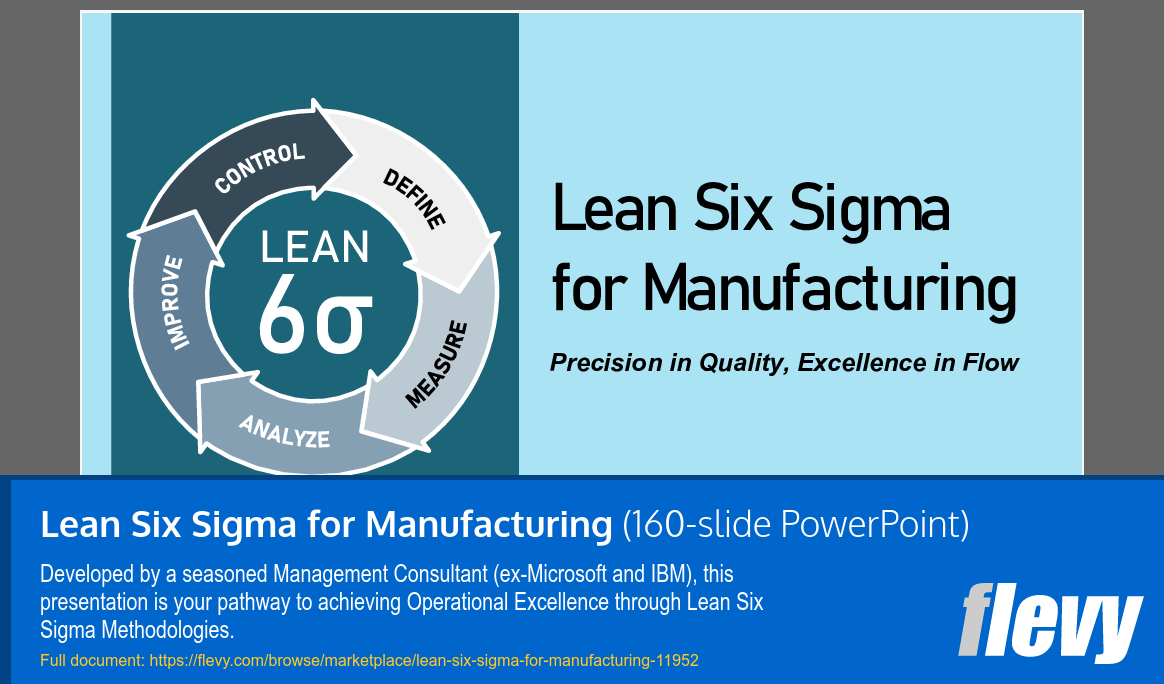
Lean Six Sigma for Manufacturing – PowerPoint PPTX Template
PowerPoint (PPTX) + Zip archive file (ZIP) 160 Slides


BENEFITS OF THIS DOWNLOADABLE POWERPOINT DOCUMENT
- You gain a ready‑to‑use professional training resource that saves preparation time and delivers structured, visually engaging content for workshops and team sessions.
- The deck provides manufacturing‑specific, shop‑floor relevant examples and tools, ensuring practical application of Lean and Six Sigma principles.
- Developed by Operational Excellence Consulting (Singapore), it offers an authoritative, customizable resource that supports long‑term capability building and sustained improvement.
SIX SIGMA PROJECT PPT TEMPLATE DESCRIPTION
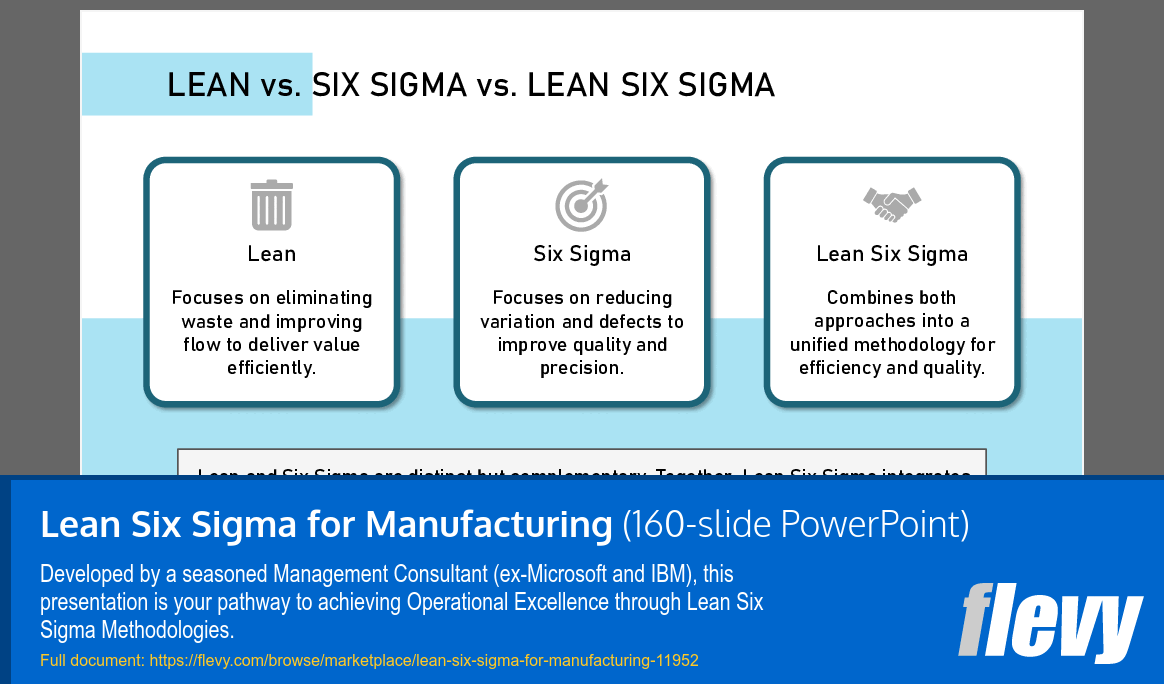
The Lean Six Sigma for Manufacturing Training Toolkit is a comprehensive, ready‑to‑use resource designed to help organizations achieve world‑class performance on the shop floor. It combines Lean's focus on eliminating waste and improving flow with Six Sigma's rigor in reducing variation and defects.
This toolkit is tailored for manufacturing environments – from automotive and aerospace to process industries – and emphasizes practicality over complexity. Participants learn to apply proven tools such as Value Stream Mapping, 5S, Visual Management, Standard Work, and Poka‑Yoke, supported by structured DMAIC methodology.
The program also highlights modern data analysis strategies, including AI‑powered insights, collaboration with internal experts, and accessible software tools like Minitab. The emphasis is on fit‑for‑purpose analysis: clear visual evidence, practical significance, and measurable improvements in quality, lead time, and throughput.
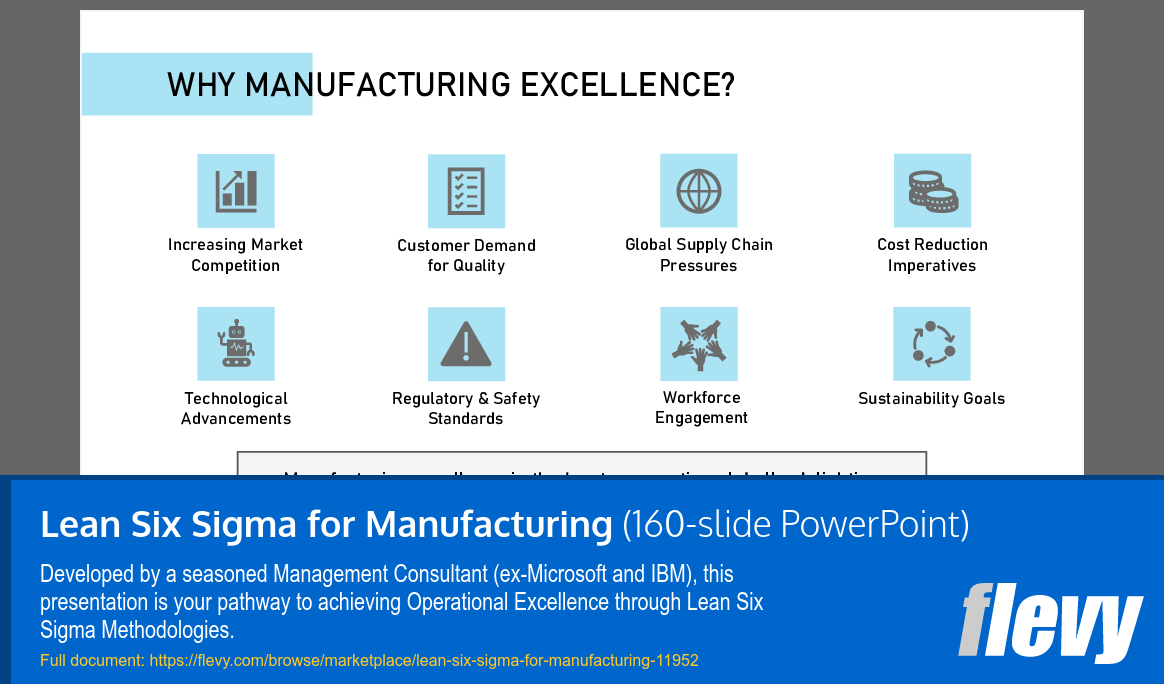
Key Value: Manufacturing excellence is the key to competing globally, delighting customers, and building a sustainable future.
WHO IS IT FOR?
This training toolkit is designed for professionals across manufacturing organizations who are responsible for driving efficiency, quality, and continuous improvement:
• Manufacturing Engineers – seeking to optimize processes and reduce waste.
• Production Supervisors & Managers – aiming to improve throughput, delivery, and workforce engagement.
• Quality Engineers & Managers – focused on defect reduction, first‑pass yield, and customer satisfaction.
• Process Improvement Specialists / Lean Six Sigma Practitioners – applying structured methodologies to deliver measurable results.
• Maintenance & Operations Teams – ensuring equipment reliability and supporting flow improvements.
• Senior Leaders & Plant Directors – building a culture of operational excellence and sustainable competitiveness.
LEARNING OBJECTIVES
• Master Lean tools such as Value Stream Mapping, 5S, and Standard Work to optimize production flow and ensure "First‑Time‑Right" delivery.
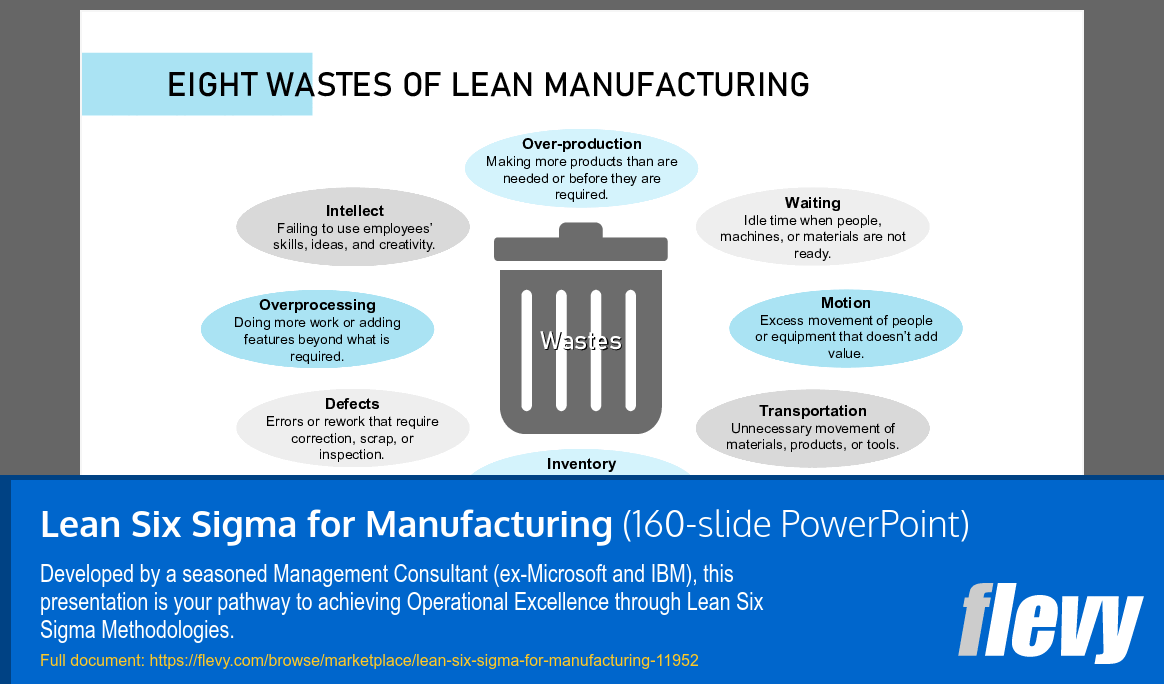
• Identify the 8 types of waste in manufacturing operations to uncover hidden inefficiencies, excess inventory, and bottlenecks.
• Apply the 5‑phase DMAIC framework to structure, lead, and sustain process improvement initiatives that reduce defects and variation.
• Understand the core principles of Lean and Six Sigma tailored specifically for manufacturing environments.
CONTENTS
1. Foundations of Lean Manufacturing
• Definition of Lean Manufacturing
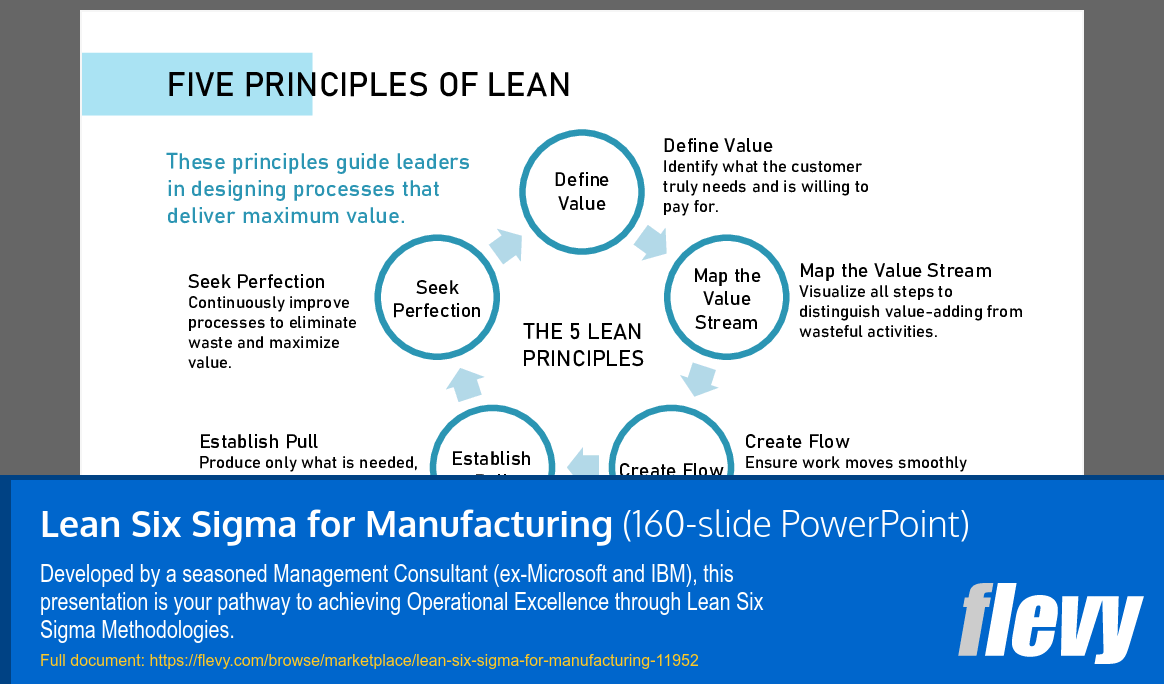
• The 5 Lean Principles (Define Value, Map the Value Stream, Create Flow, Establish Pull, Seek Perfection)
• Respect for People: Engagement, Psychological Safety, No‑Blame Culture
• What Lean is not (not layoffs, cost‑cutting, or outsourcing)
• Benefits of Lean Manufacturing: customer satisfaction, productivity, throughput, sustainable advantage
2. Eight Wastes of Lean Manufacturing
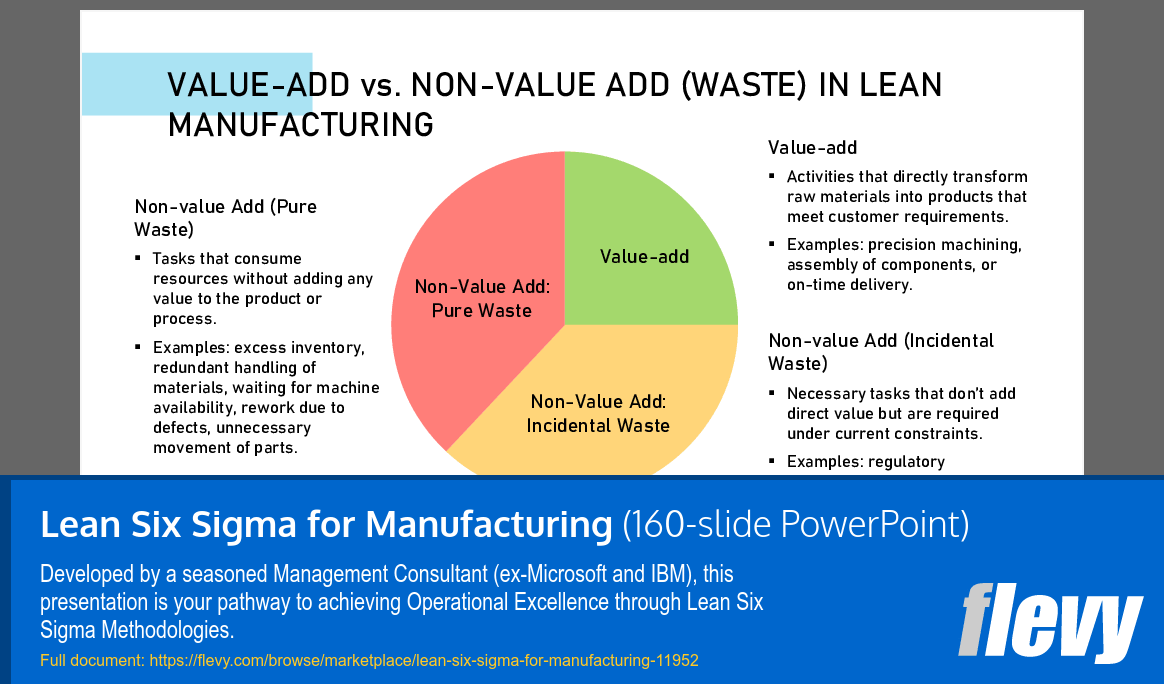
• Value‑Add vs. Non‑Value‑Add activities
• Detailed examples of each waste: Overproduction, Inventory, Waiting, Defects, Motion, Overprocessing, Transportation, Intellect (underutilized talent)
• Pitfalls to avoid and best practices in waste elimination
• Activity: Spot the Wastes (shop‑floor exercise)
3. Practical Lean Tools
• Lean Tools Selection Matrix (8 Wastes, 5S, Visual Management, Standard Work, Takt Time, Spaghetti Diagram, SMED, VSM, Poka‑Yoke, Kaizen)
• Buffet Approach: selecting tools based on urgent pain points (flow/layout vs. changeover speed)
• 5S Principles for shop‑floor efficiency (Sort, Set in Order, Shine, Standardize, Sustain)
• Visual Management: boards, metrics, LDMS (Lean Daily Management System)
• Standard Work: clarity, consistency, examples (setup, assembly, logistics, inspection)
• Value Stream Mapping: current vs. future state maps, strategic focus
4. Foundations of Six Sigma in Manufacturing
• Six Sigma philosophy: precision, variation reduction, defect elimination
• DMAIC methodology (Define, Measure, Analyze, Improve, Control)
• Practicality vs. Rigor: focus on practical significance, visual data evidence, Pareto/Fishbone over complex tests
• Modern Data Analysis: AI‑powered insights, collaboration, specialized tools (Minitab)
5. Six Sigma Toolkit
• 5 Whys and Fishbone Analysis for root cause identification
• Pareto Analysis for defect prioritization
• Hypothesis testing (fit‑for‑purpose)
• Poka‑Yoke (error‑proofing) in manufacturing contexts
• Control Charts and Run Charts for monitoring variation
6. Industry Case Studies
• Automotive: throughput, downtime, rework, inventory optimization
• Aerospace: turnaround time, spare parts management
• Process industries: material wastage, asset availability
• Cross‑industry applications (banks, IT, telecom, airlines, hospitals, public services)
• Manufacturing case studies: lead time reduction (Lean‑heavy) and defect reduction (Six Sigma‑heavy)
Got a question about the product? Email us at support@flevy.com or ask the author directly by using the "Ask the Author a Question" form. If you cannot view the preview above this document description, go here to view the large preview instead.
Source: Best Practices in Six Sigma Project PowerPoint Slides: Lean Six Sigma for Manufacturing PowerPoint (PPTX) Presentation Slide Deck, Operational Excellence Consulting
ABOUT THE AUTHOR

Operational Excellence Consulting, founded in 2009 by Allan Ung, draws from extensive experience at Microsoft, IBM, and Underwriters Laboratories (UL). We specialize in strategy deployment, customer experience design, and operational excellence, applying Design Thinking, Lean, and Systems Thinking to maximize customer value and minimize waste.
Our
... [read more]
Ask the Author a Question
You must be logged in to contact the author.




























