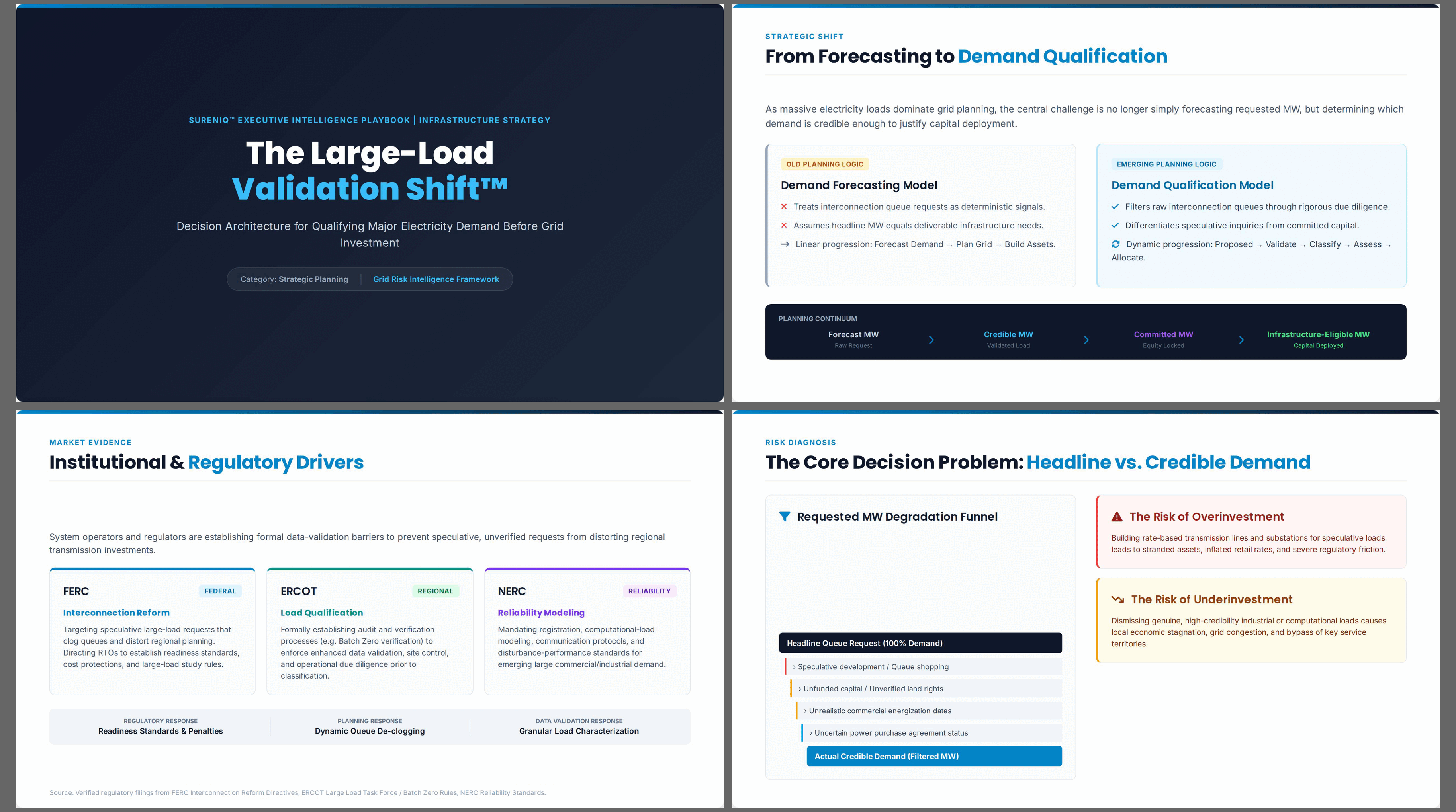

 Click main image to view in full screen. Unlock all 13 preview images:
Large-Load Validation Shift – PDF
PDF document 17 Pages


BENEFITS OF THIS DOWNLOADABLE PDF DOCUMENT
- Provides a structured framework for distinguishing headline electricity demand from credible, committed, and infrastructure-ready large-load demand.
- Translates large-load uncertainty into practical qualification, infrastructure-gating, risk-allocation, and executive decision tools.
- Helps decision-makers align infrastructure and capital commitments with project maturity, demand credibility, grid exposure, and delivery readiness.
ENERGY INDUSTRY PDF DESCRIPTION
The Large-Load Validation Shift™ is an executive decision-intelligence playbook for organizations facing rapidly growing electricity demand from data centers, advanced manufacturing, industrial facilities, electrification projects, and other emerging high-load developments.
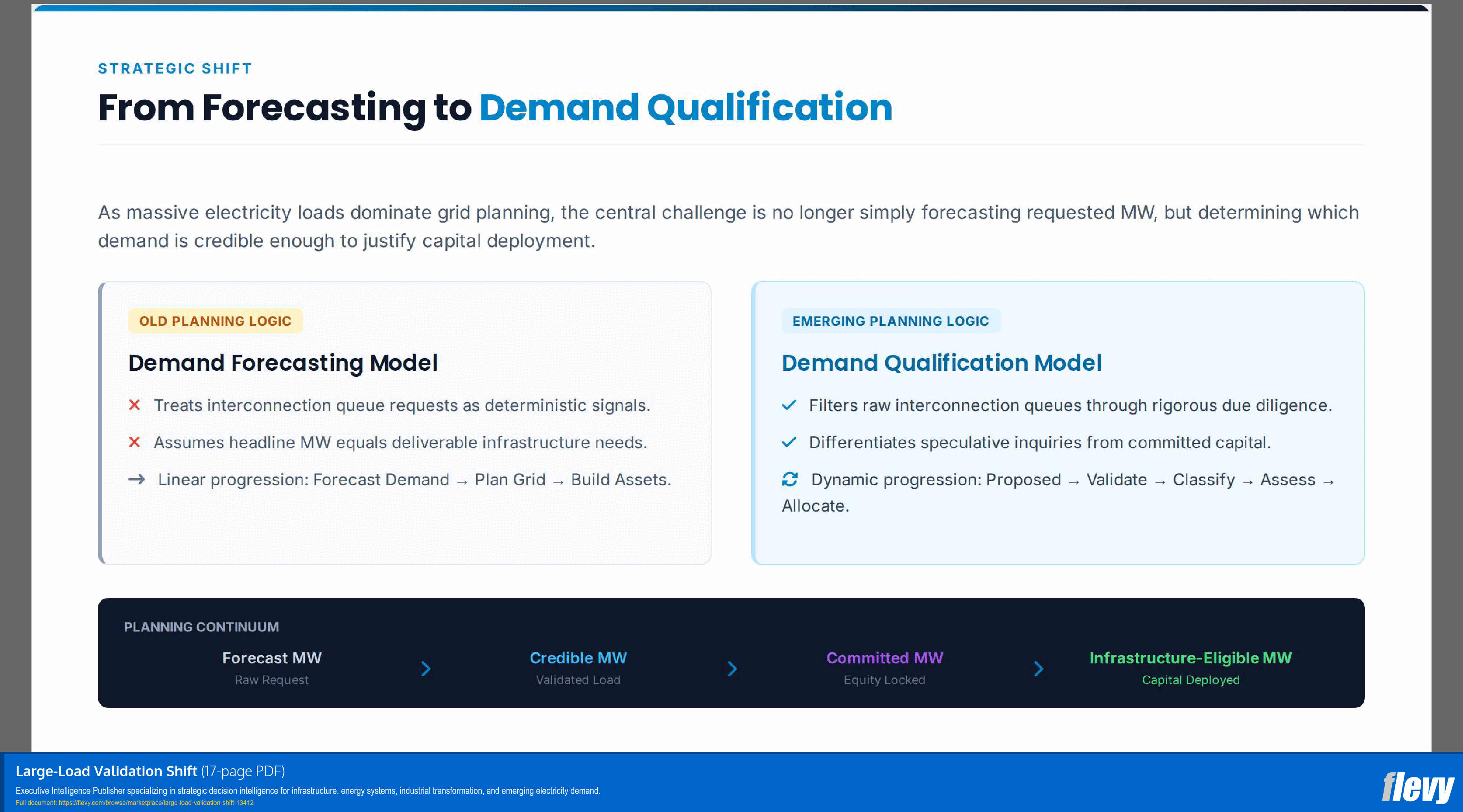
As large electricity-demand requests increasingly influence grid planning, infrastructure investment, generation requirements, and capital allocation, the central challenge is no longer simply forecasting requested megawatts. The critical management question is determining which demand is sufficiently credible, committed, and infrastructure-ready to justify grid and capital investment.
This playbook introduces a structured decision architecture for separating headline demand from planning-relevant demand. It enables executives, infrastructure planners, utilities, investors, industrial developers, and other decision-makers to evaluate large-load opportunities before committing significant infrastructure capital.
Inside, you will find:
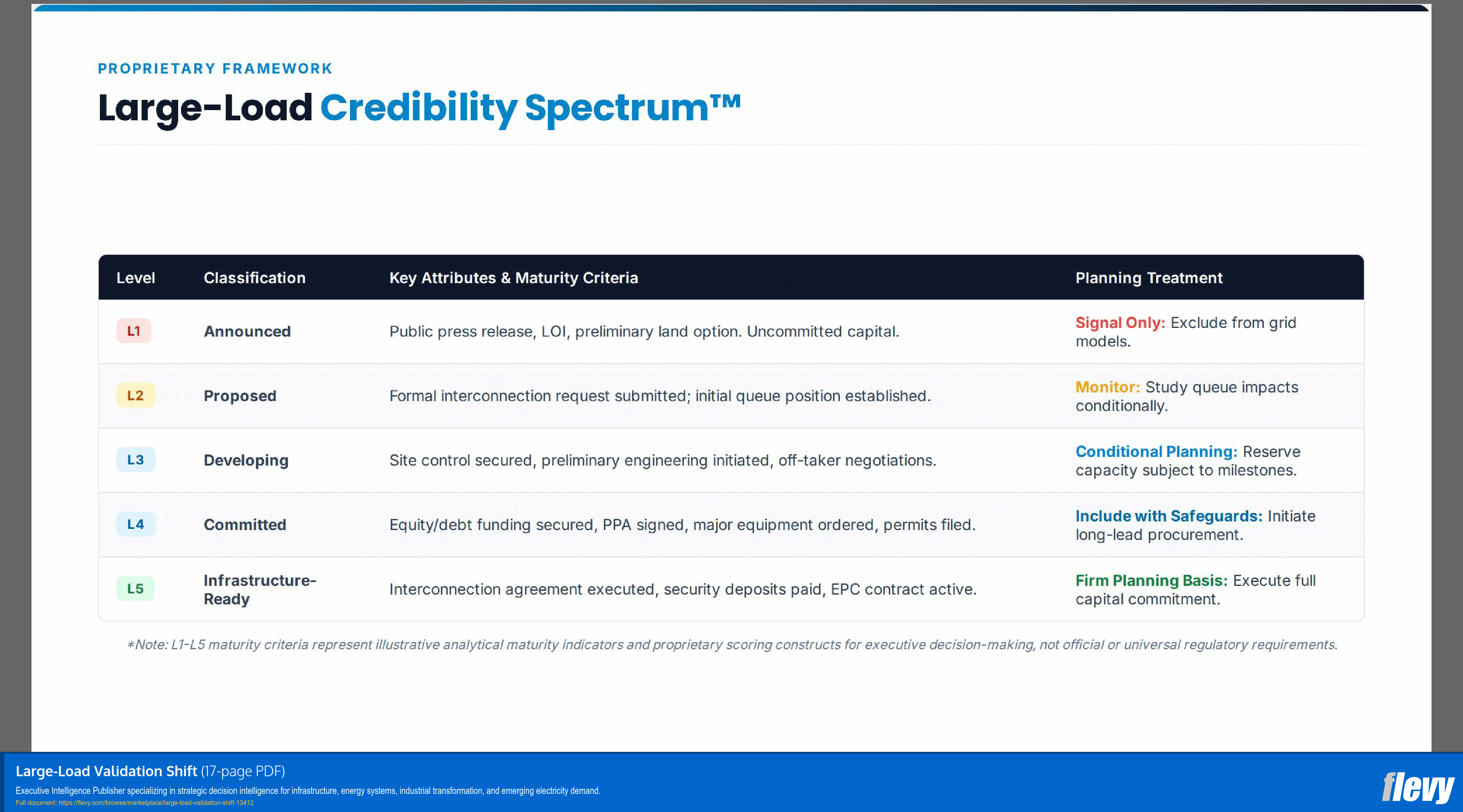
• Large-Load Credibility Spectrum™ – a maturity framework distinguishing announced, proposed, developing, committed, and infrastructure-ready demand.
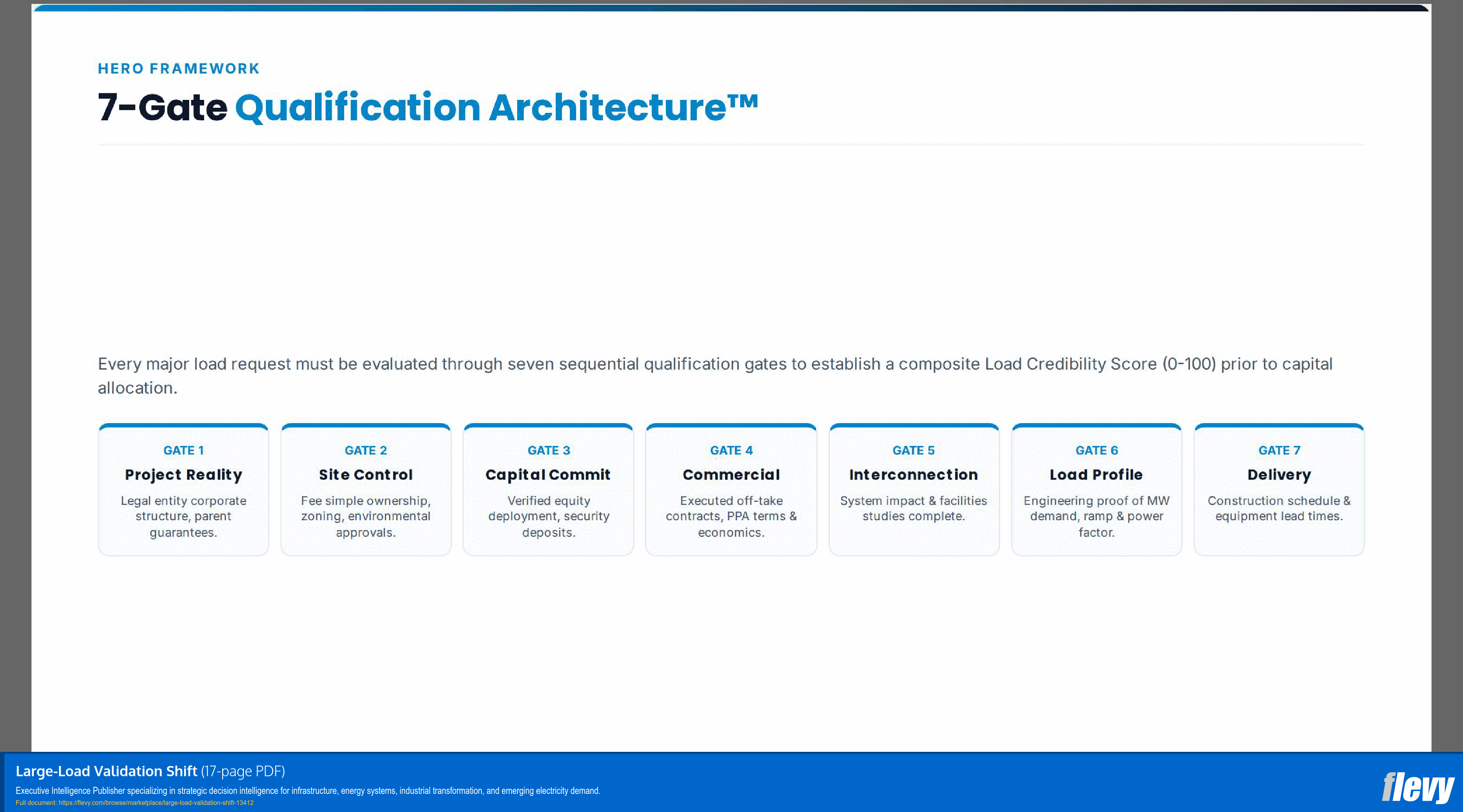
• 7-Gate Qualification Architecture™ – a structured qualification process covering project reality, site control, capital commitment, commercial readiness, interconnection, load profile, and delivery readiness.
• Load Credibility Score™ – a proprietary analytical scoring model for translating multiple readiness dimensions into a structured credibility assessment.
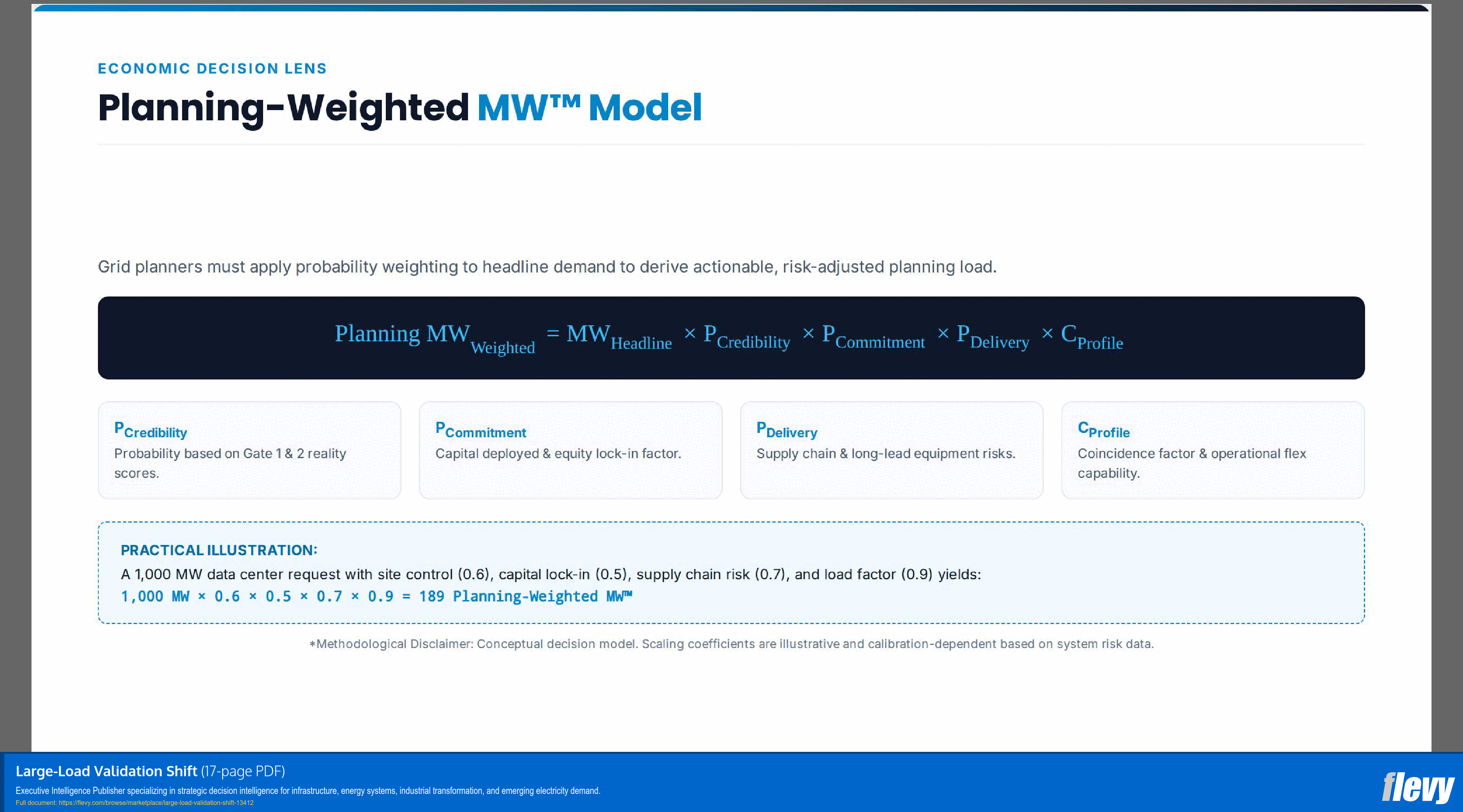
• Planning-Weighted MW™ Model – a decision-support model for converting nominal demand into a more planning-relevant load estimate by incorporating credibility, commitment, delivery, and configuration factors.
• Grid Investment Exposure Matrix™ – a framework for assessing how large-load characteristics translate into potential grid infrastructure exposure and investment risk.
• Infrastructure Commitment Gate™ Process – a four-stage decision architecture connecting demand validation, qualification, grid exposure, and risk allocation to capital-commitment decisions.
• Strategic Load Configuration Pathways™ – four pathways for firm, conditional, flexible/interrupted, and deferred connections.
• Large-Load Decision Matrix™ – an executive tool for determining whether a project should proceed, proceed conditionally, be made flexible, be deferred, or be excluded.
• Executive Pre-Commitment Checklist and 30/90/180-Day Action Architecture – practical tools for converting the framework into diligence, governance, planning, and capital-allocation actions.
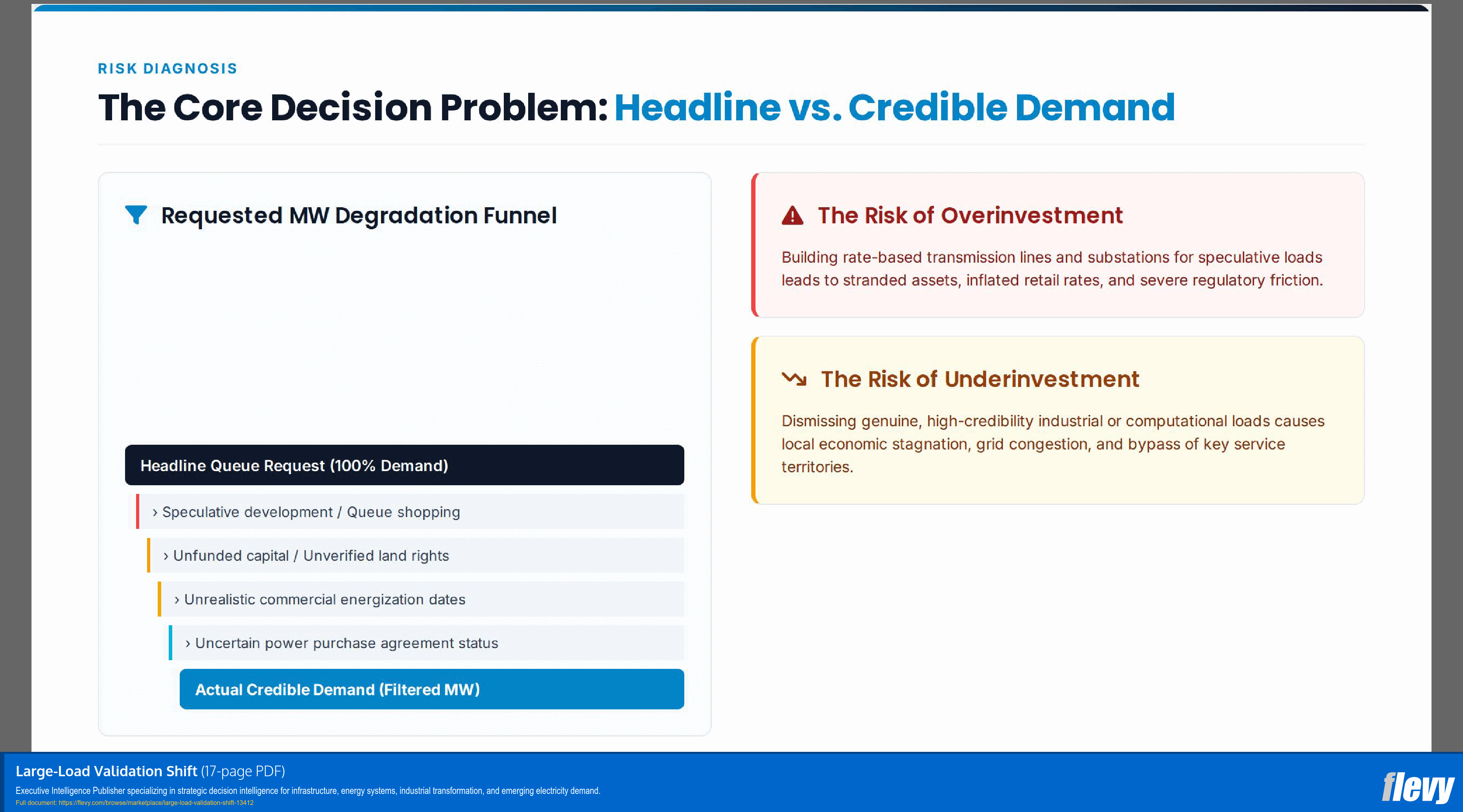
The playbook addresses both sides of the planning problem: the risk of overinvestment caused by speculative or insufficiently validated demand, and the risk of underinvestment caused by failing to recognize genuinely high-credibility industrial or computational loads.
The framework is designed to move organizations from a passive forecasting model toward a qualification-based planning model:
Forecast MW → Credible MW → Committed MW → Infrastructure-Eligible MW
Rather than functioning as a market forecast or generic electricity-demand report, this playbook focuses on the executive decision behind the forecast: Which megawatts are credible enough to build infrastructure around?
The methodology can be applied across data centers, semiconductor fabrication, clean hydrogen and electrolysis, advanced manufacturing, batteries, heavy logistics electrification, and other emerging high-volume electricity-demand environments.
Got a question about the product? Email us at support@flevy.com or ask the author directly by using the "Ask the Author a Question" form. If you cannot view the preview above this document description, go here to view the large preview instead.
Source: Best Practices in Energy Industry PDF: Large-Load Validation Shift PDF (PDF) Document, Wisnu Pandega Wardana
ABOUT THE AUTHOR

I am an independent Industrial Intelligence and Strategic Innovation Publisher focused on developing structured business intelligence, innovation frameworks, and opportunity-oriented research for decision-makers.
My work focuses on translating emerging technologies, industrial transformation, sustainability, resource efficiency, and market shifts into structured intelligence assets that
... [read more]
Ask the Author a Question
You must be logged in to contact the author.




























