
 Click main image to view in full screen. Unlock all 21 preview images:
Kubernetes Architecture and Administration Training – PDF
PDF document 190 Pages


BENEFITS OF THIS DOWNLOADABLE PDF DOCUMENT
- Gain a structured understanding of Kubernetes architecture, control plane components, worker nodes and container orchestration.
- Learn how to manage Kubernetes workloads, networking, services, persistent storage, ConfigMaps, Secrets and Helm.
- Use a comprehensive presentation resource for instructor-led training, technical workshops, corporate learning and Kubernetes knowledge development.
CLOUD PDF DESCRIPTION
# Kubernetes Architecture and Administration Training
## Overview
This comprehensive Kubernetes training presentation provides a structured introduction to Kubernetes architecture, container orchestration, cluster administration, networking, workloads, storage, configuration management and application deployment.
Kubernetes is an open-source container orchestration platform used to automate the deployment, scaling and management of containerized applications. This training material introduces the fundamental concepts and technical components required to understand how Kubernetes clusters operate and how applications are managed within them.
The presentation is designed for IT professionals, DevOps engineers, cloud engineers, system administrators, software developers and technical teams looking to build or strengthen their Kubernetes knowledge.
## What You Will Learn
The material covers the following key areas:
1. Kubernetes Fundamentals
• Introduction to Kubernetes and container orchestration.
• Benefits, capabilities and real-world use cases.
• Container fundamentals, Linux namespaces and cgroups.
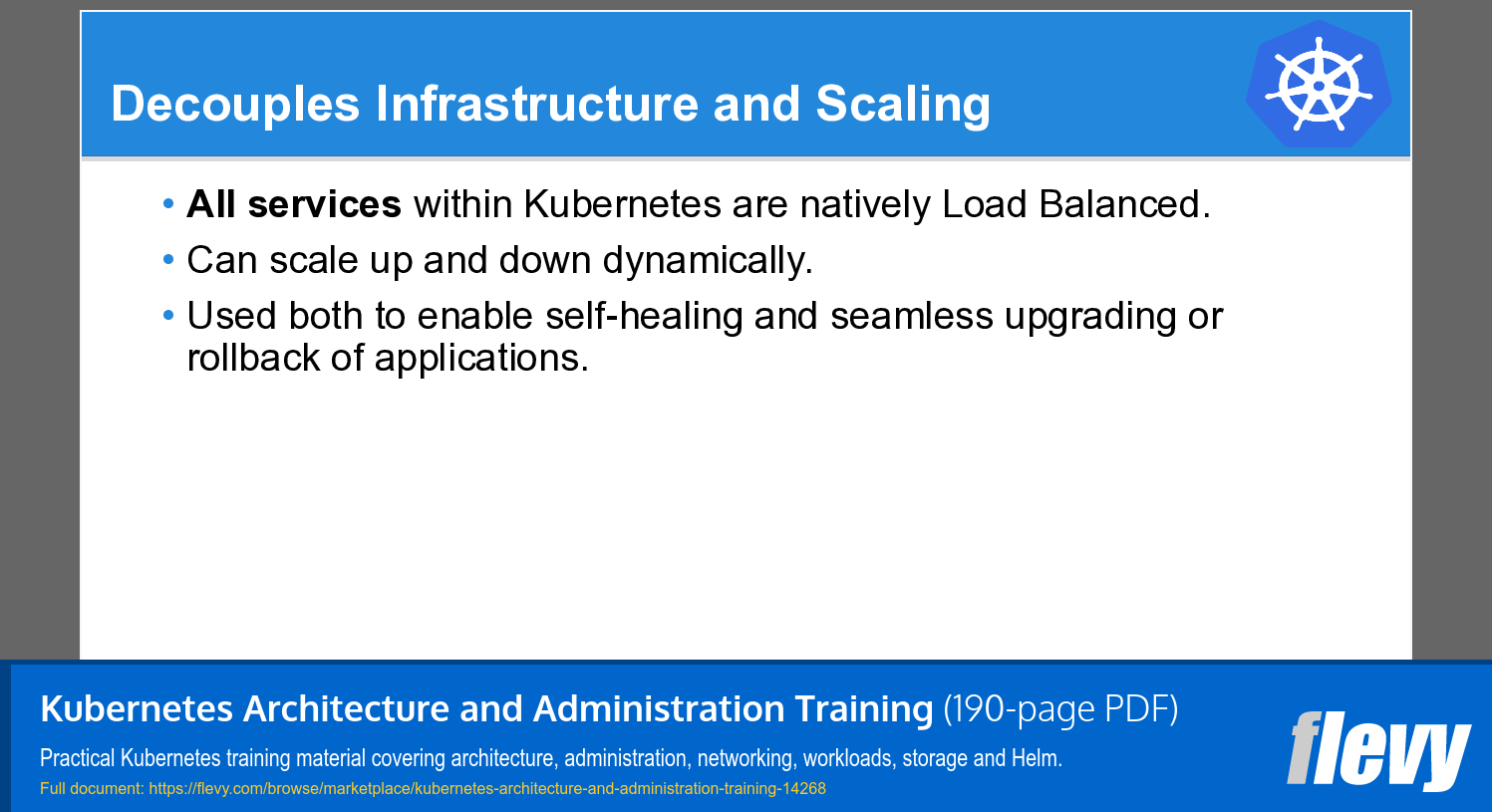
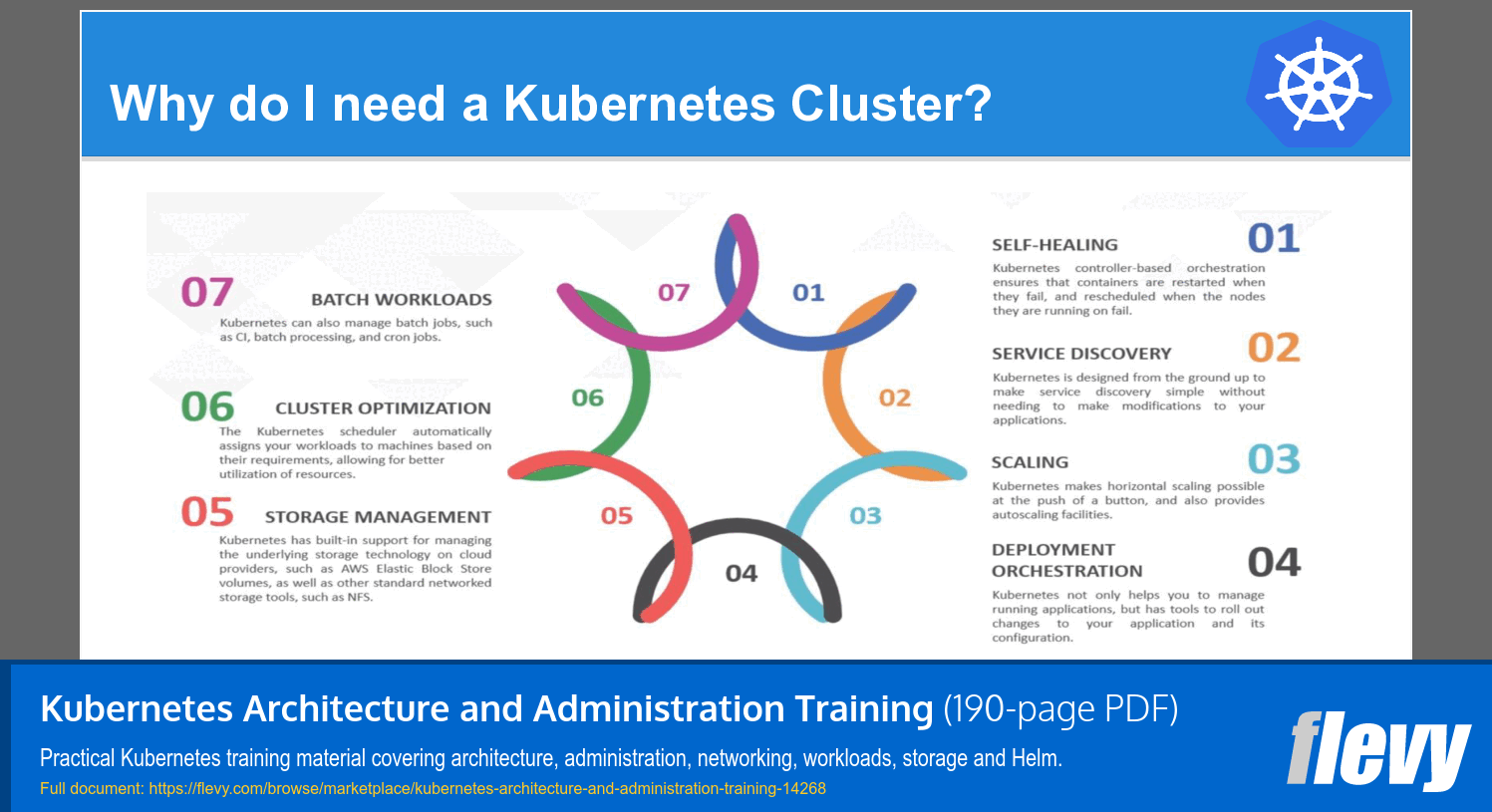
• Declarative infrastructure and self-healing capabilities.
2. Kubernetes Architecture
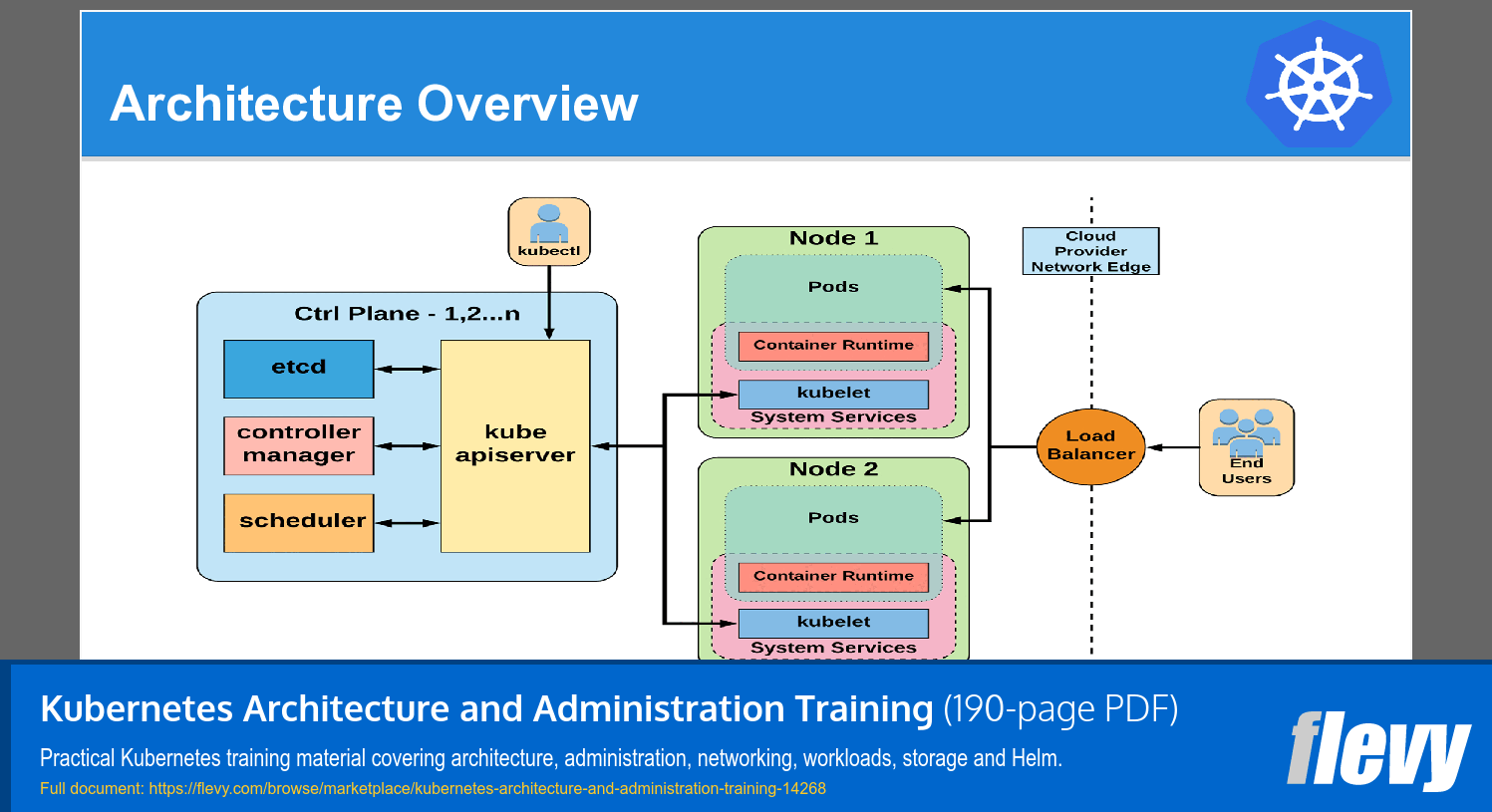
• Kubernetes cluster architecture and components.
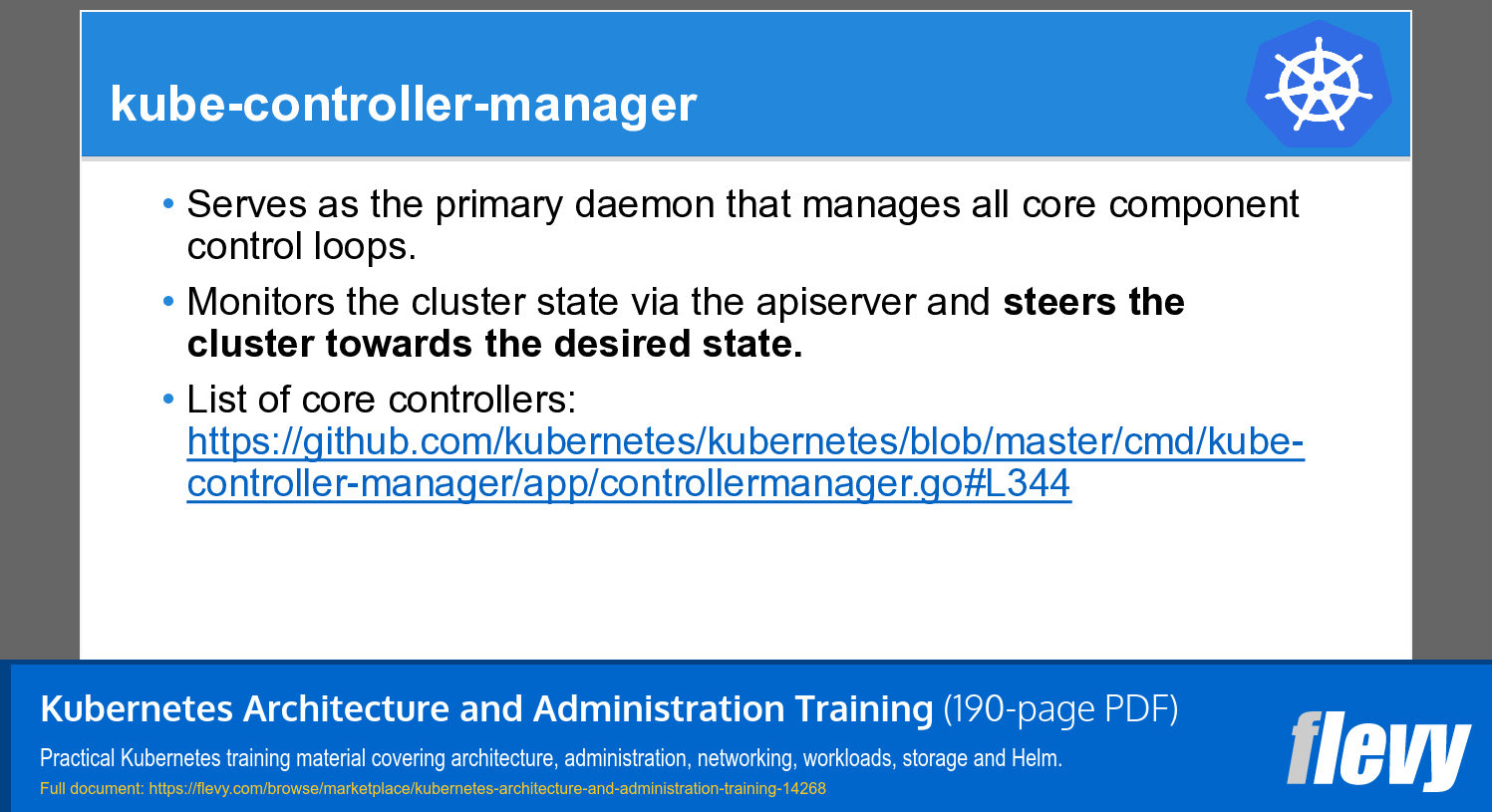
• Control Plane components, including API Server, etcd, Controller Manager and Scheduler.
• Worker Node components, including kubelet, kube-proxy and container runtime.
• Understanding cluster operations and component responsibilities.
3. Kubernetes Networking
• Kubernetes networking architecture.
• Pod networking and service networking.
• Container Network Interface (CNI).
• Service discovery and communication.
4. Kubernetes API and Core Concepts
• Kubernetes API and resource model.
• YAML and JSON configuration.
• Namespaces, Pods, Labels and Selectors.
• Working with Kubernetes objects and resources.
5. Workloads and Application Management
• ReplicaSets and Deployments.
• DaemonSets and StatefulSets.
• Jobs and CronJobs.
• Managing application replicas and workload lifecycle.
6. Kubernetes Storage
• Volumes and volume mounts.
• PersistentVolumes and PersistentVolumeClaims.
• StorageClasses and storage management.
• Understanding persistent application storage.
7. Configuration Management
• ConfigMaps and configuration externalization.
• Kubernetes Secrets.
• Environment variables and volume-based configuration injection.
8. Helm Package Management
• Introduction to Helm.
• Helm charts, configurations and releases.
• Helm client and library concepts.
• Managing Kubernetes application packages.
## Who Should Use This Material?
• DevOps Engineers and Cloud Engineers.
• Kubernetes Administrators.
• Software Developers working with containerized applications.
• System Administrators and Infrastructure Engineers.
• IT professionals transitioning into cloud-native technologies.
• Corporate technical training teams and educational institutions.
## Key Value
This presentation provides a structured learning resource that connects Kubernetes fundamentals with its practical architecture and resource-management concepts. It can be used as a foundation for instructor-led training, technical workshops, internal knowledge-sharing sessions and individual learning.
Whether you are beginning your Kubernetes journey or looking to organize your existing knowledge, this training presentation offers a consolidated reference covering the essential building blocks of Kubernetes.
Format: PDF
Topic: Kubernetes, Container Orchestration, Cloud-Native Infrastructure and DevOps.
Got a question about the product? Email us at support@flevy.com or ask the author directly by using the "Ask the Author a Question" form. If you cannot view the preview above this document description, go here to view the large preview instead.
Source: Best Practices in Cloud, DevOps PDF: Kubernetes Architecture and Administration Training PDF (PDF) Document, Swayaan Digital Solutions Pvt Ltd.
ABOUT THE AUTHOR

Ask the Author a Question
You must be logged in to contact the author.