
 Click main image to view in full screen. Unlock all 12 preview images:


ISO 42001 PPT TEMPLATE DESCRIPTION
ISO/IEC 42001:2023 – The Global Standard for AI Management Systems
By Mohamed Al-Shamey
Chapter 1: The Dawn of Responsible AI
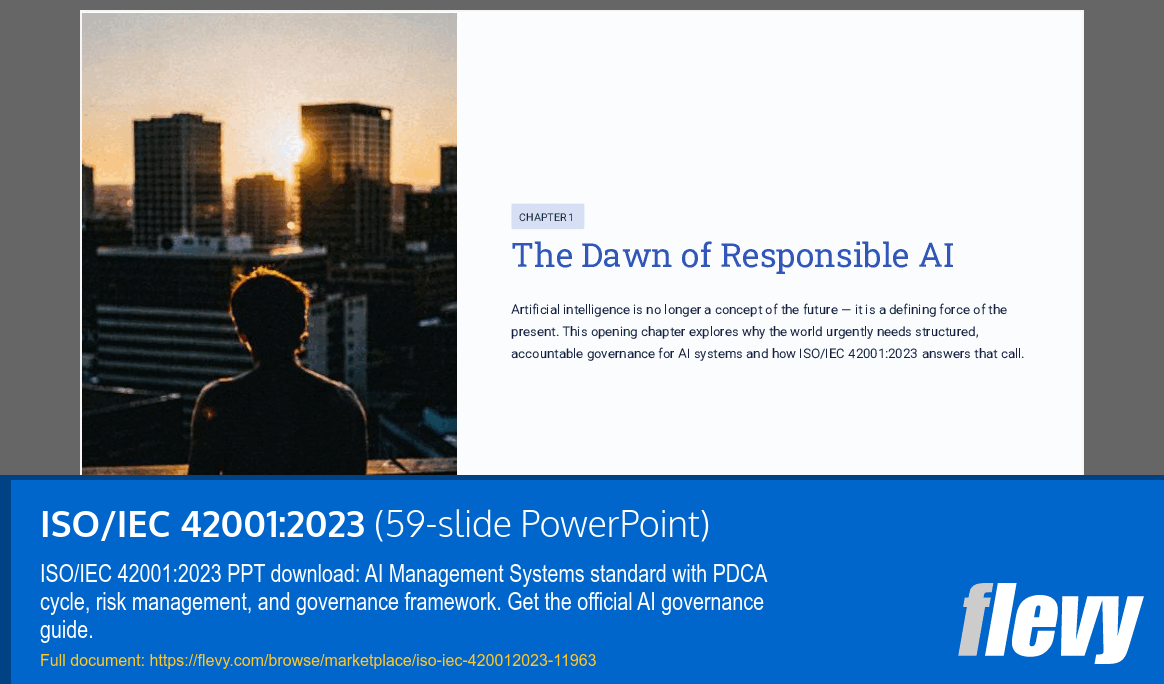
The AI Revolution is Here
• Artificial Intelligence is rapidly transforming industries and daily life.
• This rapid advancement brings immense opportunities but also significant risks.
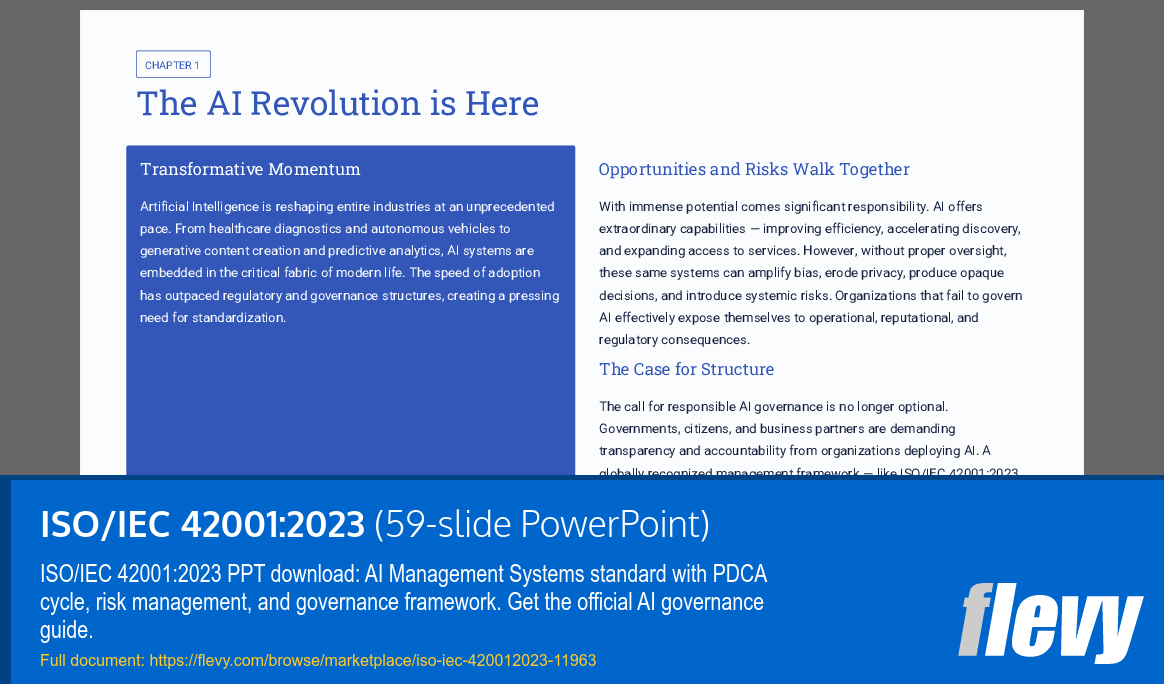
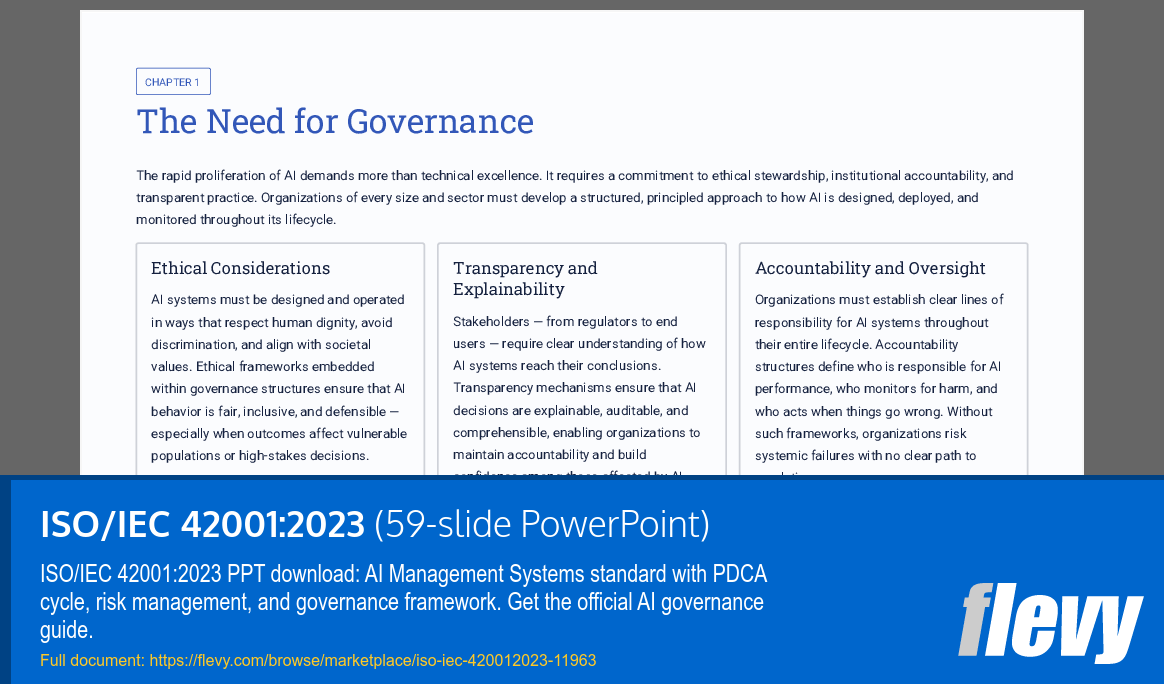
The Need for Governance
• Ethical considerations, transparency, and accountability are paramount.
• Organizations require a structured approach to manage AI responsibly.
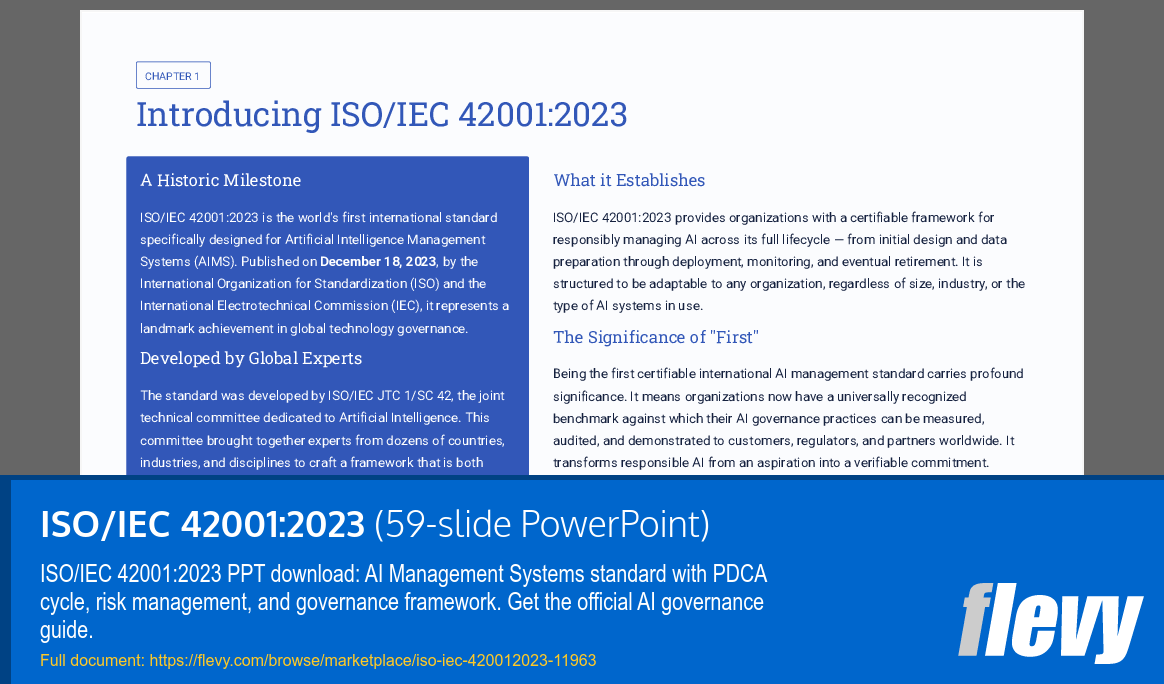
Introducing ISO/IEC 42001:2023
• The world's first international standard for AI Management Systems (AIMS).
• Published on December 18, 2023, by ISO and IEC.
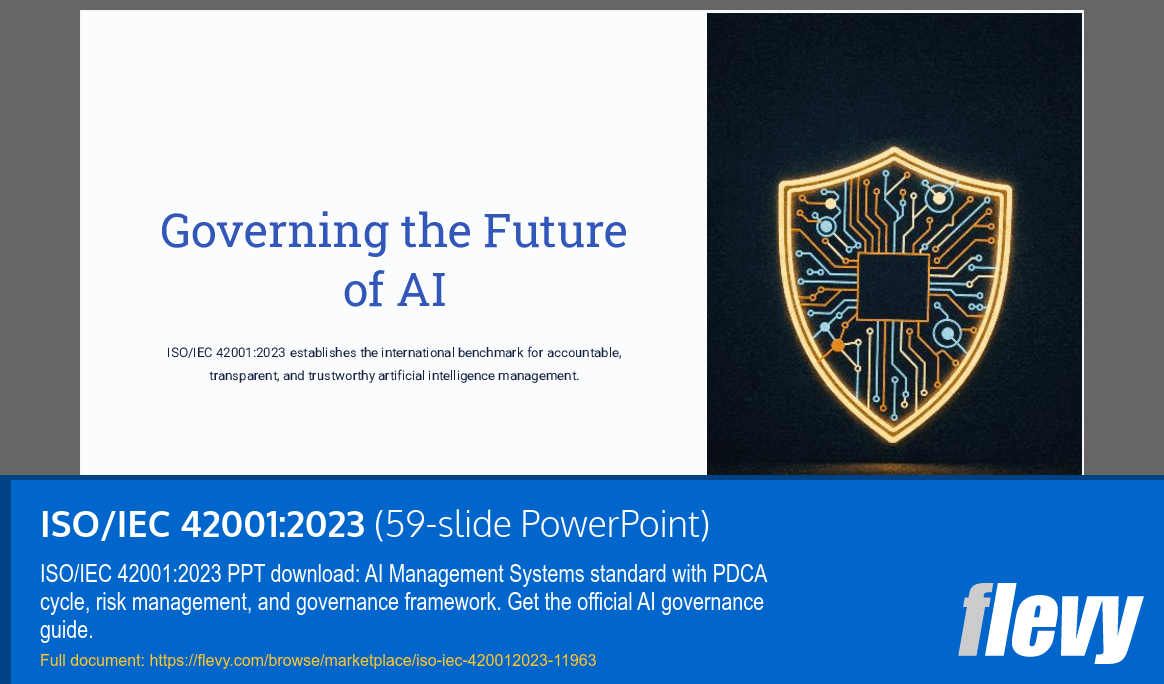
[image] Abstract graphic representing interconnected AI nodes and a shield, text: "Governing the Future of AI"
Chapter 2: What is ISO/IEC 42001:2023?
Defining the AI Management System (AIMS)
• Specifies requirements for establishing, implementing, maintaining, and continually improving an AIMS.
• Aims to ensure responsible development and use of AI systems.
Who is it For?
• Organizations of any size involved in developing, providing, or using AI-based products or services.
• Applicable across all industries and relevant for public sector agencies, companies, and non-profits.
Key Principles of ISO/IEC 42001
• Plan-Do-Check-Act (PDCA) Cycle: A continuous improvement framework.
• Risk and Opportunity Management: Proactively addressing AI-specific challenges.
• Stakeholder Engagement: Meeting obligations and expectations of interested parties.
[image] A circular diagram illustrating the Plan-Do-Check-Act cycle.
Chapter 3: Core Requirements of the Standard
Clause 4: Context of the Organization
• Understanding the organization's needs and expectations.
• Determining the scope of the AIMS.
Clause 5: Leadership
• Top management commitment to the AIMS.
• Establishing an AI policy and assigning roles/responsibilities.
Clause 6: Planning
• Establishing AI-specific objectives.
• Planning actions to address risks and opportunities.
Clause 7: Support
• Resource management (human, infrastructure, environment).
• Competence, awareness, and communication.
• Documented information management.
Clause 8: Operation
• Operational planning and control of AI systems.
• Implementing AI impact assessments.
• Managing data for AI systems.
[image] Flowchart showing the operational steps for AI system deployment.
Chapter 4: Key Controls and Annexes
Annex A: Controls for AI Management
• Contains 38 controls organized across eight domains.
• Domains include: AI Policies, Internal Organization, Resource Management, Impact Assessment, AI System Lifecycle, Data for AI, System by Design.
Spotlight on Key Controls
• A.6.1.6 AI Impact Assessment: Covers intended use, potential misuse, impacts on individuals/groups (including discriminatory impacts), environmental, and societal impacts.
• A.8.2 Data Quality: Ensures data used for AI training is relevant, representative, and of sufficient quality.
Control A.6.2: AI System Transparency
• Documentation of the AI system's purpose, capabilities, limitations, and intended contexts of use.
• Crucial for building trust and understanding.
[image] Infographic highlighting the 8 domains of Annex A controls.
Chapter 5: Benefits of ISO/IEC 42001 Certification
Demonstrating Responsible AI Use
• Builds trust with customers, partners, and regulators.
• Shows a commitment to ethical and trustworthy AI.
Framework for Managing Risks and Opportunities
• Proactive identification and mitigation of AI-related risks.
• Capitalizing on AI-driven opportunities.
Traceability, Transparency, and Reliability
• Enhanced understanding of AI system behavior and decision-making.
• Improved data integrity and system performance.
Cost Savings and Efficiency Gains
• Streamlined AI development and deployment processes.
• Reduced risk of costly AI failures or breaches.
[image] Split screen: one side shows a chaotic, uncontrolled AI system, the other shows a well-managed, transparent AI system.
Chapter 6: Integration and Compatibility
Leveraging Existing ISO Standards
• Follows the ISO High Level Structure (Annex SL).
• Compatible with ISO 27001 (Information Security), ISO 9001 (Quality), and ISO 14001 (Environmental Management).
Integrated Management Systems
• Organizations can integrate ISO 42001 into their existing governance infrastructure.
• Reduces incremental effort for certified organizations.
[image] Diagram showing how ISO 42001 can integrate with other ISO management systems.
Chapter 7: ISO 42001 and Regulatory Landscapes
The EU AI Act: A Key Regulatory Framework
• ISO 42001 certification can provide a presumption of conformity with certain EU AI Act requirements.
• Particularly relevant for risk management (Article 9) and quality management (Article 17).
ISO 42001 as a "Necessary but Not Sufficient" Condition
• Certification demonstrates a strong AI governance foundation.
• However, specific EU AI Act requirements (e.g., notified body involvement for high-risk systems) may go beyond ISO 42001.
[image] Map of the world highlighting regions with emerging AI regulations.
Chapter 8: Practical Implementation and Certification
Who Should Consider ISO 42001?
• AI Product and Service Providers: Demonstrating AI governance for procurement.
• Organizations Subject to the EU AI Act: Aligning with regulatory expectations.
• Companies with Existing ISO Certifications: Extending their management systems.
• Vendors Selling into Regulated Industries: Meeting increasing demands for AI governance.
The Certification Process
• Organizations implement the AIMS based on the standard's requirements.
• Independent third-party audits by accredited bodies.
• Formal certification demonstrates compliance.
[image] A graphic representing a certification badge or seal.
Chapter 9: The Future of AI Governance
Evolving AI Technologies
• The standard is designed to be technology-agnostic.
• Accommodates a full range of AI systems: machine learning, generative AI, autonomous systems.
Continuous Improvement is Key
• AI technology and its implications are constantly evolving.
• The PDCA cycle ensures the AIMS remains relevant and effective.
Global Convergence of AI Standards
• ISO/IEC 42001 provides a globally recognized benchmark.
• Facilitates international collaboration and responsible AI deployment.
[image] Futuristic cityscape with AI elements integrated seamlessly.
Chapter 10: Conclusion – Embracing Responsible AI
ISO/IEC 42001:2023 – A Blueprint for Trustworthy AI
• Establishes a robust framework for managing AI risks and opportunities.
• Empowers organizations to innovate responsibly.
The Path Forward
• Implement the standard to build confidence and ensure ethical AI practices.
• Stay ahead of evolving regulations and technological advancements.
[image] A handshake over a digital interface, symbolizing trust and collaboration in AI.
Thank You
Q&A
Contact Information
• Mohamed Al-Shamey
• [Email Address]
• [LinkedIn Profile URL]
Further Resources
• : ISO/IEC 42001:2023
• Regulome: ISO/IEC 42001 Compliance Guide
• Nemko: ISO 42001 Certification Guide
[image] ISO/IEC 42001:2023 logo or emblem.
Key Takeaways
• ISO/IEC 42001:2023 is the first certifiable international standard for AI Management Systems.
• It provides a framework for responsible AI development and use.
• Applicable to any organization involved with AI products or services.
Benefits Recap
• Enhanced trust and transparency.
• Proactive risk management.
• Streamlined operations and efficiency.
• Alignment with global regulations.
The Importance of AI Governance
• Essential for ethical innovation and societal well-being.
• ISO 42001 provides the roadmap.
[image] A diverse group of people collaborating around a table with AI-related visuals.
Building a Future of Trustworthy AI, Together.
Got a question about the product? Email us at support@flevy.com or ask the author directly by using the "Ask the Author a Question" form. If you cannot view the preview above this document description, go here to view the large preview instead.
Source: Best Practices in ISO 42001 PowerPoint Slides: ISO/IEC 42001:2023 PowerPoint (PPTX) Presentation Slide Deck, Mohamed Alshamey
ABOUT THE AUTHOR

Senior Consultant in Cybersecurity GRC, Data Governance, Cybersecurity, Privacy, and Data Management, with over 20 years of experience in information technology, consulting, training, and technical capacity building. holds a PhD. In AI & Data Privacy, he has a master's degree in cybersecurity and is currently pursuing research focused on data privacy. possesses extensive expertise in ... [read more]
Ask the Author a Question
You must be logged in to contact the author.




























