 Click main image to view in full screen.
ISO 27001 Certification Readiness Assessment & Project Plan – PowerPoint PPTX Template
PowerPoint (PPTX) 60 Slides


ISO 27001 PPT TEMPLATE DESCRIPTION
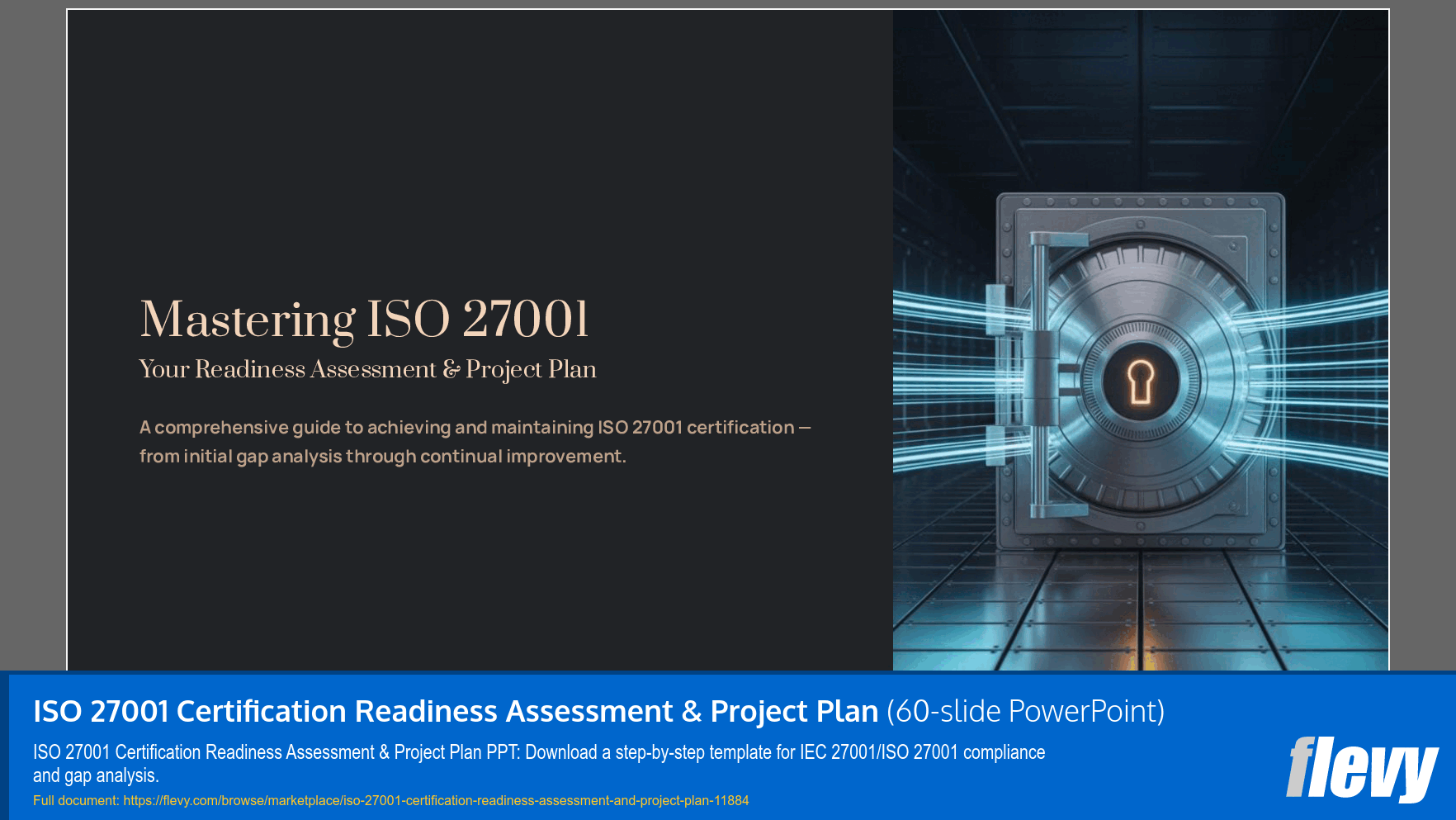
Mastering ISO 27001: Your Readiness Assessment & Project Plan
Chapter 1: The Foundation – Why ISO 27001 Matters
The Global Standard for Information Security
• ISO 27001 is the international benchmark for Information Security Management Systems (ISMS).
• Demonstrates a commitment to protecting sensitive data and managing information security risks.
• Essential for building customer trust, meeting regulatory requirements, and gaining a competitive edge.
Beyond Compliance: Building Resilience
• Certification is not a one-time event, but a journey towards continuous security improvement.
• A well-implemented ISMS protects critical IT assets and sensitive data.
• Essential for organizations in security-driven markets and those handling confidential information.
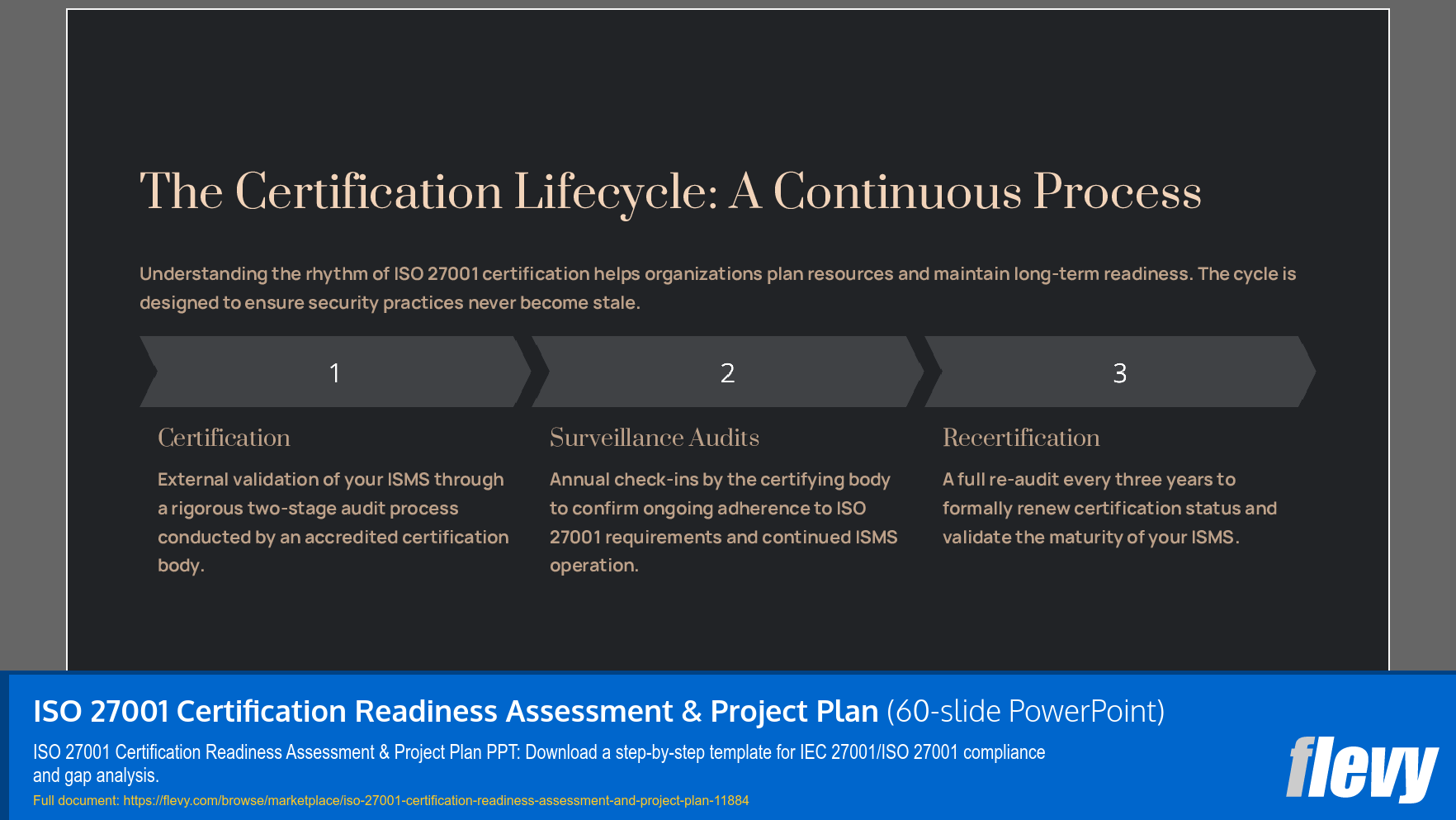
The Certification Lifecycle: A Continuous Process
• Certification: External validation of ISMS compliance.
• Surveillance Audits: Annual check-ins to ensure ongoing adherence.
• Recertification: Full audit every three years to maintain certification.
[image] A shield icon with a checkmark inside, surrounded by gears and data streams. Text: "Security as a Strategic Asset"
Chapter 2: The Readiness Assessment – Knowing Where You Stand
Step 1: Define Your ISMS Scope and Goals
• Identify Information Assets: What data needs protection?
• Organizational Boundaries: Which departments, processes, and locations are included?
• Align with Business Objectives: Ensure security supports strategic goals.
• Consider Interested Parties: Meet requirements of customers, regulators, etc.
Scope Definition: Critical Considerations
• Processes: Key activities that create or handle sensitive information.
• Technology: Information systems and infrastructure.
• People: Organizational units and departments.
• Locations: Physical premises and remote access points.
Asset Identification: The First Line of Defense
• Document all information assets, regardless of location (on-premises, cloud, remote).
• Define interfaces and dependencies with external parties.
• Assign clear ownership for each asset throughout its lifecycle.
[image] A mind map or flowchart illustrating interconnected business processes and data flows. Text: "Mapping Your Information Landscape"
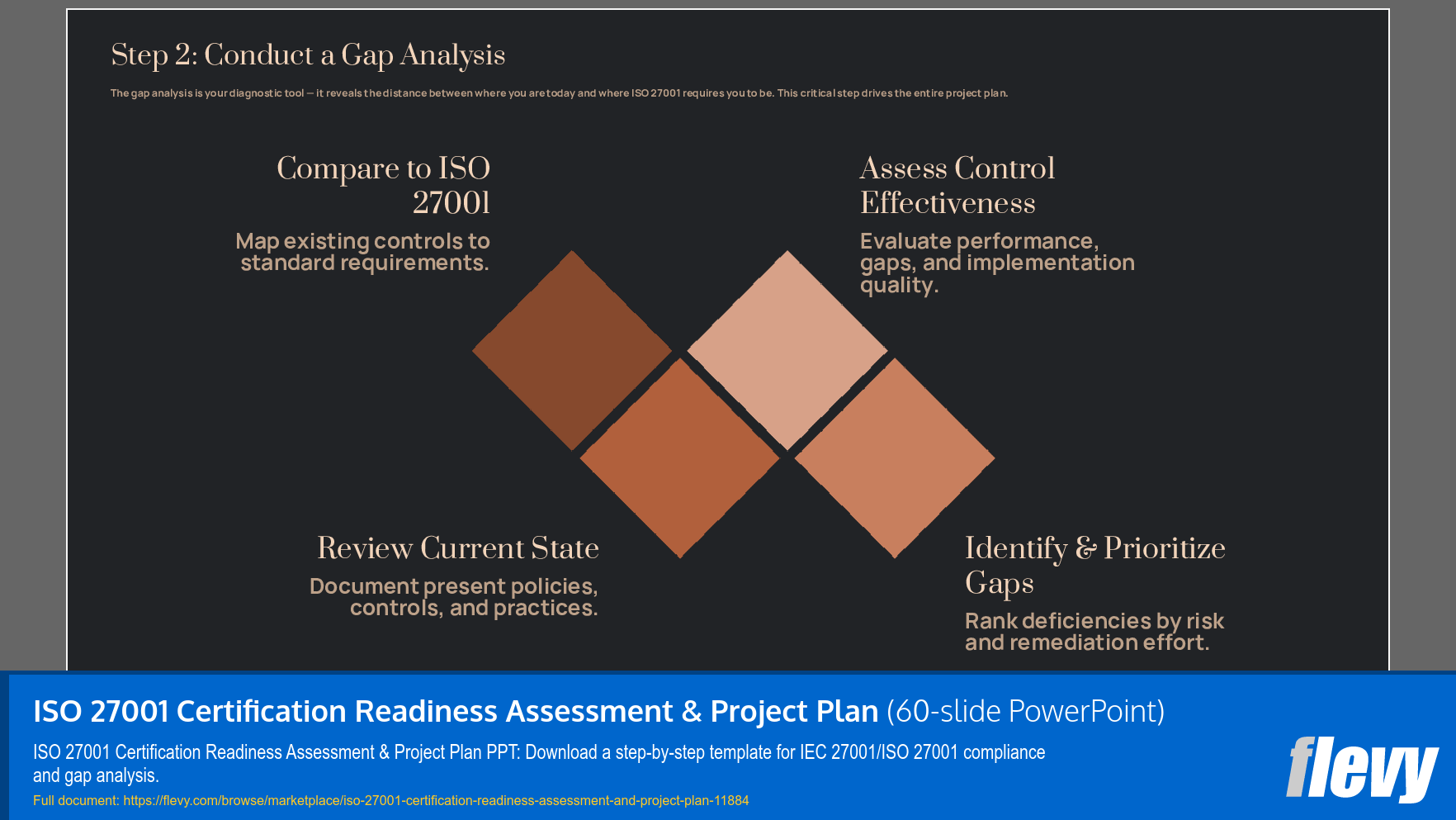
Step 2: Conduct a Gap Analysis
• Compare Current State vs. ISO 27001 Requirements: Identify missing controls and policies.
• Review Existing Documentation: Policies, procedures, and records.
• Assess Control Effectiveness: Are current controls functioning as intended?
• Identify Gaps: Pinpoint areas needing improvement or new implementation.
Common Gap Areas
• Lack of a formal Information Security Policy.
• Inadequate risk assessment and treatment processes.
• Insufficient access control mechanisms.
• Missing or outdated incident response plans.
• Gaps in employee security awareness training.
[image] A visual representation of a bridge with a gap in the middle, symbolizing the gap analysis. Text: "Bridging the Compliance Divide"
Step 3: Implement Controls and Policies
• Develop and Document: Create necessary policies, procedures, and guidelines.
• Implement Technical Controls: Firewalls, encryption, access management systems.
• Implement Organizational Controls: Roles, responsibilities, security awareness training.
• Focus on Annex A Controls: Address the specific security objectives and controls outlined in ISO 27001.
The Statement of Applicability (SoA)
• A crucial document listing all ISO 27001 Annex A controls.
• Specifies which controls are applicable and why.
• Details the implementation status of each applicable control.
[image] A document icon with a magnifying glass over it, representing the SoA. Text: "Your Control Blueprint: The Statement of Applicability"
Step 4: Prove Readiness Through Internal Audits
• Simulate an External Audit: Test your ISMS implementation and effectiveness.
• Validate Documentation: Ensure all records are complete and accurate.
• Identify Non-Conformities: Find areas that need correction before the external audit.
• Develop Corrective Action Plans: Address identified issues systematically.
The Internal Audit: Your Dress Rehearsal
• Conducted by trained internal auditors.
• Provides objective feedback on ISMS performance.
• Essential for building confidence and ensuring audit readiness.
[image] A checklist with several items ticked off, and one item highlighted with a question mark. Text: "Are You Audit-Ready?"
Chapter 3: The Project Plan – Charting Your Course to Certification
Phase 1: Initiation & Planning (Approx. 1-2 Months)
• Secure Leadership Commitment: Essential for resource allocation and buy-in.
• Define Project Scope & Objectives: Reiterate ISMS scope and certification goals.
• Assign Project Team & Resources: Identify key personnel and allocate budget.
• Develop Project Charter: Formal document outlining project goals, scope, and stakeholders.
Key Outputs: Phase 1
• Project Charter
• Defined ISMS Scope Statement
• Appointed Project Manager and Team
[image] A blueprint or architectural drawing with project milestones marked. Text: "Laying the Groundwork: Project Initiation"
Phase 2: Risk Assessment & Planning (Approx. 2-3 Months)
• Identify Information Assets: Comprehensive inventory.
• Conduct Risk Assessment: Identify threats, vulnerabilities, and potential impacts.
• Develop Risk Treatment Plan: Select appropriate controls to mitigate identified risks.
• Create Statement of Applicability (SoA): Document control selection.
Key Outputs: Phase 2
• Risk Assessment Report
• Risk Treatment Plan
• Draft Statement of Applicability (SoA)
[image] A risk matrix showing likelihood vs. impact, with identified risks plotted. Text: "Understanding and Mitigating Your Risks"
Phase 3: ISMS Development & Implementation (Approx. 3-5 Months)
• Draft Policies & Procedures: Develop core ISMS documentation.
• Implement Technical & Organizational Controls: Put selected controls into practice.
• Establish Monitoring Mechanisms: Set up systems for tracking control effectiveness.
• Develop Incident Response Plan: Prepare for security breaches.
Key Outputs: Phase 3
• Comprehensive ISMS Documentation (Policies, Procedures)
• Implemented Controls (Technical & Organizational)
• Incident Response Plan
[image] A visual of interconnected systems and processes, representing a functioning ISMS. Text: "Building Your Security Infrastructure"
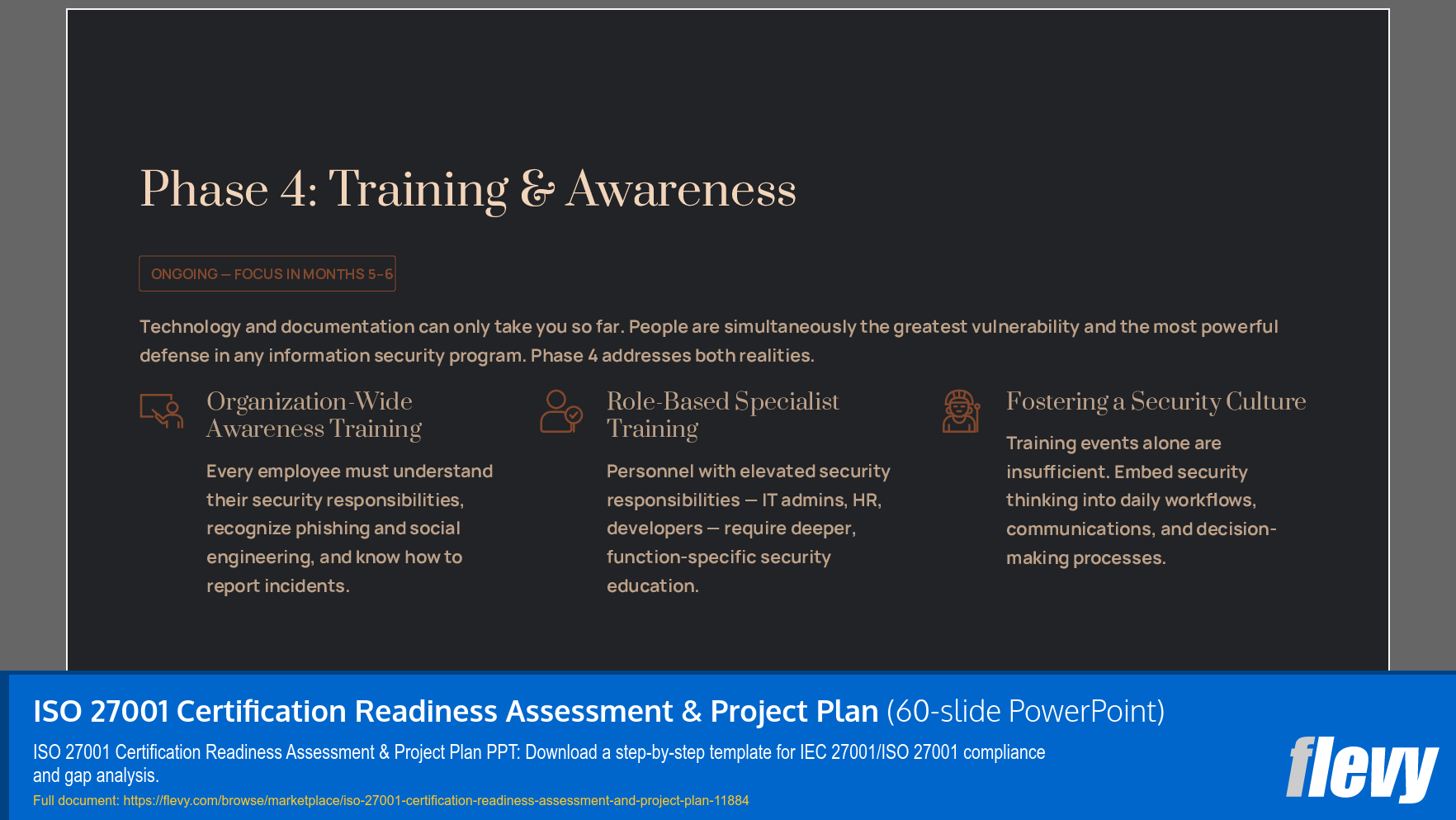
Phase 4: Training & Awareness (Ongoing, with a focus in Months 5-6)
• Conduct Employee Security Awareness Training: Educate all staff on security policies and procedures.
• Provide Role-Based Training: Specific training for personnel with security responsibilities.
• Foster a Security Culture: Embed security into daily operations.
Key Outputs: Phase 4
• Training Materials
• Training Logs and Records
• Increased Security Awareness Across the Organization
[image] Diverse group of employees participating in a security training session. Text: "Empowering Your People: Security Awareness"
Phase 5: Internal Audit & Management Review (Approx. 1 Month)
• Perform Internal Audit: Validate ISMS implementation and effectiveness.
• Conduct Management Review: Leadership formally reviews ISMS performance, risks, and objectives.
• Develop Corrective Action Plans: Address any non-conformities found.
Key Outputs: Phase 5
• Internal Audit Report
• Management Review Records
• Corrective Action Plans
[image] A magnifying glass examining a document, symbolizing the internal audit. Text: "Internal Audit: Your Path to Perfection"
Phase 6: Certification Audit (Approx. 1-2 Months)
• Stage 1 Audit (Documentation Review): Auditor reviews your ISMS documentation.
• Stage 2 Audit (On-site Implementation Review): Auditor assesses ISMS implementation and effectiveness.
• Address Auditor Findings: Respond to any non-conformities identified.
Key Outputs: Phase 6
• Stage 1 & Stage 2 Audit Reports
• Certification Recommendation (if successful)
[image] A handshake between two people, representing the successful audit and certification. Text: "Achieving Certification: The Goal"
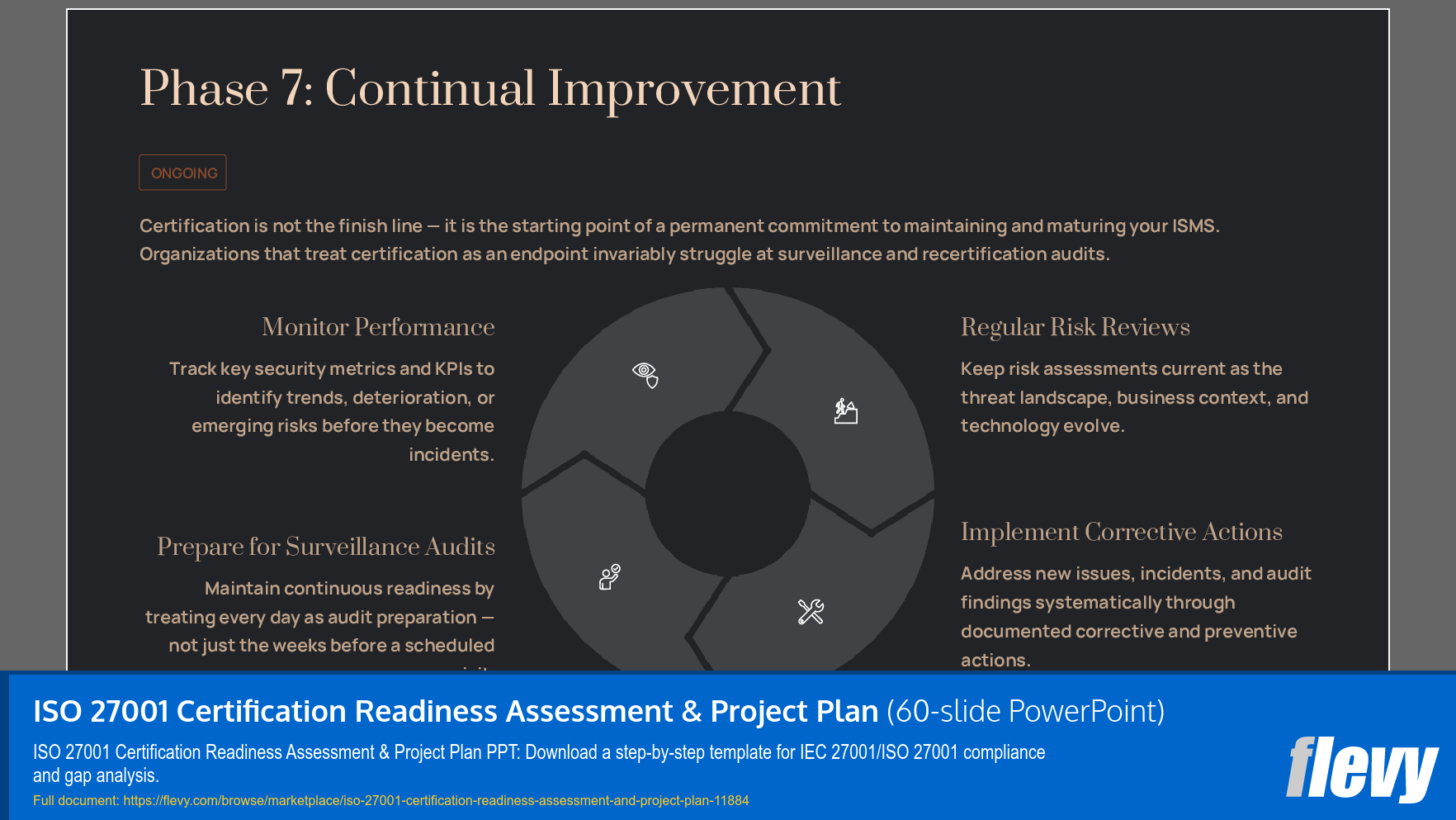
Phase 7: Continual Improvement (Ongoing)
• Monitor ISMS Performance: Track key metrics and KPIs.
• Regular Risk Reviews: Keep risk assessments up-to-date.
• Implement Corrective Actions: Address new issues and improve processes.
• Prepare for Surveillance Audits: Maintain readiness throughout the certification cycle.
Key Outputs: Phase 7
• Continuous Improvement Logs
• Updated ISMS Documentation
• Maintained Certification Status
[image] A circular arrow icon, symbolizing continuous improvement. Text: "The Journey Never Ends: Continual Improvement"
Timeline Overview: A Realistic Approach
• Small Organizations (50-200 employees): 9-12 months
• Medium Organizations (200-1000 employees): 12-15 months
• Large Organizations (1000+ employees): 15-24 months
• Note: Rushing can lead to "certification theater" and increased long-term costs.
[image] A timeline graphic showing the different phases and estimated durations. Text: "Your ISO 27001 Journey: A Phased Timeline"
Chapter 4: Key Success Factors & Common Pitfalls
Success Factor: Strong Leadership Support
• Crucial for resource allocation, decision-making, and driving cultural change.
• Leaders must champion the ISMS and its importance.
Success Factor: Employee Engagement & Training
• Security is everyone's responsibility.
• Comprehensive training builds awareness and competence.
Success Factor: Clear Scope Definition
• A well-defined scope prevents scope creep and ensures focus.
• Aligns ISMS with critical business functions.
Success Factor: Robust Risk Management
• Thorough risk assessments and effective treatment plans are paramount.
• Proactive identification and mitigation of threats.
[image] A graphic showing a strong foundation with pillars labeled "Leadership," "People," "Scope," and "Risk." Text: "Pillars of Success"
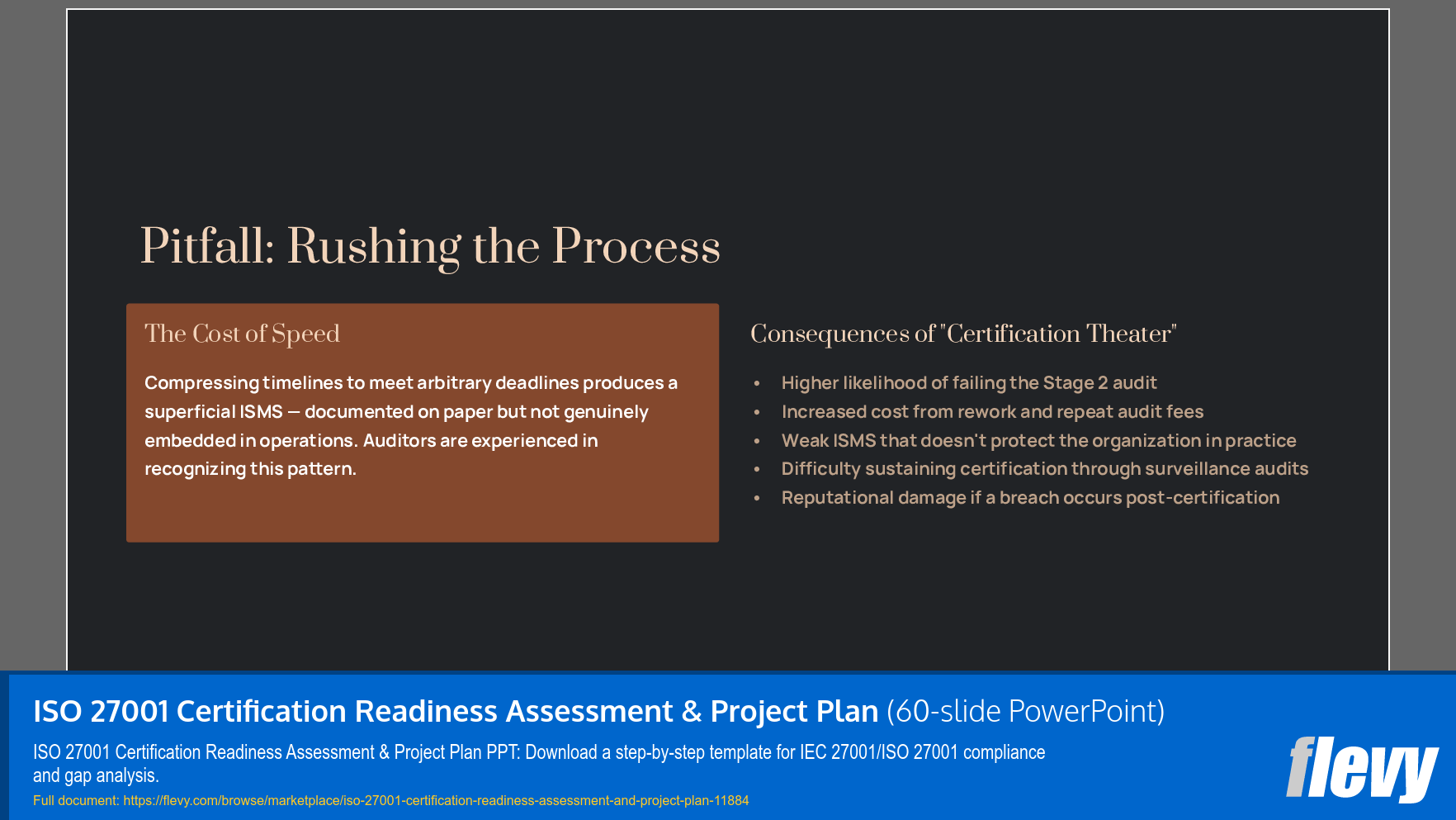
Pitfall: Rushing the Process
• Leads to superficial implementation and "certification theater."
• Increases the likelihood of failing audits or losing certification.
Pitfall: Inadequate Documentation
• Missing or incomplete policies, procedures, and records.
• Auditors require evidence of ISMS operation.
Pitfall: Weak Risk Treatment Plans
• Failing to adequately address identified risks.
• Leaving the organization vulnerable to security incidents.
Pitfall: Lack of Continual Improvement
• Treating certification as an endpoint, not a starting point.
• ISMS becomes outdated and ineffective.
[image] A red 'X' mark over a checklist with many items incomplete. Text: "Common Roadblocks to Certification"
Chapter 5: Leveraging Tools and Resources
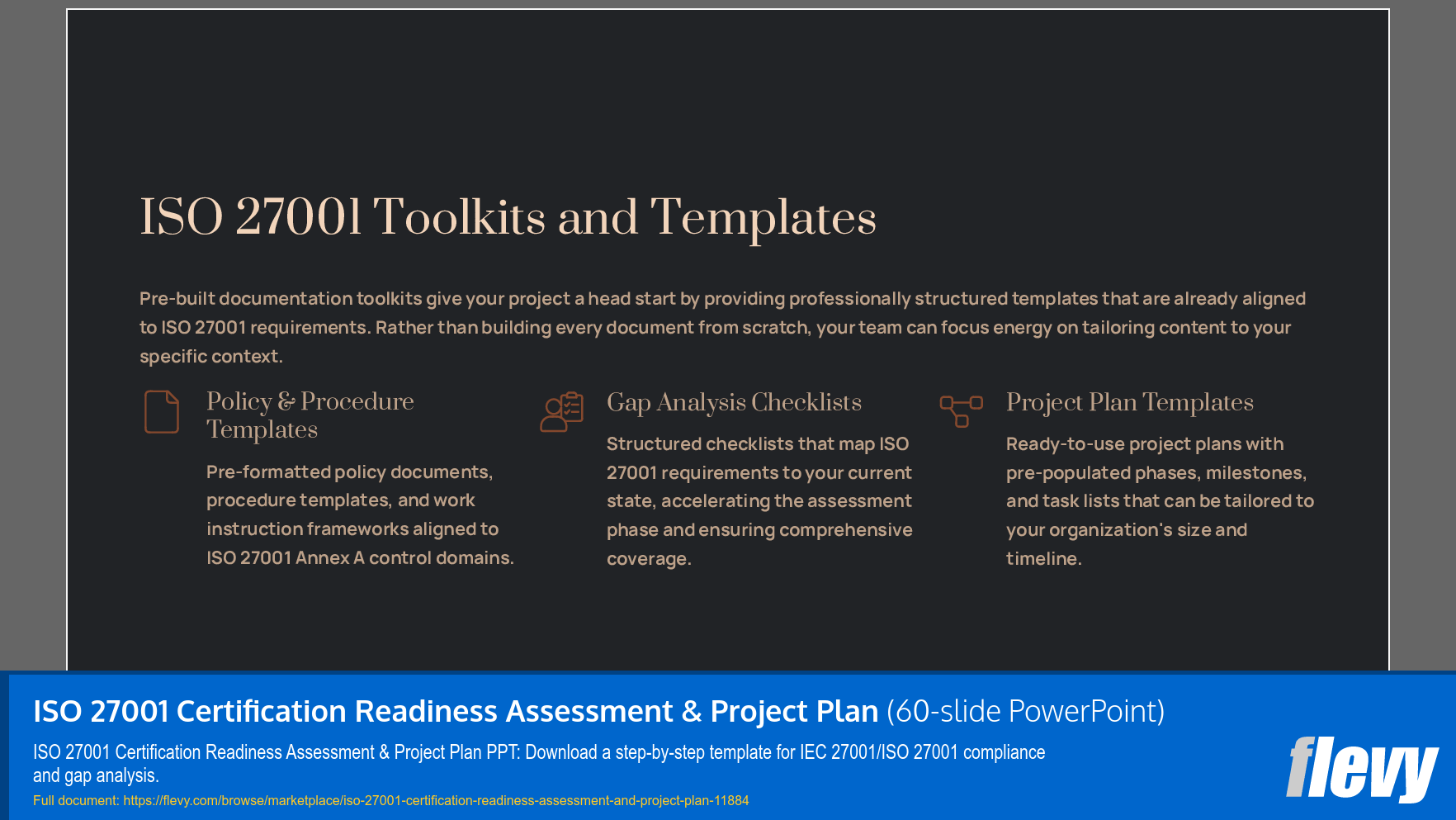
ISO 27001 Toolkits and Templates
• Pre-built documentation, checklists, and project plans can accelerate implementation.
• Resources like ISO Templates and Documents Download offer comprehensive toolkits.
Compliance Automation Software
• Platforms like Vanta can automate evidence collection, risk assessment, and ongoing compliance.
• Streamlines the process and reduces manual effort.
Expert Support and Consultancy
• Engaging experienced consultants can provide guidance and expertise.
• Helps navigate complex requirements and best practices.
[image] A collage of icons representing software, documents, and people, symbolizing comprehensive support. Text: "Your Toolkit for Success"
Got a question about the product? Email us at support@flevy.com or ask the author directly by using the "Ask the Author a Question" form. If you cannot view the preview above this document description, go here to view the large preview instead.
Source: Best Practices in ISO 27001 PowerPoint Slides: ISO 27001 Certification Readiness Assessment & Project Plan PowerPoint (PPTX) Presentation Slide Deck, Mohamed Alshamey
ABOUT THE AUTHOR

Senior Consultant in Cybersecurity GRC, Data Governance, Cybersecurity, Privacy, and Data Management, with over 20 years of experience in information technology, consulting, training, and technical capacity building. holds a PhD. In AI & Data Privacy, he has a master's degree in cybersecurity and is currently pursuing research focused on data privacy. possesses extensive expertise in ... [read more]
Ask the Author a Question
You must be logged in to contact the author.




























