
 Click main image to view in full screen. Unlock all 12 preview images:
Farm Data-to-Value Architecture™ – PDF
PDF document + PowerPoint (PPTX) 26 Pages


BENEFITS OF THIS DOWNLOADABLE PDF DOCUMENT
- Provides a structured end-to-end framework for evaluating how agricultural AI connects farm data, intelligence, decisions, transactions, ecosystem control, and economic value.
- Translates complex AI, agricultural data, and platform dynamics into practical diagnostic tools for strategy, investment, partnership, and ecosystem-positioning decisions.
- Helps decision-makers identify potential control points, dependency risks, governance considerations, and opportunities to build or capture value as agricultural intelligence systems scale.
ARTIFICIAL INTELLIGENCE PDF DESCRIPTION
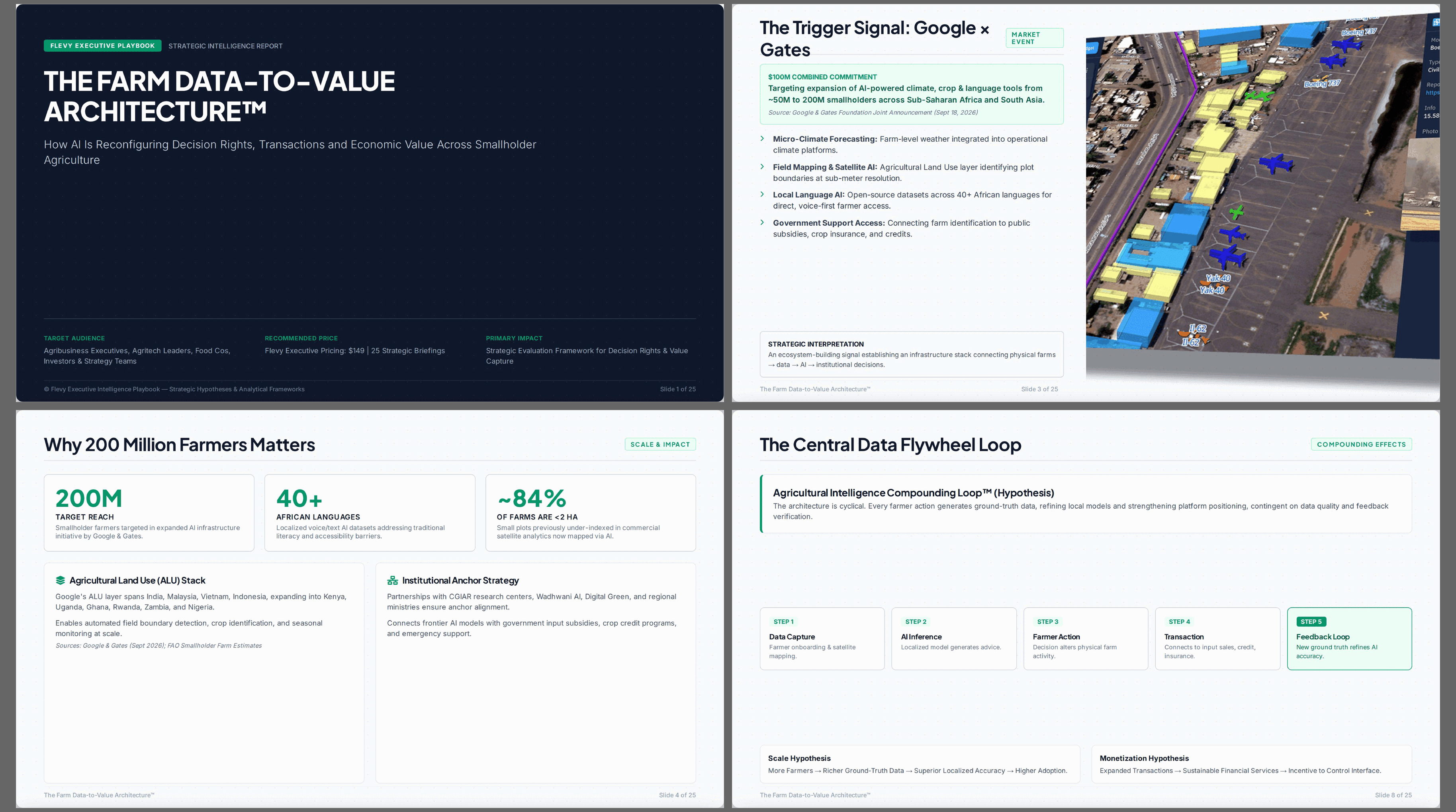
The Farm Data-to-Value Architecture™ is a 26-page executive intelligence playbook examining how AI is reconfiguring decision rights, transactions, and economic value across smallholder agriculture.
As agricultural AI moves from isolated advisory tools toward integrated intelligence systems, the strategic question is changing. The opportunity is no longer limited to improving farm-level recommendations. Increasingly, farm data, AI models, decision interfaces, transaction pathways, and ecosystem relationships can become interconnected layers of an emerging agricultural value architecture.
This playbook provides a structured framework for understanding that transition and evaluating where strategic control and economic value may accumulate.
Inside, you will find:
• The 7-Layer Farm Data-to-Value Architecture™ – maps the progression from farm data and agricultural intelligence through decision interfaces, action, transactions, ecosystem control, and value capture.
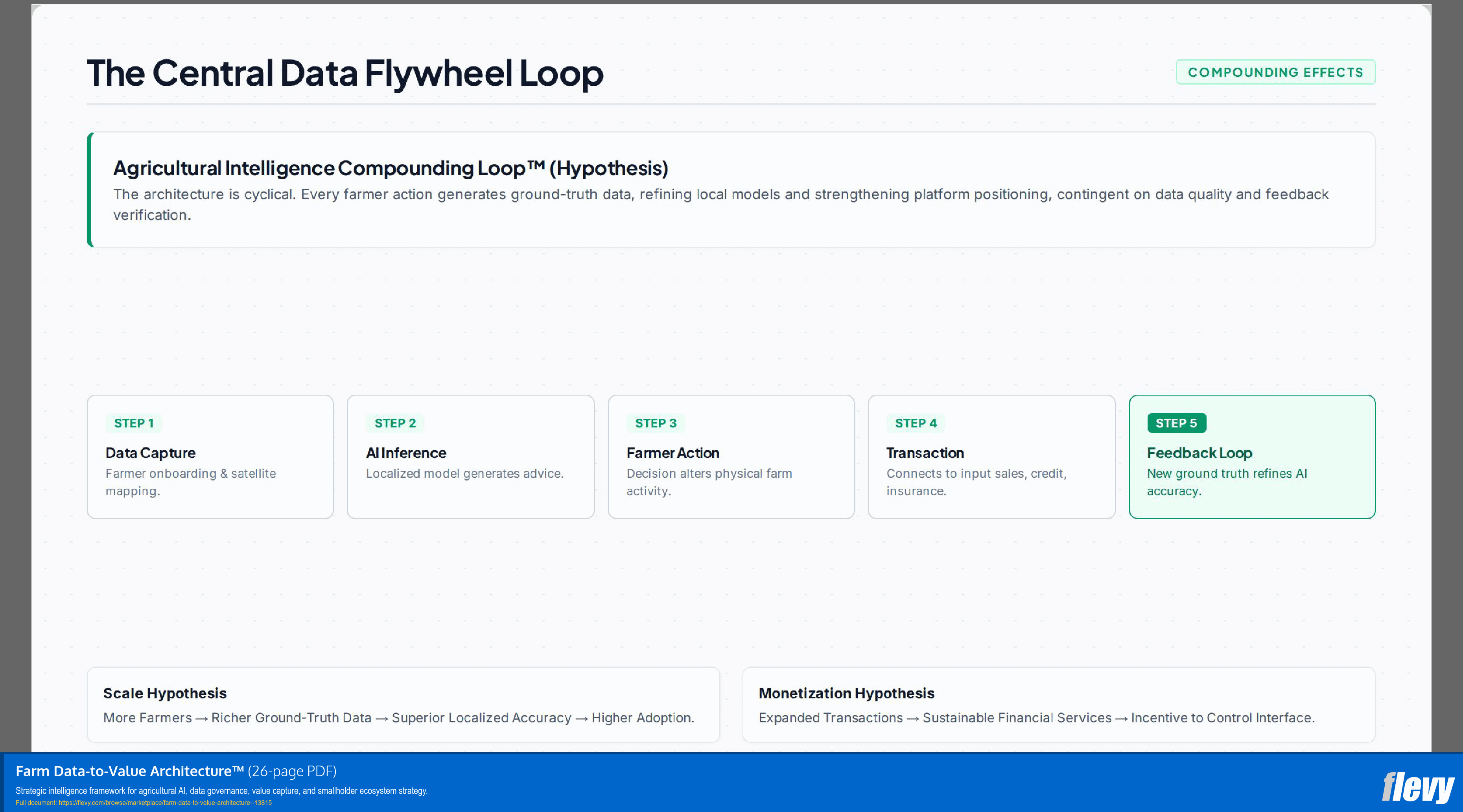
• Agricultural Intelligence Compounding Loop™ – examines the potential feedback mechanism connecting data capture, AI inference, farmer action, transactions, and model improvement.
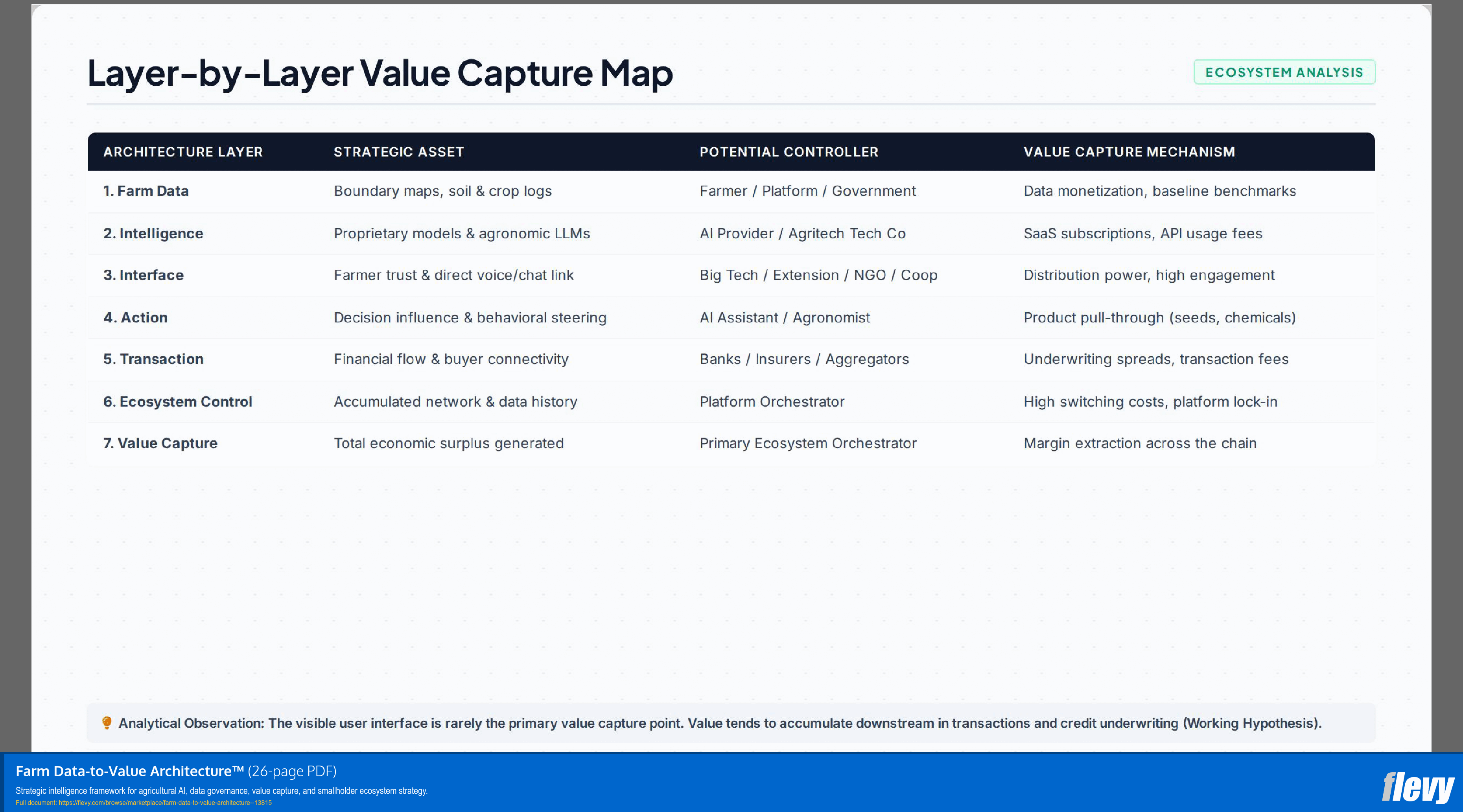
• Layer-by-Layer Value Capture Map – identifies potential strategic assets, control positions, and value-capture mechanisms across the architecture.
• Three Economies of Ag AI – distinguishes the emerging Information Economy, Transaction Economy, and Control Economy.
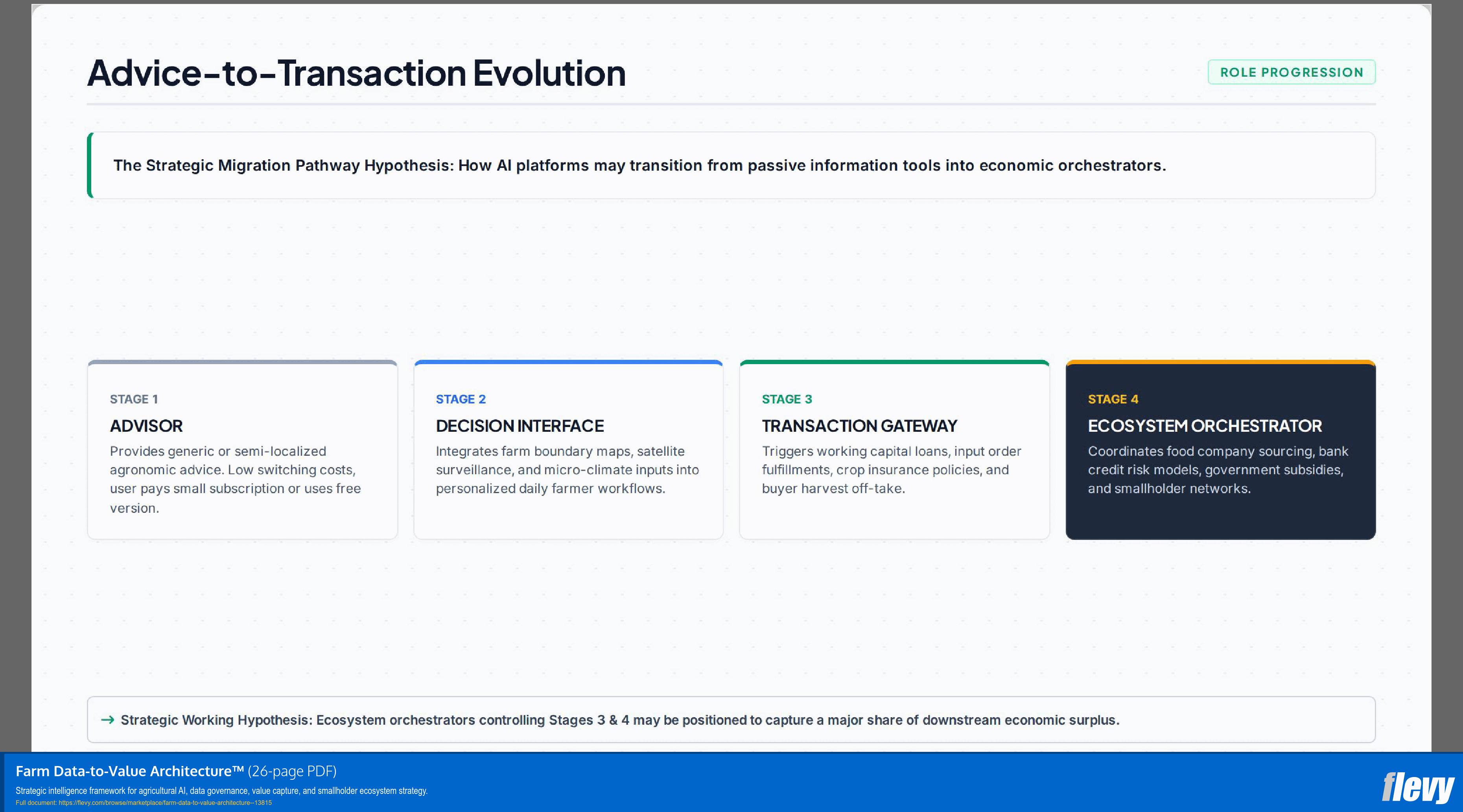
• Advice-to-Transaction Evolution – explores the potential progression from advisory tools to decision interfaces, transaction gateways, and ecosystem orchestration.
• Four Value-Capture Business Models – evaluates platform-centric commercial, public digital infrastructure, ecosystem consortium, and farmer-centric cooperative archetypes.
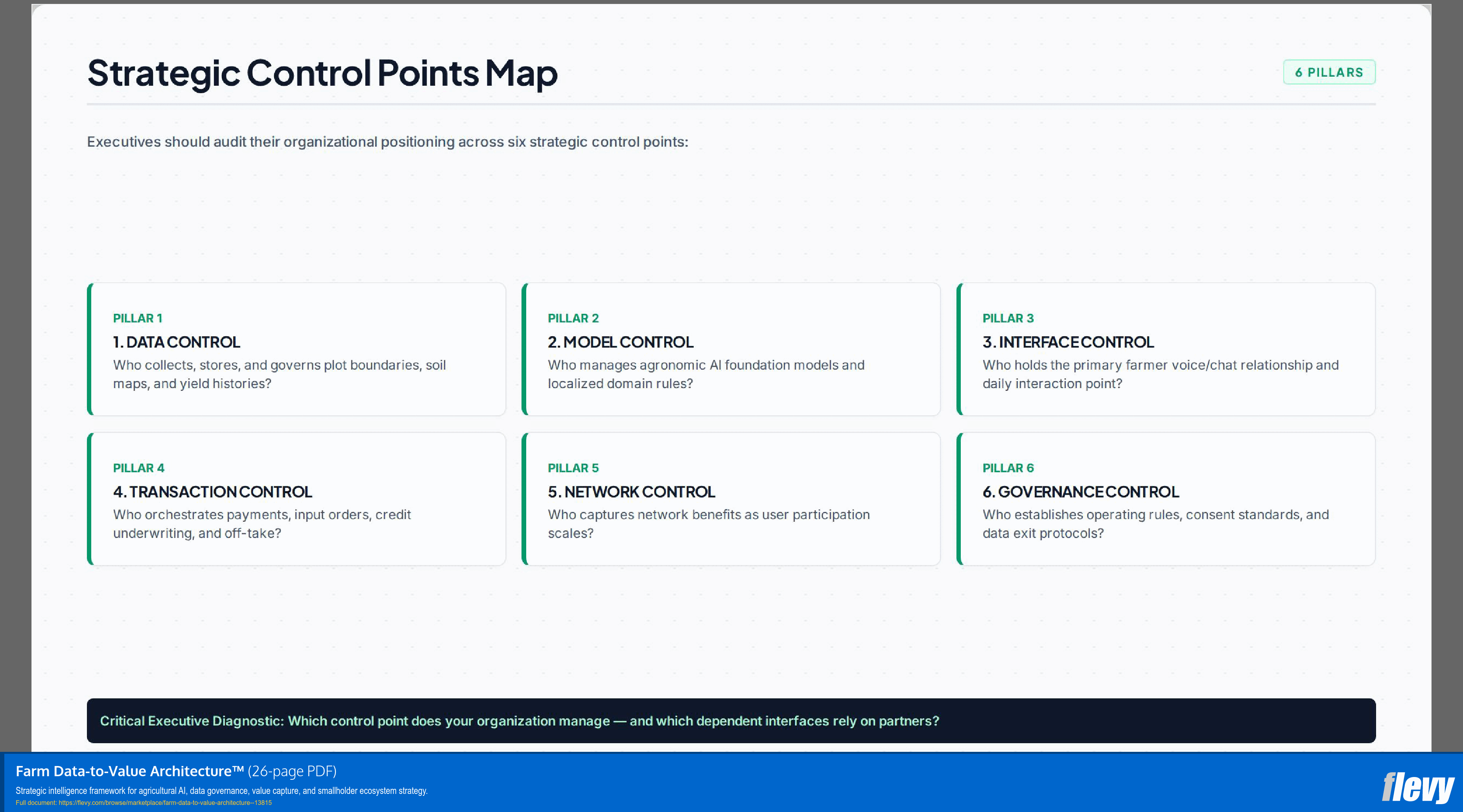
• Strategic Control Points Map – identifies six potential control points spanning data, models, interfaces, transactions, networks, and governance.
• Value-Capture Diagnostic Matrix™ – provides an executive tool for assessing data ownership, portability, intelligence ownership, interface control, transaction access, switching costs, and value return.
• Farmer Value-Retention Test™ – evaluates access, agency, ownership, portability, and measurable economic benefit.
• Data Flywheel vs. Data Trap – presents two potential ecosystem trajectories shaped by data governance, interoperability, trust, and platform concentration.
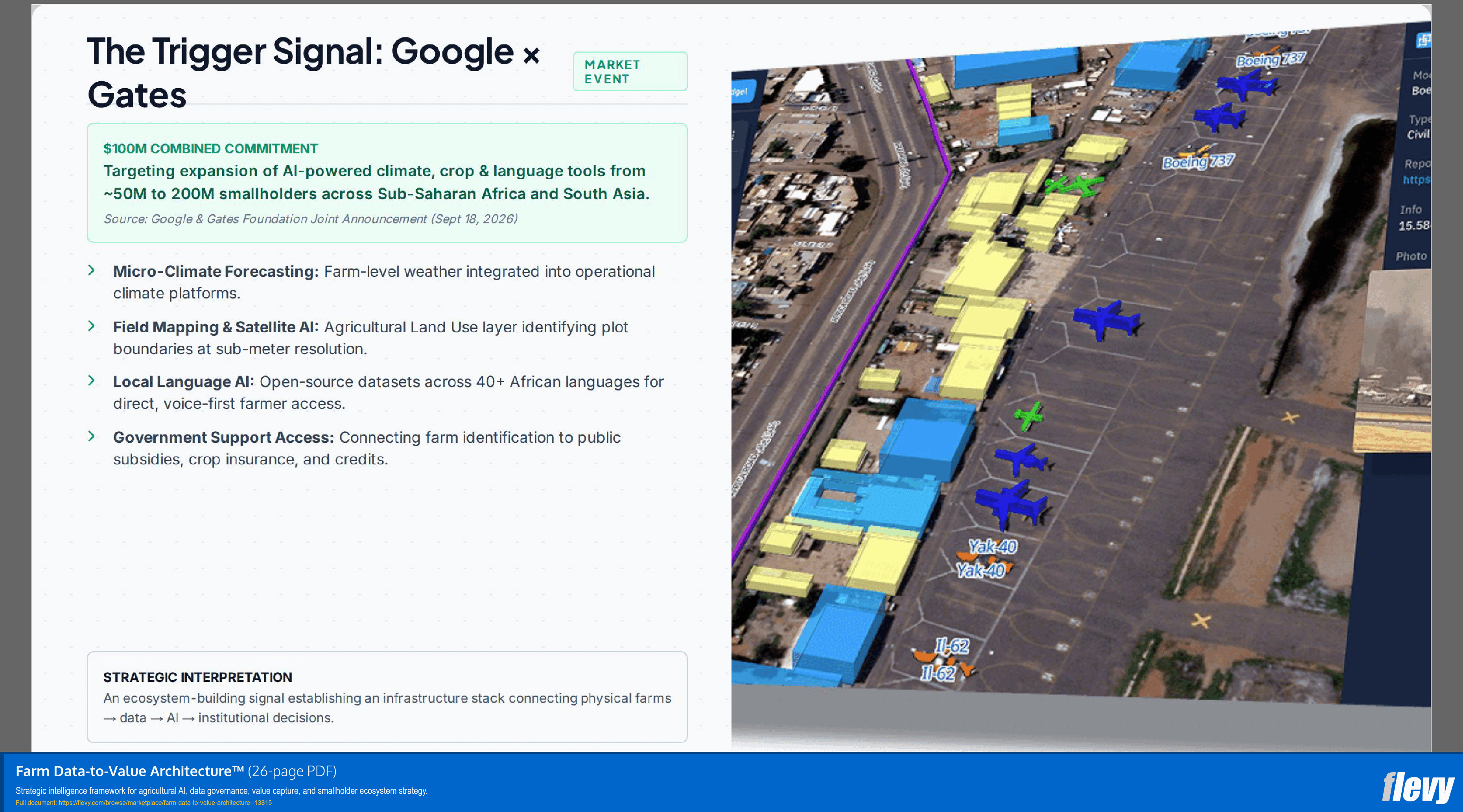
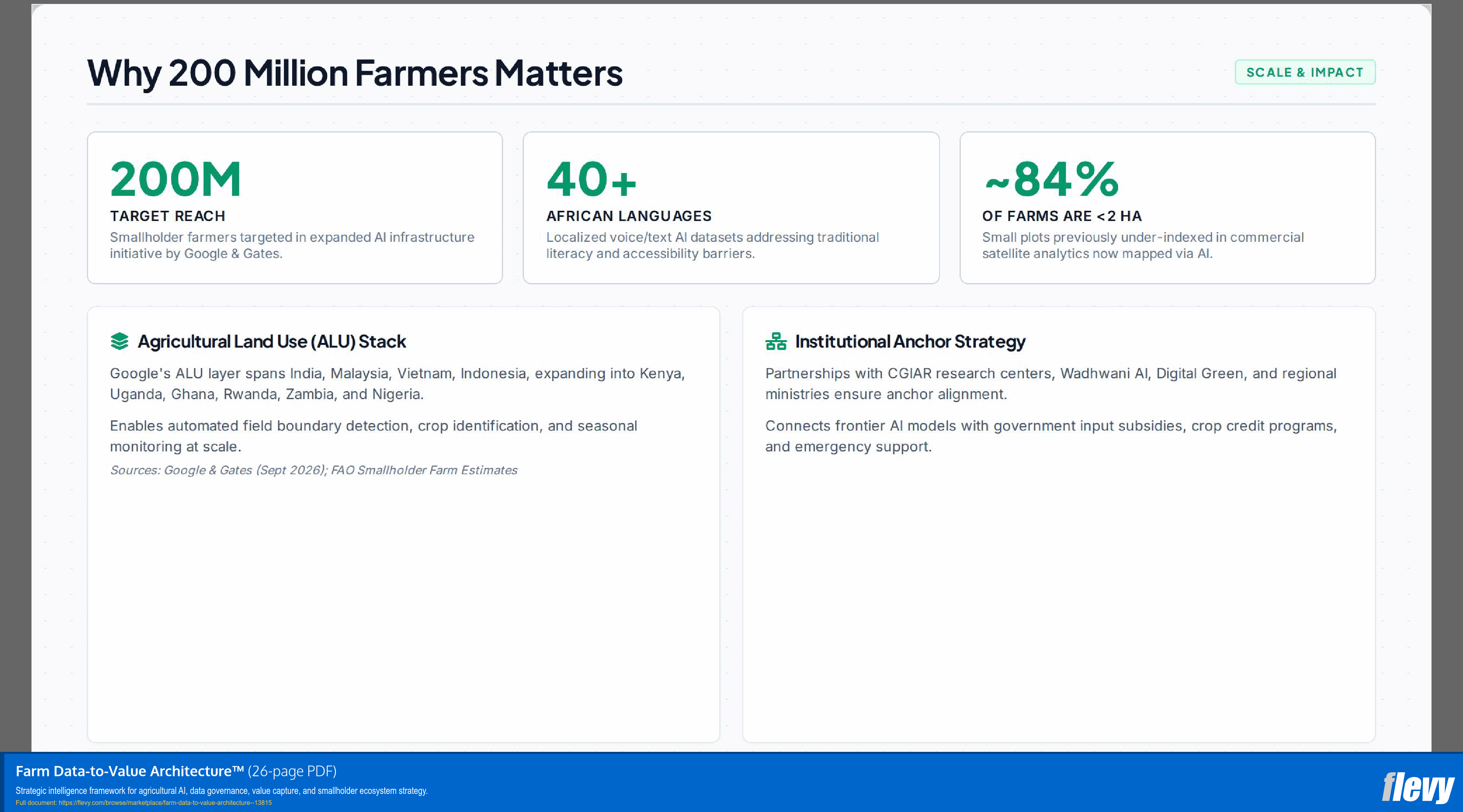
• 2026 Market Signals & Institutional Benchmarks – contextualizes the architecture through Google × Gates, Cropin, World Bank, BCG, IFPRI, and CGIAR developments.
• Strategic Implications by Player – translates the architecture into implications for agritech, financial institutions, input manufacturers, food & beverage companies, governments, and development organizations.
• 90-Day Executive Action Roadmap – converts the intelligence into an actionable sequence of map & audit, pilot & test, and position & scale.
The playbook is grounded in the emerging convergence of agricultural data, AI, satellite intelligence, localized interfaces, digital public infrastructure, financial services, and downstream market connectivity. It treats value concentration and farmer value retention as strategic hypotheses to evaluate, rather than predetermined outcomes.
Designed for strategy, innovation, operations, agritech, food-system, financial-services, government, and development leaders, this playbook provides a reusable methodology for evaluating where organizations create value, where they control value, where they are dependent on other ecosystem participants, and where AI may alter the economics of agricultural value chains.
Got a question about the product? Email us at support@flevy.com or ask the author directly by using the "Ask the Author a Question" form. If you cannot view the preview above this document description, go here to view the large preview instead.
Source: Best Practices in Artificial Intelligence, Agriculture Industry PDF: Farm Data-to-Value Architecture™ PDF (PDF) Document, Wisnu Pandega Wardana
ABOUT THE AUTHOR

I am an independent Industrial Intelligence and Strategic Innovation Publisher focused on developing structured business intelligence, innovation frameworks, and opportunity-oriented research for decision-makers.
My work focuses on translating emerging technologies, industrial transformation, sustainability, resource efficiency, and market shifts into structured intelligence assets that
... [read more]
Ask the Author a Question
You must be logged in to contact the author.




























