 Click main image to view in full screen.
Every Square Kilometer Matters: Spatial Energy Economics – PDF
PDF document 16 Pages


BENEFITS OF THIS DOWNLOADABLE PDF DOCUMENT
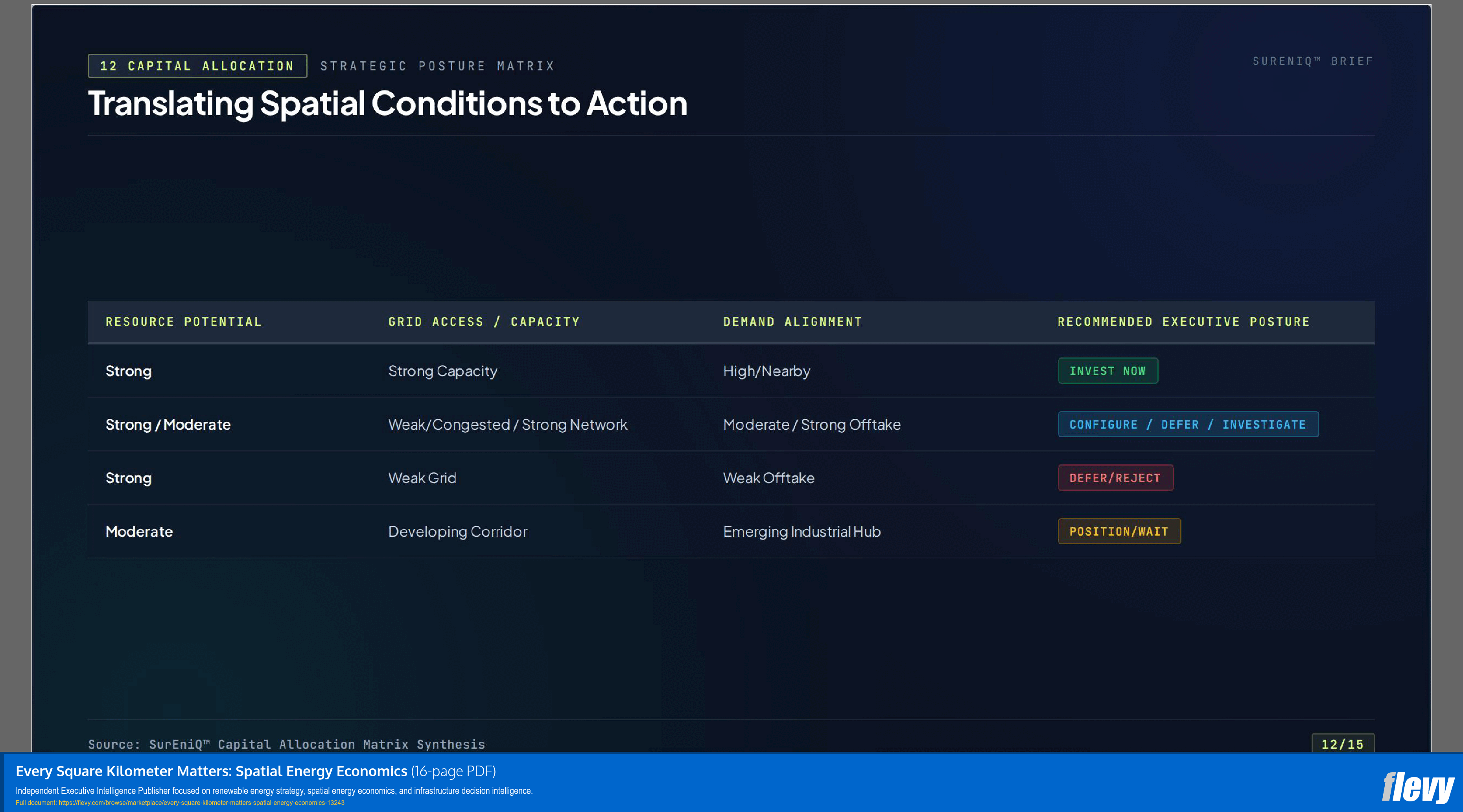
- Provides a structured framework for evaluating energy locations beyond resource quality and generation cost.
- Helps decision-makers identify whether an energy location should be invested in, configured, positioned for later development, or rejected.
- Connects renewable resources, grid infrastructure, electricity demand, industrial activity, flexibility, and timing into a unified capital-allocation perspective.
ENERGY INDUSTRY PDF DESCRIPTION
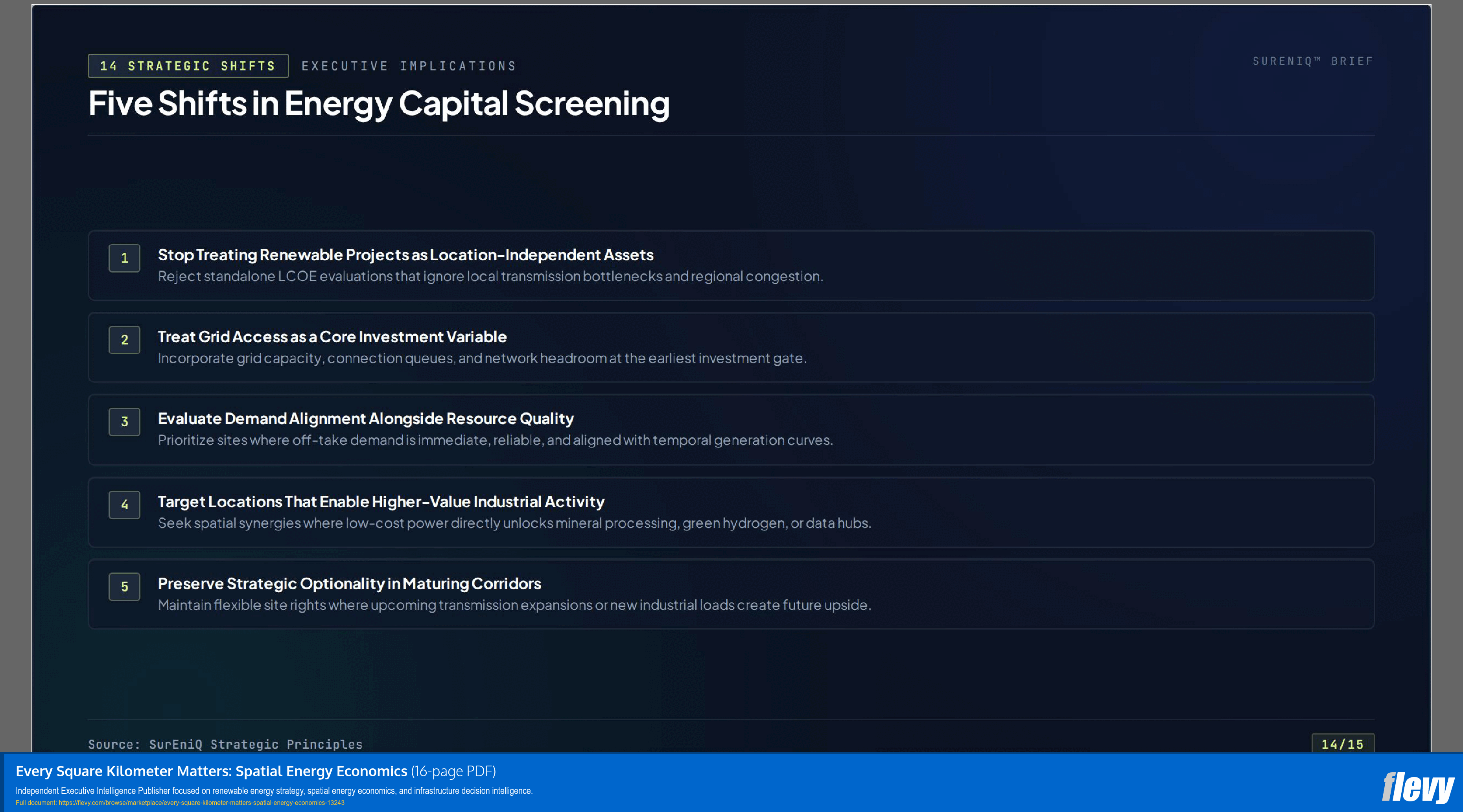
Renewable energy investment is often evaluated through resource quality, generation cost, and technology economics. But as renewable deployment scales, another constraint becomes increasingly important: location. The same megawatt of renewable generation can create very different economic outcomes depending on its relationship with transmission capacity, grid congestion, electricity demand, industrial activity, flexibility resources, infrastructure requirements, and future development options.
Every Square Kilometer Matters: Spatial Energy Economics presents a decision-oriented framework for evaluating energy locations through this broader economic lens. Rather than treating geography as a passive backdrop to energy development, the brief positions location as an economic asset that can influence how efficiently energy, infrastructure, industrial demand, and capital interact.
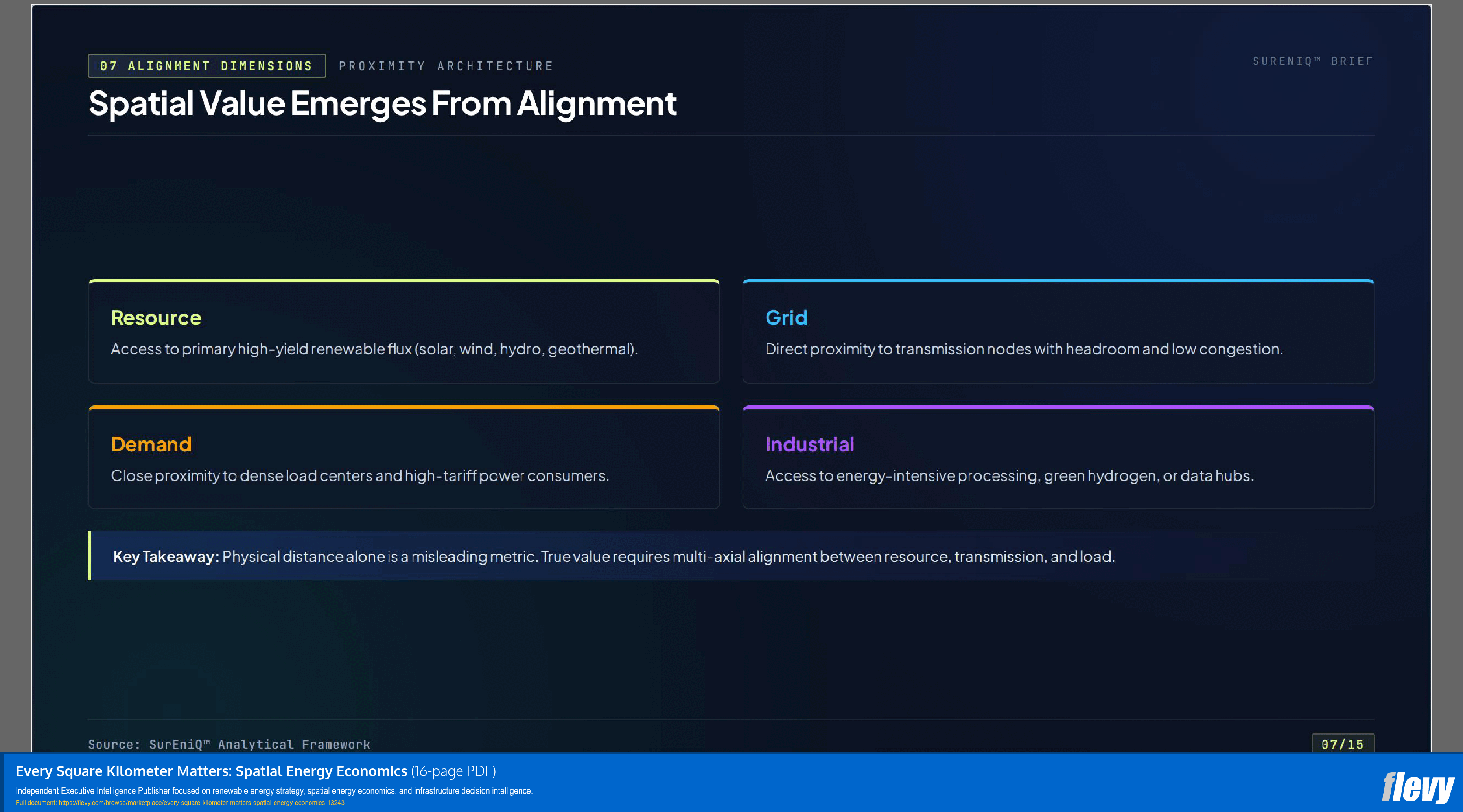
At the center of the brief is the Spatial Energy Value Stack™, a ten-dimensional framework covering Resource, Access, Capacity, Demand, Flexibility, Infrastructure, Industrial Pull, Resilience, Optionality, and Time Horizon. Together, these dimensions provide a structured way to move beyond the simple question of where renewable resources are strongest toward the more consequential question of where energy investment can unlock the greatest economic system value.
The brief then translates this framework into a Spatial Energy Decision Engine™. The decision architecture separates core feasibility from value and timing considerations, enabling decision-makers to distinguish between locations that justify immediate investment, locations that require configuration, locations worth positioning for future development, and locations that should be rejected because of structural misalignment.
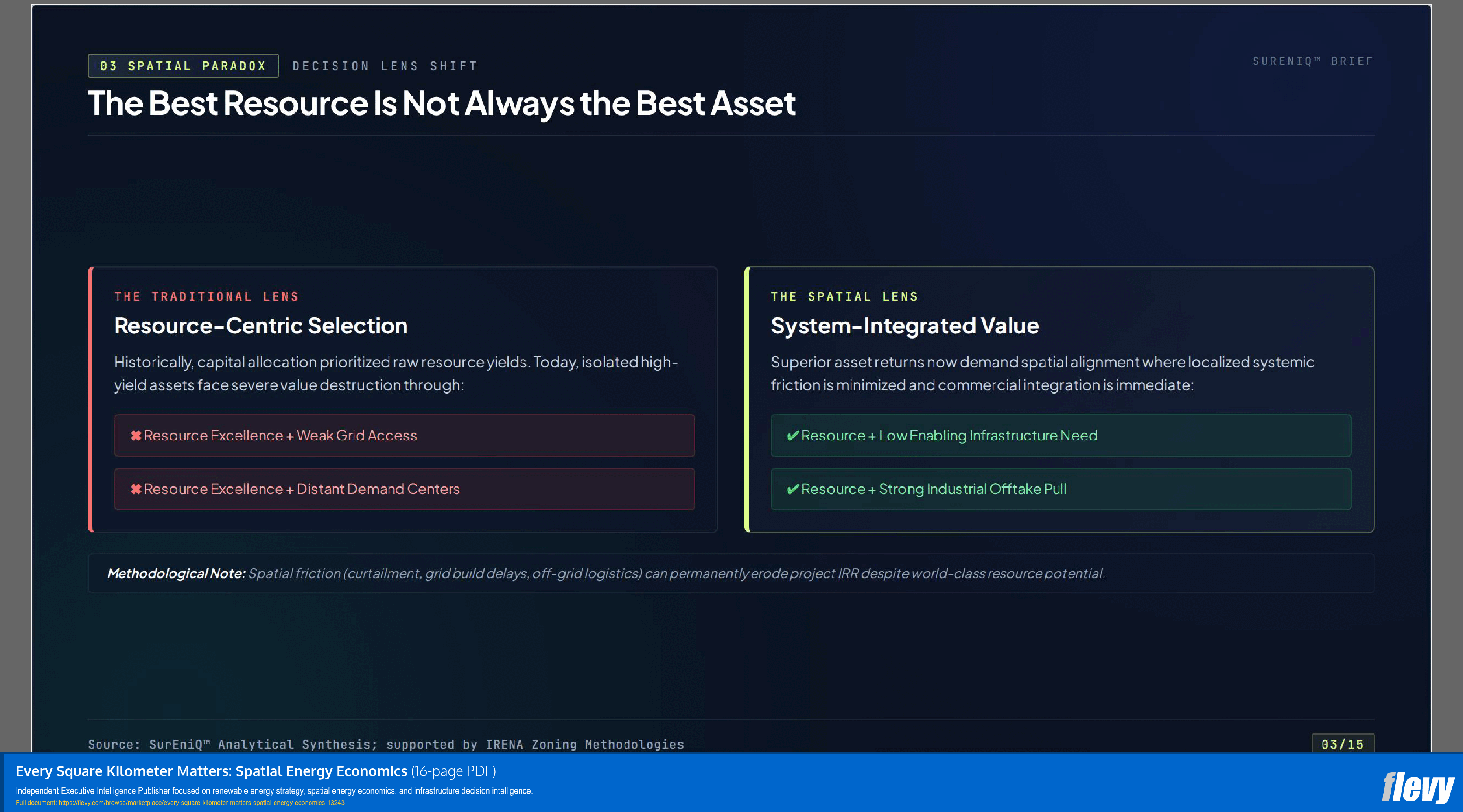
The analysis also examines the spatial paradox created by modern energy systems: renewable resources may be abundant in one geography while electricity demand, industrial activity, and grid capacity are concentrated elsewhere. This creates an economic role for transmission, storage, flexible demand, industrial clustering, and infrastructure sequencing that cannot be captured through generation-cost analysis alone.
An Indonesia application demonstrates how the framework can be interpreted within a geographically dispersed energy system, where renewable potential, transmission development, industrial corridors, and demand centers may not naturally coincide.
This Executive Intelligence Brief is designed for executives, investors, infrastructure developers, energy strategists, industrial planners, and decision-makers evaluating renewable energy projects, power infrastructure, industrial locations, or long-term capital allocation.
The core proposition is simple: the winning energy location is not necessarily where energy is cheapest to produce. It is where resource, network, demand, flexibility, infrastructure, industrial pull, optionality, and time align strongly enough to unlock superior economic value.
Got a question about the product? Email us at support@flevy.com or ask the author directly by using the "Ask the Author a Question" form. If you cannot view the preview above this document description, go here to view the large preview instead.
Source: Best Practices in Energy Industry PDF: Every Square Kilometer Matters: Spatial Energy Economics PDF (PDF) Document, Wisnu Pandega Wardana
ABOUT THE AUTHOR

I am an independent Industrial Intelligence and Strategic Innovation Publisher focused on developing structured business intelligence, innovation frameworks, and opportunity-oriented research for decision-makers.
My work focuses on translating emerging technologies, industrial transformation, sustainability, resource efficiency, and market shifts into structured intelligence assets that
... [read more]
Ask the Author a Question
You must be logged in to contact the author.




























