
 Click main image to view in full screen. Unlock all 22 preview images:
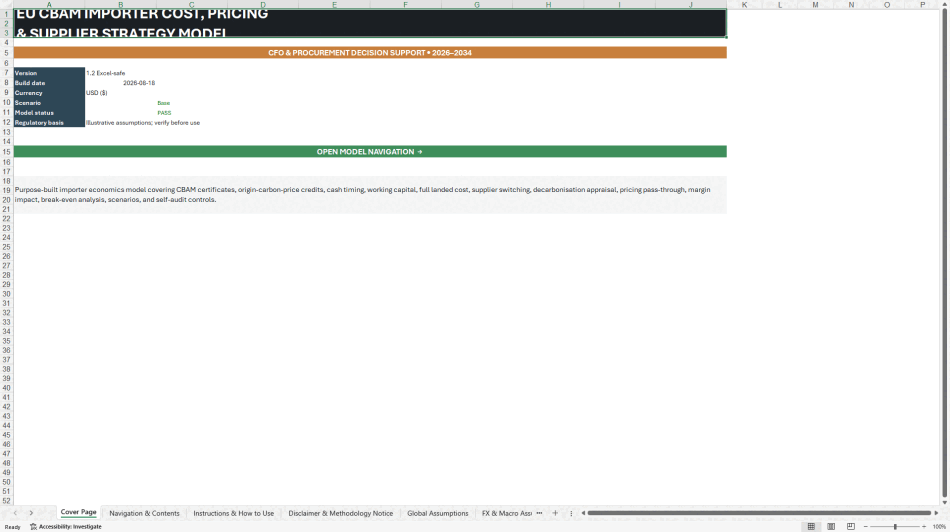
EU CBAM Importer Cost, Pricing, and Supplier Strategy – Excel XLSX
Excel (XLSX) + supplemental PDF


BENEFITS OF THIS DOWNLOADABLE EXCEL DOCUMENT
- Quantifies 2026-2034 CBAM certificate obligations, cash timing, working capital, and landed-cost impact under a linked scenario framework.
- Compares supplier economics using cost, emissions, reliability, origin-carbon-price credits, switching savings, and decarbonisation investment returns.
- Connects procurement decisions to customer pass-through, gross margin, EBITDA, break-even thresholds, sensitivities, and executive dashboards.
PROCUREMENT STRATEGY EXCEL DESCRIPTION
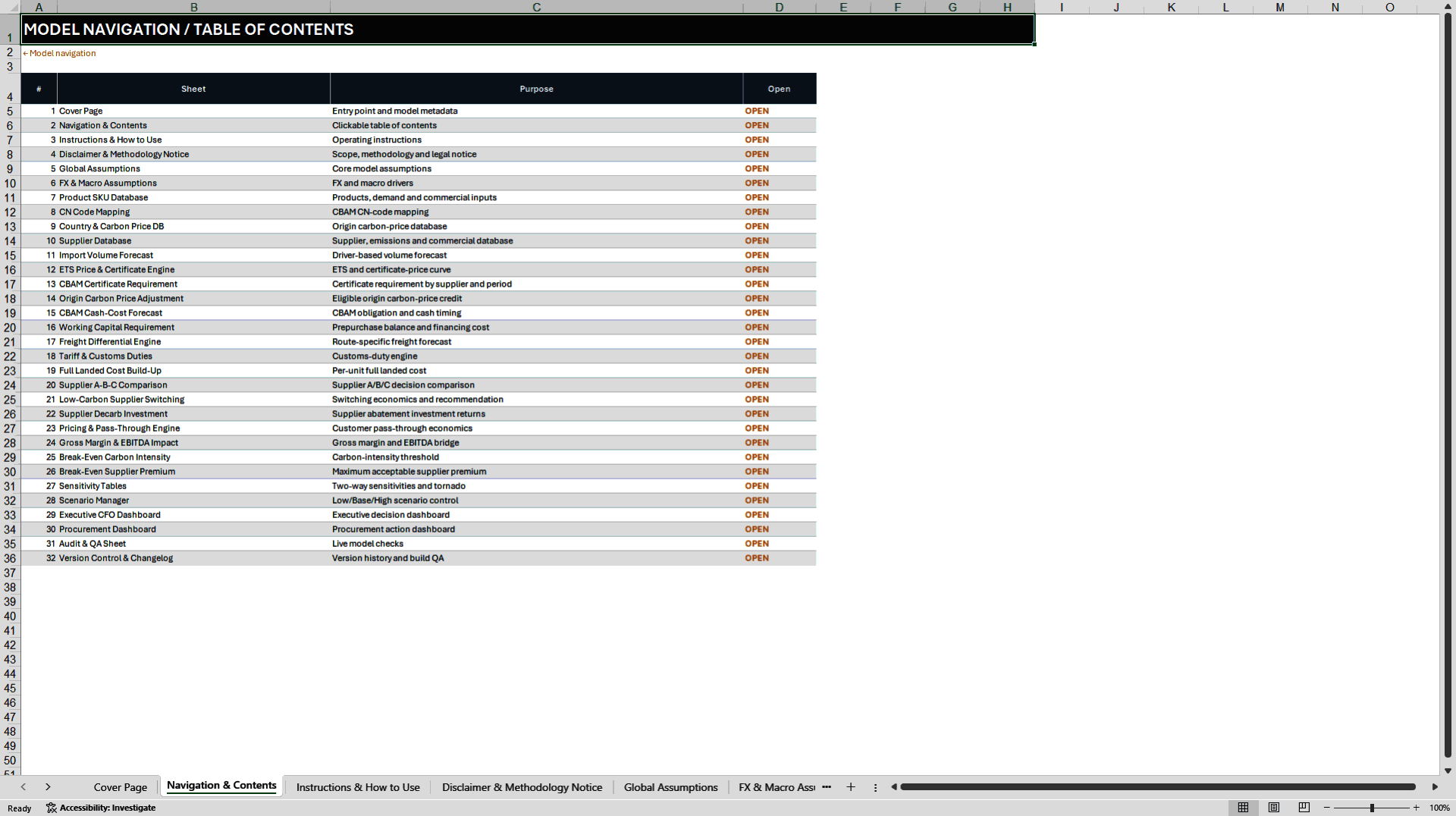
The EU CBAM Importer Cost, Pricing & Supplier Strategy Model is a 32-sheet editable workbook for finance, procurement, sourcing, and advisory teams that need to understand the importer-side economic impact of the EU Carbon Border Adjustment Mechanism. The model is structured around an annual 2026-2034 planning horizon and links carbon-related obligations to sourcing choices, cash needs, pricing decisions, and profitability.
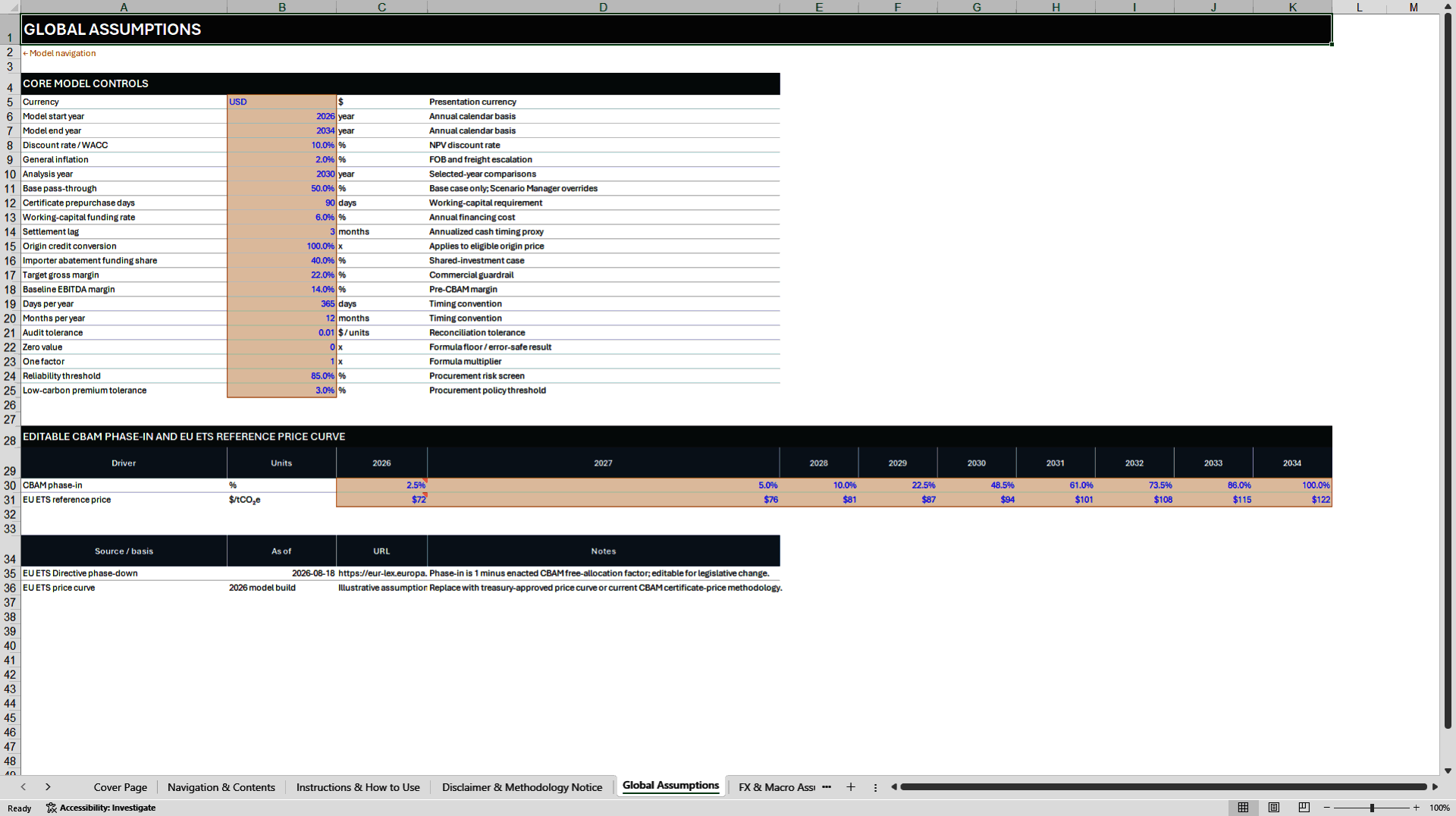
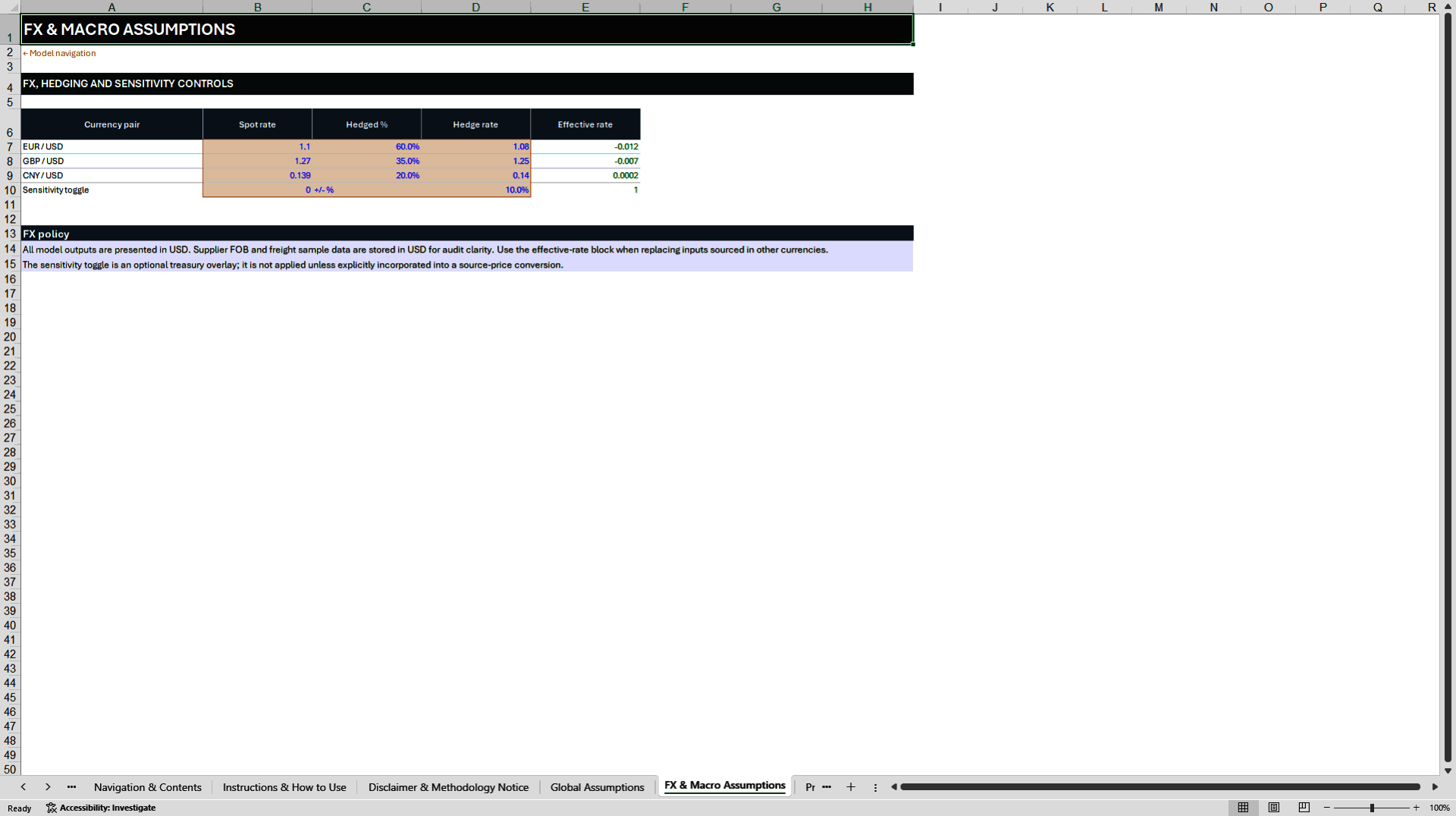
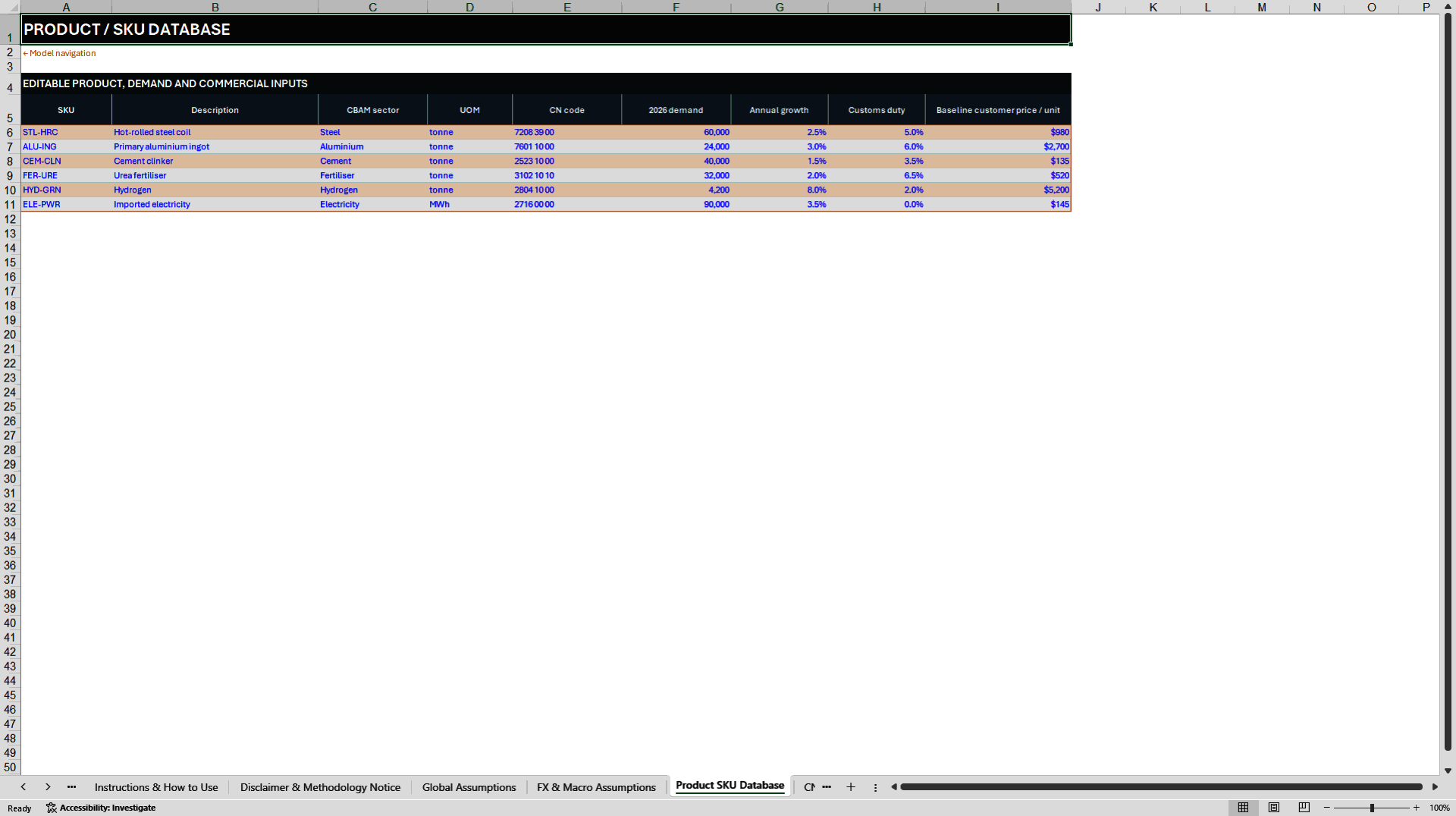
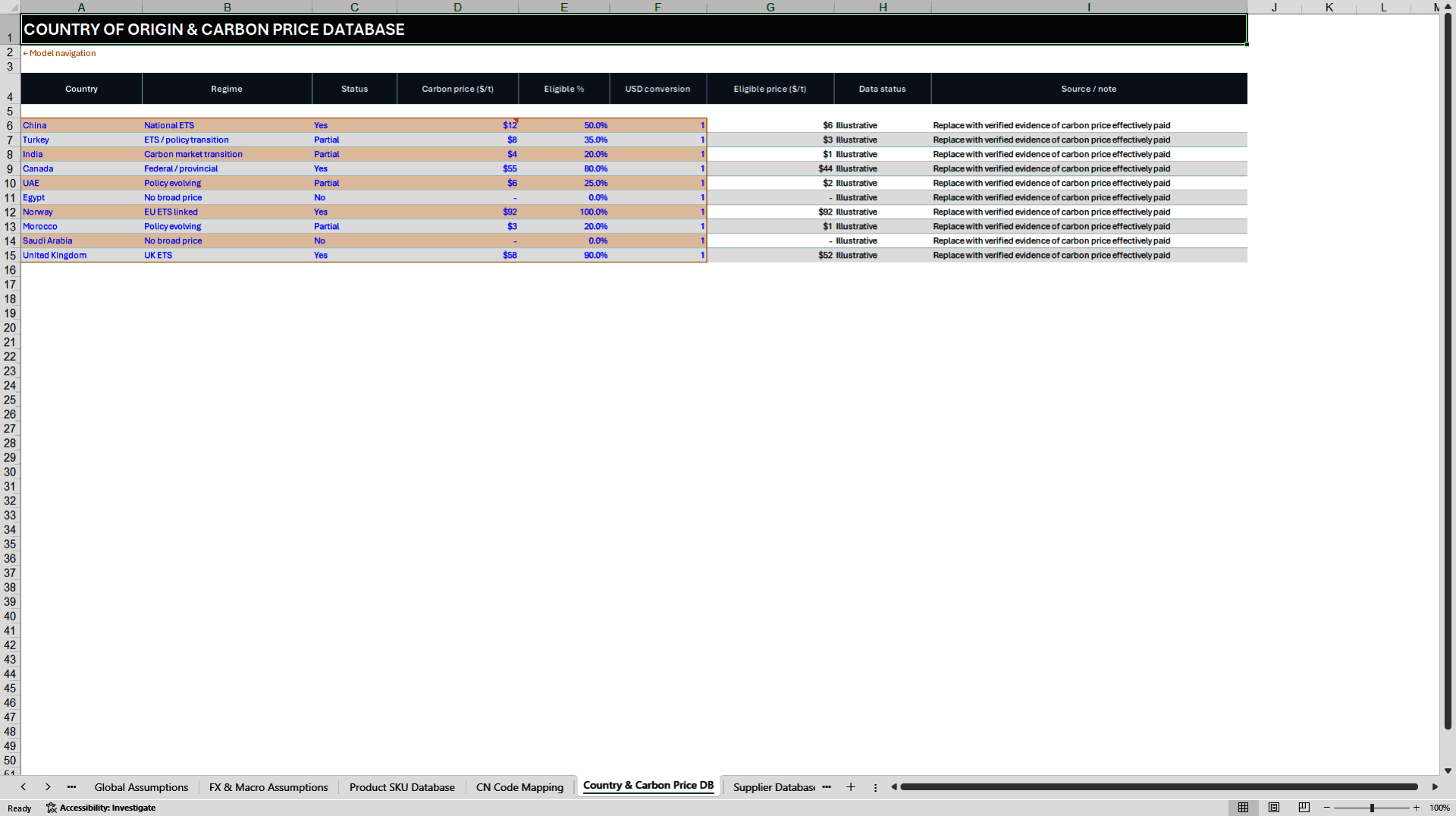
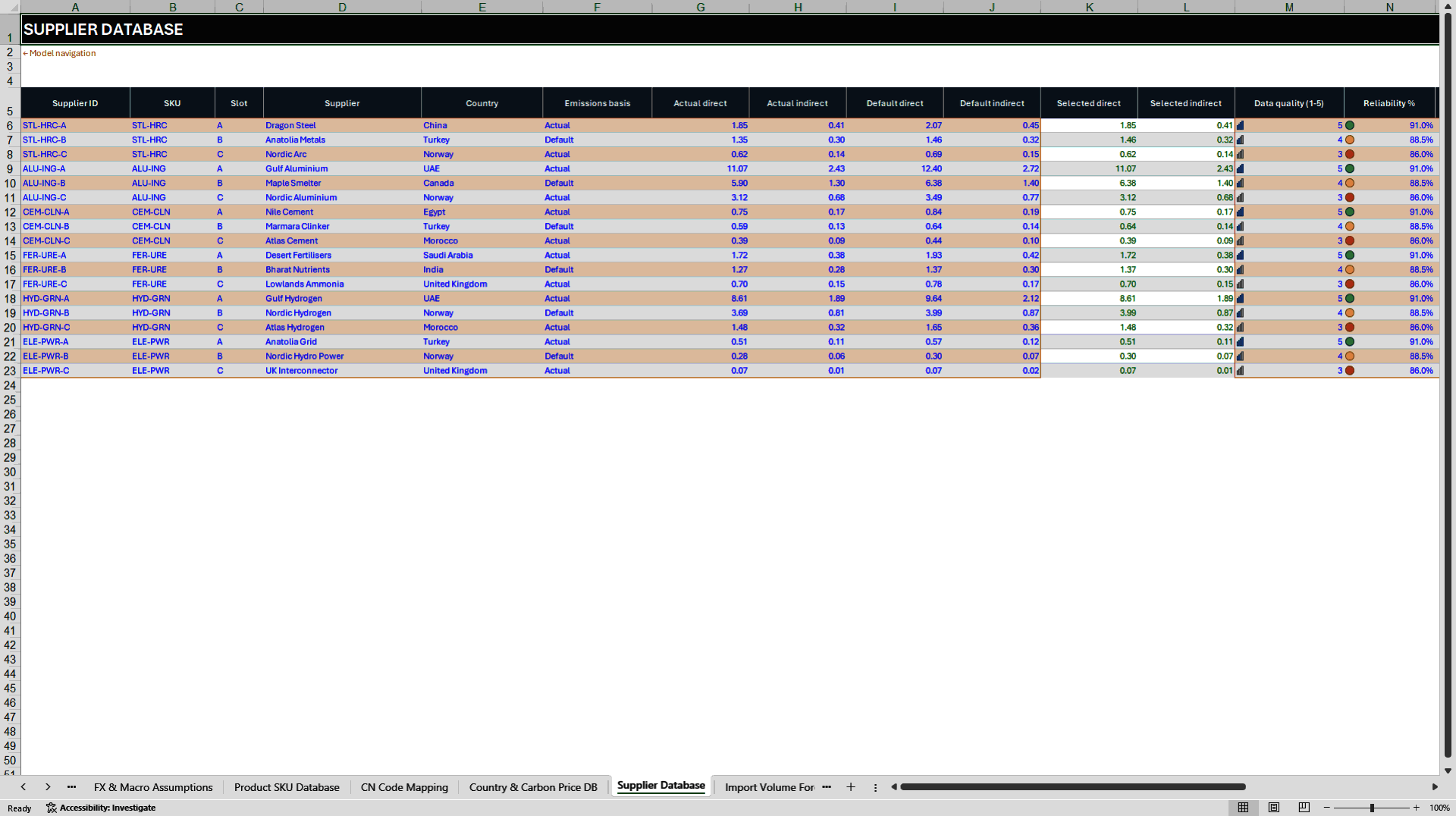
The workbook begins with editable global assumptions, FX and macro controls, a product and SKU database, CN-code mapping, an origin-country carbon-price database, and a supplier database. Supplier records include country, actual or default emissions basis, selected direct and indirect emissions, data-quality score, reliability, volume allocation, FOB price, freight, decarbonisation rate, abatement investment, and abatement potential. Sample products cover steel, aluminium, cement, fertiliser, hydrogen, and imported electricity, with the workbook making clear that illustrative inputs must be replaced or verified for real-world use.
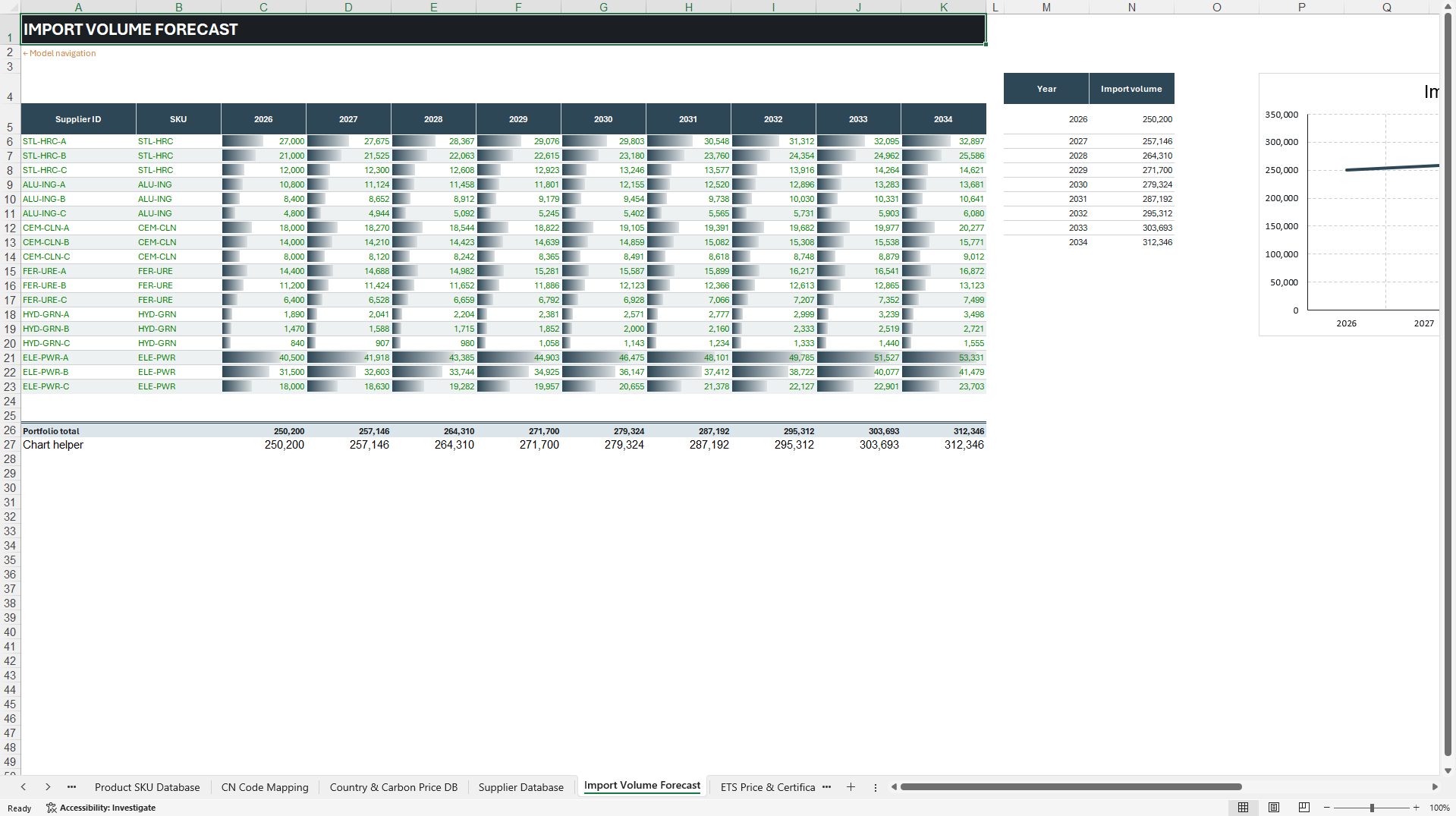
A driver-based import-volume forecast feeds the EU ETS price and CBAM certificate-price engine. The model then calculates CBAM certificate requirements by supplier and year, eligible origin-carbon-price adjustments, gross and net CBAM obligations, timing-lagged cash paid, unpaid obligations, and CBAM cost per imported unit. A separate working-capital schedule estimates certificate prepurchase balances and related financing cost.
The cost build-up continues through route-specific freight, tariffs and customs duties, and full landed cost. Procurement analyses compare supplier alternatives on cost, emissions intensity, reliability, and decision flags. The low-carbon supplier switching module calculates savings per unit, emissions reduction, NPV of switching savings, breakeven year, action, and rationale. A supplier decarbonisation investment appraisal also evaluates importer co-funding using abatement value, NPV, IRR, payback, and an investment decision.
Commercial impacts are connected through the pricing and customer pass-through engine, which separates customer recovery from unrecovered CBAM. Gross margin and EBITDA schedules show how the modeled carbon cost flows into profitability. Break-even analyses calculate carbon-intensity thresholds and the maximum acceptable low-carbon supplier premium.
Scenario and risk analysis are built into the workbook. A single Low, Base, or High scenario selector controls ETS price, demand, and pass-through assumptions. The sensitivity section includes a two-way EBITDA sensitivity and a tornado analysis for key drivers. Executive and procurement dashboards summarize decision metrics, cash and working-capital trends, supplier actions, switching economics, and management focus.
The workbook includes clickable navigation, operating instructions, a methodology and disclaimer notice, live Audit and QA controls, and version history. The Audit and QA sheet reconciles key model outputs and provides a master model status. Users should refresh regulatory, market, supplier-emissions, CN-code, carbon-price, and other illustrative assumptions before relying on outputs. The workbook is intended for internal planning and decision support rather than customs, tax, legal, accounting, investment, or regulatory advice.
Got a question about the product? Email us at support@flevy.com or ask the author directly by using the "Ask the Author a Question" form. If you cannot view the preview above this document description, go here to view the large preview instead.
Source: Best Practices in Procurement Strategy, Tax Excel: EU CBAM Importer Cost, Pricing, and Supplier Strategy Excel (XLSX) Spreadsheet, PDMM Financial Models
ABOUT THE AUTHOR
PDMM Financial Models develops professional, decision-ready Excel models for business owners, entrepreneurs, investors, consultants, analysts, and finance teams. Our objective is to transform complex business assumptions into clear, structured analysis that supports better planning and investment decisions.
Our models cover business planning, forecasting, budgeting, feasibility analysis,
... [read more]
Ask the Author a Question
You must be logged in to contact the author.




























