

Securing the Path to Digital Transformation
In today's hyperconnected landscape, digital transformation stands as the linchpin of strategic success for organizations striving to maintain competitiveness and operational excellence. The advent of cutting-edge technologies like cloud computing, Internet of Things (IoT), artificial intelligence, and big data has ushered in a new era of innovation and efficiency. However, this transformative journey also unfurls novel challenges and cybersecurity risks that demand proactive mitigation.
The Crucial Role of Cybersecurity:
This presentation delves into the pivotal role of cybersecurity in not only safeguarding but also catalyzing digital transformation endeavors. As businesses increasingly digitalize their operations and amass troves of data, their vulnerability to cyber threats, from data breaches to ransomware and advanced persistent threats, escalates. Consequently, cybersecurity has transcended its peripheral status to become an integral element of overarching business strategy.
Cybersecurity as an Enabler:
A groundbreaking perspective underscored in this presentation is that cybersecurity is not a mere defense mechanism; it serves as the enabler of digital transformation. Organizations that prioritize cybersecurity erect a secure bedrock that nurtures innovation, cultivates customer trust, and ensures regulatory compliance. By shielding their digital assets, businesses can boldly embrace emerging technologies and capitalize on growth prospects while upholding data integrity and customer privacy.
Key Highlights:
1. Cybersecurity: Empowering Digital Transformation
2. Navigating the Realm of Cybercrime
3. Cloud Computing and the Cybersecurity Nexus
Harness the Synergy:
This 87-slide presentation elucidates the symbiotic relationship between cybersecurity and digital transformation. By reconceptualizing cybersecurity as an enabler rather than an impediment, organizations can fully harness the potential of digitalization while reinforcing their resilience against evolving cyber perils. An integrated, forward-looking cybersecurity approach empowers businesses to securely and sustainably realize their digital transformation aspirations.
Customize and Conquer:
This easily customizable document boasts a plethora of impactful figures, diagrams, ice-breakers, visuals, and more. It offers a holistic perspective on the intersection of cybersecurity and enabling digital transformation, equipping you with the insights needed to navigate this dynamic landscape with confidence.
This presentation provides actionable insights into the evolving landscape of cybersecurity as it relates to digital transformation. It emphasizes the necessity for organizations to adopt a proactive cybersecurity posture that not only protects assets, but also fosters innovation and agility in a rapidly changing environment.
Got a question about the product? Email us at support@flevy.com or ask the author directly by using the "Ask the Author a Question" form. If you cannot view the preview above this document description, go here to view the large preview instead.
Executive Summary
This presentation titled "Cybersecurity: Enabling Digital Transformation" provides a comprehensive overview of how cybersecurity is integral to digital transformation initiatives across industries. It emphasizes the increasing role of IT in enhancing operational efficiency and innovation while addressing the growing risks associated with cyber threats. The insights presented are developed by experts with extensive consulting experience, equipping corporate executives and integration leaders with actionable strategies to safeguard digital assets and leverage cloud technologies effectively.
Who This Is For and When to Use
• Chief Information Officers (CIOs) overseeing cybersecurity and IT strategy
• Digital transformation leaders implementing cloud solutions and cybersecurity measures
• Risk management teams assessing vulnerabilities and developing mitigation strategies
• IT security professionals focused on protecting organizational data and infrastructure
Best-fit moments to use this deck:
• During strategic planning sessions for digital transformation initiatives
• When assessing the cybersecurity landscape and its impact on cloud adoption
• For training sessions aimed at enhancing cybersecurity awareness among teams
• In stakeholder meetings to discuss the alignment of cybersecurity with business objectives
Learning Objectives
• Define the concept of digital transformation and its implications for organizations.
• Identify the critical role of cybersecurity in enabling successful digital transformation.
• Analyze the evolving landscape of cyber threats and their impact on business operations.
• Develop strategies for integrating cybersecurity into cloud computing frameworks.
• Establish a framework for incident response and risk management in digital environments.
• Assess the effectiveness of current cybersecurity measures and identify areas for improvement.
Table of Contents
• Introduction to Cybersecurity and Digital Transformation (page 1)
• Understanding Cybercrime and Its Implications (page 2)
• The Role of Cloud Computing in Cybersecurity (page 3)
• Strategies for Protecting Digital Assets (page 4)
• Government Regulations and Cybersecurity Initiatives (page 5)
• Future Trends in Cybersecurity and Digital Transformation (page 6)
Primary Topics Covered
• Digital Transformation Definition - Digital transformation refers to the integration of digital technology into all areas of a business, fundamentally changing how it operates and delivers value to customers.
• Cybercrime Landscape - The presentation highlights the alarming statistics surrounding cybercrime, including the financial impact and the number of organizations affected by cyberattacks.
• Cloud Computing's Role - Cloud computing is positioned as a central component of digital transformation, offering scalable resources while presenting unique cybersecurity challenges.
• Protect, Detect, Respond Framework - This framework outlines a proactive approach to cybersecurity, emphasizing the need for protection across all endpoints, detection through advanced monitoring, and rapid response to incidents.
• Government Involvement - Governments play a crucial role in establishing cybersecurity regulations and frameworks to protect critical infrastructure and promote international cooperation.
• Future Cybersecurity Trends - The presentation discusses emerging trends in cybersecurity, including the increasing sophistication of cyber threats and the need for adaptive security measures.
Deliverables, Templates, and Tools
• Cybersecurity strategy framework template for assessing organizational readiness.
• Incident response plan template to guide teams in managing cybersecurity breaches.
• Risk assessment tool for evaluating vulnerabilities in digital transformation initiatives.
• Cloud security checklist to ensure compliance with best practices and regulations.
• Training materials for enhancing cybersecurity awareness among employees.
• Governance model for aligning cybersecurity with business objectives and compliance requirements.
Slide Highlights
• Overview of the digital transformation journey and its reliance on cybersecurity.
• Key statistics illustrating the prevalence and cost of cybercrime.
• Visual representation of the Protect, Detect, Respond framework for cybersecurity.
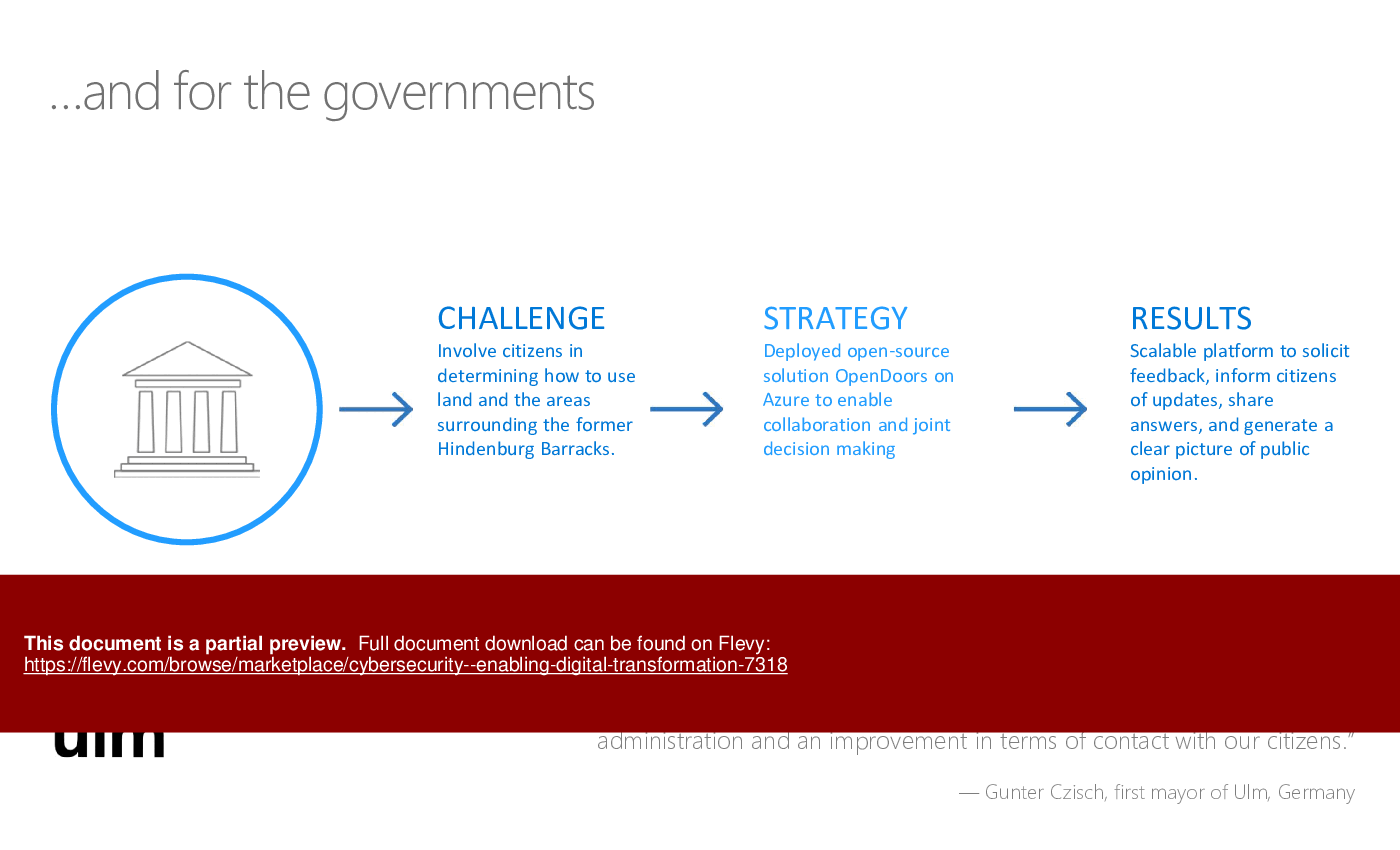
• Case studies showcasing successful cloud implementations and their cybersecurity strategies.
• Government initiatives aimed at enhancing cybersecurity across sectors.
Potential Workshop Agenda
Cybersecurity Fundamentals Session (60 minutes)
• Introduction to cybersecurity concepts and their relevance to digital transformation.
• Discussion of current cyber threats and their implications for businesses.
Cloud Security Strategies Workshop (90 minutes)
• Exploration of best practices for securing cloud environments.
• Group activity to develop a cloud security checklist tailored to organizational needs.
Incident Response Planning Session (60 minutes)
• Overview of incident response frameworks and their importance.
• Collaborative development of an incident response plan based on real-world scenarios.
Customization Guidance
• Tailor the cybersecurity strategy framework to align with specific organizational goals and industry standards.
• Adjust the incident response plan template to reflect unique operational processes and communication channels.
• Incorporate relevant case studies and examples that resonate with the audience's industry context.
Secondary Topics Covered
• The impact of regulatory compliance on cybersecurity strategies.
• Best practices for employee training and awareness programs.
• The role of emerging technologies in enhancing cybersecurity measures.
• International cooperation and its significance in combating cybercrime.
• The importance of continuous monitoring and adaptation in cybersecurity practices.
FAQ
What is digital transformation?
Digital transformation is the process of integrating digital technology into all aspects of a business, leading to fundamental changes in operations and service delivery.
How does cybersecurity enable digital transformation?
Cybersecurity protects digital assets and infrastructure, allowing organizations to innovate and adopt new technologies without compromising security.
What are the key challenges associated with cybercrime?
Challenges include financial losses, reputational damage, regulatory compliance issues, and the increasing sophistication of cyber threats.
What role does cloud computing play in cybersecurity?
Cloud computing provides scalable resources, but also introduces unique security challenges that must be addressed through robust cybersecurity measures.
How can organizations assess their cybersecurity readiness?
Organizations can use risk assessment tools and frameworks to evaluate vulnerabilities and develop strategies for improvement.
What is the Protect, Detect, Respond framework?
This framework emphasizes a proactive approach to cybersecurity, focusing on protection across endpoints, detection through monitoring, and rapid response to incidents.
Why is government involvement important in cybersecurity?
Governments establish regulations and frameworks that promote cybersecurity best practices and protect critical infrastructure, fostering international cooperation.
What future trends should organizations be aware of in cybersecurity?
Organizations should monitor trends such as the increasing sophistication of cyber threats, the rise of AI in cybersecurity, and the need for adaptive security measures.
Glossary
• Digital Transformation - The integration of digital technology into all areas of a business.
• Cybercrime - Criminal activities conducted via the internet or involving computer systems.
• Cloud Computing - The delivery of computing services over the internet, including storage, processing, and applications.
• Incident Response - The process of managing and mitigating cybersecurity breaches.
• Risk Assessment - The systematic evaluation of potential risks and vulnerabilities.
• Governance Model - A framework for aligning cybersecurity with business objectives and compliance requirements.
• Protect, Detect, Respond - A cybersecurity framework focusing on proactive measures and rapid incident management.
• Compliance - Adherence to laws, regulations, and guidelines governing cybersecurity practices.
• Data Breach - An incident where unauthorized access to sensitive data occurs.
• Endpoint Security - Protection measures for devices connected to a network.
• Multi-Factor Authentication - A security process requiring multiple forms of verification to access systems.
• Vulnerability - A weakness in a system that can be exploited by threats.
• Threat Intelligence - Information that helps organizations understand and mitigate cyber threats.
• Phishing - A cybercrime where attackers impersonate legitimate entities to steal sensitive information.
• Malware - Malicious software designed to disrupt, damage, or gain unauthorized access to systems.
• Encryption - The process of converting information into a secure format to prevent unauthorized access.
• Firewall - A network security device that monitors and controls incoming and outgoing network traffic.
• Intrusion Detection System (IDS) - A device or software application that monitors network traffic for suspicious activity.
• Zero Trust Security - A security model that assumes threats could be internal or external and requires verification for every access request.
• Business Continuity Plan - A strategy for maintaining business operations during and after a disruptive event.
• Security Policy - A formal document outlining how an organization protects its physical and information technology assets.
Source: Best Practices in Digital Transformation, Cyber Security PowerPoint Slides: Cybersecurity - Enabling Digital Transformation PowerPoint (PPTX) Presentation Slide Deck, RadVector Consulting
|
Download our FREE Digital Transformation Templates
Download our free compilation of 50+ Digital Transformation slides and templates. DX concepts covered include Digital Leadership, Digital Maturity, Digital Value Chain, Customer Experience, Customer Journey, RPA, etc. |










