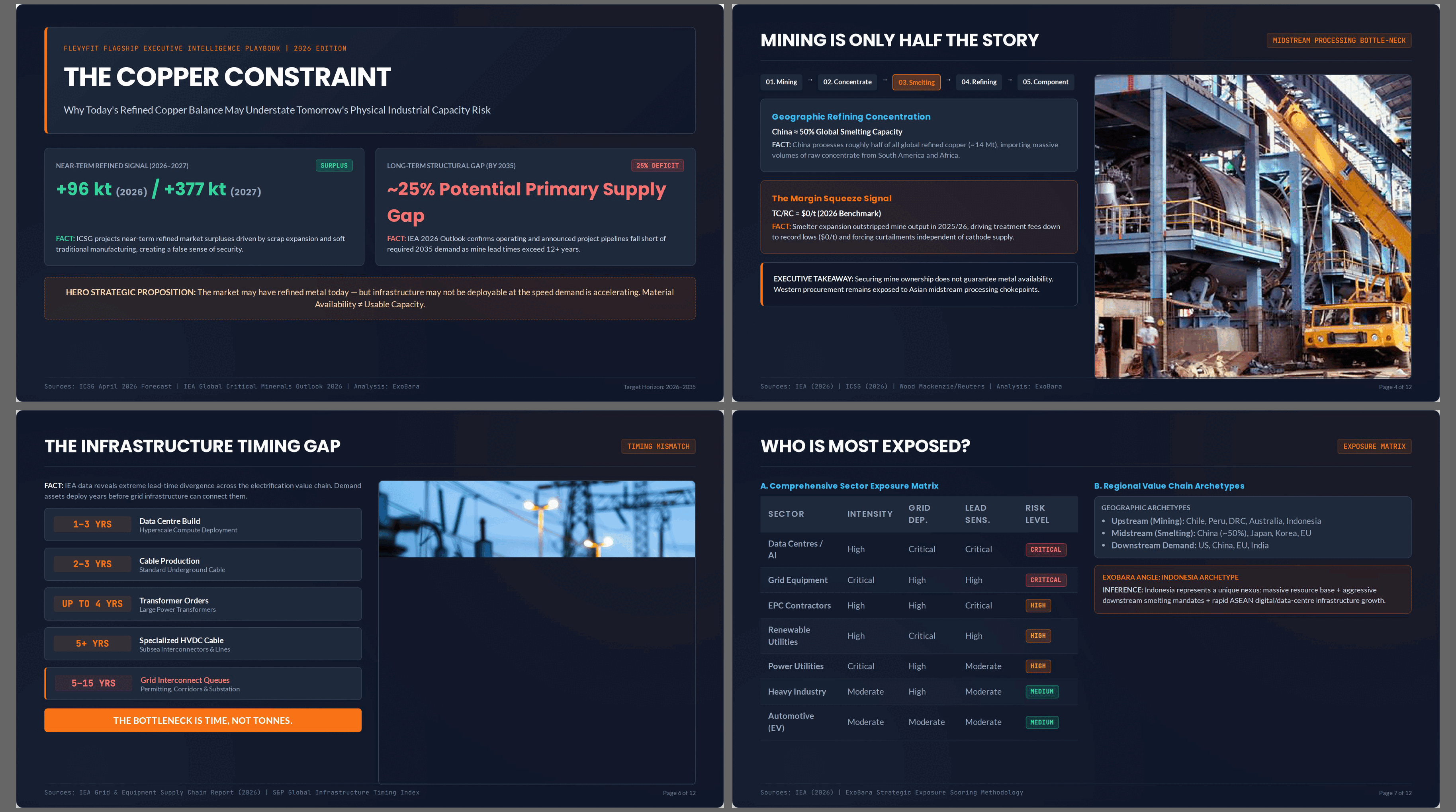
 Click main image to view in full screen.
Copper Constraint: Physical Capacity Risk – PDF
PDF document 13 Pages


BENEFITS OF THIS DOWNLOADABLE PDF DOCUMENT
- Provides a structured framework for identifying where copper, processing, electrical equipment, and grid constraints can limit physical industrial capacity.
- Helps executives translate physical-market signals into exposure assessments, constraint states, and actionable supply, procurement, infrastructure, and project decisions.
- Provides reusable analytical tools--including the Copper Stress Indicator™, Physical Bottleneck Stack™, exposure matrix, decision framework, and executive watchlist--for ongoing strategic risk monitoring.
MINING INDUSTRY PDF DESCRIPTION
The Copper Constraint: Physical Capacity Risk is an Executive Intelligence Playbook examining how copper, processing capacity, electrical equipment, and grid infrastructure can become interconnected constraints on the physical expansion of the AI and electrification economy.
Rather than providing a conventional copper price outlook, this playbook examines the deeper industrial question: where can physical capacity become constrained before the market fully recognizes the constraint?
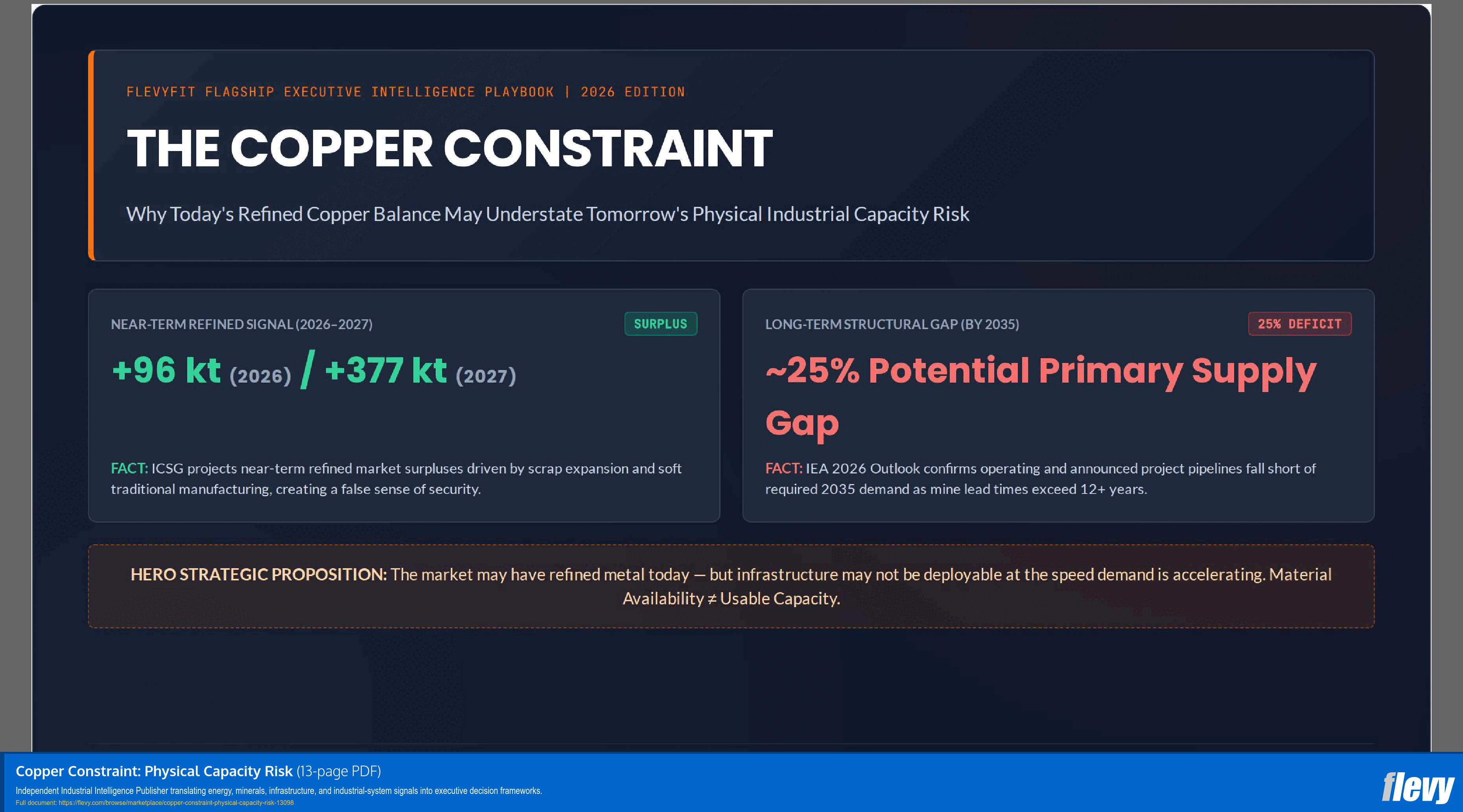
The analysis begins with the current copper market signal and introduces the Copper Stress Indicator™ (CSI), a transparent composite diagnostic using exchange inventories, treatment and refining charges, physical premiums, supply disruptions, and concentrate/smelter stress. The methodology distinguishes current physical-market tightness from a generalized global copper shortage and explicitly incorporates counter-signals, including near-term refined-market balance.
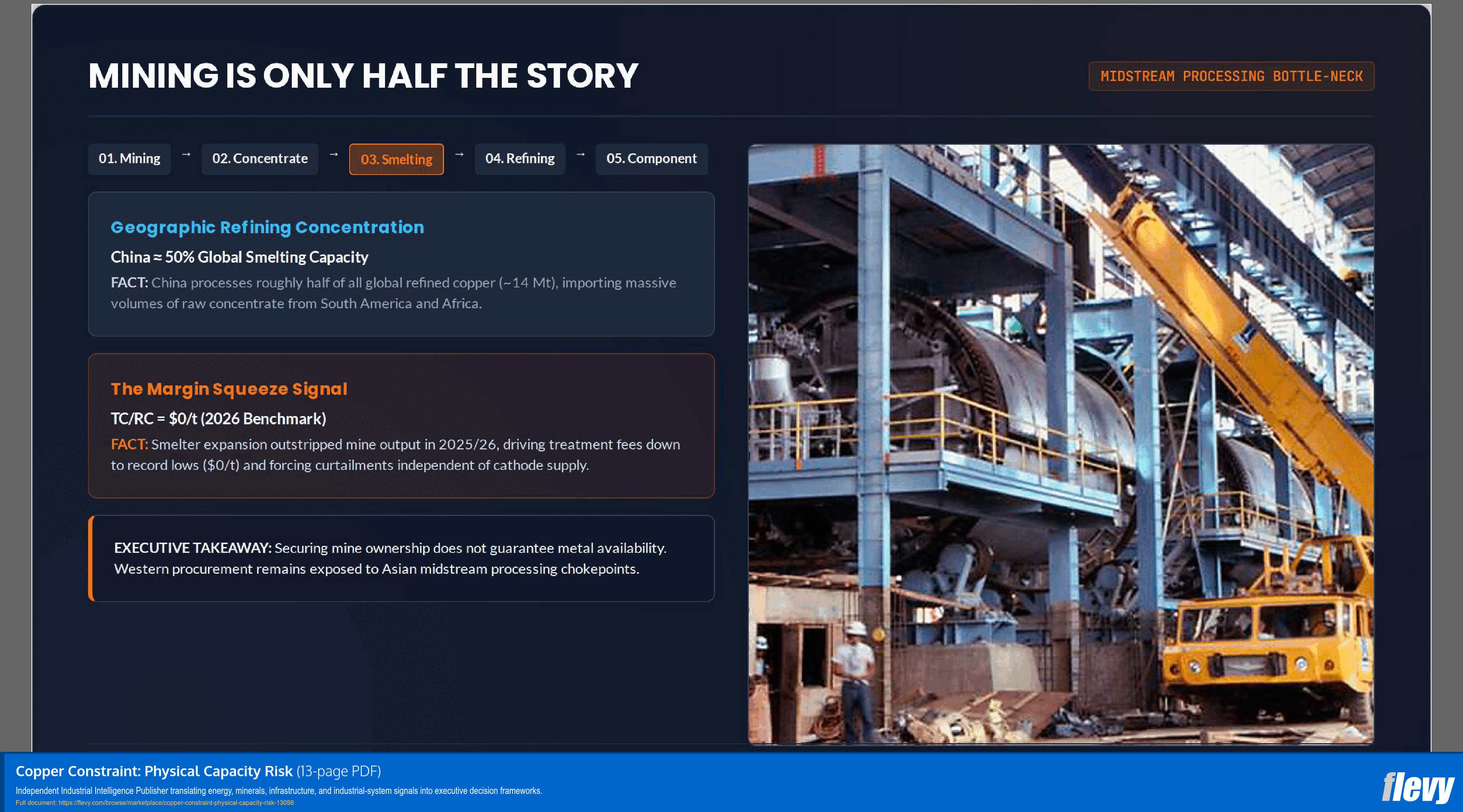
The playbook then moves beyond mining to examine the complete physical value chain: mine → concentrate → smelting/refining → electrical components → infrastructure → electricity → industrial capacity. This reveals an important strategic distinction: securing copper does not necessarily guarantee usable industrial capacity.
Its central framework, the Physical Bottleneck Stack™, identifies six layers where constraints can propagate: minerals, processing, components, infrastructure, electricity, and final usable capacity. Particular attention is given to transformers, cables, substations, grid connections, and other infrastructure whose procurement and development timelines can exceed the speed of demand growth.
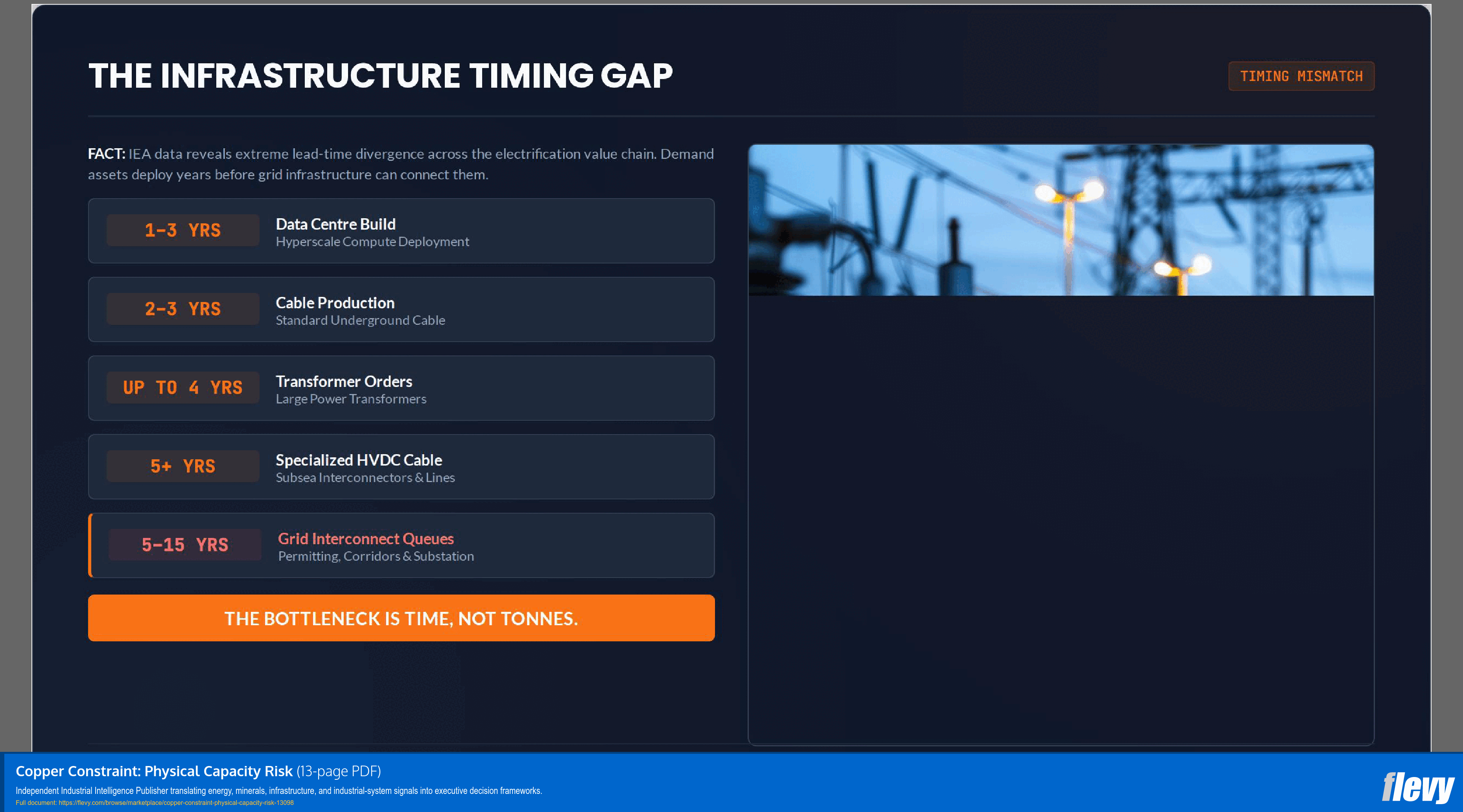
The Infrastructure Timing Gap further examines the mismatch between demand deployment and physical infrastructure lead times, including data-centre construction, cable production, transformer procurement, specialized HVDC cable requirements, and grid interconnection.
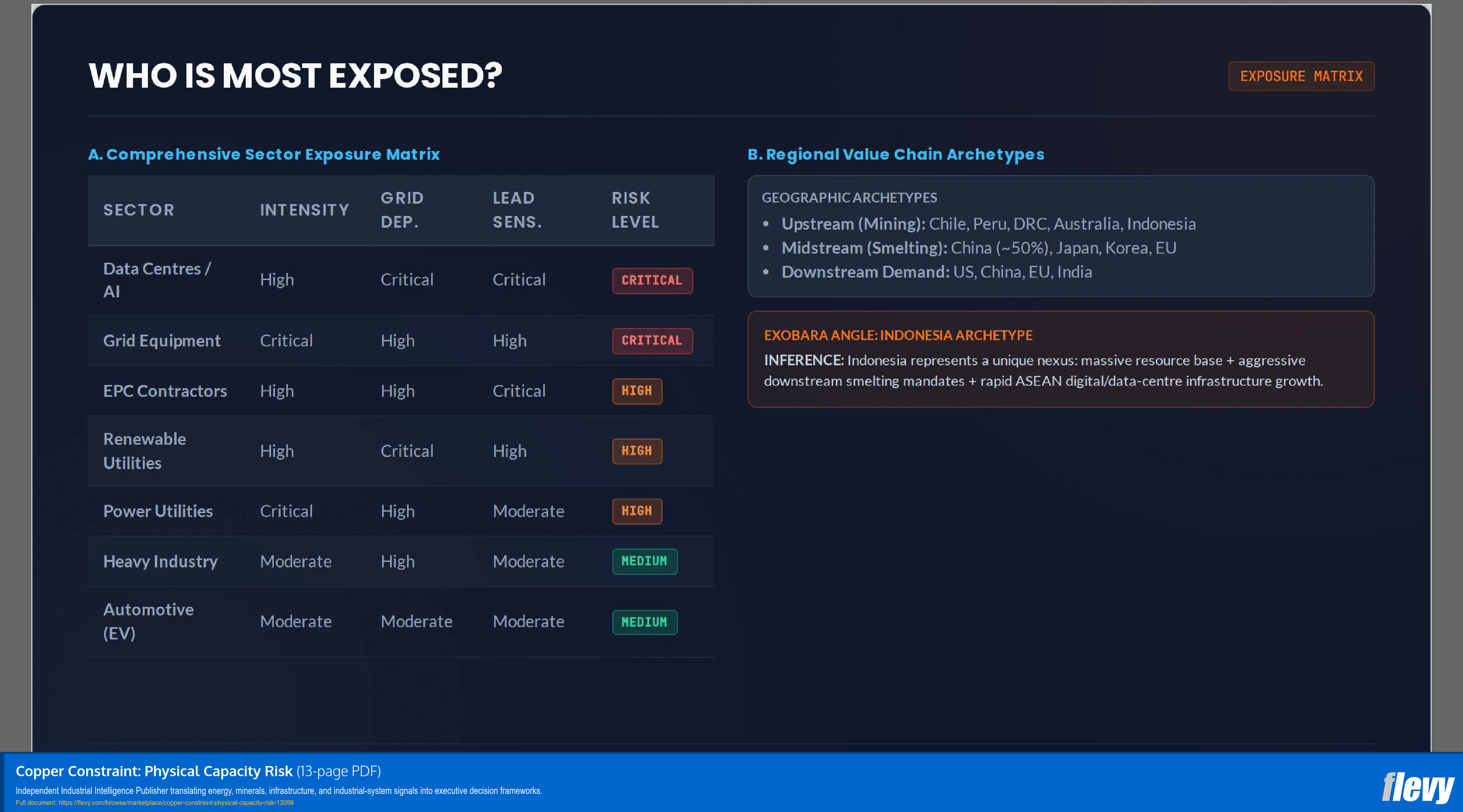
The playbook also provides an Exposure Matrix for industries including data centres, grid equipment, EPC contractors, utilities, heavy industry, automotive, and mining, alongside geographic value-chain archetypes covering upstream mining, midstream processing, and downstream demand.
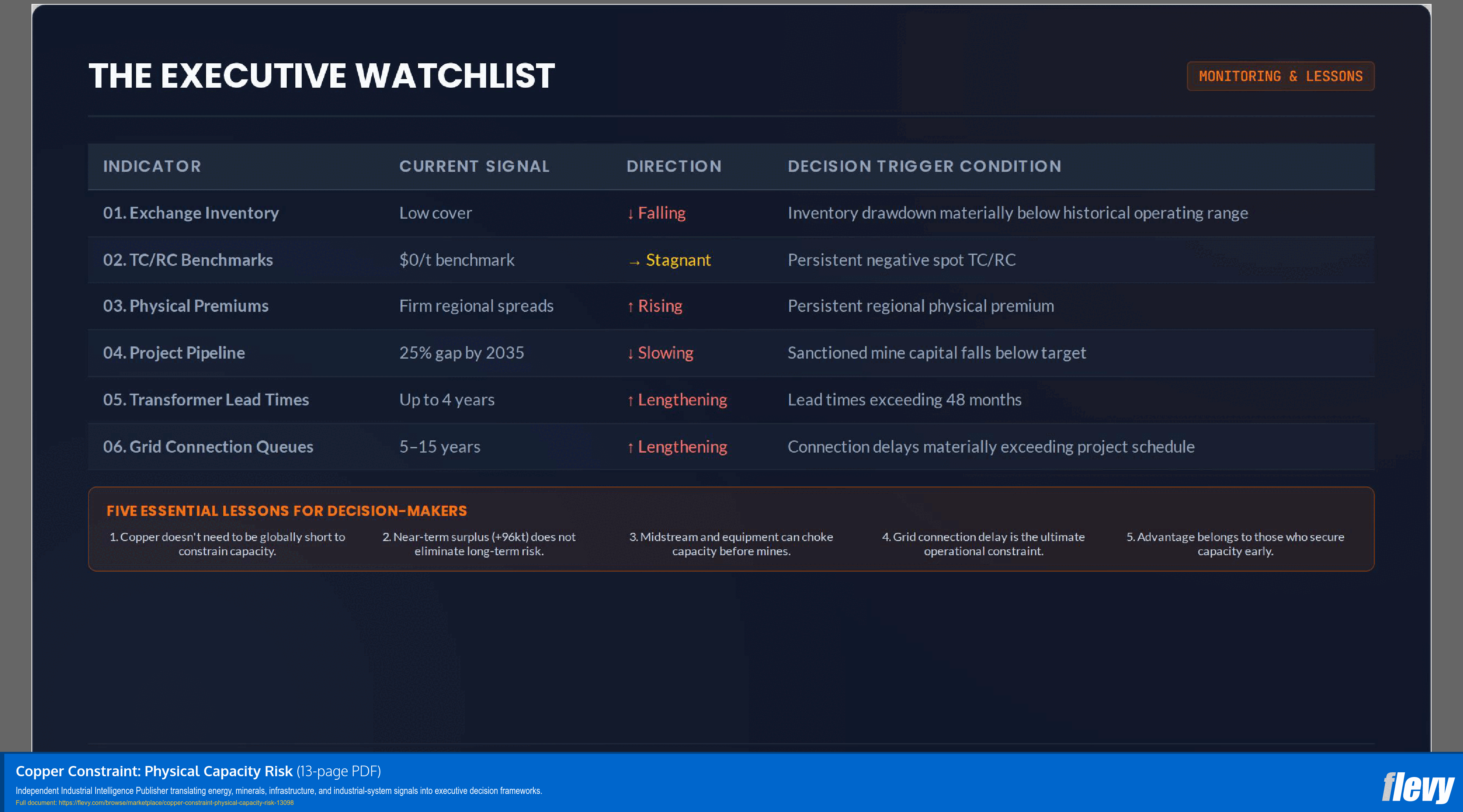
Finally, the intelligence converts market signals into three Constraint States—Managed Tightness, Structural Tightness, and Systemic Constraint—and provides an executive decision framework built around SECURE → DIVERSIFY → SUBSTITUTE → ACCELERATE.
The result is designed as a practical decision asset for executives involved in strategy, operations, procurement, infrastructure planning, capital allocation, industrial development, and supply-chain risk.
The playbook is particularly useful for organizations evaluating electricity-intensive projects, critical-material exposure, supplier concentration, infrastructure lead times, project sequencing, and long-term physical capacity risk.
Core proposition: copper does not need to be globally short for industrial capacity to become constrained. The strategic risk increasingly lies in the time required to convert materials into components, infrastructure, electricity, and ultimately usable productive capacity.
Got a question about the product? Email us at support@flevy.com or ask the author directly by using the "Ask the Author a Question" form. If you cannot view the preview above this document description, go here to view the large preview instead.
Source: Best Practices in Mining Industry, Energy Industry PDF: Copper Constraint: Physical Capacity Risk PDF (PDF) Document, Wisnu Pandega Wardana
ABOUT THE AUTHOR

I am an independent Industrial Intelligence and Strategic Innovation Publisher focused on developing structured business intelligence, innovation frameworks, and opportunity-oriented research for decision-makers.
My work focuses on translating emerging technologies, industrial transformation, sustainability, resource efficiency, and market shifts into structured intelligence assets that
... [read more]
Ask the Author a Question
You must be logged in to contact the author.




























