
 Click main image to view in full screen. Unlock all 12 preview images:
Consulting Resource Allocation Standard Operating Procedure – Word DOCX
Word (DOCX) 17 Pages


BENEFITS OF THIS DOWNLOADABLE WORD DOCUMENT
- Provides a framework for optimizing consulting resource allocation across projects, practices, and global teams.
- Establishes standardized governance for staffing, skills matching, bench management, utilization tracking, and subcontractor deployment.
- Enables organizations to maximize billable utilization, minimize bench leakage, and align the right consulting talent to the right client engagements.
PROJECT MANAGEMENT WORD DESCRIPTION
Curated by McKinsey-trained Executives
Consulting Resource Allocation Standard Operating Procedure (SOP)
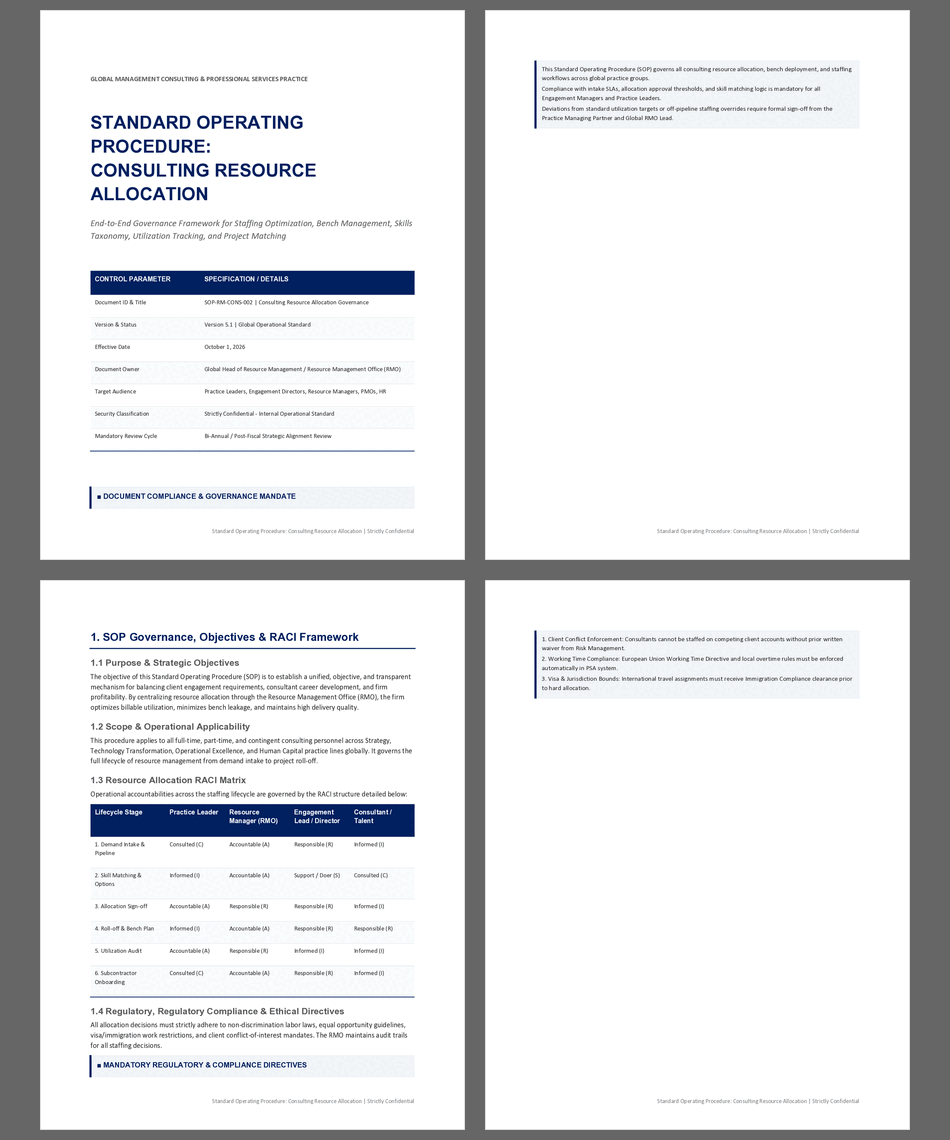
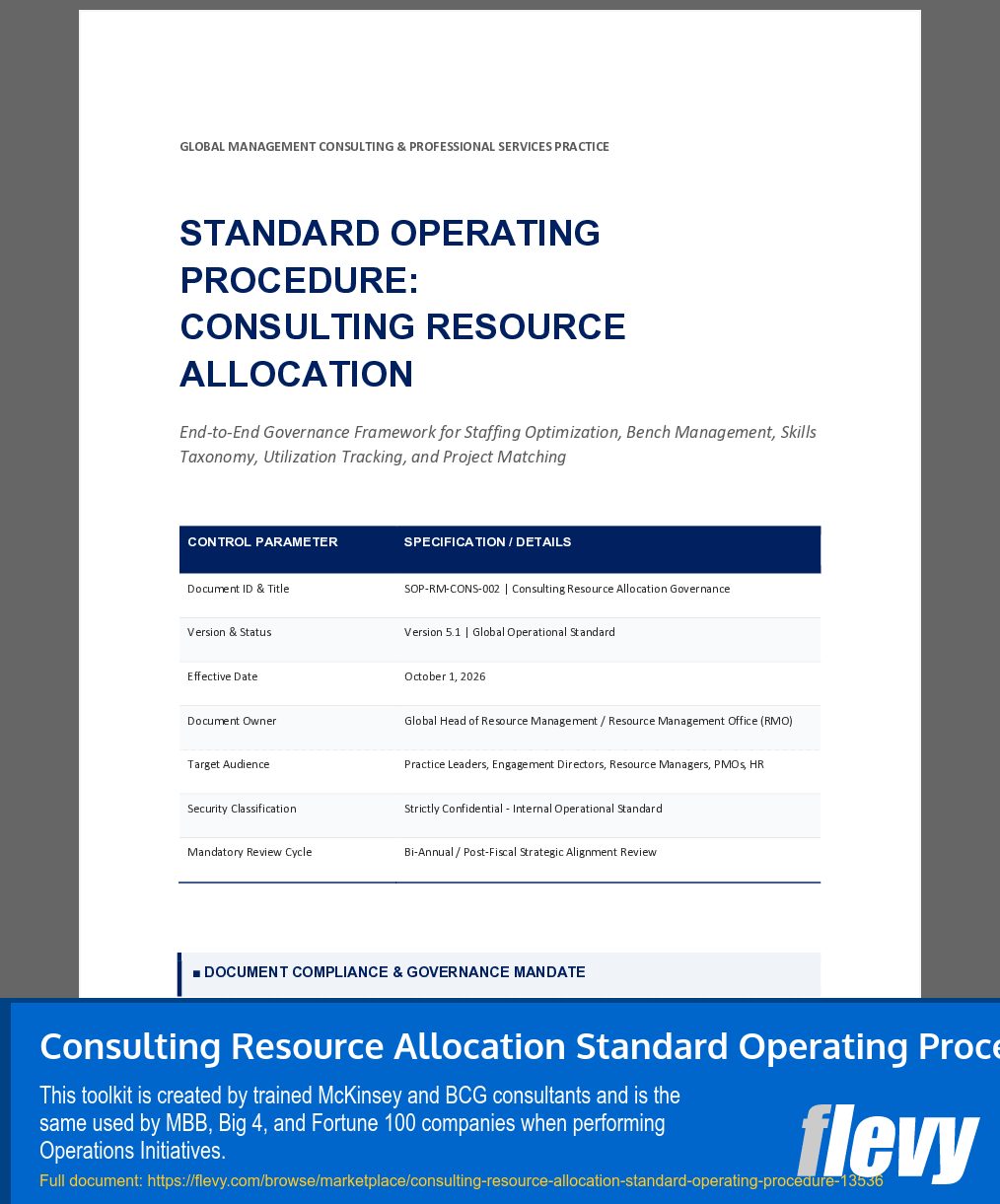
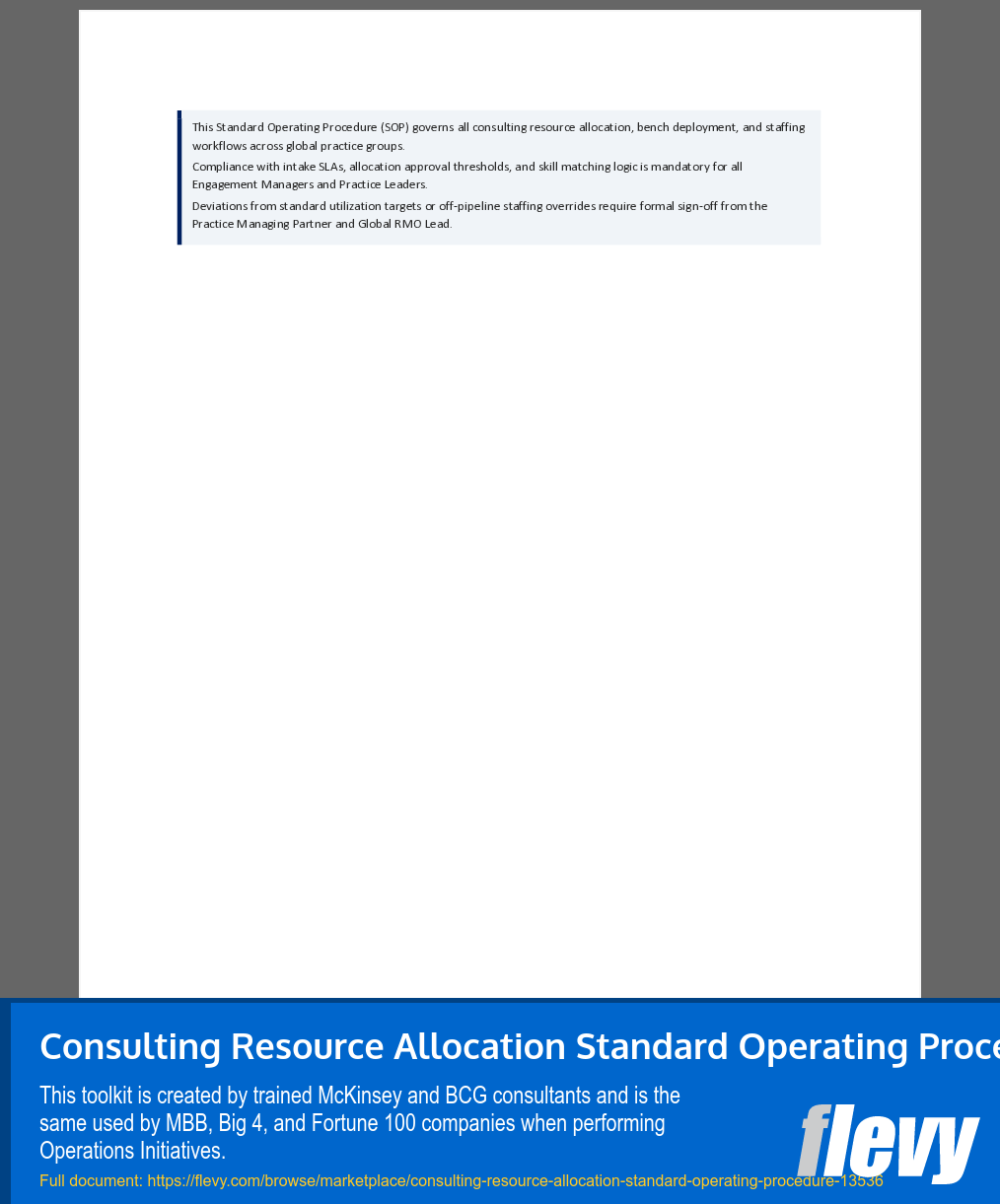
This downloadable Microsoft Word document provides an institutional-grade, end-to-end governance and execution framework for consulting resource allocation, demand forecasting, skills taxonomy, staffing optimization, bench management, utilization tracking, subcontractor governance, project matching, roll-off planning, and resource-management performance controls. Built specifically for Practice Leaders, Engagement Directors, Resource Managers, PMOs, HR, and consulting talent, it combines pipeline-driven capacity planning, quantitative resource matching, allocation approval thresholds, utilization governance, bench deployment protocols, contingent labor controls, PSA data governance, and executive escalation mechanisms into a structured global operating standard.
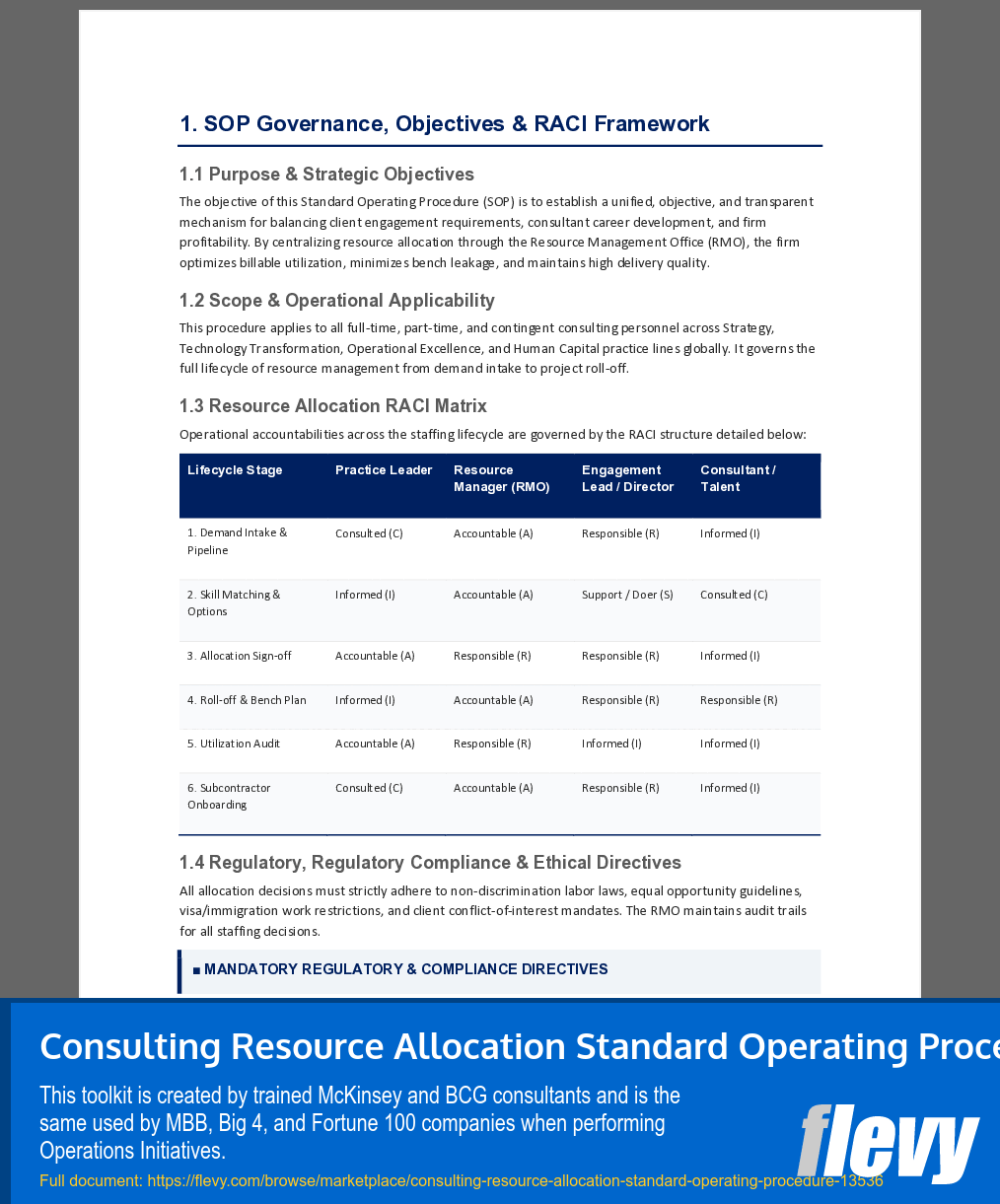
Section 1 – SOP Governance, Objectives & RACI Framework
• Strategic resource-management objectives focused on balancing client delivery requirements, consultant career development, billable utilization, bench optimization, delivery quality, and firm profitability.
• Global scope covering full-time, part-time, and contingent consulting personnel across Strategy, Technology Transformation, Operational Excellence, and Human Capital practice lines.
• End-to-end resource lifecycle governance from demand intake through skill matching, allocation approval, project delivery, roll-off, bench management, and utilization audit.
• Resource Allocation RACI Matrix mapping Practice Leaders, Resource Managers/RMO, Engagement Leads/Directors, and Consultants/Talent across Demand Intake, Skill Matching, Allocation Sign-Off, Roll-Off, Utilization Audit, and Subcontractor Onboarding.
• Regulatory and ethical governance covering non-discrimination, equal opportunity, visa and immigration restrictions, client conflicts, working-time requirements, and jurisdictional assignment rules.
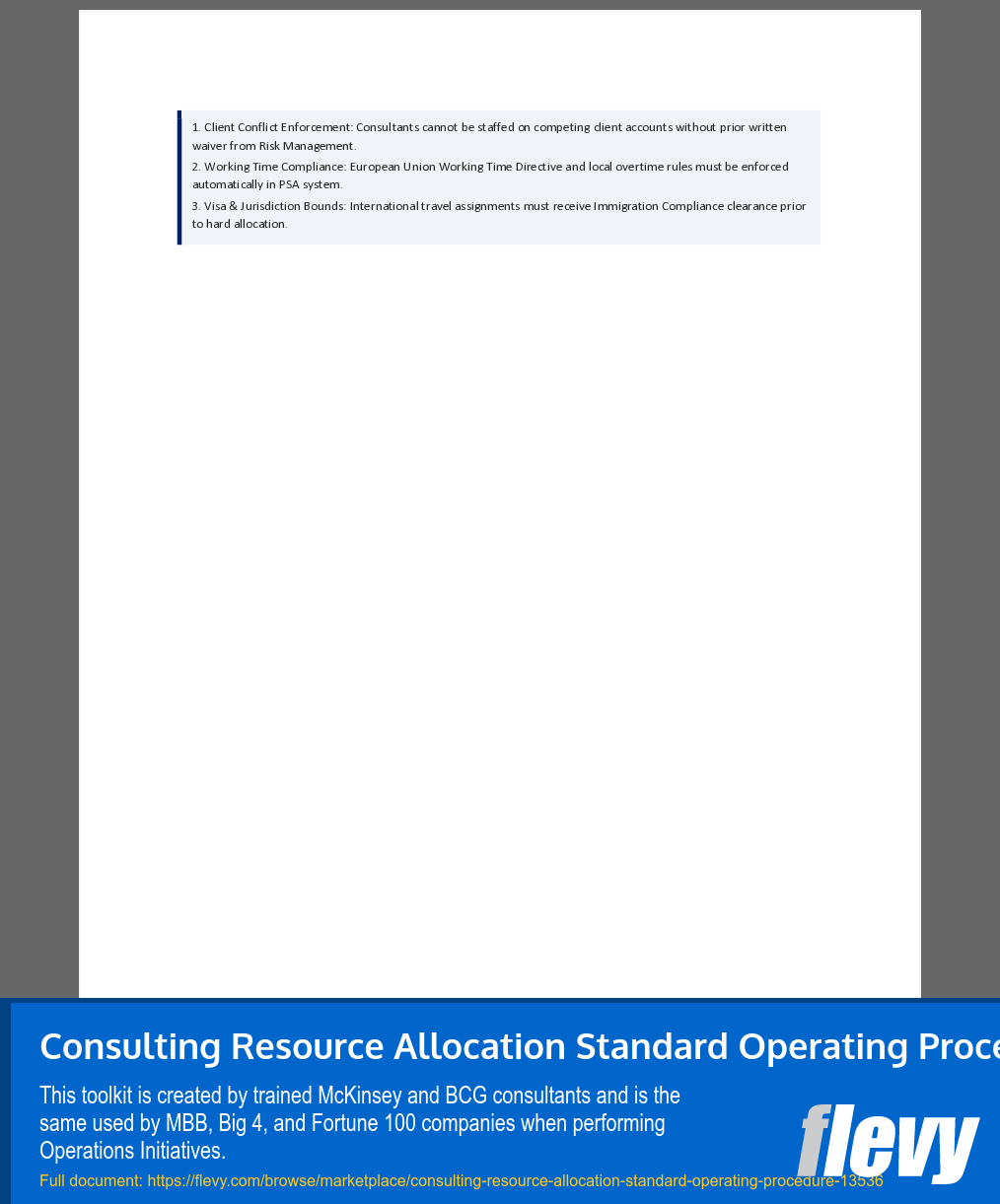
• Mandatory client conflict controls preventing consultants from being staffed on competing accounts without Risk Management approval.
• European Union Working Time Directive and local overtime compliance requirements embedded into PSA governance.
• Immigration Compliance clearance requirement for international travel and cross-border assignments.
Section 2 – Demand Forecasting & Engagement Intake Protocols
• Integrated CRM-to-PSA demand forecasting architecture enabling the RMO to monitor sales pipeline activity and proactively identify future capacity requirements.
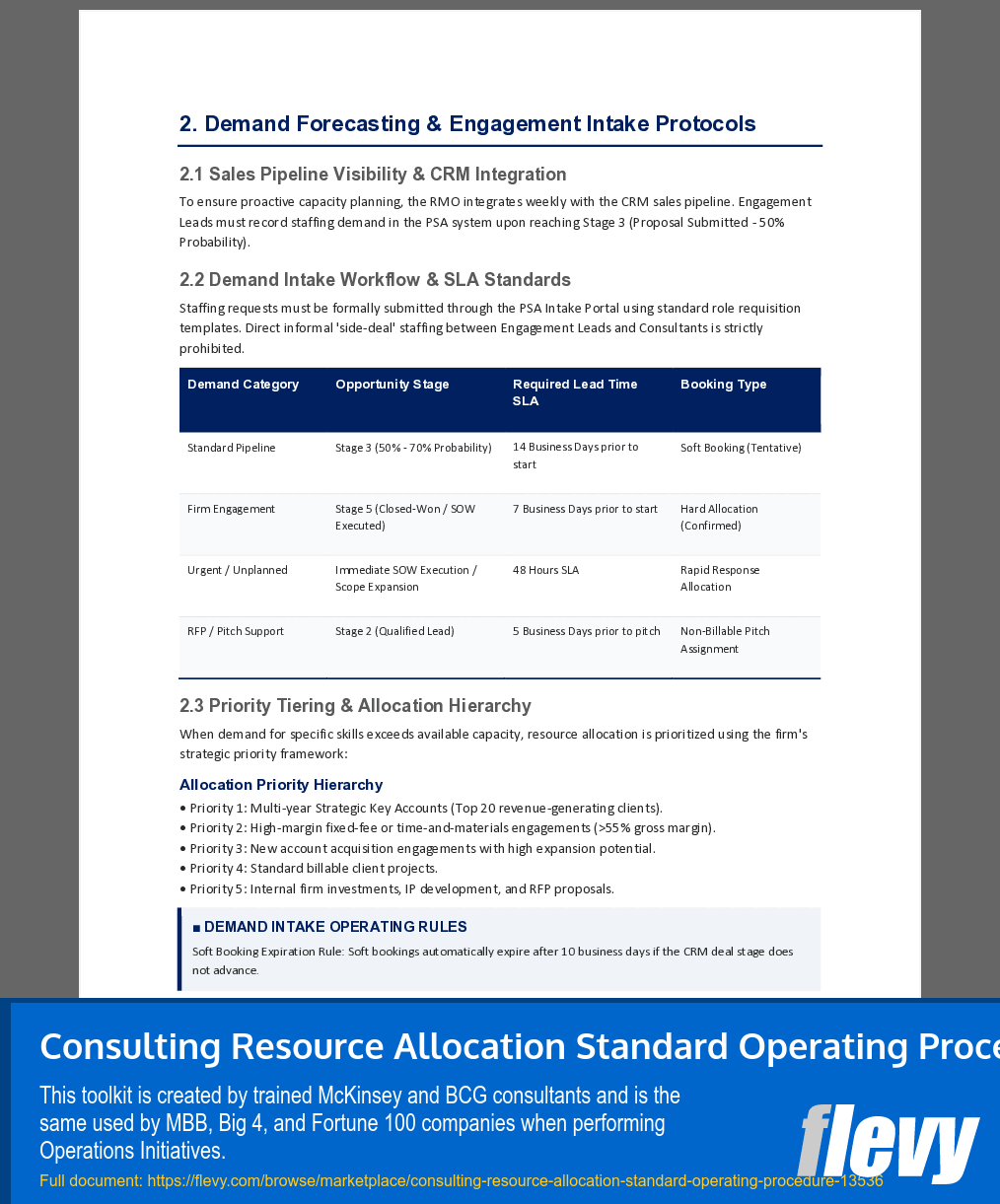
• Mandatory requirement for Engagement Leads to record staffing demand in the PSA once an opportunity reaches Stage 3 / Proposal Submitted / 50% probability.
• Formal staffing-request workflow through the PSA Intake Portal, eliminating informal side-deal staffing between Engagement Leads and consultants.
• Demand Intake SLA Matrix covering Standard Pipeline, Firm Engagement, Urgent/Unplanned Demand, and RFP/Pitch Support.
• Four booking classifications defining required lead time and booking status:
• Standard Pipeline: 14 business days prior to start; soft booking/tentative allocation.
• Firm Engagement: 7 business days prior to start; hard allocation/confirmed booking.
• Urgent/Unplanned: 48-hour rapid-response allocation SLA.
• RFP/Pitch Support: 5 business days prior to pitch; non-billable pitch assignment.
• Allocation Priority Hierarchy ranking strategic key accounts, high-margin engagements, new-account acquisition, standard billable projects, and internal firm investments.
• Soft-booking expiration rule requiring unprogressed CRM opportunities to be automatically released after the prescribed period.
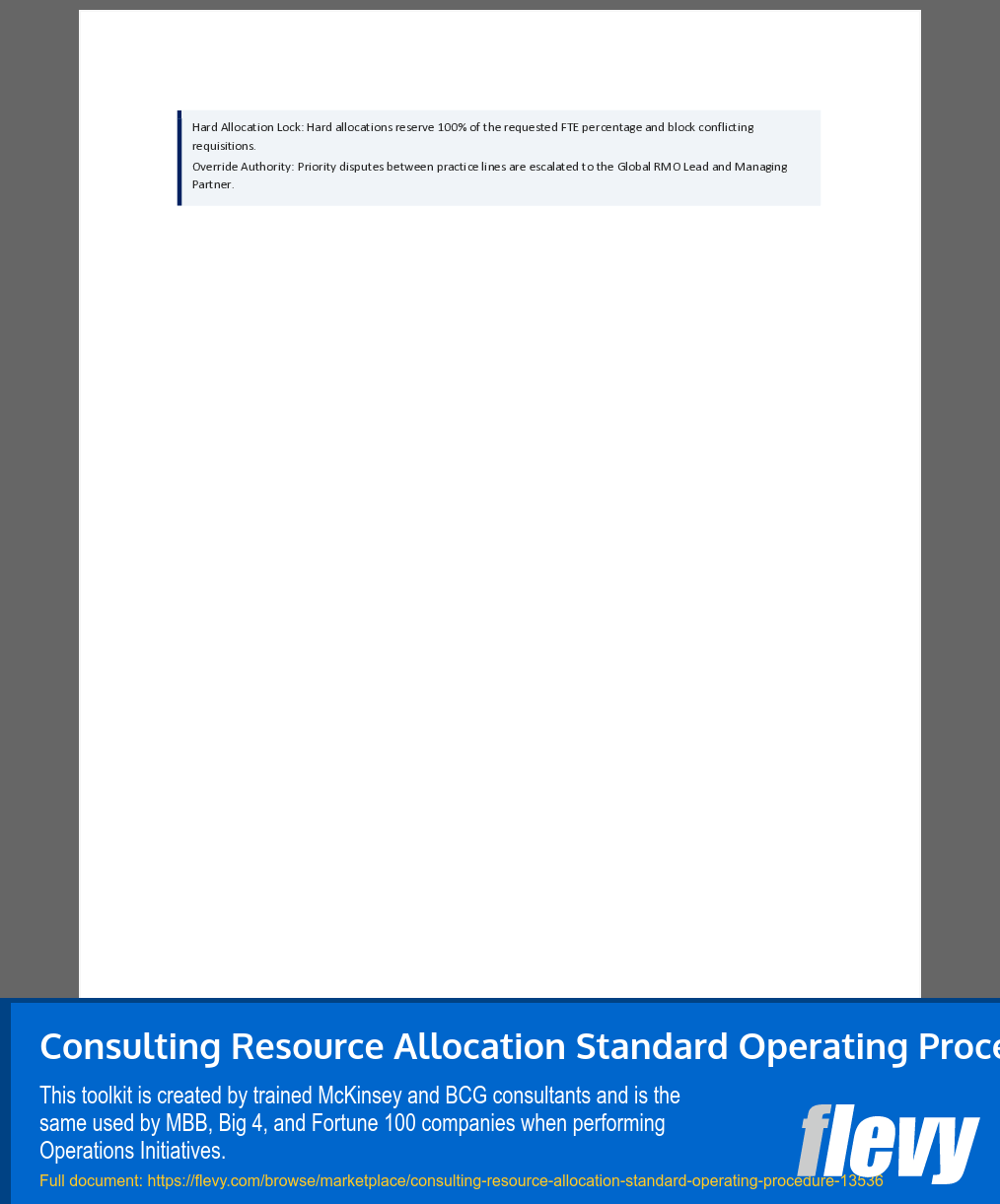
• Hard-allocation lock preventing conflicting requisitions from consuming reserved consultant capacity.
• Escalation mechanism for cross-practice priority disputes to the Global RMO Lead and Managing Partner.
Section 3 – Skills Taxonomy & Resource Profiling Architecture
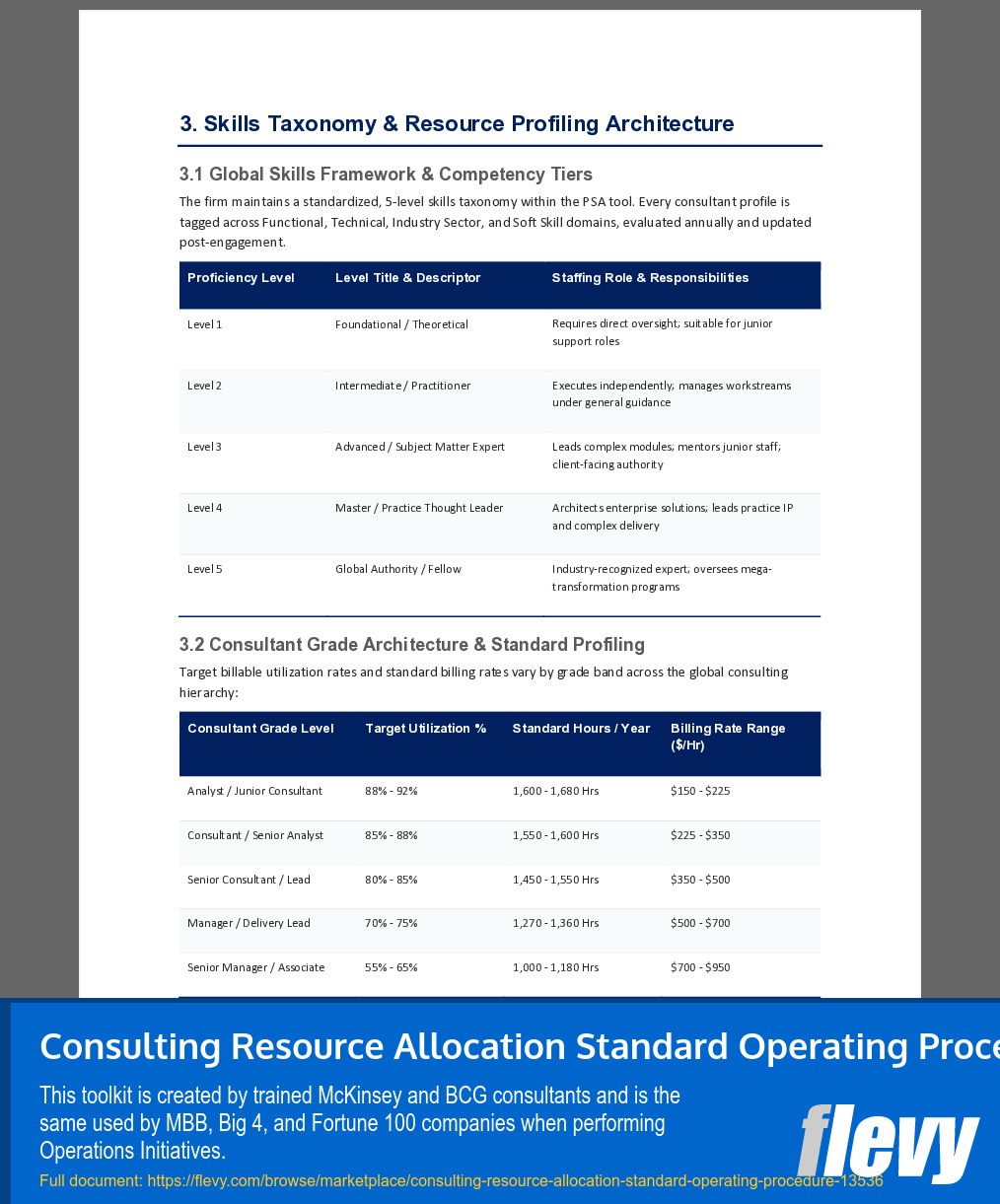
• Institutional Global Skills Framework establishing a standardized five-level competency taxonomy within the PSA platform.
• Consultant profiles categorized across Functional, Technical, Industry Sector, and Soft Skill domains.
• Five proficiency levels defining progressively greater independence, expertise, leadership, and industry authority:
• Level 1 – Foundational/Theoretical: Junior support capability requiring direct oversight.
• Level 2 – Intermediate/Practitioner: Independent execution and workstream responsibility.
• Level 3 – Advanced/Subject Matter Expert: Complex module leadership, mentoring, and client-facing authority.
• Level 4 – Master/Practice Thought Leader: Enterprise solution architecture and complex-delivery leadership.
• Level 5 – Global Authority/Fellow: Industry-recognized authority overseeing major transformation programs.
• Consultant Grade Architecture linking grade level to target utilization, annual standard capacity, and standard billing-rate ranges.
• Utilization benchmarks covering Analyst/Junior Consultant through Director/Managing Director levels.
• Formal requirement for annual skills-profile validation and post-engagement competency updates.
• Skills Verification Assessment requirement within five business days of project completion to capture newly acquired capabilities, delivery performance, and verified proficiency.
Section 4 – Multi-Dimensional Resource Matching & Allocation Approval
• Institutional Resource Matching Engine designed to standardize consultant-to-project selection and reduce subjective staffing decisions.
• Five-variable candidate evaluation model weighted across:
• Primary Skill & Experience Alignment – 35%
• Availability & Time-Zone/Geographic Match – 25%
• Target Billable Utilization & Bench Status – 20%
• Career Development & Growth Goals – 10%
• Engagement Profitability & Rate-Margin Alignment – 10%
• Structured candidate comparison methodology requiring Resource Managers to document suitability against each weighted dimension.
• Resource Conflict Resolution Matrix covering cross-practice competition, overlapping roll-offs, client-named resources, and consultant career-development conflicts.
• Priority rules for competing resource requests based on CRM deal stage, strategic-account status, project continuity, and business impact.
• Six-month role-rotation control preventing consultants from remaining indefinitely in repetitive low-skill assignments.
• Allocation Approval Threshold Framework tied to SOW value, duration, and cross-border complexity.
• Standard allocation approval for engagements below $500k.
• Practice Leader and RMO Lead approval for major allocations between $500k–$2M.
• Practice Managing Partner and HR/Immigration approval for allocations exceeding $2M or involving cross-border requirements.
• Formal electronic approval requirement within the PSA system before hard allocation becomes effective.
Section 5 – Bench Management, Roll-Off & Transition Protocols
• End-to-end Roll-Off Management Framework designed to minimize unplanned bench time and maintain continuous consultant utilization.
• Mandatory project-end-date accuracy requirements for Engagement Managers within the PSA.
• 21/14/7-Day Roll-Off Planning Architecture:
• T-21 Days: Confirm roll-off date and flag consultant as Upcoming Available.
• T-14 Days: Begin pipeline matching and schedule interviews for prospective assignments.
• T-7 Days: Confirm next assignment or pre-assign approved internal bench work.
• T-0: Complete knowledge transfer and transition consultant to next assignment or active bench.
• Bench Optimization Matrix defining mandatory productive activities according to bench tenure.
• Short-term bench assignments covering RFP support, pitch preparation, and training.
• Medium-term bench assignments covering internal IP development, whitepapers, and asset creation.
• Extended bench assignments covering cross-skilling, pro-bono work, and shadow staffing.
• Critical bench status after 31+ days triggering formal performance review, practice reallocation, or outplacement consideration.
• 30-Business-Day Maximum Bench Tenure Mandate without billable work or approved strategic internal assignment.
• Shadow-staffing mechanism allowing junior consultants to gain experience alongside senior consultants on strategic projects.
• Mandatory daily logging of non-billable bench activity against designated internal WBS codes.
Section 6 – Subcontractor, Contingent Labor & Partner Pool Management
• Institutional Contingent Labor Governance Framework governing independent contractors, subcontractors, and external specialist resources.
• Permitted use cases covering specialized capability gaps, temporary demand spikes, capacity shortages, and client-specific compliance requirements.
• Mandatory sourcing through the Preferred Vendor List (PVL) administered by Procurement.
• Contingent Labor Margin Control Matrix establishing maximum hourly pay rates, minimum client gross-margin requirements, and approval authorities by contractor grade.
• Contractor Analyst/Developer controls with $65–$95/hr maximum pay-rate range and minimum 45% gross-margin target.
• Senior SME controls with $120–$180/hr maximum pay-rate range and minimum 40% gross-margin target.
• Executive Lead controls with $200–$320/hr maximum pay-rate range and minimum 35% gross-margin target.
• Niche Specialist exception framework permitting market-rate/pass-through arrangements subject to Managing Partner approval and minimum margin requirements.
• Mandatory contractor onboarding controls covering background verification, IP assignment, client NDA execution, security training, and system-access authorization.
• Weekly PSA timesheet requirement linking contractor payment to approved logged hours.
• Automated or mandatory security offboarding requiring revocation of client data-room, code-repository, and firm-system access upon completion of the SOW.
Section 7 – Utilization Metrics, Targets & Financial Performance Governance
• Institutional Resource Management KPI Framework establishing standardized financial and utilization measurements across individual consultants, practice lines, and the global firm.
• Defined calculation methodology for:
• Gross Utilization: Billable Hours / Standard Annual Capacity Hours.
• Net Utilization: Billable Hours / Available Capacity after PTO and Firm Holidays.
• Chargeability Rate: Client-Billed Hours / Total Hours Logged.
• Realization Rate: Actual Net Revenue Collected / Target Standard Billing Value.
• Practice-Level Utilization Benchmark Matrix covering Strategy & Advisory, Technology Transformation, Operational Excellence, and Human Capital Consulting.
• Practice-specific gross and net utilization targets designed to reflect different delivery and leadership models.
• Global blended benchmark of approximately 81% gross utilization and 87% net utilization, with a maximum blended bench target of 6.5%.
• Grade-specific utilization expectations aligned to consultant seniority and commercial responsibilities.
• Weekly RMO utilization-review cadence with Practice Leaders every Monday morning.
• Proactive Staffing Plan Trigger for consultants falling below target utilization for two consecutive pay periods.
• Executive visibility through recurring utilization and capacity dashboards.
Section 8 – PSA Systems, Timesheet Governance & Data Quality
• Enterprise Professional Services Automation (PSA) Governance Standard designating the PSA platform as the single source of truth for resource capacity, time tracking, skills inventory, allocation, forecasting, and utilization.
• Supported enterprise PSA architecture examples including FinancialForce, Kantata, and OpenAir.
• Explicit prohibition of shadow resource-management spreadsheets or parallel allocation systems.
• Timesheet Submission & Approval SLA Matrix covering Consultants, Engagement Managers, and Resource Management.
• Consultant timesheet deadline of every Friday at 17:00 local time.
• Engagement Manager approval deadline of every Monday at 12:00 local time.
• RMO final utilization freeze and executive-dashboard generation every Monday at 17:00.
• Automated enforcement mechanisms for late timesheets, including system locks, escalation, and revenue-recognition impacts.
• Data Hygiene Governance Framework requiring weekly RMO audits for orphaned soft bookings, expired allocations, unassigned project codes, and allocation variances.
• Automatic soft-booking cleanup for outdated opportunities without updated CRM-stage information.
• Weekly actual-versus-forecast allocation variance analysis, with variances greater than 15% triggering PM review.
• Mandatory annual consultant skills-metadata refresh aligned with performance-review cycles.
Section 9 – Appendices, Emergency Staffing & Executive Governance Sign-Off
Appendix A – Master Resource Allocation Lifecycle Checklist
• Covers Demand Intake, Candidate Matching, Approval, Onboarding, Delivery, Roll-Off, Skills Verification, and Bench Planning.
• Detailed milestone and SLA tracking from initial staffing requisition through consultant transition.
Appendix B – Emergency Staffing Escalation Playbook
• Governs mission-critical staffing events including consultant departures, emergency project starts, and unexpected scope expansion.
• Four-step emergency response model:
• Step 1 – Immediate Triage: RMO assesses available internal capacity and eligible contractors within four hours.
• Step 2 – Capacity Borrowing: Temporary 20–50% reallocation from non-critical internal engagements.
• Step 3 – Contractor Mobilization: Procurement activates pre-approved vendor arrangements under expedited SOW procedures.
• Step 4 – Leadership Sign-Off: Managing Partner approves rate variance or temporary margin concession where required.
Appendix C – Quality Control & Executive Governance Sign-Off
• Formal implementation approval required from the Global Head of Resource Management, Global Practice Managing Partner, and Chief Human Resources Officer.
• Final governance certification establishing the document as the firm's Global Consulting Resource Allocation Operational Standard.
• Executive sign-off required prior to enterprise deployment.
Keywords: Process Audit SOPs, Internal Audit Standard Operating Procedures, Process Audit Framework, Control Testing Procedures, Risk Assessment Methodologies, Audit Governance, Process Audit Strategy, Audit Evidence Collection, Compliance Audit SOPs, Continuous Auditing, Process Mapping, Audit Documentation Standards, Audit Quality Assurance, Process Risk Management, Operational Risk Audit, Enterprise Audit Management, Audit Committee Reporting, Audit Analytics, Process Mining, AI-Assisted Auditing, Audit Technology SOPs, Global Process Audit, Audit Playbooks, Audit Templates, Audit Training Programs, Audit Remediation Management, Audit Excellence, Process Audit Toolkit, McKinsey Audit Framework, Audit Best Practices, Enterprise Governance, Internal Control Assessment, Audit Procedures Manual, Audit Program Design, Audit Resource Planning, Audit Scheduling, Audit Efficiency, Audit Effectiveness, Audit Performance Metrics, Audit KPIs, Audit ROI, Audit Value Creation, Process Optimization, Operational Excellence, Business Process Audit, Functional Audit, Departmental Audit, Transactional Audit, Service Audit, Administrative Process Audit, Supply Chain Process Audit, Finance Process Audit, IT Process Audit, HR Process Audit, Procurement Process Audit, Sales Process Audit, Customer Service Audit, Production Audit, Quality Audit, Compliance Testing, Regulatory Audit, Policy Compliance, Procedure Audit, Documentation Audit, Audit Trail Review, Exception Management, Control Design, Control Effectiveness, Control Testing, Preventive Controls, Detective Controls, Corrective Actions, Root Cause Analysis, Finding Classification, Audit Report Writing, Executive Summaries, Audit Communication, Stakeholder Engagement, Process Owner Engagement, Management Accountability, Audit Committee Governance, Audit Charter, Audit Independence, Auditor Ethics, Professional Skepticism, Audit Competency, Audit Training, Audit Certification, Audit Standards (IIA, IAASB), Audit Best Practices, Audit Methodology, Audit Framework, Audit Operating Model, Process Audit Excellence, Audit Mastery, Fortune 500 Audit, Enterprise Audit Operations, Corporate Audit Function, Strategic Audit Planning, Transformation Audit, Digital Audit, Innovation Audit, Benchmarking Audit, Maturity Assessment, Audit Scaling, Audit Outsourcing, Co-Sourcing Models, Vendor Management, Audit Technology Stack, Audit Tools, Audit Software, Continuous Monitoring, Predictive Analytics, Anomaly Detection, Data Quality, Process Intelligence, Workflow Analytics, Business Process Management, Process Automation, RPA Audit, AI Governance, Responsible AI Audit, Cybersecurity Audit, Data Governance Audit, Privacy Audit, Information Security, Audit Evidence Standards, Working Papers, Audit Documentation, Audit File Management, Audit Records Retention, Audit Trail Integrity, Audit Report Confidentiality, Multi-Site Audit Coordination, Global Audit Strategy, International Audit Standards, Regional Audit Compliance, Cultural Considerations in Audit, Localization of Audit Procedures, Process Transformation Audit, Business Reengineering Audit, Change Audit, Operational Change, Audit Change Management, Audit Communication Plan, Audit Stakeholder Communication, Audit Performance Review, Audit Function Review, Strategic Review Process, Audit Leadership Development, Audit Team Development, Audit Coaching, Audit Supervision, Audit Career Progression, Audit Knowledge Management, Audit Playbook Development, Audit Template Library, Audit Standards Documentation, Audit Policy Manual, Lessons Learned Capture, Best Practice Sharing, Audit Continuous Improvement, Audit Methodology Enhancement, Audit Process Optimization, Audit Efficiency Improvement, Audit Effectiveness Enhancement, Audit Quality Improvement, Audit Risk Management, Audit Risk Register, Audit Issue Management, Audit Action Tracking, Audit Metrics Dashboard, Audit Performance Dashboard, Audit Scorecard, Audit Balanced Scorecard, KPI Framework for Audit, Audit Success Factors, Critical Success Factors in Audit, Audit Strategic Objectives, Audit Vision Statement, Audit Mission Statement, Audit Values and Ethics, Audit Culture, Audit Maturity Model, Audit Capability Model, Audit Competency Framework, Professional Development in Audit, Audit Certification Programs, Internal Audit Standards, Audit Best Practices Guide, Audit Reference Manual, Audit Operating Manual, Audit Procedures Manual, Audit Program Manual, McKinsey Audit Excellence, Deloitte Audit Framework, EY Audit Approach, KPMG Audit Methodology, Big 4 Audit Standards, Audit Industry Benchmarks, Audit Industry Standards, Audit Thought Leadership, Audit Innovation, Audit Transformation Program, Audit Digital Transformation, Audit Process Transformation, Audit Service Transformation, Audit Operating Model Transformation, Audit Function Evolution, Audit Future-Proofing, Emerging Trends in Audit, Audit 2025 Roadmap, Audit Strategic Priorities, Audit Strategic Planning, Audit Strategic Execution, Audit Implementation Plan, Audit Deployment Strategy, Audit Rollout Plan, Audit Quick-Start Guide, Audit Implementation Guide, Audit User Guide, Audit Handbook, Audit Manual, Audit Documentation Standard, Audit Work Standards, Audit Quality Standards, Audit Performance Standards, Audit Excellence Standards, Enterprise Audit Excellence, Audit Mastery Program, Audit Excellence Initiative, Audit Excellence Framework, Audit Excellence Culture, Audit Excellence Mindset, Strategic Audit Excellence, Operational Audit Excellence, Financial Audit Excellence, Compliance Audit Excellence, Quality Audit Excellence, Process Audit Excellence, Audit Excellence ROI, Audit Excellence Value Creation, Audit Excellence Competitive Advantage, Audit Excellence Strategic Advantage, Audit Excellence Performance Advantage, Audit Excellence Organizational Advantage, Inventory Management, Demand Planning, Inventory Optimization, Inventory Control, Supply Chain Management, Warehouse Operations, Replenishment Strategy, Inventory Analytics, WIP Reduction, Inventory Accuracy, Distribution Network, Inventory Forecasting, Supply Chain Excellence, Working Capital, Inventory KPIs, Procurement Strategy, Inventory Governance, Inventory SOPs, Continuous Improvement, Supply Chain Transformation, GenAI deployment SOPs, generative AI operating model, enterprise AI governance framework, AI Center of Excellence, responsible AI, AI risk management, AI use case prioritization, GenAI implementation roadmap, AI vendor selection, prompt engineering standards, AI compliance, AI adoption strategy, generative AI across value chain, AI strategy, enterprise transformation, AI implementation, AI scaling framework
Strategy & Transformation, Growth Strategy, Strategic Planning, Strategy Frameworks, Innovation Management, Pricing Strategy, Core Competencies, Strategy Development, Business Transformation, Marketing Plan Development, Product Strategy, Breakout Strategy, Competitive Advantage, Mission, Vision, Values, Strategy Deployment & Execution, Innovation, Vision Statement, Core Competencies Analysis, Corporate Strategy, Product Launch Strategy, BMI, Blue Ocean Strategy, Breakthrough Strategy, Business Model Innovation, Business Strategy Example, Corporate Transformation, Critical Success Factors, Customer Segmentation, Customer Value Proposition, Distinctive Capabilities, Enterprise Performance Management, KPI, Key Performance Indicators, Market Analysis, Market Entry Example, Market Entry Plan, Market Intelligence, Market Research, Market Segmentation, Market Sizing, Marketing, Michael Porter's Value Chain, Organizational Transformation, Performance Management, Performance Measurement, Platform Strategy, Product Go-to-Market Strategy, Reorganization, Restructuring, SWOT, SWOT Analysis, Service 4.0, Service Strategy, Service Transformation, Strategic Analysis, Strategic Plan Example, Strategy Deployment, Strategy Execution, Strategy Frameworks Compilation, Strategy Methodologies, Strategy Report Example, Value Chain, Value Chain Analysis, Value Innovation, Value Proposition, Vision Statement, Corporate Strategy, Business Development, Business plan pdf, business plan, PDF, Business Plan DOC, Business Plan Template, PPT, Market strategy playbook, strategic market planning, competitive analysis tools, market segmentation frameworks, growth strategy templates, product positioning strategy, market execution toolkit, strategic alignment playbook, KPI and OKR frameworks, business growth strategy guide, cross-functional strategy templates, market risk management, market strategy PowerPoint doc, guide, ebook, e-book ,McKinsey Change Playbook, Organizational change management toolkit, Change management frameworks 2025, Influence model for change, Change leadership strategies, Behavioral change in organizations, Change management PowerPoint templates, Transformational leadership in change, supply chain KPIs, supply chain KPI toolkit, supply chain PowerPoint template, logistics KPIs, procurement KPIs, inventory management KPIs, supply chain performance metrics, manufacturing KPIs, supply chain dashboard, supply chain strategy KPIs, reverse logistics KPIs, sustainability KPIs in supply chain, financial supply chain KPIs, warehouse KPIs, digital supply chain KPIs, 1200 KPIs, supply chain scorecard, KPI examples, supply chain templates, Corporate Finance SOPs, Finance SOP Excel Template, CFO Toolkit, Finance Department Procedures, Financial Planning SOPs, Treasury SOPs, Accounts Payable SOPs, Accounts Receivable SOPs, General Ledger SOPs, Accounting Policies Template, Internal Controls SOPs, Finance Process Standardization, Finance Operating Procedures, Finance Department Excel Template, FP&A Process Documentation, Corporate Finance Template, Finance SOP Toolkit, CFO Process Templates, Accounting SOP Package, Tax Compliance SOPs, Financial Risk Management Procedures.
NOTE: Our digital products are sold on an "as is" basis, making returns and refunds unavailable post-download. Please preview and inquire before purchasing. Please contact us before purchasing if you have any questions! This policy aligns with the standard Flevy Terms of Usage.
Got a question about the product? Email us at support@flevy.com or ask the author directly by using the "Ask the Author a Question" form. If you cannot view the preview above this document description, go here to view the large preview instead.
Source: Best Practices in Project Management, Consulting Sales Word: Consulting Resource Allocation Standard Operating Procedure Word (DOCX) Document, SB Consulting
ABOUT THE AUTHOR
SB Consulting is dedicated to empowering businesses to communicate their ideas with impact. This consulting firm specializes in teaching organizations how to create effective corporate and management presentations. With training from top-tier global consulting firms, including McKinsey, BCG, and Porsche Consulting, extensive expertise in presentation design and ... [read more]
Ask the Author a Question
You must be logged in to contact the author.




























