
 Click main image to view in full screen. Unlock all 12 preview images:
Construction Project Costing and Cash Flow System – Excel XLSX
Excel (XLSX) + Zip archive file (ZIP)


BENEFITS OF THIS DOWNLOADABLE EXCEL DOCUMENT
- Provides integrated control over BOQ budgets, change orders, commitments, actual costs, labor, billing, WIP, and project profitability.
- Improves short-term liquidity planning through a connected rolling 13-week construction cash-flow forecast.
- Delivers project and portfolio dashboards that help management identify cost overruns, commercial risks, and potential funding gaps.
CASH FLOW MANAGEMENT EXCEL DESCRIPTION
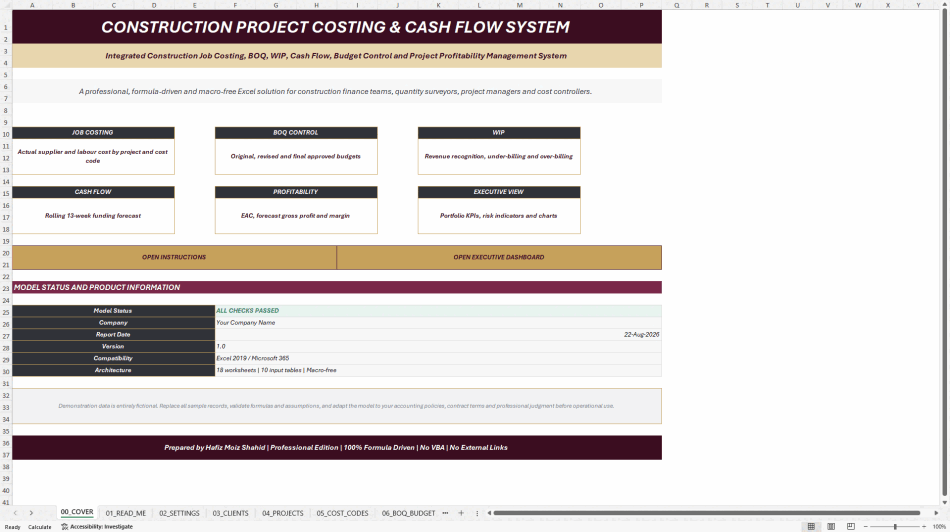
The Construction Project Costing and Cash Flow System is a professional, formula-driven financial management model developed for contractors, subcontractors, property developers, engineering firms, quantity surveyors, project managers, commercial managers, cost controllers, and construction finance teams.
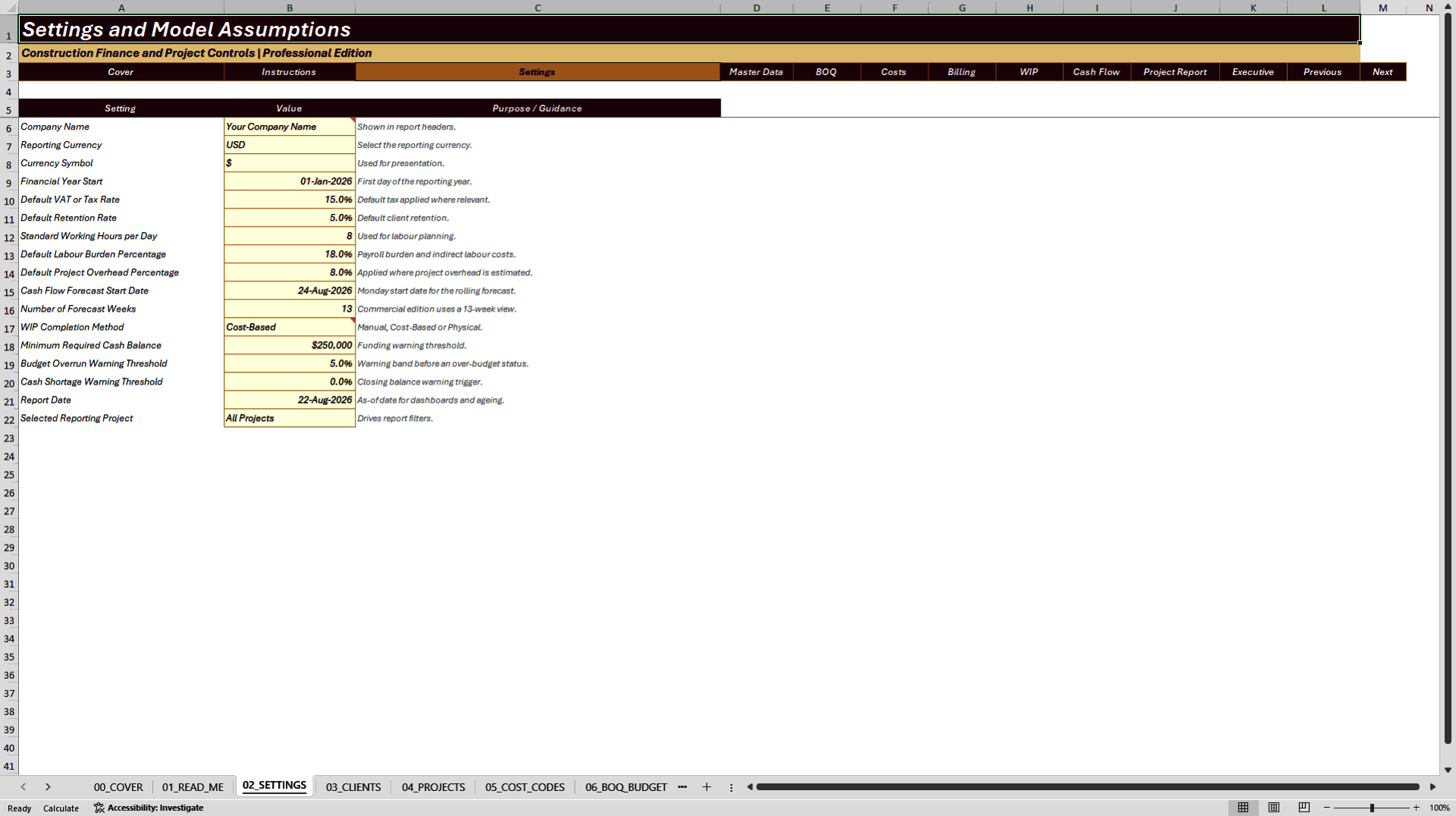
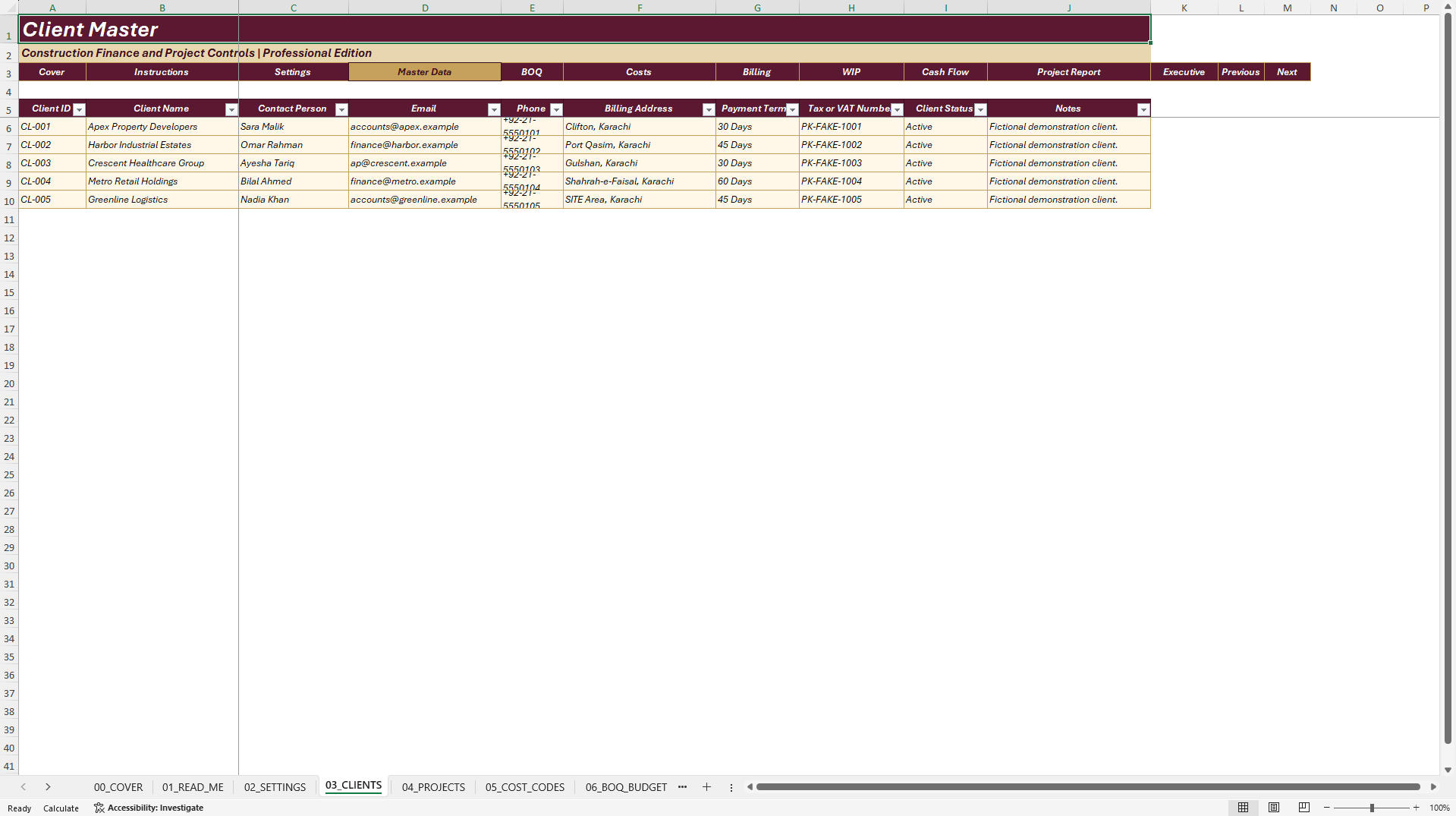
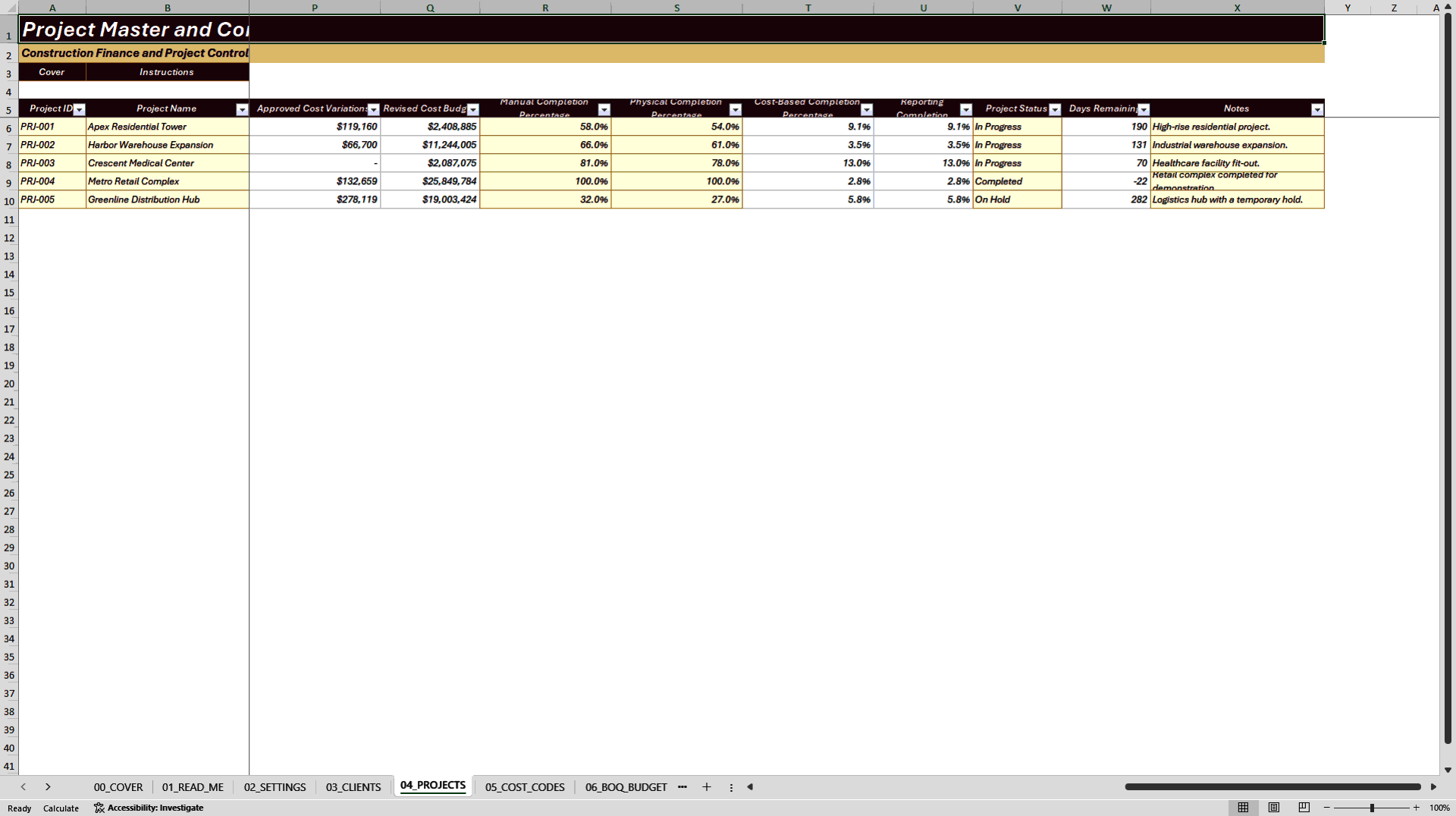
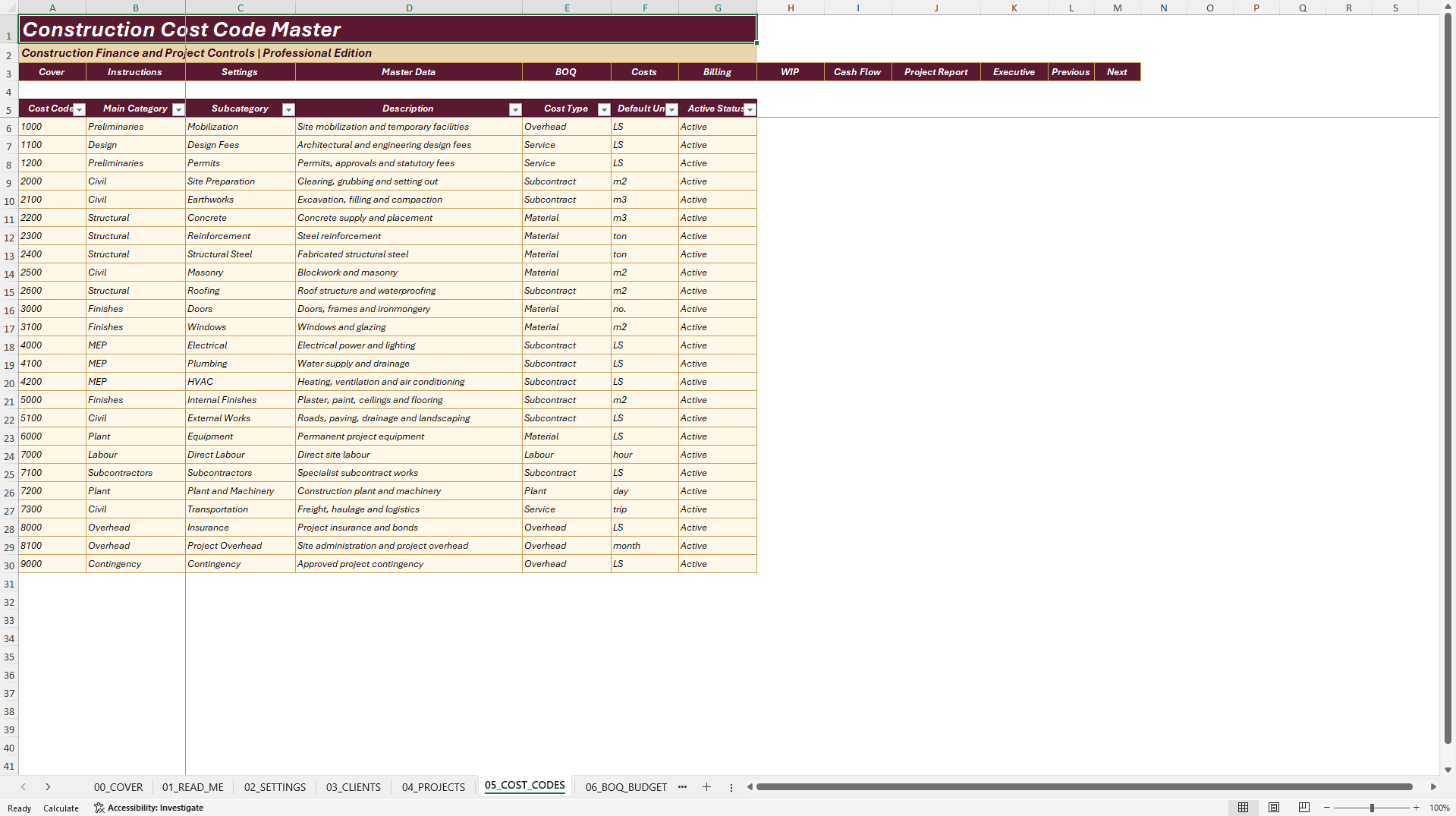
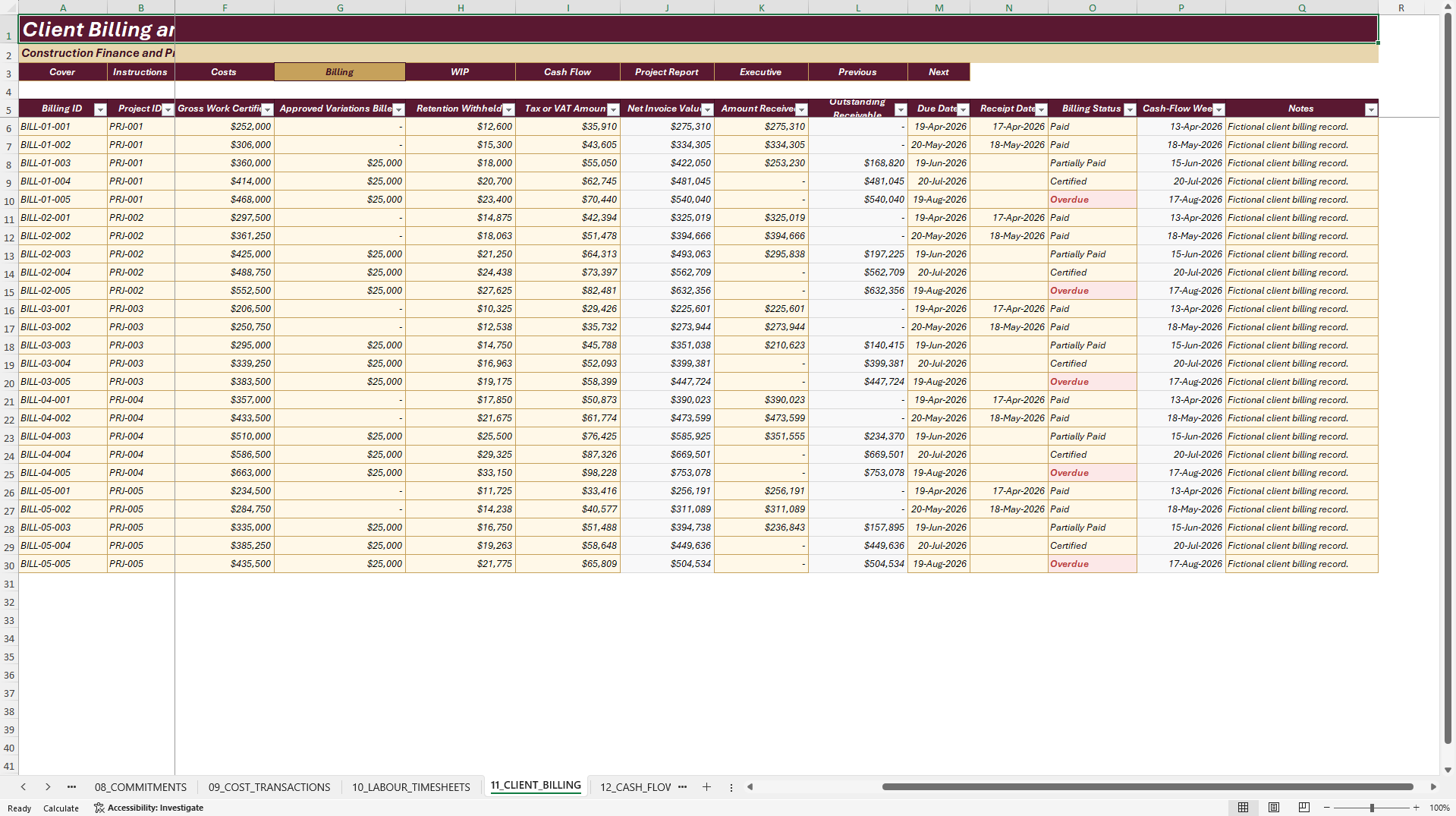
The system connects the principal commercial and financial activities of multiple construction projects within one structured workbook. Users can configure clients, projects, and construction cost codes; establish original and revised BOQ budgets; maintain change orders; monitor purchase orders and subcontract commitments; record supplier costs and loaded labor costs; manage client billing and collections; calculate work in progress; prepare rolling 13-week cash-flow forecasts; and review project and portfolio performance.
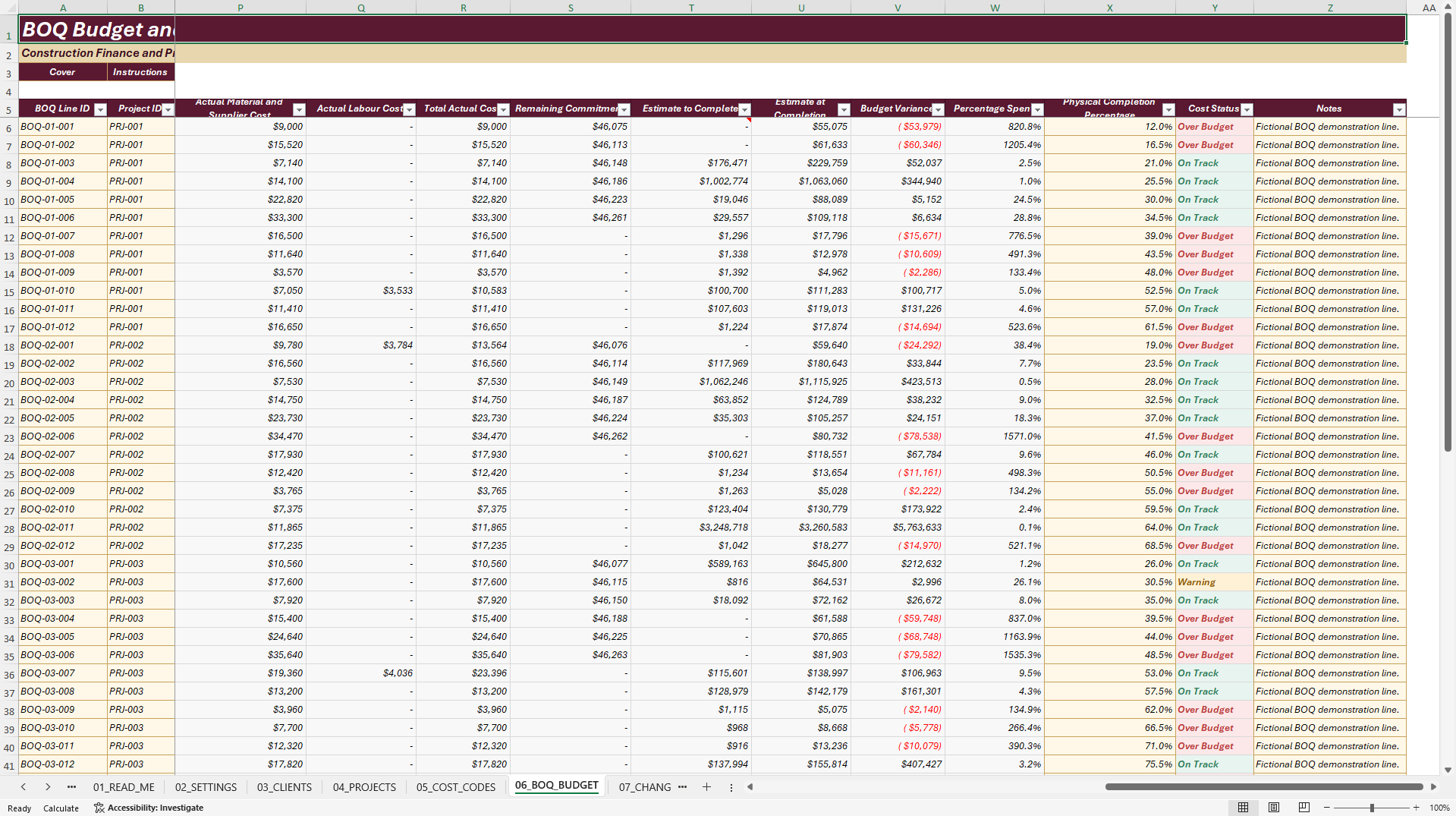
The BOQ and project-control modules provide visibility over original budgets, approved changes, revised budgets, commitments, actual costs, remaining commitments, estimates to complete, estimates at completion, and budget variances. This enables project and finance teams to identify potential cost overruns and commercial risks before they materially affect project profitability.
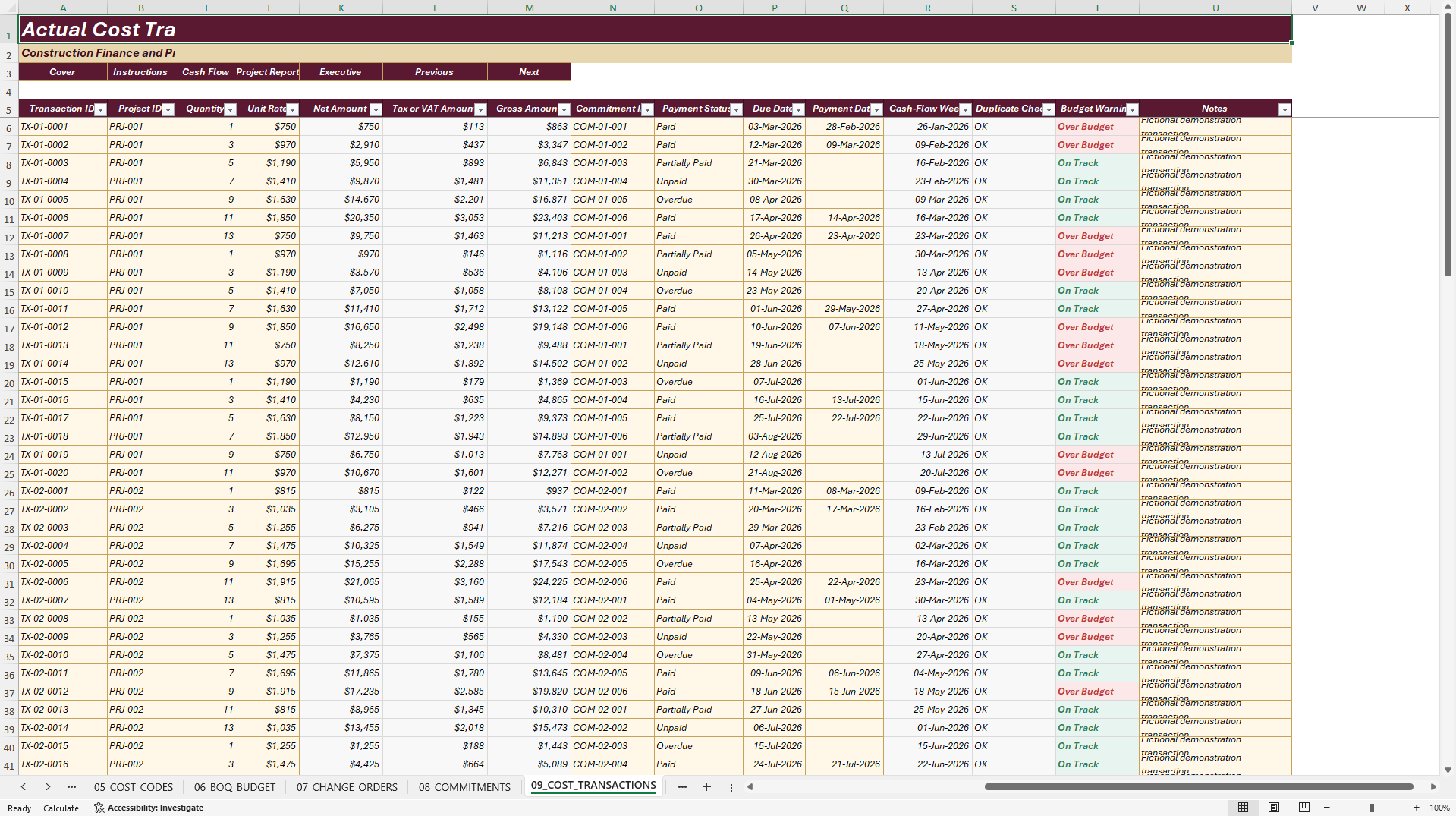
Change-order and commitment registers help users monitor approved variations, supplier obligations, subcontract values, invoices, payments, and future cost exposure. Actual supplier costs and labor timesheets are connected to relevant Project IDs and Cost Codes, providing a consistent structure for job-cost reporting.
The WIP module connects contract values, project costs, commitments, completion percentages, earned revenue, and amounts billed. It supports Manual, Cost-Based, and Physical completion methods. Users can review under-billing, over-billing, forecast final revenue, forecast final cost, forecast gross profit, and forecast gross margin.
The rolling 13-week cash-flow forecast summarizes expected receipts and payments, opening and closing cash balances, minimum cash requirements, projected surpluses, and potential funding gaps. Project summaries and executive dashboards provide management with key performance indicators, profitability analysis, risk indicators, and visual reporting.
The primary document is an 18-worksheet Microsoft Excel workbook containing 10 structured input tables. The secondary documentation ZIP contains a detailed 35-page User Manual, an 11-page Quick Start Guide, and a 20-page Product Preview. These supporting documents explain the workbook structure, setup process, operating sequence, control procedures, and principal outputs.
The workbook is 100% formula-driven, contains no VBA, and has no external workbook links. It is designed for Microsoft Excel 2019 and Microsoft 365. Users should retain a backup copy and avoid overwriting calculated formula cells.
All included names, records, projects, and financial figures are fictional demonstration data and must be replaced before operational use. This workbook is a management planning and project-control model. It is not a statutory accounting ledger, construction ERP, payroll system, procurement platform, contract-management system, or certified quantity-surveying application. Users remain responsible for validating their data, assumptions, contractual terms, accounting policies, calculations, and business decisions.
Got a question about the product? Email us at support@flevy.com or ask the author directly by using the "Ask the Author a Question" form. If you cannot view the preview above this document description, go here to view the large preview instead.
Source: Best Practices in Cash Flow Management, Construction Excel: Construction Project Costing and Cash Flow System Excel (XLSX) Spreadsheet, Hafiz Moiz Shahid
ABOUT THE AUTHOR

Accounting and finance professional with 8+ years of experience in financial reporting, budgeting, forecasting, accounting operations, inventory management, product costing, payroll processing, reconciliations, and ERP-based financial processes. I specialize in developing practical Excel-based financial models, business planning tools, management dashboards, budgeting and forecasting solutions, ... [read more]
Ask the Author a Question
You must be logged in to contact the author.




























