
 Click main image to view in full screen. Unlock all 10 preview images:


FOOD & BEVERAGE INDUSTRY EXCEL DESCRIPTION
Starting a coffee shop is an exciting business venture, but it requires careful financial planning to ensure long-term success. A coffee shop financial model template is an essential tool that helps entrepreneurs understand their financial position, plan for startup costs, and create accurate financial projections. This template provides a structured approach to financial modeling, covering everything from revenue models and balance sheets to break-even analysis and cash flow projections. By leveraging this model, coffee shop owners can make informed decisions and improve their financial performance.
Key Components
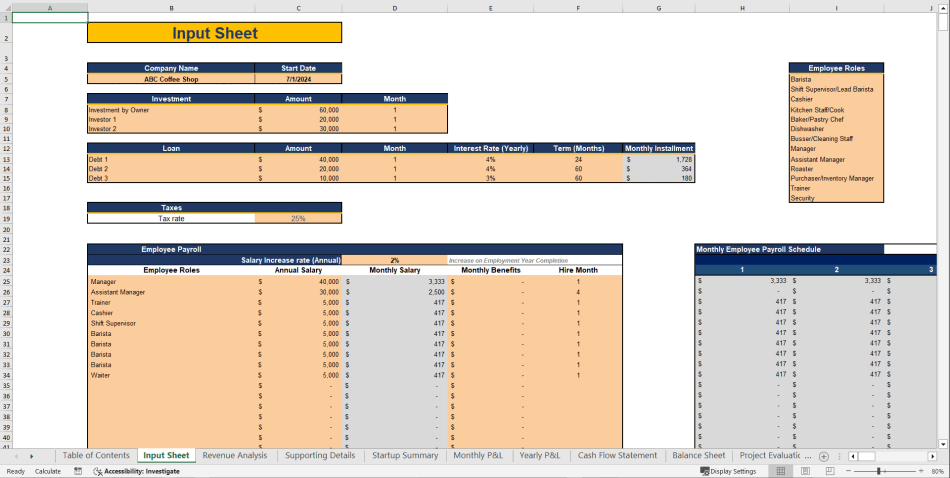
Input Sheet
A well-defined input sheet forms the foundation of a solid financial model template. It includes:
1. Core assumptions such as pricing, sales volume, and operational costs.
2. Fixed costs, variable expenses, and capital expenditures.
3. A realistic baseline for financial planning and strategic decision-making.
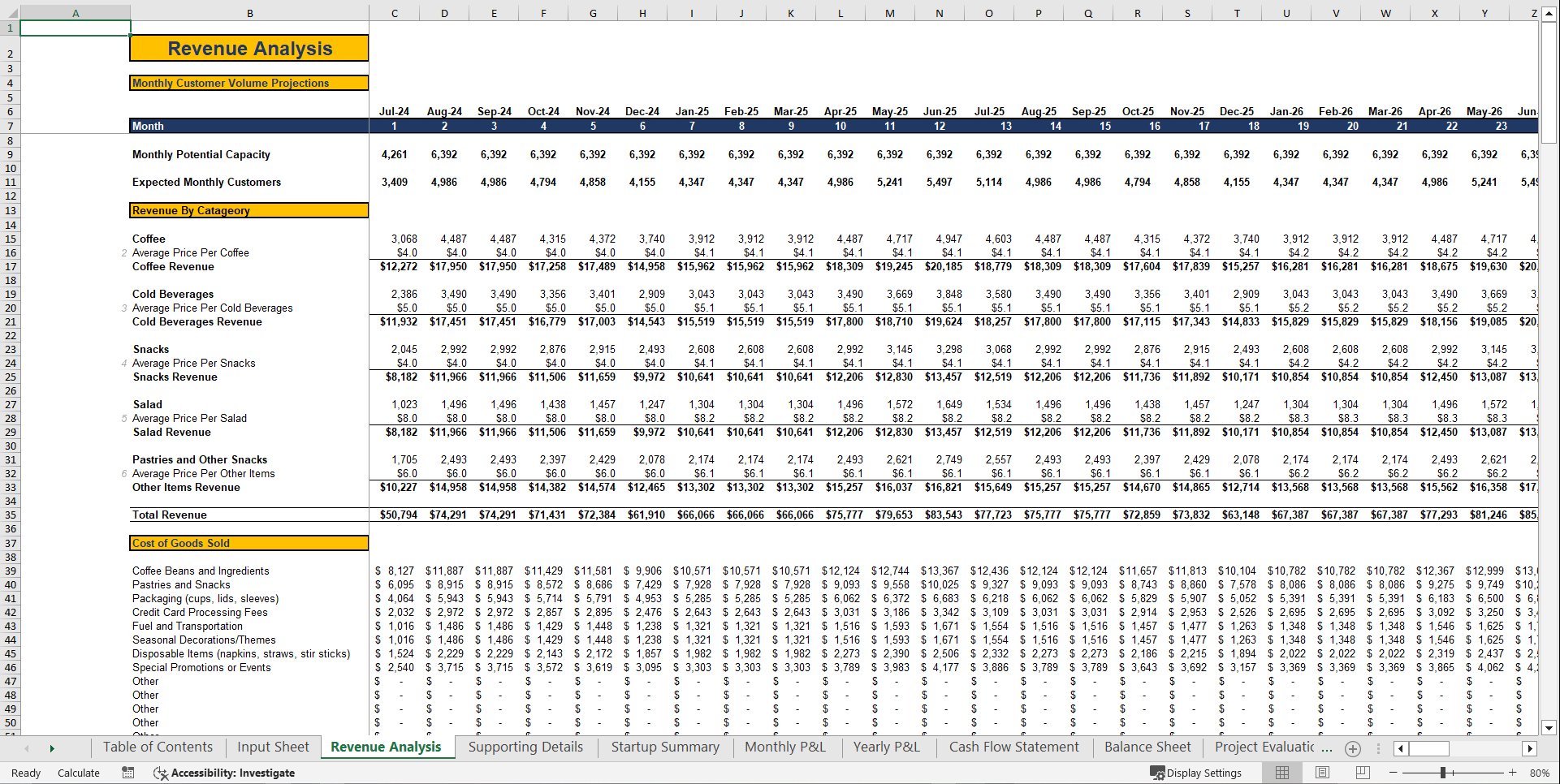
Revenue Analysis
Understanding the revenue streams is crucial for a successful coffee shop. This section includes:
1. A breakdown of revenue streams such as coffee sales, snacks, merchandise, and catering.
2. Factors like customer footfall, average price per item, and seasonal trends.
3. The impact of pricing strategies and menu adjustments on profit margins.
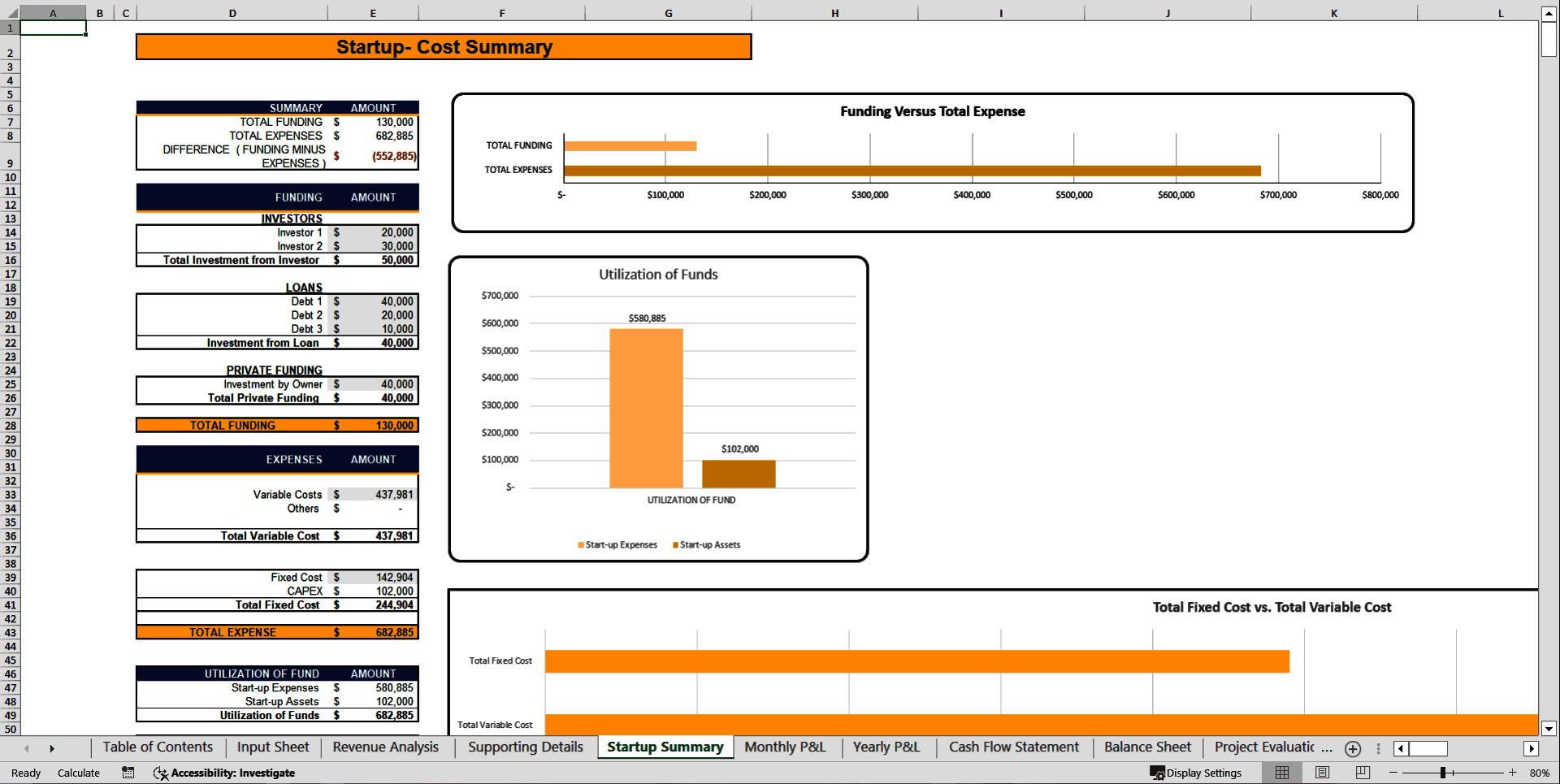
Startup Summary
For coffee shop startups, planning initial investments is key. This section highlights:
1. Startup costs such as rent, equipment, initial inventory, and marketing expenses.
2. A detailed investment plan, including funding sources and capital allocation.
3. An overview of funding requirements to support launch operations.
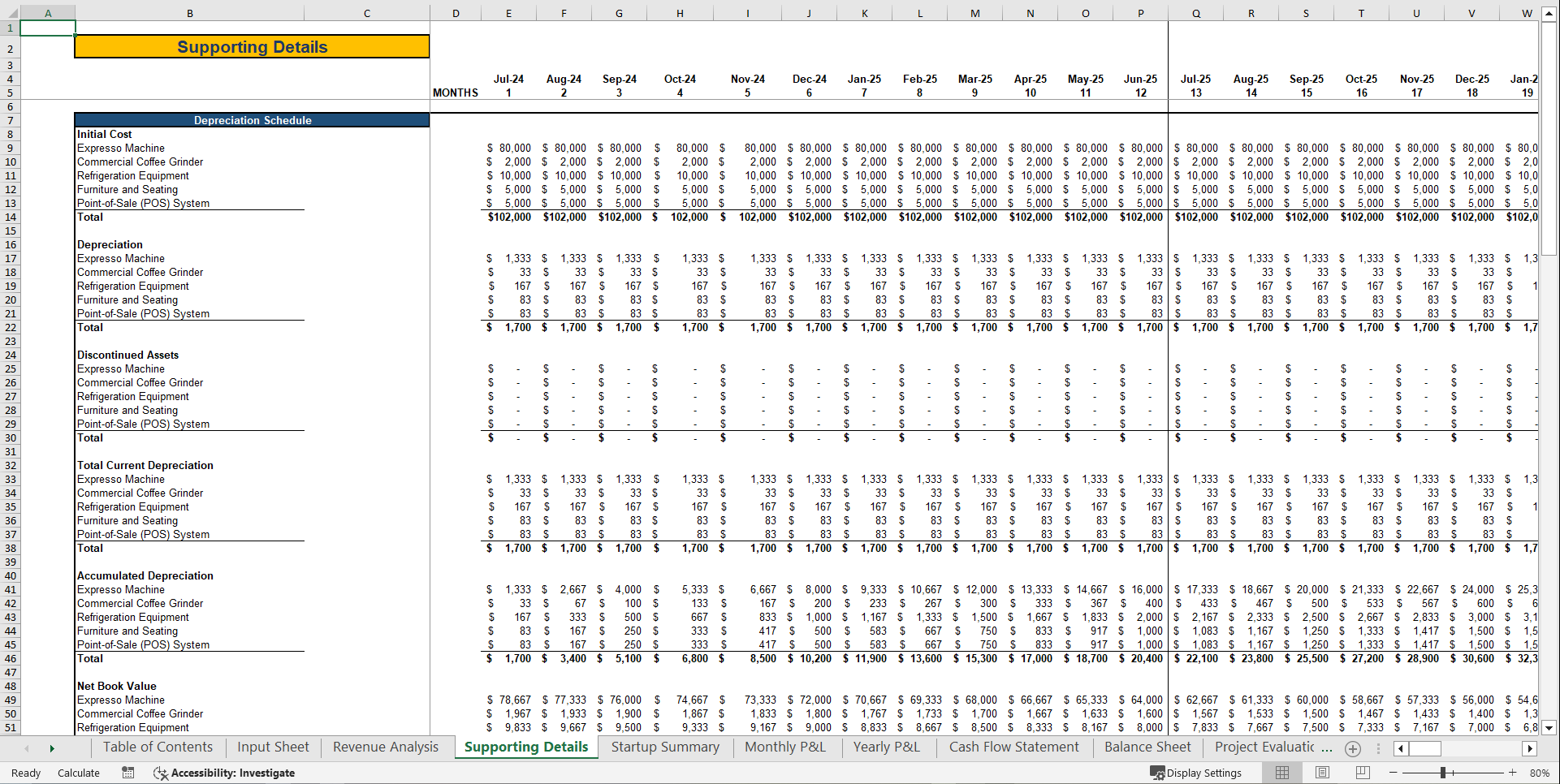
Depreciation and Amortization Schedule
This section ensures accurate tracking of long-term assets by covering:
1. Depreciation of fixed assets like equipment, furniture, and fixtures.
2. Amortization of intangible assets, such as trademarks and branding costs.
3. Proper calculation for tax reporting and financial statements.
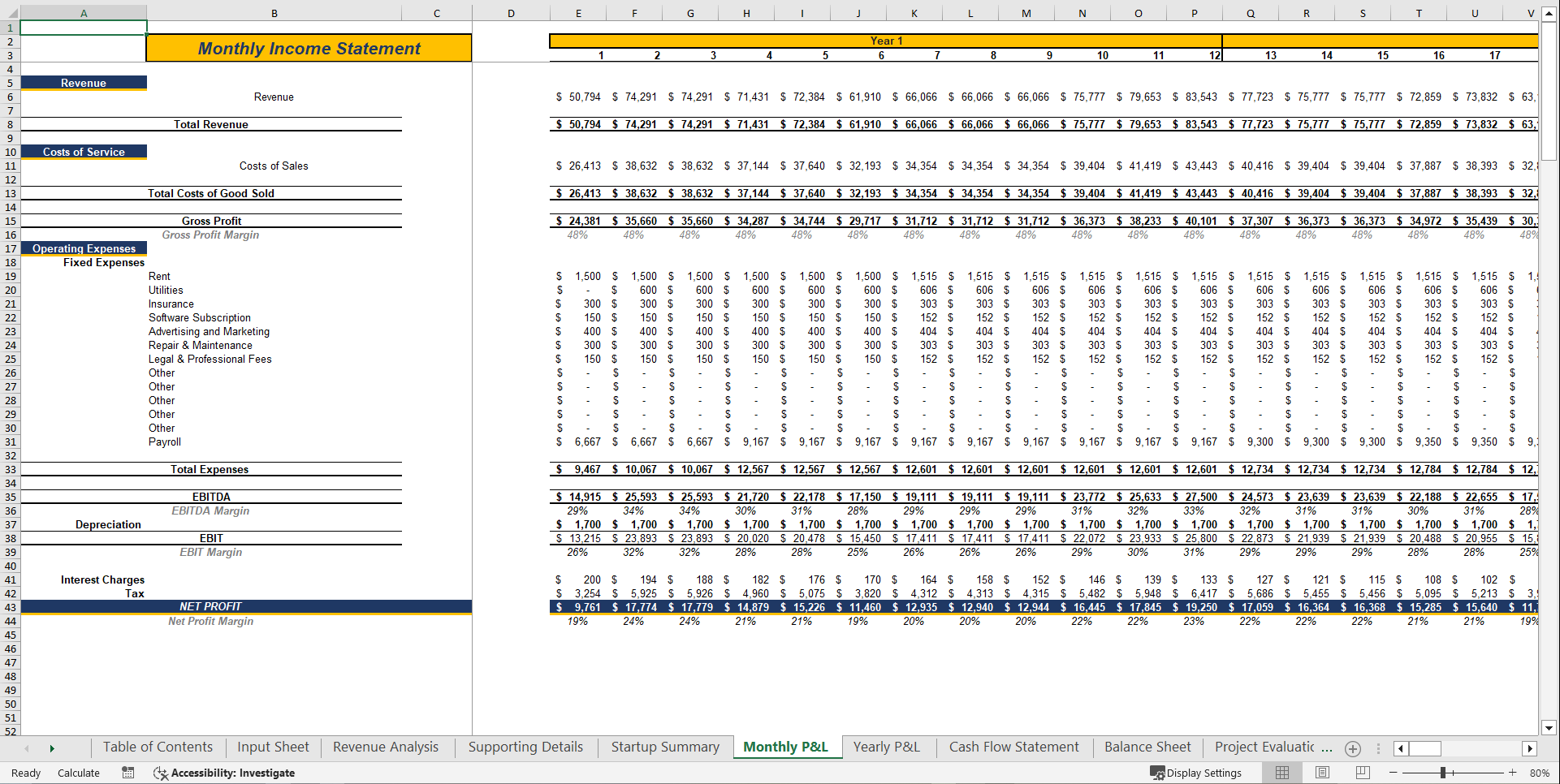
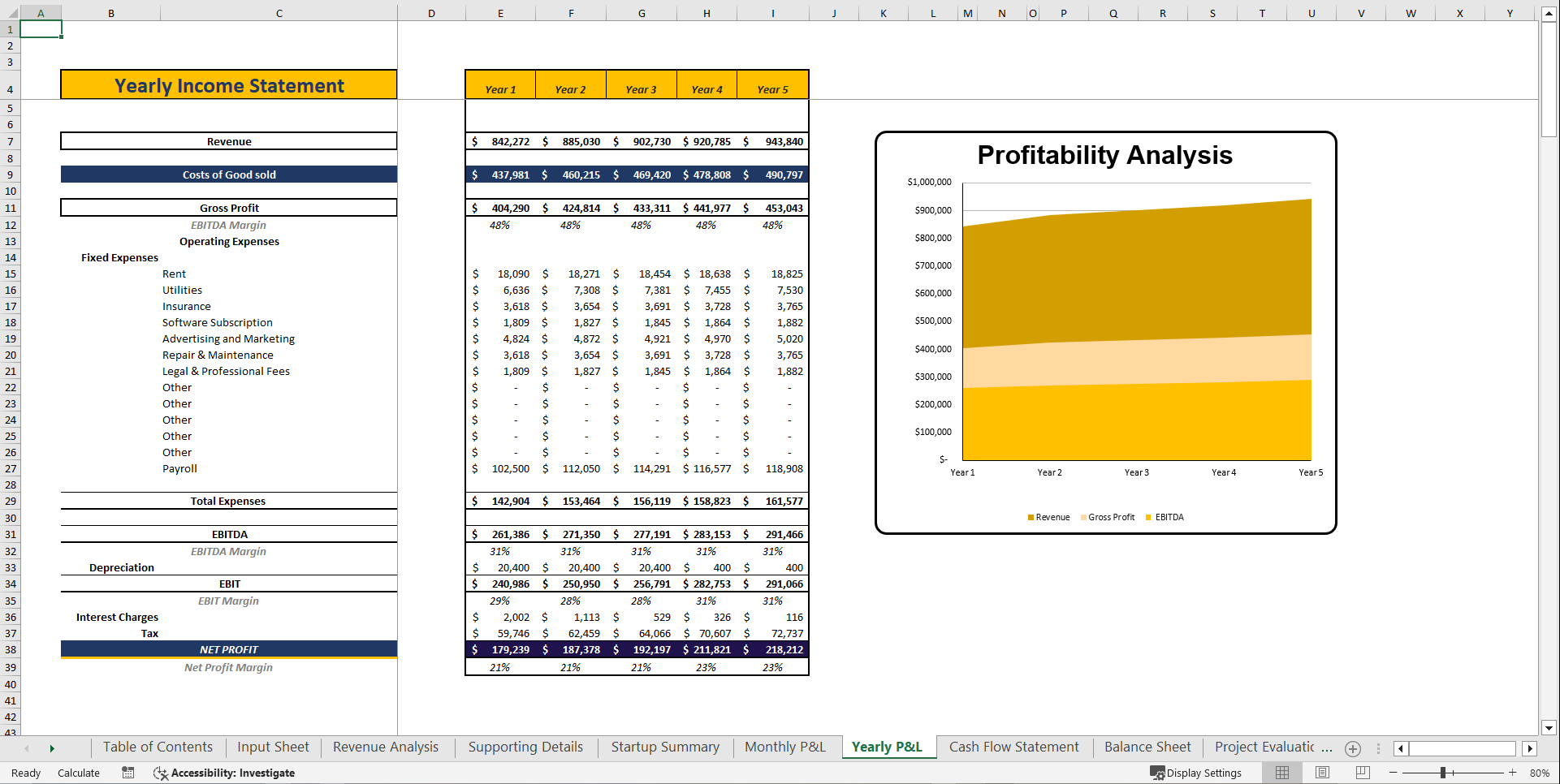
Income Statement
The income statement provides a snapshot of profitability, including:
1. Revenue, cost of sales, and net income over a specific period.
2. A breakdown of operating expenses, including staff salaries, rent, and marketing expenses.
3. Insights into monthly revenues, profit & loss trends, and financial performance.
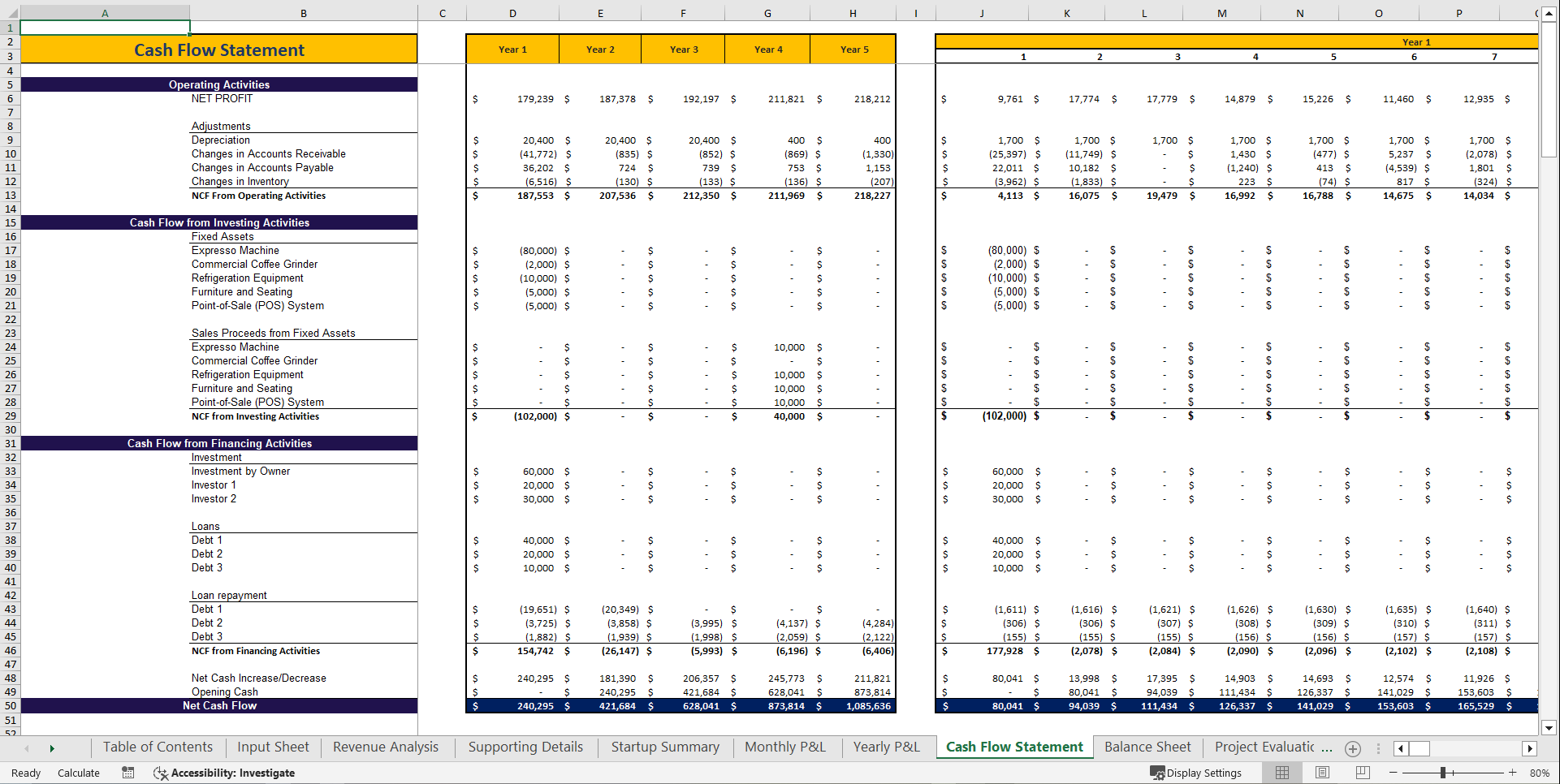
Cash Flow Statement
A healthy cash flow statement ensures smooth business operations. It includes:
1. Cash inflows and outflows from operations, investments, and financing.
2. A clear view of cash movements to maintain healthy cash balances.
3. Helps business owners in financial decision-making and liquidity management.
Balance Sheet
The balance sheet evaluates the financial stability of a coffee shop by covering:
1. Assets, liabilities, and equity for an accurate financial position.
2. Balance sheet projections to track financial growth over time.
3. A key document for investors and lenders to assess business stability.
Breakeven Analysis
Knowing the break-even point is critical for profitability. This section includes:
1. The sales volume required to cover total costs.
2. The impact of pricing strategies on reaching profitability.
3. Supports strategic decision-making to improve revenue generation.
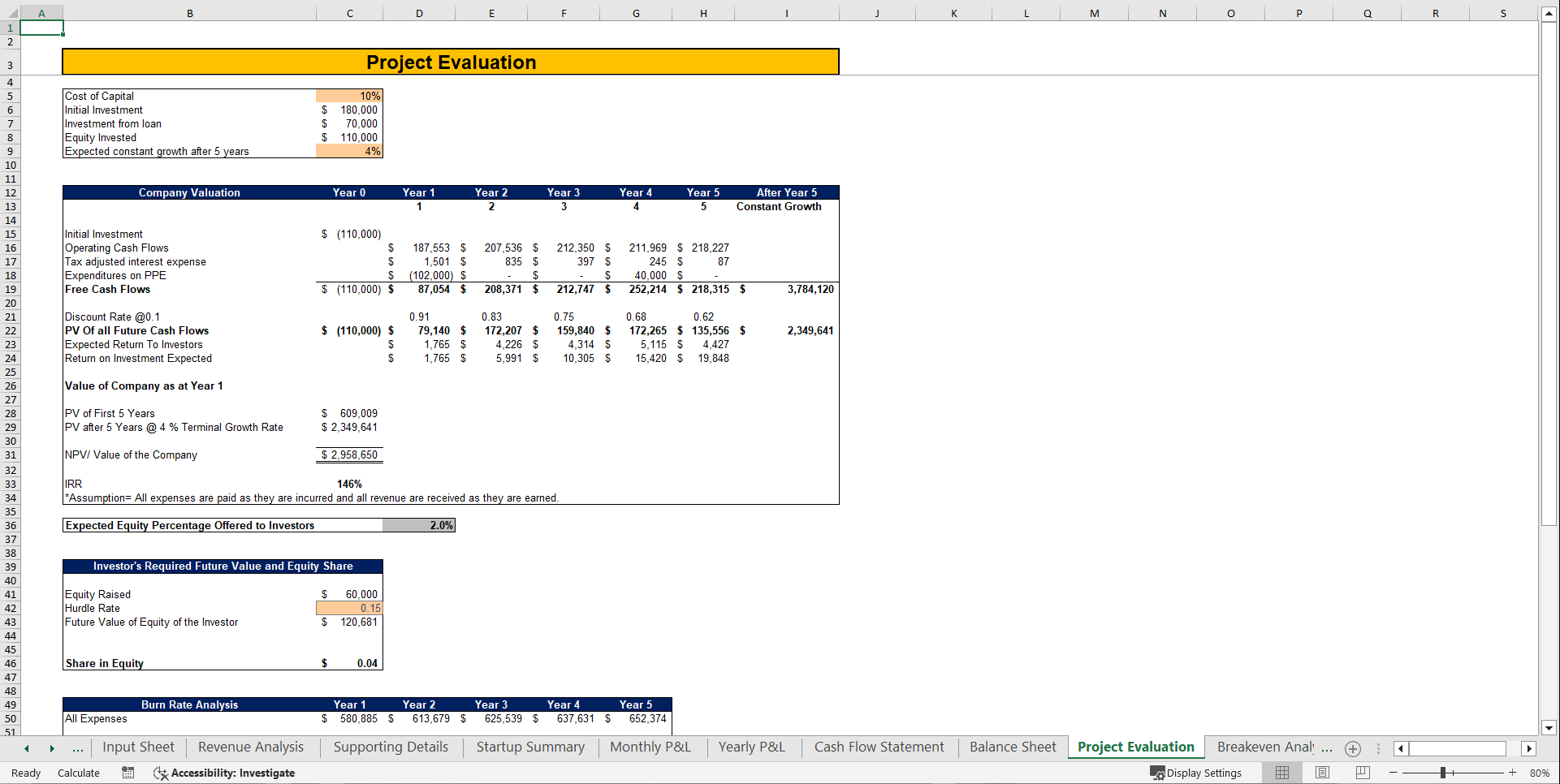
Project Evaluation
Assessing financial feasibility is crucial. This section calculates:
1. Discount rate, rate of return, and profitability ratios.
2. Whether the coffee shop model is financially viable.
3. Key benchmarks for annual revenues and cash flow projections.
Sensitivity Analysis
Understanding financial risks is essential for long-term success. This section:
1. Examines the effect of market fluctuations on revenue and costs.
2. Helps adjust for variable costs and operating expenses.
3. Tests different financial scenarios to ensure business resilience.
KPIs and Financial Ratios
Tracking performance indicators ensures effective financial management. This section includes:
1. Key performance indicators (KPIs) like profit margins, return on investment, and liquidity ratios.
2. Insights into industry benchmarks to compare performance.
3. Guidance for business owners to make informed decisions.
Dashboard
A user-friendly dashboard presents financial insights visually. It includes:
1. Operational cash flow visuals, cash flow projections, and revenue models.
2. Summarized financial plans and financial performance trends.
3. A clear overview for coffee shop owners to monitor financial health.
FAQs
1. What is a Coffee Shop Financial Model Template?
A financial model template is a structured spreadsheet that helps in financial planning, forecasting, and budgeting for a coffee shop business. It includes revenue forecasts, cost structures, and profitability metrics.
2. Why is a Cash Flow Statement Important?
A cash flow statement helps in tracking cash inflows and outflows, ensuring the business maintains adequate cash balances to cover operating expenses and investment needs.
3. How Does a Coffee Shop Revenue Projection Work?
A coffee shop revenue projection estimates future sales based on customer volume, pricing, and menu items. It helps business owners set realistic sales forecasts and growth targets.
4. What Costs Should Coffee Shop Startups Consider?
Startup costs include rent, equipment, initial inventory, marketing expenses, and staff salaries. Understanding these costs is key to preparing a solid business plan.
5. How Can a Coffee Shop Improve Its Profitability?
A successful coffee shop optimizes pricing strategies, marketing campaigns, and operational efficiencies to maximize profitability ratios and financial success.
Got a question about the product? Email us at support@flevy.com or ask the author directly by using the "Ask the Author a Question" form. If you cannot view the preview above this document description, go here to view the large preview instead.
Source: Best Practices in Food & Beverage Industry, Restaurant Industry, Integrated Financial Model Excel: Coffee Shop Financial Model Template Excel (XLSX) Spreadsheet, Oak Business Consultant




























