
 Click main image to view in full screen. Unlock all 19 preview images:
CEO Operating System Playbook (CEO OS) – PowerPoint PPTX Template
PowerPoint (PPTX) 422 Slides


BENEFITS OF THIS DOWNLOADABLE POWERPOINT DOCUMENT
- Provides a complete operating framework for CEOs to design, align, and scale their organization with clarity and control.
- Delivers a battle-tested system for turning vision and strategy into disciplined execution across leadership, teams, and metrics.
- Equips CEOs with a structured playbook to drive sustainable growth, decision quality, and long-term value creation.
CEO PPT TEMPLATE DESCRIPTION
Curated by McKinsey-trained Executives
The CEO Operating System Playbook (CEO OS) + 25 Checklists, 25 OKRs and 50 KPIs
The Definitive CEO Execution System Used to Scale Companies Without Chaos
This is not a slide deck.
This is a CEO control system.
The CEO Operating System Playbook (CEO OS) is a 400+ slide, battle-tested PowerPoint framework built for founders, CEOs, and executive teams who are done improvising leadership and want a repeatable system to scale strategy, execution, people, and performance—without burning out or blowing up the business.
If you're running a company and asking:
• *Why does strategy break down after the board meeting?*
• *Why do OKRs look great on paper but fail in execution?*
• *Why does growth create more complexity instead of leverage?*
• *Why does everything still depend on the CEO?*
CEO OS is the answer.
What the CEO OS Actually Does (And Why It's Different)
Most "CEO frameworks" are theoretical, fragmented, or academic.
CEO OS is a complete operating architecture for the modern CEO.
It shows you how to design, run, and continuously evolve your company as a system—not a collection of meetings, decks, and fire drills.
This playbook helps you:
✅ Think like a system architect, not an overloaded operator
✅ Turn vision into decision logic, not slogans
✅ Translate strategy into execution rhythms that actually stick
✅ Align leadership, culture, incentives, and metrics—by design
✅ Build a company that scales without breaking you or the org
This is the difference between *managing* a company and engineering one.
Built for Real CEOs, Not Armchair Theorists
CEO OS is designed for:
• Founders transitioning from operator → enterprise CEO
• Scale-up and growth-stage CEOs drowning in complexity
• PE-backed and VC-backed CEOs under execution pressure
• Professional CEOs running multi-business or global organizations
• Executive teams that need clarity, cadence, and accountability
If you have:
• A board
• Investors
• A leadership team
• Strategic initiatives that matter
• A reputation to protect
• A legacy to build
You need an operating system—not more advice.
Why This Deck Is So Powerful
400+ slides isn't a flex—it's coverage.
CEO OS doesn't leave gaps. It integrates:
• Strategy
• Decision-making
• Org design
• Talent systems
• Culture mechanics
• Execution cadence
• Financial control
• Metrics and dashboards
• Risk and resilience
• Board and investor dynamics
• CEO longevity and succession
Everything connects. Nothing floats.
You don't just *learn* what great CEOs do—you install it into how your company runs.
Plug-and-Play for Immediate Impact
This is not a "read once and feel inspired" asset.
CEO OS is:
• Presentation-ready for leadership offsites and board sessions
• Modular so you can deploy what you need, when you need it
• Operational, not conceptual
• Designed to be reused, refined, and institutionalized
You can use it to:
• Reset your leadership team
• Rebuild your execution cadence
• Redesign decision rights
• Align incentives and performance
• Prepare board and investor narratives
• Create clarity in moments of growth, crisis, or transition
The Hidden Value: CEO Leverage
The biggest bottleneck in most companies is the CEO.
CEO OS is built to:
• Reduce decision fatigue
• Eliminate unnecessary escalations
• Create autonomous execution
• Protect focus and energy
• Extend CEO impact without micromanagement
This playbook doesn't just scale the company.
It scales you.
Why EVERY CEO needs this
Because it gives you:
• Language your board respects
• Structure your executives can't hide behind
• Metrics that drive behavior, not vanity
• Governance without bureaucracy
• Control without control-freakery
This is the kind of internal system companies wish they had built earlier—and competitors never see coming.
CONTENT OVERVIEW
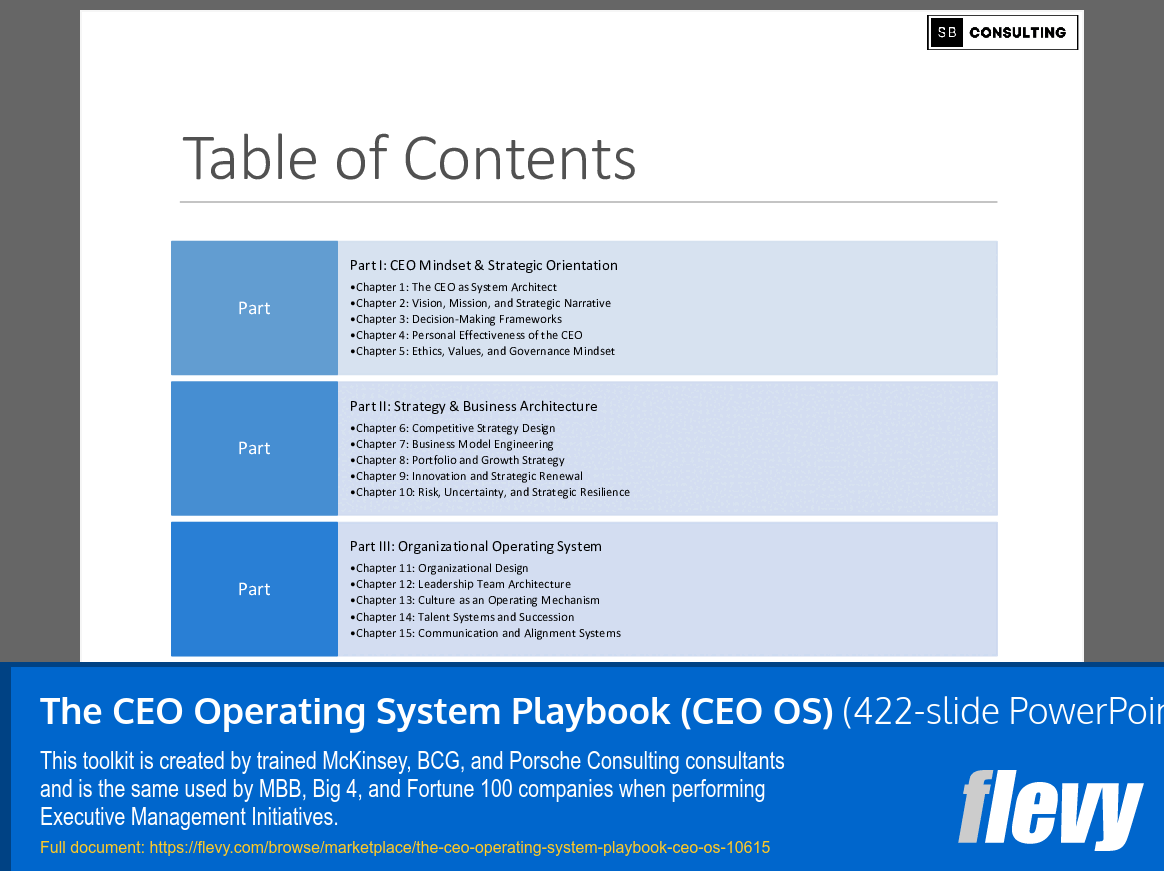
Part I: CEO Mindset & Strategic Orientation
Chapter 1: The CEO as System Architect
• 1.1 From Operator to Architect
• 1.2 Long-Term Value Creation Thinking
• 1.3 Designing for Scale and Resilience
Chapter 2: Vision, Mission, and Strategic Narrative
• 2.1 Crafting a Compelling Vision
• 2.2 Mission as an Operating Filter
• 2.3 Strategic Storytelling for Alignment
Chapter 3: Decision-Making Frameworks
• 3.1 First-Principles and Second-Order Thinking
• 3.2 Speed vs. Accuracy Tradeoffs
• 3.3 Decision Rights and Escalation Logic
Chapter 4: Personal Effectiveness of the CEO
• 4.1 Energy, Focus, and Time Allocation
• 4.2 CEO-Level Prioritization
• 4.3 Building Personal Operating Rhythms
Chapter 5: Ethics, Values, and Governance Mindset
• 5.1 Values as Strategic Constraints
• 5.2 Ethical Decision-Making at Scale
• 5.3 Fiduciary Responsibility and Stewardship
________________________________________
Part II: Strategy & Business Architecture
Chapter 6: Competitive Strategy Design
• 6.1 Market Analysis and Strategic Positioning
• 6.2 Differentiation and Moat Building
• 6.3 Strategic Tradeoffs and Focus
Chapter 7: Business Model Engineering
• 7.1 Value Creation and Capture
• 7.2 Revenue Models and Unit Economics
• 7.3 Business Model Adaptation
Chapter 8: Portfolio and Growth Strategy
• 8.1 Core, Adjacent, and Transformational Growth
• 8.2 Capital Allocation Logic
• 8.3 M&A and Strategic Partnerships
Chapter 9: Innovation and Strategic Renewal
• 9.1 Exploration vs. Exploitation
• 9.2 Innovation Governance
• 9.3 Scaling Successful Innovations
Chapter 10: Risk, Uncertainty, and Strategic Resilience
• 10.1 Strategic Risk Mapping
• 10.2 Scenario Planning
• 10.3 Crisis Anticipation and Response
________________________________________
Part III: Organizational Operating System
Chapter 11: Organizational Design
• 11.1 Structure Aligned to Strategy
• 11.2 Decision Flow and Accountability
• 11.3 Operating Model Design
Chapter 12: Leadership Team Architecture
• 12.1 Building the Executive Team
• 12.2 Roles, Interfaces, and Cadence
• 12.3 Executive Performance Management
Chapter 13: Culture as an Operating Mechanism
• 13.1 Defining and Codifying Culture
• 13.2 Culture in Hiring, Promotion, and Rewards
• 13.3 Correcting Cultural Drift
Chapter 14: Talent Systems and Succession
• 14.1 Talent Strategy and Workforce Planning
• 14.2 Leadership Development Systems
• 14.3 Succession Planning and Continuity
Chapter 15: Communication and Alignment Systems
• 15.1 Strategic Communication Architecture
• 15.2 OKRs, KPIs, and Alignment Tools
• 15.3 Feedback Loops and Organizational Learning
________________________________________
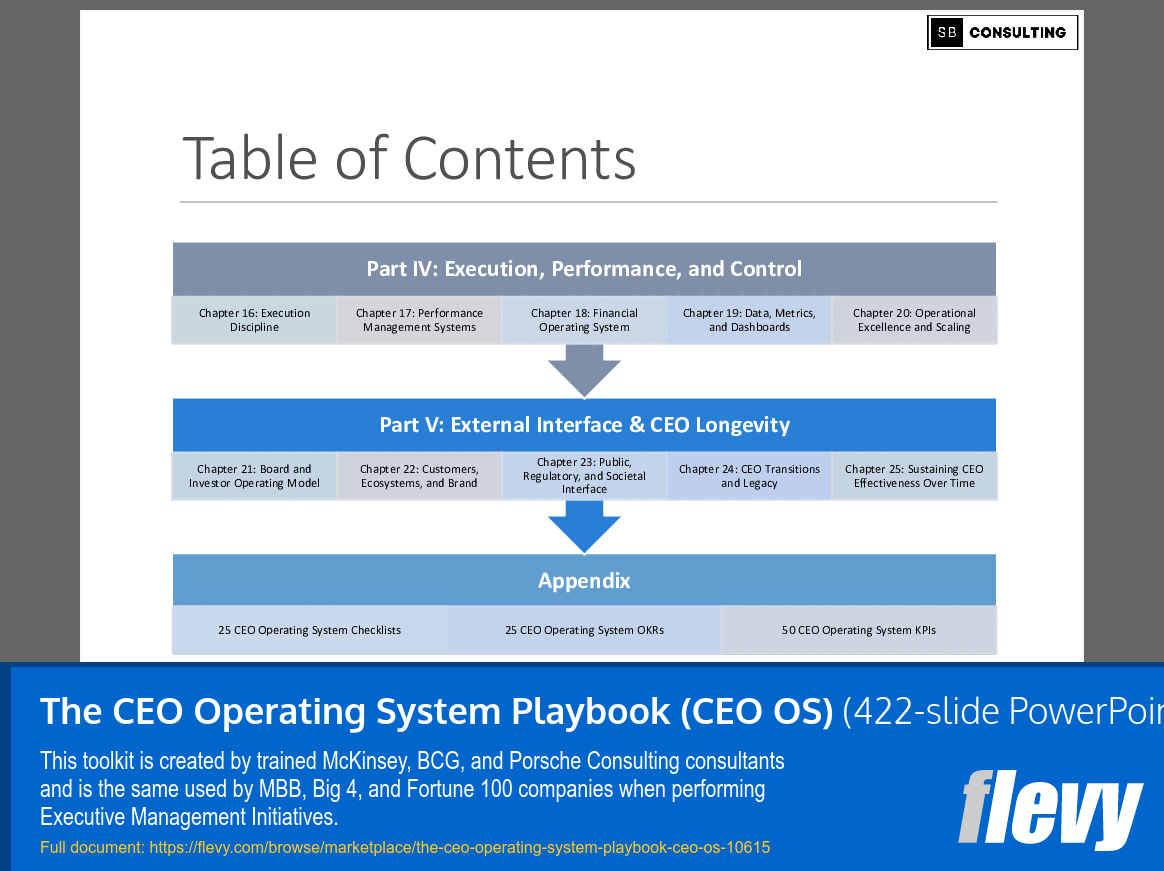
Part IV: Execution, Performance, and Control
Chapter 16: Execution Discipline
• 16.1 Translating Strategy into Action
• 16.2 Operating Cadences and Reviews
• 16.3 Removing Execution Friction
Chapter 17: Performance Management Systems
• 17.1 Defining What Matters
• 17.2 Incentives and Behavioral Design
• 17.3 Managing Underperformance
Chapter 18: Financial Operating System
• 18.1 Financial Literacy for CEOs
• 18.2 Budgeting, Forecasting, and Capital Control
• 18.3 Cash Flow, Profitability, and Returns
Chapter 19: Data, Metrics, and Dashboards
• 19.1 CEO-Level Metrics
• 19.2 Building Decision-Grade Dashboards
• 19.3 Data Governance and Integrity
Chapter 20: Operational Excellence and Scaling
• 20.1 Process Design and Optimization
• 20.2 Scaling Without Complexity
• 20.3 Continuous Improvement Systems
________________________________________
Part V: External Interface & CEO Longevity
Chapter 21: Board and Investor Operating Model
• 21.1 Board Governance and Dynamics
• 21.2 Investor Communication and Trust
• 21.3 Managing Expectations and Accountability
Chapter 22: Customers, Ecosystems, and Brand
• 22.1 CEO as Chief Customer Advocate
• 22.2 Ecosystem Strategy and Partnerships
• 22.3 Brand as a Strategic Asset
Chapter 23: Public, Regulatory, and Societal Interface
• 23.1 Regulatory Strategy
• 23.2 Public Affairs and Reputation Management
• 23.3 ESG and Societal Impact
Chapter 24: CEO Transitions and Legacy
• 24.1 Leading Through Change
• 24.2 CEO Succession and Transition
• 24.3 Building a Durable Legacy
Chapter 25: Sustaining CEO Effectiveness Over Time
• 25.1 Burnout Prevention and Renewal
• 25.2 Learning, Adaptation, and Reinvention
• 25.3 Staying Relevant in Changing Markets
________________________________________
Conclusion: The CEO Operating System in Practice
• Integrating the System
• Common Failure Modes and Corrections
• The CEO OS as a Living Framework
Checklists
• CEO Personal Effectiveness Checklist
• Strategic Vision and Mission Alignment Checklist
• Decision-Making Framework Checklist
• Board Engagement and Governance Checklist
• Investor Communication and Trust Checklist
• Organizational Design and Structure Checklist
• Leadership Team Roles and Cadence Checklist
• Culture Definition and Alignment Checklist
• Talent Development and Succession Planning Checklist
• Execution and Operating Cadence Checklist
• Performance Management and Metrics Checklist
• Financial Operating System Checklist
• Data, Metrics, and Dashboards Checklist
• Operational Excellence and Process Optimization Checklist
• Scaling and Complexity Management Checklist
• Innovation and Strategic Renewal Checklist
• Risk, Crisis, and Resilience Planning Checklist
• Customer-Centric Strategy Checklist
• Ecosystem and Partnership Management Checklist
• Brand Strategy and Reputation Checklist
• Regulatory Compliance and ESG Checklist
• Public Affairs and Societal Impact Checklist
• CEO Transition and Succession Checklist
• CEO Burnout Prevention and Renewal Checklist
• Continuous Learning, Adaptation, and Reinvention Checklist
OKRs
• Strategic Vision and Mission Execution OKR
• Revenue Growth and Market Share Expansion OKR
• Profitability and Financial Health OKR
• Cash Flow and Capital Efficiency OKR
• Customer Satisfaction and Loyalty OKR
• Innovation Pipeline and Product Development OKR
• Operational Excellence and Efficiency OKR
• Scaling and Complexity Management OKR
• Talent Development and Leadership Pipeline OKR
• Culture and Values Alignment OKR
• Board and Governance Engagement OKR
• Investor Relations and Trust OKR
• Brand Strength and Market Perception OKR
• Digital Transformation and Technology Leverage OKR
• Data and Metrics-Driven Decision Making OKR
• Risk Management and Resilience OKR
• Regulatory Compliance and ESG Integration OKR
• Public Affairs and Reputation Management OKR
• Customer-Centric Strategy and Experience OKR
• Ecosystem and Strategic Partnerships OKR
• Crisis Preparedness and Response OKR
• Sustainable Growth and Long-Term Value OKR
• CEO Personal Effectiveness and Renewal OKR
• Continuous Learning and Organizational Adaptation OKR
• CEO Succession and Legacy Planning OKR
KPIs
Cluster 1: Strategic Performance and Growth
1. Revenue Growth Rate
2. Market Share Expansion
3. New Market Penetration
4. Product/Service Portfolio Performance
5. Innovation Success Rate
6. Strategic Initiative Completion
7. Competitive Positioning Index
8. Customer Acquisition Efficiency
9. Long-Term Value Creation
10. Portfolio Diversification Impact
Cluster 2: Financial Health and Capital Efficiency
1. Gross Margin Performance
2. Operating Margin Sustainability
3. Return on Invested Capital (ROIC)
4. Free Cash Flow Growth
5. Capital Allocation Effectiveness
6. Working Capital Efficiency
7. Debt-to-Equity Balance
8. Cost of Capital Optimization
9. Investment in Strategic Initiatives
10. Cash Conversion Cycle
Cluster 3: Organizational Health and Talent
1. Employee Engagement and Satisfaction
2. Leadership Bench Strength
3. Retention of Key Talent
4. Succession Readiness
5. Training and Development Impact
6. Cultural Alignment Index
7. Cross-Functional Collaboration
8. Performance Review Completion
9. Diversity, Equity, and Inclusion Metrics
10. Talent Productivity and Contribution
Cluster 4: Operational Excellence and Execution
1. Process Efficiency and Cycle Times
2. Execution of Key Strategic Initiatives
3. Operational Risk Incidents
4. Delivery Reliability and Quality
5. Cost-to-Serve / Operational Costs
6. Supply Chain Resilience
7. Technology and Automation Utilization
8. KPI Adherence Across Teams
9. Operational Bottleneck Resolution
10. Continuous Improvement Adoption
Cluster 5: External Relations and Market Perception
1. Customer Satisfaction / Net Promoter Score
2. Brand Awareness and Preference
3. Customer Retention Rate
4. Strategic Partner Engagement
5. Ecosystem Collaboration Effectiveness
6. Investor Confidence and Alignment
7. Regulatory Compliance and Favorable Outcomes
8. ESG Performance Metrics
9. Media and Reputation Score
10. Crisis Response Effectiveness
The Bottom Line
The CEO Operating System Playbook is what happens when:
• Strategy meets execution
• Vision meets mechanics
• Leadership meets design
It's not a framework.
It's not a course.
It's not theory.
It's the operating system for serious CEOs building serious companies.
If you're done winging it—
and ready to run your company like a system,
this is the playbook you've been missing.
Key Words:
Strategy & Transformation, Growth Strategy, Strategic Planning, Strategy Frameworks, Innovation Management, Pricing Strategy, Core Competencies, Strategy Development, Business Transformation, Marketing Plan Development, Product Strategy, Breakout Strategy, Competitive Advantage, Mission, Vision, Values, Strategy Deployment & Execution, Innovation, Vision Statement, Core Competencies Analysis, Corporate Strategy, Product Launch Strategy, BMI, Blue Ocean Strategy, Breakthrough Strategy, Business Model Innovation, Business Strategy Example, Corporate Transformation, Critical Success Factors, Customer Segmentation, Customer Value Proposition, Distinctive Capabilities, Enterprise Performance Management, KPI, Key Performance Indicators, Market Analysis, Market Entry Example, Market Entry Plan, Market Intelligence, Market Research, Market Segmentation, Market Sizing, Marketing, Michael Porter's Value Chain, Organizational Transformation, Performance Management, Performance Measurement, Platform Strategy, Product Go-to-Market Strategy, Reorganization, Restructuring, SWOT, SWOT Analysis, Service 4.0, Service Strategy, Service Transformation, Strategic Analysis, Strategic Plan Example, Strategy Deployment, Strategy Execution, Strategy Frameworks Compilation, Strategy Methodologies, Strategy Report Example, Value Chain, Value Chain Analysis, Value Innovation, Value Proposition, Vision Statement, Corporate Strategy, Business Development, Business plan pdf, business plan, PDF, Business Plan DOC, Business Plan Template, PPT, Market strategy playbook, strategic market planning, competitive analysis tools, market segmentation frameworks, growth strategy templates, product positioning strategy, market execution toolkit, strategic alignment playbook, KPI and OKR frameworks, business growth strategy guide, cross-functional strategy templates, market risk management, market strategy PowerPoint doc, guide, ebook, e-book ,McKinsey Change Playbook, Organizational change management toolkit, Change management frameworks 2025, Influence model for change, Change leadership strategies, Behavioral change in organizations, Change management PowerPoint templates, Transformational leadership in change, supply chain KPIs, supply chain KPI toolkit, supply chain PowerPoint template, logistics KPIs, procurement KPIs, inventory management KPIs, supply chain performance metrics, manufacturing KPIs, supply chain dashboard, supply chain strategy KPIs, reverse logistics KPIs, sustainability KPIs in supply chain, financial supply chain KPIs, warehouse KPIs, digital supply chain KPIs, 1200 KPIs, supply chain scorecard, KPI examples, supply chain templates, Corporate Finance SOPs, Finance SOP Excel Template, CFO Toolkit, Finance Department Procedures, Financial Planning SOPs, Treasury SOPs, Accounts Payable SOPs, Accounts Receivable SOPs, General Ledger SOPs, Accounting Policies Template, Internal Controls SOPs, Finance Process Standardization, Finance Operating Procedures, Finance Department Excel Template, FP&A Process Documentation, Corporate Finance Template, Finance SOP Toolkit, CFO Process Templates, Accounting SOP Package, Tax Compliance SOPs, Financial Risk Management Procedures.
NOTE: Our digital products are sold on an "as is" basis, making returns and refunds unavailable post-download. Please preview and inquire before purchasing. Please contact us before purchasing if you have any questions! This policy aligns with the standard Flevy Terms of Usage.
Got a question about the product? Email us at support@flevy.com or ask the author directly by using the "Ask the Author a Question" form. If you cannot view the preview above this document description, go here to view the large preview instead.
Source: Best Practices in CEO PowerPoint Slides: CEO Operating System Playbook (CEO OS) PowerPoint (PPTX) Presentation Slide Deck, SB Consulting
ABOUT THE AUTHOR
SB Consulting is dedicated to empowering businesses to communicate their ideas with impact. This consulting firm specializes in teaching organizations how to create effective corporate and management presentations. With training from top-tier global consulting firms, including McKinsey, BCG, and Porsche Consulting, extensive expertise in presentation design and ... [read more]
Ask the Author a Question
You must be logged in to contact the author.




























