
Editor Summary
Best Practices in Direct Material Procurement is a 49-slide PowerPoint presentation developed by a leading global strategy consulting firm, sold as a digital download on Flevy.
Read moreIt provides a 7-phase procurement framework (Procurement Strategy Design; Supplier Selection; Material Specification; Forecasting; Procurement; Fulfillment; Supplier Development) and includes deliverables such as a procurement strategy template, supplier evaluation scorecard, procurement process flowchart, IT tool recommendations, case studies, and a best practices checklist. Target users include procurement managers, supply chain leaders, product development teams, and operations executives; immediate digital download.
This deck is designed for situations where an organization needs to strengthen direct material sourcing—whether launching new products, selecting or consolidating suppliers, running procurement improvement workshops, or training procurement staff.
Procurement managers building supplier evaluation scorecards and aligning procurement strategy with product development phases.
Supply chain leaders monitoring on-time delivery and quality KPIs and optimizing supplier management processes.
Product development teams integrating material specifications and supplier selection early in design decisions.
Operations executives mapping procurement flows to remove bottlenecks and improve fulfillment controls.
The presentation’s structured 7-phase process, from strategy design through supplier development, reflects the phase-based consulting approach associated with McKinsey, Bain, and BCG.
This PowerPoint presentation identifies some key findings regarding Direct Material Procurement and Sourcing:
• Key success criteria of direct procurement are on-time delivery and high-quality, not low costs
• To achieve this, close relationships with the suppliers are necessary that need to be built up from the early product development phase onwards
• However, relationships with direct material suppliers are complex and hence not obvious to handle
• Direct material procurement begins with the early stage of product development and is of strategic importance throughout the product lifecycle
• OEMs select, monitor and control suppliers beyond their first tier suppliers and focus besides contract manufacturers in particular on core component manufacturers
• Throughout the production phase an open exchange of information with suppliers is the key success factor to manage the supply chain
Organizations engage in Direct Material Procurement initiatives for a variety of reasons—foremost, being realizing significant cost reductions. Direct Material Sourcing is often a significant expense for organizations and engaging in Procurement Transformation can help reduce costs through negotiation, supplier consolidation, and procurement process optimization. Additionally, these efforts can provide the benefits of improved supplier relationships, risk management, innovation, strategic alignment, and sustainable procurement.
This presentation delves into the advantages of direct procurement and explain how to manage direct procurement effectively. It also delineates a number of B2B solutions; as well as provides several best practice industry examples in great depth and shows why we need to have a Procurement Strategy first.
The detailed case study breaks down the 7-phase procurement process that drives successful Procurement Transformation:
1. Procurement Strategy Design
2. Supplier Selection
3. Material Specification
4. Forecasting
5. Procurement
6. Fulfillment
7. Supplier Development
This PowerPoint presentation was developed by a leading global strategy consulting firm. With clear, concise, yet detailed information and engaging business visuals, this presentation is the optimal resource for procurement and sourcing specialists looking to optimize their Direct Procurement Strategies. These direct procurement best practices can be used to manage costs and develop competitive advantages.
The presentation highlights the importance of accurate forecasting and transparency in supply chains to ensure timely delivery and high-quality standards. It also emphasizes the need for integrated procurement solutions and intimate supplier networks to reduce costs and enhance supplier relationships.
Got a question about the product? Email us at support@flevy.com or ask the author directly by using the "Ask the Author a Question" form. If you cannot view the preview above this document description, go here to view the large preview instead.
MARCUS OVERVIEW
This synopsis was written by Marcus [?] based on the analysis of the full 49-slide presentation.
Executive Summary
This presentation on Best Practices in Direct Material Procurement is crafted to deliver insights and strategies that align with the rigor and quality you would expect from a McKinsey, Bain, or BCG-quality framework (consulting-grade; not affiliated). It emphasizes the critical role of procurement strategy from the early stages of product development, highlighting the importance of supplier relationships and operational excellence throughout the product lifecycle. Buyers will learn how to enhance supplier selection, optimize procurement processes, and ensure timely delivery and high quality, ultimately driving efficiency and effectiveness in direct material procurement.
Who This Is For and When to Use
• Procurement managers and teams focused on direct material sourcing
• Supply chain leaders responsible for supplier management and optimization
• Product development teams seeking to integrate procurement strategies early in the lifecycle
• Operations executives aiming to enhance quality and delivery performance
Best-fit moments to use this deck:
• During the initial phases of product development to establish procurement strategies
• When assessing and selecting suppliers for direct materials
• In workshops aimed at improving supplier relationships and procurement processes
• For training sessions on best practices in procurement management
Learning Objectives
• Define the strategic importance of direct material procurement in the product lifecycle
• Build effective procurement strategies that prioritize supplier relationships
• Establish processes for timely delivery and high-quality assurance in procurement
• Identify key performance indicators for evaluating supplier performance
• Optimize procurement processes to reduce costs while maintaining quality
• Develop frameworks for ongoing supplier evaluation and relationship management
Table of Contents
• Introduction to Direct Material Procurement (page 1)
• Importance of Procurement Strategy (page 2)
• Supplier Relationship Management (page 3)
• Key Success Factors in Procurement (page 4)
• Procurement Process Overview (page 5)
• Tools and Technologies for Procurement (page 8)
• Industry Best Practices (page 15)
• Case Studies in Direct Material Procurement (page 29)
Primary Topics Covered
• Procurement Strategy - Establishing a comprehensive procurement strategy is essential for managing direct materials effectively throughout the product lifecycle.
• Supplier Relationships - Building and maintaining strong relationships with suppliers is crucial for ensuring timely delivery and high quality.
• Operational Excellence - Mastering both strategic and operational procurement processes is necessary for achieving procurement goals.
• Supplier Evaluation - Implementing ongoing evaluation mechanisms to assess supplier performance against key metrics.
• Technology Integration - Leveraging IT tools to streamline procurement processes and enhance supplier collaboration.
• Cost Management - Understanding the total cost of ownership and implementing strategies to manage procurement costs effectively.
Deliverables, Templates, and Tools
• Procurement strategy template for aligning supplier selection with product development phases
• Supplier evaluation scorecard for assessing performance based on delivery, quality, and cost
• Procurement process flowchart detailing steps from supplier selection to order fulfillment
• IT tool recommendations for enhancing procurement efficiency and supplier collaboration
• Case study examples showcasing successful procurement strategies in various industries
• Best practices checklist for ongoing supplier relationship management
Slide Highlights
• Overview of the procurement lifecycle emphasizing early-stage integration with product development
• Visual representation of supplier relationship dynamics and their impact on procurement success
• Key metrics for evaluating supplier performance and procurement efficiency
• Case studies illustrating best practices from leading industries in direct material procurement
• Tools and technologies that facilitate effective procurement processes and supplier collaboration
Potential Workshop Agenda
Understanding Direct Material Procurement (60 minutes)
• Discuss the strategic importance of procurement in product development
• Identify key success factors for effective supplier relationships
Supplier Selection and Evaluation (90 minutes)
• Review criteria for supplier evaluation and selection
• Develop a supplier evaluation scorecard as a group exercise
Optimizing Procurement Processes (120 minutes)
• Analyze current procurement processes and identify areas for improvement
• Create a roadmap for implementing best practices in procurement
Customization Guidance
• Tailor the procurement strategy template to reflect specific organizational goals and product requirements
• Adjust the supplier evaluation criteria based on industry-specific needs and supplier capabilities
• Incorporate relevant IT tools that align with existing procurement systems and processes
Secondary Topics Covered
• Challenges in managing supplier relationships and strategies to overcome them
• The role of technology in enhancing procurement efficiency
• Industry-specific procurement strategies and their implications
• Trends in direct material procurement and their impact on supply chain management
Topic FAQ
What are the typical phases of a procurement transformation for direct materials?
Procurement transformation for direct materials is often structured across 7 phases: Procurement Strategy Design, Supplier Selection, Material Specification, Forecasting, Procurement, Fulfillment, and Supplier Development. These phases guide activities from strategy through ongoing supplier improvement and are presented as a 7-phase process in the source material.
Which KPIs matter most when monitoring direct material suppliers?
Key performance indicators for direct material suppliers focus on delivery and quality: on-time delivery rates, product quality levels, supplier responsiveness, and overall cost performance. These KPIs are highlighted as central to supplier evaluation and ongoing monitoring using tools such as a supplier evaluation scorecard.
How should procurement be involved during product development?
Procurement should be engaged from early product development to align supplier selection with material specifications and forecasting, ensuring materials meet quality and delivery requirements. The presentation recommends integrating procurement strategy and material specification steps into product design using a procurement strategy template and material specification guidance.
What IT tools can improve procurement efficiency and supplier collaboration?
IT tools referenced include procurement management software and collaborative platforms that enable real-time data sharing, streamline procurement workflows, and improve supplier communication. The deck lists IT tool recommendations and discusses how these applications support supplier collaboration and process efficiency.
How do I choose a direct material procurement toolkit for my team?
Look for a toolkit that includes a procurement strategy template, supplier evaluation scorecard, a procurement process flowchart, IT tool recommendations, and case studies to support practical application. The Best Practices in Direct Material Procurement PowerPoint includes all these elements across its 49 slides, which helps teams apply the methods.
How long should a procurement workshop take and what agenda works?
A practical workshop agenda provided breaks into 3 sessions: Understanding Direct Material Procurement (60 minutes), Supplier Selection and Evaluation (90 minutes), and Optimizing Procurement Processes (120 minutes), totaling 270 minutes. These sessions cover strategy, developing a supplier scorecard, process mapping, and a roadmap for improvement.
If my priority is improving supplier quality and delivery, which steps should I start with?
Prioritize early-stage activities: Procurement Strategy Design to set objectives, Supplier Selection to choose partners that meet delivery and quality requirements, Material Specification to clarify standards, and Forecasting to stabilize supply. These steps feed into Fulfillment and Supplier Development for ongoing performance improvement.
Can templates and case studies justify the cost of buying procurement materials?
Templates and case studies support cost reductions through better negotiation, supplier consolidation, and procurement process optimization, and they help operationalize supplier relationship and quality improvements. The presentation links these outcomes to activities such as negotiation, supplier consolidation, and procurement process optimization.
Document FAQ
These are questions addressed within this presentation.
What is the importance of having a procurement strategy?
A procurement strategy is essential for aligning supplier selection with product development, ensuring that materials meet quality and delivery standards throughout the lifecycle.
How can supplier relationships be effectively managed?
Effective management involves open communication, regular performance evaluations, and collaborative problem-solving to build trust and reliability.
What are the key success factors in direct material procurement?
Key success factors include timely delivery, high quality, and strong supplier relationships, rather than solely focusing on cost reduction.
What tools can support the procurement process?
Tools such as supplier evaluation scorecards, procurement management software, and collaborative platforms can enhance efficiency and supplier engagement.
How can procurement processes be optimized?
Optimization can be achieved through process mapping, identifying bottlenecks, and implementing best practices for supplier management and evaluation.
What metrics should be used to evaluate supplier performance?
Metrics should include on-time delivery rates, quality levels, responsiveness, and overall cost performance.
How can technology enhance procurement efficiency?
Technology can streamline processes, improve communication, and provide real-time data for better decision-making in procurement.
What are the challenges in direct material procurement?
Challenges include managing complex supplier relationships, ensuring quality and timely delivery, and adapting to market fluctuations.
Glossary
• Direct Material Procurement - The process of sourcing and acquiring materials directly used in production.
• Supplier Relationship Management - Strategies and practices for managing interactions with suppliers to enhance performance.
• Total Cost of Ownership (TCO) - The comprehensive assessment of all costs associated with purchasing and using a product or service.
• Procurement Strategy - A plan that outlines how an organization will acquire goods and services to meet its operational needs.
• Supplier Evaluation Scorecard - A tool used to assess and rate supplier performance based on predefined criteria.
• Operational Procurement Processes - Day-to-day activities involved in acquiring goods and services.
• Strategic Procurement Processes - Long-term planning and decision-making related to sourcing and supplier management.
• IT Tools - Software applications that support procurement activities and enhance supplier collaboration.
• Market Communication - The process of sharing information about procurement needs and supplier capabilities.
• Supplier Development - Initiatives aimed at improving supplier performance and capabilities.
• Forecasting - The process of predicting future demand for materials based on historical data and market trends.
• Material Specification - Detailed descriptions of the materials required for production, including quality and performance standards.
• Fulfillment - The process of ensuring that ordered materials are delivered on time and meet specified requirements.
• Change Management - The approach to managing changes in material specifications or supplier relationships.
• Inventory Management - The process of overseeing and controlling inventory levels to meet production needs.
• Just-in-Time (JIT) - An inventory strategy that aligns material orders with production schedules to minimize holding costs.
• Contract Manufacturer - A third-party company that produces goods on behalf of another company, often handling procurement of materials.
• Core Component Manufacturer - A supplier that provides essential components critical to the production process.
• Standard Component Manufacturer - A supplier that provides widely used, non-specialized components.
• B2B Solutions - Business-to-business platforms and tools designed to facilitate procurement and supply chain management.
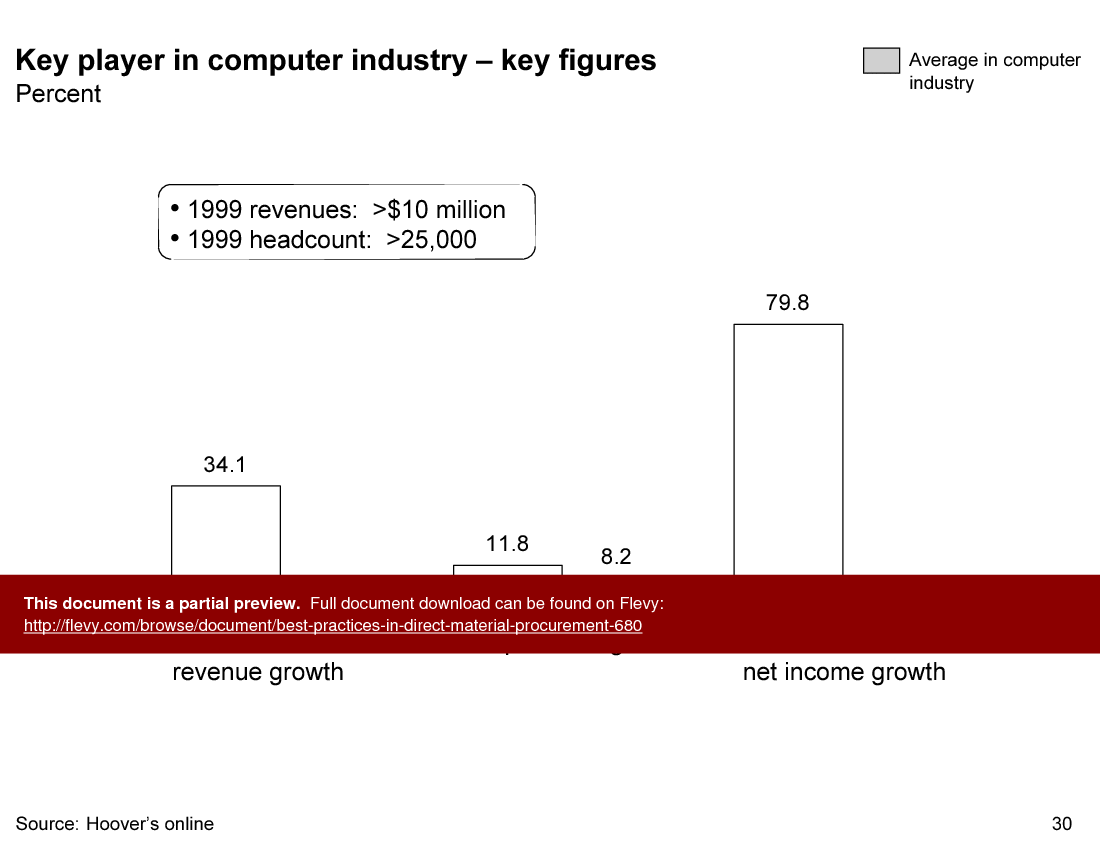
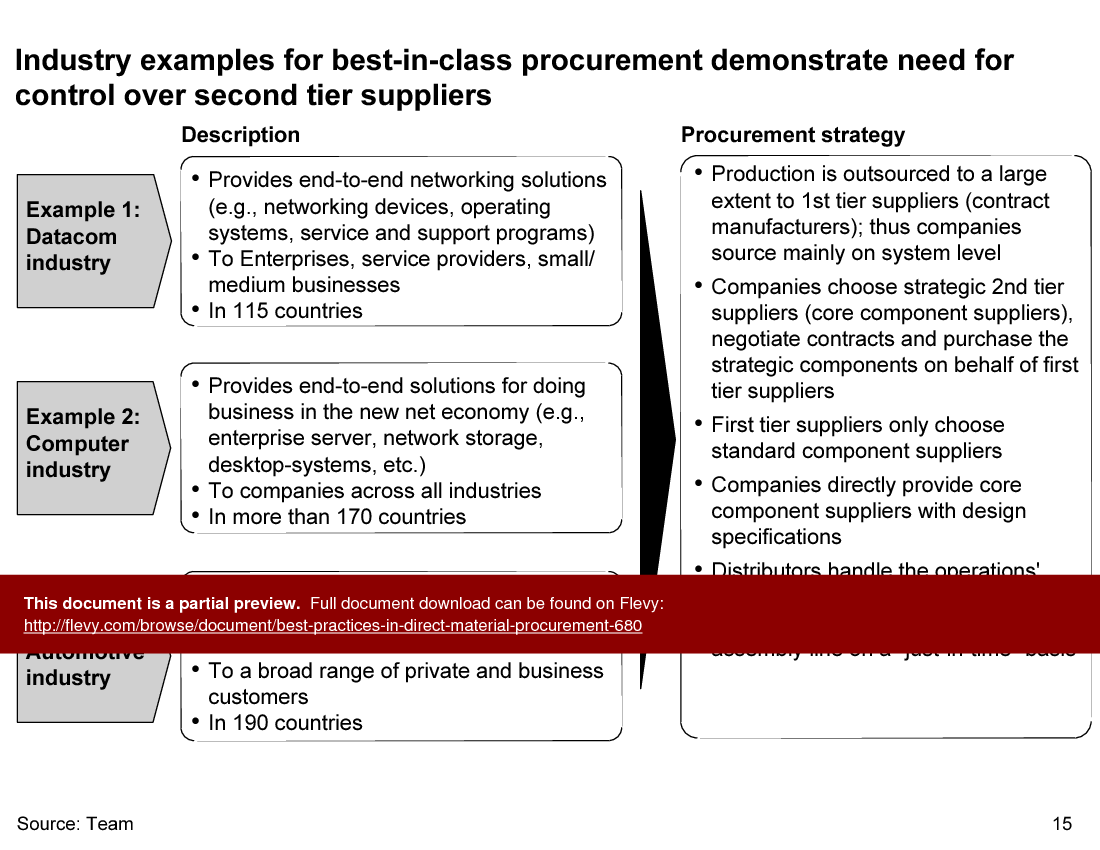
This PPT slide presents key performance metrics for a major automotive industry player, focusing on 3 financial indicators: 12-month revenue growth, net profit margin, and 12-month net income growth. The company reports a 12-month revenue growth of 7.7%, significantly exceeding the industry average of 0.3%, indicating strong market demand or effective sales strategies. The net profit margin is 3.7%, lower than the industry average of 2.9%, suggesting potential issues with profitability per dollar of sales that may require analysis of cost structures or pricing strategies. Finally, the 12-month net income growth is 4.3%, outperforming the industry average of 1.1%, reflecting effective expense management or successful profitability initiatives. These metrics provide insights into the company's financial health relative to its industry.
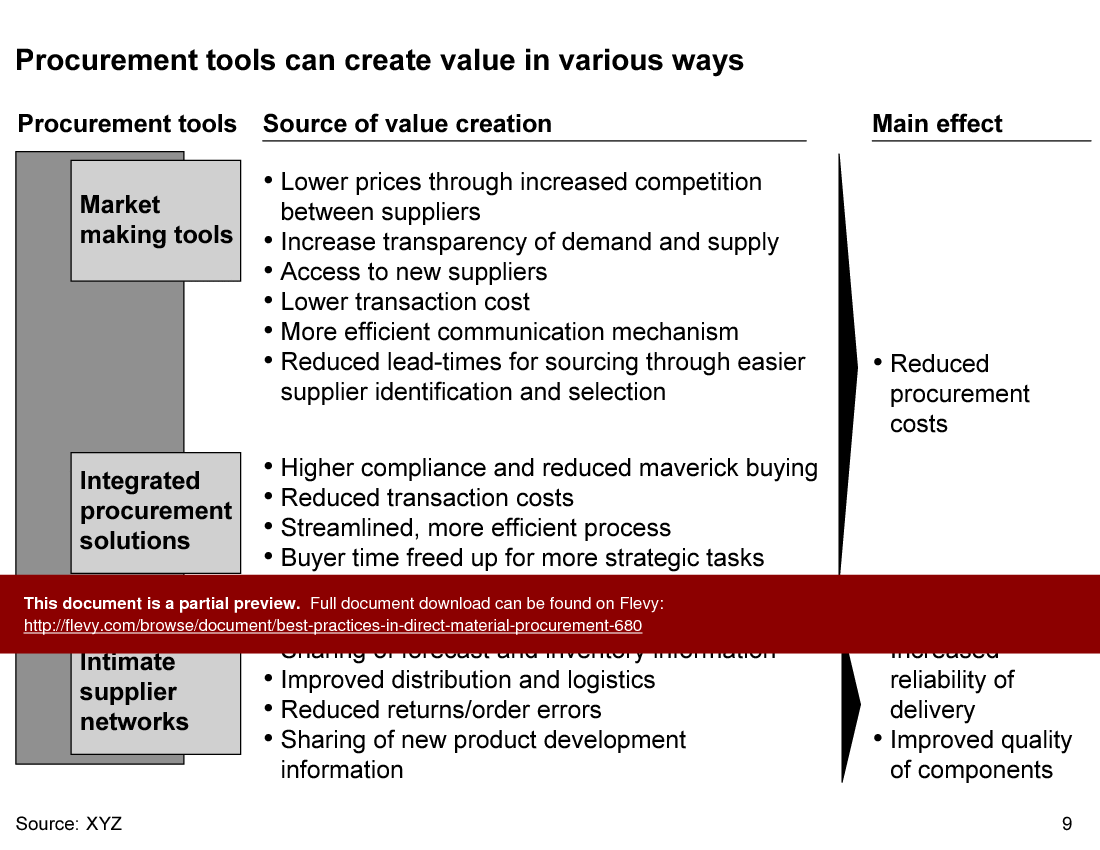
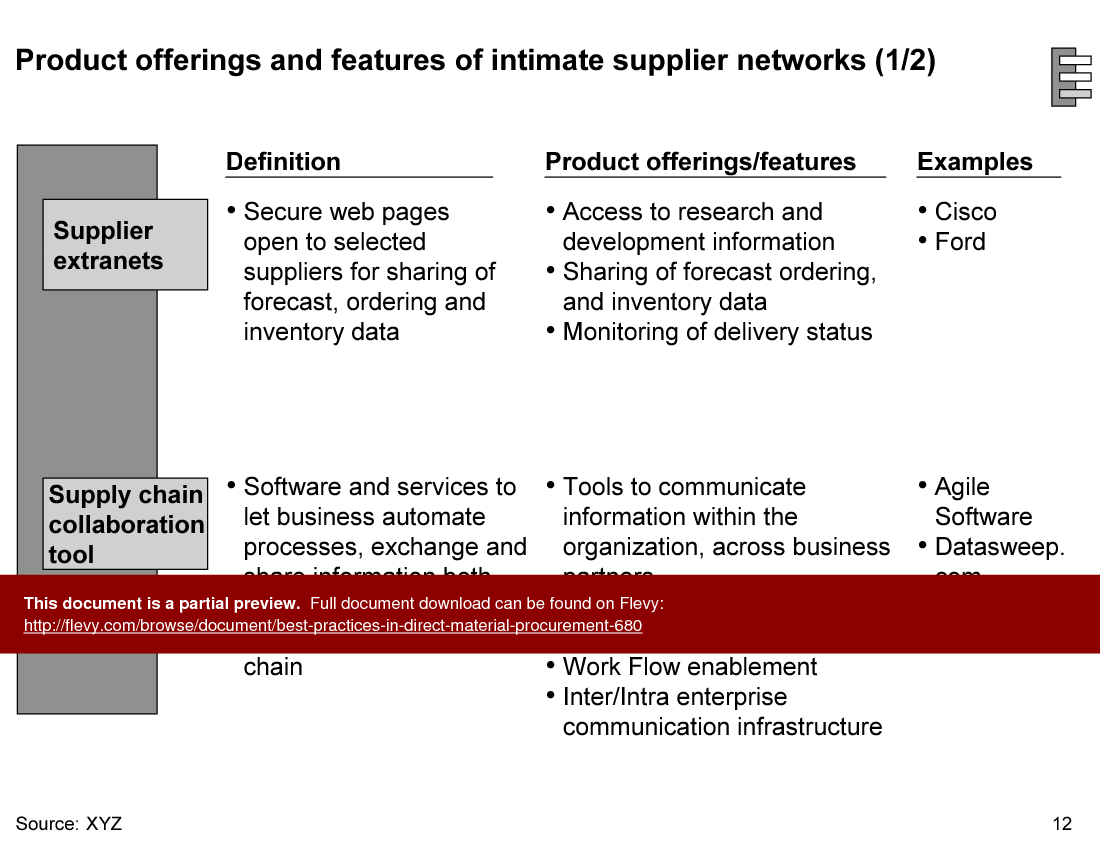
This PPT slide outlines procurement tools categorized into 3 groups: Market Making Tools, Integrated Procurement Solutions, and Intimate Supplier Networks. Market Making Tools enhance supplier competition, leading to lower prices, reduced transaction costs, improved communication, and shorter sourcing lead times. Integrated Procurement Solutions focus on compliance and efficiency, minimizing maverick buying and streamlining processes to reduce costs and free up time for strategic tasks. Intimate Supplier Networks foster collaboration with suppliers, sharing forecasts and inventory information to improve logistics, reduce returns, and strengthen supplier relationships. Implementing these tools results in reduced procurement costs and increased delivery reliability, enhancing operational efficiency and supplier relationships.
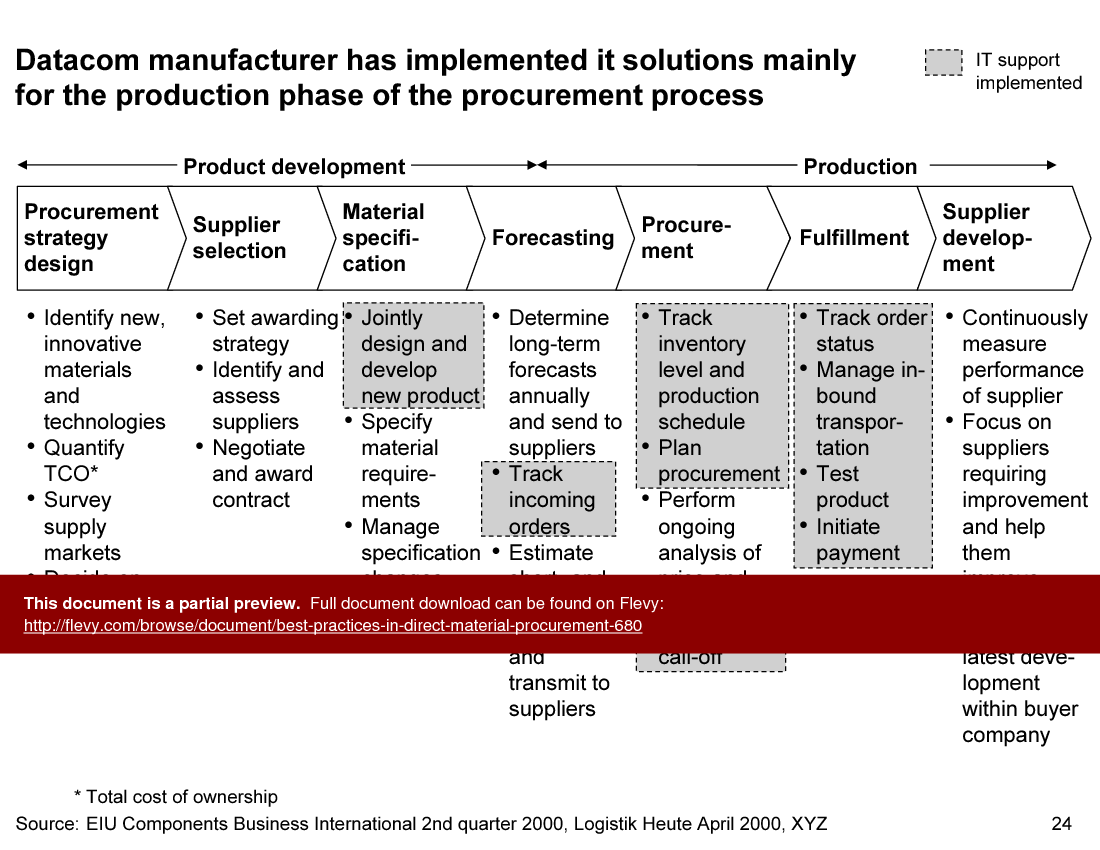
The procurement process for direct materials consists of 6 stages: Procurement Strategy Design, Supplier Selection, Material Specification, Forecasting, Procurement, and Fulfillment, along with Supplier Development.
In Procurement Strategy Design, organizations identify innovative materials, assess total cost of ownership (TCO), survey supply markets, and make sourcing decisions. Supplier Selection involves establishing an awarding strategy, assessing potential suppliers, and negotiating contracts. Material Specification focuses on collaborative product design, specifying material requirements, and managing changes.
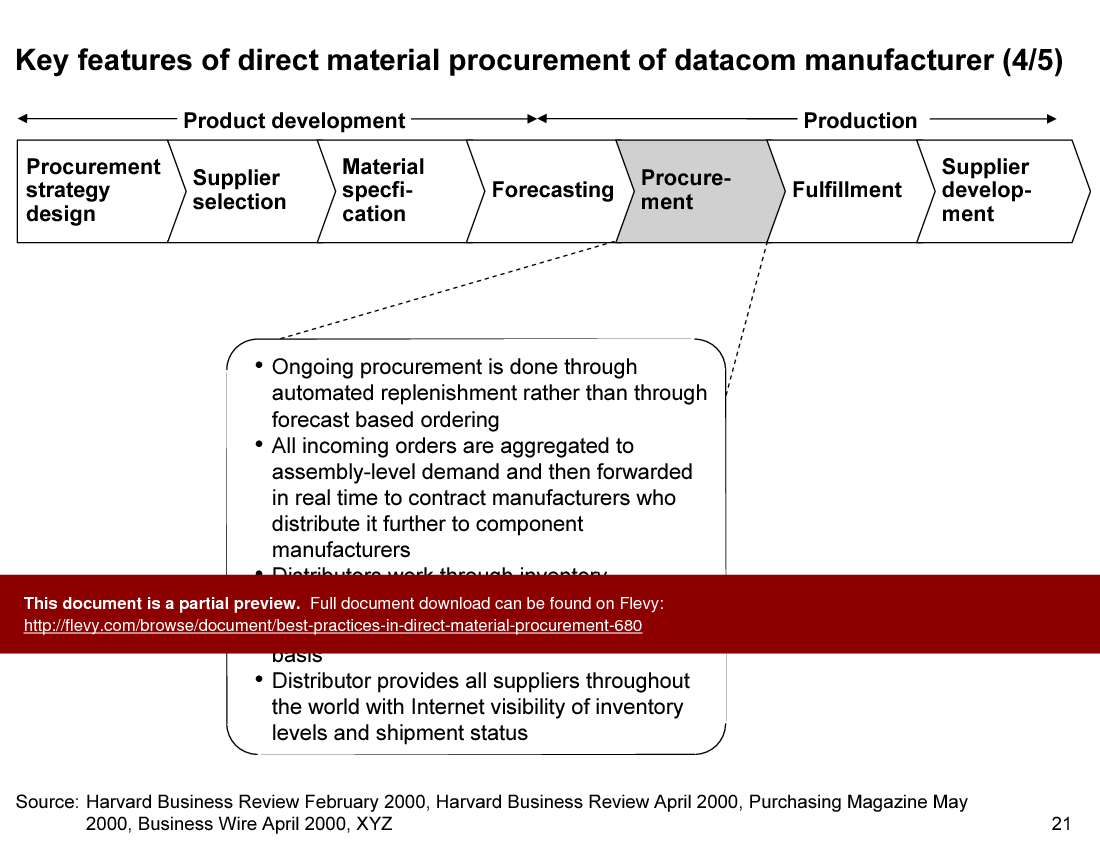
Forecasting determines long-term demand and communicates it to suppliers, tracking orders and estimating demand for supply chain efficiency. The Procurement phase tracks inventory, plans activities, and analyzes price trends, culminating in order placements. Fulfillment manages order status, transportation logistics, product testing, and payments.
Supplier Development continuously measures supplier performance, targets areas for improvement, and updates suppliers on company developments, ensuring an efficient and adaptable procurement process.
This PPT slide outlines a comprehensive procurement framework for car manufacturing, structured into distinct phases: Procurement strategy design, Supplier selection, Material specification, Procurement, Fulfillment, and Supplier development.
In the "Procurement strategy design" phase, innovative materials, total cost of ownership (TCO), and supply market surveys are emphasized for informed sourcing decisions. The "Supplier selection" phase focuses on awarding strategies, supplier assessments, and contract negotiations.
"Material specification" highlights collaboration in product design, specifying material requirements, and managing changes to meet quality standards.
Forecasting involves long-term demand predictions to guide procurement planning, with tracking incoming orders and estimating demand essential for inventory management.
The "Procurement" phase includes inventory tracking, procurement planning, and ongoing price analysis for cost management.
Finally, "Fulfillment" and "Supplier development" stress continuous supplier performance measurement and effective management of transportation and payment processes, providing a strategic roadmap for optimizing procurement efficiency.
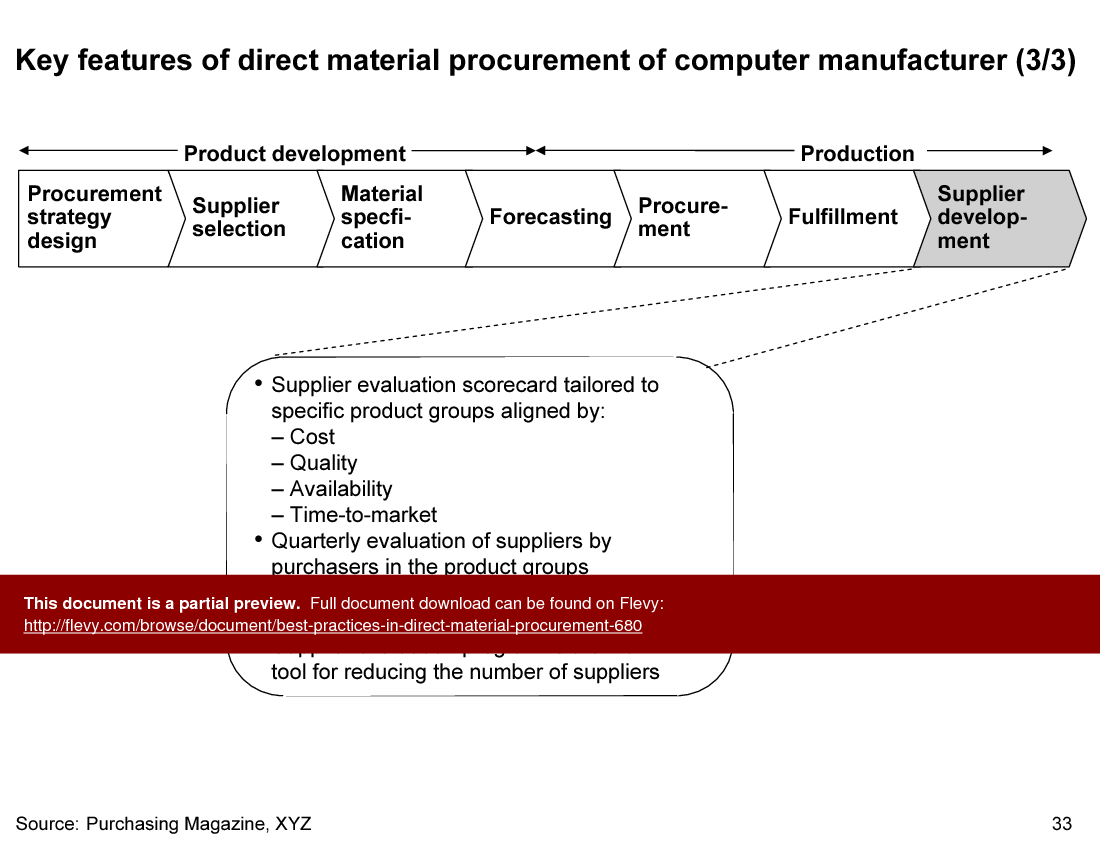
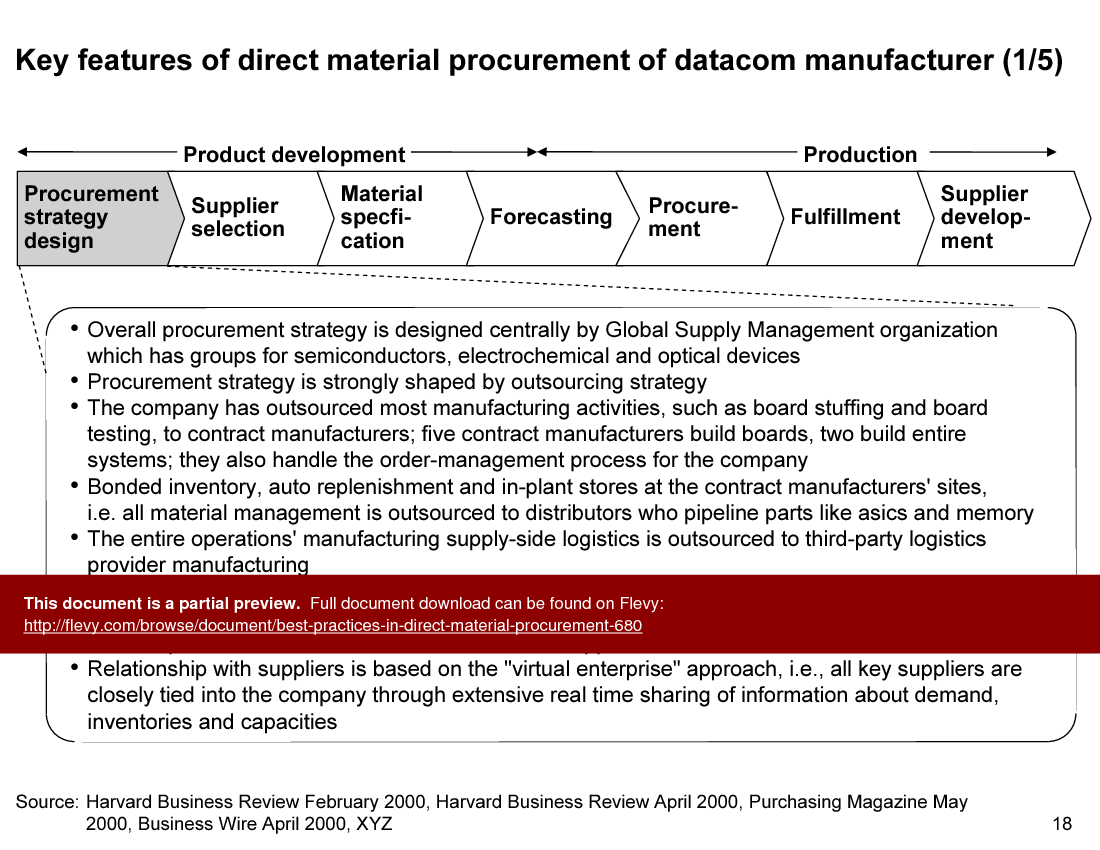
This PPT slide outlines key features of direct material procurement for a datacom manufacturer, emphasizing a centralized approach by a Global Supply Management organization. This organization consists of specialized groups focusing on components like semiconductors and optical devices. The procurement strategy heavily relies on outsourcing, enhancing operational efficiency and cost management. Most manufacturing processes, including board stuffing and testing, are delegated to 5 contract manufacturers, with 2 managing entire systems. The order-management process is also outsourced, streamlining logistics and inventory management. Bonded inventory, auto replenishment, and in-plant stores are utilized at contract manufacturers' locations, with distributors supplying parts like ASICs and memory. The company directly purchases only a few components, minimizing direct procurement activities. The procurement process is conducted through contract manufacturers or distributors, with material allocation decisions made among suppliers. The "virtual enterprise" model fosters real-time information sharing about demand and inventory, enhancing collaboration and responsiveness in a competitive market.
This PPT slide presents a case study of a datacom manufacturer that accelerated product development through networked applications. Key activities include joint design and development, material specification, and managing specification changes, highlighting the collaborative nature of product development. The IT solution integrates internal data with supplier data, allowing engineers to automatically gather product information and streamline processes, significantly reducing manual data handling. Benefits for procurement include a decrease in assembly time for the bill of materials from 1-2 days to under 15 minutes, a 25% reduction in time to volume for new products, and an annual revenue increase of $100 million, alongside a $21.5 million reduction in R&D costs. These metrics demonstrate the impact of technology on operational efficiency and profitability.
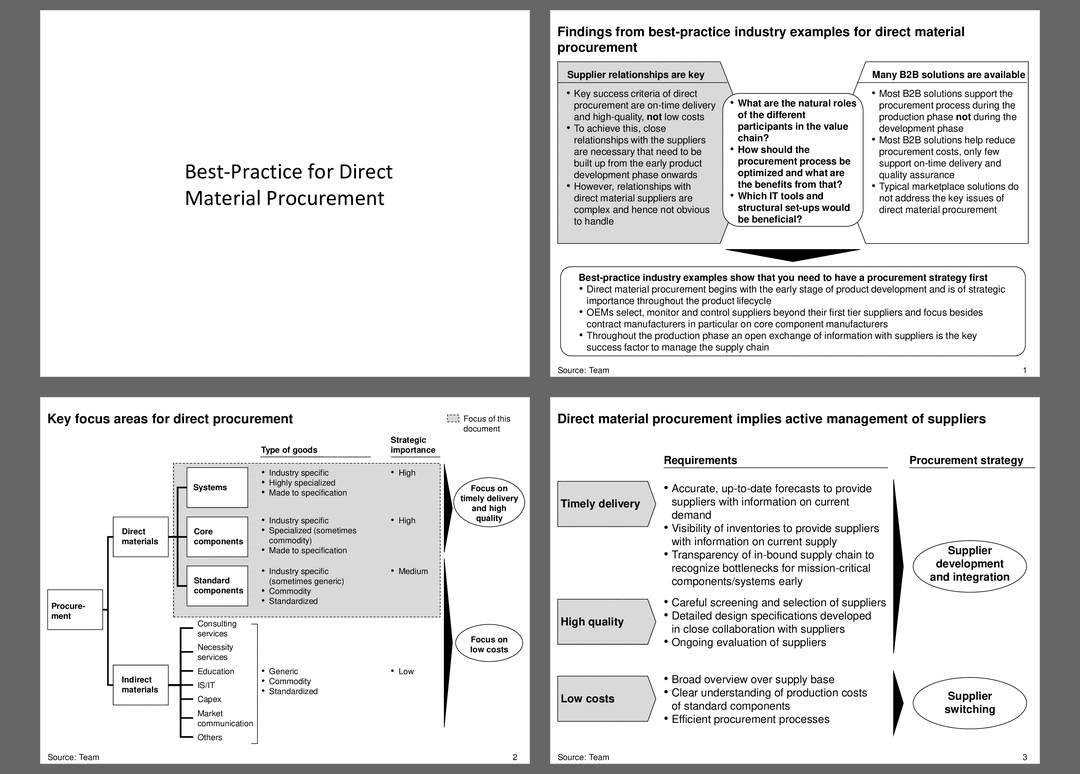
This PPT slide outlines best practices for direct material procurement, emphasizing the importance of supplier relationships and B2B solutions. Successful direct procurement relies on timely delivery and high-quality materials rather than solely on cost reduction. Establishing strong supplier relationships early in product development is essential, despite the complexities involved. Key questions focus on optimizing the procurement process, understanding the roles of value chain participants, and identifying beneficial IT tools and structural setups. Many B2B solutions support procurement during production, but often overlook the critical early development phase, failing to address on-time delivery and quality assurance. A well-defined procurement strategy should begin at the product development stage and continue throughout the product lifecycle, with OEMs actively managing suppliers beyond the first tier, particularly core component manufacturers, to align procurement with business objectives and operational efficiency.
This PPT slide outlines key focus areas for direct procurement, categorizing goods into 3 types: Systems, Core components, and Standard components. Systems are industry-specific, highly specialized, and made to specification, necessitating timely delivery and high quality. Core components, while similar, may be classified as specialized commodities, emphasizing careful supplier selection and relationship management. Standard components are sometimes generic and standardized, indicating medium strategic importance and a more cost-focused procurement approach. The slide also addresses indirect materials, including consulting services and IS/IT, generally viewed as lower in strategic importance, suggesting a standardized, cost-efficient procurement strategy. Aligning procurement strategies with the strategic importance of goods is essential for optimizing processes and supplier relationships.
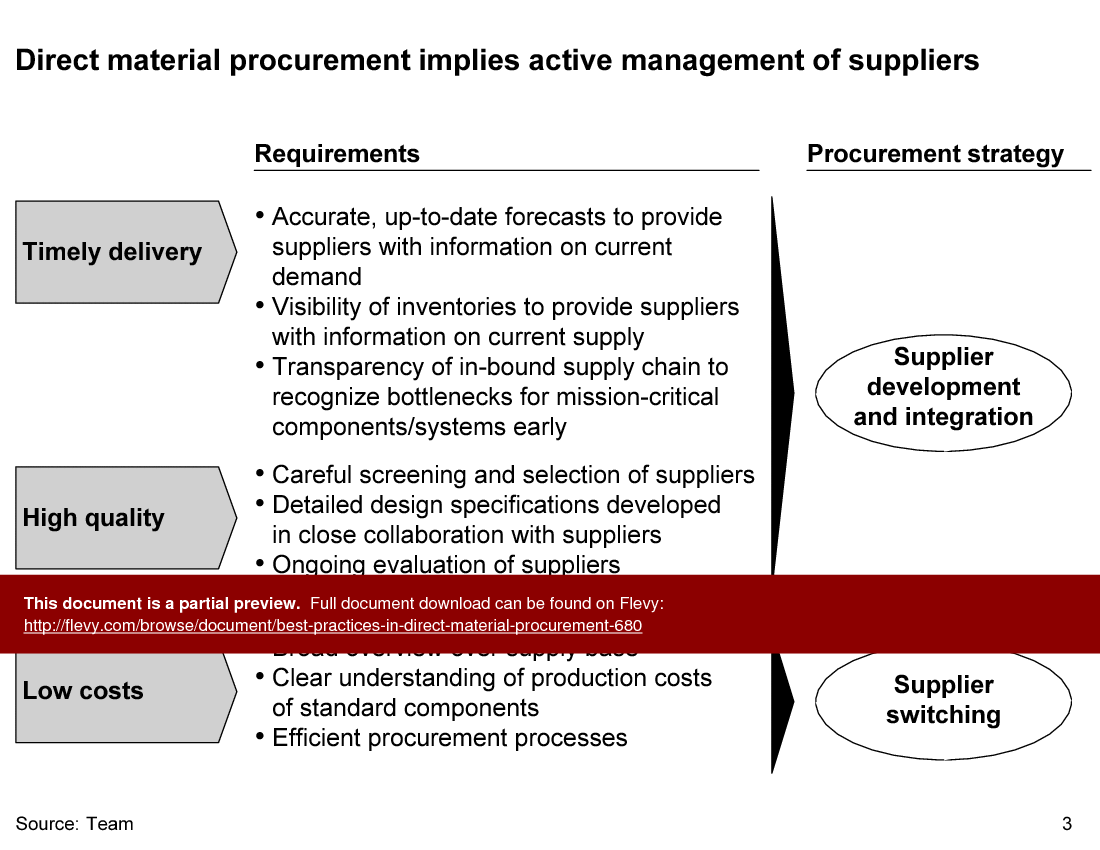
This PPT slide outlines essential elements of direct material procurement, focusing on active supplier management. Key requirements include timely delivery, high quality, and low costs. Timely delivery necessitates accurate forecasts and visibility into inventory levels, ensuring suppliers are informed about demand and supply. High quality relies on rigorous supplier selection and collaborative development of design specifications for alignment and quality assurance. Ongoing supplier evaluation is critical for maintaining standards. The low costs section emphasizes understanding the supply base and production costs for informed decision-making and cost optimization. The procurement strategy includes supplier development and integration, promoting strong supplier relationships aligned with company goals. Effective direct material procurement encompasses managing supplier relationships, ensuring quality, and maintaining timely delivery to enhance operational efficiency and drive long-term success.
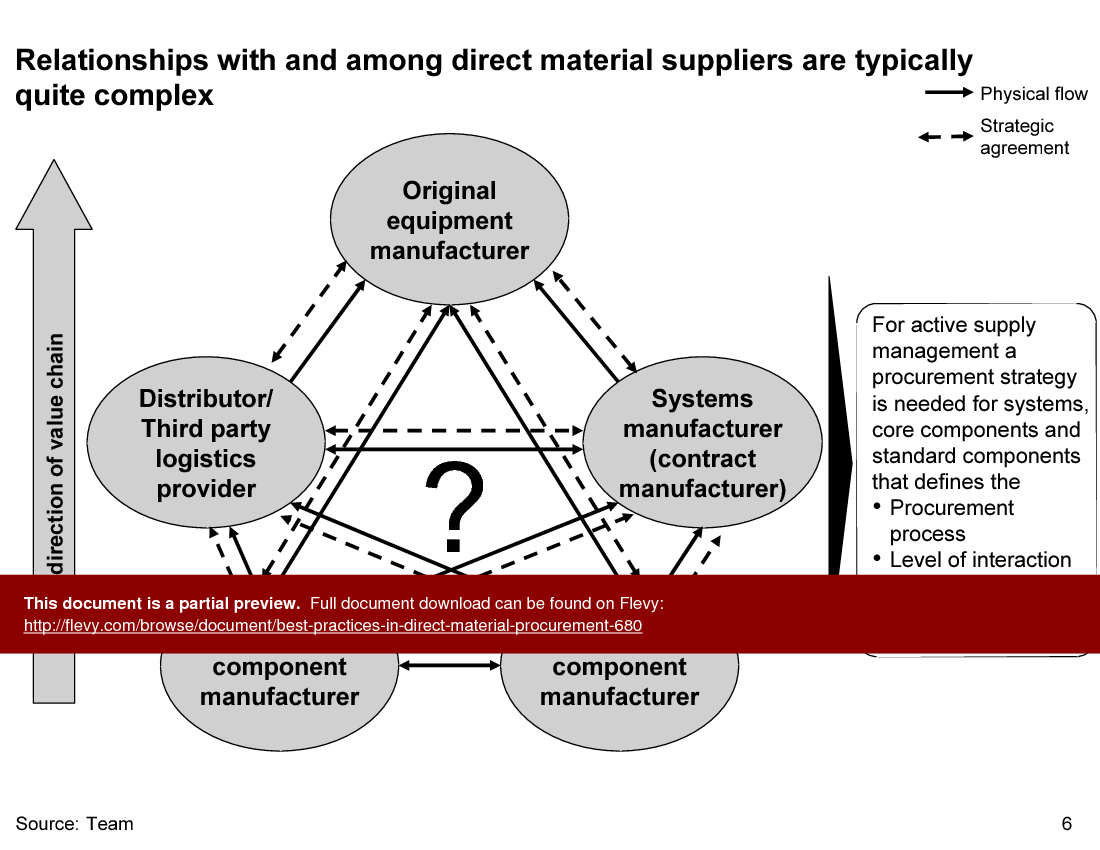
This PPT slide illustrates the relationships among direct material suppliers in a supply chain, with the original equipment manufacturer (OEM) at the center, surrounded by systems manufacturers, core component manufacturers, standard component manufacturers, and third-party logistics providers. The diagram indicates 2 types of flows: physical flow, which involves the movement of materials and products, and strategic agreements that foster collaboration among parties. Effective supply chain management requires logistical coordination and alignment of strategic goals. A well-defined procurement strategy should encompass systems, core components, and standard components, ensuring clarity in procurement and defining interaction levels among supply chain participants to enhance collaboration and efficiency. Managing supplier relationships is complex and necessitates a strategic approach to optimize procurement processes.
Source: Best Practices in Procurement Strategy PowerPoint Slides: Best Practices in Direct Material Procurement PowerPoint (PPT) Presentation Slide Deck, Documents & Files
The average daily rate of a McKinsey consultant is $6,625 (not including expenses). The average price of a Flevy document is $65.
Trusted by over 10,000+ Client Organizations
Since 2012, we have provided business templates to over 10,000 businesses and organizations of all sizes, from startups and small businesses to the Fortune 100, in over 130 countries.

"My FlevyPro subscription provides me with the most popular frameworks and decks in demand in today’s market. They not only augment my existing consulting and coaching offerings and delivery, but also keep me abreast of the latest trends, inspire new products and service offerings for my practice, and educate me
in a fraction of the time and money of other solutions. I strongly recommend FlevyPro to any consultant serious about success.
"
– Bill Branson, Founder at Strategic Business Architects
"One of the great discoveries that I have made for my business is the Flevy library of training materials.
As a Lean Transformation Expert, I am always making presentations to clients on a variety of topics: Training, Transformation, Total Productive Maintenance, Culture, Coaching, Tools, Leadership Behavior, etc. Flevy
It is well worth the money to purchase these presentations. Sure, I have the knowledge and information to make my point. It is another thing to create a presentation that captures what I want to say. Flevy has saved me countless hours of preparation time that is much better spent with implementation that will actually save money for my clients.
"
– Ed Kemmerling, Senior Lean Transformation Expert at PMG
"I have found Flevy to be an amazing resource and library of useful presentations for lean sigma, change management and so many other topics. This has reduced the time I need to spend on preparing for my performance consultation. The library is easily accessible and updates are regularly provided. A wealth of great information."
– Cynthia Howard RN, PhD, Executive Coach at Ei Leadership
"As a consultant requiring up to date and professional material that will be of value and use to my clients, I find Flevy a very reliable resource.
The variety and quality of material available through Flevy offers a very useful and commanding source for information. Using Flevy saves me time, enhances my expertise and ends up being a good decision."
– Dennis Gershowitz, Principal at DG Associates
"Flevy.com has proven to be an invaluable resource library to our Independent Management Consultancy, supporting and enabling us to better serve our enterprise clients.
The value derived from our [FlevyPro] subscription in terms of the business it has helped to gain far exceeds the investment made, making a subscription a no-brainer for any growing consultancy – or in-house strategy team."
– Dean Carlton, Chief Transformation Officer, Global Village Transformations Pty Ltd.
"I am extremely grateful for the proactiveness and eagerness to help and I would gladly recommend the Flevy team if you are looking for data and toolkits to help you work through business solutions."
– Trevor Booth, Partner, Fast Forward Consulting
"[Flevy] produces some great work that has been/continues to be of immense help not only to myself, but as I seek to provide professional services to my clients, it gives me a large "tool box" of resources that are critical to provide them with the quality of service and outcomes they are expecting."
– Royston Knowles, Executive with 50+ Years of Board Level Experience
"As a young consulting firm, requests for input from clients vary and it's sometimes impossible to provide expert solutions across a broad spectrum of requirements. That was before I discovered Flevy.com.
Through subscription to this invaluable site of a plethora of topics that are key and crucial to consulting, I
have been able to exceed expectations and deliver quality advice and solutions to my clients. The quality and expertise of the authors are exemplary and gives me great confidence to use as part of my service offerings.
I highly recommend this company for any consultant wanting to apply international best practice standards in their service offerings.
"
– Nishi Singh, Strategist and MD at NSP Consultants
Receive our FREE presentation on Operational Excellence
This 50-slide presentation provides a high-level introduction to the 4 Building Blocks of Operational Excellence. Achieving OpEx requires the implementation of a Business Execution System that integrates these 4 building blocks.