
 Click main image to view in full screen. Unlock all 9 preview images:
AI Readiness Assessment & Execution Plan Excel Template – Excel XLSX
Excel (XLSX) + Zip archive file (ZIP)


BENEFITS OF THIS DOWNLOADABLE EXCEL DOCUMENT
- Establish an AI readiness baseline using 48 criteria with documented evidence, then identify the gaps to your target.
- Turn assessment gaps into assigned actions with effort, costs and delivery dates for a programme review.
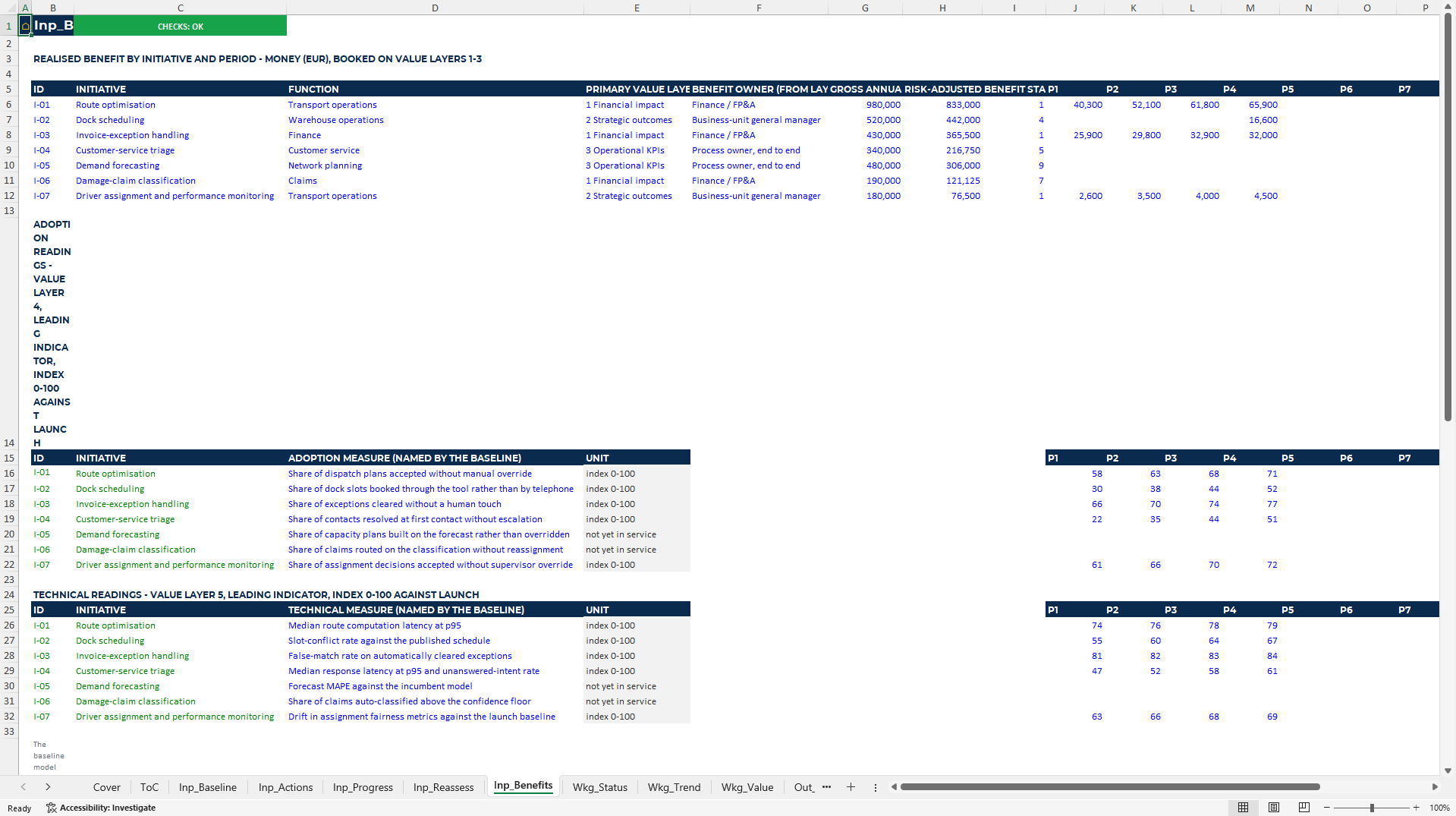
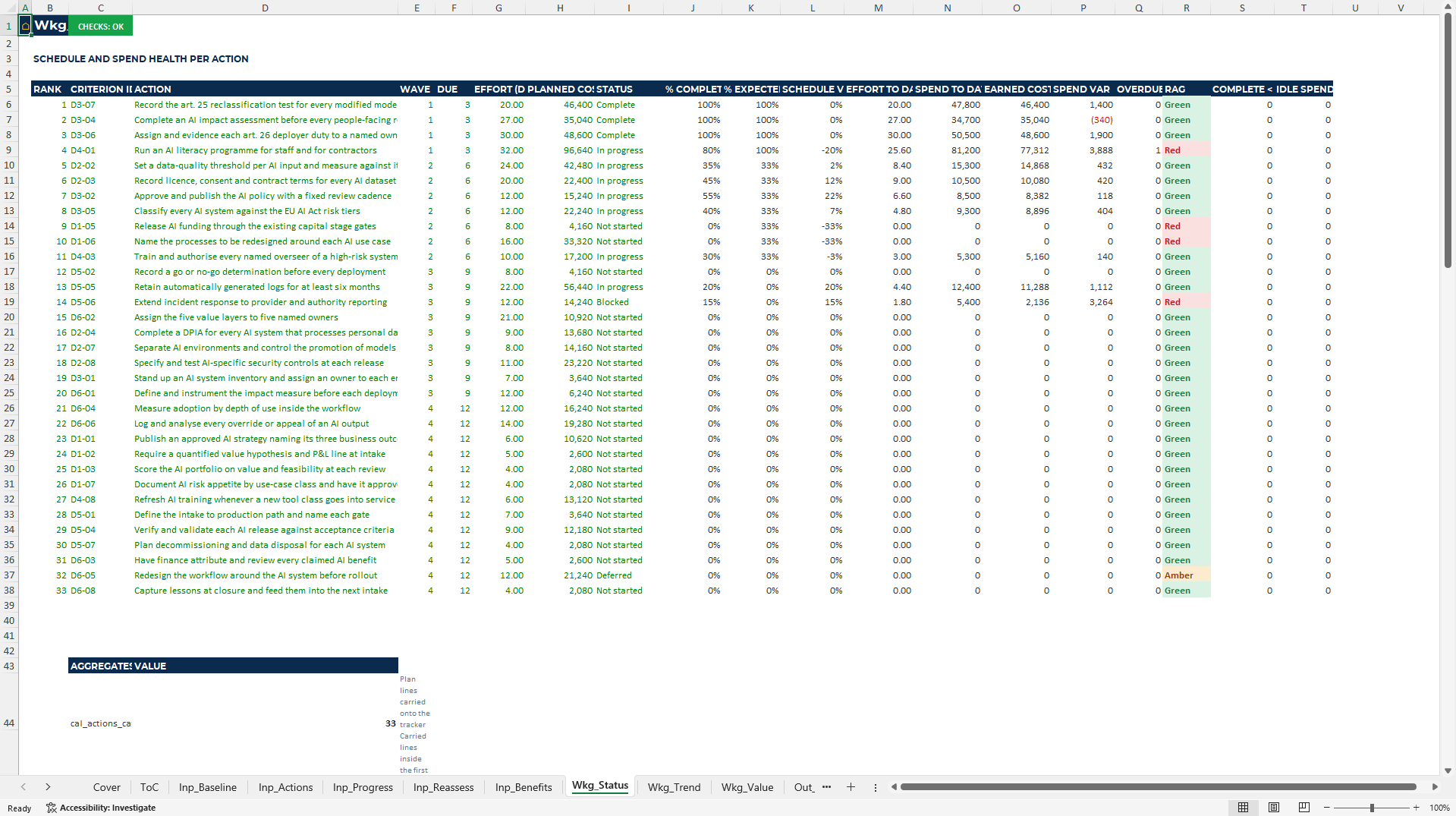
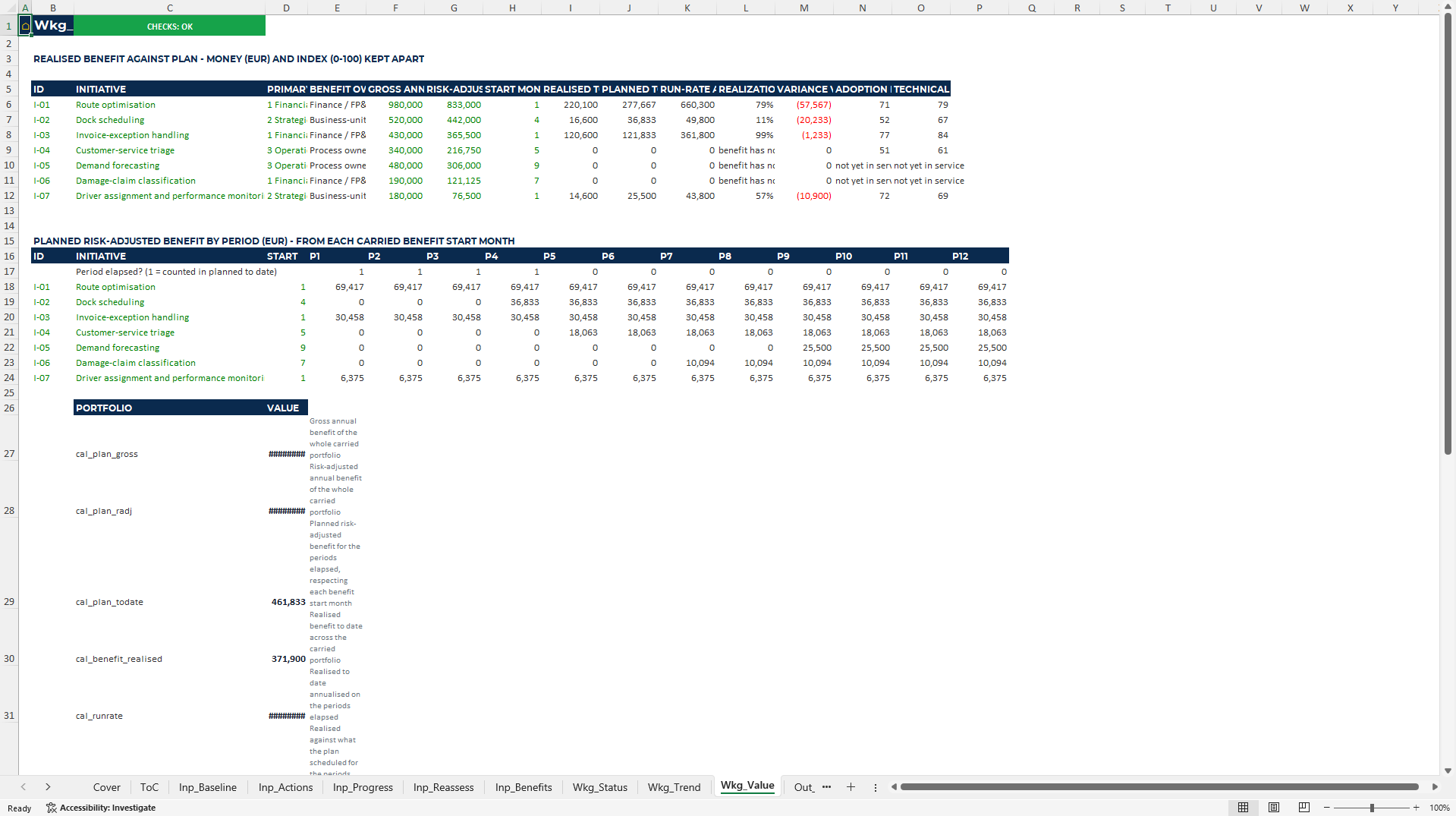
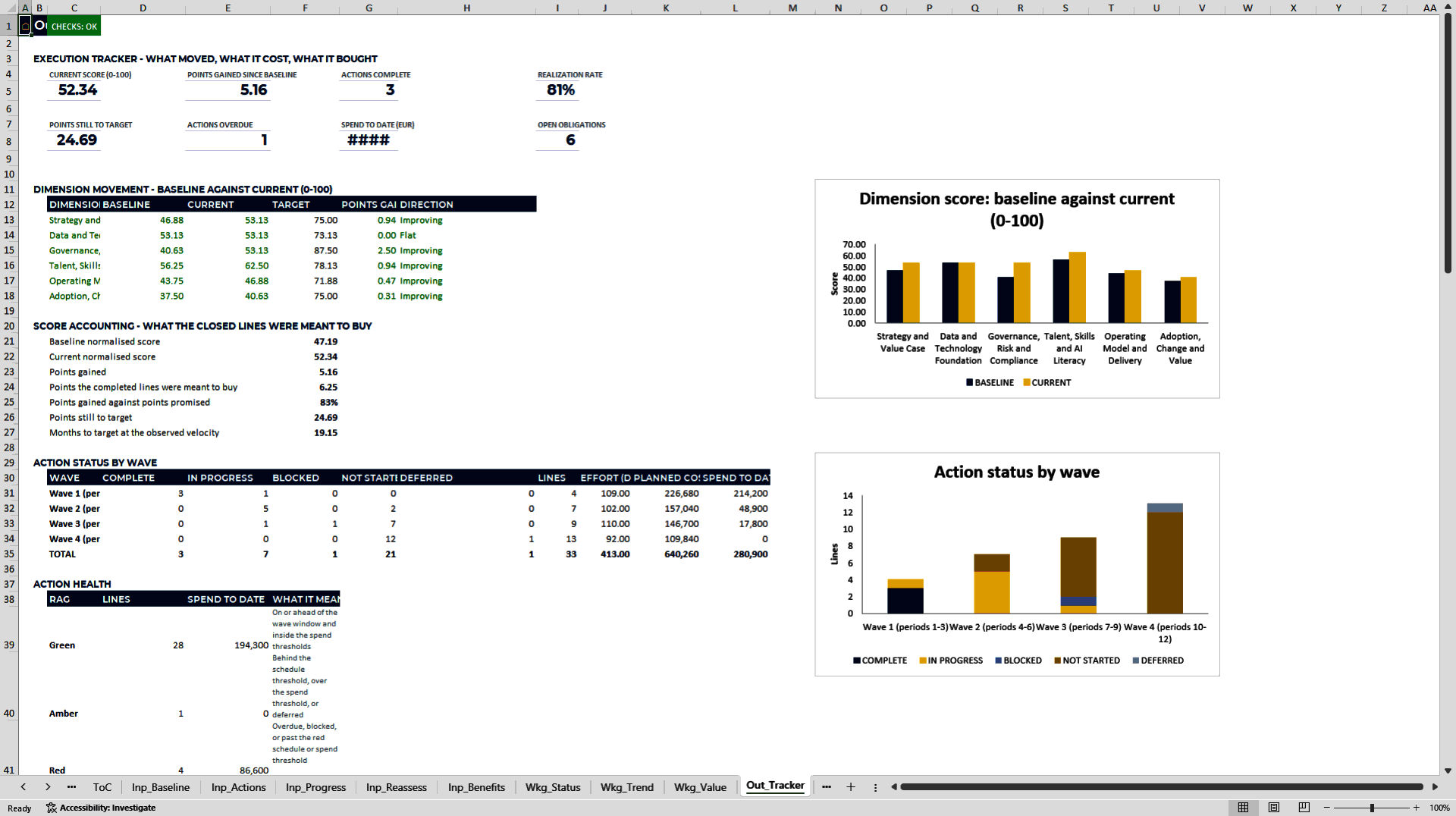
- Track action progress, spending and realised benefits in the companion Excel workbook across 12 reporting periods.
ARTIFICIAL INTELLIGENCE EXCEL DESCRIPTION
Decide where your organisation is ready for AI, what to improve next, and how to track delivery.
The AI Readiness Assessment and Execution Plan connects a documented readiness baseline with priorities, owners, programme costs and progress tracking. Use it to prepare an AI planning workshop, compare improvement actions or bring a costed programme to a governance review. The package contains two editable Excel workbooks and an illustrated implementation manual, with a populated example to show the workflow before you enter your own information.
WHAT YOU RECEIVE
• AI Readiness and Execution Plan workbook: 18 sheets covering the assessment, scorecard, gap analysis, action plan, governance-obligation register and programme economics.
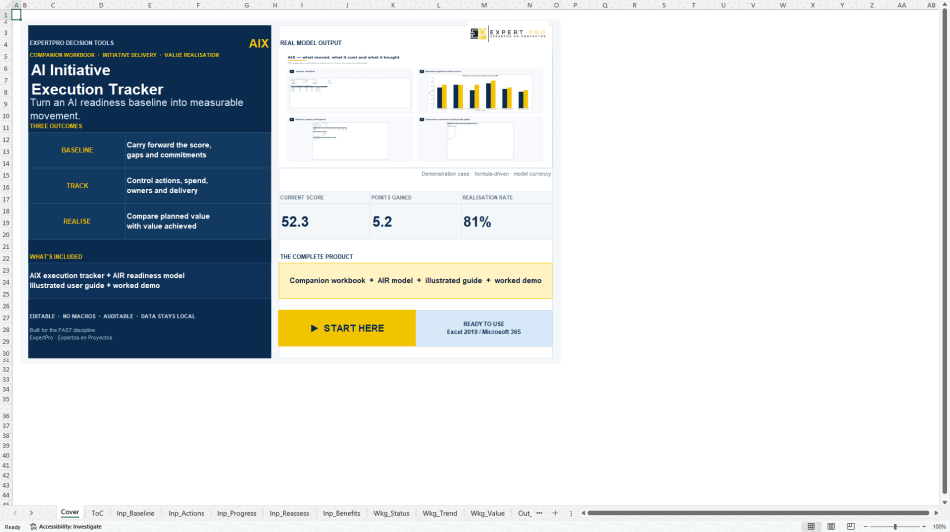
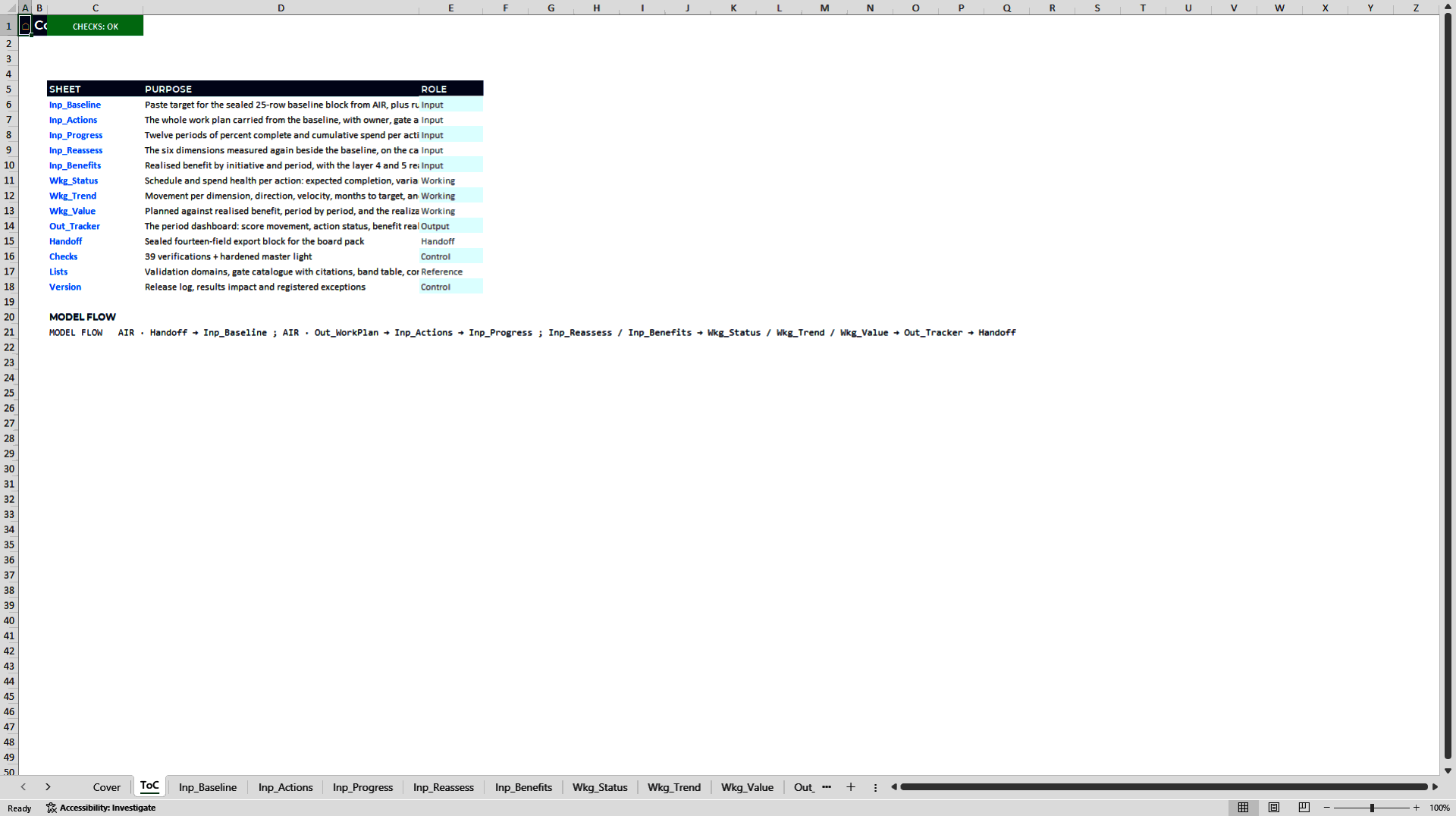
• AI Initiative Execution Tracker workbook: 15 sheets for action delivery, reporting actuals, reassessment and benefit tracking.
• A 63-page PDF implementation manual explaining preparation, scoring, planning, interpretation and the hand-off between workbooks.
• A populated worked example, visible checks and editable assumptions. The files operate locally in Microsoft Excel; no API connection or subscription to an AI platform is required to use the templates.
WHO THIS IS FOR
CIOs, transformation leads and programme offices can use the package to turn an AI readiness discussion into an assigned and costed plan. CFOs can review the investment assumptions and initiative economics. Governance and risk teams can organise evidence and open questions for specialist review. Advisers can adapt the workbooks to a client's assessment and reporting process.
HOW TO USE THE PACKAGE
1. Review the populated example and the manual. Agree on the assessment scope, evidence owners, weights and target scores before entering your organisation's data.
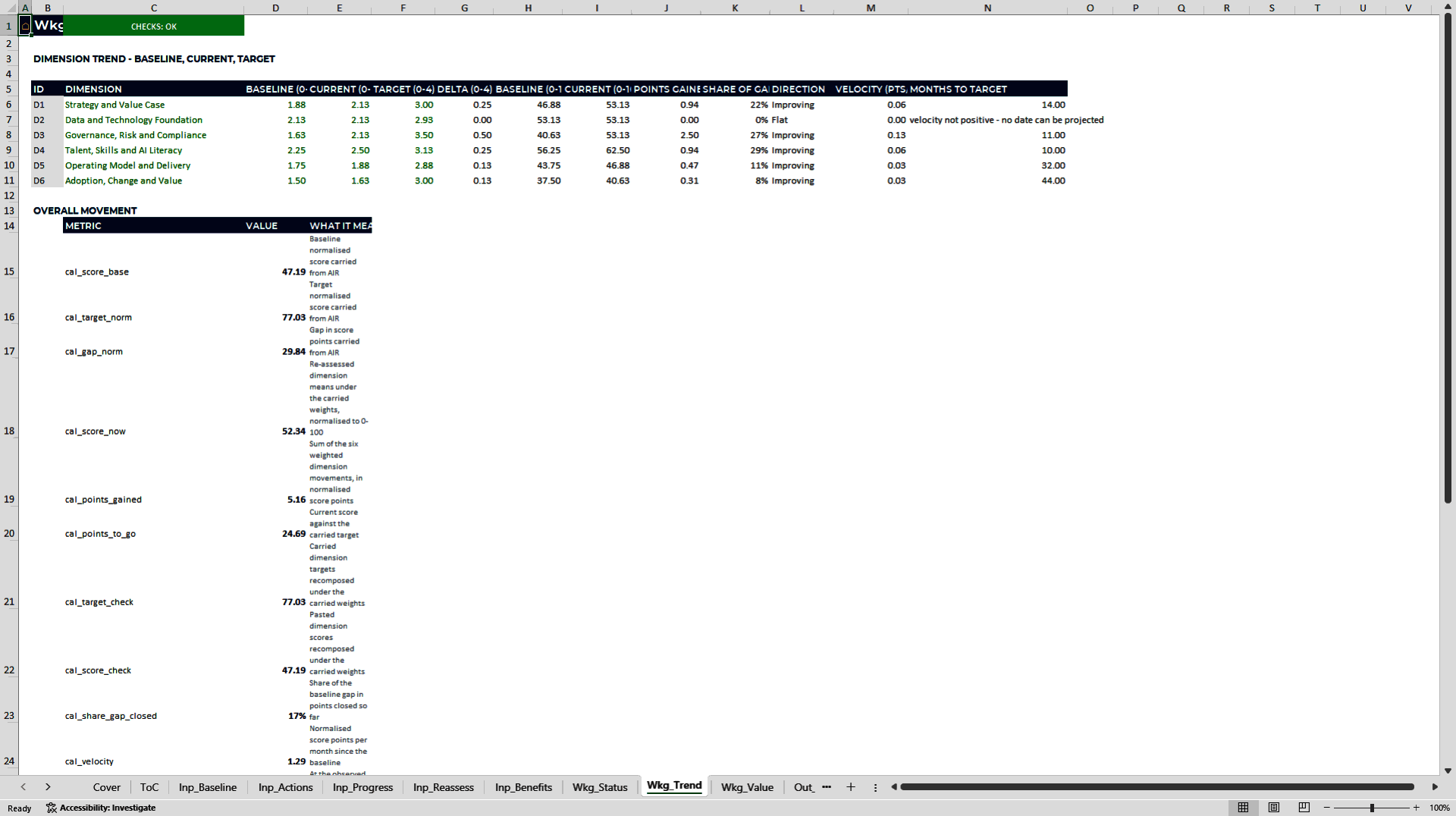
2. Score 48 criteria across six dimensions. Record the evidence, confidence, assessor and date behind the assessment. Review the resulting baseline and the gap to your target.
3. Build the action plan. Assign owners, effort, costs, dates and delivery waves. Review how planned actions address readiness gaps and recorded governance obligations.
4. Review programme and initiative economics. Enter your own investment and benefit assumptions, then compare the calculated costs, payback and value measures. The outputs depend on those assumptions.
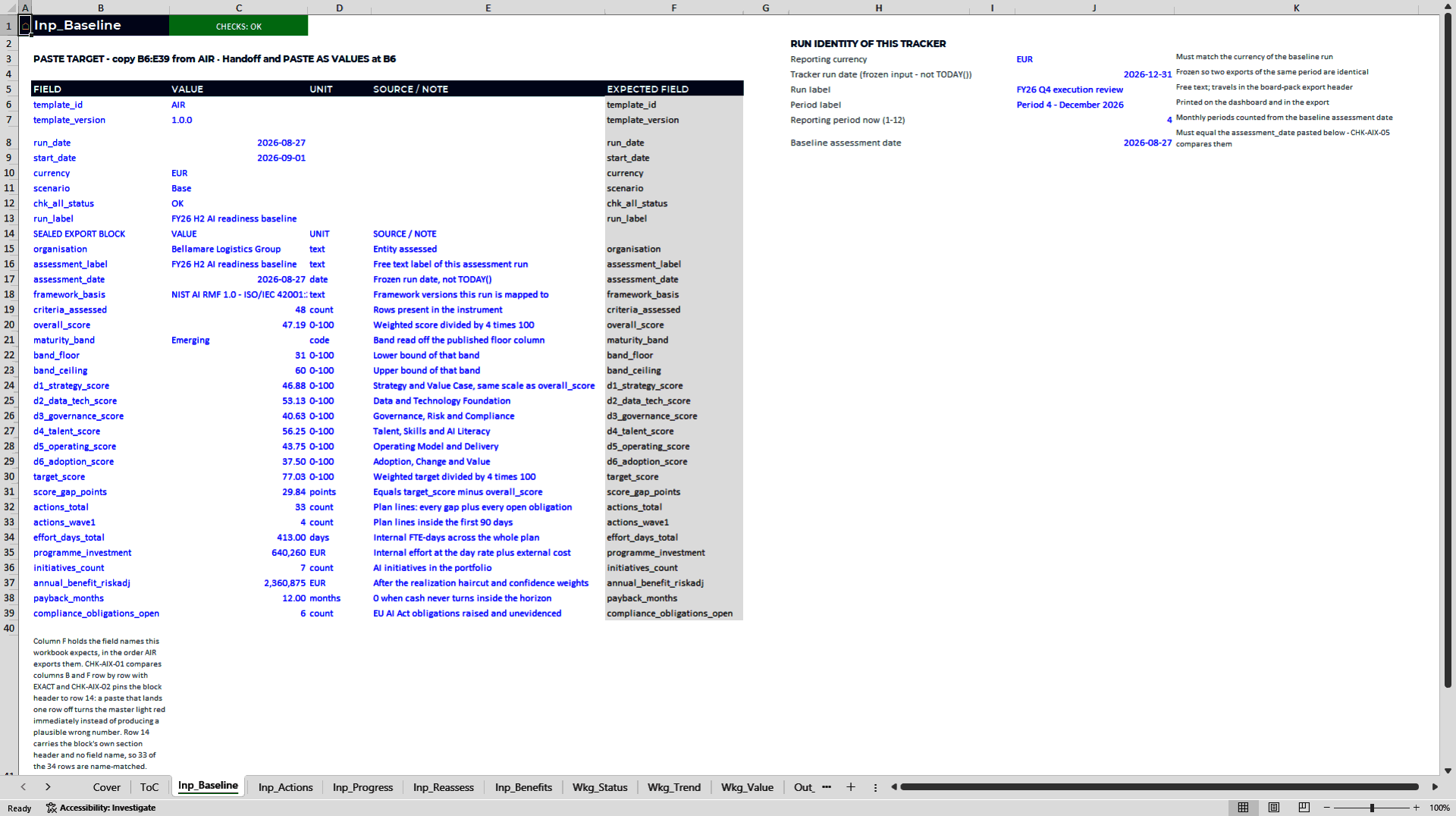
5. Transfer the plan into the companion tracker. Update action progress and spending across 12 reporting periods, perform a second assessment and compare delivery with readiness movement and realised benefits.
WHAT THE ASSESSMENT COVERS
The six dimensions are Strategy and Value Case; Data and Technology Foundation; Governance, Risk and Compliance; Talent, Skills and AI Literacy; Operating Model and Delivery; and Adoption, Change and Value. Each dimension contains eight criteria, for 48 in total.
The workbooks include checks for weight totals, plan reconciliation and the transfer between assessment and tracking. Both Excel files have visible sheets, with no macros or external workbook links. You can inspect and adapt the assumptions and formulas.
START WITH A WORKED EXAMPLE
The included Bellamare example shows the sequence from assessment and prioritisation through programme costing and a later delivery review. It is an illustrative scenario, not a customer outcome or a forecast of what your organisation will achieve. Replace the example inputs with your own evidence before using the outputs for a decision.
CAPACITY AND COMPATIBILITY
The package is designed for Microsoft Excel 2019 and Microsoft 365 desktop. The supplied assessment covers 48 criteria and up to 36 action-plan lines. The assessment workbook supports up to 12 initiative cases; the companion's supplied benefit-tracking ranges cover seven initiatives across 12 reporting periods. Larger programmes require extending the relevant ranges and checking the calculations again.
SCOPE AND LIMITATIONS
This is an assessment and planning toolkit. Users enter the evidence, scores and reporting actuals. It does not inspect AI systems, test models, verify evidence, connect to live data sources or implement an AI solution.
The framework references and governance register reflect the versions and run date documented in the workbooks. They support structured review; they do not provide legal advice, certification or a determination of regulatory compliance. Check current requirements with qualified specialists when needed.
Financial benefits are entered assumptions, not guaranteed savings. The package helps document and compare a case; it cannot guarantee that an initiative will deliver the expected value.
Choose this package when you need a traceable path from an AI readiness assessment to a costed action plan and ongoing delivery reviews. Review the workbook previews above to check the layout and scope before purchasing.
Got a question about the product? Email us at support@flevy.com or ask the author directly by using the "Ask the Author a Question" form. If you cannot view the preview above this document description, go here to view the large preview instead.
Source: Best Practices in Artificial Intelligence Excel: AI Readiness Assessment & Execution Plan Excel Template Excel (XLSX) Spreadsheet, ExpertPro Consulting
ABOUT THE AUTHOR

ExpertPro is an advisory firm that builds the financial and decision infrastructure behind capital projects. Our work sits at the intersection of project finance, engineering economics and data: we model, stress-test and document infrastructure investments so that sponsors, lenders and investment committees can decide on evidence rather than intuition.
The practice is led by Eduard Kofman, .
... [read more]
Ask the Author a Question
You must be logged in to contact the author.




























