
 Click main image to view in full screen. Unlock all 19 preview images:
AI Build vs. Buy Assessment Framework – PowerPoint PPTX Template
PowerPoint (PPTX) + Excel (XLSX) 331 Slides


BENEFITS OF THIS DOWNLOADABLE POWERPOINT DOCUMENT
- Provides a structured framework for evaluating whether AI capabilities should be built internally, purchased from vendors, or implemented through hybrid approaches.
- Enables organizations to systematically assess the strategic, financial, technical, and risk implications of AI build vs. buy decisions.
- Guides executives in designing AI investment strategies that balance competitive advantage, cost efficiency, and long-term technological control.
ARTIFICIAL INTELLIGENCE PPT TEMPLATE DESCRIPTION
Curated by McKinsey-trained Executives
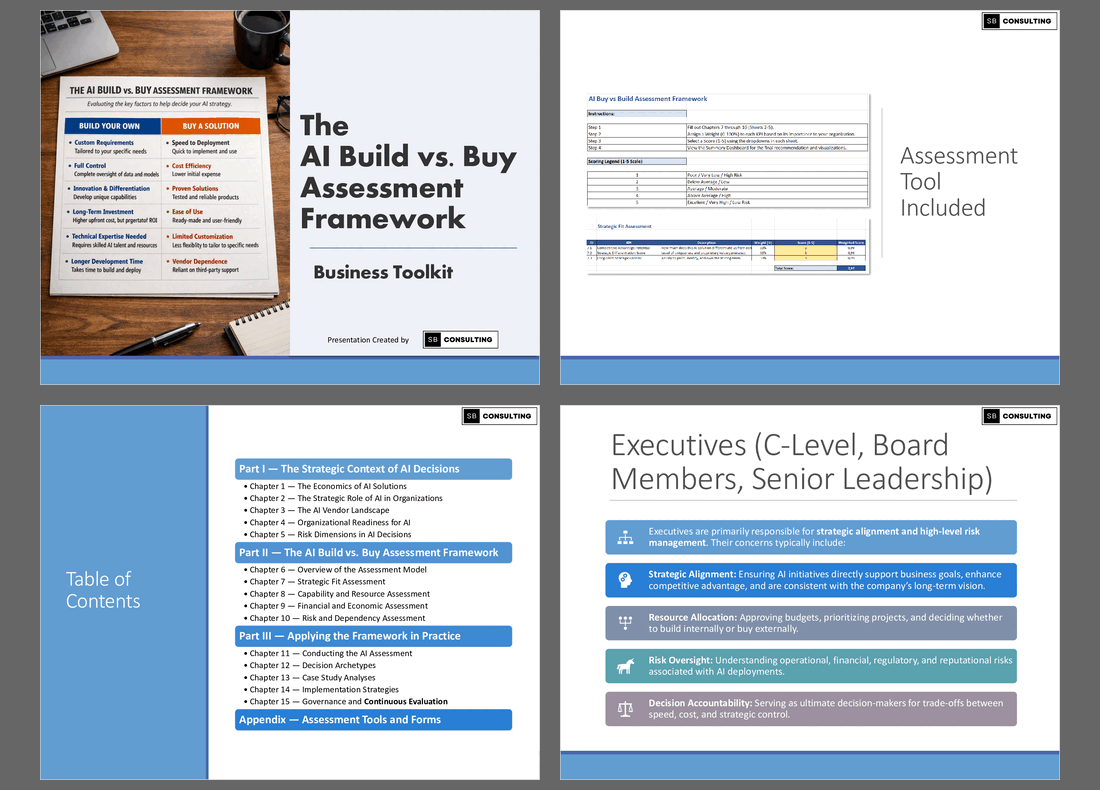
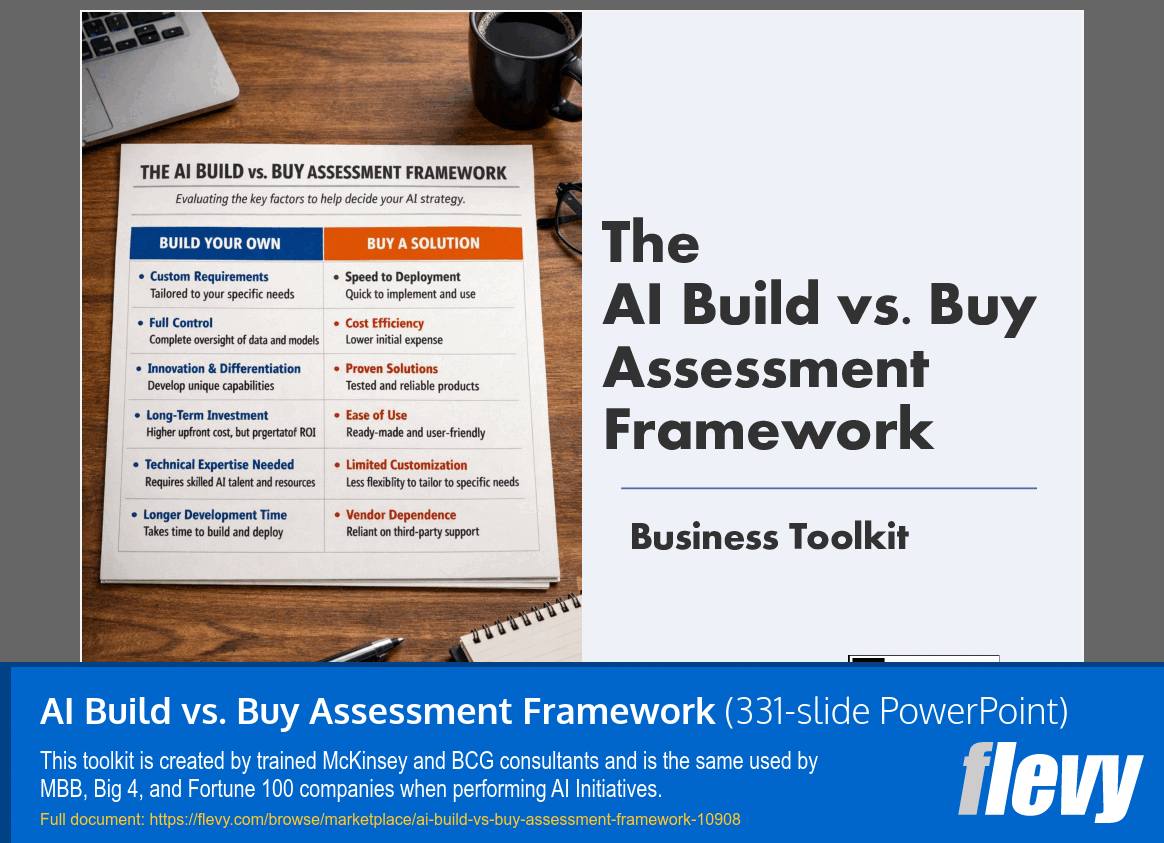
🚀 The AI Build vs. Buy Assessment Framework
The Ultimate 300+ Slide Executive Decision System for AI Strategy
If your organization is investing in AI – or planning to – one question will determine whether you create massive competitive advantage or burn millions on the wrong architecture:
Should you build AI internally… or buy it from vendors?
Most companies get this wrong.
They either:
• Waste years building what they should have bought
• Lock themselves into vendors they can never escape
• Overpay for platforms they barely use
• Or miss the opportunity to build AI capabilities that become strategic moats
The AI Build vs. Buy Assessment Framework is the most comprehensive executive decision system ever created for evaluating AI investment strategies.
Delivered as a 300+ slide executive-grade PowerPoint, this framework equips leaders with a structured, repeatable, board-ready methodology for deciding when to build AI, when to buy AI, and when to combine both.
This is not theory.
This is the strategic decision engine used by elite consulting firms, corporate strategy teams, and venture investors when evaluating AI initiatives.
And now it is packaged into a ready-to-deploy strategic toolkit.
🧠 Turn AI Strategy Into a Competitive Advantage
Every organization today faces the same high-stakes questions:
• Should we build our own AI models?
• Should we rely on external AI platforms?
• Which capabilities must we own internally?
• Which can safely be outsourced?
• What are the true long-term costs of each option?
• Where are the hidden strategic risks?
• How do we prevent vendor lock-in?
• How do we build AI capabilities that compound over time?
The AI Build vs. Buy Assessment Framework provides a rigorous, structured system to answer these questions with clarity, speed, and confidence.
Instead of guessing, debating endlessly, or copying competitors —
You deploy a strategic AI decision model.
💼 What You Get
Inside this 300+ slide strategic framework, you receive a complete AI investment evaluation system designed for executive-level decision making.
The framework enables organizations to systematically evaluate:
✔ Strategic importance of AI capabilities
✔ Internal talent and infrastructure readiness
✔ Data maturity and availability
✔ Vendor ecosystem dynamics
✔ Financial cost structures and lifecycle economics
✔ Time-to-value trade-offs
✔ Operational complexity
✔ Security, compliance, and governance risks
✔ Vendor dependency exposure
✔ Long-term strategic control
Every section of the framework is designed to transform uncertain AI decisions into structured, defensible strategy.
This is not a simple presentation.
It is a decision architecture for AI strategy.
⚙️ A Full Strategic Operating System for AI Investment Decisions
The framework functions as a complete evaluation pipeline that moves organizations from AI ambition to AI investment clarity.
It enables leadership teams to:
✔ Diagnose whether AI capabilities are core or non-core to strategy
✔ Evaluate whether building internally creates defensible advantage
✔ Identify where buying external solutions accelerates value creation
✔ Quantify the real economic trade-offs between build and buy
✔ Analyze the risk of vendor lock-in and platform dependence
✔ Determine when hybrid strategies create optimal outcomes
✔ Design governance structures for ongoing AI decision-making
Instead of making AI decisions reactively, companies can operate with strategic discipline and long-term foresight.
📊 Built for Executive Strategy Sessions
This framework is designed to support real strategic decision environments, including:
• Executive AI strategy workshops
• Board-level AI investment discussions
• Corporate innovation programs
• Digital transformation initiatives
• AI vendor evaluation processes
• Internal AI capability planning
• Technology roadmap development
• Strategic architecture decisions
It provides the structure executives need to move from AI hype to AI clarity.
🔍 Identify Hidden Risks Most Organizations Miss
Many AI initiatives fail because organizations underestimate the structural risks embedded in AI systems.
This framework exposes critical risks that most companies overlook:
⚠ Vendor lock-in that traps organizations for years
⚠ Escalating platform pricing over time
⚠ Hidden infrastructure and maintenance costs
⚠ Dependency on proprietary APIs and models
⚠ Data ownership and portability issues
⚠ Compliance and regulatory exposure
⚠ Talent bottlenecks in internal development
⚠ Long-term operational complexity
By surfacing these risks early, the framework protects organizations from costly strategic mistakes.
💰 Understand the True Economics of AI
One of the most valuable elements of this system is its deep financial modeling logic.
The framework helps organizations rigorously evaluate:
• Development cost structures
• Procurement and licensing economics
• Total cost of ownership (TCO)
• Lifecycle maintenance costs
• Infrastructure investments
• Vendor pricing models
• Time-to-value comparisons
• Long-term scalability economics
This enables leadership teams to make capital allocation decisions based on strategic economics – not hype.
🏗 Design AI Capabilities That Become Strategic Assets
Not all AI capabilities should be treated equally.
Some are commodities.
Others become the foundation of long-term competitive advantage.
This framework helps organizations identify:
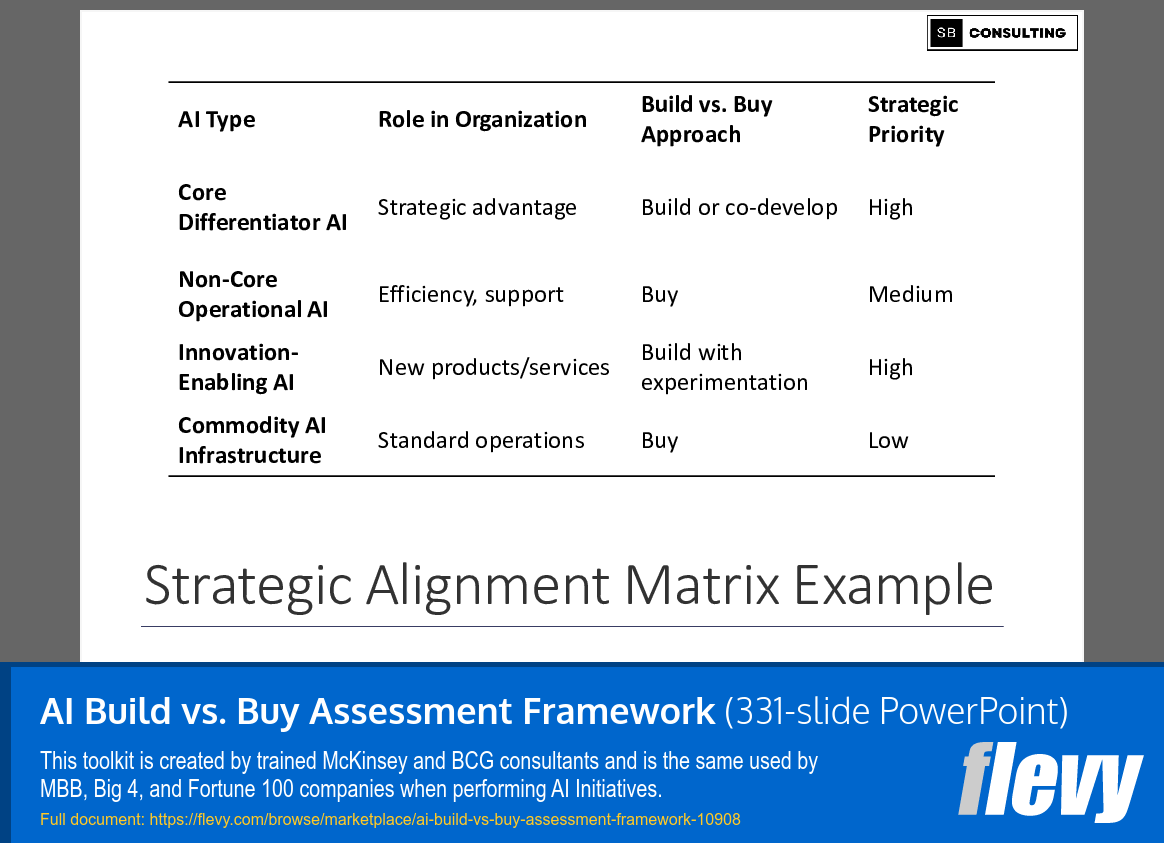
✔ Which AI capabilities must be owned internally
✔ Which capabilities can safely be sourced externally
✔ Where internal development creates defensible moats
✔ When buying accelerates speed without sacrificing control
✔ How hybrid architectures create strategic leverage
The result is AI infrastructure aligned with long-term competitive positioning.
🧪 Apply the Framework to Real AI Use Cases
The framework is not abstract.
It is designed to be applied directly to real enterprise AI initiatives, such as:
• Customer service automation
• Predictive maintenance systems
• Enterprise knowledge intelligence
• AI-powered analytics platforms
• Operational optimization systems
• AI-driven decision support tools
It provides a structured method to analyze each use case and determine the optimal strategy.
🏢 Designed for Organizations That Take AI Seriously
This framework is built for leaders responsible for major technology and strategy decisions.
Ideal users include:
• CEOs and founders
• Chief Technology Officers
• Chief Data Officers
• Chief Digital Officers
• Corporate strategy leaders
• AI program directors
• Innovation teams
• Enterprise architects
• Private equity technology advisors
• Management consultants
Anyone responsible for AI investment decisions will find this framework indispensable.
⚡ Transform AI From Experimentation to Strategy
Most companies are still experimenting with AI.
But the organizations that win will be the ones that treat AI as strategic infrastructure.
The AI Build vs. Buy Assessment Framework enables that shift.
Instead of scattered experimentation, you gain:
✔ Structured AI investment logic
✔ Strategic clarity around capability ownership
✔ Financial discipline in AI spending
✔ Vendor risk management
✔ Long-term architectural planning
✔ Continuous AI governance
This turns AI from a collection of projects into a coherent strategic capability.
📈 Why This Framework Pays for Itself
One wrong AI decision can cost millions.
Examples include:
• Building systems that should have been purchased
• Purchasing platforms that create permanent vendor lock-in
• Overinvesting in internal AI capabilities without sufficient data
• Underinvesting in AI capabilities that should have been core
This framework dramatically improves the quality of AI investment decisions.
Just one avoided strategic mistake can justify the entire system.
🏆 What Makes This Framework Unique
Unlike typical AI strategy content, this system combines:
• Strategic management frameworks
• Technology architecture analysis
• Financial evaluation models
• Risk assessment structures
• Vendor ecosystem intelligence
• Governance design principles
It is designed to function as a complete AI decision architecture.
🚨 Stop Guessing About AI Strategy
Right now, many organizations are making AI decisions based on:
• Vendor sales pitches
• Internal political pressure
• Short-term experimentation
• Incomplete cost analysis
• Hype-driven urgency
That is a dangerous way to design strategic technology infrastructure.
The AI Build vs. Buy Assessment Framework replaces uncertainty with structured strategic thinking.
🎯 Take Control of Your AI Strategy
If you want to:
✔ Avoid expensive AI investment mistakes
✔ Build AI capabilities that create real competitive advantage
✔ Reduce vendor dependency risk
✔ Accelerate AI decision-making across the organization
✔ Align AI investments with long-term strategy
✔ Bring clarity to board-level technology discussions
Then this framework becomes an essential strategic tool.
CONTENT OVERVIEW
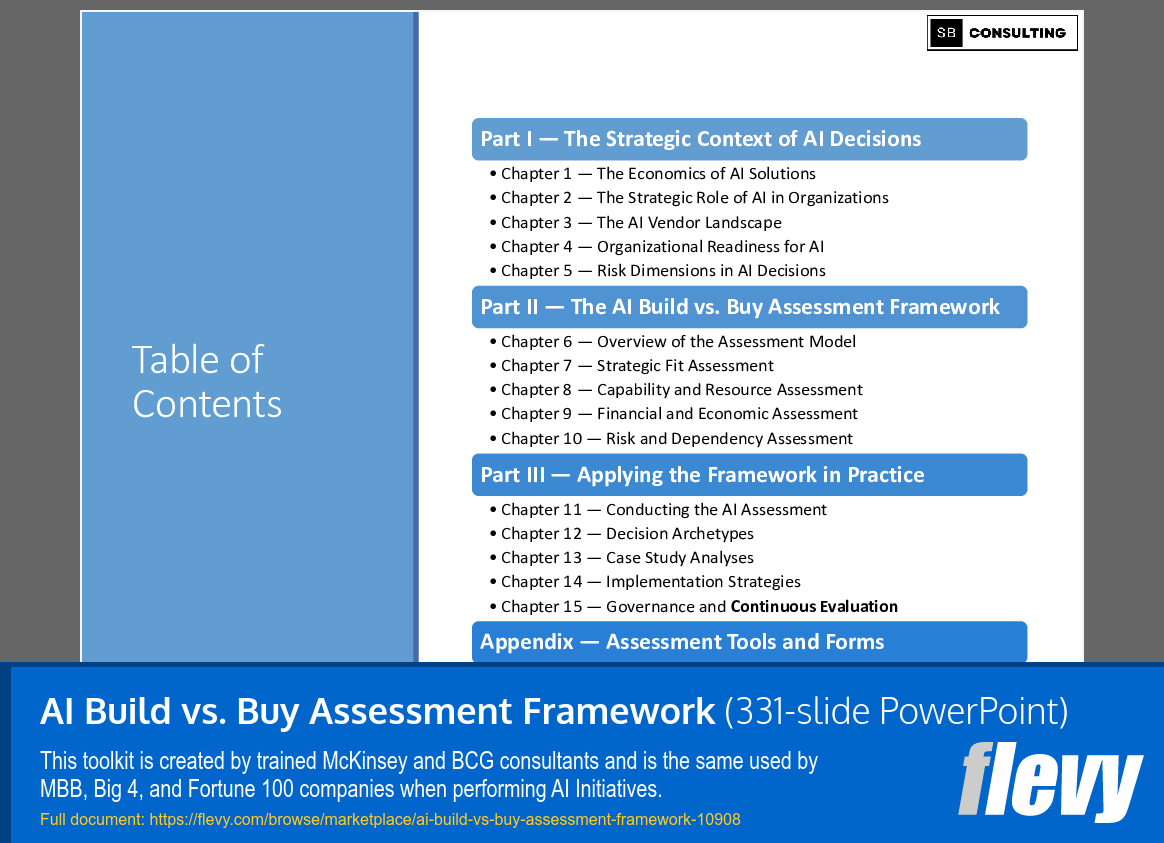
Part I – The Strategic Context of AI Decisions
Chapter 1 – The Economics of AI Solutions
• 1.1 Cost Structures of AI Development vs. Procurement
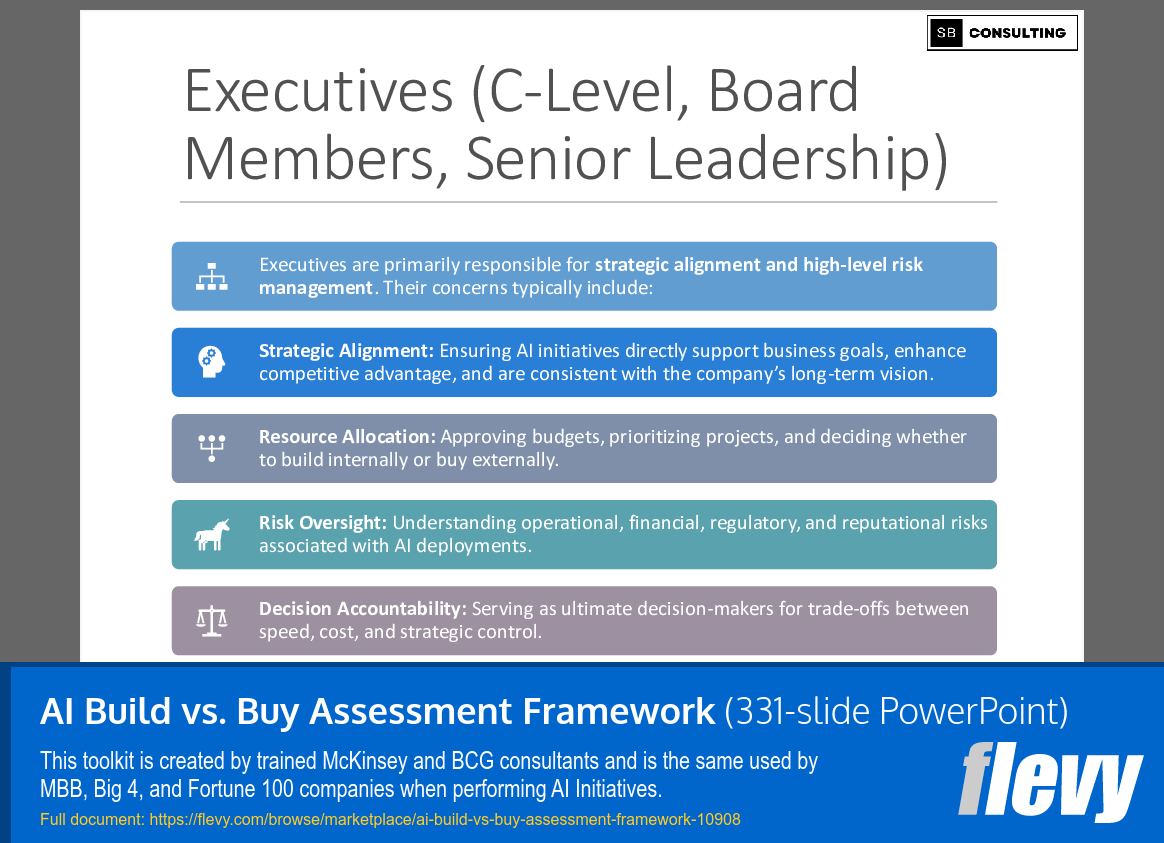
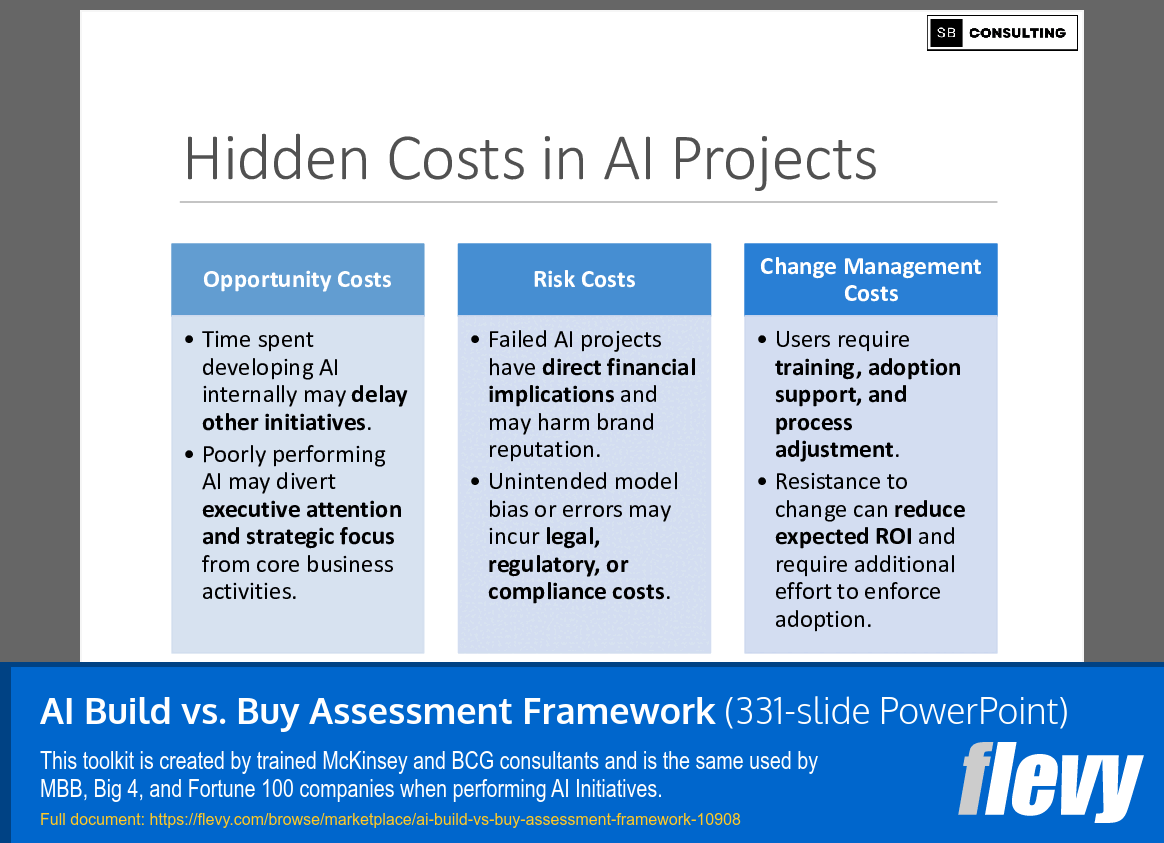
• 1.2 Hidden Costs in AI Projects
• 1.3 Total Cost of Ownership for AI Systems
Chapter 2 – The Strategic Role of AI in Organizations
• 2.1 AI as Infrastructure vs. Competitive Differentiator
• 2.2 Core vs. Non-Core AI Capabilities
• 2.3 Strategic Positioning Through AI
Chapter 3 – The AI Vendor Landscape
• 3.1 Categories of AI Vendors
• 3.2 Platform Ecosystems and Lock-In Risks
• 3.3 Evaluating Vendor Maturity and Stability
Chapter 4 – Organizational Readiness for AI
• 4.1 Data Maturity and Infrastructure
• 4.2 AI Talent and Capability Gaps
• 4.3 Governance and Responsible AI Structures
Chapter 5 – Risk Dimensions in AI Decisions
• 5.1 Technical Risk
• 5.2 Strategic and Dependency Risk
• 5.3 Legal, Compliance, and Ethical Risk
Part II – The AI Build vs. Buy Assessment Framework
Chapter 6 – Overview of the Assessment Model
• 6.1 Core Principles of the Framework
• 6.2 Key Decision Dimensions
• 6.3 The Assessment Workflow
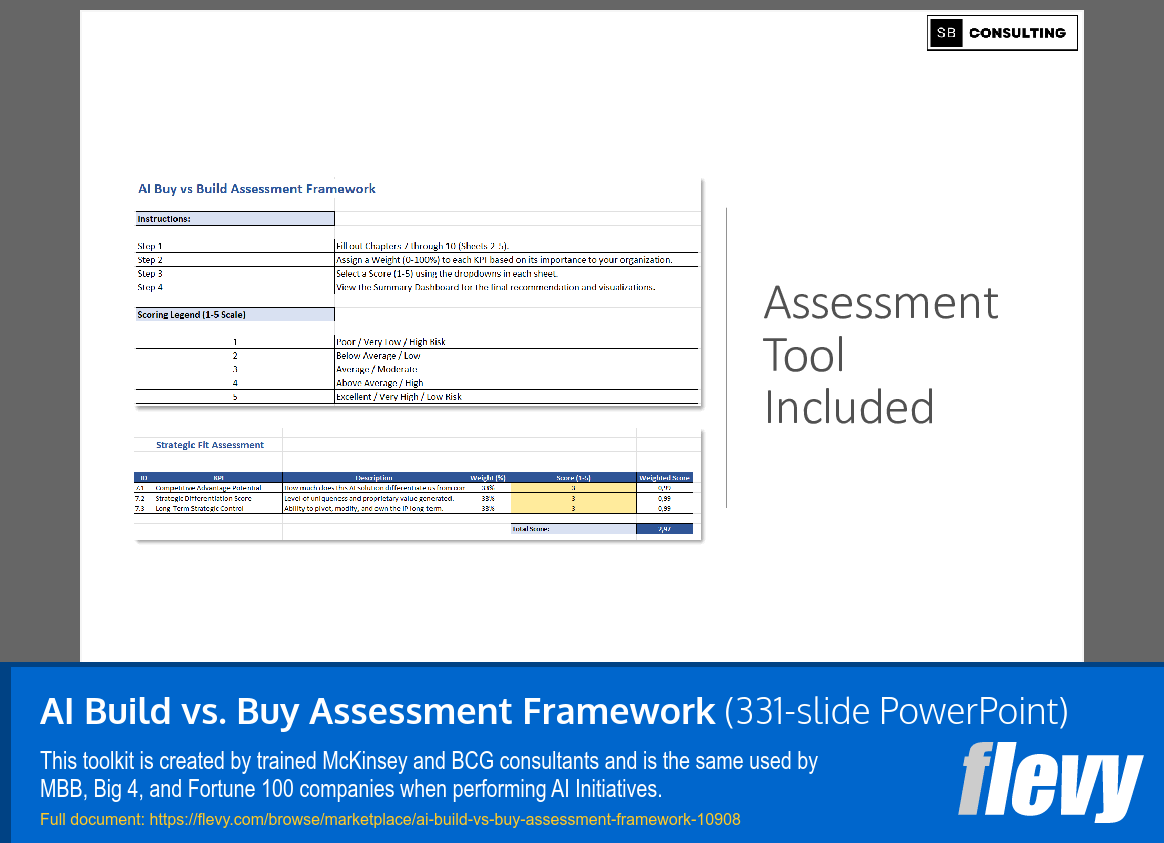
Chapter 7 – Strategic Fit Assessment
• 7.1 Competitive Advantage Potential
• 7.2 Strategic Differentiation Score
• 7.3 Long-Term Strategic Control
Chapter 8 – Capability and Resource Assessment
• 8.1 Internal Talent and Skill Availability
• 8.2 Data Availability and Quality
• 8.3 Infrastructure and Engineering Capacity
Chapter 9 – Financial and Economic Assessment
• 9.1 Development vs. Procurement Cost Modeling
• 9.2 Time-to-Value Analysis
• 9.3 Lifecycle Cost Comparison
Chapter 10 – Risk and Dependency Assessment
• 10.1 Vendor Lock-In and Strategic Dependence
• 10.2 Security and Compliance Considerations
• 10.3 Operational and Maintenance Risk
Part III – Applying the Framework in Practice
Chapter 11 – Conducting the AI Assessment
• 11.1 Structuring the Assessment Process
• 11.2 Stakeholder Involvement and Governance
• 11.3 Scoring and Decision Methodology
Chapter 12 – Decision Archetypes
• 12.1 When Building AI Is the Right Choice
• 12.2 When Buying AI Is the Better Option
• 12.3 Hybrid Approaches: Build on Top of Bought AI
Chapter 13 – Case Study Analyses
• 13.1 AI in Customer Service Automation
• 13.2 AI in Predictive Maintenance
• 13.3 AI in Enterprise Knowledge Systems
Chapter 14 – Implementation Strategies
• 14.1 Building an Internal AI Capability
• 14.2 Managing AI Vendors and Platforms
• 14.3 Integration with Existing Systems
Chapter 15 – Governance and Continuous Evaluation
• 15.1 Monitoring AI Performance and ROI
• 15.2 Updating Build vs. Buy Decisions Over Time
• 15.3 Establishing an AI Decision Governance Model
Appendix – Assessment Forms
Strategic Assessment Forms
• AI Strategic Importance Evaluation Form
• Competitive Differentiation Assessment Form
• Core Capability Identification Worksheet
Capability Assessment Forms
• AI Talent and Skills Assessment Form
• Data Readiness Assessment Form
• Infrastructure Capability Assessment Form
Financial Assessment Forms
• AI Cost Comparison Calculator
• AI Total Cost of Ownership (TCO) Assessment Form
• AI Time-to-Value Estimation Assessment
Risk Assessment Forms
• Vendor Lock-In Risk Assessment Form
• AI Security and Compliance Assessment Form
• AI Operational Risk Evaluation Form
🔥 AI will reshape every industry.
But the winners will not simply be the companies using AI.
They will be the companies that design the right AI architecture from the beginning.
The AI Build vs. Buy Assessment Framework gives you the system to do exactly that.
This is not just a slide deck.
It is the strategic blueprint for making the most important AI decisions your organization will face.
Key Words:
Strategy & Transformation, Growth Strategy, Strategic Planning, Strategy Frameworks, Innovation Management, Pricing Strategy, Core Competencies, Strategy Development, Business Transformation, Marketing Plan Development, Product Strategy, Breakout Strategy, Competitive Advantage, Mission, Vision, Values, Strategy Deployment & Execution, Innovation, Vision Statement, Core Competencies Analysis, Corporate Strategy, Product Launch Strategy, BMI, Blue Ocean Strategy, Breakthrough Strategy, Business Model Innovation, Business Strategy Example, Corporate Transformation, Critical Success Factors, Customer Segmentation, Customer Value Proposition, Distinctive Capabilities, Enterprise Performance Management, KPI, Key Performance Indicators, Market Analysis, Market Entry Example, Market Entry Plan, Market Intelligence, Market Research, Market Segmentation, Market Sizing, Marketing, Michael Porter's Value Chain, Organizational Transformation, Performance Management, Performance Measurement, Platform Strategy, Product Go-to-Market Strategy, Reorganization, Restructuring, SWOT, SWOT Analysis, Service 4.0, Service Strategy, Service Transformation, Strategic Analysis, Strategic Plan Example, Strategy Deployment, Strategy Execution, Strategy Frameworks Compilation, Strategy Methodologies, Strategy Report Example, Value Chain, Value Chain Analysis, Value Innovation, Value Proposition, Vision Statement, Corporate Strategy, Business Development, Business plan pdf, business plan, PDF, Business Plan DOC, Business Plan Template, PPT, Market strategy playbook, strategic market planning, competitive analysis tools, market segmentation frameworks, growth strategy templates, product positioning strategy, market execution toolkit, strategic alignment playbook, KPI and OKR frameworks, business growth strategy guide, cross-functional strategy templates, market risk management, market strategy PowerPoint doc, guide, ebook, e-book ,McKinsey Change Playbook, Organizational change management toolkit, Change management frameworks 2025, Influence model for change, Change leadership strategies, Behavioral change in organizations, Change management PowerPoint templates, Transformational leadership in change, supply chain KPIs, supply chain KPI toolkit, supply chain PowerPoint template, logistics KPIs, procurement KPIs, inventory management KPIs, supply chain performance metrics, manufacturing KPIs, supply chain dashboard, supply chain strategy KPIs, reverse logistics KPIs, sustainability KPIs in supply chain, financial supply chain KPIs, warehouse KPIs, digital supply chain KPIs, 1200 KPIs, supply chain scorecard, KPI examples, supply chain templates, Corporate Finance SOPs, Finance SOP Excel Template, CFO Toolkit, Finance Department Procedures, Financial Planning SOPs, Treasury SOPs, Accounts Payable SOPs, Accounts Receivable SOPs, General Ledger SOPs, Accounting Policies Template, Internal Controls SOPs, Finance Process Standardization, Finance Operating Procedures, Finance Department Excel Template, FP&A Process Documentation, Corporate Finance Template, Finance SOP Toolkit, CFO Process Templates, Accounting SOP Package, Tax Compliance SOPs, Financial Risk Management Procedures.
NOTE: Our digital products are sold on an "as is" basis, making returns and refunds unavailable post-download. Please preview and inquire before purchasing. Please contact us before purchasing if you have any questions! This policy aligns with the standard Flevy Terms of Usage.
Got a question about the product? Email us at support@flevy.com or ask the author directly by using the "Ask the Author a Question" form. If you cannot view the preview above this document description, go here to view the large preview instead.
Source: Best Practices in Artificial Intelligence, Make or Buy PowerPoint Slides: AI Build vs. Buy Assessment Framework PowerPoint (PPTX) Presentation Slide Deck, SB Consulting
ABOUT THE AUTHOR

SB Consulting is dedicated to empowering businesses to communicate their ideas with impact. This consulting firm specializes in teaching organizations how to create effective corporate and management presentations. With training from top-tier global consulting firms, including McKinsey, BCG, and Porsche Consulting, extensive expertise in presentation design and ... [read more]
Ask the Author a Question
You must be logged in to contact the author.




























