
Agriculture Value Chain   34-slide PPT PowerPoint presentation slide deck (PPTX)
$39.00

Agriculture Value Chain (34-slide PPT PowerPoint presentation slide deck (PPTX)) Preview Image
Log in to unlock full preview.
Agriculture Value Chain (34-slide PPT PowerPoint presentation slide deck (PPTX)) Preview Image
Arrow   Click main image to view in full screen.

Agriculture Value Chain (PowerPoint PPTX Slide Deck)

PowerPoint (PPTX) 34 Slides

#1 in Agriculture Industry $39.00
This framework is created by former McKinsey, BCG, Deloitte, EY, and Capgemini consultants and provides actionable insights for Agriculture Industry Value Chain Analysis.
Add to Cart


Immediate download
Free lifetime updates

BENEFITS OF THIS POWERPOINT DOCUMENT

  1. Provides a framework for examining the Agriculture Industry.
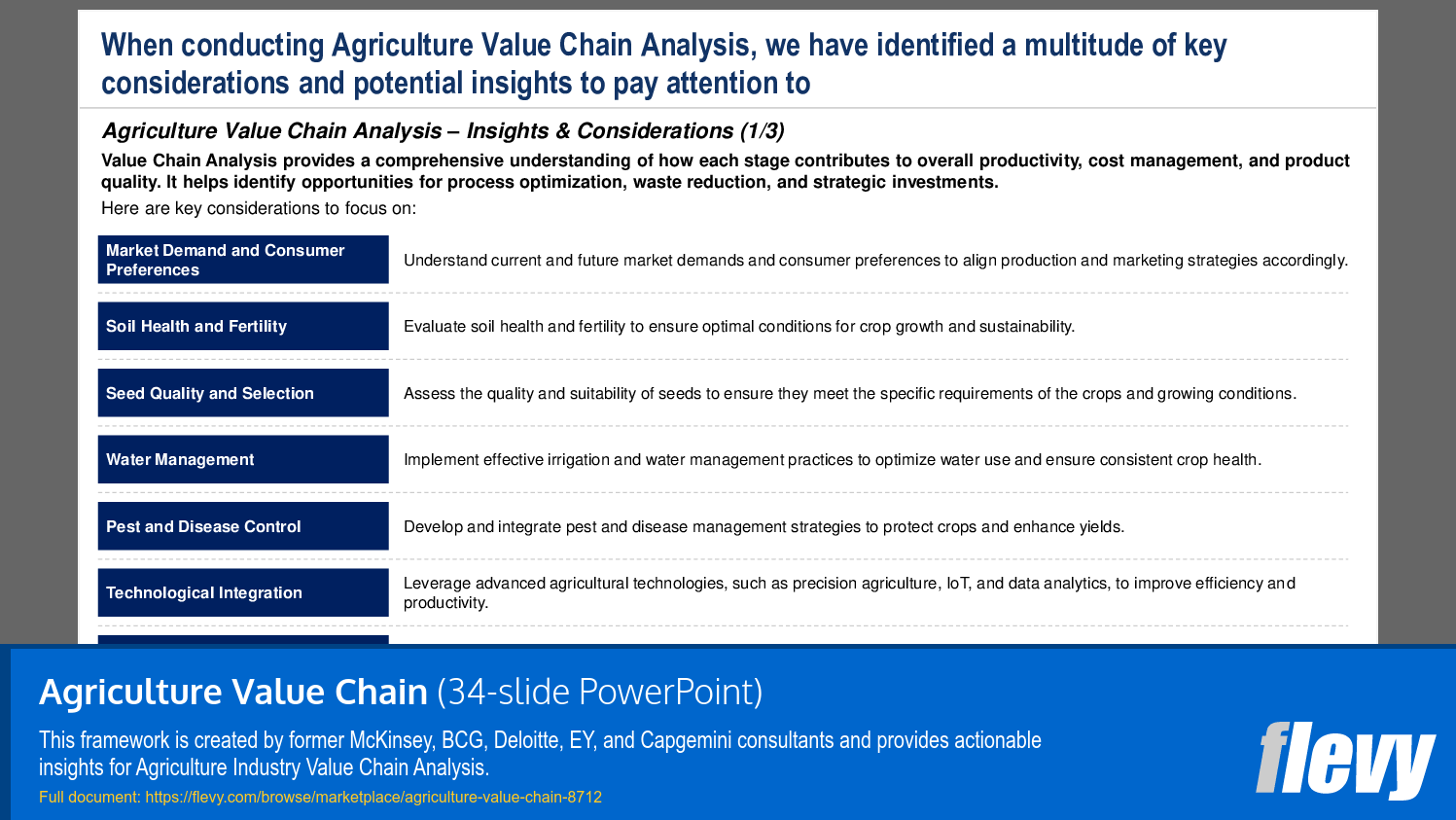
  2. Identifies 20 important insights and considerations for Agriculture Value Chain Analysis.
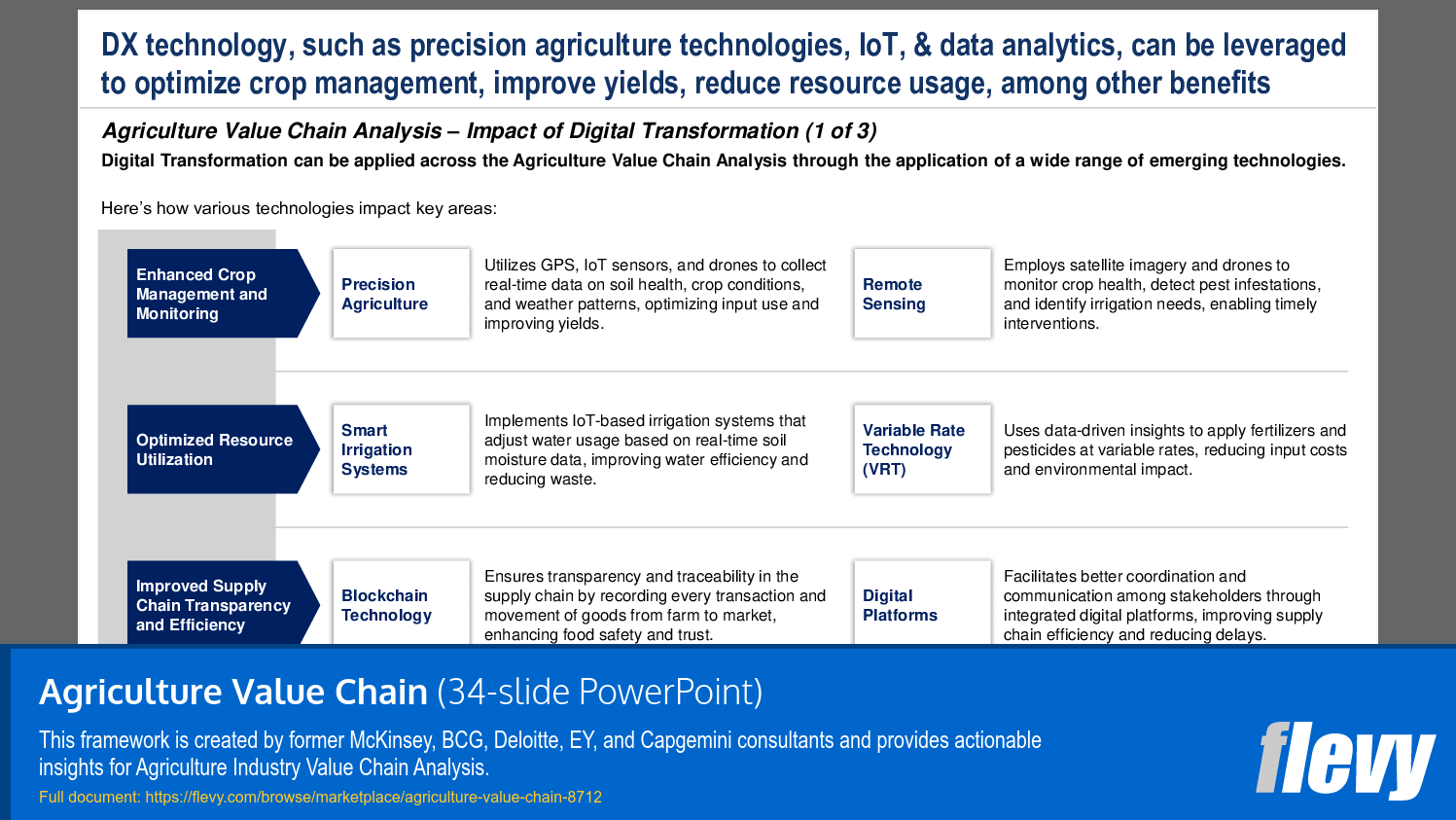
  3. Provides a detailed breakdown of the impact of Digital Transformation across the Agriculture Value Chain.

VALUE CHAIN ANALYSIS PPT DESCRIPTION

Agriculture Value Chain PPT: Learn key stages, supply chain management, and agribusiness insights. Download this detailed agriculture value chain template now. Agriculture Value Chain is a 34-slide PPT PowerPoint presentation slide deck (PPTX) available for immediate download upon purchase.

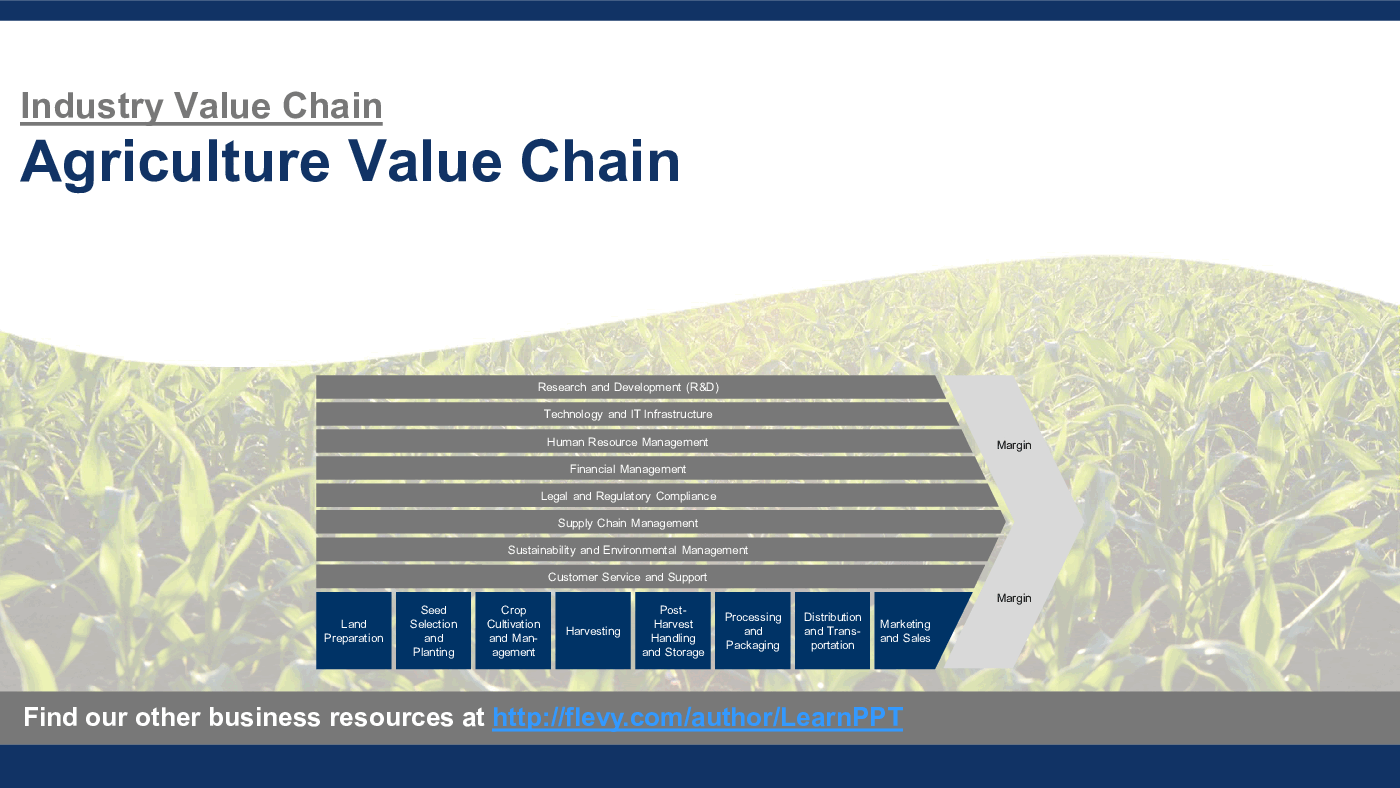
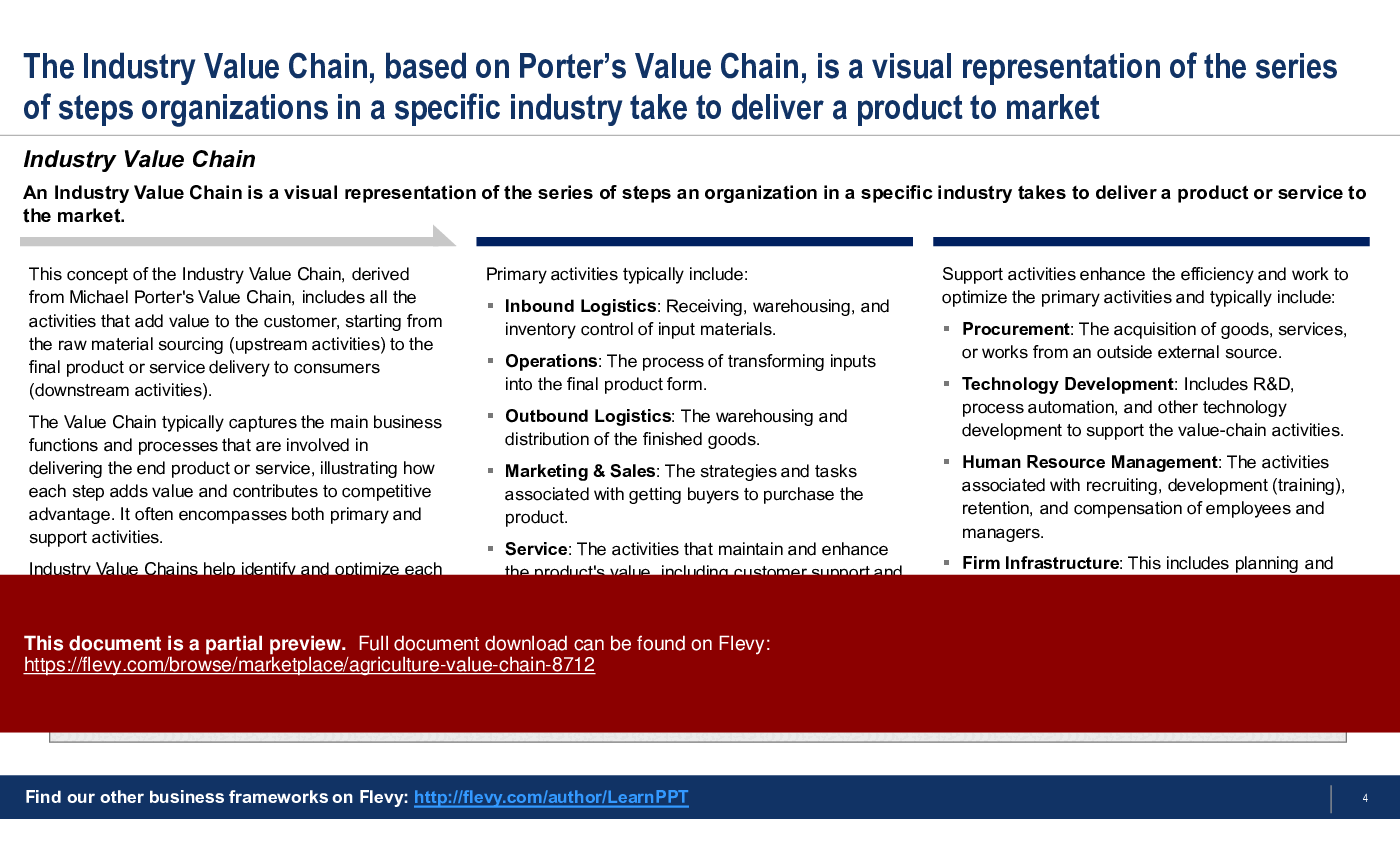
An Industry Value Chain is a visual representation of the series of steps an organization in a specific industry takes to deliver a product or service to the market. It captures the main business functions and processes that are involved in delivering the end product or service, illustrating how each step adds value and contributes to a Competitive Advantage. It often encompasses both primary and support activities.

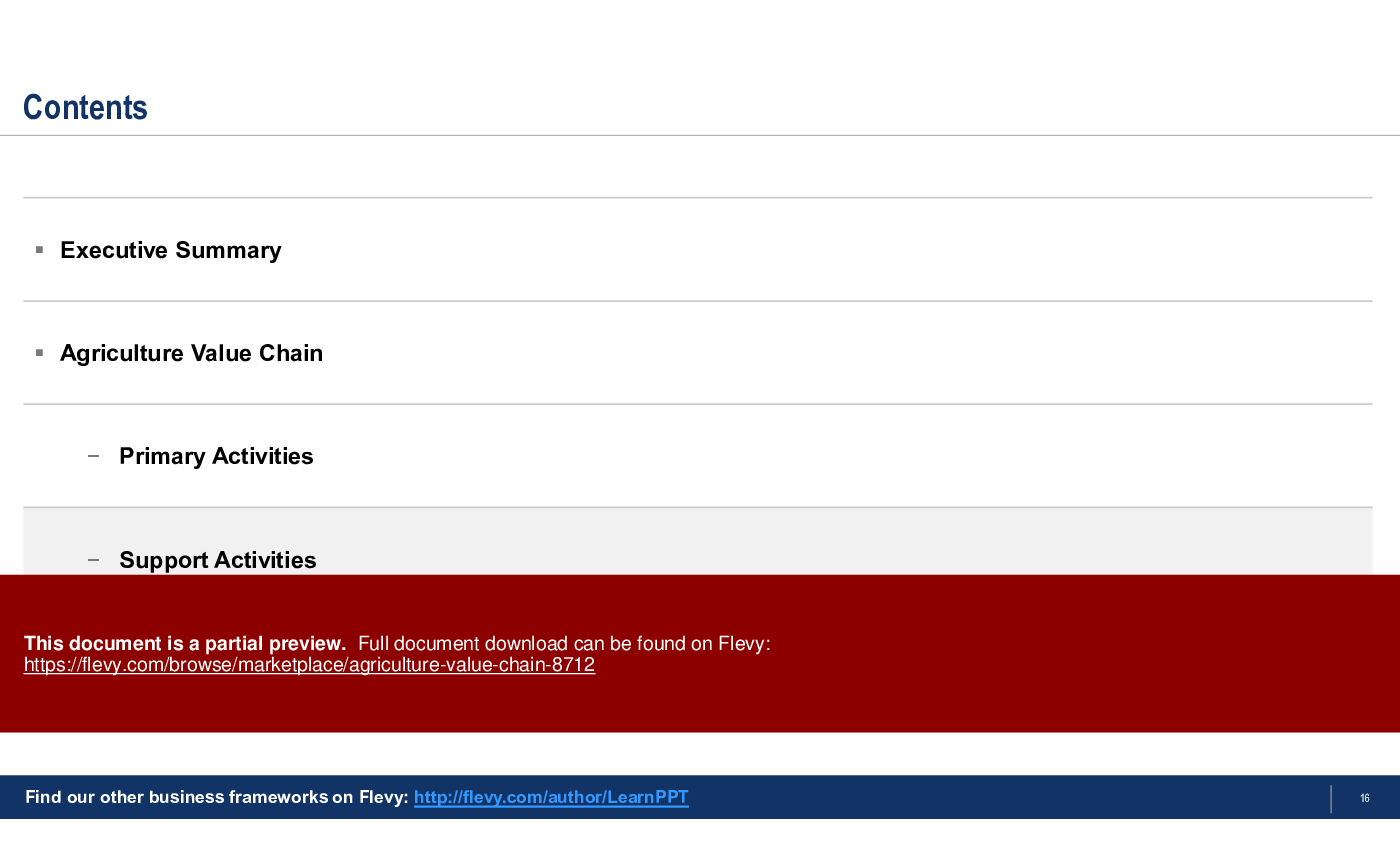
This PowerPoint presentation captures the Agriculture Industry Value Chain, which includes the following primary and support activities:

Primary Activities
1. Land Preparation
2. Seed Selection and Planting
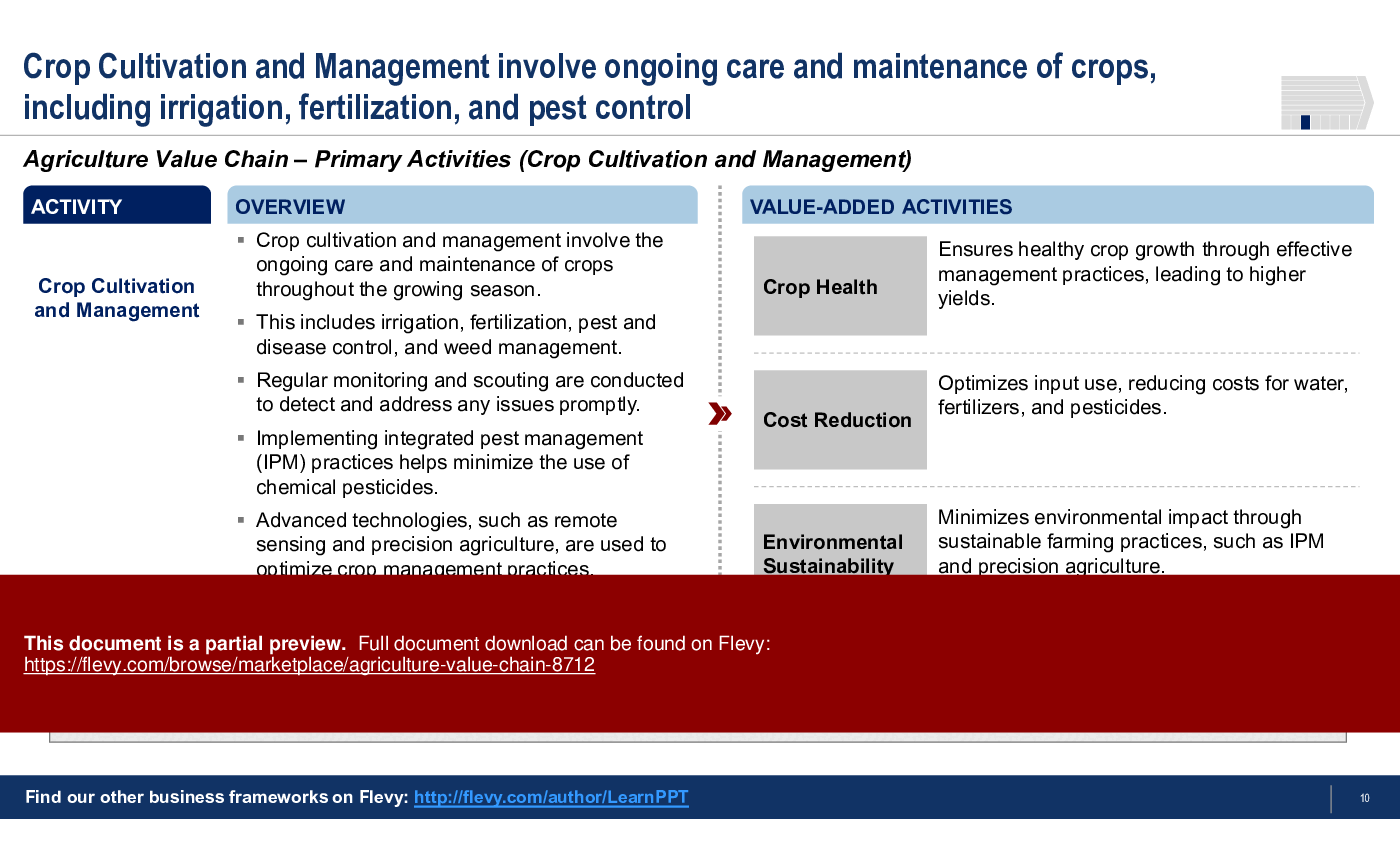
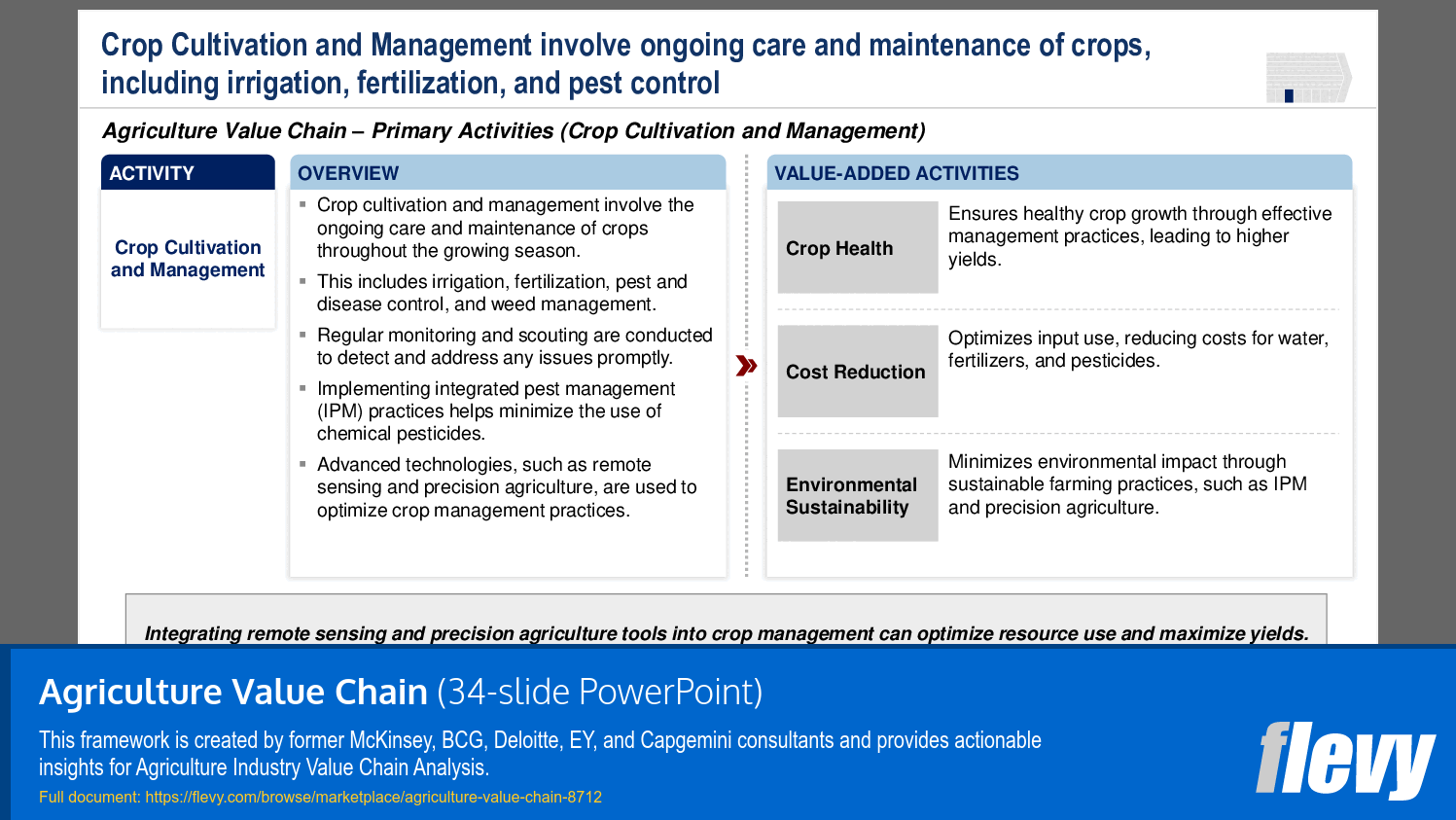
3. Crop Cultivation and Management
4. Harvesting
5. Post-Harvest Handling and Storage
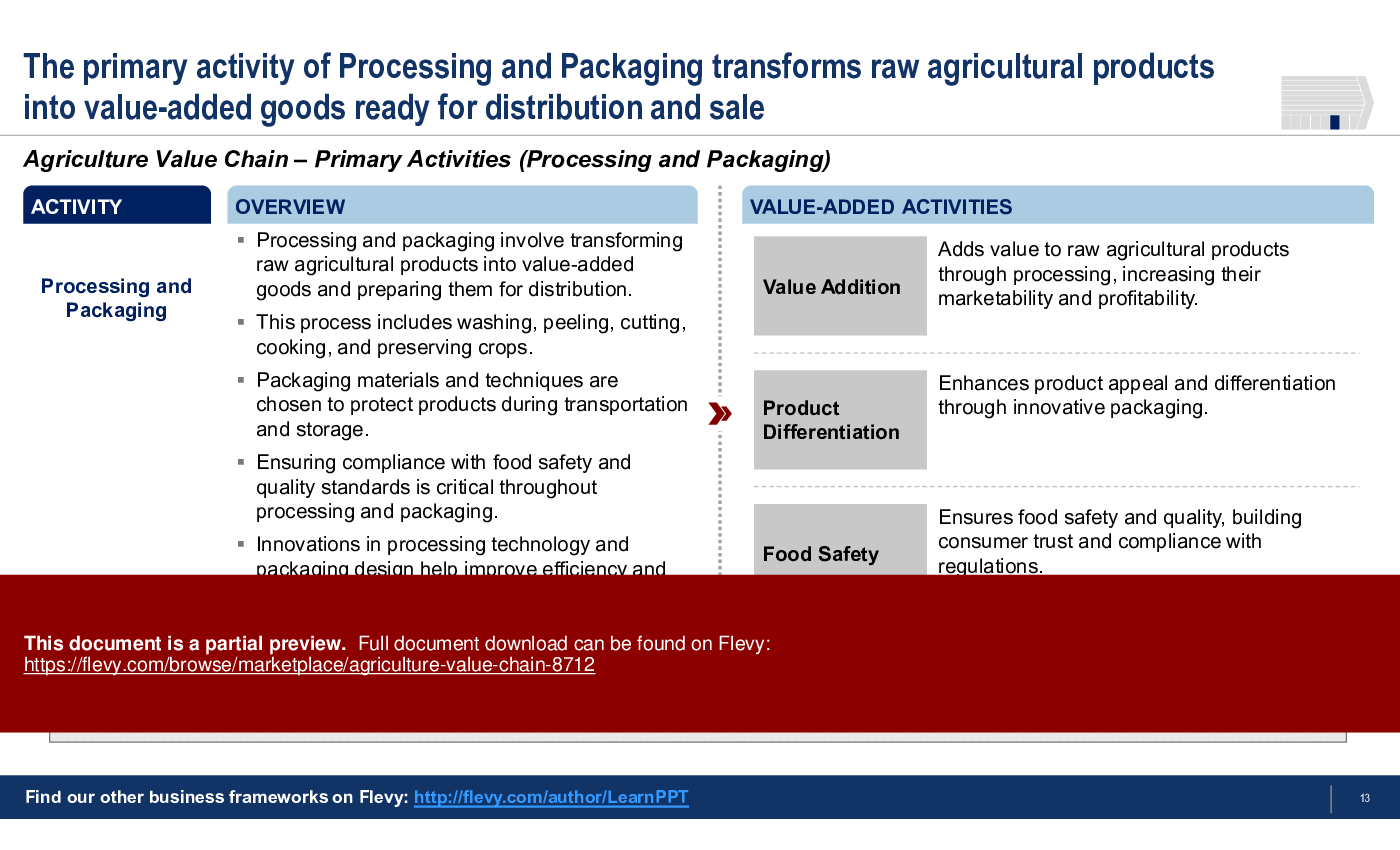
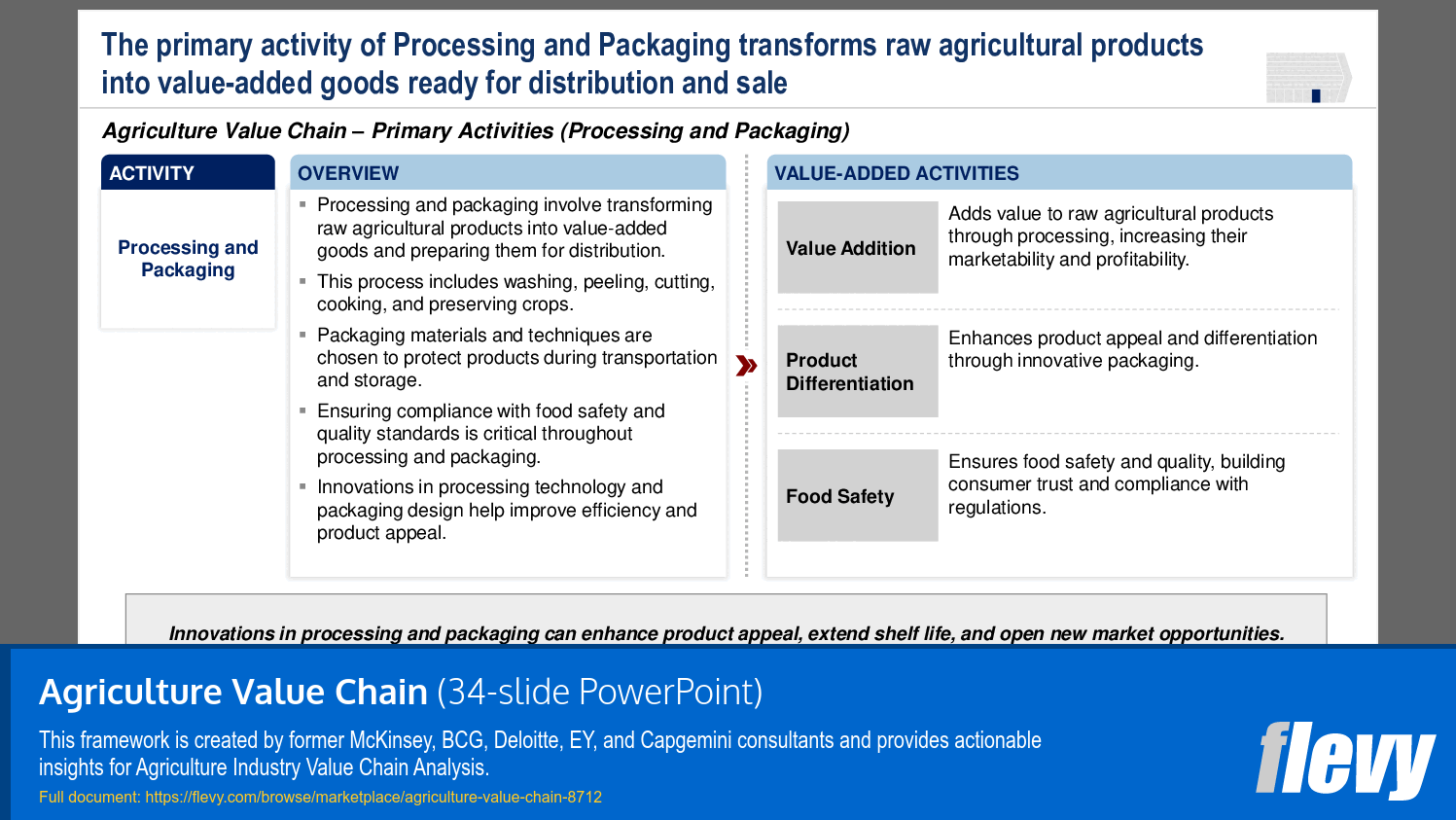
6. Processing and Packaging
7. Distribution and Transportation
8. Marketing and Sales

Support Activities
1. Research and Development (R&D)
2. Technology and IT Infrastructure
3. Human Resource Management
4. Financial Management
5. Legal and Regulatory Compliance
6. Supply Chain Management
7. Sustainability and Environmental Management
8. Customer Service and Support

This PowerPoint presentation dives deeper into each of these activities, highlighting key elements.

The Agriculture Industry Value Chain integrates land preparation, seed selection, crop management, and distribution to deliver high-quality agricultural products efficiently. Advanced processing and packaging techniques add value to raw agricultural products, enhancing marketability and consumer appeal. Sustainable practices and environmental management in agriculture promote long-term viability and meet growing consumer demand for eco-friendly products. Efficient post-harvest handling and storage are crucial for maintaining crop quality and reducing losses, significantly impacting profitability.

This PowerPoint presentation also discusses Agriculture Value Chain Analysis, highlighting a multitude of key considerations and potential insights to pay attention to. We further discuss the significant impact of Digital Transformation and various specific emergent technologies on the Agriculture Industry.

This presentation not only outlines the key activities within the Agriculture Value Chain, but also emphasizes the importance of integrating technology and sustainable practices to enhance operational efficiency. It provides actionable insights that can help organizations adapt to evolving market demands and improve overall productivity in agricultural operations.

Got a question about the product? Email us at support@flevy.com or ask the author directly by using the "Ask the Author a Question" form. If you cannot view the preview above this document description, go here to view the large preview instead.

MARCUS OVERVIEW

This synopsis was written by Marcus [?] based on the analysis of the full 34-slide presentation.


Executive Summary
The Agriculture Value Chain presentation provides a comprehensive framework for understanding the series of steps involved in delivering agricultural products to the market. Created by former consultants from top-tier firms like McKinsey, BCG, and Deloitte, this consulting-grade resource outlines both primary and support activities essential for optimizing agricultural operations. Buyers will gain actionable insights into enhancing productivity, managing costs, and improving product quality through effective value chain analysis. This framework is designed to help organizations identify opportunities for process optimization and strategic investments, ultimately leading to a competitive advantage in the agriculture industry.

Who This Is For and When to Use
•  Agricultural executives and managers focused on improving operational efficiency
•  Supply chain professionals seeking to optimize logistics and distribution
•  Marketing teams aiming to enhance product visibility and market reach
•  Consultants working with agribusiness clients on value chain strategies

Best-fit moments to use this deck:
•  During strategic planning sessions to align production and marketing strategies
•  In workshops aimed at improving supply chain efficiency and cost management
•  When conducting value chain analysis for performance improvement initiatives

Learning Objectives
•  Define the Agriculture Value Chain and its significance in the agricultural sector
•  Identify primary and support activities that contribute to value creation
•  Analyze current market demands and consumer preferences to inform production strategies
•  Implement best practices for post-harvest handling and storage to maintain crop quality
•  Leverage technology and innovation to enhance agricultural productivity
•  Develop effective marketing strategies to maximize revenue and market share

Table of Contents
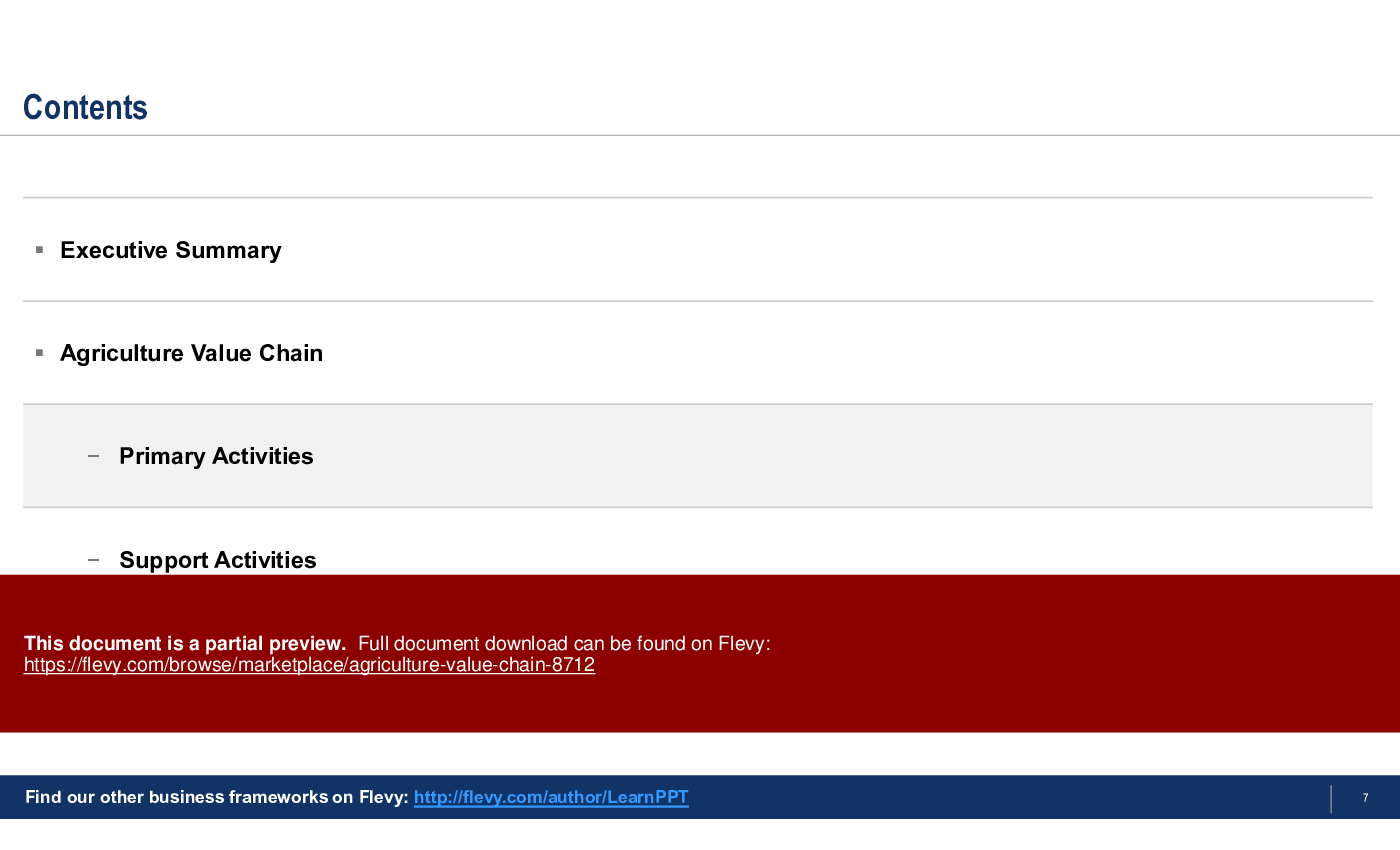
•  Executive Summary (page 1)
•  Agriculture Value Chain (page 2)
•  Primary Activities (page 3)
•  Support Activities (page 4)
•  Agriculture Value Chain Analysis (page 5)

Primary Topics Covered
•  Primary Activities - The core processes in the Agriculture Value Chain, including land preparation, seed selection, crop management, harvesting, post-harvest handling, processing, distribution, and marketing.
•  Support Activities - Essential functions that enhance primary activities, such as research and development, technology management, human resource management, financial management, legal compliance, supply chain management, sustainability practices, and customer service.
•  Value Chain Analysis - A method for evaluating how each stage contributes to overall productivity, cost management, and product quality.

Deliverables, Templates, and Tools
•  Value chain mapping template to visualize primary and support activities
•  Best practices guide for post-harvest handling and storage
•  Cost management framework for optimizing supply chain processes
•  Marketing strategy template tailored for agricultural products
•  R&D planning template for innovation in agricultural practices
•  Compliance checklist for legal and regulatory standards

Slide Highlights
•  Overview of the Agriculture Value Chain, illustrating primary and support activities
•  Detailed breakdown of each primary activity, including value-added elements
•  Insights on market demand and consumer preferences affecting production strategies
•  Analysis of the impact of digital transformation technologies on agricultural operations
•  Key considerations for effective supply chain management and risk mitigation

Potential Workshop Agenda
Value Chain Optimization Session (90 minutes)
•  Review the Agriculture Value Chain framework and its components
•  Identify current challenges and opportunities within each activity
•  Develop action plans for optimizing primary and support activities

Market Strategy Development (60 minutes)
•  Analyze consumer trends and preferences in the agricultural sector
•  Create targeted marketing strategies to enhance product visibility
•  Discuss digital marketing tools and e-commerce platforms for market access

Customization Guidance
•  Tailor the value chain mapping template to reflect specific agricultural operations
•  Adjust marketing strategies based on regional consumer preferences and trends
•  Incorporate local regulatory requirements into the compliance checklist
•  Modify best practices for post-harvest handling to align with available resources

Secondary Topics Covered
•  Digital transformation in agriculture
•  Sustainable farming practices and their impact on the environment
•  The role of technology in enhancing agricultural productivity
•  Risk management strategies for agricultural operations
•  Importance of customer feedback in product development

FAQ
What is the Agriculture Value Chain?
The Agriculture Value Chain is a framework that outlines the series of steps involved in delivering agricultural products from production to market, including both primary and support activities.

How can this framework help improve agricultural operations?
By analyzing each stage of the value chain, organizations can identify inefficiencies, optimize processes, and enhance product quality, ultimately leading to increased profitability.

What are the primary activities in the Agriculture Value Chain?
Primary activities include land preparation, seed selection and planting, crop cultivation, harvesting, post-harvest handling, processing and packaging, distribution, and marketing.

What role does technology play in the Agriculture Value Chain?
Technology enhances operational efficiency, improves decision-making, and supports data-driven practices, such as precision agriculture and supply chain management.

How can organizations ensure compliance with legal and regulatory standards?
Implementing a compliance program that includes regular audits, employee training, and adherence to industry regulations is essential for mitigating legal risks.

What are some best practices for post-harvest handling?
Best practices include proper cleaning, sorting, and storage techniques to maintain crop quality and extend shelf life, as well as monitoring environmental conditions.

How can marketing strategies be tailored for agricultural products?
Marketing strategies should consider consumer preferences, market trends, and effective branding to enhance product visibility and drive sales.

What are the benefits of conducting a value chain analysis?
Value chain analysis provides insights into productivity, cost management, and quality control, enabling organizations to make informed strategic decisions.

Glossary
•  Agriculture Value Chain - The series of steps involved in delivering agricultural products from production to market.
•  Primary Activities - Core processes that directly contribute to the creation of agricultural products.
•  Support Activities - Functions that enhance the efficiency of primary activities.
•  Value Chain Analysis - A method for evaluating how each stage contributes to overall productivity and quality.
•  Digital Transformation - The integration of digital technologies into agricultural practices to enhance efficiency.
•  Sustainability Practices - Methods aimed at reducing environmental impact and promoting long-term viability in agriculture.
•  Market Demand - The desire for agricultural products based on consumer preferences and trends.
•  Post-Harvest Handling - The processes involved in maintaining crop quality after harvesting.
•  Compliance - Adherence to legal and regulatory standards in agricultural operations.
•  Risk Management - Strategies developed to mitigate potential risks in agricultural practices.
•  Customer Feedback - Insights gathered from consumers to inform product development and improvement.
•  Supply Chain Management - Coordination of the flow of goods from producers to consumers.

VALUE CHAIN ANALYSIS PPT SLIDES

Digital Transformation in Agriculture Value Chain

Comprehensive Overview of the Agriculture Value Chain

Optimizing Seed Selection and Planting Techniques

Key Considerations for Agriculture Value Chain Analysis

Transforming Raw Agriculture: Processing and Packaging Insights

Optimizing Crop Production through Effective Land Preparation

Optimizing Crop Management through Technology and Sustainability

Source: Best Practices in Value Chain Analysis, Agriculture Industry PowerPoint Slides: Agriculture Value Chain PowerPoint (PPTX) Presentation Slide Deck, LearnPPT Consulting


$39.00
This framework is created by former McKinsey, BCG, Deloitte, EY, and Capgemini consultants and provides actionable insights for Agriculture Industry Value Chain Analysis.
Add to Cart
  

ABOUT THE AUTHOR

Author image
Additional documents from author: 141

We are a team of management consultants trained by top tier global consulting firms (including McKinsey, BCG, Deloitte, EY, Capgemini) with a collective experience of several decades. We specialize in business frameworks based on real-life consulting engagements.

We have served 100s of clients that range from Fortune 500 companies to tech startups to ... [read more]

Ask the Author a Question

You must be logged in to contact the author.

Click here to log in Click here register

Did you know?
The average daily rate of a McKinsey consultant is $6,625 (not including expenses). The average price of a Flevy document is $65.


Trusted by over 10,000+ Client Organizations
Since 2012, we have provided best practices to over 10,000 businesses and organizations of all sizes, from startups and small businesses to the Fortune 100, in over 130 countries.
AT&T GE Cisco Intel IBM Coke Dell Toyota HP Nike Samsung Microsoft Astrazeneca JP Morgan KPMG Walgreens Walmart 3M Kaiser Oracle SAP Google E&Y Volvo Bosch Merck Fedex Shell Amgen Eli Lilly Roche AIG Abbott Amazon PwC T-Mobile Broadcom Bayer Pearson Titleist ConEd Pfizer NTT Data Schwab


Read Customer Testimonials

 
"Flevy.com has proven to be an invaluable resource library to our Independent Management Consultancy, supporting and enabling us to better serve our enterprise clients.

The value derived from our [FlevyPro] subscription in terms of the business it has helped to gain far exceeds the investment made, making a subscription a no-brainer for any growing consultancy – or in-house strategy team."

– Dean Carlton, Chief Transformation Officer, Global Village Transformations Pty Ltd.
 
"As an Independent Management Consultant, I find Flevy to add great value as a source of best practices, templates and information on new trends. Flevy has matured and the quality and quantity of the library is excellent. Lastly the price charged is reasonable, creating a win-win value for "

– Jim Schoen, Principal at FRC Group
 
"FlevyPro provides business frameworks from many of the global giants in management consulting that allow you to provide best in class solutions for your clients."

– David Harris, Managing Director at Futures Strategy
 
"As a niche strategic consulting firm, Flevy and FlevyPro frameworks and documents are an on-going reference to help us structure our findings and recommendations to our clients as well as improve their clarity, strength, and visual power. For us, it is an invaluable resource to increase our impact and value."

– David Coloma, Consulting Area Manager at Cynertia Consulting
 
"Flevy is now a part of my business routine. I visit Flevy at least 3 times each month.

Flevy has become my preferred learning source, because what it provides is practical, current, and useful in this era where the business world is being rewritten.

In today's environment where there are so "

– Omar Hernán Montes Parra, CEO at Quantum SFE
 
"The wide selection of frameworks is very useful to me as an independent consultant. In fact, it rivals what I had at my disposal at Big 4 Consulting firms in terms of efficacy and organization."

– Julia T., Consulting Firm Owner (Former Manager at Deloitte and Capgemini)
 
"As a small business owner, the resource material available from FlevyPro has proven to be invaluable. The ability to search for material on demand based our project events and client requirements was great for me and proved very beneficial to my clients. Importantly, being able to easily edit and tailor "

– Michael Duff, Managing Director at Change Strategy (UK)
 
"I have used FlevyPro for several business applications. It is a great complement to working with expensive consultants. The quality and effectiveness of the tools are of the highest standards."

– Moritz Bernhoerster, Global Sourcing Director at Fortune 500


Customers Also Bought These Documents


Customers Also Like These Documents

Explore Related Management Topics


Your Recently Viewed Documents
Download our FREE Strategy & Transformation Framework Templates

Download our free compilation of 50+ Strategy & Transformation slides and templates. Frameworks include McKinsey 7-S, Balanced Scorecard, Disruptive Innovation, BCG Curve, and many more.