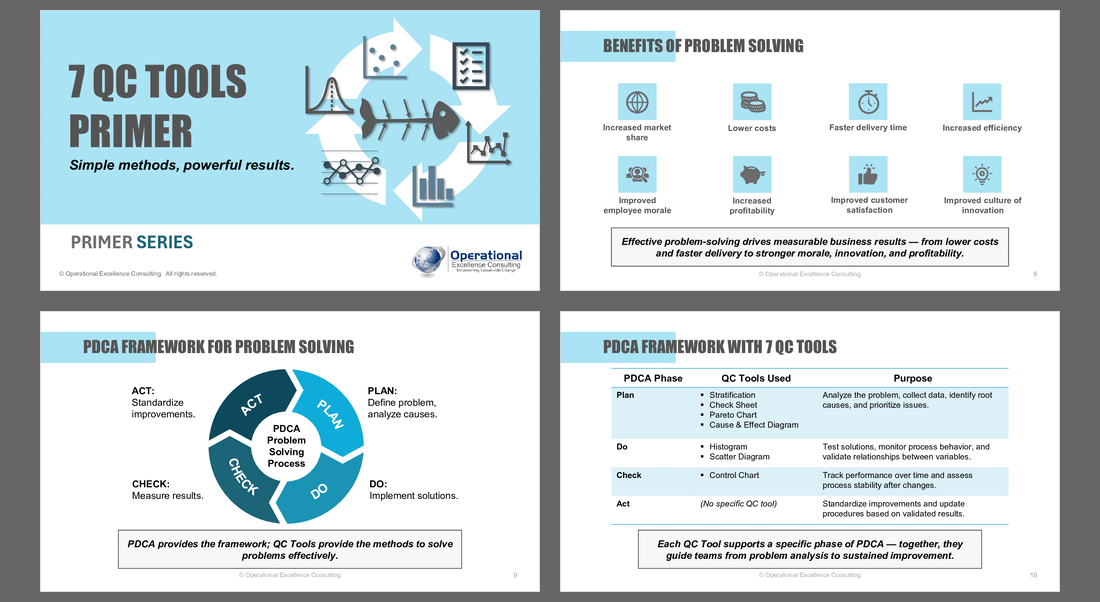

7 QC Tools Primer   45-slide PPT PowerPoint presentation slide deck (PPTX)
$35.00

7 QC Tools Primer (45-slide PPT PowerPoint presentation slide deck (PPTX)) Preview Image
Log in to unlock full preview.
7 QC Tools Primer (45-slide PPT PowerPoint presentation slide deck (PPTX)) Preview Image
Arrow   Click main image to view in full screen.

7 QC Tools Primer (PowerPoint PPTX Slide Deck)

PowerPoint (PPTX) 45 Slides

$35.00
Developed by a seasoned Certified Lean Six Sigma Black Belt (ex-Microsoft and IBM), this 7 QC Tools Primer is your pathway to mastering the fundamental methods of quality improvement and driving sustainable performance improvement.
Add to Cart


Immediate download
Fully editable PowerPoint
Free lifetime updates

BENEFITS OF THIS POWERPOINT DOCUMENT

  1. Facilitation‑Ready Design: Structured slides, examples, and exercises make training delivery seamless for facilitators.
  2. Practical, Proven Tools: Learners gain confidence applying simple methods that solve real workplace problems without complex statistics.
  3. Business Impact: Drives measurable improvements in efficiency, customer satisfaction, and profitability by embedding structured problem‑solving.

PROBLEM SOLVING PPT DESCRIPTION

7 QC Tools Primer PPT: Learn quality control basics with Ishikawa’s 7 tools—Pareto, Cause-Effect, Histogram, Control Chart & more. Download training slides now. 7 QC Tools Primer is a 45-slide PPT PowerPoint presentation slide deck (PPTX) available for immediate download upon purchase.

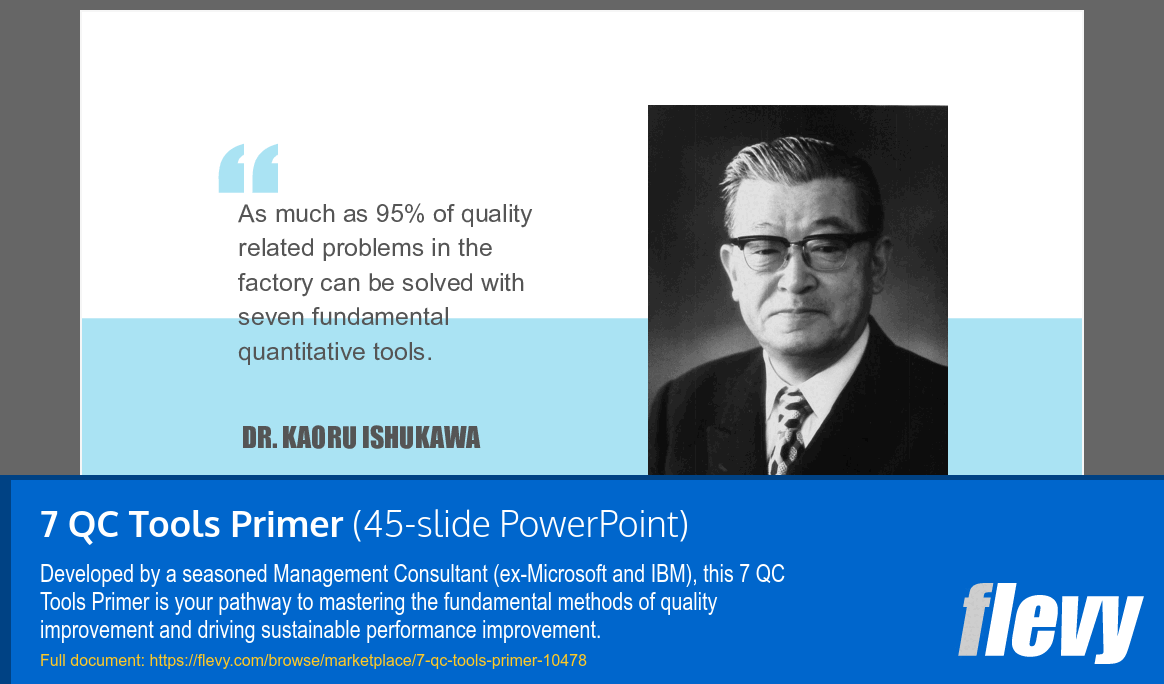
The 7 QC Tools Primer PPT is a facilitation‑ready training resource designed to equip teams with the foundational methods of quality improvement. Developed by Operational Excellence Consulting, this authoritative primer introduces the seven basic quality control tools that solve up to 95% of factory‑related problems, as emphasized by Dr. Kaoru Ishikawa. With clear explanations, practical examples, and hands‑on exercises, the primer empowers learners to analyze data, uncover root causes, and drive measurable business results. It is ideal for operators, technicians, supervisors, and managers seeking practical, proven tools to strengthen problem‑solving and continuous improvement capabilities.

LEARNING OBJECTIVES

By the end of this primer, learners will be able to:

1. Explain the purpose of the 7 QC Tools
2. Identify the appropriate tool for different problem types
3. Construct and interpret each QC Tool
4. Analyze data to uncover patterns and root causes
5. Apply the 7 QC Tools in team problem‑solving
6. Communicate findings effectively

CONTENTS

1. Foundations of Problem Solving
•  What is a problem?
•  What is problem solving?
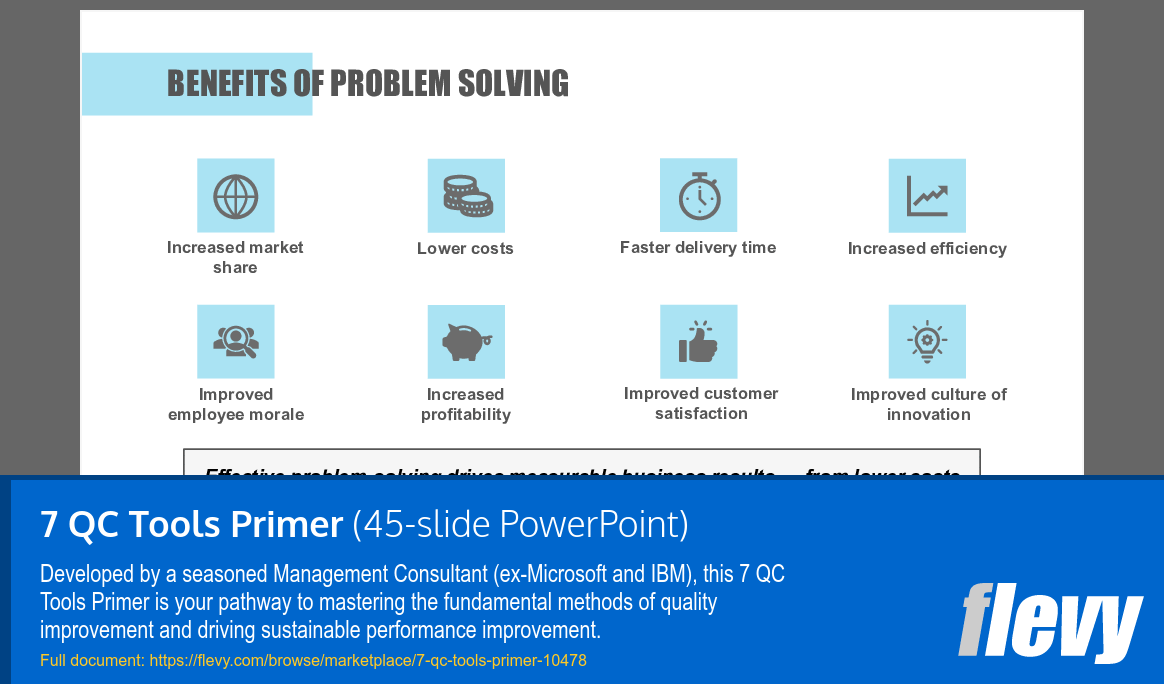
•  Benefits of problem solving
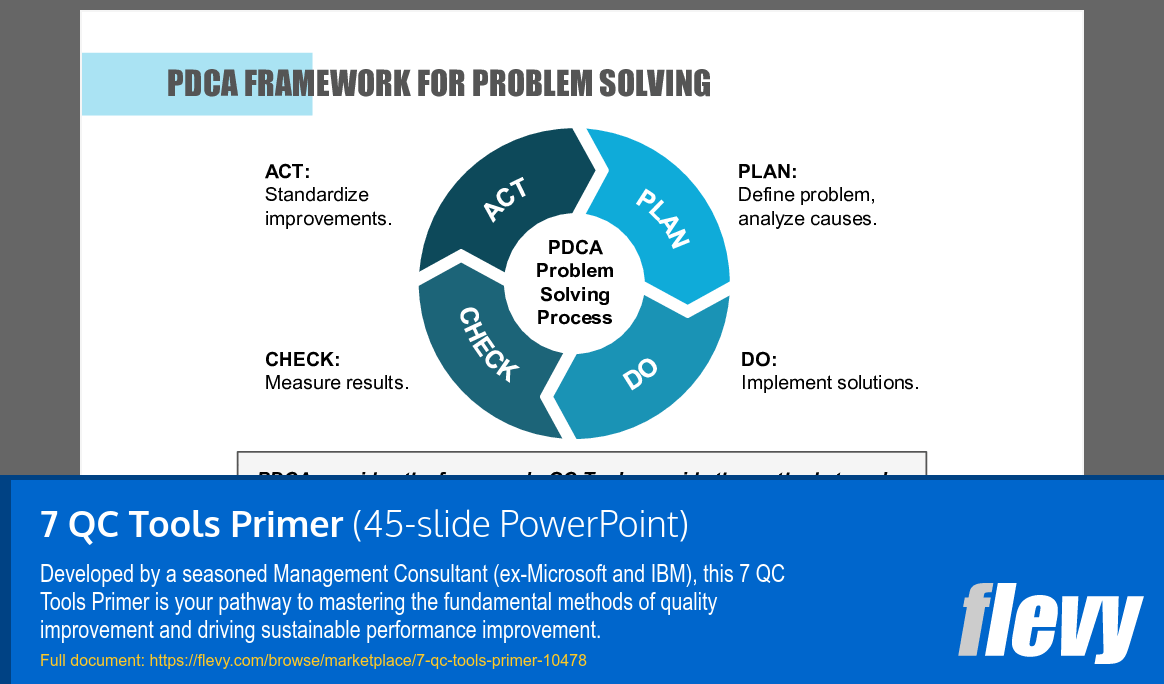
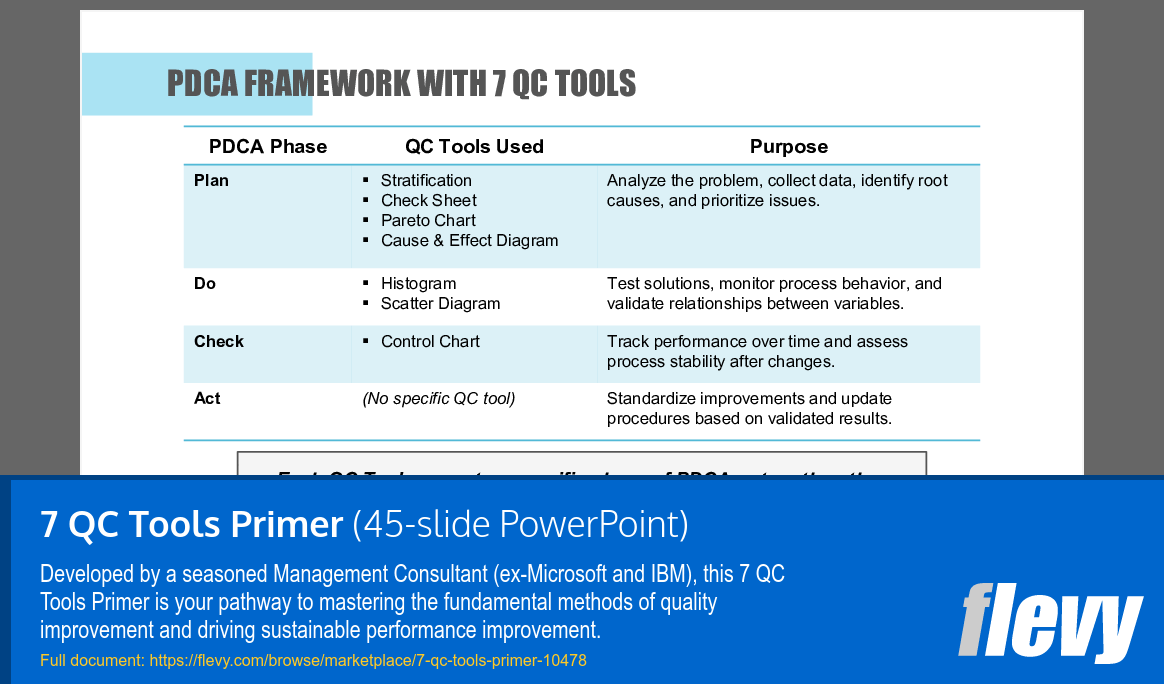
•  PDCA framework and QC tool alignment

2. Introduction to the 7 QC Tools
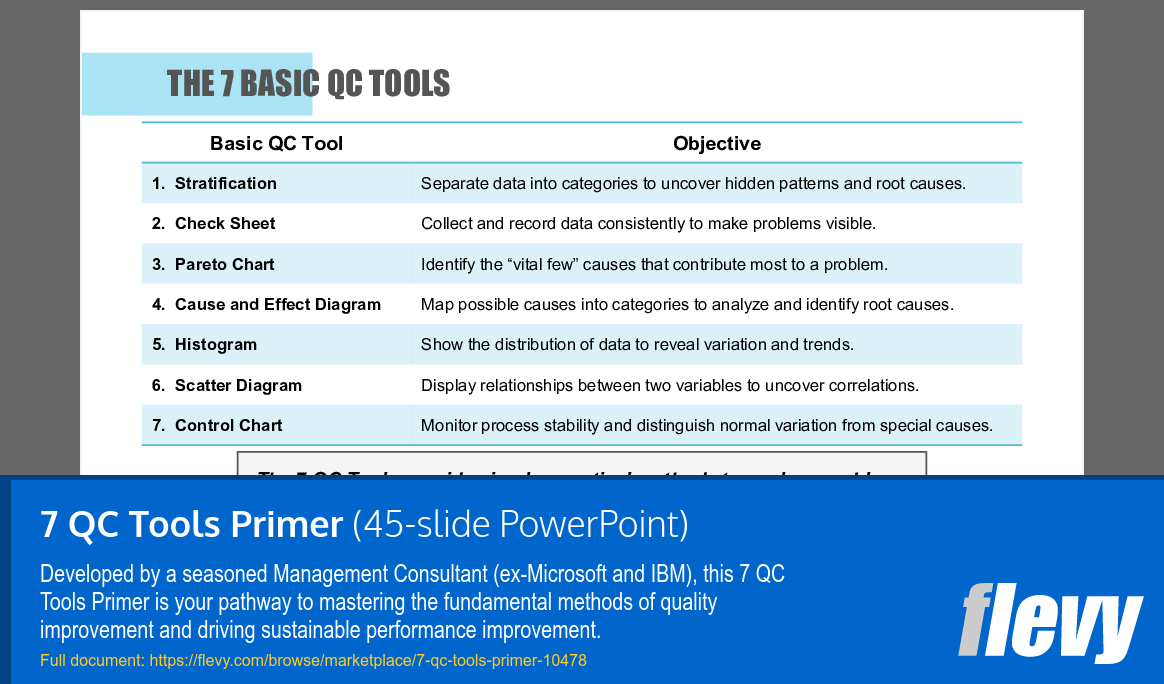
•  Overview of each tool and its objective
•  Dr. Kaoru Ishikawa's perspective
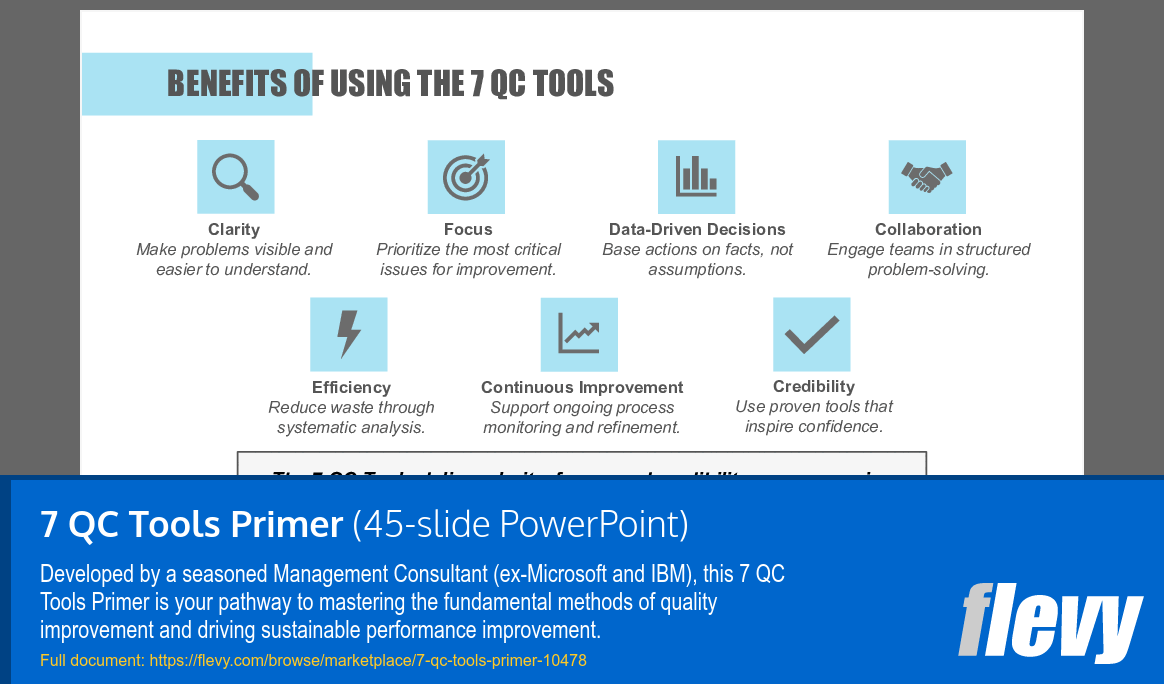
•  Benefits of using the 7 QC Tools

3. Process & Tools
•  Stratification: overview, example, procedures & tips, exercise
•  Check Sheet: overview, example, procedures & tips
•  Pareto Chart: overview, example, procedures & tips, exercise
•  Cause & Effect Diagram: overview, example, procedures & tips, exercise
•  Histogram: overview, example, procedures & tips, exercise
•  Scatter Diagram: overview, example, procedures & tips
•  Control Chart: overview, example, procedures & tips

4. Exercises & Activities
•  Stratification practice
•  Pareto chart construction
•  Cause & Effect diagram analysis
•  Histogram analysis

About the OEC Primer Series

Developed by Operational Excellence Consulting, each Primer is designed to be facilitation‑ready, practical, and credible. Unlike generic training materials, our Primer Series is built by practitioners with decades of transformation experience, ensuring every deck combines clear frameworks, proven tools, and interactive activities. This consistency across topics (5S, Kaizen, Lean, Problem Solving, Design Thinking, and more) makes the series a trusted resource for consultants, trainers, and organizations seeking structured, high‑impact learning.

Got a question about the product? Email us at support@flevy.com or ask the author directly by using the "Ask the Author a Question" form. If you cannot view the preview above this document description, go here to view the large preview instead.

MARCUS OVERVIEW

This synopsis was written by Marcus [?] based on the analysis of the full 45-slide presentation.


Executive Summary
The 7 QC Tools Primer is an essential training resource designed to equip teams with practical methods for quality improvement. Developed by a Certified Lean Six Sigma Black Belt with experience at Microsoft and IBM, this presentation focuses on the fundamental tools for problem-solving and process enhancement. By mastering the 7 quality control tools—Stratification, Check Sheet, Pareto Chart, Cause and Effect Diagram, Histogram, Scatter Diagram, and Control Chart—learners will be empowered to identify root causes, analyze data, and implement effective solutions, ultimately driving sustainable performance improvements.

Who This Is For and When to Use
•  Quality Assurance teams seeking to enhance problem-solving capabilities
•  Operations managers focused on process optimization
•  Continuous improvement professionals implementing Lean methodologies
•  Training and development leaders aiming to upskill teams in quality control

Best-fit moments to use this deck:
•  During quality improvement initiatives to establish a structured approach
•  In training sessions aimed at enhancing team collaboration in problem-solving
•  When analyzing performance data to identify trends and root causes

Learning Objectives
•  Explain the purpose of the 7 QC Tools
•  Identify the appropriate tool for different problem types
•  Construct and interpret each QC Tool
•  Analyze data to uncover patterns and root causes
•  Apply the 7 QC Tools in team problem-solving
•  Communicate findings effectively

Table of Contents
•  Foundations of Problem Solving (page 6)
•  Introduction to the 7 QC Tools (page 12)
•  Process & Tools (page 16)

Primary Topics Covered
•  Foundations of Problem Solving - Understanding the gap between actual performance and desired standards, and the structured approach to eliminate nonconformities.
•  7 Basic QC Tools - Overview of the 7 fundamental tools that aid in problem analysis and continuous improvement efforts.
•  Benefits of Using the 7 QC Tools - Clarity, focus, data-driven decision-making, and enhanced collaboration that lead to effective problem-solving.

Deliverables, Templates, and Tools
•  Stratification template for segmenting data into meaningful categories
•  Check Sheet template for consistent data collection
•  Pareto Chart template for prioritizing issues based on frequency or impact
•  Cause and Effect Diagram template for structured brainstorming
•  Histogram template for analyzing performance trends
•  Scatter Diagram template for identifying correlations between variables
•  Control Chart template for monitoring process stability

Slide Highlights
•  Overview of the PDCA framework integrated with the 7 QC Tools
•  Visual representation of each QC Tool's purpose and application
•  Illustrative examples demonstrating the use of each tool in real scenarios
•  Exercises designed to engage participants in applying the tools

Potential Workshop Agenda
Introduction to QC Tools (30 minutes)
•  Overview of the 7 QC Tools and their importance
•  Discussion on the foundations of problem-solving

Hands-On Tool Application (90 minutes)
•  Group exercises using Stratification and Check Sheets
•  Analysis of data using Pareto Charts and Cause and Effect Diagrams

Review and Wrap-Up (30 minutes)
•  Present findings from group exercises
•  Discuss best practices for implementing QC Tools in the workplace

Customization Guidance
•  Tailor the presentation to include specific industry examples relevant to your organization
•  Adjust the exercises to reflect real data from your operational processes
•  Incorporate company-specific terminology and metrics for clarity

Secondary Topics Covered
•  The role of data in quality management
•  Techniques for effective team collaboration in problem-solving
•  Continuous improvement methodologies and their application in various industries

FAQ
What are the 7 QC Tools?
The 7 QC Tools are Stratification, Check Sheet, Pareto Chart, Cause and Effect Diagram, Histogram, Scatter Diagram, and Control Chart, each designed to facilitate problem-solving and process improvement.

How can these tools be applied in my organization?
These tools can be utilized in quality improvement initiatives, training sessions, and performance analysis to enhance problem-solving capabilities and drive continuous improvement.

What is the PDCA framework?
The PDCA (Plan-Do-Check-Act) framework is a structured approach to problem-solving that integrates the 7 QC Tools to analyze problems, implement solutions, and standardize improvements.

Can the presentation be customized?
Yes, the presentation can be tailored to fit specific organizational needs, including industry examples and company-specific terminology.

How do I measure the effectiveness of the QC Tools?
Effectiveness can be measured through improved performance metrics, reduced defects, and enhanced team collaboration in problem-solving.

What is the importance of data in using QC Tools?
Data is crucial for identifying patterns, analyzing root causes, and making informed decisions based on factual evidence rather than assumptions.

How do I train my team to use these tools effectively?
Conduct workshops that include hands-on exercises, real-world examples, and collaborative problem-solving sessions to build proficiency in using the QC Tools.

What are the benefits of using the 7 QC Tools?
Benefits include improved clarity in problem identification, focused prioritization of issues, data-driven decision-making, and enhanced collaboration among team members.

Glossary
•  QC Tools - Tools used for quality control and improvement in processes.
•  Stratification - The process of segmenting data into categories to identify patterns.
•  Check Sheet - A structured form for collecting and tracking data.
•  Pareto Chart - A bar chart that prioritizes issues based on frequency or impact.
•  Cause and Effect Diagram - A visual tool for identifying root causes of problems.
•  Histogram - A bar chart showing frequency distribution across intervals.
•  Scatter Diagram - A graph showing relationships between 2 variables.
•  Control Chart - A time-based chart for monitoring process stability.
•  PDCA - Plan-Do-Check-Act; a framework for continuous improvement.
•  Root Cause Analysis - A method for identifying the underlying causes of problems.
•  Continuous Improvement - Ongoing efforts to enhance products, services, or processes.
•  Data-Driven Decision Making - Making decisions based on data analysis rather than intuition.
•  Performance Metrics - Standards used to measure the efficiency and effectiveness of a process.
•  Quality Improvement - Efforts aimed at enhancing the quality of products or services.
•  Team Collaboration - Working together towards a common goal, sharing knowledge and skills.
•  Problem-Solving - The process of identifying and resolving issues effectively.
•  Process Optimization - The practice of making a process as effective and efficient as possible.
•  Quality Assurance - A way of preventing errors or defects in manufactured products and avoiding problems when delivering solutions or services.
•  Lean Management - A production practice that considers the expenditure of resources in any aspect other than the direct creation of value for the end customer to be wasteful and thus a target for elimination.
•  Ishikawa Diagram - Another name for the Cause and Effect Diagram, named after Kaoru Ishikawa.
•  Data Analysis - The process of inspecting, cleansing, transforming, and modeling data to discover useful information.

Source: Best Practices in Problem Solving PowerPoint Slides: 7 QC Tools Primer PowerPoint (PPTX) Presentation Slide Deck, Operational Excellence Consulting


$35.00
Developed by a seasoned Certified Lean Six Sigma Black Belt (ex-Microsoft and IBM), this 7 QC Tools Primer is your pathway to mastering the fundamental methods of quality improvement and driving sustainable performance improvement.
Add to Cart
  

ABOUT THE AUTHOR

Author image
Additional documents from author: 257
Terms of usage (for all documents from this author)

Operational Excellence Consulting, founded in 2009 by Allan Ung, draws from extensive experience at Microsoft, IBM, and Underwriters Laboratories (UL). We specialize in strategy deployment, customer experience design, and operational excellence, applying Design Thinking, Lean, and Systems Thinking to maximize customer value and minimize waste.

Our ... [read more]

Ask the Author a Question

You must be logged in to contact the author.

Click here to log in Click here register

Did you know?
The average daily rate of a McKinsey consultant is $6,625 (not including expenses). The average price of a Flevy document is $65.



Trusted by over 10,000+ Client Organizations
Since 2012, we have provided business templates to over 10,000 businesses and organizations of all sizes, from startups and small businesses to the Fortune 100, in over 130 countries.
AT&T GE Cisco Intel IBM Coke Dell Toyota HP Nike Samsung Microsoft Astrazeneca JP Morgan KPMG Walgreens Walmart 3M Kaiser Oracle SAP Google E&Y Volvo Bosch Merck Fedex Shell Amgen Eli Lilly Roche AIG Abbott Amazon PwC T-Mobile Broadcom Bayer Pearson Titleist ConEd Pfizer NTT Data Schwab


Read Customer Testimonials

 
"One of the great discoveries that I have made for my business is the Flevy library of training materials.

As a Lean Transformation Expert, I am always making presentations to clients on a variety of topics: Training, Transformation, Total Productive Maintenance, Culture, Coaching, Tools, Leadership Behavior, etc. Flevy "

– Ed Kemmerling, Senior Lean Transformation Expert at PMG
 
"I have found Flevy to be an amazing resource and library of useful presentations for lean sigma, change management and so many other topics. This has reduced the time I need to spend on preparing for my performance consultation. The library is easily accessible and updates are regularly provided. A wealth of great information."

– Cynthia Howard RN, PhD, Executive Coach at Ei Leadership
 
"As a consulting firm, we had been creating subject matter training materials for our people and found the excellent materials on Flevy, which saved us 100's of hours of re-creating what already exists on the Flevy materials we purchased."

– Michael Evans, Managing Director at Newport LLC
 
"As a small business owner, the resource material available from FlevyPro has proven to be invaluable. The ability to search for material on demand based our project events and client requirements was great for me and proved very beneficial to my clients. Importantly, being able to easily edit and tailor "

– Michael Duff, Managing Director at Change Strategy (UK)
 
"Last Sunday morning, I was diligently working on an important presentation for a client and found myself in need of additional content and suitable templates for various types of graphics. Flevy.com proved to be a treasure trove for both content and design at a reasonable price, considering the time I "

– M. E., Chief Commercial Officer, International Logistics Service Provider
 
"As an Independent Management Consultant, I find Flevy to add great value as a source of best practices, templates and information on new trends. Flevy has matured and the quality and quantity of the library is excellent. Lastly the price charged is reasonable, creating a win-win value for "

– Jim Schoen, Principal at FRC Group
 
"The wide selection of frameworks is very useful to me as an independent consultant. In fact, it rivals what I had at my disposal at Big 4 Consulting firms in terms of efficacy and organization."

– Julia T., Consulting Firm Owner (Former Manager at Deloitte and Capgemini)
 
"My FlevyPro subscription provides me with the most popular frameworks and decks in demand in today’s market. They not only augment my existing consulting and coaching offerings and delivery, but also keep me abreast of the latest trends, inspire new products and service offerings for my practice, and educate me "

– Bill Branson, Founder at Strategic Business Architects


Customers Also Like These Documents

Explore Related Management Topics

8D
A3


Your Recently Viewed Documents
Receive our FREE whitepaper on the Top 101 Consulting Frameworks

Download our 200+ page guide summarizing the Top 101 Management Consulting Frameworks. Each framework provides a structured approach to analyzing and solving a common business problem.