 Click main image to view in full screen.
18 AI & Automation Use Cases for Payments – PowerPoint PPTX Template
PowerPoint (PPTX) + Excel (XLSX) 19 Slides


BENEFITS OF THIS DOWNLOADABLE POWERPOINT DOCUMENT
- Identify high-value payment automation opportunities fast -- 18 detailed use cases spanning operations, fraud, investigations, screening, liquidity and exception management, each with delivery and benefit assumptions
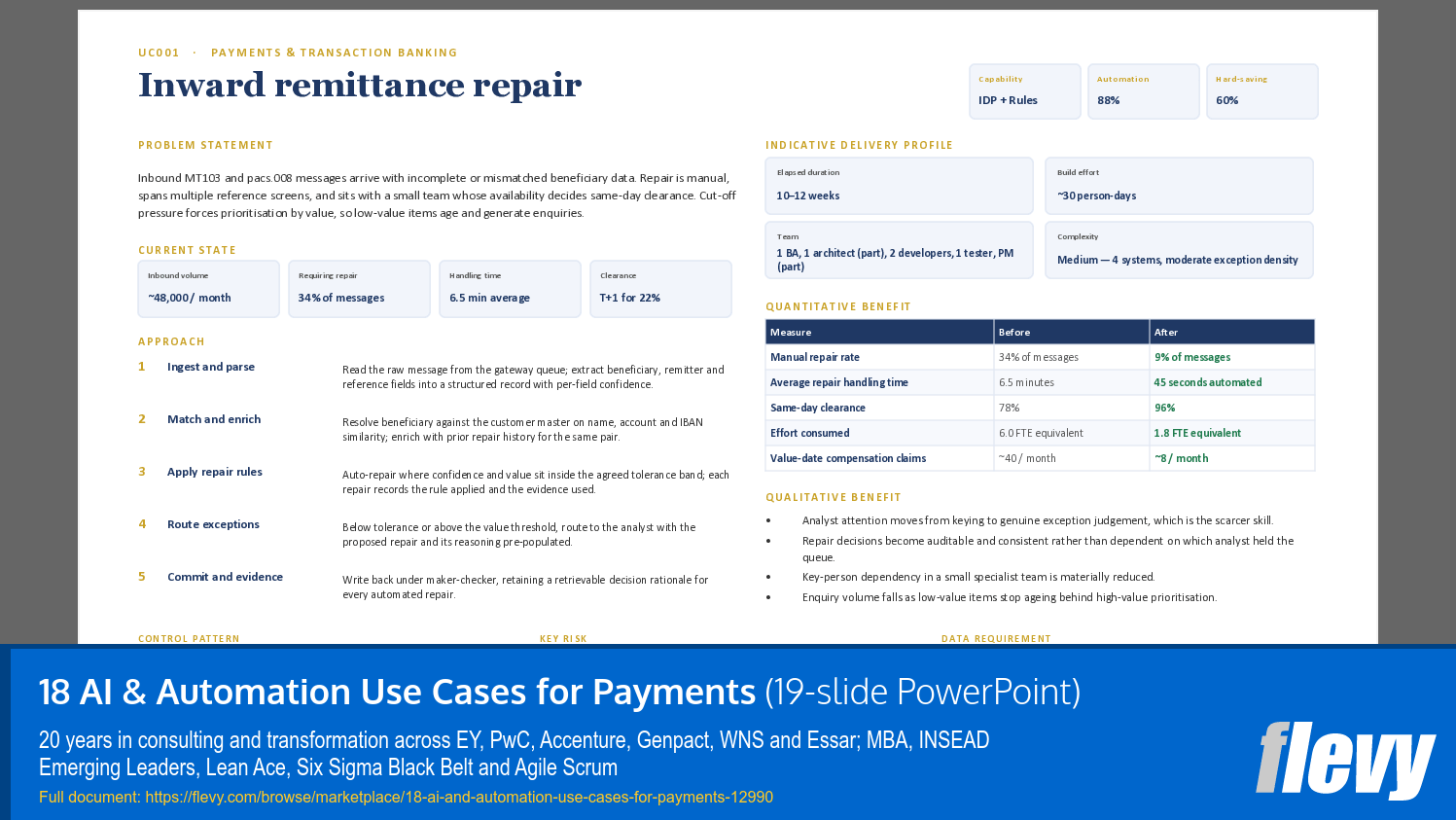
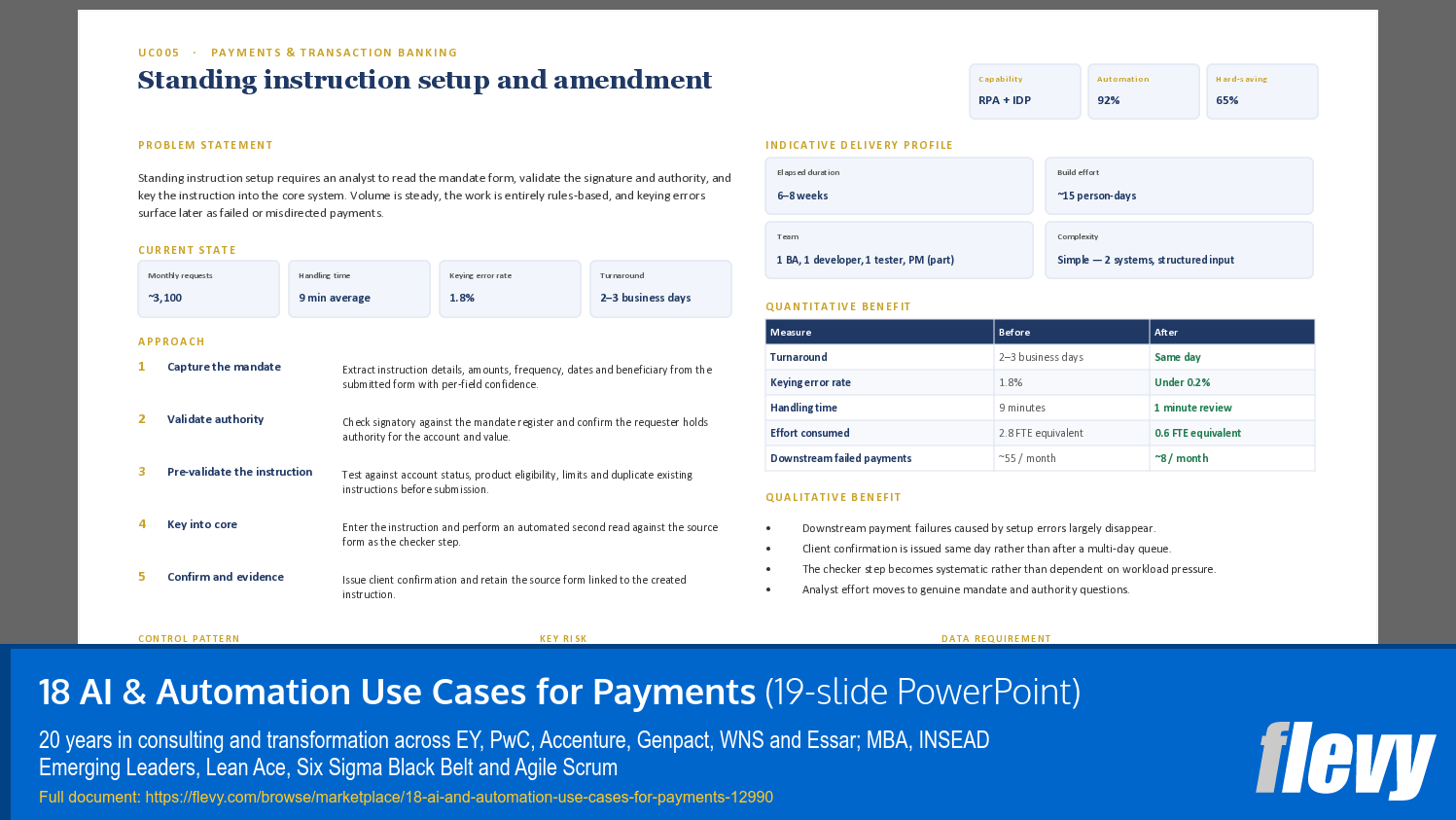
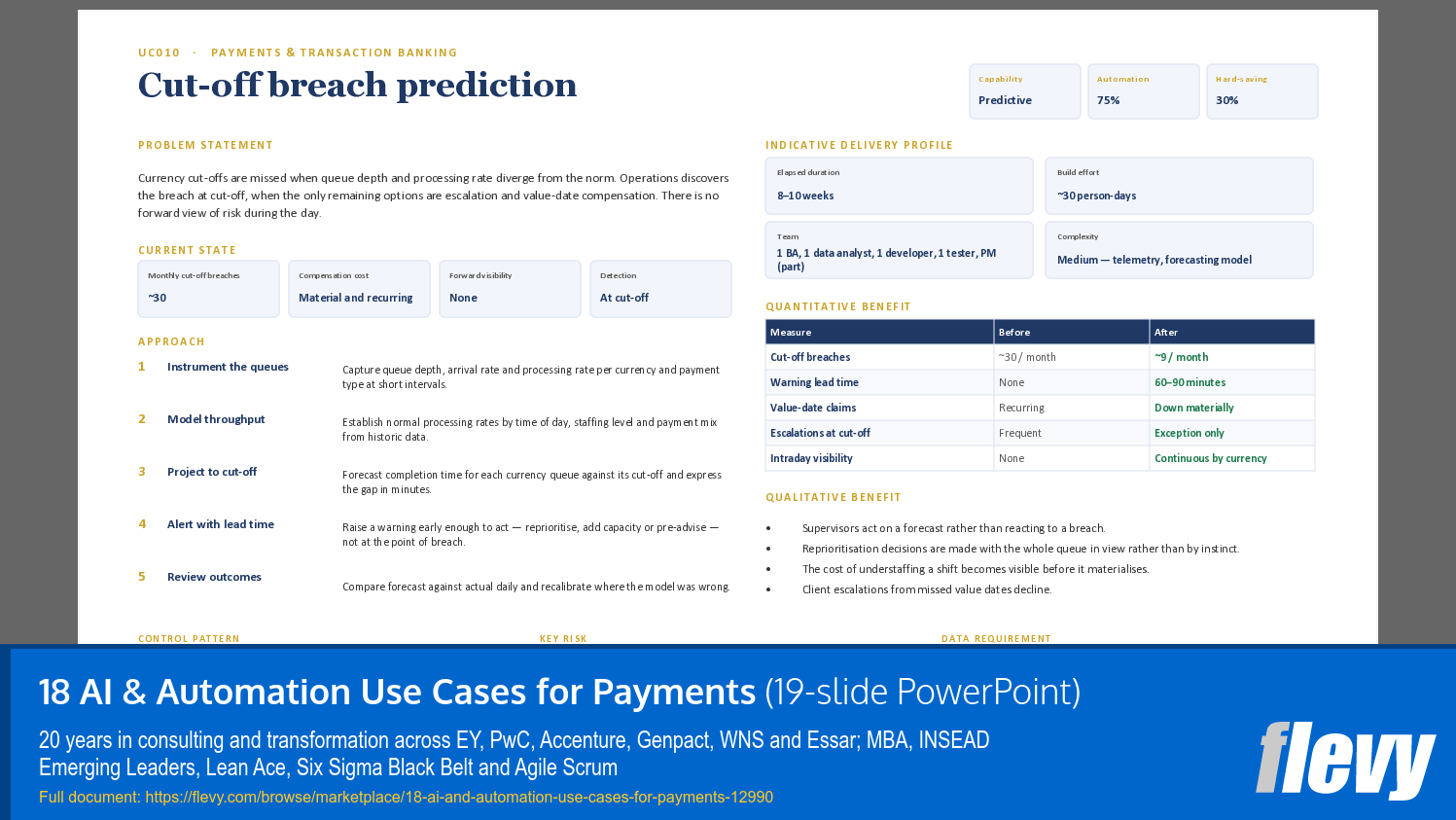
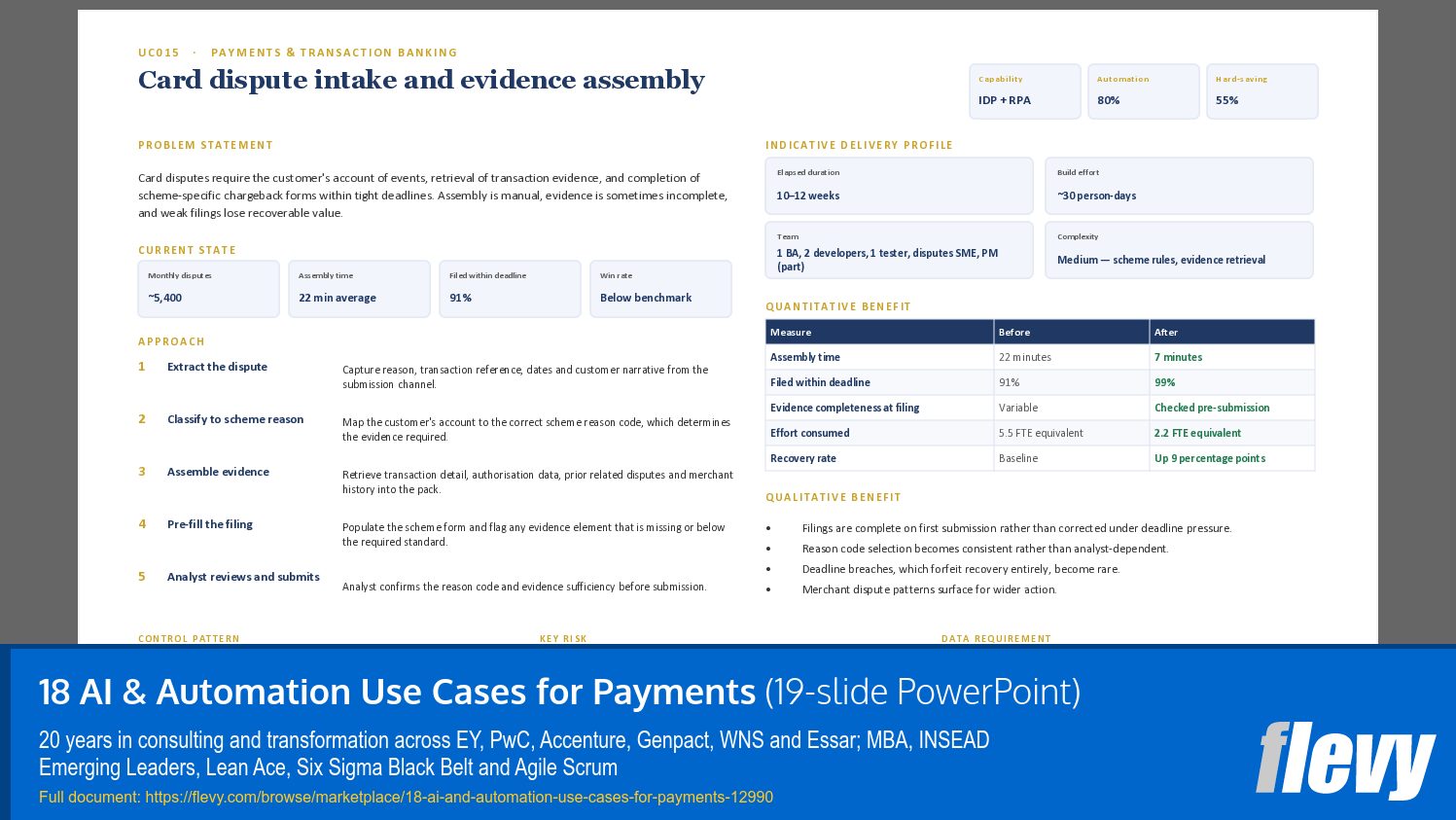
- Move beyond idea lists -- every use case includes the problem, current state, 5-step approach, team, effort, complexity, quantitative and qualitative benefits, control pattern, risk and data requirements
- Use the included Excel workbook to filter, compare and prioritize opportunities by automation potential, hard-saving potential and complexity for workshops, roadmaps and business-case validation
ARTIFICIAL INTELLIGENCE PPT TEMPLATE DESCRIPTION
Payments and Transaction Banking combines some of the highest transaction volumes, tightest cut-off windows, and most rules-intensive processes in a bank. This creates an unusually strong environment for AI and intelligent automation—but only when opportunities are selected with a clear understanding of operational risk, control design, exception handling, and measurable economics.
This toolkit presents 18 detailed AI and automation use cases for Payments & Transaction Banking. It is designed for banking executives, operations leaders, transformation teams, automation Centers of Excellence, product owners, consultants, architects, business analysts, and technology teams looking for practical opportunities that can move from idea to implementation.
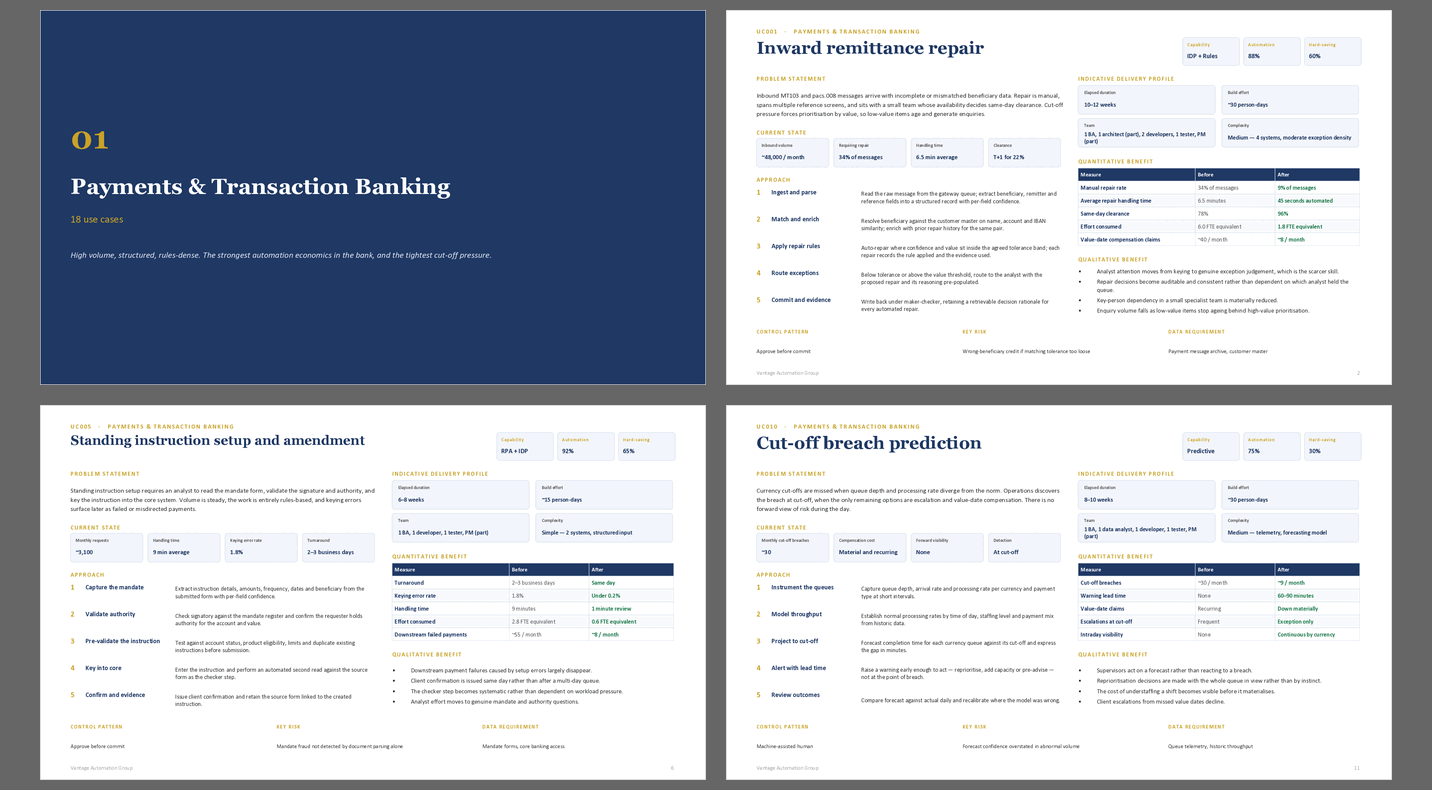
Unlike a simple list of automation ideas, each use case is structured as a mini implementation case. The PowerPoint sets out the business problem, current-state operating baseline, technology capability, indicative automation potential, hard-saving potential, a five-step solution approach, elapsed delivery duration, build effort, team profile, implementation complexity, before-and-after quantitative benefit measures, qualitative benefits, control pattern, key risk, and data requirements.
The 18 opportunities span core payment and transaction-banking activities, including inward remittance repair, straight-through-processing root-cause analysis, cross-border payment status enquiries, sanctions disposition support, standing-instruction setup, payment fraud pattern detection, bulk-file validation, correspondent-charge reconciliation, payment-investigation triage, cut-off breach prediction, beneficiary screening pre-checks, nostro funding forecasting, direct-debit return handling, payment-repair knowledge capture, card-dispute evidence assembly, duplicate-payment detection, cheque image capture and clearing, and value-date claim calculation.
The toolkit deliberately covers multiple automation patterns rather than treating every problem as a Generative AI problem. Depending on the use case, the recommended capabilities include Intelligent Document Processing, rules engines, RPA, predictive analytics, NLP, Generative AI, workflow automation, and machine-assisted human decisioning. The control design also varies: some opportunities are suitable for full automation, while higher-risk processes retain maker-checker, analyst approval, or human decision ownership.
A separate Excel supporting workbook is included to make the content actionable. It provides a filterable use-case library, a normalized quantitative-benefit table, and a prioritization view that compares automation potential, hard-saving potential, and delivery complexity. This allows a transformation team to use the package not only as reference material, but also as an input to opportunity-identification workshops, portfolio reviews, business-case development, and roadmap planning.
The material has been developed from a senior consulting and transformation practitioner perspective shaped by more than 18 years of experience across transformation, operational excellence, program governance, digital initiatives, enterprise architecture, resilience, and automation. The author's professional background includes experience across EY (Ernst & Young), PwC (PricewaterhouseCoopers), Accenture, Genpact, WNS, and Essar. Credentials include an MBA, INSEAD Emerging Leaders, Lean Ace, Six Sigma Black Belt, and Agile Scrum.
The intent is practical: help users move from "Where can we automate?" to "Which opportunity should we pursue, what would the solution do, how might it be delivered, what controls are required, and what benefits should we validate?"
The baseline volumes, benefit figures, team sizes, effort estimates, and delivery durations in this toolkit are indicative scenario assumptions intended for planning, comparison, and workshop use. They should not be interpreted as claims of realized results at any named organization or client. Buyers should validate the assumptions against their own products, jurisdictions, policies, technology architecture, volumes, risk appetite, and control environment before investment approval.
For banks seeking a practical starting point for payment modernization, operations productivity, service improvement, financial-crime support, liquidity optimization, and intelligent automation, this toolkit provides 18 structured opportunities with enough implementation detail to support an informed next conversation—not merely another brainstorm.
Got a question about the product? Email us at support@flevy.com or ask the author directly by using the "Ask the Author a Question" form. If you cannot view the preview above this document description, go here to view the large preview instead.
Source: Best Practices in Artificial Intelligence, Fintech PowerPoint Slides: 18 AI & Automation Use Cases for Payments PowerPoint (PPTX) Presentation Slide Deck, Vantage Automation Group
ABOUT THE AUTHOR
Vantage Automation Group publishes decision-grade frameworks, financial models and operating model blueprints for people running large-scale operations and transformation programmes.
The material is drawn from nineteen years of enterprise delivery -- across global consulting firms and industry -- covering operations transformation, target operating model design, operational resilience and
... [read more]
Ask the Author a Question
You must be logged in to contact the author.




























