 Click main image to view in full screen.
18 AI & Automation Use Cases for Lending & Credit – PowerPoint PPTX Template
PowerPoint (PPTX) + Excel (XLSX) 19 Slides


BENEFITS OF THIS DOWNLOADABLE POWERPOINT DOCUMENT
- Accelerate lending transformation -- 18 detailed use cases across origination, credit analysis, monitoring, documentation, collections and workout, with practical delivery and benefit assumptions
- Protect credit judgment while automating the work around it -- each case defines the problem, approach, team, controls, risks, data needs and before-and-after benefit measures
- Use the supporting Excel library to compare and prioritize opportunities by automation potential, hard-saving potential and complexity for workshops, roadmaps and investment cases
ARTIFICIAL INTELLIGENCE PPT TEMPLATE DESCRIPTION
Lending and Credit is one of the most attractive areas for intelligent automation because it combines document-heavy processing, repetitive data assembly, financial analysis, policy rules, monitoring obligations, and judgment-led decision making. The opportunity is not to automate credit judgment indiscriminately. It is to automate the work around the judgment, improve the quality and timeliness of evidence, and reserve human attention for decisions that genuinely require expertise and accountability.
This toolkit presents 18 detailed AI and automation use cases across Lending & Credit. It is designed for credit executives, lending operations leaders, risk teams, relationship banking functions, collections and workout teams, transformation offices, automation Centers of Excellence, consultants, business analysts, architects, and technology teams seeking practical, implementable opportunities.
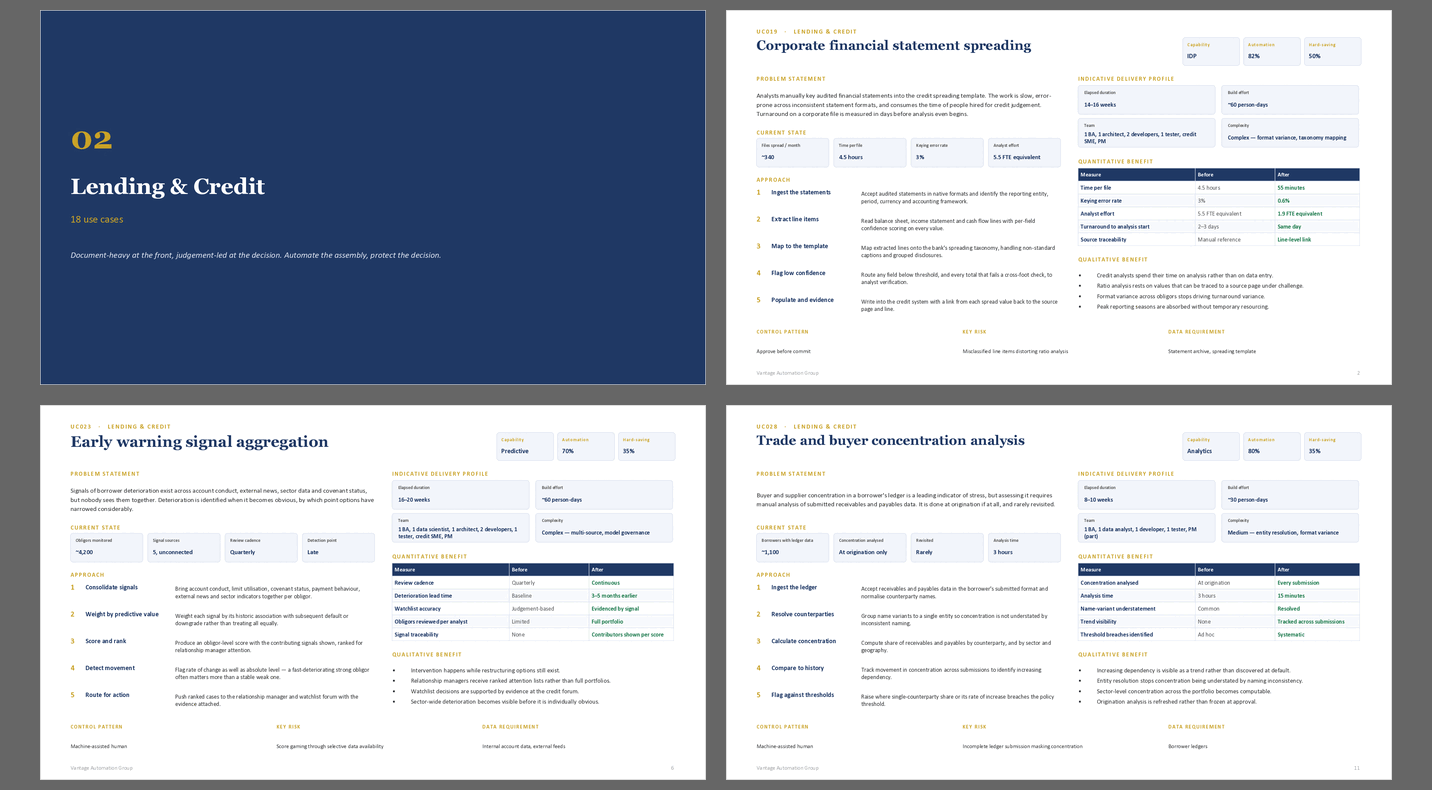
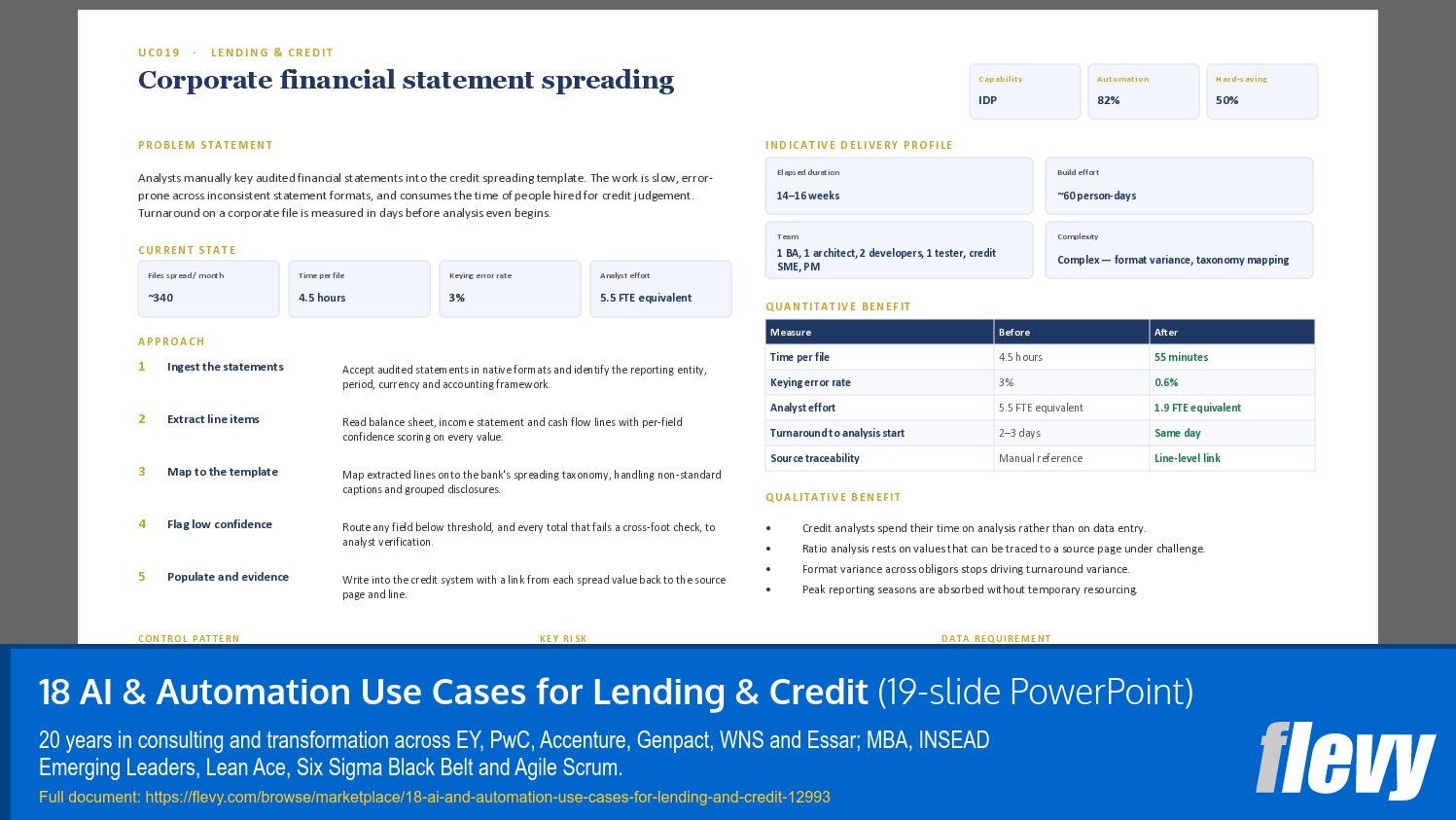
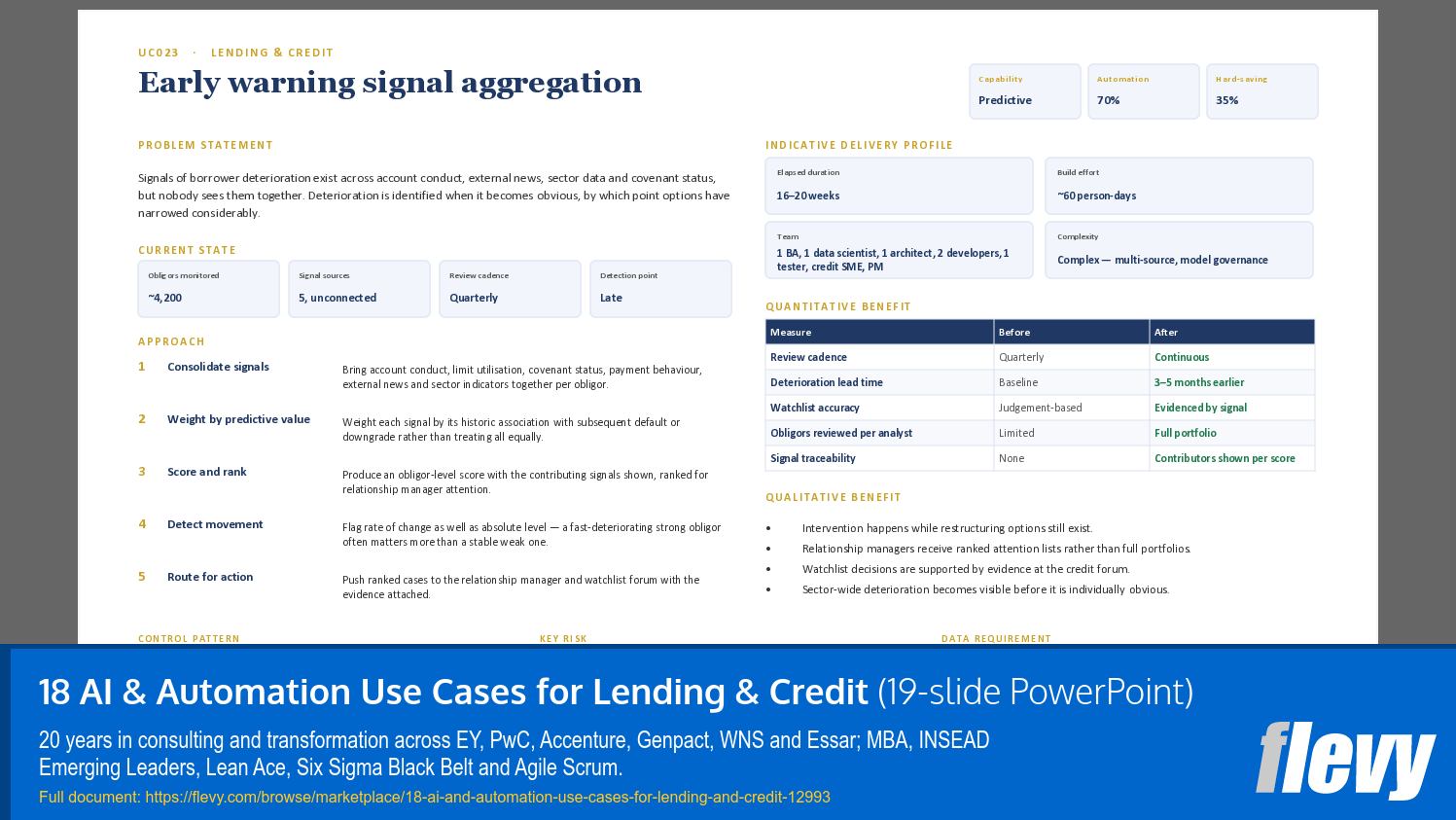
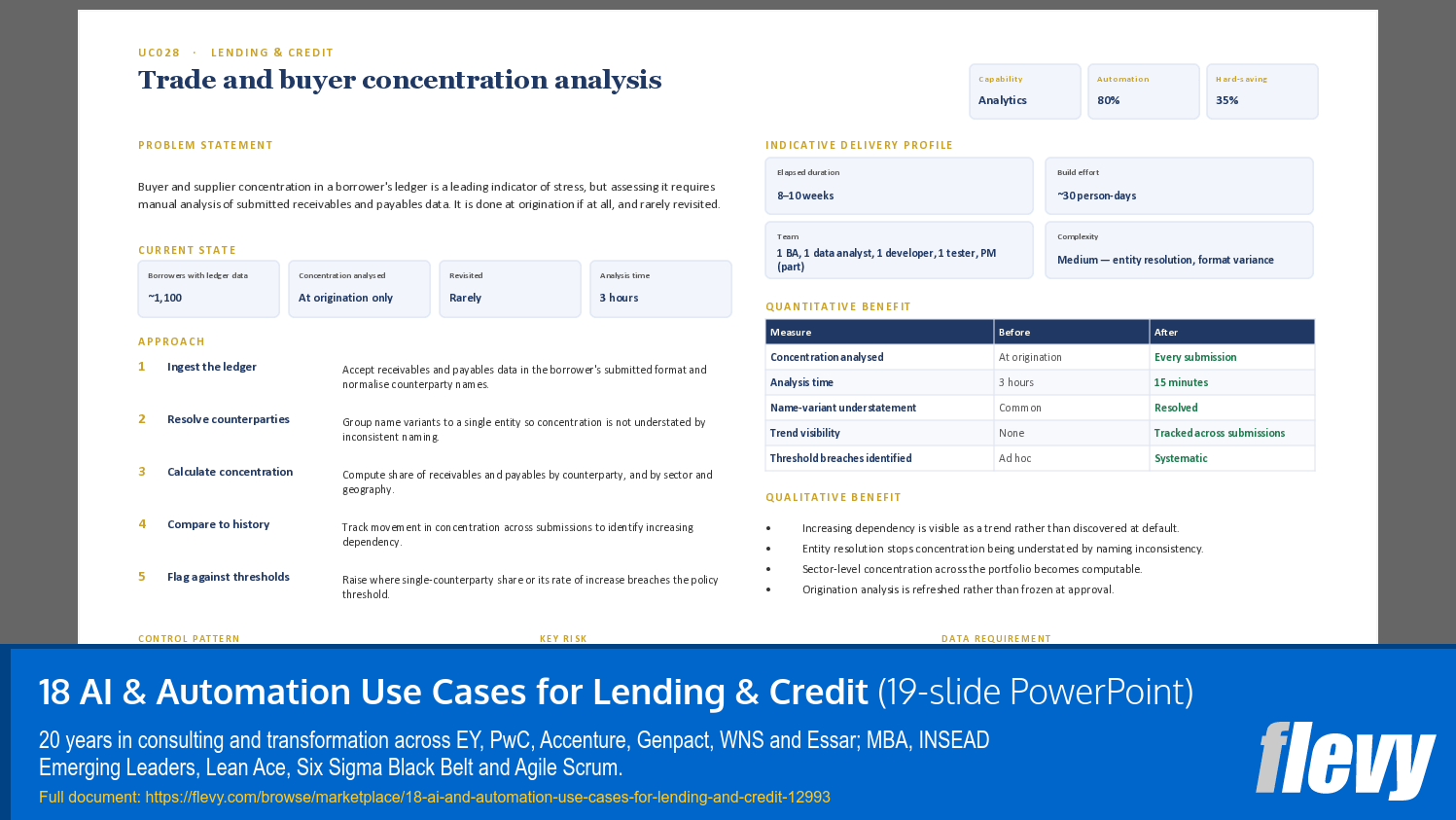
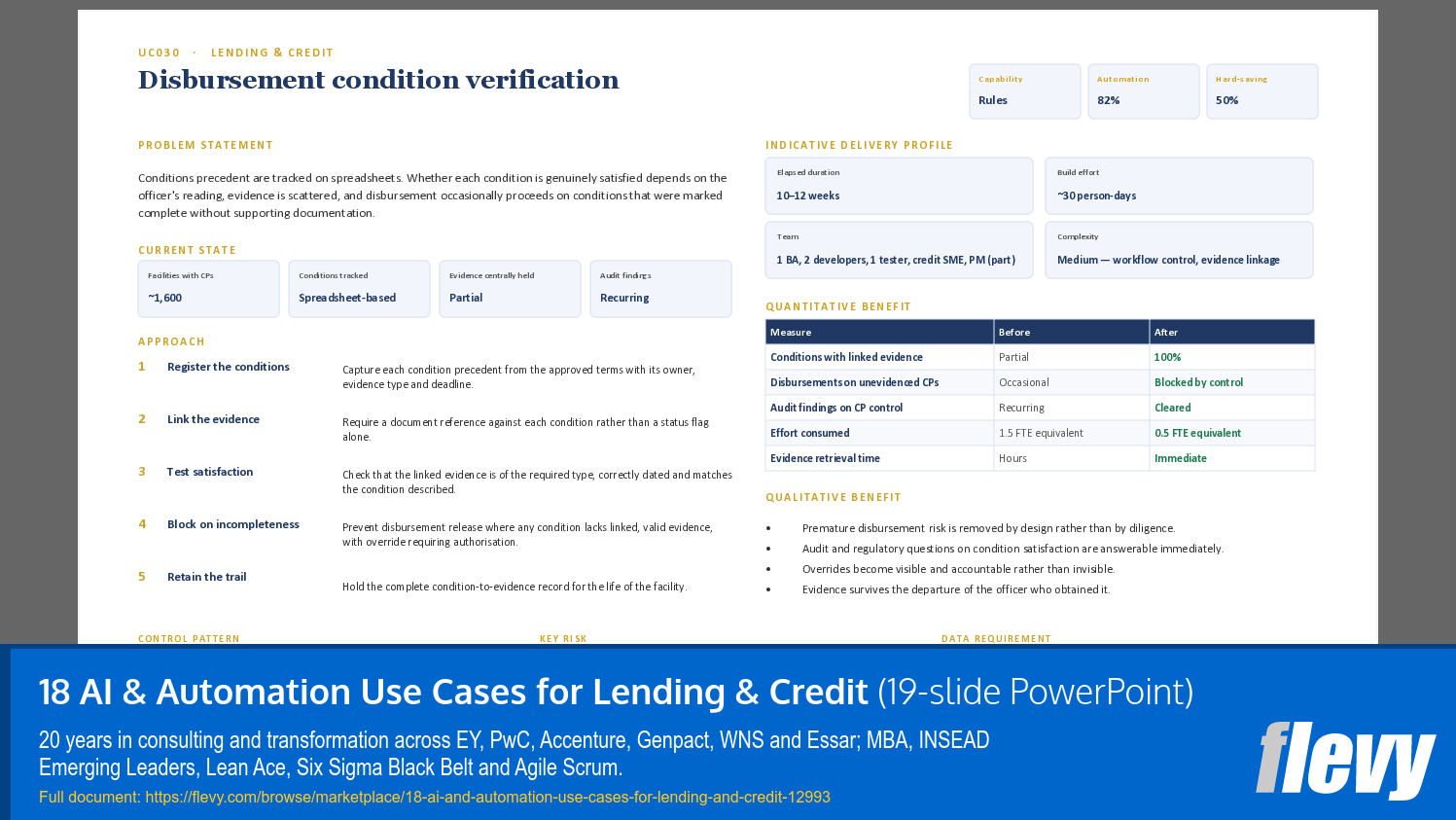
Each use case is developed as a mini implementation case rather than a one-line idea. The PowerPoint includes the problem statement, current-state operating baseline, relevant AI or automation capability, indicative automation percentage, hard-saving potential, a five-step implementation approach, elapsed duration, build effort, indicative team composition, delivery complexity, before-and-after quantitative benefit measures, qualitative benefits, control pattern, key risk, and data requirements.
The 18 use cases cover the lending lifecycle from origination to monitoring, review, restructuring, and collections. They include corporate financial-statement spreading, covenant extraction from facility agreements, covenant-breach monitoring, credit-memo drafting, early-warning-signal aggregation, retail credit decisioning, collateral-valuation review, limit-excess monitoring, annual-review pack assembly, trade and buyer concentration analysis, loan-document completeness checks, disbursement-condition verification, restructuring scenario modelling, collections prioritization, provisioning-input preparation, mortgage-document verification, pricing-exception analysis, and credit-policy question answering.
The toolkit also distinguishes between automation that can execute rules and automation that should only assist a human decision. For example, data extraction, document completeness, workflow routing, calculation, and pack assembly can often be highly automated. Credit judgments, policy interpretation, distressed scenarios, or generative drafting require explicit governance, evidence traceability, human ownership, and controls against over-reliance.
A separate Excel workbook accompanies the presentation. It converts the use cases into a searchable and filterable working library, consolidates the quantitative benefit assumptions, and provides a prioritization view based on automation potential, hard-saving potential, and implementation complexity. Teams can therefore use the package as a workshop asset, portfolio-development tool, or starting point for business-case validation rather than simply reading it as a presentation.
The content has been developed from a senior consulting and transformation practitioner perspective shaped by more than 18 years of experience across transformation, operational excellence, program governance, digital initiatives, automation, enterprise architecture, and large-scale change. The author's professional background includes experience across EY (Ernst & Young), PwC (PricewaterhouseCoopers), Accenture, Genpact, WNS, and Essar. Credentials include an MBA, INSEAD Emerging Leaders, Lean Ace, Six Sigma Black Belt, and Agile Scrum.
The core philosophy behind the toolkit is simple: automate assembly, repetitive control execution, evidence gathering, and monitoring wherever practical—but preserve accountable human judgment where the decision materially affects credit risk, customer outcomes, or regulatory responsibility.
All volumes, baseline metrics, savings percentages, benefit assumptions, team sizes, effort estimates, and delivery durations are indicative scenario assumptions for planning and comparison. They are not represented as realized client outcomes or results from any named organization. Every opportunity should be validated against the buyer's own portfolio, policy framework, jurisdiction, data availability, model governance, technology environment, customer conduct obligations, and risk appetite before implementation.
For institutions seeking to improve lending turnaround, credit productivity, monitoring discipline, portfolio visibility, collections effectiveness, and control quality, these 18 use cases provide a structured starting point with enough detail to assess both the opportunity and the implementation implications
Got a question about the product? Email us at support@flevy.com or ask the author directly by using the "Ask the Author a Question" form. If you cannot view the preview above this document description, go here to view the large preview instead.
Source: Best Practices in Artificial Intelligence, Loans PowerPoint Slides: 18 AI & Automation Use Cases for Lending & Credit PowerPoint (PPTX) Presentation Slide Deck, Vantage Automation Group
ABOUT THE AUTHOR
Vantage Automation Group publishes decision-grade frameworks, financial models and operating model blueprints for people running large-scale operations and transformation programmes.
The material is drawn from nineteen years of enterprise delivery -- across global consulting firms and industry -- covering operations transformation, target operating model design, operational resilience and
... [read more]
Ask the Author a Question
You must be logged in to contact the author.




























