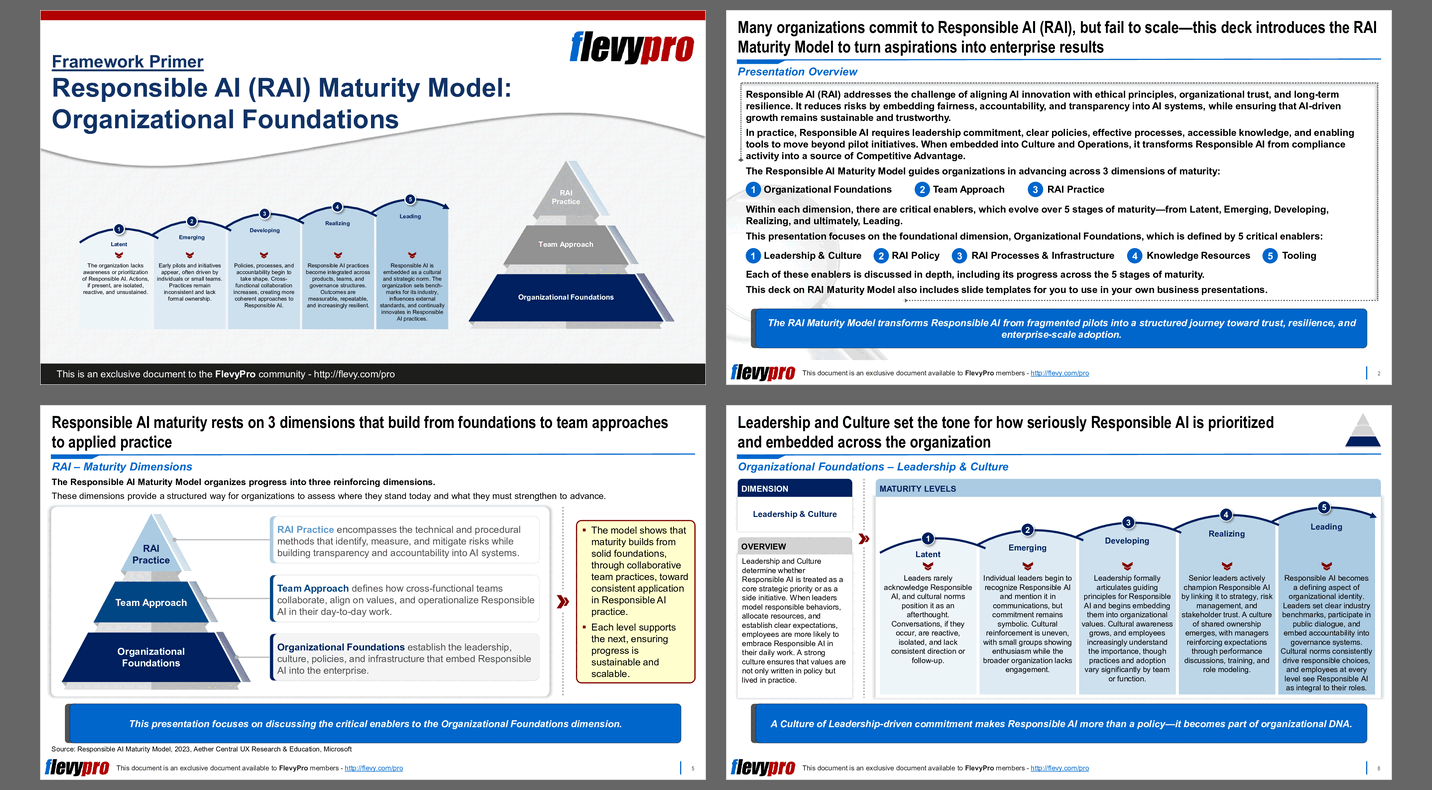
This framework is developed by a team of former McKinsey and Big 4 consultants. The presentation follows the headline-body-bumper slide format used by global consulting firms.
This product (Responsible AI [RAI] Maturity Model: Organizational Foundations) is a 26-slide PPT PowerPoint presentation slide deck (PPTX), which you can download immediately upon purchase.
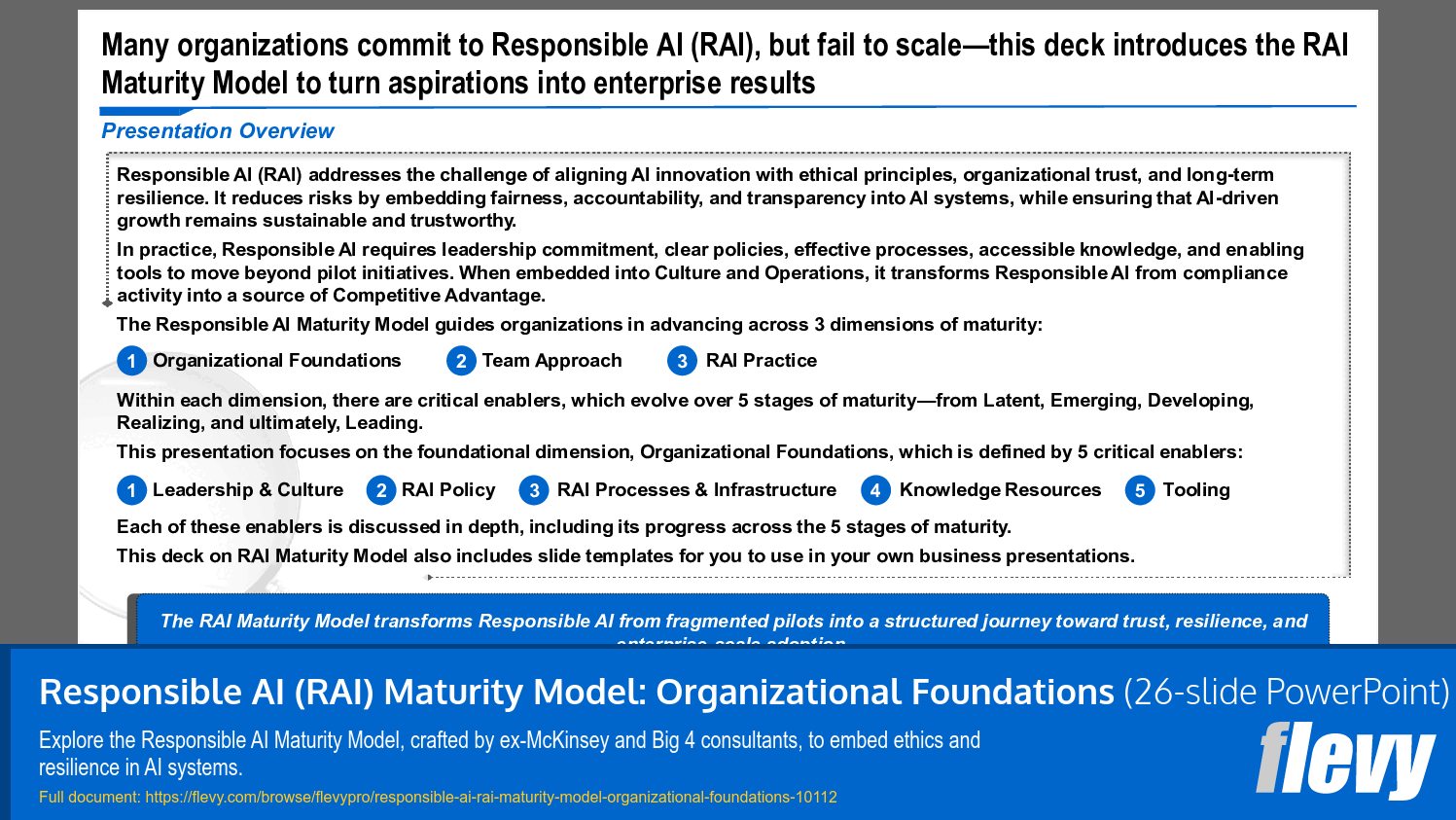
Responsible AI (RAI) addresses the challenge of aligning AI innovation with ethical principles, organizational trust, and long-term resilience. It reduces risks by embedding fairness, accountability, and transparency into AI systems, while ensuring that AI-driven growth remains sustainable and trustworthy.
In practice, Responsible AI requires leadership commitment, clear policies, effective processes, accessible knowledge, and enabling tools to move beyond pilot initiatives. When embedded into Culture and Operations, it transforms Responsible AI from compliance activity into a source of Competitive Advantage.
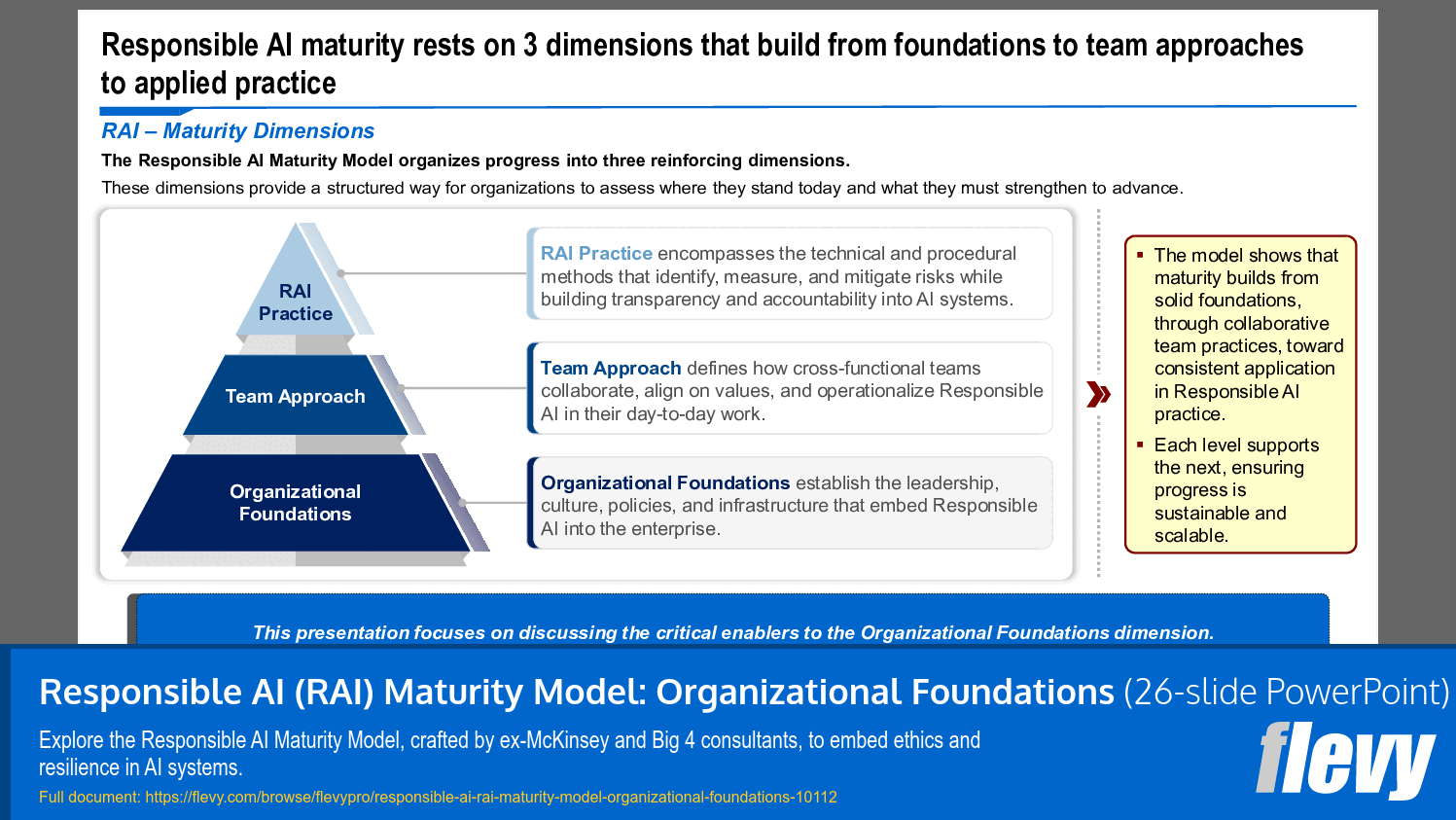
The Responsible AI Maturity Model guides organizations in advancing across 3 dimensions of maturity:
1. Organizational Foundations
2. Team Approach
3. RAI Practice
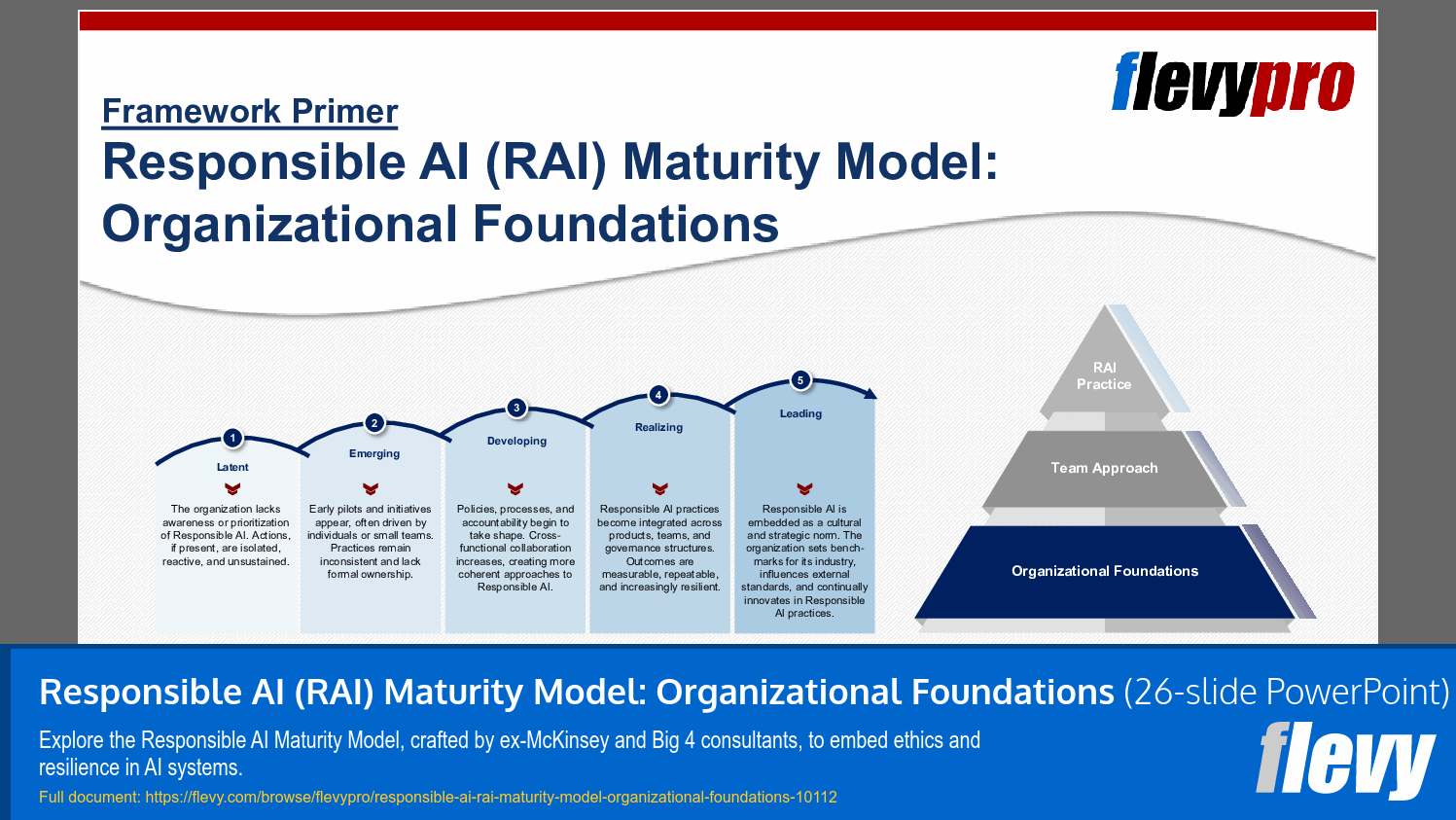
Within each dimension, there are critical enablers, which evolve over 5 stages of maturity—from Latent, Emerging, Developing, Realizing, and ultimately, Leading. The RAI Maturity Model transforms Responsible AI from fragmented pilots into a structured journey toward trust, resilience, and enterprise-scale adoption.
This PPT presentation focuses on the foundational dimension, Organizational Foundations, which is defined by 5 critical enablers:
1. Leadership
2. RAI Policy
3. RAI Processes & Infrastructure
4. Knowledge Resources
5. Tooling
Each of these enablers is discussed in depth, including its progress across the 5 stages of maturity.
This deck on RAI Maturity Model also includes slide templates for you to use in your own business presentations.
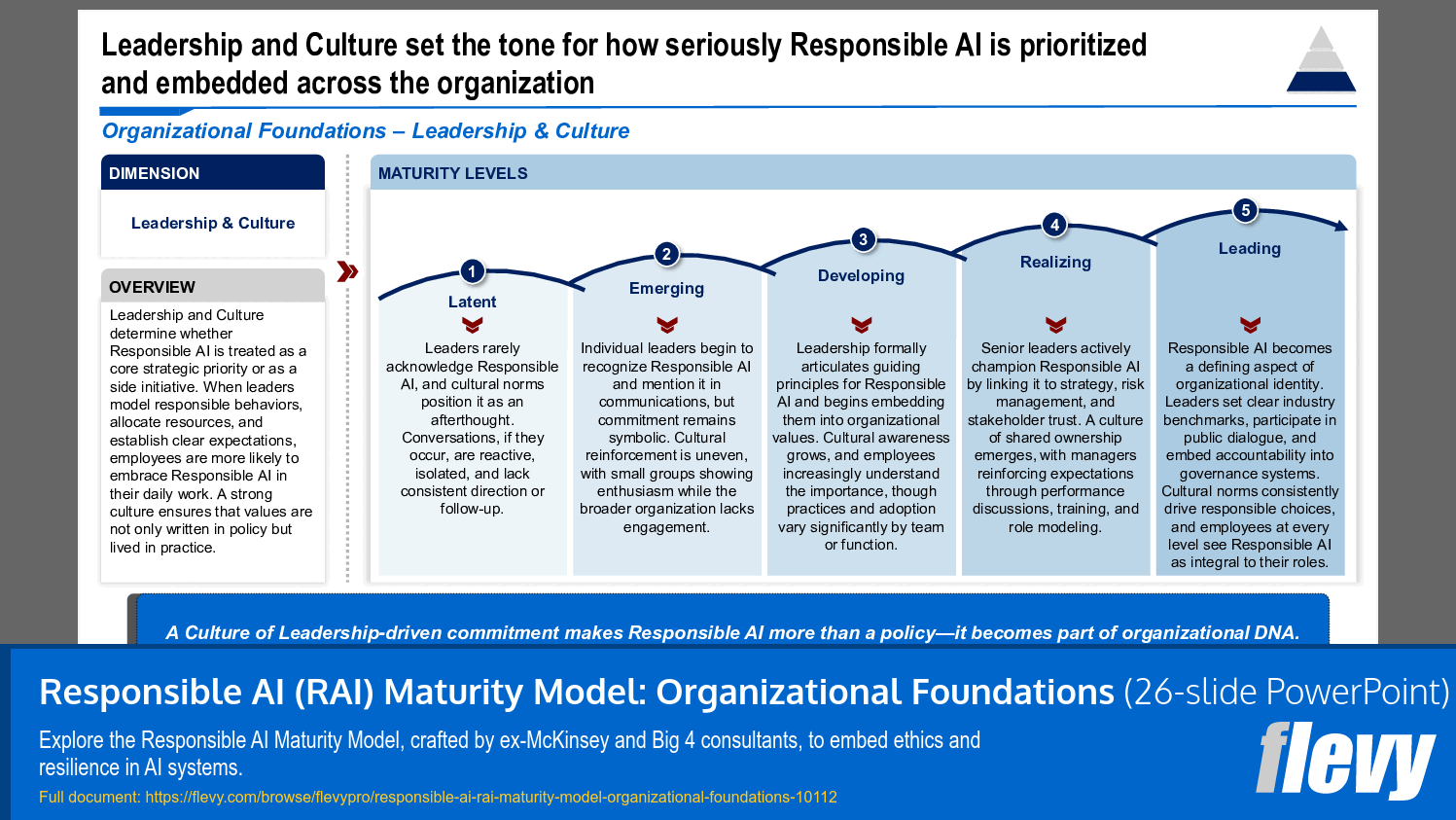
This PPT slide presents a framework for understanding how leadership and organizational culture influence the prioritization of Responsible AI (RAI). It emphasizes that the tone set by leadership and the embedded cultural norms shape whether AI ethics are treated as a core strategic focus or just an ancillary concern. The slide categorizes organizational maturity into 5 levels, from Latent to Leading, illustrating the progression in responsible AI practices as leadership commitment and cultural awareness grow stronger.
Each maturity level is described with specific behaviors and attitudes. At the Latent stage, leaders rarely acknowledge responsible AI, and cultural norms do not support it. Moving to Emerging, individual leaders recognize the importance, but lack consistent reinforcement. Developing organizations formalize guiding principles and embed them into values, while Realizing organizations actively link responsible AI to strategy and risk management, with senior leaders championing responsible AI through performance discussions and training. The Leading stage marks organizations where responsible AI becomes part of the organizational identity, with leaders setting clear industry benchmarks, engaging in public dialogue, and embedding accountability into governance systems.
The slide underscores that responsible AI is not just a policy, but a reflection of leadership and culture. The progression through these levels demonstrates how organizations evolve from reactive to proactive in embedding responsible AI practices. The visual and textual content suggest that leadership’s role is critical in shaping cultural norms that support responsible AI, ultimately making it integral to organizational DNA. This model offers a diagnostic tool for assessing where an organization stands and what leadership actions are necessary to advance maturity in responsible AI practices.
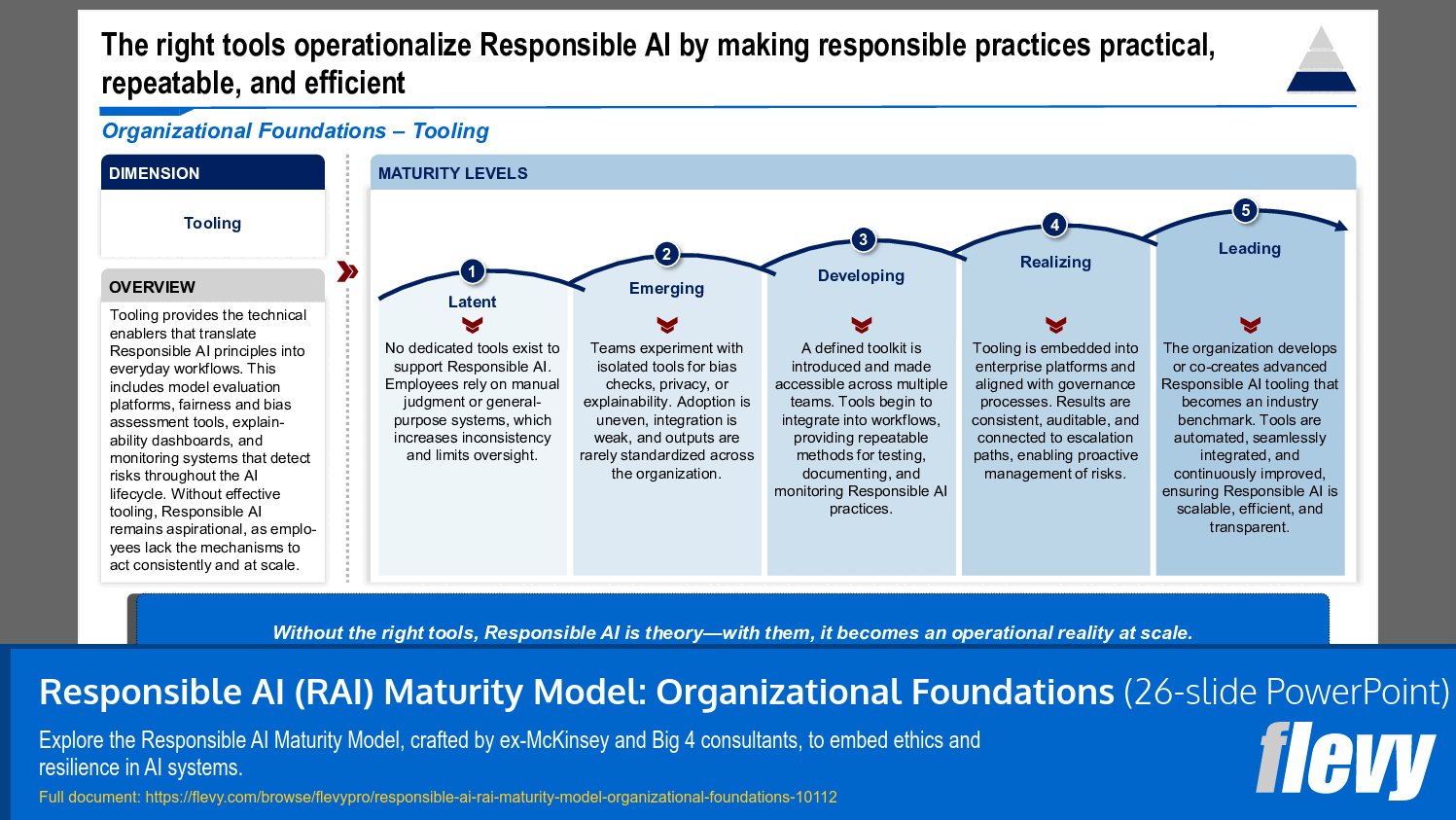
This PPT slide outlines a framework for operationalizing Responsible AI (RAI) within organizations by emphasizing practical, scalable practices. It presents a maturity model with 5 levels—Latent, Emerging, Developing, Realizing, and Leading—that describe the progression of AI responsibility capabilities. Each level reflects a different stage of tool adoption and organizational maturity, from no dedicated tools at the Latent stage to advanced, industry-leading practices at the Leading stage.
The left sidebar summarizes the purpose of tooling in Responsible AI, emphasizing that tools are essential for translating principles into daily workflows. It notes that early-stage organizations lack dedicated tools, relying on manual judgment, which leads to inconsistency. As organizations mature, they experiment with isolated tools, then integrate them into enterprise platforms aligned with governance. The final stage involves embedding responsible AI practices into the core enterprise infrastructure, with tools that are automated, seamless, and continuously improved.
The bottom banner reinforces that without the right tools, Responsible AI remains a theoretical concept rather than an operational reality. It highlights that the model was developed by experienced consultants and points to a full document for deeper exploration. The structure of the slide suggests a clear pathway for organizations to assess their current maturity level and identify targeted actions to advance their responsible AI practices. This model provides a practical roadmap, emphasizing the importance of tool integration and organizational commitment at each stage of maturity.
This framework is developed by a team of former McKinsey and Big 4 consultants. The presentation follows the headline-body-bumper slide format used by global consulting firms.
For $10.00 more, you can download this document plus 2 more FlevyPro documents. That's just $13 each.
ABOUT FLEVYPRO
This document is part of the FlevyPro Library, a curated knowledge base of documents for our FlevyPro subscribers.

FlevyPro is a subscription service for on-demand business frameworks and analysis tools. FlevyPro subscribers receive access to an exclusive library of curated business documents—business framework primers, presentation templates, Lean Six Sigma tools, and more—among other exclusive benefits.
The average daily rate of a McKinsey consultant is $6,625 (not including expenses). The average price of a Flevy document is $65.
Trusted by over 10,000+ Client Organizations
Since 2012, we have provided best practices to over 10,000 businesses and organizations of all sizes, from startups and small businesses to the Fortune 100, in over 130 countries.
Read Customer Testimonials
"I have used FlevyPro for several business applications. It is a great complement to working with expensive consultants. The quality and effectiveness of the tools are of the highest standards."
– Moritz Bernhoerster, Global Sourcing Director at Fortune 500
"As an Independent Management Consultant, I find Flevy to add great value as a source of best practices, templates and information on new trends. Flevy has matured and the quality and quantity of the library is excellent. Lastly the price charged is reasonable, creating a win-win value for
the customer, Flevy and the various authors. This is truly a service that benefits the consulting industry and associated clients. Thanks for providing this service.
"
– Jim Schoen, Principal at FRC Group
"Flevy.com has proven to be an invaluable resource library to our Independent Management Consultancy, supporting and enabling us to better serve our enterprise clients.
The value derived from our [FlevyPro] subscription in terms of the business it has helped to gain far exceeds the investment made, making a subscription a no-brainer for any growing consultancy – or in-house strategy team."
– Dean Carlton, Chief Transformation Officer, Global Village Transformations Pty Ltd.
"I like your product. I'm frequently designing PowerPoint presentations for my company and your product has given me so many great ideas on the use of charts, layouts, tools, and frameworks. I really think the templates are a valuable asset to the job."
– Roberto Fuentes Martinez, Senior Executive Director at Technology Transformation Advisory
"As a young consulting firm, requests for input from clients vary and it's sometimes impossible to provide expert solutions across a broad spectrum of requirements. That was before I discovered Flevy.com.
Through subscription to this invaluable site of a plethora of topics that are key and crucial to consulting, I
have been able to exceed expectations and deliver quality advice and solutions to my clients. The quality and expertise of the authors are exemplary and gives me great confidence to use as part of my service offerings.
I highly recommend this company for any consultant wanting to apply international best practice standards in their service offerings.
"
– Nishi Singh, Strategist and MD at NSP Consultants
"I am extremely grateful for the proactiveness and eagerness to help and I would gladly recommend the Flevy team if you are looking for data and toolkits to help you work through business solutions."
– Trevor Booth, Partner, Fast Forward Consulting
"Flevy is our 'go to' resource for management material, at an affordable cost. The Flevy library is comprehensive and the content deep, and typically provides a great foundation for us to further develop and tailor our own service offer."
– Chris McCann, Founder at Resilient.World
"As a consultant requiring up to date and professional material that will be of value and use to my clients, I find Flevy a very reliable resource.
The variety and quality of material available through Flevy offers a very useful and commanding source for information. Using Flevy saves me time, enhances my expertise and ends up being a good decision."
Download our FREE Digital Transformation Templates
Download our free compilation of 50+ Digital Transformation slides and templates. DX concepts covered include Digital Leadership, Digital Maturity, Digital Value Chain, Customer Experience, Customer Journey, RPA, etc.









