
This framework is developed by a team of former McKinsey and Big 4 consultants. The presentation follows the headline-body-bumper slide format used by global consulting firms.
Industrial Asset Closure Value Creation PPT: Download a strategic framework and 4-phase approach to maximize shareholder value and ESG impact in asset closures. Industrial Asset Closure Value Creation is a 32-slide PPT PowerPoint presentation template (PPTX) available for immediate download upon purchase.
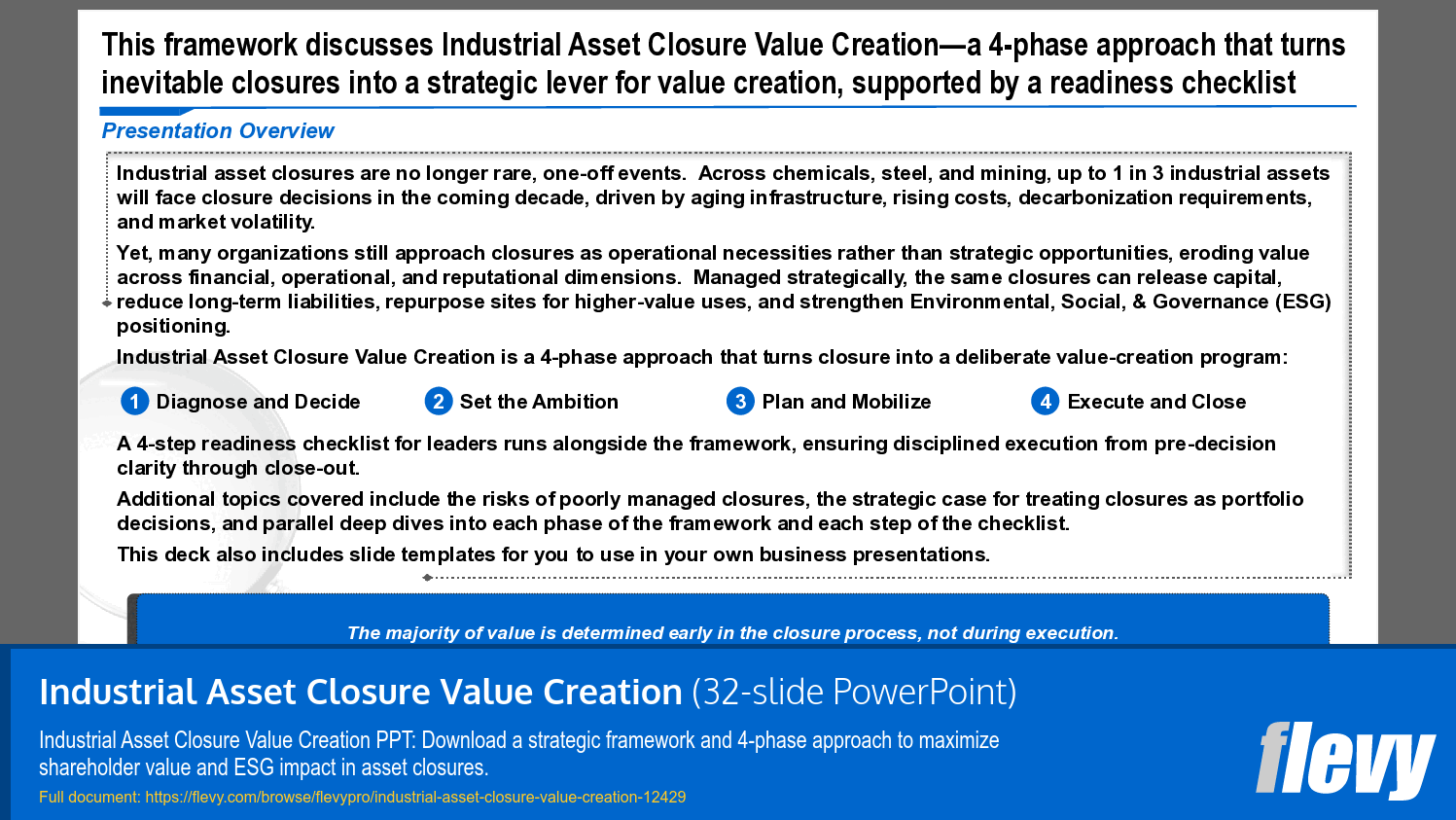
Industrial asset closures are no longer rare, one-off events. Across chemicals, steel, and mining, up to 1 in 3 industrial assets will face closure decisions in the coming decade, driven by aging infrastructure, rising costs, decarbonization requirements, and market volatility.
Yet, many organizations still approach closures as operational necessities rather than strategic opportunities, eroding value across financial, operational, and reputational dimensions. Managed strategically, the same closures can release capital, reduce long-term liabilities, repurpose sites for higher-value uses, and strengthen Environmental, Social, & Governance (ESG) positioning.
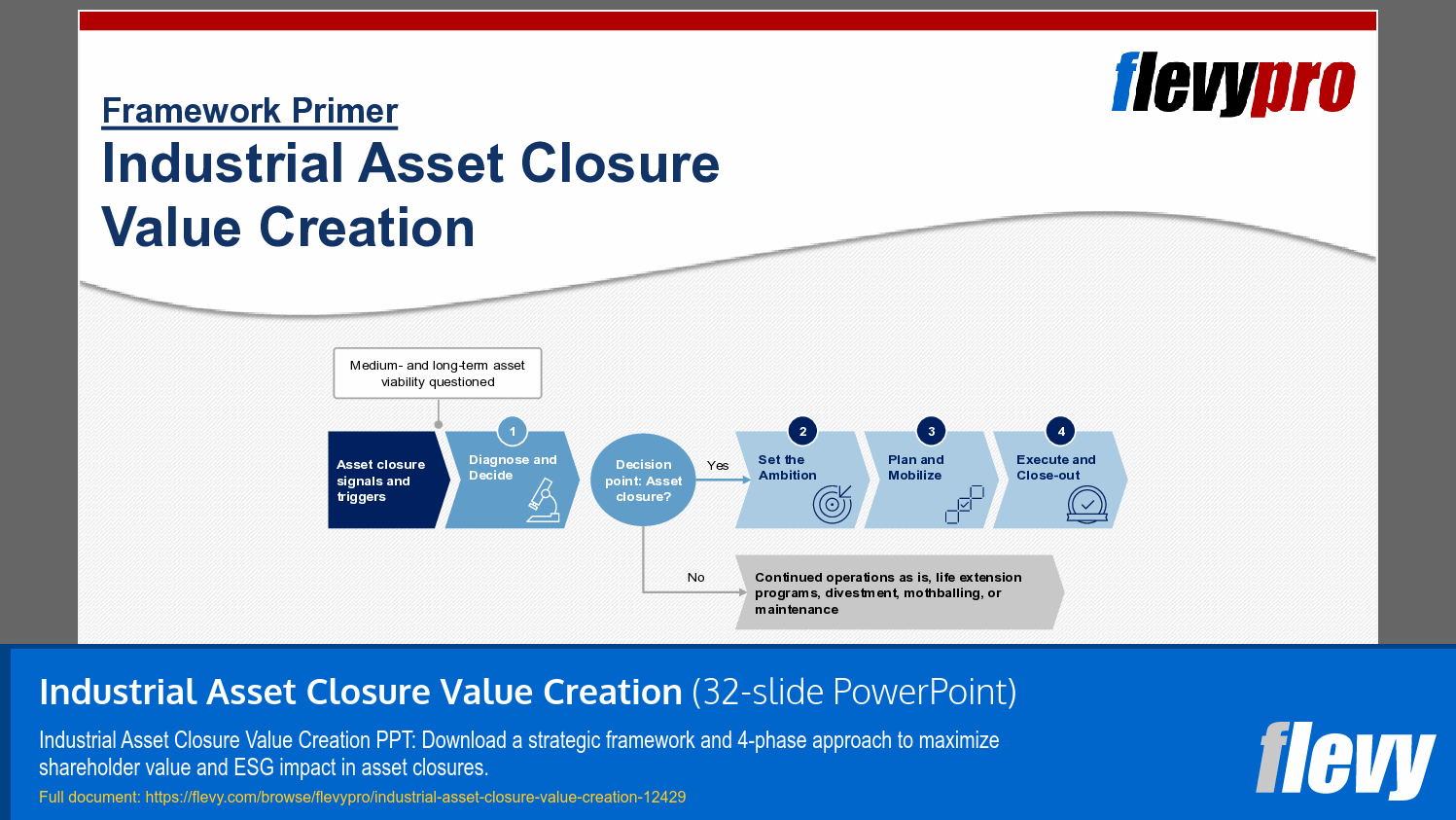
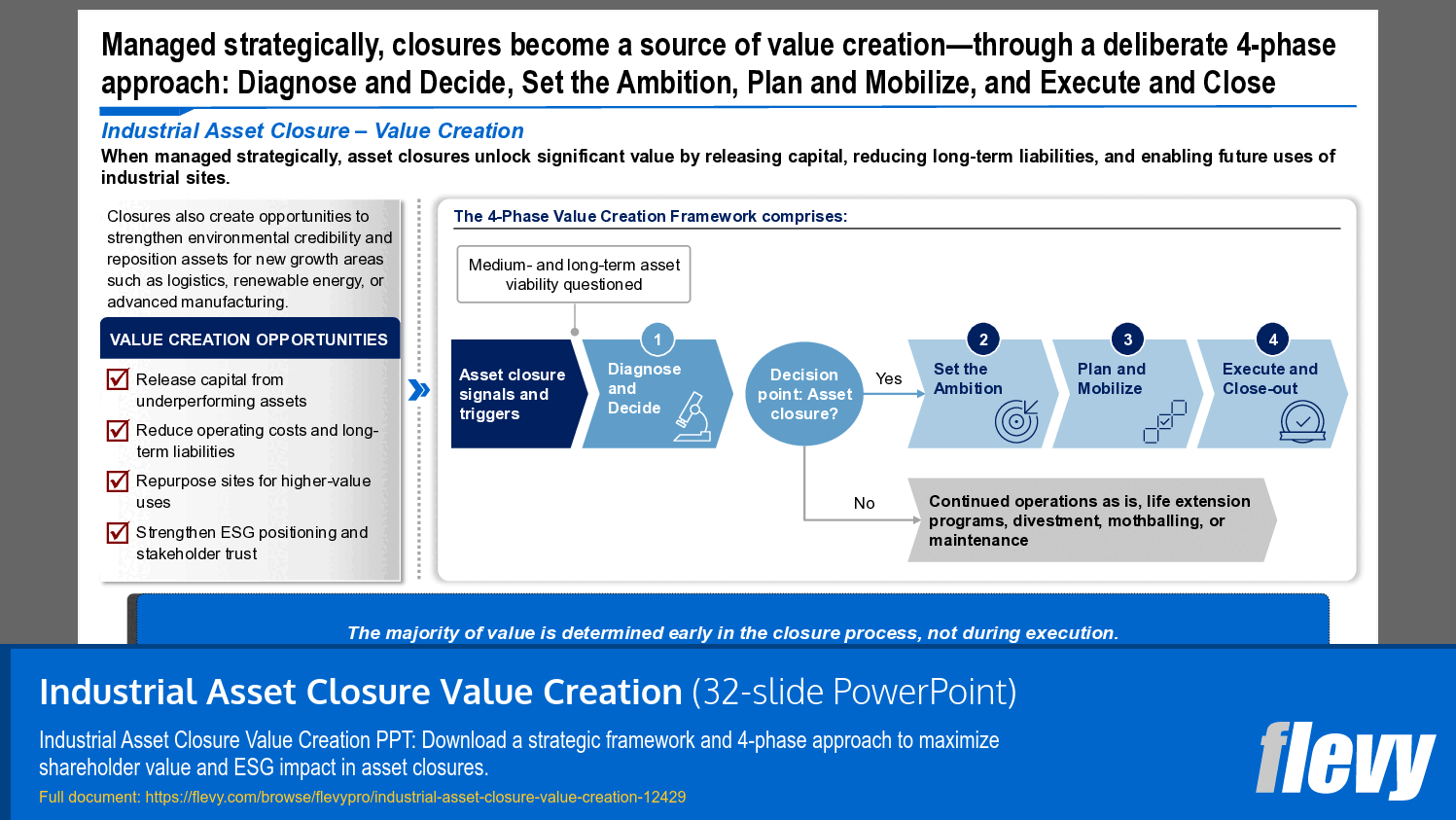
Industrial Asset Closure Value Creation is a 4-phase approach that turns closure into a deliberate value-creation program:
1. Diagnose and Decide
2. Set the Ambition
3. Plan and Mobilize
4. Execute and Close
Each of these phases is discussed in depth.
The majority of value is determined early in the closure process, not during execution.
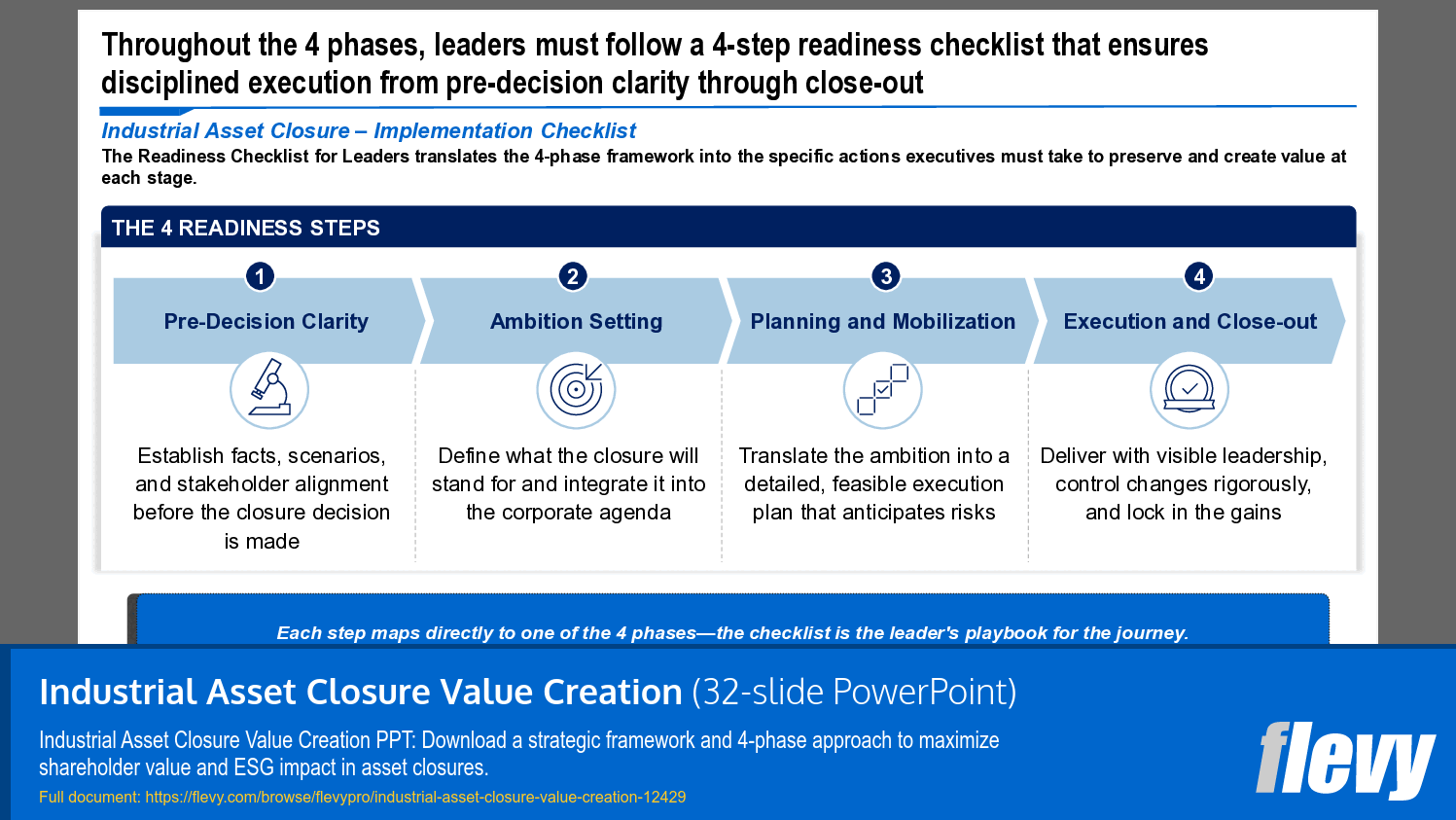
Additionally, this PPT presentation discusses a 4-step readiness checklist for leaders runs alongside the framework, ensuring disciplined execution from pre-decision clarity through close-out.
Additional topics covered include the risks of poorly managed closures, the strategic case for treating closures as portfolio decisions, and parallel deep dives into each phase of the framework and each step of the checklist.
This deck on Industrial Asset Closure also includes slide templates for you to use in your own business presentations.
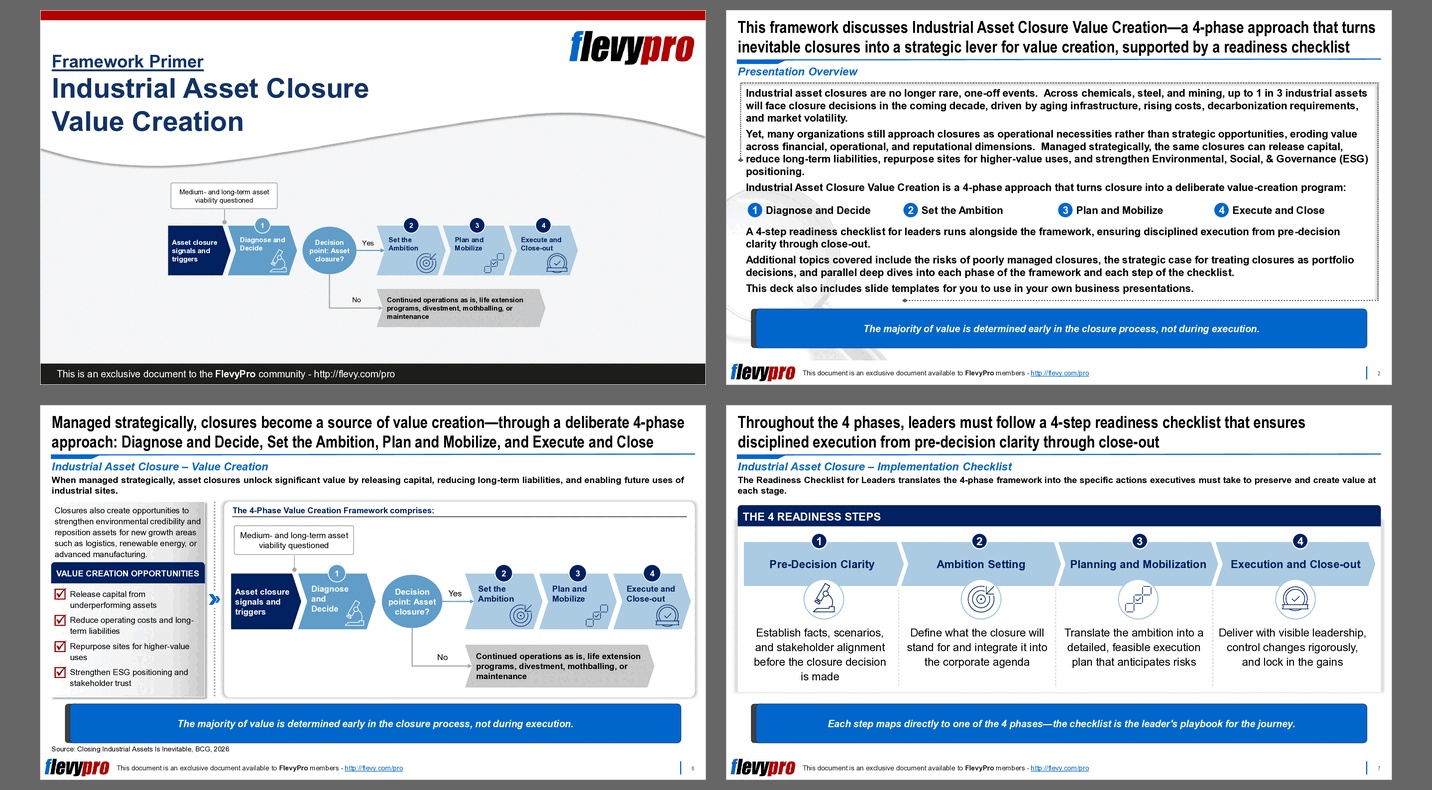
Strategically managed asset closures serve as a source of value creation by releasing capital, reducing long-term liabilities, and enabling the repurposing of industrial sites for higher-value uses. The 4-Phase Value Creation Framework includes: 1) Diagnose and Decide, where asset closure signals prompt evaluation; 2) Set the Ambition, establishing goals for closure; 3) Plan and Mobilize, coordinating resources for execution; and 4) Execute and Close-out, finalizing the closure process. This framework emphasizes that the majority of value is determined early in the closure process, impacting future operational strategies and stakeholder trust, particularly in strengthening ESG positioning.
Leaders must implement a structured 4-step readiness checklist for effective industrial asset closure. The first step, Pre-Decision Clarity, involves establishing facts, scenarios, and stakeholder alignment prior to making closure decisions. Next, Ambition Setting defines the objectives of the closure and integrates them into the corporate agenda. The third step, Planning and Mobilization, translates these ambitions into a comprehensive execution plan that identifies and mitigates potential risks. Finally, Execution and Close-out emphasizes the importance of visible leadership, rigorous change control, and strategies to secure and sustain gains throughout the closure process.
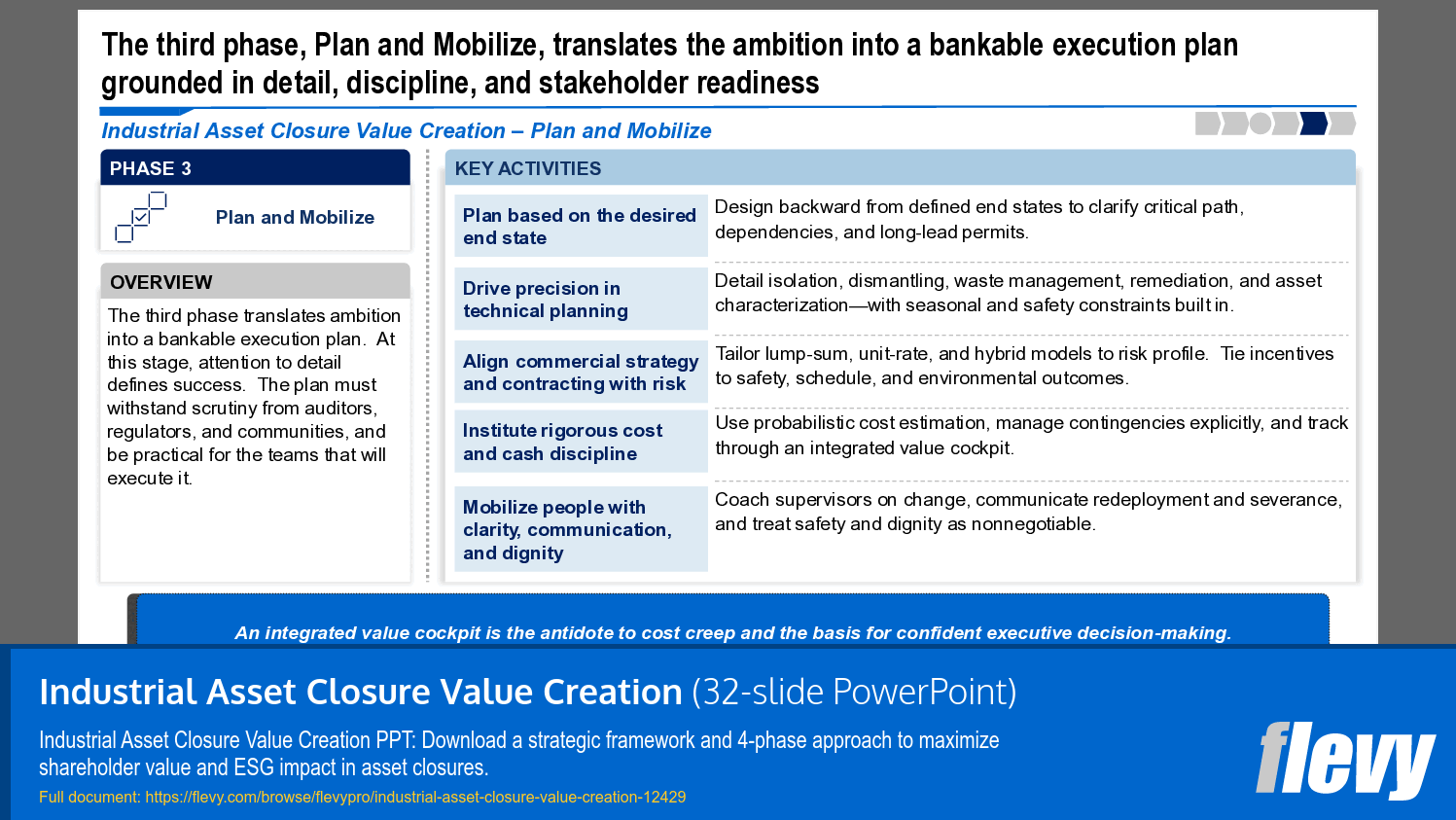
The "Plan and Mobilize" phase transforms strategic ambition into a viable execution plan, emphasizing meticulous attention to detail. Key activities include designing backward from the desired end state to clarify dependencies and critical paths, ensuring technical planning precision through isolation and waste management. Aligning commercial strategy with risk profiles involves tailoring contract models to safety and environmental outcomes. Rigorous cost and cash discipline is achieved via probabilistic cost estimation and an integrated value cockpit for contingency management. Effective mobilization of personnel requires clear communication regarding redeployment and severance, prioritizing safety and dignity throughout the process.
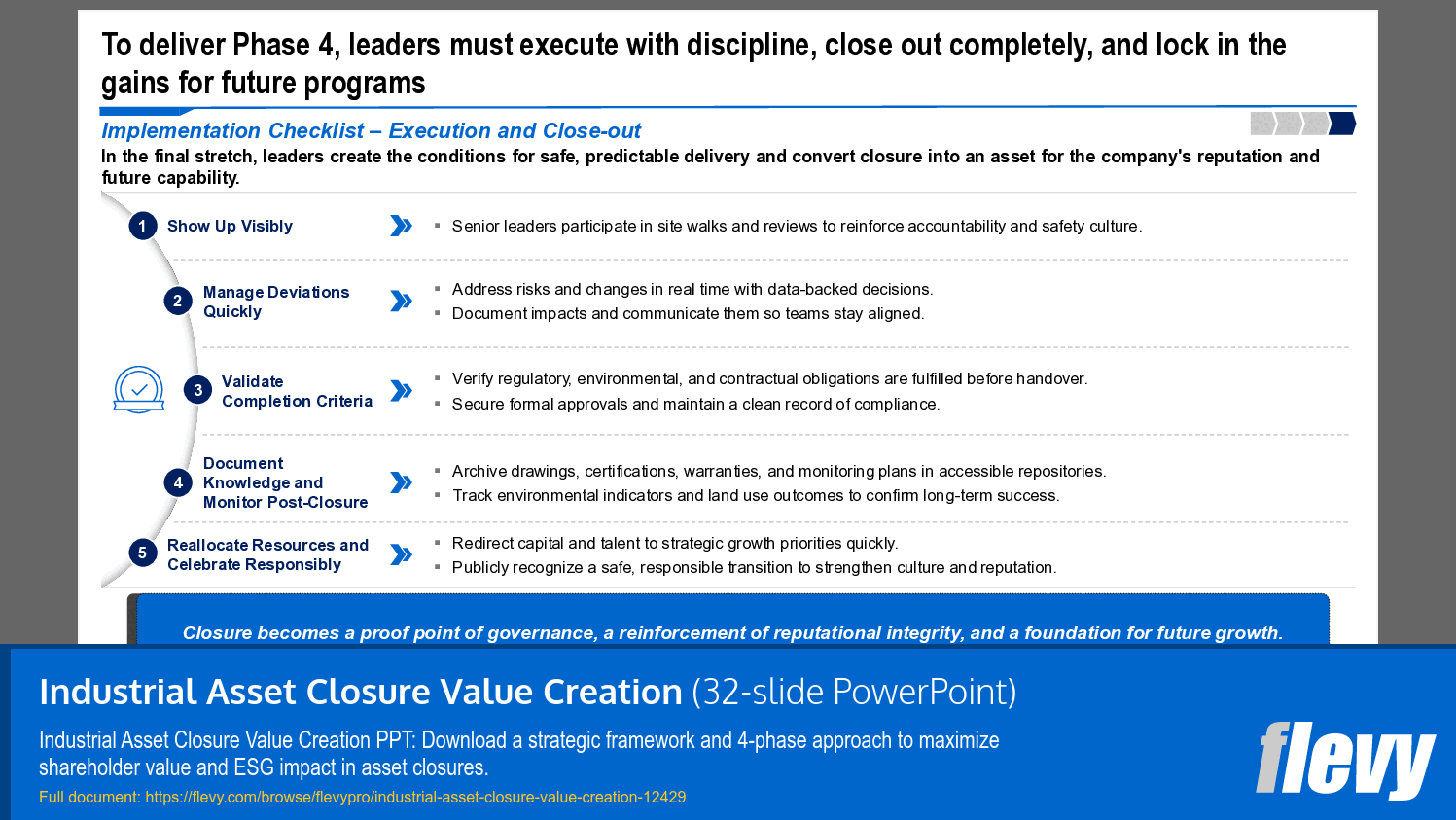
In Phase 4 of project execution, leaders must ensure disciplined closure to enhance organizational reputation and future capabilities. Key actions include visibly engaging in site reviews to reinforce accountability, quickly managing deviations through data-driven decisions, and validating completion criteria by fulfilling regulatory and contractual obligations. Documentation of knowledge and monitoring post-closure is essential for tracking environmental outcomes and ensuring long-term success. Additionally, reallocating resources to strategic priorities and publicly celebrating transitions strengthens organizational culture and reputation. This structured approach transforms closure into a strategic asset.
Strategically managed asset closures serve as a source of value creation by releasing capital, reducing long-term liabilities, and enabling the repurposing of industrial sites for higher-value uses. The 4-Phase Value Creation Framework includes: 1) Diagnose and Decide, where asset closure signals prompt evaluation; 2) Set the Ambition, establishing goals for closure; 3) Plan and Mobilize, coordinating resources for execution; and 4) Execute and Close-out, finalizing the closure process. This framework emphasizes that the majority of value is determined early in the closure process, impacting future operational strategies and stakeholder trust, particularly in strengthening ESG positioning.
Leaders must implement a structured 4-step readiness checklist for effective industrial asset closure. The first step, Pre-Decision Clarity, involves establishing facts, scenarios, and stakeholder alignment prior to making closure decisions. Next, Ambition Setting defines the objectives of the closure and integrates them into the corporate agenda. The third step, Planning and Mobilization, translates these ambitions into a comprehensive execution plan that identifies and mitigates potential risks. Finally, Execution and Close-out emphasizes the importance of visible leadership, rigorous change control, and strategies to secure and sustain gains throughout the closure process.
The "Plan and Mobilize" phase transforms strategic ambition into a viable execution plan, emphasizing meticulous attention to detail. Key activities include designing backward from the desired end state to clarify dependencies and critical paths, ensuring technical planning precision through isolation and waste management. Aligning commercial strategy with risk profiles involves tailoring contract models to safety and environmental outcomes. Rigorous cost and cash discipline is achieved via probabilistic cost estimation and an integrated value cockpit for contingency management. Effective mobilization of personnel requires clear communication regarding redeployment and severance, prioritizing safety and dignity throughout the process.
In Phase 4 of project execution, leaders must ensure disciplined closure to enhance organizational reputation and future capabilities. Key actions include visibly engaging in site reviews to reinforce accountability, quickly managing deviations through data-driven decisions, and validating completion criteria by fulfilling regulatory and contractual obligations. Documentation of knowledge and monitoring post-closure is essential for tracking environmental outcomes and ensuring long-term success. Additionally, reallocating resources to strategic priorities and publicly celebrating transitions strengthens organizational culture and reputation. This structured approach transforms closure into a strategic asset.
Source: Best Practices in Value Creation, ESG, Asset Management PowerPoint Slides: Industrial Asset Closure Value Creation PowerPoint (PPTX) Presentation Slide Deck, LearnPPT Consulting
This framework is developed by a team of former McKinsey and Big 4 consultants. The presentation follows the headline-body-bumper slide format used by global consulting firms.
For $10.00 more, you can download this document plus 2 more FlevyPro documents. That's just $13 each.
ABOUT FLEVYPRO
This document is part of the FlevyPro Library, a curated knowledge base of documents for our FlevyPro subscribers.
FlevyPro is a subscription service for on-demand business frameworks and analysis tools. FlevyPro subscribers receive access to an exclusive library of curated business documents—business framework primers, presentation templates, Lean Six Sigma tools, and more—among other exclusive benefits.
The average daily rate of a McKinsey consultant is $6,625 (not including expenses). The average price of a Flevy document is $65.
Trusted by over 10,000+ Client Organizations
Since 2012, we have provided business templates to over 10,000 businesses and organizations of all sizes, from startups and small businesses to the Fortune 100, in over 130 countries.
"As an Independent Management Consultant, I find Flevy to add great value as a source of best practices, templates and information on new trends. Flevy has matured and the quality and quantity of the library is excellent. Lastly the price charged is reasonable, creating a win-win value for
the customer, Flevy and the various authors. This is truly a service that benefits the consulting industry and associated clients. Thanks for providing this service.
"
– Jim Schoen, Principal at FRC Group
"I am extremely grateful for the proactiveness and eagerness to help and I would gladly recommend the Flevy team if you are looking for data and toolkits to help you work through business solutions."
– Trevor Booth, Partner, Fast Forward Consulting
"As a young consulting firm, requests for input from clients vary and it's sometimes impossible to provide expert solutions across a broad spectrum of requirements. That was before I discovered Flevy.com.
Through subscription to this invaluable site of a plethora of topics that are key and crucial to consulting, I
have been able to exceed expectations and deliver quality advice and solutions to my clients. The quality and expertise of the authors are exemplary and gives me great confidence to use as part of my service offerings.
I highly recommend this company for any consultant wanting to apply international best practice standards in their service offerings.
"
– Nishi Singh, Strategist and MD at NSP Consultants
"As a small business owner, the resource material available from FlevyPro has proven to be invaluable. The ability to search for material on demand based our project events and client requirements was great for me and proved very beneficial to my clients. Importantly, being able to easily edit and tailor
the material for specific purposes helped us to make presentations, knowledge sharing, and toolkit development, which formed part of the overall program collateral. While FlevyPro contains resource material that any consultancy, project or delivery firm must have, it is an essential part of a small firm or independent consultant's toolbox.
"
– Michael Duff, Managing Director at Change Strategy (UK)
"One of the great discoveries that I have made for my business is the Flevy library of training materials.
As a Lean Transformation Expert, I am always making presentations to clients on a variety of topics: Training, Transformation, Total Productive Maintenance, Culture, Coaching, Tools, Leadership Behavior, etc. Flevy
It is well worth the money to purchase these presentations. Sure, I have the knowledge and information to make my point. It is another thing to create a presentation that captures what I want to say. Flevy has saved me countless hours of preparation time that is much better spent with implementation that will actually save money for my clients.
"
– Ed Kemmerling, Senior Lean Transformation Expert at PMG
"Flevy.com has proven to be an invaluable resource library to our Independent Management Consultancy, supporting and enabling us to better serve our enterprise clients.
The value derived from our [FlevyPro] subscription in terms of the business it has helped to gain far exceeds the investment made, making a subscription a no-brainer for any growing consultancy – or in-house strategy team."
– Dean Carlton, Chief Transformation Officer, Global Village Transformations Pty Ltd.
"[Flevy] produces some great work that has been/continues to be of immense help not only to myself, but as I seek to provide professional services to my clients, it gives me a large "tool box" of resources that are critical to provide them with the quality of service and outcomes they are expecting."
– Royston Knowles, Executive with 50+ Years of Board Level Experience
"Flevy is now a part of my business routine. I visit Flevy at least 3 times each month.
Flevy has become my preferred learning source, because what it provides is practical, current, and useful in this era where the business world is being rewritten.

many challenges and there is the need to make the right decisions in a short time, with so much scattered information, we are fortunate to have Flevy. Flevy investigates, selects, and puts at our disposal the best of the best to help us be successful in our work.
Download our free compilation of 50+ Strategy & Transformation slides and templates. Frameworks include McKinsey 7-S, Balanced Scorecard, Disruptive Innovation, BCG Curve, and many more.