
GenAI Profitability Paradox: Solutions Part 1   31-slide PPT PowerPoint presentation slide deck (PPTX)
$29.00

GenAI Profitability Paradox: Solutions Part 1 (31-slide PPT PowerPoint presentation slide deck (PPTX)) Preview Image
Log in to unlock full preview.
GenAI Profitability Paradox: Solutions Part 1 (31-slide PPT PowerPoint presentation slide deck (PPTX)) Preview Image
Arrow   Click main image to view in full screen.

GenAI Profitability Paradox: Solutions Part 1 (PowerPoint PPTX Slide Deck)

PowerPoint (PPTX) 31 Slides FlevyPro Document

$29.00
FlevyPro price: FREE (included in subscription)
This framework is developed by a team of former McKinsey and Big 4 consultants. The presentation follows the headline-body-bumper slide format used by global consulting firms.
Add to Cart


Immediate download
Free lifetime updates

AGENTIC AI PPT DESCRIPTION

Editor Summary GenAI Profitability Paradox: Solutions Part 1 is a 31-slide PowerPoint presentation outlining a strategic framework to close the gap between GenAI adoption and financial impact. Read more

Many organizations have rapidly adopted GenAI through copilots and chatbots, achieving broad usage but limited financial impact. In fact, nearly 8 in 10 organizations report deploying GenAI in at least one business function. However, more than 80% report no material impact on earnings.

The core challenge is not access to technology, but how AI is deployed. Most GenAI initiatives enhance individual tasks rather than reshaping the workflows, decisions, and systems that drive enterprise value.

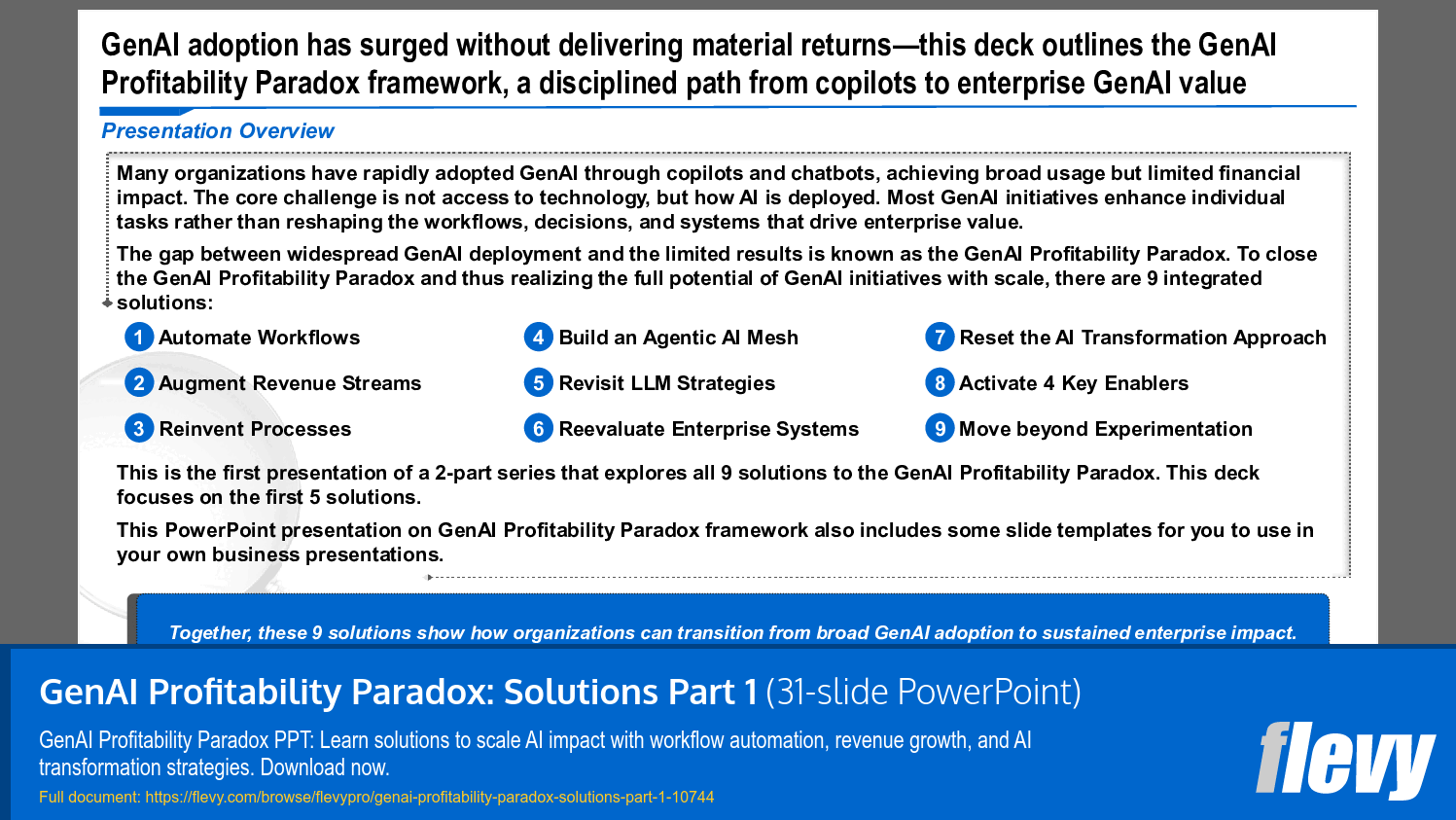
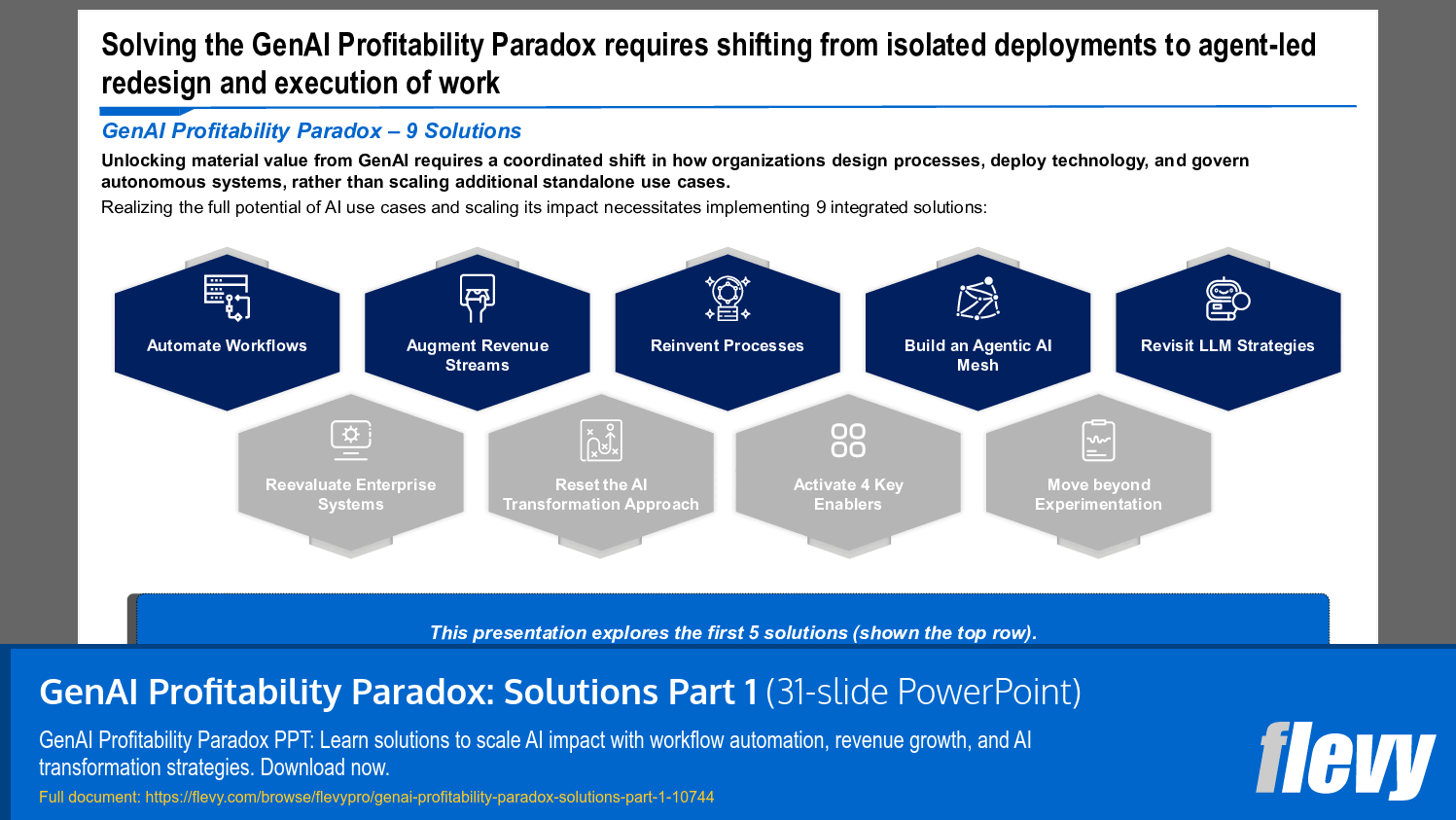
The gap between widespread GenAI deployment and the limited results is known as the GenAI Profitability Paradox. To close the GenAI Profitability Paradox and thus realizing the full potential of GenAI initiatives with scale, there are 9 integrated solutions:

1. Automate Workflows
2. Augment Revenue Streams
3. Reinvent Processes
4. Build an Agentic AI Mesh
5. Revisit LLM Strategies

6. Reevaluate Enterprise Systems
7. Reset the AI Transformation Approach
8. Activate 4 Key Enablers
9. Move beyond Experimentation

Together, these 9 solutions show how organizations can transition from broad GenAI adoption to sustained enterprise impact. Scaling AI tools creates activity—scaling agents inside operations creates results.

This is the first presentation of a 2-part series that explores all 9 solutions to the GenAI Profitability Paradox. This deck focuses on the first 5 solutions. Each of these 5 solutions is discussed in depth.

This PowerPoint presentation on GenAI Profitability Paradox framework also includes some slide templates for you to use in your own business presentations.

Got a question about this document? Email us at flevypro@flevy.com.

MARCUS OVERVIEW

This synopsis was written by Marcus [?] based on the analysis of the full 31-slide presentation.


Executive Summary
The "GenAI Profitability Paradox: Solutions Part 1" presentation offers a strategic framework for organizations grappling with the challenges of Generative AI (GenAI) adoption. Despite rapid deployment, many organizations face the paradox of limited financial returns. This presentation outlines a disciplined approach to bridge the gap between technology access and effective deployment. It introduces nine integrated solutions to enhance AI impact, focusing on the first five: Automate Workflows, Augment Revenue Streams, Reinvent Processes, Build an Agentic AI Mesh, and Revisit LLM Strategies. Executives will gain actionable insights to transform GenAI initiatives from mere experimentation to sustainable enterprise value.

Who This Is For and When to Use
•  Corporate executives overseeing digital transformation initiatives
•  Integration leaders responsible for AI deployment strategies
•  Consultants advising on AI and technology adoption
•  Business analysts evaluating the financial impact of AI initiatives

Best-fit moments to use this deck:
•  During strategic planning sessions for AI implementation
•  In workshops aimed at redesigning workflows and processes
•  When assessing the effectiveness of current AI initiatives

Learning Objectives
•  Define the GenAI Profitability Paradox and its implications for organizations
•  Identify key solutions to enhance the financial impact of GenAI initiatives
•  Develop strategies for automating workflows to improve operational efficiency
•  Explore methods for augmenting revenue through AI-driven customer interactions
•  Reinvent business processes to leverage AI capabilities effectively
•  Build an agentic AI mesh to facilitate scalable and controlled AI execution
•  Revisit LLM strategies to align with operational needs and governance

Table of Contents
•  Overview (page 1)
•  GenAI Profitability Paradox (page 2)
•  GenAI Profitability Paradox Solutions (page 3)
•  Slide Design Structure & Templates (page 4)

Primary Topics Covered
•  GenAI Profitability Paradox - The disparity between widespread GenAI adoption and limited financial results, highlighting the need for strategic deployment.
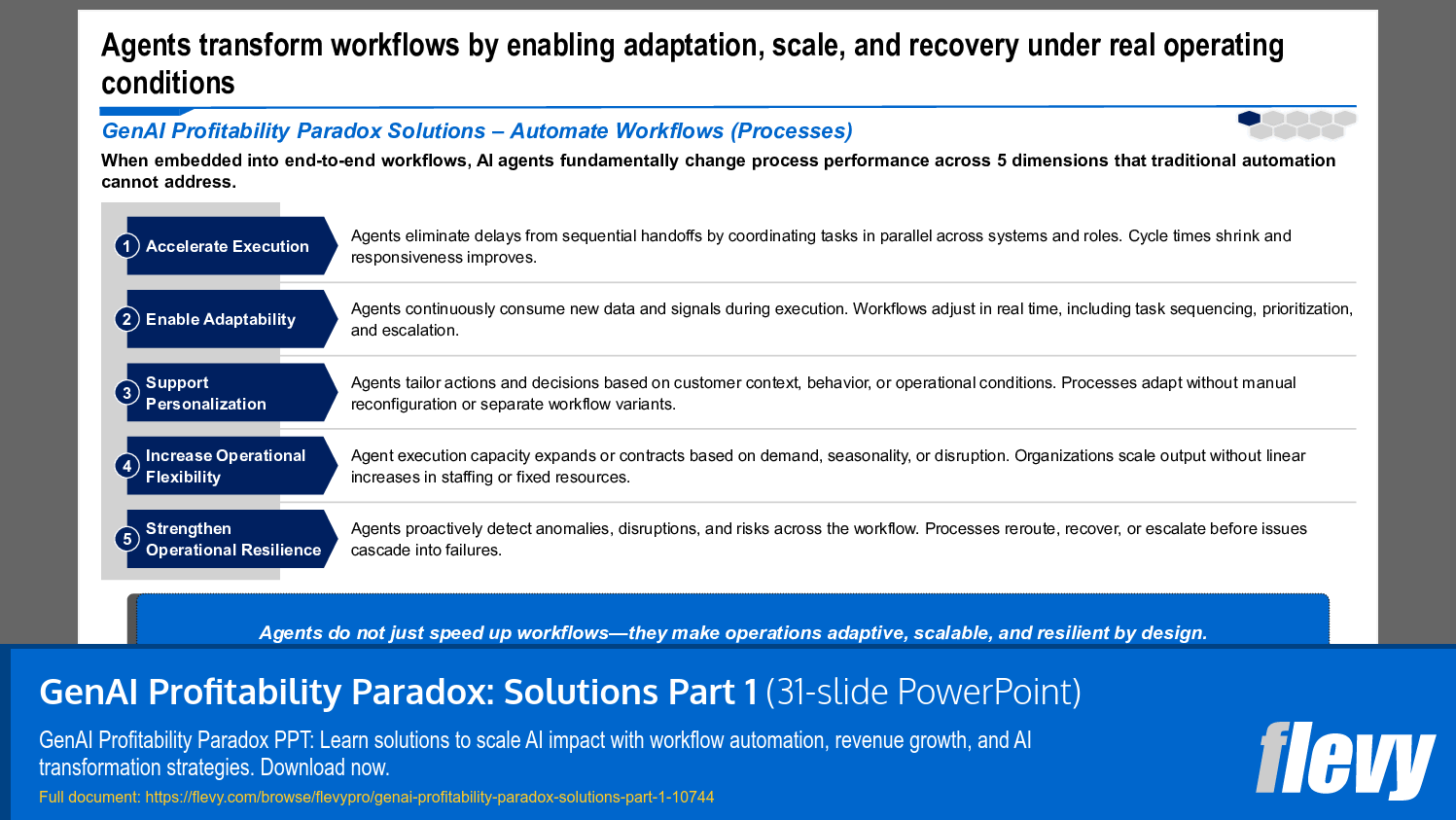
•  Automate Workflows - Strategies for implementing agent-based automation to enhance operational efficiency and reduce cycle times.
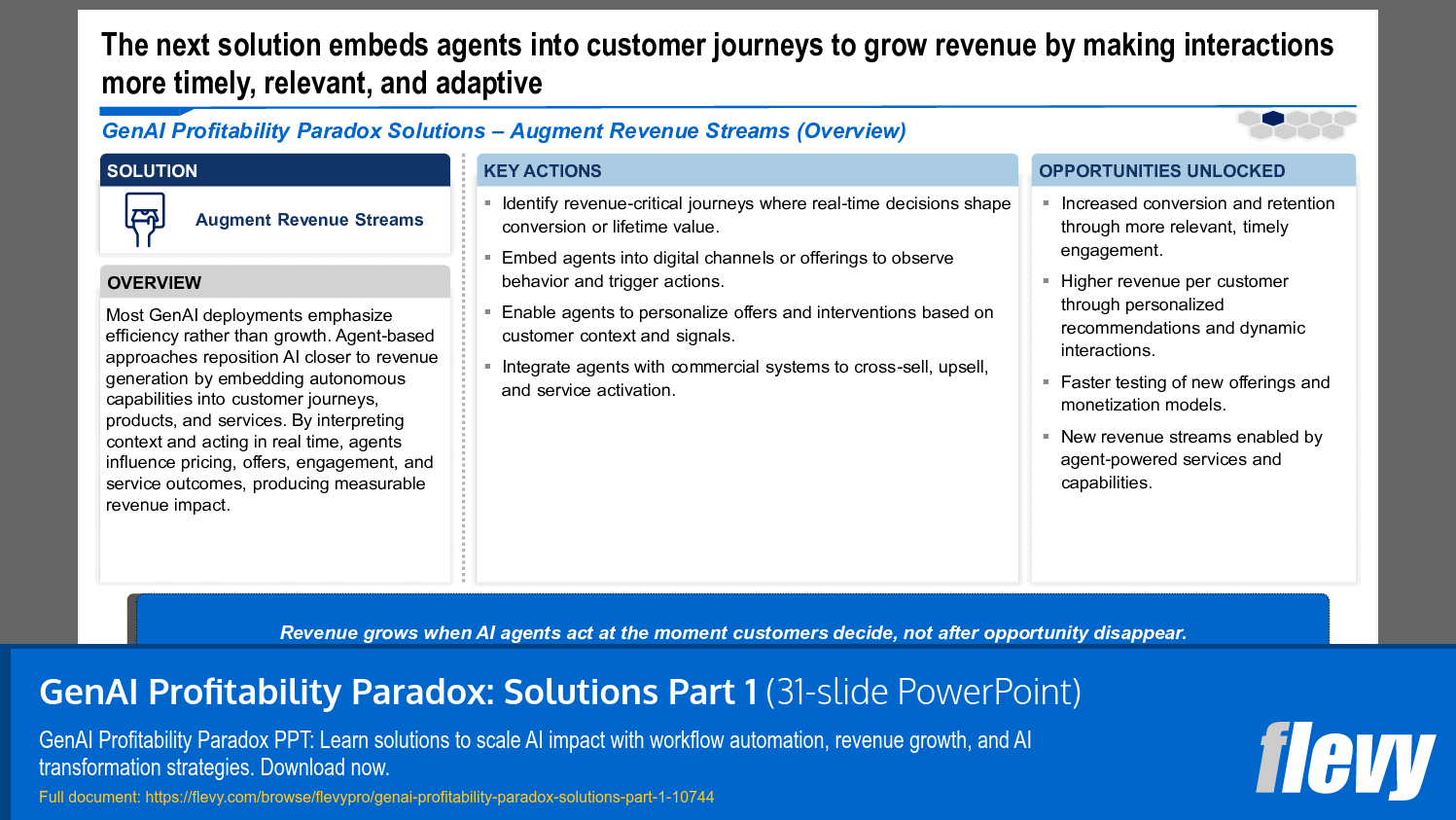
•  Augment Revenue Streams - Techniques for embedding AI into customer journeys to drive timely and relevant interactions that increase revenue.
•  Reinvent Processes - The importance of rethinking workflows to integrate AI capabilities, moving beyond simple task automation.
•  Build an Agentic AI Mesh - Creating a collaborative architecture that supports multi-agent execution and governance.
•  Revisit LLM Strategies - Aligning foundation models with operational needs to ensure effective AI deployment and governance.

Deliverables, Templates, and Tools
•  Workflow automation templates for cross-functional processes
•  Revenue augmentation models for customer engagement strategies
•  Process redesign frameworks to facilitate AI integration
•  Agentic AI mesh architecture guidelines for scalable deployment
•  LLM strategy assessment tools for operational alignment

Slide Highlights
•  Overview of the GenAI Profitability Paradox and its implications
•  Detailed breakdown of the first 5 solutions to enhance AI impact
•  Visual representations of workflow automation and revenue augmentation strategies
•  Frameworks for reinventing processes and building an agentic AI mesh

Potential Workshop Agenda
Introduction to GenAI Profitability Paradox (30 minutes)
•  Overview of the paradox and its implications for organizations
•  Discussion on current AI initiatives and their effectiveness

Automating Workflows Session (60 minutes)
•  Identify key processes for automation
•  Develop a roadmap for implementing agent-based automation

Augmenting Revenue Streams Workshop (60 minutes)
•  Explore customer journey mapping techniques
•  Design strategies for real-time engagement and personalization

Customization Guidance
•  Tailor the workflow automation templates to fit specific organizational processes and roles
•  Adjust revenue augmentation strategies to align with industry-specific customer journeys
•  Modify process redesign frameworks to reflect unique operational challenges

Secondary Topics Covered
•  Challenges of scaling vertical AI use cases
•  The role of governance in AI deployment
•  Cultural and organizational barriers to effective AI integration
•  Best practices for managing AI-related change

Topic FAQ

What is the GenAI Profitability Paradox and why do organizations experience it?

The GenAI Profitability Paradox describes the gap between extensive GenAI deployment and limited financial returns; many firms deploy copilots and chatbots, but fail to change underlying workflows and systems. Nearly 8 in 10 organizations report GenAI use in at least one function while over 80% report no material earnings impact; see the deck’s overview on page 2.

What deployment mistakes commonly limit GenAI’s financial impact?

Common mistakes include focusing on task-level enhancements rather than end-to-end workflow redesign, weak governance, difficulties scaling vertical use cases, and integration or technical-debt issues. The presentation highlights these barriers and addresses them via process redesign, governance, and agent-based automation in its solution set covering Automate Workflows and Reinvent Processes.

What is an "agentic AI mesh" and when is it useful?

An agentic AI mesh is a collaborative architecture enabling multiple AI agents to operate together for coordinated, scalable execution across functions. It supports controlled multi-agent workflows, governance, and orchestration; the deck supplies agentic AI mesh architecture guidelines and examples for scalable deployment.

How should I evaluate GenAI strategy toolkits for an enterprise project on a constrained timeline or budget?

Prioritize toolkits that provide ready-to-adapt templates for workflow automation, revenue models, and process redesign; include LLM assessment tools and guidance on governance to reduce prototyping time. Also check for customization guidance to align with industry-specific journeys and operational constraints, such as available workflow automation templates and LLM strategy assessment tools.

What should a small integration team prioritize first when scaling GenAI across functions?

Small teams should identify high-impact cross-functional processes for agent-based automation and pilot AI-driven customer interactions to validate revenue uplift. Begin with process selection and roadmap creation, focusing on Automate Workflows and Augment Revenue Streams (solutions 1 and 2) to generate measurable outcomes.

We deployed copilots, but saw no earnings lift—what operational changes can help?

Shift from individual task support to workflow and decision redesign, embed AI into customer journeys for timely interactions, strengthen governance, and align LLM choice with operational needs. Operational actions include redesigning processes and implementing agent-based automation templates to move from activity to measurable results.

How can companies use GenAI to increase revenue rather than only reduce costs?

Embed AI into customer journeys to enable timely personalization, real-time engagement, and new monetization models that drive conversion and retention. Tactical steps include mapping journeys, designing AI-driven touchpoints, and validating revenue impact using revenue augmentation models provided in the deck’s tools.

How much of the full 9-solution framework does this first presentation cover?

This first of a two-part series covers the first 5 solutions in depth—Automate Workflows, Augment Revenue Streams, Reinvent Processes, Build an Agentic AI Mesh, and Revisit LLM Strategies—and includes slide templates and practical guidance for those 5 solutions.

Document FAQ
These are questions addressed within this presentation.

What is the GenAI Profitability Paradox?
The GenAI Profitability Paradox refers to the gap between widespread GenAI adoption and the limited financial results it generates for organizations.

How can organizations automate workflows effectively?
Organizations can automate workflows by identifying cross-functional processes, redesigning them for agent-based execution, and integrating with existing systems.

What are the benefits of augmenting revenue streams with AI?
Augmenting revenue streams with AI can lead to increased conversion rates, higher customer retention, and the creation of new monetization models.

Why is it important to reinvent processes for AI integration?
Reinventing processes allows organizations to fully leverage AI capabilities, enabling more efficient workflows and better alignment with business objectives.

What is an agentic AI mesh?
An agentic AI mesh is a collaborative architecture that allows multiple AI agents to operate together, facilitating scalable and controlled execution across functions.

How should organizations revisit their LLM strategies?
Organizations should align their LLM strategies with operational contexts, prioritize model selection based on specific needs, and ensure compliance and governance.

What are the key actions for implementing the solutions outlined in this presentation?
Key actions include identifying critical processes for automation, embedding AI into customer journeys, and designing frameworks for effective AI governance.

Glossary
•  GenAI - Generative AI that creates new content based on user prompts.
•  Agent-Based Automation - Automation that utilizes AI agents to execute tasks across workflows.
•  Revenue Streams - Channels through which an organization generates income.
•  LLM - Large Language Model, a type of AI model used for natural language processing.
•  Agentic AI Mesh - A framework for integrating multiple AI agents to work collaboratively.
•  Workflow Automation - The use of technology to automate complex business processes.
•  Process Redesign - The rethinking of existing workflows to improve efficiency and effectiveness.
•  Customer Journey - The complete experience a customer has with a brand, from awareness to purchase.
•  Governance - The framework that ensures AI systems operate within defined guidelines and regulations.
•  Vertical Use Cases - AI applications tailored to specific functions within an organization.
•  Horizontal Use Cases - AI applications that are broadly applicable across multiple functions.
•  Cultural Resistance - The reluctance of employees to adopt new technologies or processes.
•  Technical Debt - The implied cost of additional rework caused by choosing an easy solution now instead of using a better approach that would take longer.
•  Operational Resilience - The ability of an organization to adapt to disruptions while maintaining continuous operations.
•  Data Accessibility - The ease with which data can be accessed and utilized within an organization.
•  Performance Metrics - Standards used to measure the efficiency and effectiveness of an organization’s operations.
•  Integration - The process of combining different systems and processes to work together effectively.
•  Scalability - The capability of a system to handle a growing amount of work or its potential to accommodate growth.
•  Change Management - The approach to transitioning individuals, teams, and organizations to a desired future state.
•  AI Deployment - The process of integrating AI technologies into business operations.

AGENTIC AI PPT SLIDES

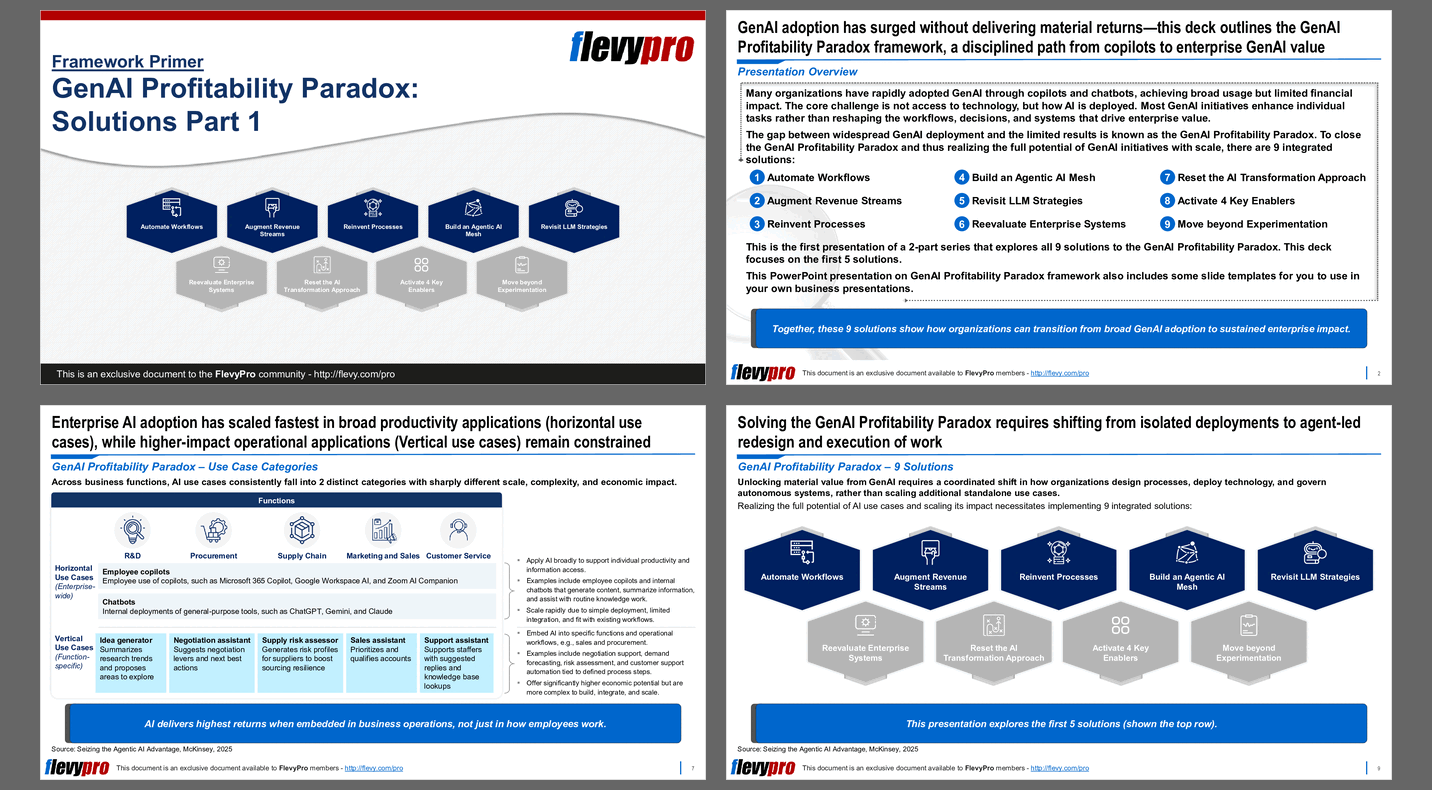
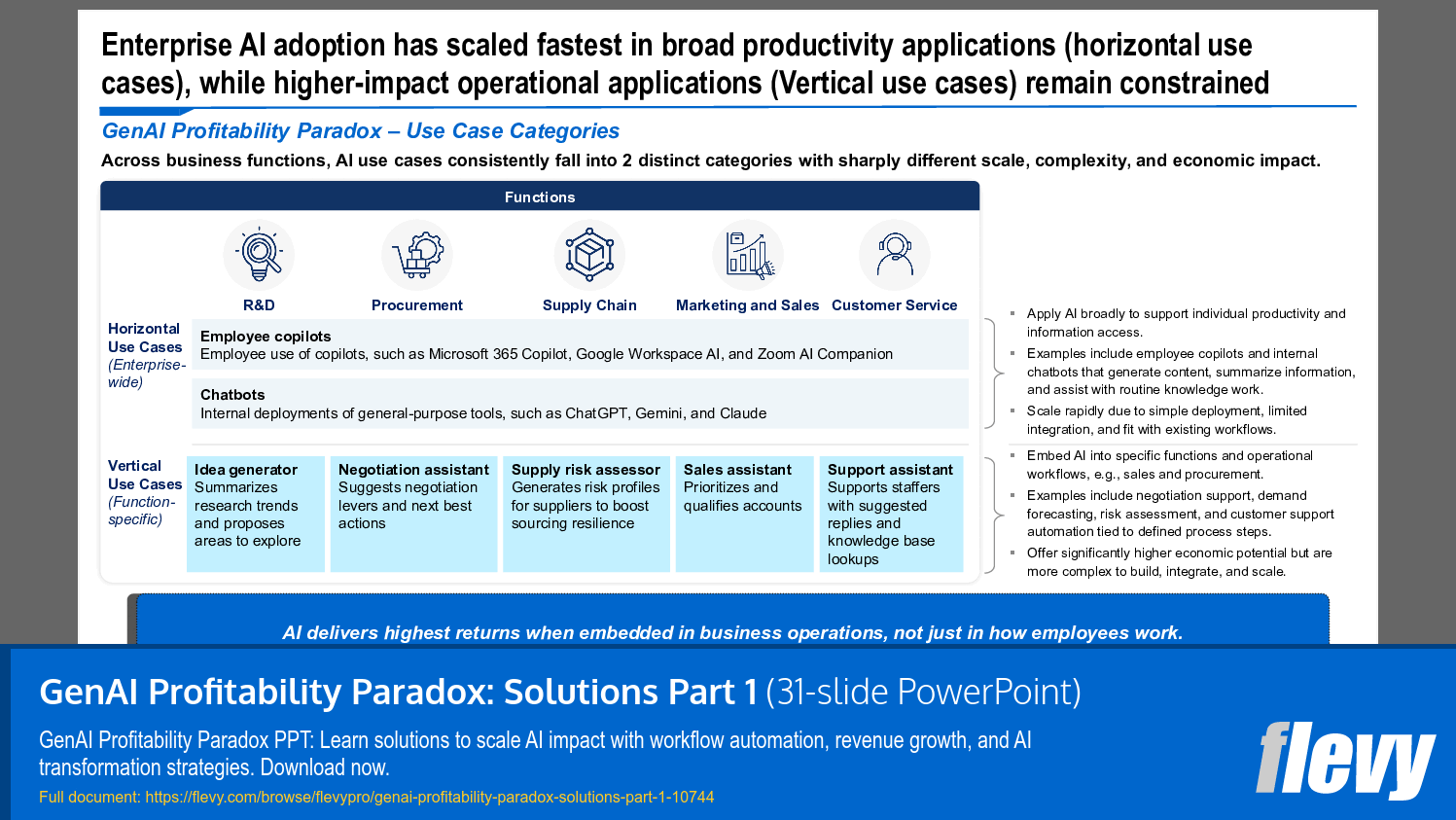
AI Adoption: Horizontal vs. Vertical Use Cases

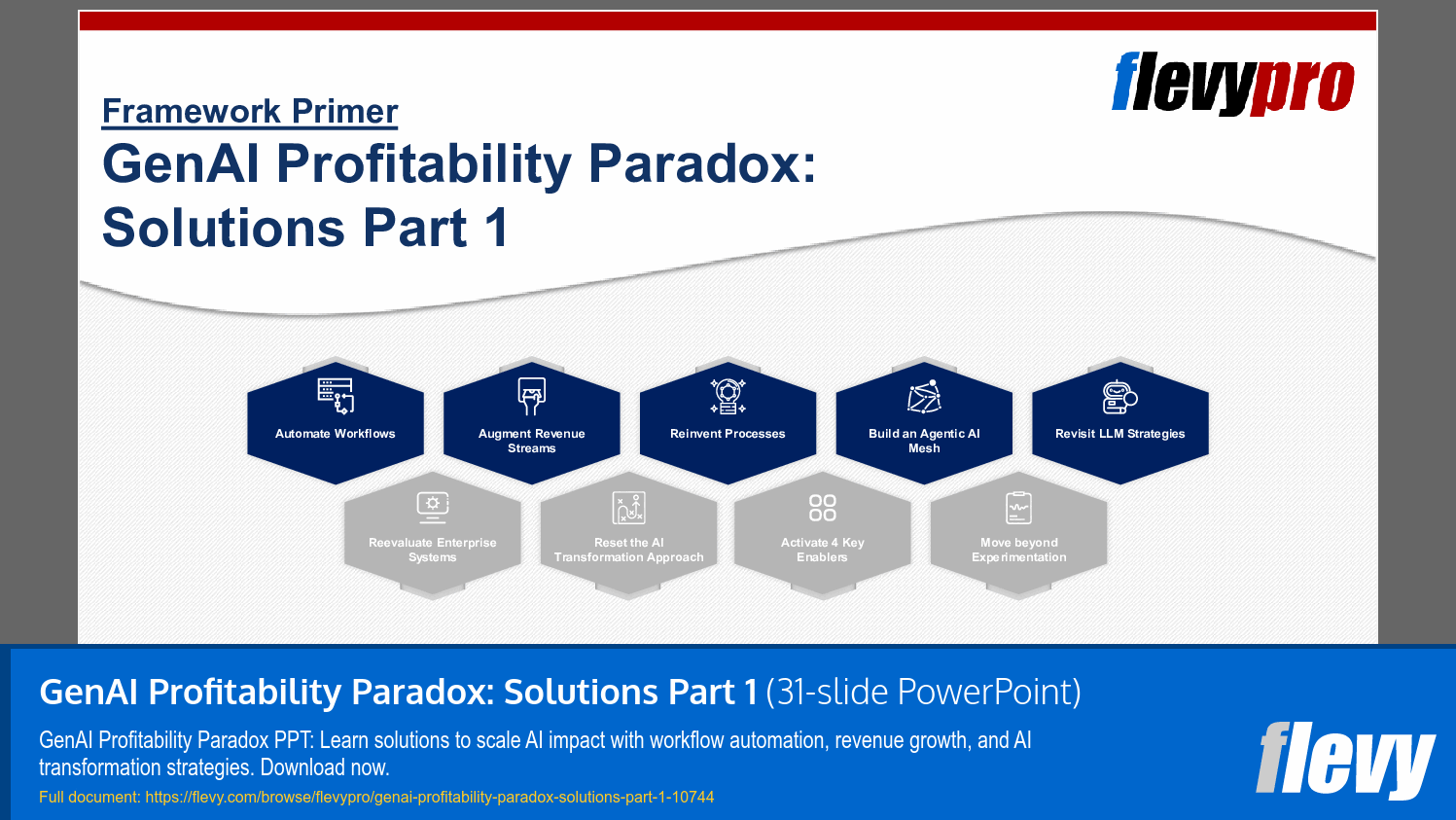
Integrated Solutions for GenAI Profitability Enhancement

Embedding AI Agents for Enhanced Revenue Generation

Transforming Workflows with AI Agents: Key Dimensions

Source: Best Practices in Agentic AI, GenAI PowerPoint Slides: GenAI Profitability Paradox: Solutions Part 1 PowerPoint (PPTX) Presentation Slide Deck, LearnPPT Consulting


$29.00
FlevyPro price: FREE (included in subscription)
This framework is developed by a team of former McKinsey and Big 4 consultants. The presentation follows the headline-body-bumper slide format used by global consulting firms.
Add to Cart
  

Did you need more documents?

Consider a FlevyPro subscription from $39/month. View plans here.

For $10.00 more, you can download this document plus 2 more FlevyPro documents. That's just $13 each.

ABOUT FLEVYPRO

This document is part of the FlevyPro Library, a curated knowledge base of documents for our FlevyPro subscribers.

FlevyPro is a subscription service for on-demand business frameworks and analysis tools. FlevyPro subscribers receive access to an exclusive library of curated business documents—business framework primers, presentation templates, Lean Six Sigma tools, and more—among other exclusive benefits.

Click here to learn more about FlevyPro and its benefits.

Did you know?
The average daily rate of a McKinsey consultant is $6,625 (not including expenses). The average price of a Flevy document is $65.


Trusted by over 10,000+ Client Organizations
Since 2012, we have provided business templates to over 10,000 businesses and organizations of all sizes, from startups and small businesses to the Fortune 100, in over 130 countries.
AT&T GE Cisco Intel IBM Coke Dell Toyota HP Nike Samsung Microsoft Astrazeneca JP Morgan KPMG Walgreens Walmart 3M Kaiser Oracle SAP Google E&Y Volvo Bosch Merck Fedex Shell Amgen Eli Lilly Roche AIG Abbott Amazon PwC T-Mobile Broadcom Bayer Pearson Titleist ConEd Pfizer NTT Data Schwab


Read Customer Testimonials

 
"I like your product. I'm frequently designing PowerPoint presentations for my company and your product has given me so many great ideas on the use of charts, layouts, tools, and frameworks. I really think the templates are a valuable asset to the job."

– Roberto Fuentes Martinez, Senior Executive Director at Technology Transformation Advisory
 
"[Flevy] produces some great work that has been/continues to be of immense help not only to myself, but as I seek to provide professional services to my clients, it gives me a large "tool box" of resources that are critical to provide them with the quality of service and outcomes they are expecting."

– Royston Knowles, Executive with 50+ Years of Board Level Experience
 
"My FlevyPro subscription provides me with the most popular frameworks and decks in demand in today’s market. They not only augment my existing consulting and coaching offerings and delivery, but also keep me abreast of the latest trends, inspire new products and service offerings for my practice, and educate me "

– Bill Branson, Founder at Strategic Business Architects
 
"I am extremely grateful for the proactiveness and eagerness to help and I would gladly recommend the Flevy team if you are looking for data and toolkits to help you work through business solutions."

– Trevor Booth, Partner, Fast Forward Consulting
 
"I have found Flevy to be an amazing resource and library of useful presentations for lean sigma, change management and so many other topics. This has reduced the time I need to spend on preparing for my performance consultation. The library is easily accessible and updates are regularly provided. A wealth of great information."

– Cynthia Howard RN, PhD, Executive Coach at Ei Leadership
 
"As a small business owner, the resource material available from FlevyPro has proven to be invaluable. The ability to search for material on demand based our project events and client requirements was great for me and proved very beneficial to my clients. Importantly, being able to easily edit and tailor "

– Michael Duff, Managing Director at Change Strategy (UK)
 
"Flevy.com has proven to be an invaluable resource library to our Independent Management Consultancy, supporting and enabling us to better serve our enterprise clients.

The value derived from our [FlevyPro] subscription in terms of the business it has helped to gain far exceeds the investment made, making a subscription a no-brainer for any growing consultancy – or in-house strategy team."

– Dean Carlton, Chief Transformation Officer, Global Village Transformations Pty Ltd.
 
"FlevyPro has been a brilliant resource for me, as an independent growth consultant, to access a vast knowledge bank of presentations to support my work with clients. In terms of RoI, the value I received from the very first presentation I downloaded paid for my subscription many times over! The "

– Roderick Cameron, Founding Partner at SGFE Ltd


Customers Also Like These Documents

Explore Templates on Related Management Topics


Your Recently Viewed Documents
Download our FREE Digital Transformation Templates

Download our free compilation of 50+ Digital Transformation slides and templates. DX concepts covered include Digital Leadership, Digital Maturity, Digital Value Chain, Customer Experience, Customer Journey, RPA, etc.