
Dynamic Capabilities Framework   30-slide PPT PowerPoint presentation slide deck (PPTX)
$29.00

Dynamic Capabilities Framework (30-slide PPT PowerPoint presentation slide deck (PPTX)) Preview Image
Log in to unlock full preview.
Dynamic Capabilities Framework (30-slide PPT PowerPoint presentation slide deck (PPTX)) Preview Image
Arrow   Click main image to view in full screen.

Dynamic Capabilities Framework (PowerPoint PPTX Slide Deck)

PowerPoint (PPTX) 30 Slides FlevyPro Document

$29.00
FlevyPro price: FREE (included in subscription)
This framework is developed by a team of former McKinsey and Big 4 consultants. The presentation follows the headline-body-bumper slide format used by global consulting firms.
Add to Cart


Immediate download
Free lifetime updates

CORE COMPETENCIES PPT DESCRIPTION

Editor Summary Dynamic Capabilities Framework is a 30-slide PowerPoint (PPTX) presentation explaining the sensing–seizing–reconfiguring model developed by David Teece, Gary Pisano, and Amy Shuen. Read more

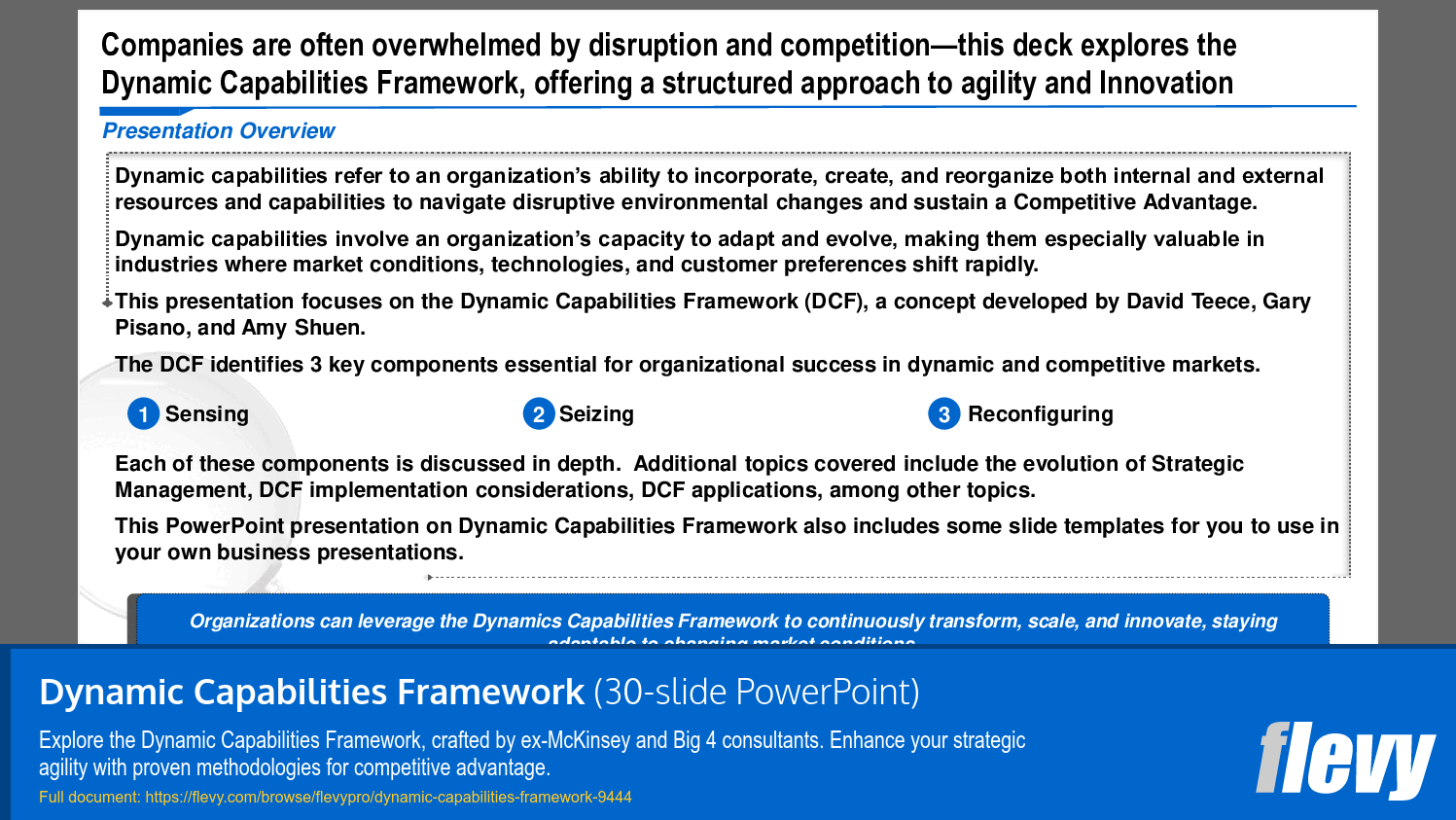
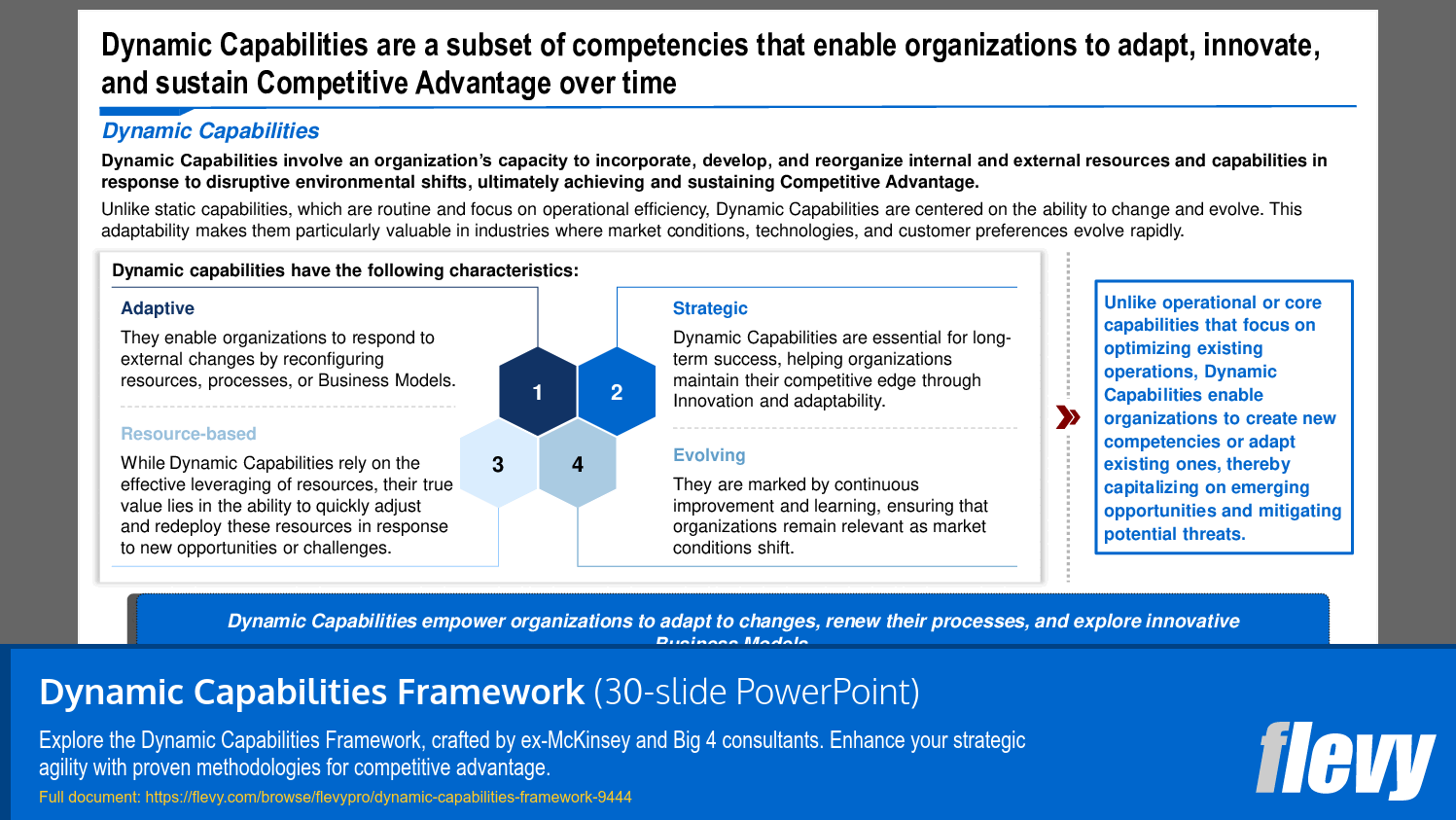
Dynamic capabilities refer to an organization's ability to incorporate, create, and reorganize both internal and external resources and capabilities to navigate disruptive environmental changes and sustain a Competitive Advantage.

Dynamic capabilities involve an organization's capacity to adapt and evolve, making them especially valuable in industries where market conditions, technologies, and customer preferences shift rapidly.

This PPT presentation focuses on the Dynamic Capabilities Framework (DCF), a concept developed by David Teece, Gary Pisano, and Amy Shuen. Organizations can leverage the DCF to continuously transform, scale, and innovate, staying adaptable to changing market conditions.

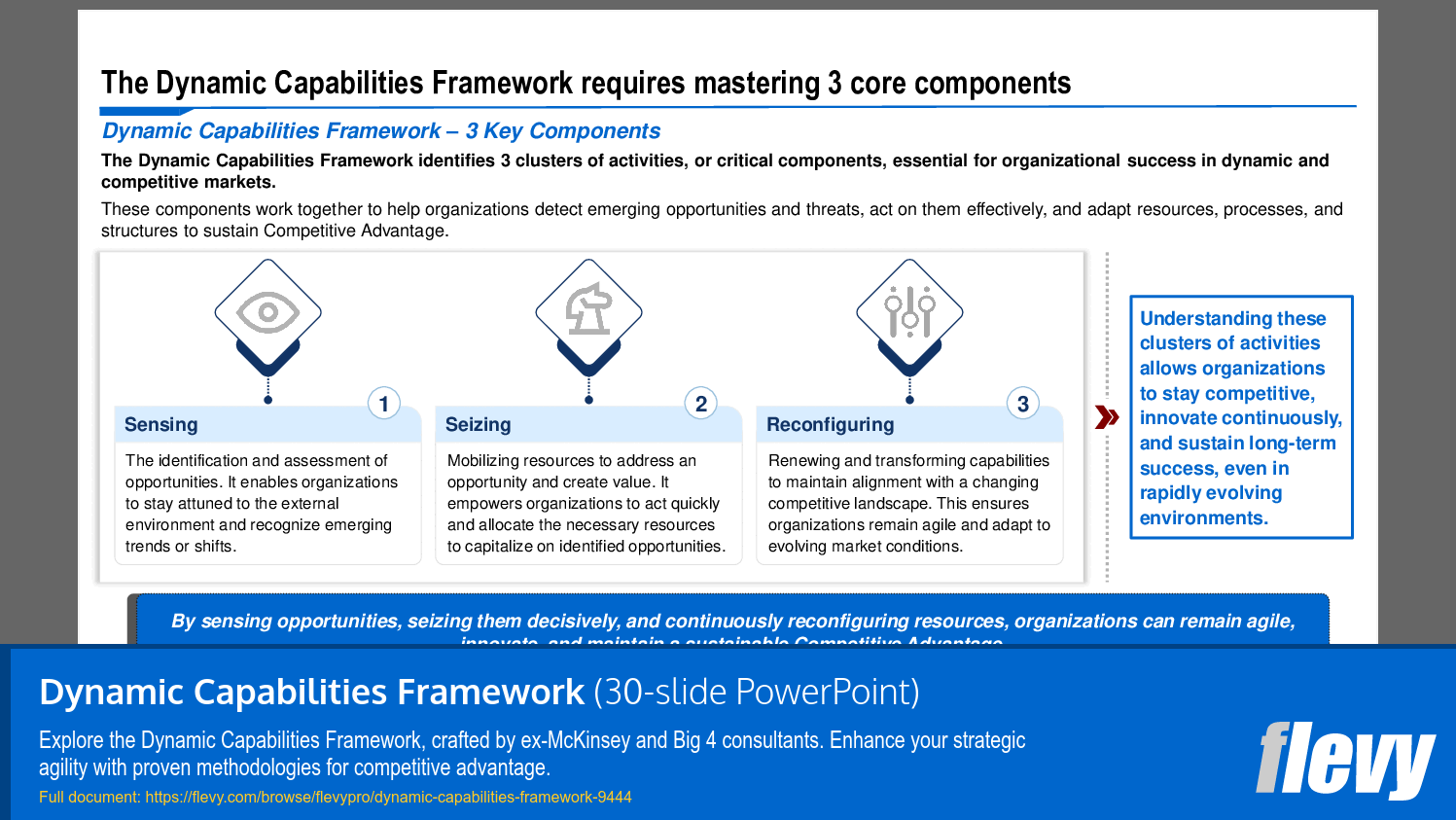
The DCF identifies 3 key components essential for organizational success in dynamic and competitive markets.

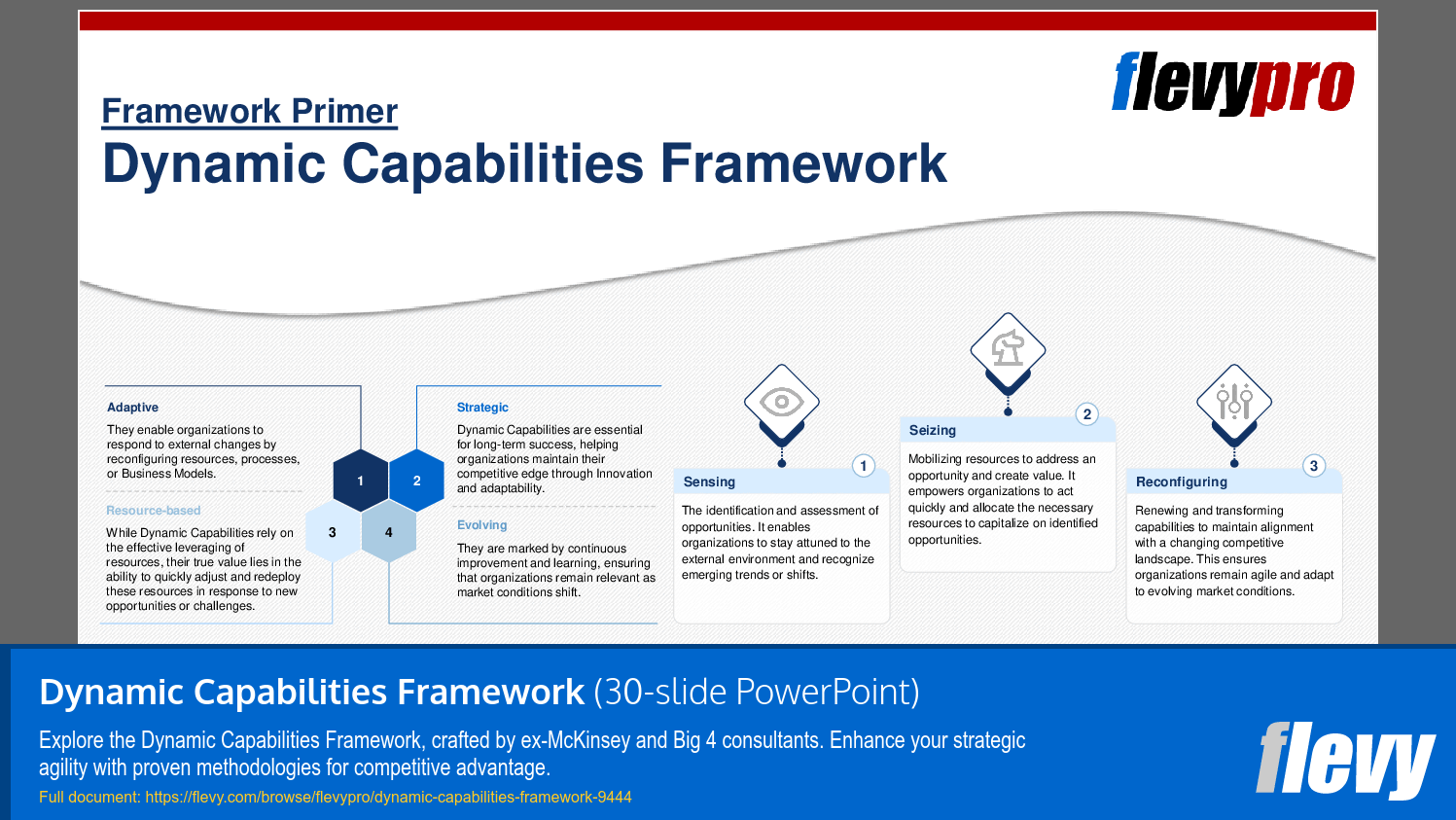
1. Sensing – The identification and assessment of opportunities. It enables organizations to stay attuned to the external environment and recognize emerging trends or shifts.

2. Seizing – Mobilizing resources to address an opportunity and create value. It empowers organizations to act quickly and allocate the necessary resources to capitalize on identified opportunities.

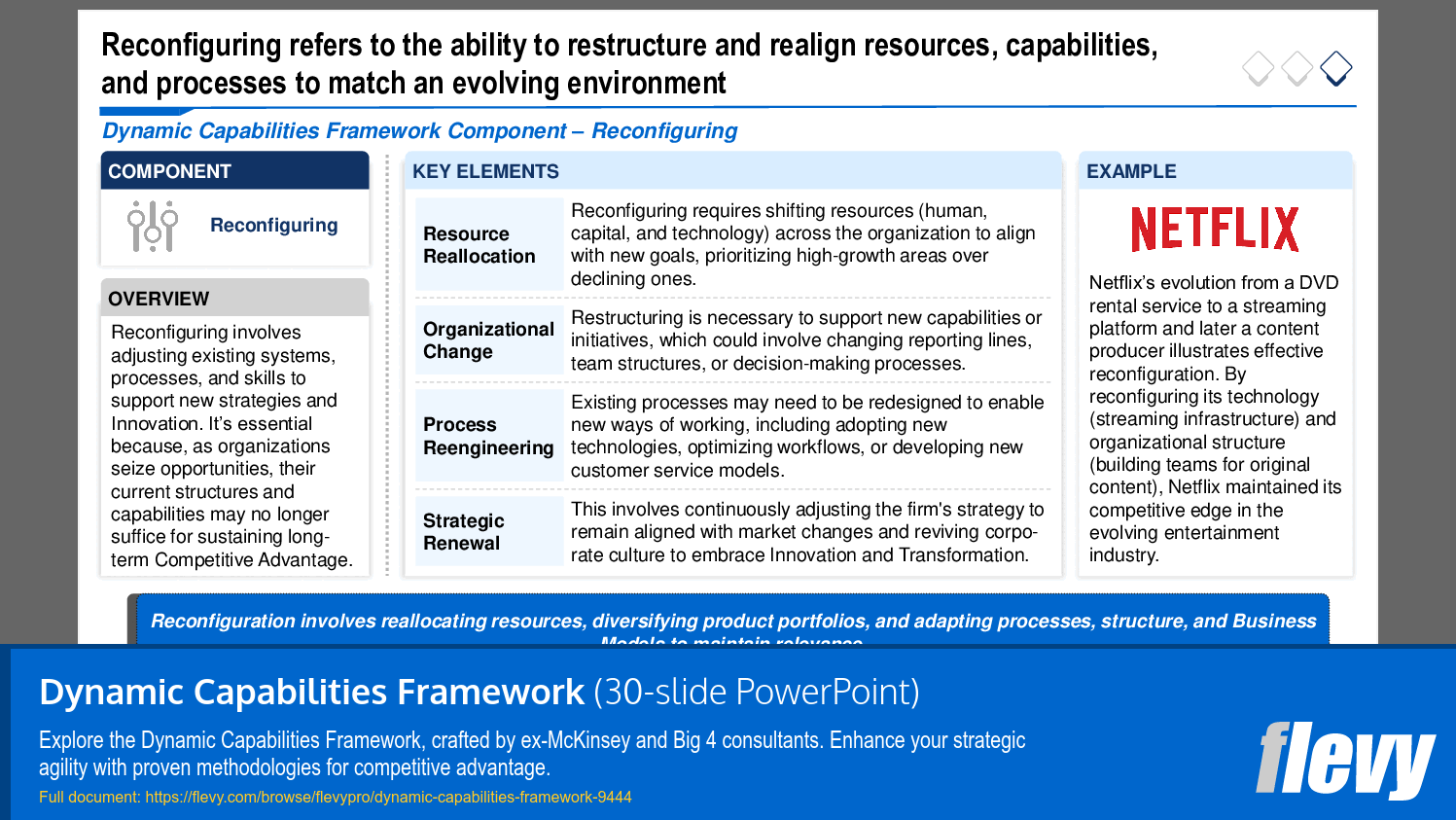
3. Reconfiguring – Renewing and transforming capabilities to maintain alignment with a changing competitive landscape. This ensures organizations remain agile and adapt to evolving market conditions.

Each of these components is discussed in depth. Additional topics covered include the evolution of Strategic Management, DCF implementation considerations, DCF applications, among other topics.

This PowerPoint presentation on Dynamic Capabilities Framework also includes some slide templates for you to use in your own business presentations.

Got a question about this document? Email us at flevypro@flevy.com.

MARCUS OVERVIEW

This synopsis was written by Marcus [?] based on the analysis of the full 30-slide presentation.


Executive Summary
The Dynamic Capabilities Framework presentation provides a structured approach for organizations to enhance their agility and innovation in rapidly changing environments. Developed by renowned scholars David Teece, Gary Pisano, and Amy Shuen, this framework emphasizes the importance of sensing opportunities, seizing them, and reconfiguring resources to maintain a competitive advantage. Executives and consultants can leverage this framework to adapt to market disruptions, optimize resource allocation, and foster a culture of continuous improvement.

Who This Is For and When to Use
•  Corporate executives seeking to drive strategic agility within their organizations
•  Integration leaders managing change in dynamic environments
•  Consultants advising clients on innovation and adaptability strategies
•  Business development teams focused on identifying new market opportunities

Best-fit moments to use this deck:
•  During strategic planning sessions to align on dynamic capabilities
•  In workshops aimed at fostering innovation and adaptability
•  When addressing organizational challenges related to market disruptions

Learning Objectives
•  Define the Dynamic Capabilities Framework and its relevance in today’s business landscape
•  Build strategies for sensing market opportunities and threats
•  Establish processes for mobilizing resources effectively to seize identified opportunities
•  Reconfigure organizational structures and processes to enhance adaptability
•  Foster a culture of continuous learning and innovation within teams
•  Apply the framework to real-world case studies for practical insights

Table of Contents
•  Overview (page 2)
•  Dynamic Capabilities Framework (page 3)
•  Dynamic Capabilities Framework Components (page 9)
•  Dynamic Capabilities Framework Implementation (page 14)
•  Slide Design Structure & Templates (page 19)

Primary Topics Covered
•  Dynamic Capabilities Framework - A comprehensive overview of the framework that emphasizes the importance of adaptability and innovation in competitive markets.
•  Sensing - The process of identifying and assessing external opportunities and threats to stay attuned to market changes.
•  Seizing - Mobilizing resources to capitalize on identified opportunities and create value through strategic decision-making.
•  Reconfiguring - The ability to renew and transform organizational capabilities to align with evolving market conditions.

Deliverables, Templates, and Tools
•  Framework overview template for presenting dynamic capabilities
•  Sensing, seizing, and reconfiguring process templates for practical application
•  Case study examples illustrating successful implementation of the framework
•  Slide design templates for effective presentation of dynamic capabilities

Slide Highlights
•  Overview of the Dynamic Capabilities Framework and its significance in strategic management
•  Detailed breakdown of the 3 core components: sensing, seizing, and reconfiguring
•  Case studies showcasing organizations like Tesla and Amazon that successfully implemented the framework
•  Visual aids illustrating the interconnectedness of dynamic capabilities and organizational success

Potential Workshop Agenda
Dynamic Capabilities Overview Session (60 minutes)
•  Introduce the Dynamic Capabilities Framework and its relevance
•  Discuss the importance of sensing, seizing, and reconfiguring
•  Engage participants in identifying potential opportunities in their organizations

Implementation Strategy Workshop (90 minutes)
•  Break down the steps for mobilizing resources effectively
•  Collaborate on reconfiguring organizational structures for agility
•  Share insights from case studies and discuss application in participants' contexts

Customization Guidance
•  Tailor the framework components to align with specific organizational goals and market conditions
•  Adjust case studies to reflect industry-specific challenges and opportunities
•  Incorporate organizational terminology and metrics to enhance relevance

Secondary Topics Covered
•  Evolution of Strategic Management and its impact on dynamic capabilities
•  Challenges and criticisms associated with implementing the Dynamic Capabilities Framework
•  Best practices for fostering a culture of innovation within organizations

Topic FAQ

What are the core components of the Dynamic Capabilities Framework and how do they interact?

The Dynamic Capabilities Framework comprises 3 core components: sensing (identifying external opportunities and threats), seizing (mobilizing resources to capture opportunities), and reconfiguring (renewing and transforming capabilities to stay aligned with market changes). The components operate as a sequence to detect, act on, and institutionalize strategic responses across 3 phases.

How does an organization operationalize "sensing" in practice?

Operationalizing sensing involves structured market intelligence, trend scanning, and opportunity assessment processes to detect shifts in customer needs or technology. Organizations translate sensing into actions by prioritizing signals and feeding them into decision forums for seizing, often supported by dedicated process templates and market-intelligence routines.

What practical steps support effective "seizing" of identified opportunities?

Effective seizing requires rapid resource mobilization, business case development, and decision governance to allocate funding and teams to prioritized opportunities. Practices include clear criteria for investment, cross-functional mobilization, and iterative pilots; the presentation supplies seizing process templates to guide these steps.

How can a company reconfigure capabilities without disrupting core operations?

Reconfiguring combines staged capability renewal, process reengineering, and structural adjustments while preserving critical operations. Firms use phased implementation, pilot programs, and capability-transfer mechanisms to balance exploration with exploitation, aligning changes through governance and targeted resource reallocation.

What are common implementation challenges when adopting the Dynamic Capabilities Framework?

Common challenges include prioritizing scarce resources, cultural resistance to innovation, sustaining continuous adaptation, and the absence of standard metrics for capability progress. Addressing these requires leadership alignment, change management, and explicit resource-allocation mechanisms to mitigate cultural and investment barriers.

What should I look for when purchasing a Dynamic Capabilities presentation or template pack?

Look for slide templates that explain the sensing–seizing–reconfiguring sequence, practical process templates for each component, real-world case studies to illustrate application, and editable design slides for workshops; materials that combine those elements help translate concept into workshop-ready artifacts.

How do organizations measure the effectiveness of their dynamic capabilities?

Measuring dynamic capabilities is challenging; organizations focus on proxies such as time-to-market for initiatives, rate of successful new offerings, and responsiveness to market shifts. Tracking adaptability and innovation outcomes through these operational metrics provides insight into capability performance rather than a single standardized metric.

How can I apply the Dynamic Capabilities Framework after a merger or acquisition?

Post-merger application involves sensing combined market opportunities, seizing by reallocating teams and investments to prioritized initiatives, and reconfiguring organizational structures and processes to integrate capabilities. Use staged workshops and reconfiguration roadmaps to align combined resources and governance across the 3 components.

Document FAQ
These are questions addressed within this presentation.

What is the Dynamic Capabilities Framework?
The Dynamic Capabilities Framework is a model that helps organizations adapt and innovate by effectively sensing opportunities, seizing them, and reconfiguring resources to maintain a competitive advantage.

How can organizations apply this framework?
Organizations can apply the framework by integrating its components into their strategic planning processes, focusing on continuous learning, and adapting to market changes.

What are the key components of the framework?
The key components include sensing opportunities, seizing them through resource mobilization, and reconfiguring organizational capabilities to align with evolving market conditions.

Can you provide examples of organizations that have successfully implemented this framework?
Yes, companies like Tesla and Amazon exemplify successful implementation by leveraging dynamic capabilities to innovate and lead in their respective industries.

What challenges might organizations face when implementing this framework?
Challenges include prioritization of resources, cultural barriers to innovation, and the need for continuous adaptation in the face of external pressures.

How does this framework differ from traditional strategic management approaches?
Unlike traditional approaches that focus on static resources, the Dynamic Capabilities Framework emphasizes adaptability and responsiveness to external changes.

What role does leadership play in the framework?
Leadership is crucial for setting strategic direction, aligning resources with opportunities, and fostering a culture that encourages innovation and adaptability.

How can organizations measure the effectiveness of their dynamic capabilities?
Measuring effectiveness can be challenging due to the abstract nature of dynamic capabilities; organizations should focus on tracking adaptability, innovation outcomes, and market responsiveness.

Glossary
•  Dynamic Capabilities - Competencies that enable organizations to adapt, innovate, and sustain competitive advantage.
•  Sensing - The ability to identify and assess external opportunities and threats.
•  Seizing - Mobilizing resources to capitalize on identified opportunities.
•  Reconfiguring - Adjusting organizational structures and processes to align with changing environments.
•  Competitive Advantage - The attributes that allow an organization to outperform its competitors.
•  Innovation - The process of developing new ideas, products, or methods.
•  Organizational Culture - The shared values, beliefs, and practices that shape how an organization operates.
•  Market Intelligence - The process of gathering and analyzing data about market trends and consumer behavior.
•  Strategic Decision-Making - The process of making choices that align with organizational goals and market opportunities.
•  Resource Mobilization - The efficient allocation of financial, human, and technological resources to seize opportunities.
•  Process Reengineering - The redesign of business processes to improve efficiency and effectiveness.
•  Strategic Renewal - The ongoing process of adapting an organization’s strategy to align with market changes.
•  Exploration vs. Exploitation - The balance between pursuing new opportunities and optimizing existing capabilities.
•  Cultural Barriers - Organizational norms that may hinder innovation and adaptability.
•  External Factors - Market conditions and trends that influence organizational strategy and performance.
•  Tracking Issues - Challenges in measuring and assessing dynamic capabilities effectively.
•  Lack of Standard Metrics - The absence of universally accepted methods for evaluating dynamic capabilities.
•  High Investment - The significant resources required to develop and sustain dynamic capabilities.
•  Organizational Resistance - The pushback against change from existing structures and processes.
•  Competitive Pressure - The challenges posed by rivals in the marketplace that influence strategic decisions.

CORE COMPETENCIES PPT SLIDES

Adapting Resources and Processes for Strategic Evolution

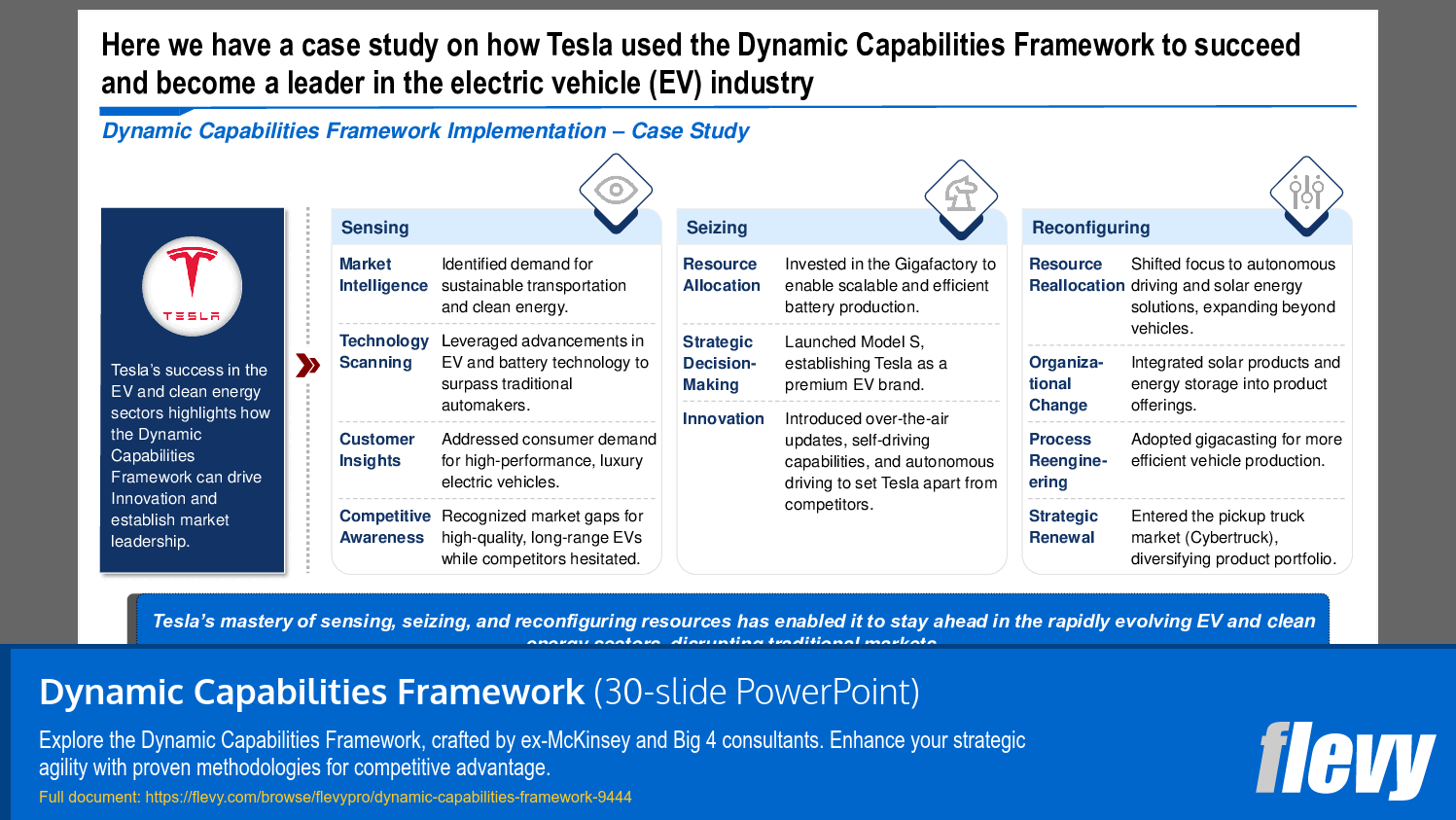
Tesla's Dynamic Capabilities: A Case Study in EV Leadership

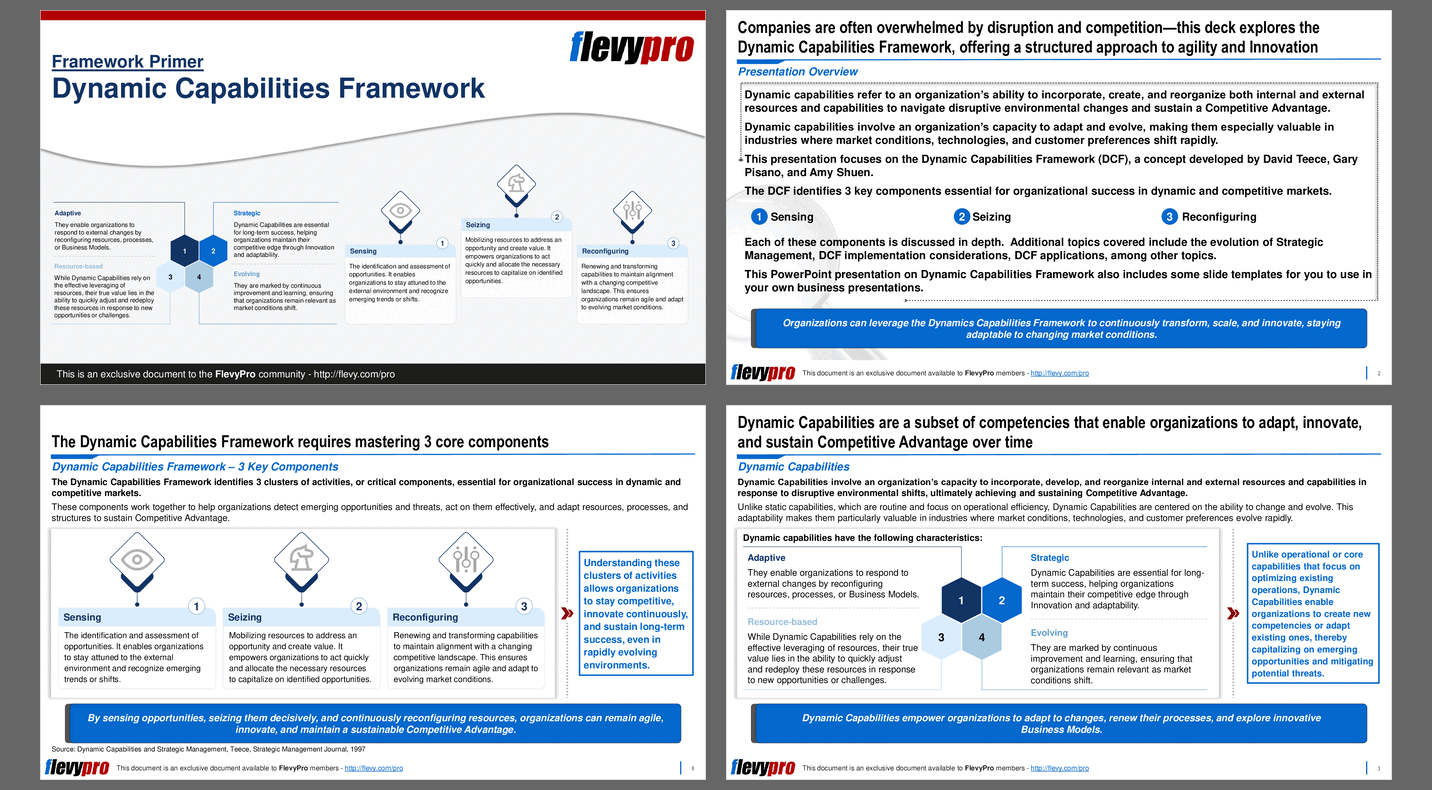
Characteristics and Importance of Dynamic Capabilities

Mastering the Dynamic Capabilities Framework Components

Source: Best Practices in Competitive Advantage, Capability Analysis, Resource Management PowerPoint Slides: Dynamic Capabilities Framework PowerPoint (PPTX) Presentation Slide Deck, LearnPPT Consulting


$29.00
FlevyPro price: FREE (included in subscription)
This framework is developed by a team of former McKinsey and Big 4 consultants. The presentation follows the headline-body-bumper slide format used by global consulting firms.
Add to Cart
  

Did you need more documents?

Consider a FlevyPro subscription from $39/month. View plans here.

For $10.00 more, you can download this document plus 2 more FlevyPro documents. That's just $13 each.

ABOUT FLEVYPRO

This document is part of the FlevyPro Library, a curated knowledge base of documents for our FlevyPro subscribers.

FlevyPro is a subscription service for on-demand business frameworks and analysis tools. FlevyPro subscribers receive access to an exclusive library of curated business documents—business framework primers, presentation templates, Lean Six Sigma tools, and more—among other exclusive benefits.

Click here to learn more about FlevyPro and its benefits.

Did you know?
The average daily rate of a McKinsey consultant is $6,625 (not including expenses). The average price of a Flevy document is $65.


Trusted by over 10,000+ Client Organizations
Since 2012, we have provided business templates to over 10,000 businesses and organizations of all sizes, from startups and small businesses to the Fortune 100, in over 130 countries.
AT&T GE Cisco Intel IBM Coke Dell Toyota HP Nike Samsung Microsoft Astrazeneca JP Morgan KPMG Walgreens Walmart 3M Kaiser Oracle SAP Google E&Y Volvo Bosch Merck Fedex Shell Amgen Eli Lilly Roche AIG Abbott Amazon PwC T-Mobile Broadcom Bayer Pearson Titleist ConEd Pfizer NTT Data Schwab


Read Customer Testimonials

 
"I have used FlevyPro for several business applications. It is a great complement to working with expensive consultants. The quality and effectiveness of the tools are of the highest standards."

– Moritz Bernhoerster, Global Sourcing Director at Fortune 500
 
"I am extremely grateful for the proactiveness and eagerness to help and I would gladly recommend the Flevy team if you are looking for data and toolkits to help you work through business solutions."

– Trevor Booth, Partner, Fast Forward Consulting
 
"Flevy.com has proven to be an invaluable resource library to our Independent Management Consultancy, supporting and enabling us to better serve our enterprise clients.

The value derived from our [FlevyPro] subscription in terms of the business it has helped to gain far exceeds the investment made, making a subscription a no-brainer for any growing consultancy – or in-house strategy team."

– Dean Carlton, Chief Transformation Officer, Global Village Transformations Pty Ltd.
 
"As a young consulting firm, requests for input from clients vary and it's sometimes impossible to provide expert solutions across a broad spectrum of requirements. That was before I discovered Flevy.com.

Through subscription to this invaluable site of a plethora of topics that are key and crucial to consulting, I "

– Nishi Singh, Strategist and MD at NSP Consultants
 
"As a consultant requiring up to date and professional material that will be of value and use to my clients, I find Flevy a very reliable resource.

The variety and quality of material available through Flevy offers a very useful and commanding source for information. Using Flevy saves me time, enhances my expertise and ends up being a good decision."

– Dennis Gershowitz, Principal at DG Associates
 
"I have used Flevy services for a number of years and have never, ever been disappointed. As a matter of fact, David and his team continue, time after time, to impress me with their willingness to assist and in the real sense of the word. I have concluded in fact "

– Roberto Pelliccia, Senior Executive in International Hospitality
 
"As a small business owner, the resource material available from FlevyPro has proven to be invaluable. The ability to search for material on demand based our project events and client requirements was great for me and proved very beneficial to my clients. Importantly, being able to easily edit and tailor "

– Michael Duff, Managing Director at Change Strategy (UK)
 
"If you are looking for great resources to save time with your business presentations, Flevy is truly a value-added resource. Flevy has done all the work for you and we will continue to utilize Flevy as a source to extract up-to-date information and data for our virtual and onsite presentations!"

– Debbi Saffo, President at The NiKhar Group


Customers Also Bought These Documents


Customers Also Like These Documents

Explore Templates on Related Management Topics


Your Recently Viewed Documents
Download our FREE Strategy & Transformation Framework Templates

Download our free compilation of 50+ Strategy & Transformation slides and templates. Frameworks include McKinsey 7-S, Balanced Scorecard, Disruptive Innovation, BCG Curve, and many more.