
This framework is developed by a team of former McKinsey and Big 4 consultants. The presentation follows the headline-body-bumper slide format used by global consulting firms.
Digital Twin PPT: Learn core concepts, applications, and industry use cases in healthcare, construction, and manufacturing. Download the Digital Twin Technology Primer now. Digital Twin Technology Primer is a 34-slide PPT PowerPoint presentation template (PPTX) available for immediate download upon purchase.
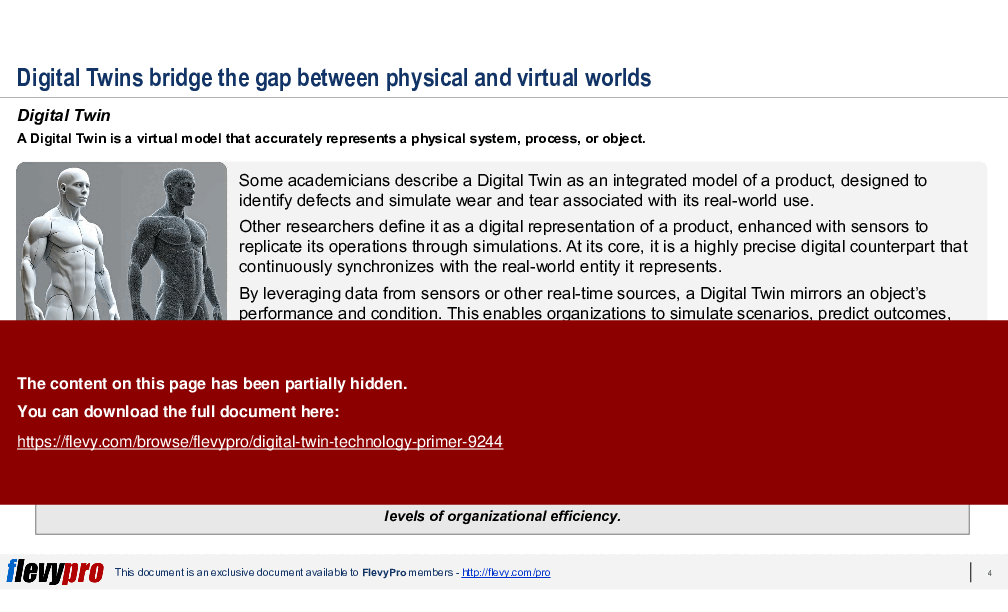
A Digital Twin is a virtual model that accurately mirrors a physical system, process, or product. Some experts describe it as an integrated model of a developed product, designed to identify defects and simulate wear and tear during use.
Others define it as a digital representation of a product equipped with inbuilt sensors to replicate its real-world functioning through simulations. Fundamentally, it serves as a highly precise digital counterpart, continuously synchronized with the physical entity it represents.
Digital Twins seamlessly connect the digital and physical worlds, transforming data into actionable insights that drive smarter decisions and optimized outcomes.
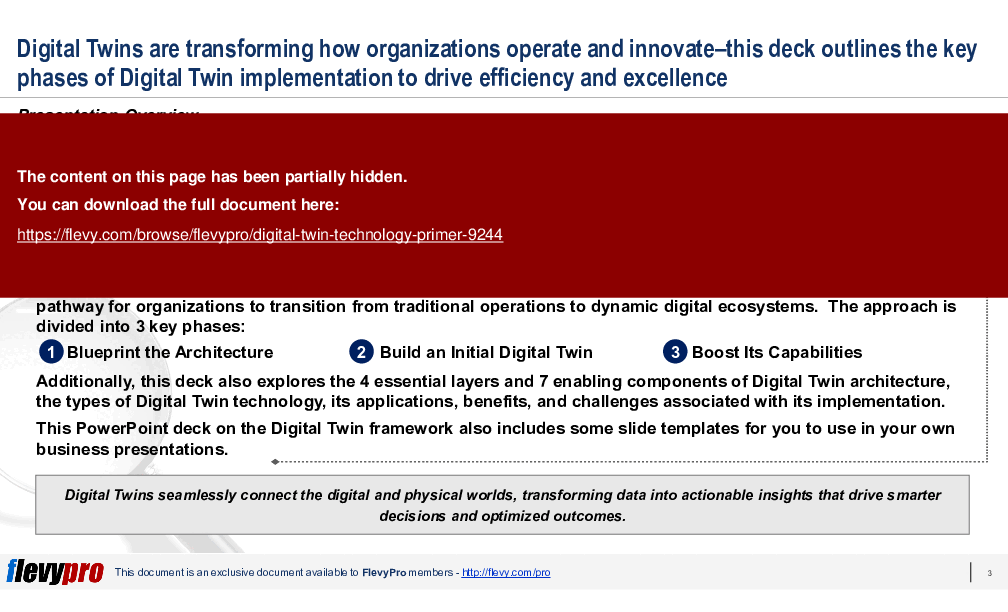
This PowerPoint presentation introduces a methodical approach to developing a Digital Twin architecture, offering a structured pathway for organizations to transition from traditional operations to dynamic digital ecosystems. The approach is divided into 3 key phases:
1. Blueprint the Architecture – The initial phase focuses on defining the objectives of Digital Twin implementation, selecting appropriate technologies, and ensuring alignment with organizational goals.
2. Build an Initial Digital Twin – In this phase, a basic yet functional version of the Digital Twin is created to simulate and monitor specific aspects of the system. This prototype serves as a proof of concept, validating the architecture and paving the way for future refinements.
3. Boost Its Capabilities – With the foundational Digital Twin operational, this phase focuses on expanding its scope and functionality. By integrating advanced analytics, AI, and automation, the Digital Twin becomes a powerful tool for optimization and strategic decision making.
Each of these phases is discussed in depth. Additionally, this deck also explores the 4 essential layers and 7 enabling components of Digital Twin architecture, the types of Digital Twin technology, its applications, benefits, and challenges associated with its implementation.
This PPT deck on the Digital Twin framework also includes some slide templates for you to use in your own business presentations.
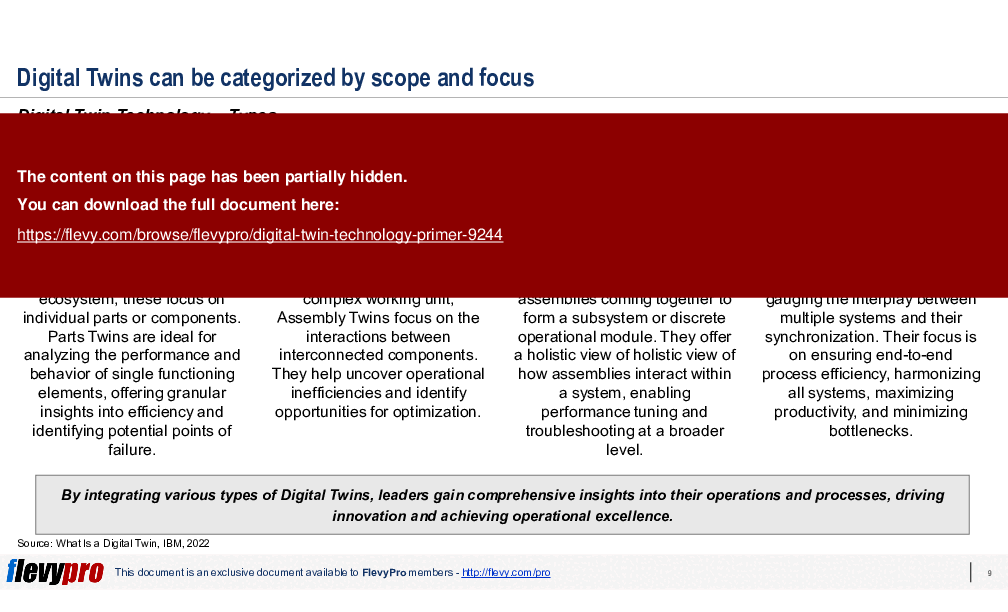
Digital Twin technology is categorized into 4 types: Parts Twins, Assembly Twins, Module Twins, and Workflow Twins, each enhancing operational efficiency within a digital ecosystem.
Parts Twins focus on individual components, enabling performance analysis to identify inefficiencies and potential failure points. Assembly Twins analyze interactions among interconnected components, uncovering operational inefficiencies for optimization. Module Twins provide a holistic view of multiple assemblies, facilitating performance tuning and troubleshooting at a subsystem level. Workflow Twins encompass entire processes, ensuring end-to-end efficiency and minimizing bottlenecks.
Leveraging these Digital Twin categories drives innovation and operational excellence.
This PPT slide template outlines a structured approach to implementing a Digital Twin through a three-phase methodology. The first phase, "Blueprint the Architecture," establishes a solid framework that serves as the foundation for the Digital Twin initiative, ensuring alignment with strategic goals. The second phase, "Build an Initial Digital Twin," focuses on creating a practical prototype that allows organizations to test and refine their concepts in a controlled environment. The final phase, "Boost Its Capabilities," emphasizes continuous enhancement to adapt to evolving business needs and maximize return on investment. This methodical implementation aligns the Digital Twin with business objectives, unlocking opportunities for innovation and operational excellence in a data-driven landscape.
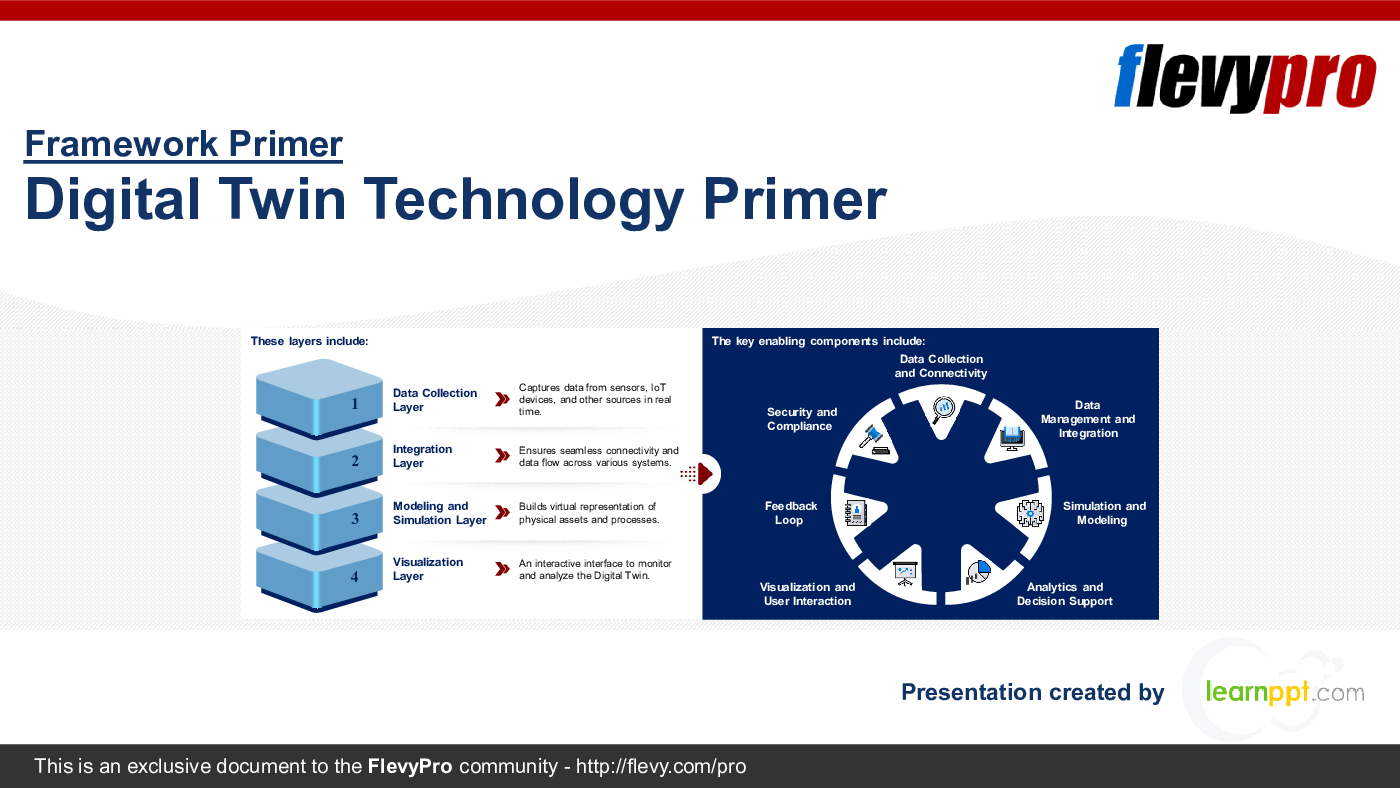
This PPT slide template outlines Digital Twin Architecture, highlighting its 4 essential layers:
1. Data Collection Layer: Captures real-time data from sensors and IoT devices, ensuring accurate information for subsequent processes.
2. Integration Layer: Facilitates seamless connectivity among systems, maintaining data integrity and reliability.
3. Modeling and Simulation Layer: Creates virtual representations of physical assets, enabling scenario testing and insights for improved operational efficiencies.
4. Visualization Layer: Provides an interactive interface for monitoring and analyzing the Digital Twin, essential for effective decision-making.
Enabling components include security measures, feedback loops, and analytical tools, enhancing the Digital Twin's functionality and providing actionable insights. This cohesive framework is vital for leveraging digital twins in manufacturing, improving operational performance and decision-making capabilities.
The second phase of implementing a Digital Twin focuses on constructing an initial prototype, which serves as a proof of concept to validate the architecture. Key steps include developing a simplified prototype targeting a single component to ensure robust architecture and correct data flow. Integrating real-time data from sensors and IoT devices is essential for effective functionality. Running simulations with AI-driven models tests various scenarios to identify performance issues and areas for improvement. Validation compares Digital Twin outputs with real-world data to ensure accuracy. Establishing visualization tools, including dashboards and AR/VR interfaces, enhances real-time monitoring and stakeholder engagement with generated insights.
This PPT slide template outlines essential considerations for developing Digital Twin technology, focusing on alignment with organizational goals and stakeholder needs.
The "Purpose and Objectives" section emphasizes defining specific problems, measurable outcomes, and Key Performance Indicators (KPIs) for success.
The "Scope and Application" segment addresses which assets or processes the Digital Twin will replicate, including the level of detail and focus on real-time monitoring, predictive analytics, or process optimization.
The "Data Requirements" section identifies necessary data types, such as real-time or historical data, and stresses data reliability and secure collection methods.
"Integration and Compatibility" discusses how the Digital Twin will interface with existing systems, including concerns about legacy systems and interoperability standards.
Finally, the "Technology and Infrastructure" category examines the required technology stack, including cloud computing and edge computing, while highlighting scalability to manage data complexity as the Digital Twin evolves.
Source: Best Practices in Digital Transformation, Manufacturing, Digital Twin PowerPoint Slides: Digital Twin Technology Primer PowerPoint (PPTX) Presentation Slide Deck, LearnPPT Consulting
This framework is developed by a team of former McKinsey and Big 4 consultants. The presentation follows the headline-body-bumper slide format used by global consulting firms.
For $10.00 more, you can download this document plus 2 more FlevyPro documents. That's just $13 each.
ABOUT FLEVYPRO
This document is part of the FlevyPro Library, a curated knowledge base of documents for our FlevyPro subscribers.
FlevyPro is a subscription service for on-demand business frameworks and analysis tools. FlevyPro subscribers receive access to an exclusive library of curated business documents—business framework primers, presentation templates, Lean Six Sigma tools, and more—among other exclusive benefits.
The average daily rate of a McKinsey consultant is $6,625 (not including expenses). The average price of a Flevy document is $65.
Trusted by over 10,000+ Client Organizations
Since 2012, we have provided business templates to over 10,000 businesses and organizations of all sizes, from startups and small businesses to the Fortune 100, in over 130 countries.
"As an Independent Management Consultant, I find Flevy to add great value as a source of best practices, templates and information on new trends. Flevy has matured and the quality and quantity of the library is excellent. Lastly the price charged is reasonable, creating a win-win value for
the customer, Flevy and the various authors. This is truly a service that benefits the consulting industry and associated clients. Thanks for providing this service.
"
– Jim Schoen, Principal at FRC Group
"Flevy.com has proven to be an invaluable resource library to our Independent Management Consultancy, supporting and enabling us to better serve our enterprise clients.
The value derived from our [FlevyPro] subscription in terms of the business it has helped to gain far exceeds the investment made, making a subscription a no-brainer for any growing consultancy – or in-house strategy team."
– Dean Carlton, Chief Transformation Officer, Global Village Transformations Pty Ltd.
"FlevyPro provides business frameworks from many of the global giants in management consulting that allow you to provide best in class solutions for your clients."
– David Harris, Managing Director at Futures Strategy
"As a consulting firm, we had been creating subject matter training materials for our people and found the excellent materials on Flevy, which saved us 100's of hours of re-creating what already exists on the Flevy materials we purchased."
– Michael Evans, Managing Director at Newport LLC
"Flevy is now a part of my business routine. I visit Flevy at least 3 times each month.
Flevy has become my preferred learning source, because what it provides is practical, current, and useful in this era where the business world is being rewritten.

many challenges and there is the need to make the right decisions in a short time, with so much scattered information, we are fortunate to have Flevy. Flevy investigates, selects, and puts at our disposal the best of the best to help us be successful in our work.
"
– Omar Hernán Montes Parra, CEO at Quantum SFE
"As a niche strategic consulting firm, Flevy and FlevyPro frameworks and documents are an on-going reference to help us structure our findings and recommendations to our clients as well as improve their clarity, strength, and visual power. For us, it is an invaluable resource to increase our impact and value."
– David Coloma, Consulting Area Manager at Cynertia Consulting
"As a young consulting firm, requests for input from clients vary and it's sometimes impossible to provide expert solutions across a broad spectrum of requirements. That was before I discovered Flevy.com.
Through subscription to this invaluable site of a plethora of topics that are key and crucial to consulting, I
have been able to exceed expectations and deliver quality advice and solutions to my clients. The quality and expertise of the authors are exemplary and gives me great confidence to use as part of my service offerings.
I highly recommend this company for any consultant wanting to apply international best practice standards in their service offerings.
"
– Nishi Singh, Strategist and MD at NSP Consultants
"As a small business owner, the resource material available from FlevyPro has proven to be invaluable. The ability to search for material on demand based our project events and client requirements was great for me and proved very beneficial to my clients. Importantly, being able to easily edit and tailor
the material for specific purposes helped us to make presentations, knowledge sharing, and toolkit development, which formed part of the overall program collateral. While FlevyPro contains resource material that any consultancy, project or delivery firm must have, it is an essential part of a small firm or independent consultant's toolbox.
"
– Michael Duff, Managing Director at Change Strategy (UK)
Download our FREE Digital Transformation Templates
Download our free compilation of 50+ Digital Transformation slides and templates. DX concepts covered include Digital Leadership, Digital Maturity, Digital Value Chain, Customer Experience, Customer Journey, RPA, etc.