
Corporate Corruption and Fraud   24-slide PPT PowerPoint presentation template (PPT)
$29.00

Corporate Corruption and Fraud (24-slide PPT PowerPoint presentation slide deck (PPT)) Preview Image
Log in to unlock full preview.
Corporate Corruption and Fraud (24-slide PPT PowerPoint presentation slide deck (PPT)) Preview Image
Arrow   Click main image to view in full screen.

Corporate Corruption and Fraud – PowerPoint PPT Template

PowerPoint (PPT) 24 Slides FlevyPro Document

#2 in Fraud $29.00
FlevyPro price: FREE (included in subscription)
This framework is developed by a team of former McKinsey and Big 4 consultants. The presentation follows the headline-body-bumper slide format used by global consulting firms.
Add to Cart


Immediate download
Free lifetime updates

BUSINESS ETHICS PPT TEMPLATE DESCRIPTION

Editor Summary The Corporate Corruption and Fraud deck is a 24-slide PowerPoint by LearnPPT Consulting that outlines the 4 primary forms of corporate corruption—bribery, grease payments, extortion, and employee fraud—and presents 4 countermeasures: basic controls, investing in core functions, strong local leadership, and “tough it out.” Includes deliverables and templates such as a corruption risk assessment, compliance training materials, ethical governance framework, incident reporting procedures, and leadership guidelines. Read more

Markets today offer rewarding opportunities for organizations in new territories. But these opportunities are not devoid of the perils of encountering new risks concerning corporate corruption and fraud.

To contest the danger of denting their reputation and results, senior leaders must strive to make coping with corruption a fundamental organizational capability. This demands an uncompromising attention to compliance, a solid leadership commitment to ethical behavior, and a strong will to bear the consequences and costs of uploading these ethical practices. It requires policies, controls, commitment, and culture to endure the pressure of corrupt and fraudulent entities.

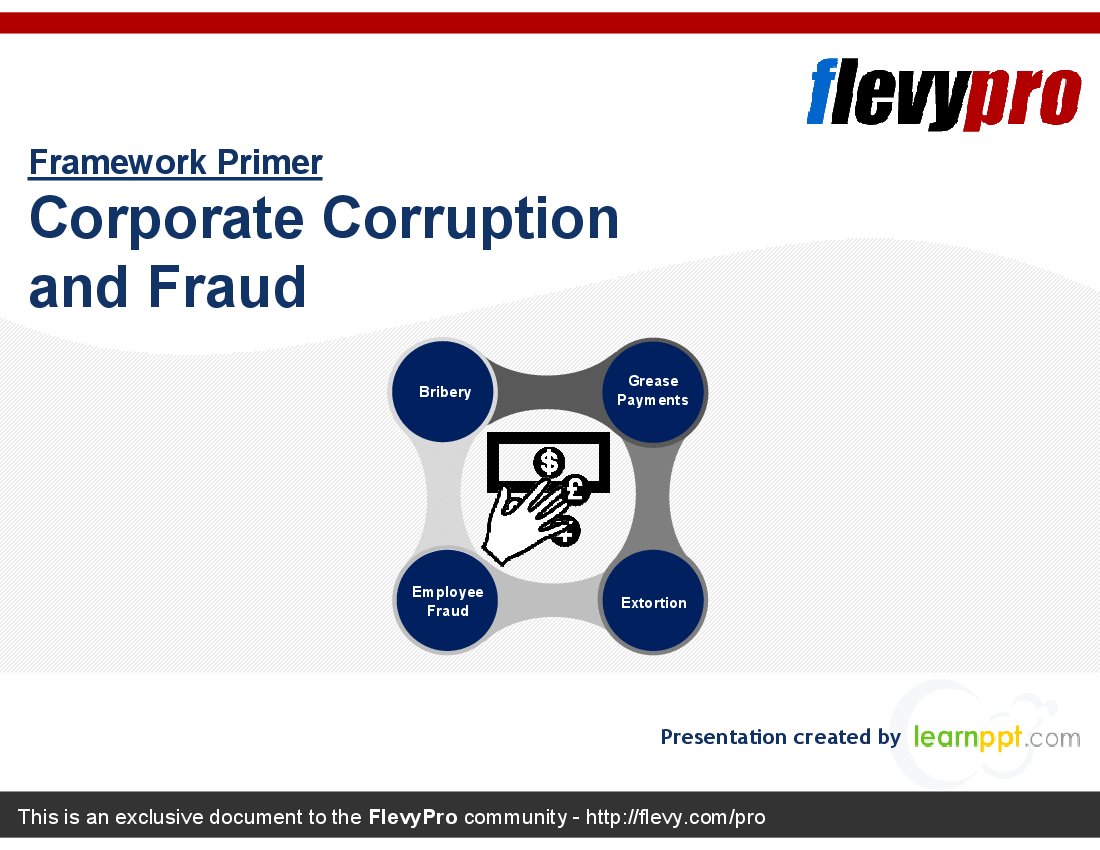
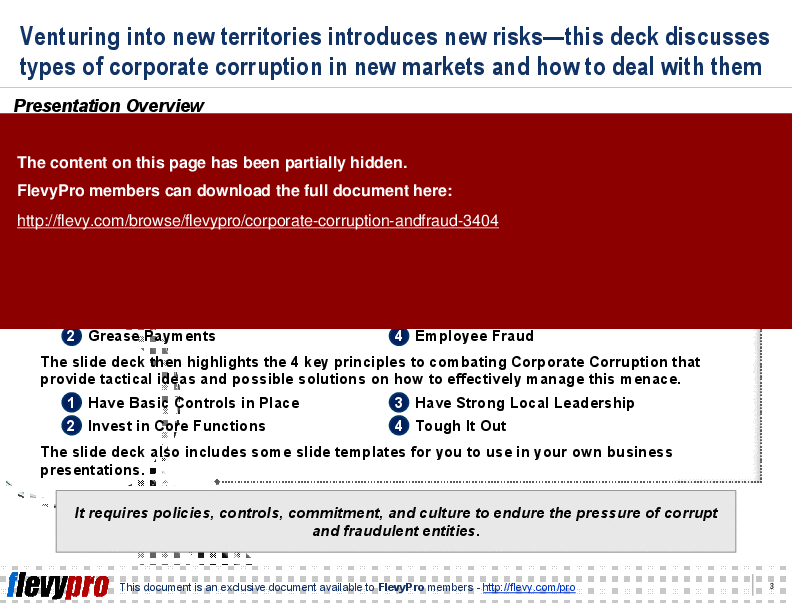
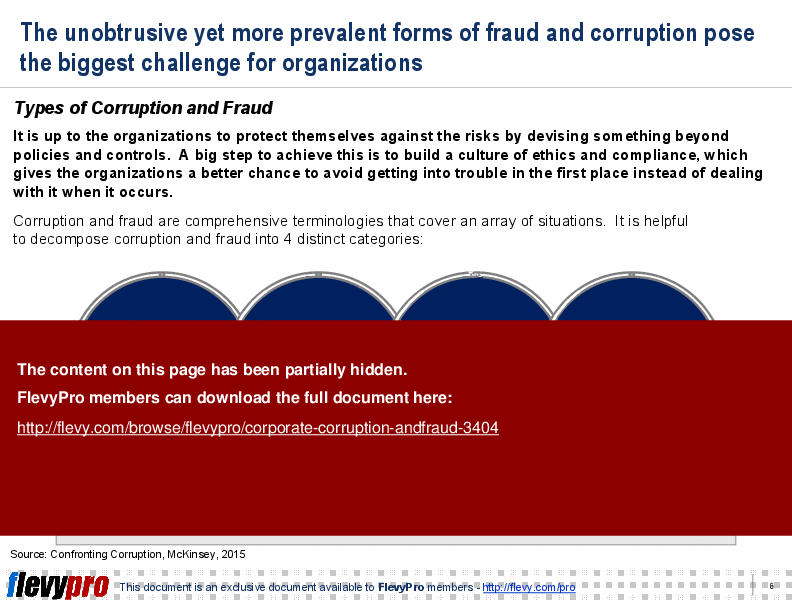
This presentation describes the 4 broad categories of corruption and fraud that executives are likely to come across in various geographies globally:

1. Bribery
2. Grease Payments
3. Extortion
4. Employee Fraud

The slide deck then highlights the 4 key principles to combating Corporate Corruption that provide tactical ideas and possible solutions on how to effectively manage this menace.

1. Have Basic Controls in Place
2. Invest in Core Functions
3. Have Strong Local Leadership
4. Tough It Out

The slide deck also includes some slide templates for you to use in your own business presentations.

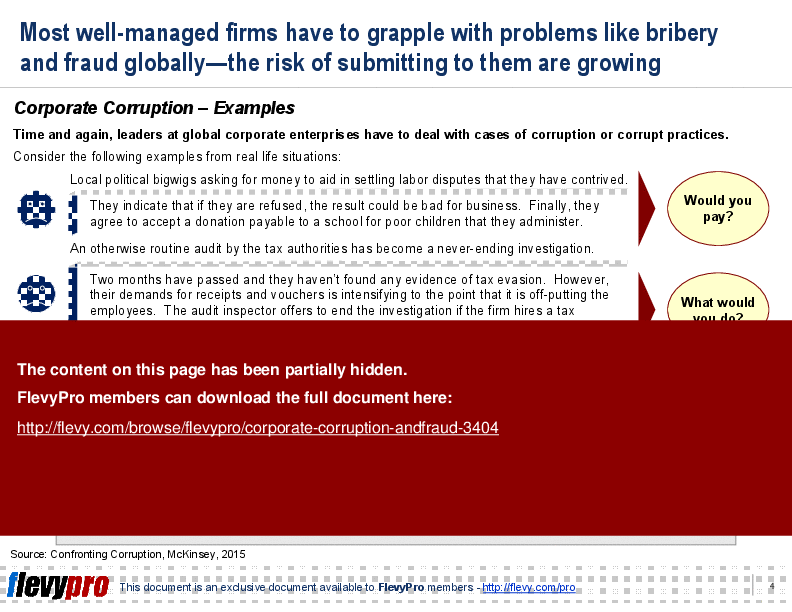
This slide deck offers real-life examples of corporate corruption, providing practical scenarios to help executives understand the nuances of dealing with bribery, extortion, and other fraudulent activities. The examples illustrate the complexities and pressures faced by organizations, making it clear that a proactive approach is essential for maintaining ethical standards and protecting the company's reputation.

The PPT also emphasizes the importance of investing in core functions such as legal, finance, and internal audit to build a robust defense against corruption. By highlighting the need for strong local leadership and a commitment to ethical practices, this presentation equips senior leaders with the knowledge and tools to navigate and mitigate the risks associated with corporate corruption and fraud.

Got a question about this document? Email us at flevypro@flevy.com.

MARCUS OVERVIEW

This synopsis was written by Marcus [?] based on the analysis of the full 24-slide presentation.


Executive Summary
The Corporate Corruption and Fraud presentation provides a comprehensive overview of the various forms of corruption and fraud that organizations may encounter, especially when venturing into new markets. It emphasizes the importance of establishing a robust ethical framework and compliance culture to combat these challenges. The presentation outlines 4 primary types of corruption: bribery, grease payments, extortion, and employee fraud. It also details 4 key principles for combating corruption, offering practical solutions for executives to implement in their organizations. This resource serves as an essential guide for corporate leaders aiming to enhance their ethical practices and safeguard their organizations against corrupt practices.

Who This Is For and When to Use
•  Corporate executives responsible for compliance and ethical governance
•  Risk management teams assessing vulnerabilities in new markets
•  Compliance officers developing anti-corruption training programs
•  Internal audit teams evaluating fraud detection and prevention strategies

Best-fit moments to use this deck:
•  During strategic planning sessions for entering new markets
•  In compliance training workshops for employees
•  When conducting risk assessments related to corruption and fraud
•  For executive briefings on ethical governance and compliance strategies

Learning Objectives
•  Define the 4 types of corporate corruption and fraud.
•  Identify the risks associated with bribery, grease payments, extortion, and employee fraud.
•  Establish basic controls to mitigate corruption risks.
•  Develop a culture of ethics and compliance within the organization.
•  Implement strategies for effective leadership in combating corruption.
•  Create actionable plans for addressing corruption in new markets.

Table of Contents
•  Overview (page 3)
•  Types of Corruption and Fraud (page 6)
•  Approach to Combating Corruption (page 12)
•  Templates (page 18)

Primary Topics Covered
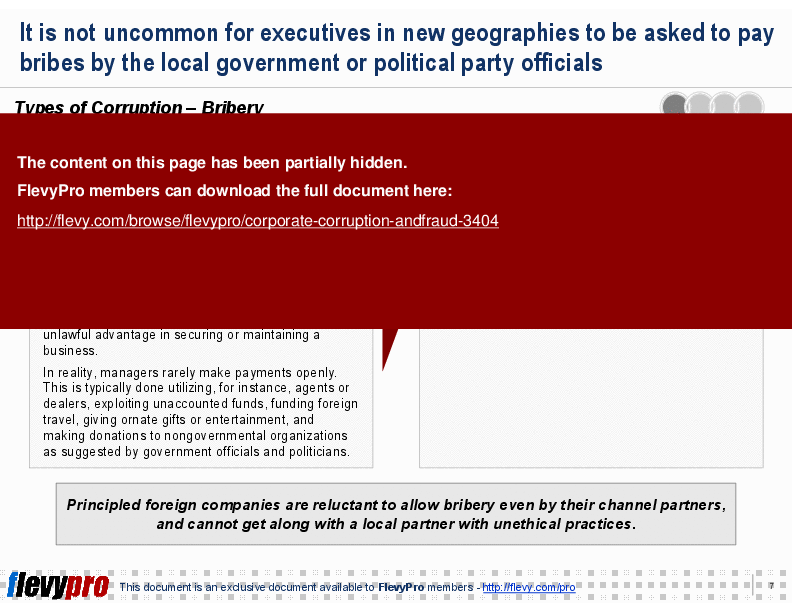
•  Bribery - A prevalent form of corruption where payments are made to secure business advantages, often in violation of local and international laws.
•  Grease Payments - Payments made to expedite routine processes, which can blur the lines between legal and illegal practices.
•  Extortion - The practice of obtaining money through coercion or threats, often by corrupt officials.
•  Employee Fraud - Internal corruption involving employees, such as kickbacks and falsified transactions, driven by greed and pressure for performance.
•  Basic Controls - Essential policies and procedures organizations should implement to prevent corruption.
•  Investing in Core Functions - The need for adequate staffing and resources in compliance and legal departments to counter corruption effectively.
•  Strong Local Leadership - The importance of having knowledgeable leaders in local markets to navigate compliance challenges.
•  Tough It Out - The necessity for leaders to uphold ethical standards even in the face of immediate business pressures.

Deliverables, Templates, and Tools
•  Corruption risk assessment template for evaluating potential vulnerabilities in new markets.
•  Compliance training materials focused on the 4 types of corruption.
•  Ethical governance framework for establishing company-wide standards.
•  Incident reporting procedures for employees to report corruption or fraud.
•  Leadership guidelines for promoting ethical behavior within teams.
•  Communication strategies for reinforcing anti-corruption policies to stakeholders.

Slide Highlights
•  Overview of the 4 types of corporate corruption, with real-world examples illustrating their impact.
•  Visual representation of the principles for combating corruption, emphasizing the need for a strong ethical culture.
•  Case studies demonstrating the consequences of failing to address corruption effectively.
•  Practical solutions for mitigating risks associated with each type of corruption.

Potential Workshop Agenda
Understanding Corporate Corruption (60 minutes)
•  Overview of corruption types and their implications for business.
•  Discussion on real-life examples and case studies.

Developing an Anti-Corruption Strategy (90 minutes)
•  Breakout sessions to identify risks specific to participants' organizations.
•  Collaborative development of action plans to address identified risks.

Implementing Ethical Practices (60 minutes)
•  Strategies for fostering a culture of compliance and ethics.
•  Role-playing scenarios to practice responding to corruption-related challenges.

Customization Guidance
•  Tailor the presentation to reflect specific industry challenges and regional corruption risks.
•  Update case studies with recent examples relevant to the audience's market.
•  Modify templates to align with the organization's existing compliance frameworks and policies.

Secondary Topics Covered
•  The role of technology in detecting and preventing fraud.
•  Best practices for conducting internal audits focused on corruption.
•  Legal implications of corruption and the importance of compliance with international laws.
•  Strategies for engaging stakeholders in anti-corruption initiatives.

Topic FAQ

What are the common forms of corporate corruption and how do they differ?

Corporate corruption typically appears as bribery (payments to influence decisions), grease payments (to expedite routine actions), extortion (coercion for money or favors), and employee fraud (internal kickbacks or falsified transactions). Each involves different actors, legal implications, and control requirements, summarized as 4 distinct categories: bribery, grease payments, extortion, and employee fraud.

How can an organization implement basic controls to reduce corruption risk?

Basic controls include clear policies and procedures, segregation of duties, approval thresholds, transaction monitoring, and protected incident reporting channels. Organizations should also ensure adequate staffing in legal, finance, and internal audit to enforce controls. The deck’s materials outline basic controls and incident reporting procedures as practical starting points for implementation.

When should a company perform a corruption risk assessment?

Companies should perform corruption risk assessments regularly and especially before entering new markets, during mergers/acquisitions, or when business models change. The assessment identifies exposure to bribery, grease payments, extortion, and employee fraud and informs mitigation plans; the presentation includes a corruption risk assessment template to support this activity.

What topics should compliance training cover to help employees detect and report fraud?

Compliance training should cover recognition of bribery, grease payments, extortion, and employee fraud; company policies and legal obligations; how to use incident reporting procedures; and whistleblower protections. The deck provides compliance training materials that map training modules to these 4 corruption types.

What should buyers look for in an anti-corruption slide deck or toolkit?

Look for clear definitions of corruption types, practical control recommendations, leadership guidance, incident reporting processes, case studies, and editable templates that can be customized to industry/regional risk. Also consider author credibility and slide length; this product is a 24-slide PowerPoint by LearnPPT Consulting that includes templates.

How can small compliance teams with limited resources make use of anti-corruption resources effectively?

Small teams can prioritize risk areas identified in a corruption risk assessment, adopt ready-made templates to save design time, focus investment on core functions (legal, finance, audit), and use the deck’s communication strategies to cascade policies. The presentation includes a corruption risk assessment template to streamline this work.

I need to brief executives before entering a high-risk market—what should be included?

A market-entry briefing should explain the 4 corruption types and associated business risks, recommended basic controls, resourcing needs for compliance functions, local leadership considerations, incident reporting mechanisms, and proposed next steps. Including leadership guidelines and a corruption risk assessment template helps make the briefing actionable.

What role does technology play in detecting and preventing fraud, and is it covered in anti-corruption resources?

Technology supports fraud detection through transaction monitoring, anomaly detection, and case management for incident reports. The slide deck lists the role of technology among secondary topics and discusses technology’s contribution to detecting and preventing fraud as part of broader controls and internal audit practices.

Document FAQ
These are questions addressed within this presentation.

What are the main types of corporate corruption?
The main types include bribery, grease payments, extortion, and employee fraud. Each presents unique challenges and risks to organizations.

How can organizations combat corruption effectively?
By establishing basic controls, investing in core functions, promoting strong local leadership, and maintaining ethical standards, organizations can effectively combat corruption.

What role does leadership play in preventing corruption?
Leadership sets the tone for ethical behavior within the organization. Strong leaders model integrity and create a culture that discourages corrupt practices.

Are grease payments legal?
Grease payments are illegal in many countries, though some jurisdictions may allow them under specific circumstances. Organizations should seek legal counsel before engaging in such practices.

How can employees report suspected corruption?
Organizations should establish clear incident reporting procedures that protect whistleblowers and encourage employees to report unethical behavior without fear of retaliation.

What are the consequences of failing to address corruption?
Failure to address corruption can lead to legal penalties, reputational damage, and financial losses, as well as a toxic workplace culture.

How often should organizations conduct corruption risk assessments?
Regular assessments should be conducted, particularly when entering new markets or undergoing significant changes in operations.

What training should employees receive regarding corruption?
Employees should receive training on recognizing corruption, understanding company policies, and knowing how to report suspicious activities.

Glossary
•  Bribery - Offering, giving, receiving, or soliciting something of value to influence an action.
•  Grease Payments - Payments made to expedite routine governmental actions.
•  Extortion - Obtaining something through coercion or threats.
•  Employee Fraud - Deceptive practices by employees for personal gain.
•  Compliance - Adherence to laws, regulations, and company policies.
•  Ethical Culture - An organizational environment that promotes integrity and ethical behavior.
•  Risk Assessment - The process of identifying and evaluating risks.
•  Whistleblower - An individual who reports unethical or illegal activities within an organization.
•  Internal Audit - An independent evaluation of an organization's operations and controls.
•  Anti-Corruption Policy - A set of guidelines aimed at preventing corrupt practices within an organization.
•  Stakeholders - Individuals or groups with an interest in an organization's activities.
•  Due Diligence - The process of thorough investigation or audit of potential investments or acquisitions.
•  Corporate Governance - The system of rules, practices, and processes by which a company is directed and controlled.
•  Regulatory Compliance - The adherence to laws and regulations relevant to an organization’s operations.
•  Fraud Detection - The process of identifying and preventing fraudulent activities.
•  Code of Conduct - A set of guidelines for ethical behavior within an organization.
•  Transparency - Openness in communication and operations, fostering trust among stakeholders.
•  Accountability - The obligation of individuals or organizations to account for their activities and accept responsibility.
•  Corruption Risk - The potential for corrupt practices to occur within an organization or industry.
•  Ethical Leadership - Leadership that demonstrates and promotes ethical behavior and decision-making.
•  Cultural Competence - The ability to understand, communicate with, and effectively interact with people across cultures.
•  Stakeholder Engagement - The process of involving individuals or groups that have an interest in an organization's activities in decision-making.

BUSINESS ETHICS PPT TEMPLATES

Understanding Grease Payments in Business Operations

Understanding Corruption and Fraud Categories

Strengthening Compliance through Local Leadership Initiatives

Essential Controls for Combating Corporate Corruption

Source: Best Practices in Risk Management, Code of Ethics, Business Ethics, Corruption, Fraud PowerPoint Slides: Corporate Corruption and Fraud PowerPoint (PPT) Presentation Slide Deck, LearnPPT Consulting


$29.00
FlevyPro price: FREE (included in subscription)
This framework is developed by a team of former McKinsey and Big 4 consultants. The presentation follows the headline-body-bumper slide format used by global consulting firms.
Add to Cart
  

Did you need more documents?

Consider a FlevyPro subscription from $39/month. View plans here.

For $10.00 more, you can download this document plus 2 more FlevyPro documents. That's just $13 each.

ABOUT FLEVYPRO

This document is part of the FlevyPro Library, a curated knowledge base of documents for our FlevyPro subscribers.

FlevyPro is a subscription service for on-demand business frameworks and analysis tools. FlevyPro subscribers receive access to an exclusive library of curated business documents—business framework primers, presentation templates, Lean Six Sigma tools, and more—among other exclusive benefits.

Click here to learn more about FlevyPro and its benefits.

Did you know?
The average daily rate of a McKinsey consultant is $6,625 (not including expenses). The average price of a Flevy document is $65.


Trusted by over 10,000+ Client Organizations
Since 2012, we have provided business templates to over 10,000 businesses and organizations of all sizes, from startups and small businesses to the Fortune 100, in over 130 countries.
AT&T GE Cisco Intel IBM Coke Dell Toyota HP Nike Samsung Microsoft Astrazeneca JP Morgan KPMG Walgreens Walmart 3M Kaiser Oracle SAP Google E&Y Volvo Bosch Merck Fedex Shell Amgen Eli Lilly Roche AIG Abbott Amazon PwC T-Mobile Broadcom Bayer Pearson Titleist ConEd Pfizer NTT Data Schwab


Read Customer Testimonials

 
"I am extremely grateful for the proactiveness and eagerness to help and I would gladly recommend the Flevy team if you are looking for data and toolkits to help you work through business solutions."

– Trevor Booth, Partner, Fast Forward Consulting
 
"My FlevyPro subscription provides me with the most popular frameworks and decks in demand in today’s market. They not only augment my existing consulting and coaching offerings and delivery, but also keep me abreast of the latest trends, inspire new products and service offerings for my practice, and educate me "

– Bill Branson, Founder at Strategic Business Architects
 
"If you are looking for great resources to save time with your business presentations, Flevy is truly a value-added resource. Flevy has done all the work for you and we will continue to utilize Flevy as a source to extract up-to-date information and data for our virtual and onsite presentations!"

– Debbi Saffo, President at The NiKhar Group
 
"As a small business owner, the resource material available from FlevyPro has proven to be invaluable. The ability to search for material on demand based our project events and client requirements was great for me and proved very beneficial to my clients. Importantly, being able to easily edit and tailor "

– Michael Duff, Managing Director at Change Strategy (UK)
 
"I have used FlevyPro for several business applications. It is a great complement to working with expensive consultants. The quality and effectiveness of the tools are of the highest standards."

– Moritz Bernhoerster, Global Sourcing Director at Fortune 500
 
"Flevy is our 'go to' resource for management material, at an affordable cost. The Flevy library is comprehensive and the content deep, and typically provides a great foundation for us to further develop and tailor our own service offer."

– Chris McCann, Founder at Resilient.World
 
"Last Sunday morning, I was diligently working on an important presentation for a client and found myself in need of additional content and suitable templates for various types of graphics. Flevy.com proved to be a treasure trove for both content and design at a reasonable price, considering the time I "

– M. E., Chief Commercial Officer, International Logistics Service Provider
 
"FlevyPro provides business frameworks from many of the global giants in management consulting that allow you to provide best in class solutions for your clients."

– David Harris, Managing Director at Futures Strategy


Customers Also Like These Documents

Explore Templates on Related Management Topics


Your Recently Viewed Documents
Download our FREE Organization, Change, & Culture, Templates

Download our free compilation of 50+ slides and templates on Organizational Design, Change Management, and Corporate Culture. Methodologies include ADKAR, Burke-Litwin Change Model, McKinsey 7-S, Competing Values Framework, etc.