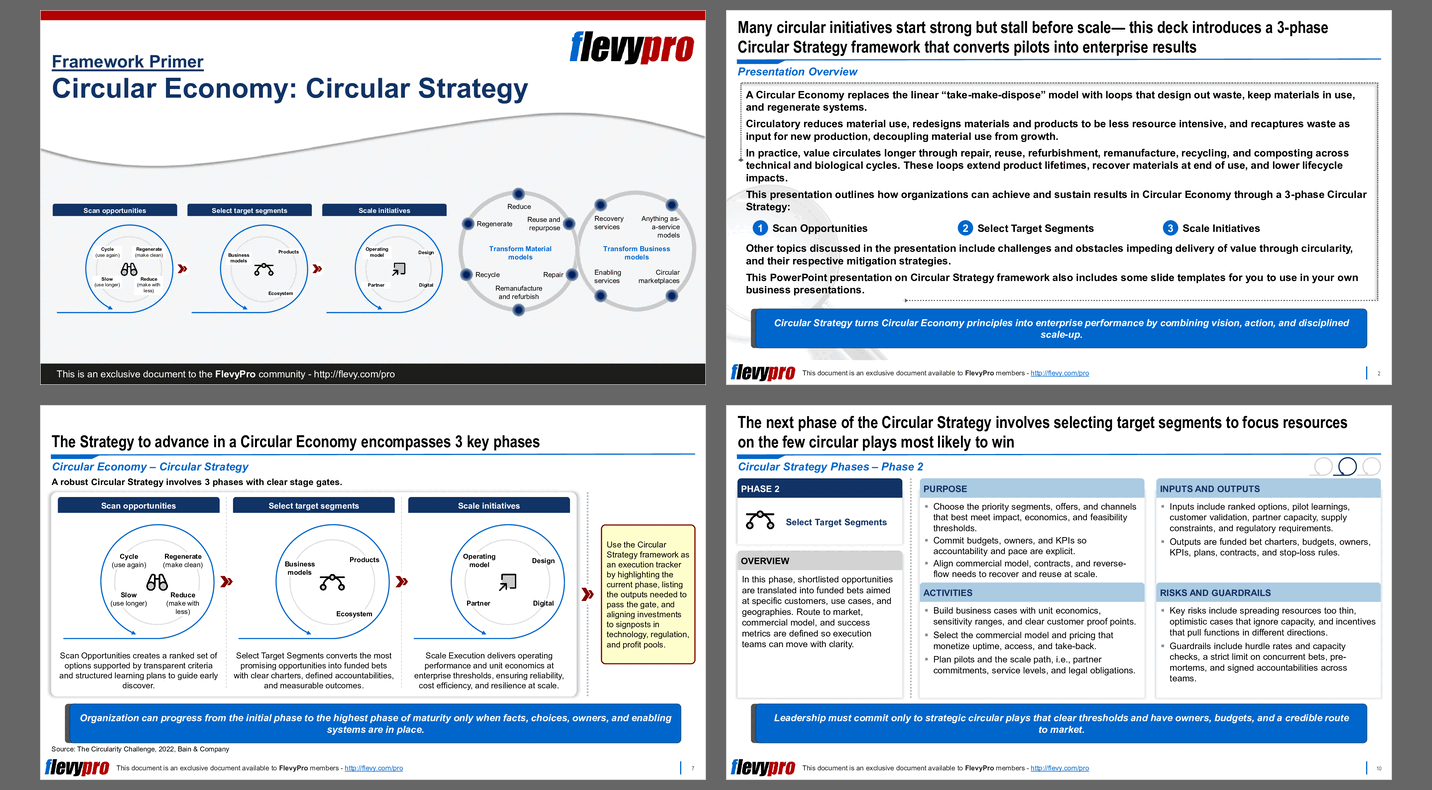

This framework is developed by a team of former McKinsey and Big 4 consultants. The presentation follows the headline-body-bumper slide format used by global consulting firms.
Explore a Circular Economy framework by ex-McKinsey & Big 4 consultants. Learn to implement a 3-phase Circular Strategy for sustainable enterprise performance. Circular Economy: Circular Strategy is a 32-slide PPT PowerPoint presentation slide deck (PPTX) available for immediate download upon purchase.
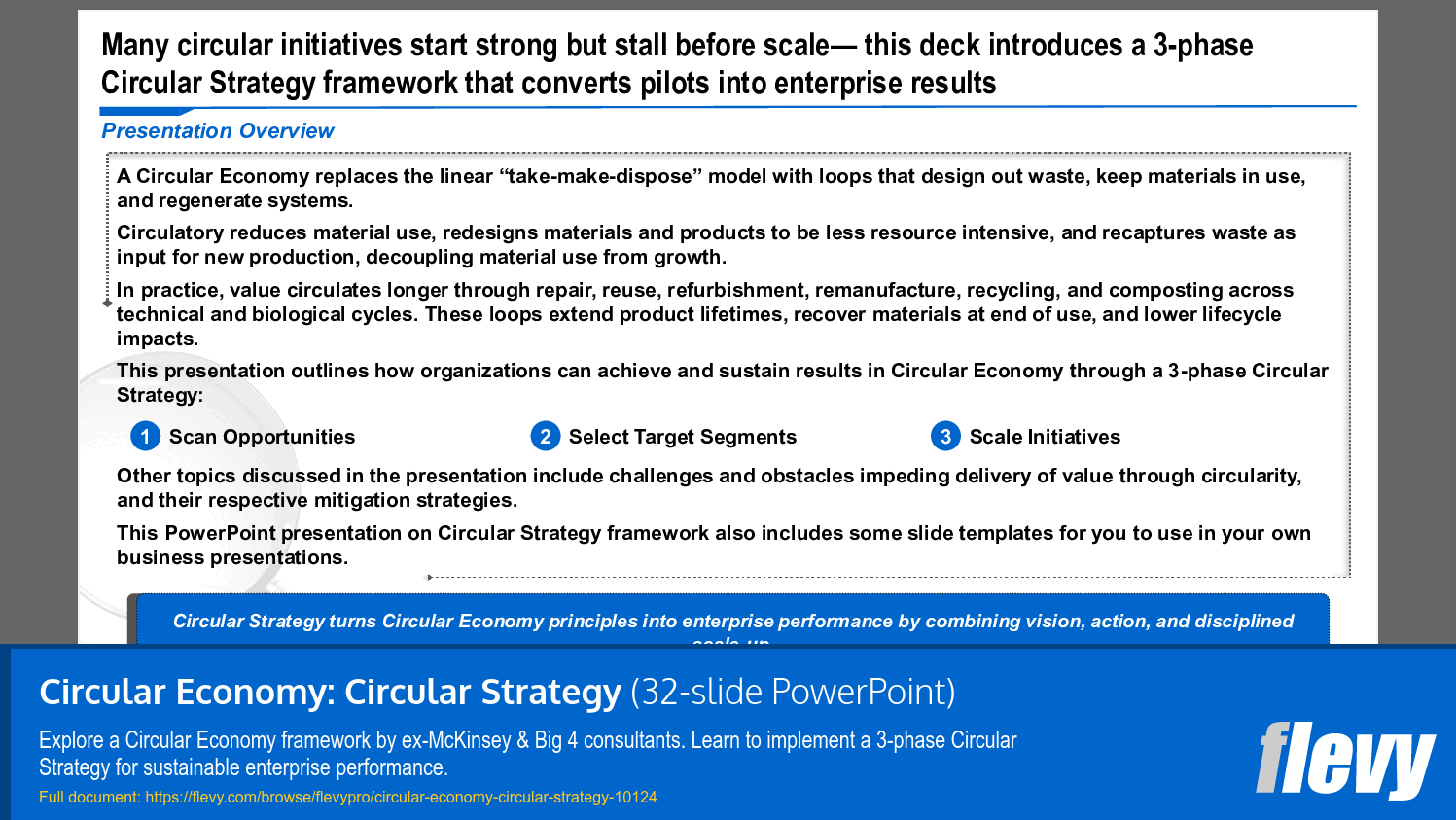
A Circular Economy replaces the linear "take-make-dispose" model with loops that design out waste, keep materials in use, and regenerate systems.
Circulatory reduces material use, redesigns materials and products to be less resource intensive, and recaptures waste as input for new production, decoupling material use from growth.
In practice, value circulates longer through repair, reuse, refurbishment, remanufacture, recycling, and composting across technical and biological cycles. These loops extend product lifetimes, recover materials at end of use, and lower lifecycle impacts.
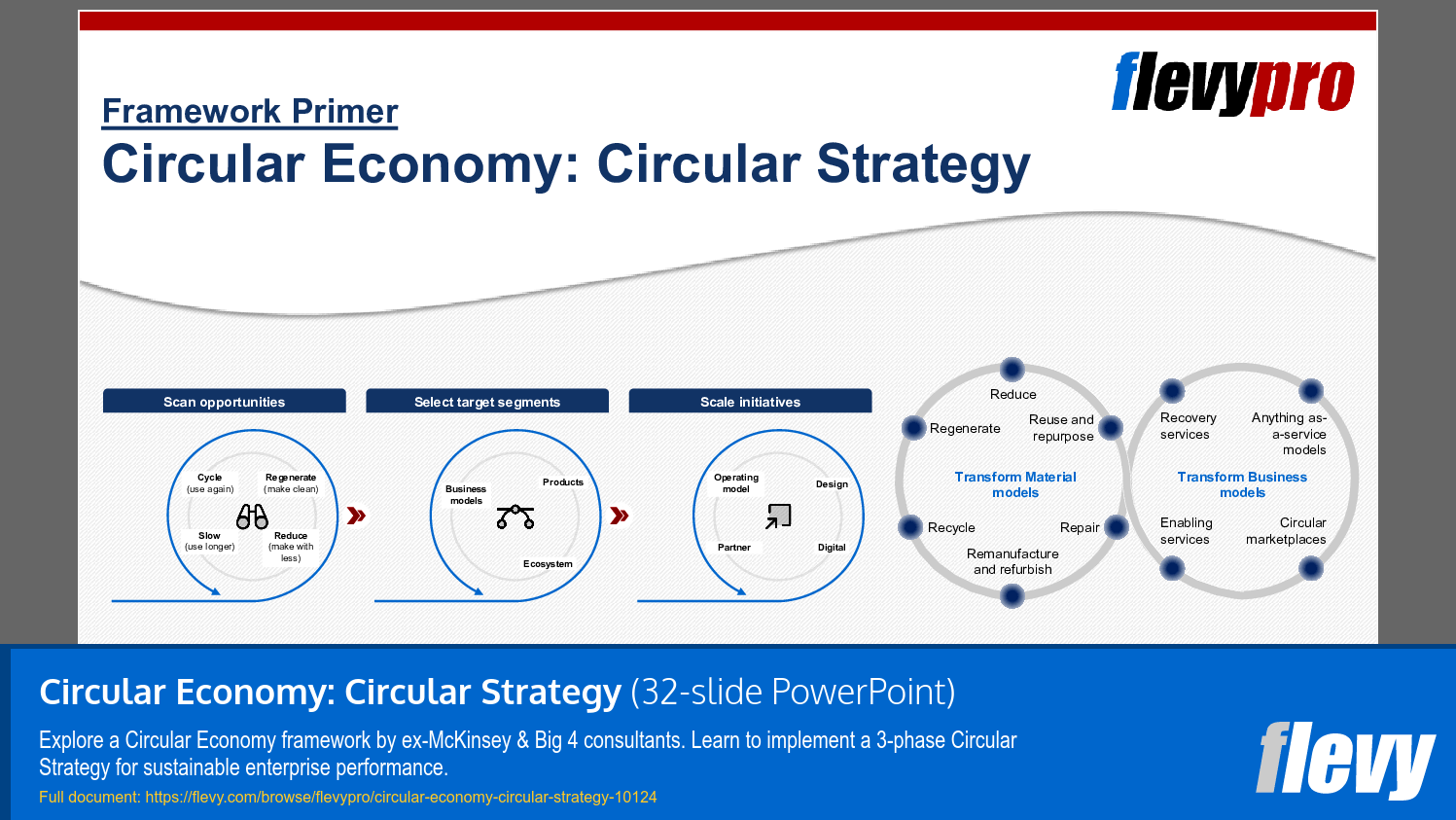
This PPT presentation outlines how organizations can achieve and sustain results in Circular Economy through a 3-phase Circular Strategy:
1. Scan Opportunities – Create a ranked set of options supported by transparent criteria and structured learning plans to guide early discover.
2. Select Target Segments – Convert the most promising opportunities into funded bets with clear charters, defined accountabilities, and measurable outcomes.
3. Scale Initiatives – Deliver operating performance and unit economics at enterprise thresholds, ensuring reliability, cost efficiency, and resilience at scale.
Circular Strategy turns Circular Economy principles into enterprise performance by combining vision, action, and disciplined scale-up. This deck digs deep into each of these 3 phases of Circular Strategy, including inputs, outputs, risks, and guardrails. Other topics discussed in the presentation include challenges and obstacles impeding delivery of value through circularity, and their respective mitigation strategies.
This PowerPoint presentation on Circular Strategy framework also includes some slide templates for you to use in your own business presentations.
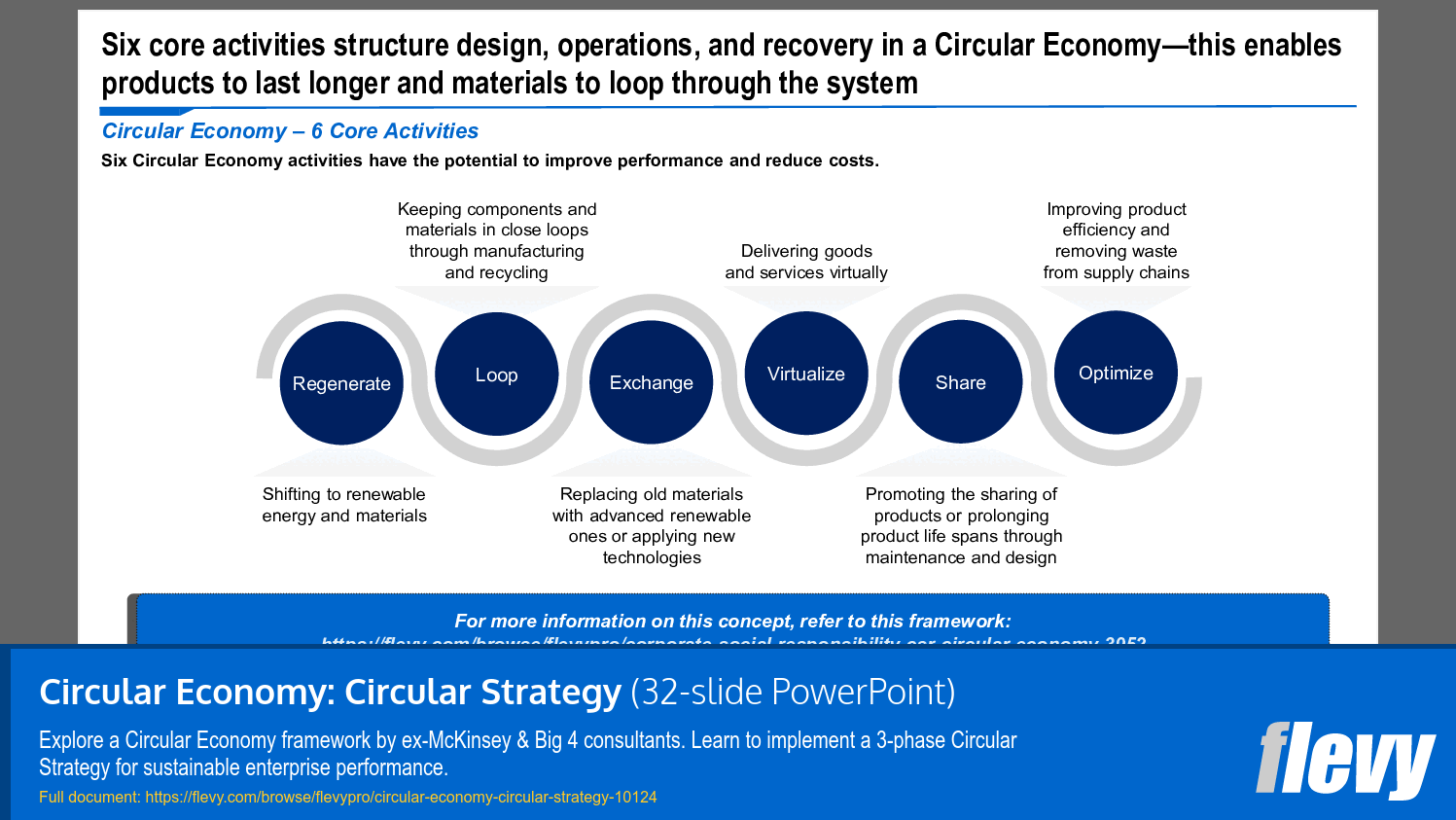
This PPT slide outlines 6 core activities of a Circular Economy: Regenerate, Maintain, Exchange, Virtualize, Share, and Optimize. Regenerating resources involves shifting to renewable energy sources. Maintaining components and materials in closed loops enhances resource efficiency through manufacturing and recycling. Exchanging old materials for advanced renewable options supports sustainability. Virtualizing goods and services reduces physical resource use, while sharing products extends their lifespan. Optimizing processes improves product efficiency and waste removal. These interconnected activities form a continuous cycle that enhances operational resilience and sustainability. The slide references a specific framework for implementing these activities, emphasizing the ongoing nature of the Circular Economy.
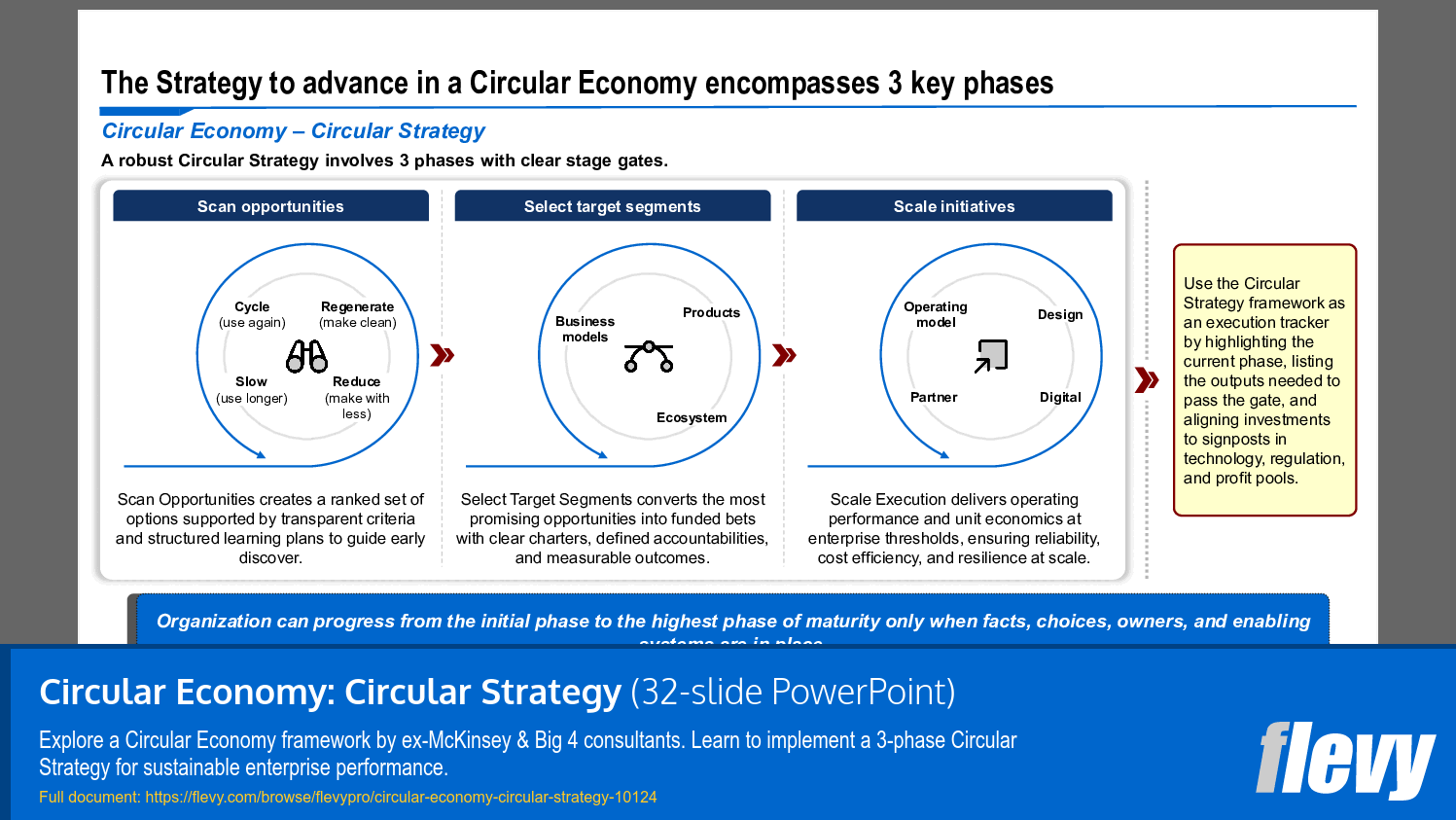
This PPT slide outlines a three-phase approach to implementing a circular economy strategy. The first phase, scanning opportunities, involves identifying options based on clear criteria and structured plans, emphasizing transparency and early discovery. The second phase focuses on selecting target segments by converting opportunities into actionable bets, defining parameters such as business models, products, and ecosystems to prioritize high-potential segments with measurable outcomes. The final phase, scaling initiatives, centers on operational execution, ensuring reliability, cost efficiency, and resilience. Utilizing the circular strategy framework as an execution tracker highlights progress, expected outputs, and necessary investments. Progress from discovery to scaled operations relies on clear stage gates and disciplined execution, aligning investments and technology with each phase to support measurable results.
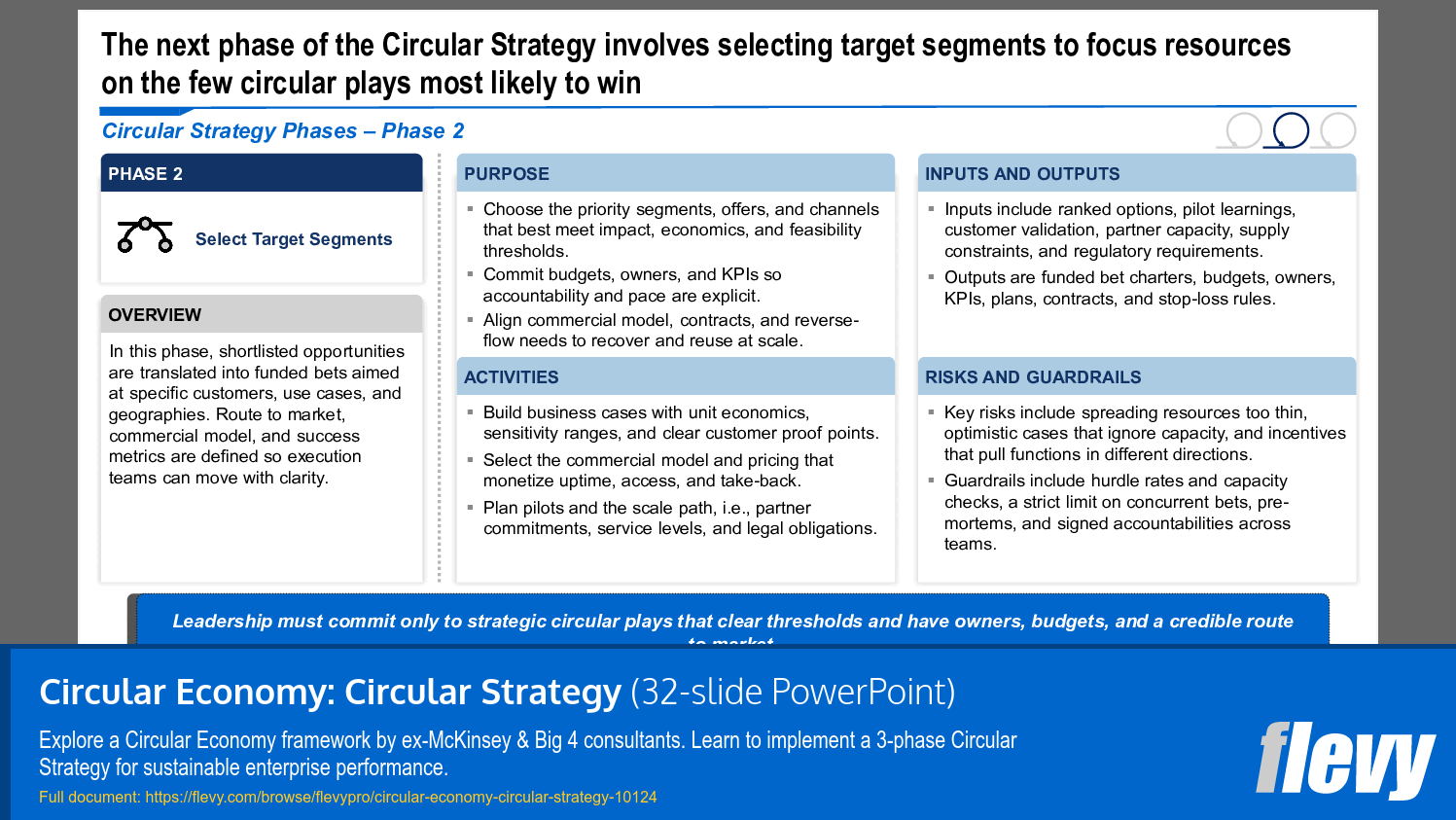
This PPT slide outlines the next phase in a circular strategy process focused on selecting target segments for resource prioritization. The goal is to identify key segments with high impact, economic viability, and feasibility. This structured approach involves choosing segments, offers, and channels aligned with strategic goals. Clear accountability is essential, with assigned budgets, owners, and KPIs. Activities include building business cases, selecting commercial models, pricing strategies, and planning pilots to test assumptions at scale. Inputs consist of ranked options, pilot learnings, customer validation, and regulatory constraints. Outputs are formalized bets—budgets, KPIs, contracts, and plans guiding execution. Leadership must commit to strategies with clear thresholds and accountability to streamline resource allocation, reduce risk, and improve success likelihood by focusing on promising segments with a disciplined, data-driven approach.
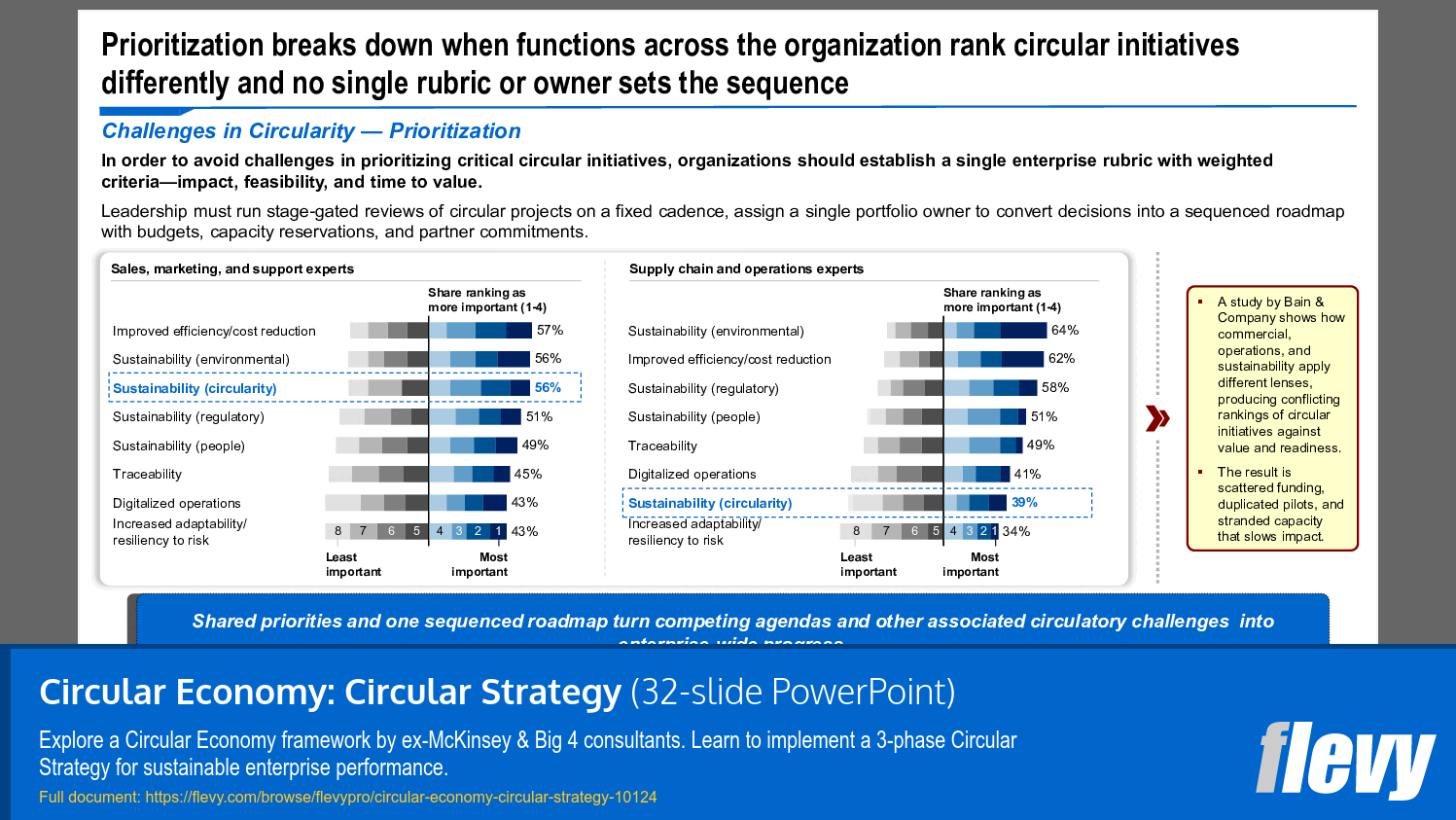
Prioritization of circular initiatives can falter when organizational functions rank them differently without a unified rubric. Establishing a single enterprise rubric based on impact, feasibility, and time to value is essential to align priorities and avoid conflicting views. Leadership should conduct stage-gated reviews of circular projects, designating a single portfolio owner to create a clear roadmap with budgets and commitments. For instance, the sales team ranks sustainability (circularity) at 56%, while the supply chain team assigns it only 39%, illustrating how different functions perceive the same initiative variably. This misalignment can slow progress and create capacity issues. A consolidated roadmap with shared priorities is critical for effective and scalable circular strategies across the organization. A Bain & Company study further highlights how conflicting rankings hinder execution.
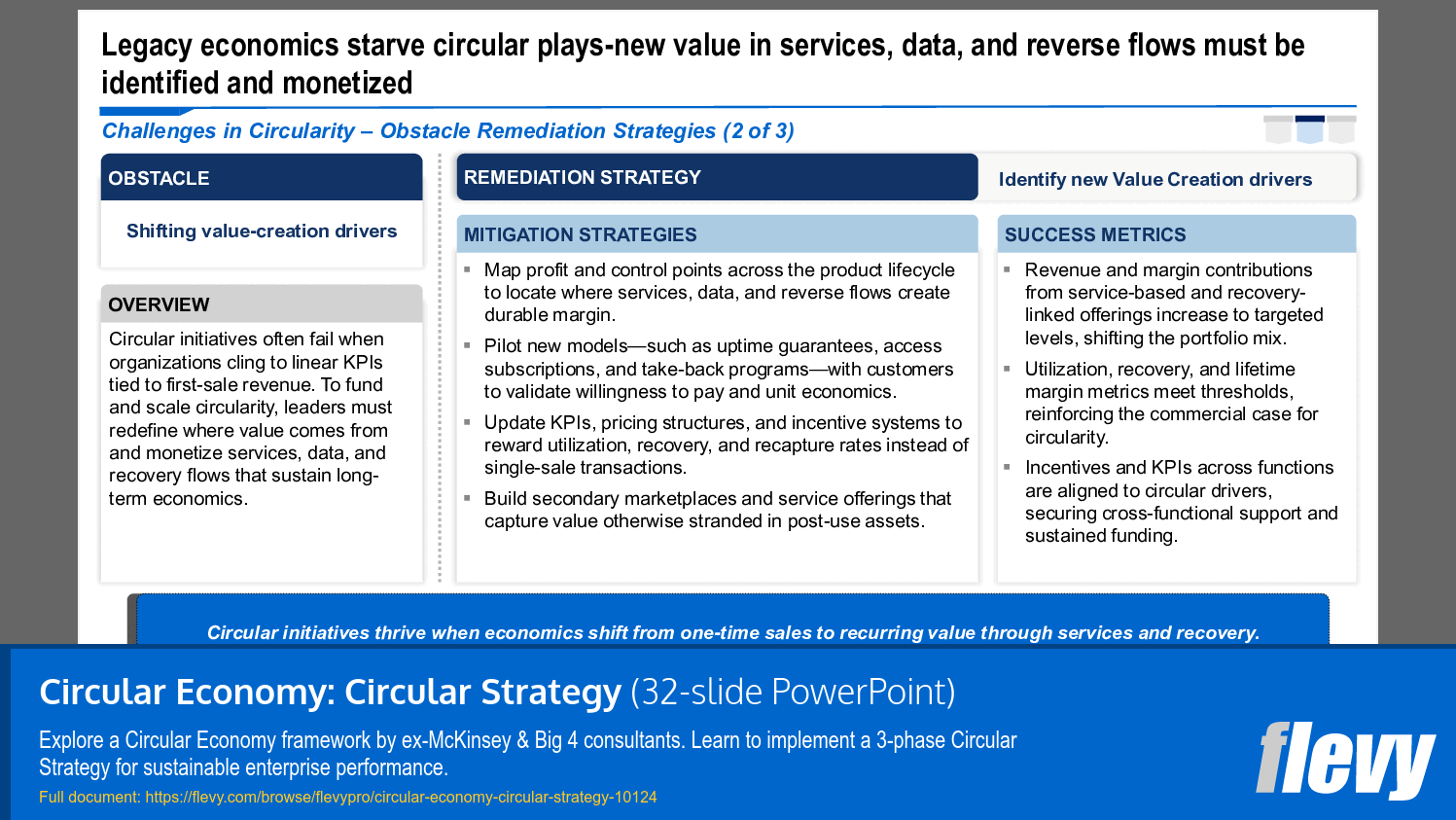
Legacy economic models are failing to support the shift toward circular economy practices, focusing instead on linear KPIs like revenue that overlook value from services, data, and reverse flows. Identifying and monetizing new value creation drivers from circular initiatives is essential. A remediation strategy involves mapping profit and control points across the product lifecycle to locate sustainable margins generated by services and reverse flows. Piloting models such as uptime guarantees and subscription services aligns incentives with circular activities. Updating KPIs, pricing structures, and incentive systems is necessary to reward these behaviors, moving away from traditional single-sale metrics. Success metrics should include revenue, margins, utilization, recovery, and lifetime metrics, with cross-functional KPIs vital for organizational alignment toward circularity. Transitioning from a linear to a circular economic model necessitates a fundamental change in how value is measured, tracked, and rewarded, unlocking new streams of value.
Source: Best Practices in Circular Economy PowerPoint Slides: Circular Economy: Circular Strategy PowerPoint (PPTX) Presentation Slide Deck, LearnPPT Consulting
This framework is developed by a team of former McKinsey and Big 4 consultants. The presentation follows the headline-body-bumper slide format used by global consulting firms.
For $10.00 more, you can download this document plus 2 more FlevyPro documents. That's just $13 each.
ABOUT FLEVYPRO
This document is part of the FlevyPro Library, a curated knowledge base of documents for our FlevyPro subscribers.

FlevyPro is a subscription service for on-demand business frameworks and analysis tools. FlevyPro subscribers receive access to an exclusive library of curated business documents—business framework primers, presentation templates, Lean Six Sigma tools, and more—among other exclusive benefits.
The average daily rate of a McKinsey consultant is $6,625 (not including expenses). The average price of a Flevy document is $65.
Trusted by over 10,000+ Client Organizations
Since 2012, we have provided business templates to over 10,000 businesses and organizations of all sizes, from startups and small businesses to the Fortune 100, in over 130 countries.
"Flevy is our 'go to' resource for management material, at an affordable cost. The Flevy library is comprehensive and the content deep, and typically provides a great foundation for us to further develop and tailor our own service offer."
– Chris McCann, Founder at Resilient.World
"As a niche strategic consulting firm, Flevy and FlevyPro frameworks and documents are an on-going reference to help us structure our findings and recommendations to our clients as well as improve their clarity, strength, and visual power. For us, it is an invaluable resource to increase our impact and value."
– David Coloma, Consulting Area Manager at Cynertia Consulting
"[Flevy] produces some great work that has been/continues to be of immense help not only to myself, but as I seek to provide professional services to my clients, it gives me a large "tool box" of resources that are critical to provide them with the quality of service and outcomes they are expecting."
– Royston Knowles, Executive with 50+ Years of Board Level Experience
"Flevy.com has proven to be an invaluable resource library to our Independent Management Consultancy, supporting and enabling us to better serve our enterprise clients.
The value derived from our [FlevyPro] subscription in terms of the business it has helped to gain far exceeds the investment made, making a subscription a no-brainer for any growing consultancy – or in-house strategy team."
– Dean Carlton, Chief Transformation Officer, Global Village Transformations Pty Ltd.
"As an Independent Management Consultant, I find Flevy to add great value as a source of best practices, templates and information on new trends. Flevy has matured and the quality and quantity of the library is excellent. Lastly the price charged is reasonable, creating a win-win value for
the customer, Flevy and the various authors. This is truly a service that benefits the consulting industry and associated clients. Thanks for providing this service.
"
– Jim Schoen, Principal at FRC Group
"My FlevyPro subscription provides me with the most popular frameworks and decks in demand in today’s market. They not only augment my existing consulting and coaching offerings and delivery, but also keep me abreast of the latest trends, inspire new products and service offerings for my practice, and educate me
in a fraction of the time and money of other solutions. I strongly recommend FlevyPro to any consultant serious about success.
"
– Bill Branson, Founder at Strategic Business Architects
"As a young consulting firm, requests for input from clients vary and it's sometimes impossible to provide expert solutions across a broad spectrum of requirements. That was before I discovered Flevy.com.
Through subscription to this invaluable site of a plethora of topics that are key and crucial to consulting, I
have been able to exceed expectations and deliver quality advice and solutions to my clients. The quality and expertise of the authors are exemplary and gives me great confidence to use as part of my service offerings.
I highly recommend this company for any consultant wanting to apply international best practice standards in their service offerings.
"
– Nishi Singh, Strategist and MD at NSP Consultants
"I have used FlevyPro for several business applications. It is a great complement to working with expensive consultants. The quality and effectiveness of the tools are of the highest standards."
– Moritz Bernhoerster, Global Sourcing Director at Fortune 500
Download our free compilation of 50+ Strategy & Transformation slides and templates. Frameworks include McKinsey 7-S, Balanced Scorecard, Disruptive Innovation, BCG Curve, and many more.