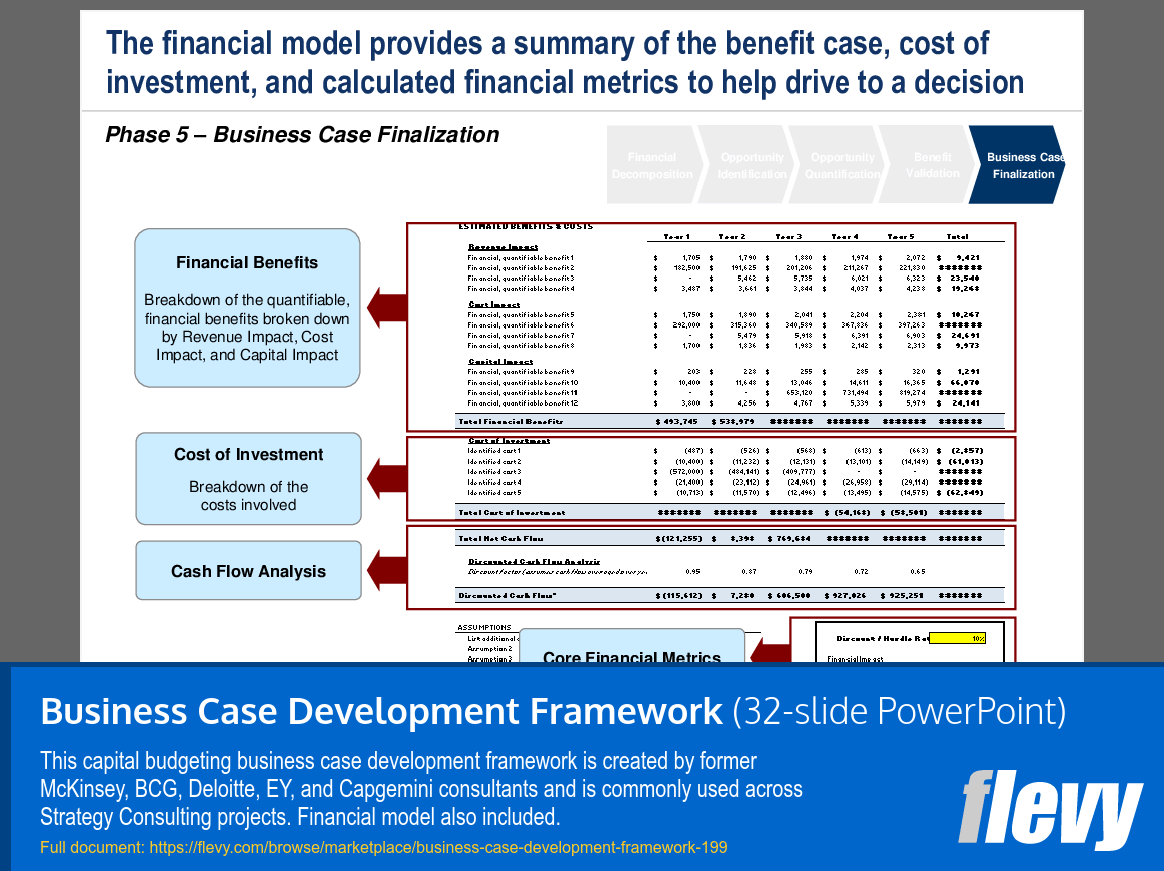
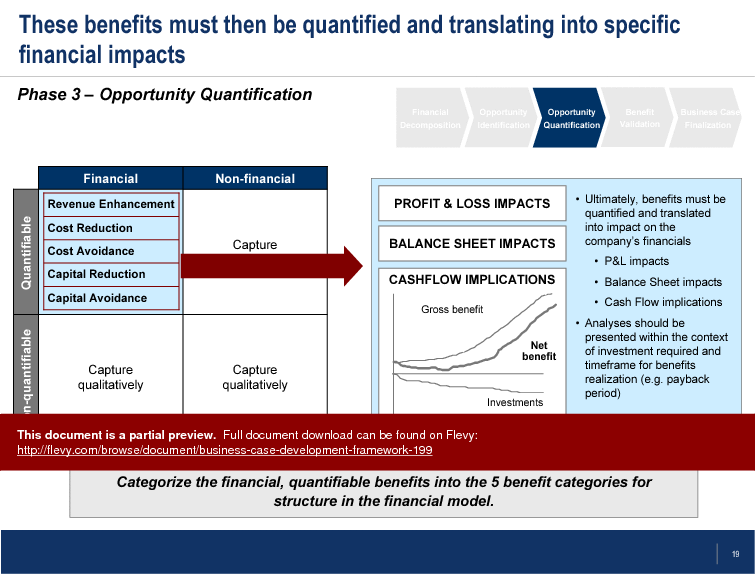
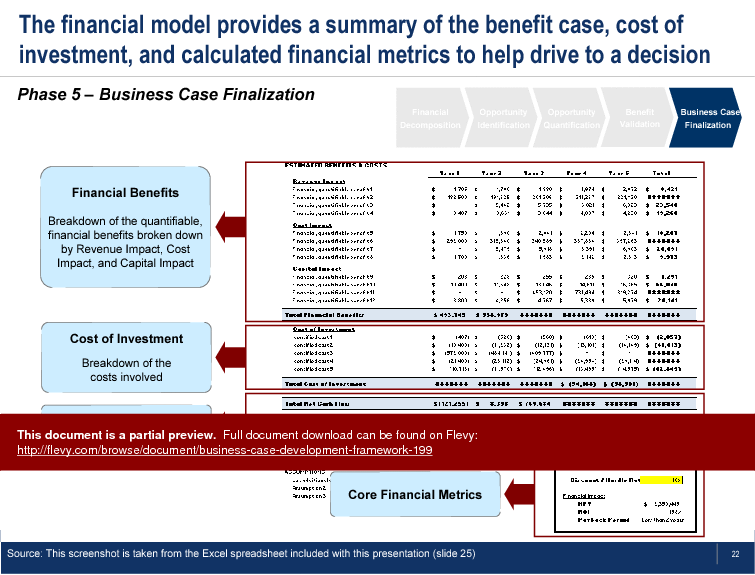

The Business Case is an instrumental tool in both justifying a project (requiring a capital budgeting decision), as well as measuring the project's success. The Business Case model typically takes the form of an Excel spreadsheet and quantifies the financial components of the project, projecting key metrics for making any important business decision: e.g. Net Present Value (NPV), Return on Investment (ROI), Payback Period, Cost of Investment.

If a project has been justified by the Business Case (both financially and non-financially) and receives the go-ahead from executives, the Business Case model is then continuously maintained and adjusted to track the project's progress against the initial financial projections and assumptions. This model then becomes a working document used during the project management process.
This presentation will detail the process of creating a robust Business Case. It also includes a working sample Business Case model (in Microsoft Excel).
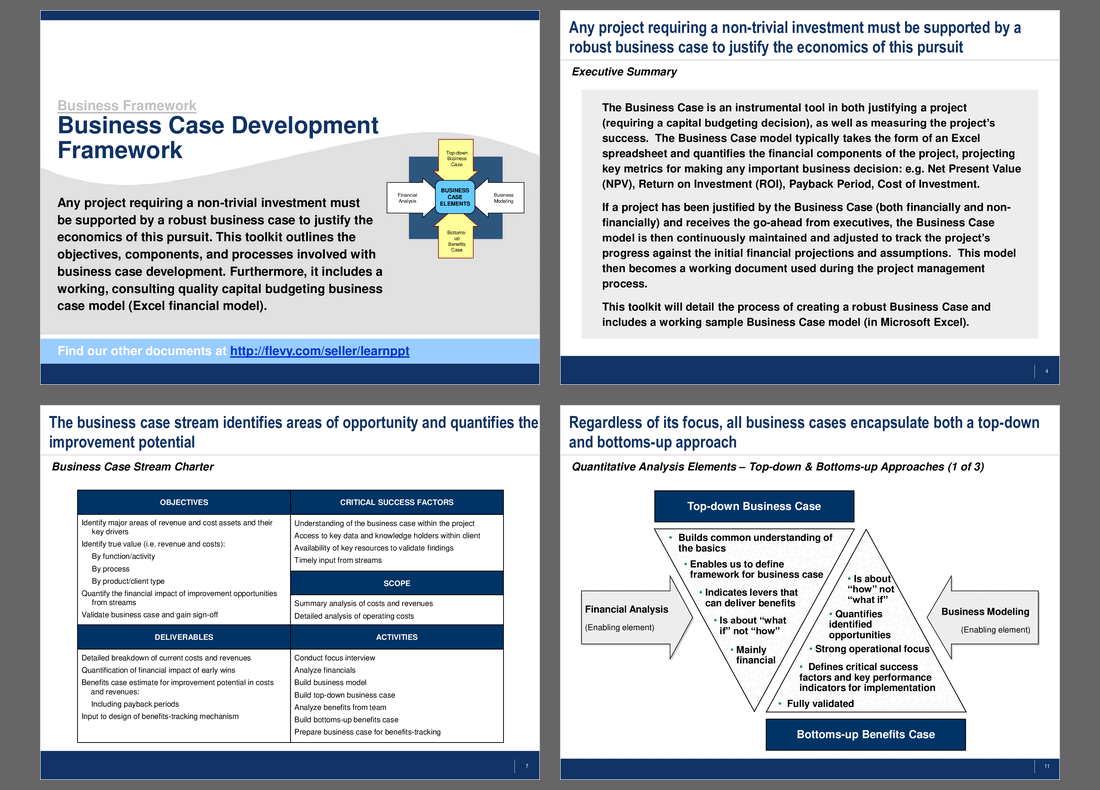
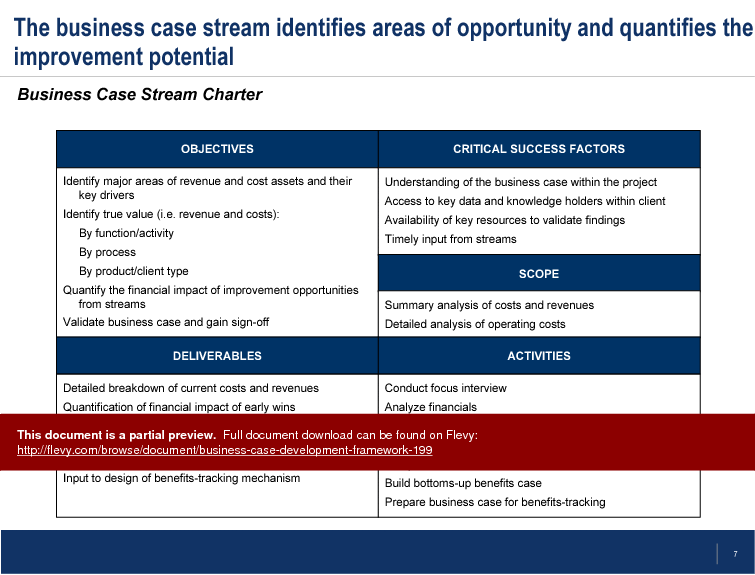
The Business Case Stream Charter outlines clear objectives, critical success factors, and deliverables to ensure comprehensive analysis and validation of business cases. It emphasizes the importance of identifying major revenue and cost drivers, quantifying financial impacts, and validating the business case to gain executive sign-off. This structured approach ensures that all relevant data and insights are captured, analyzed, and presented in a manner that supports informed decision-making.
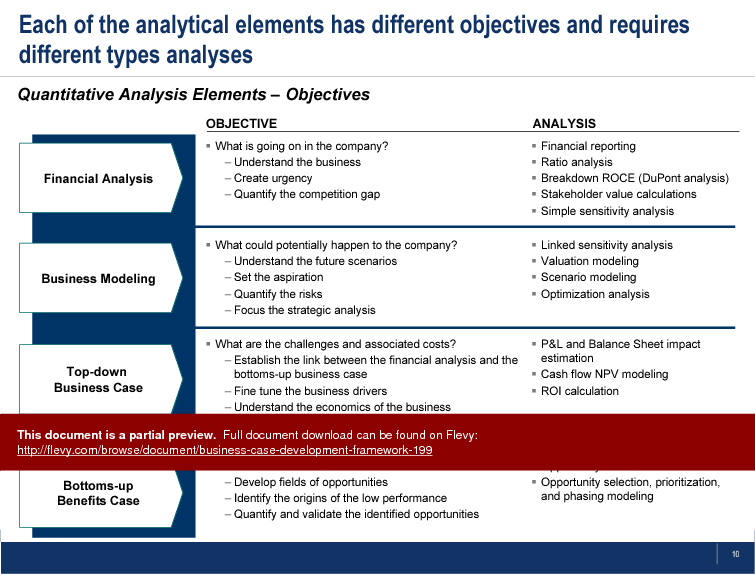
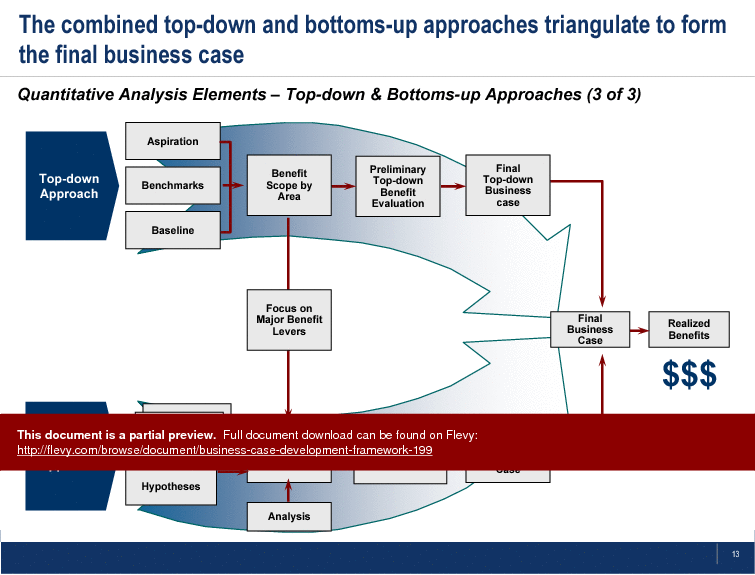
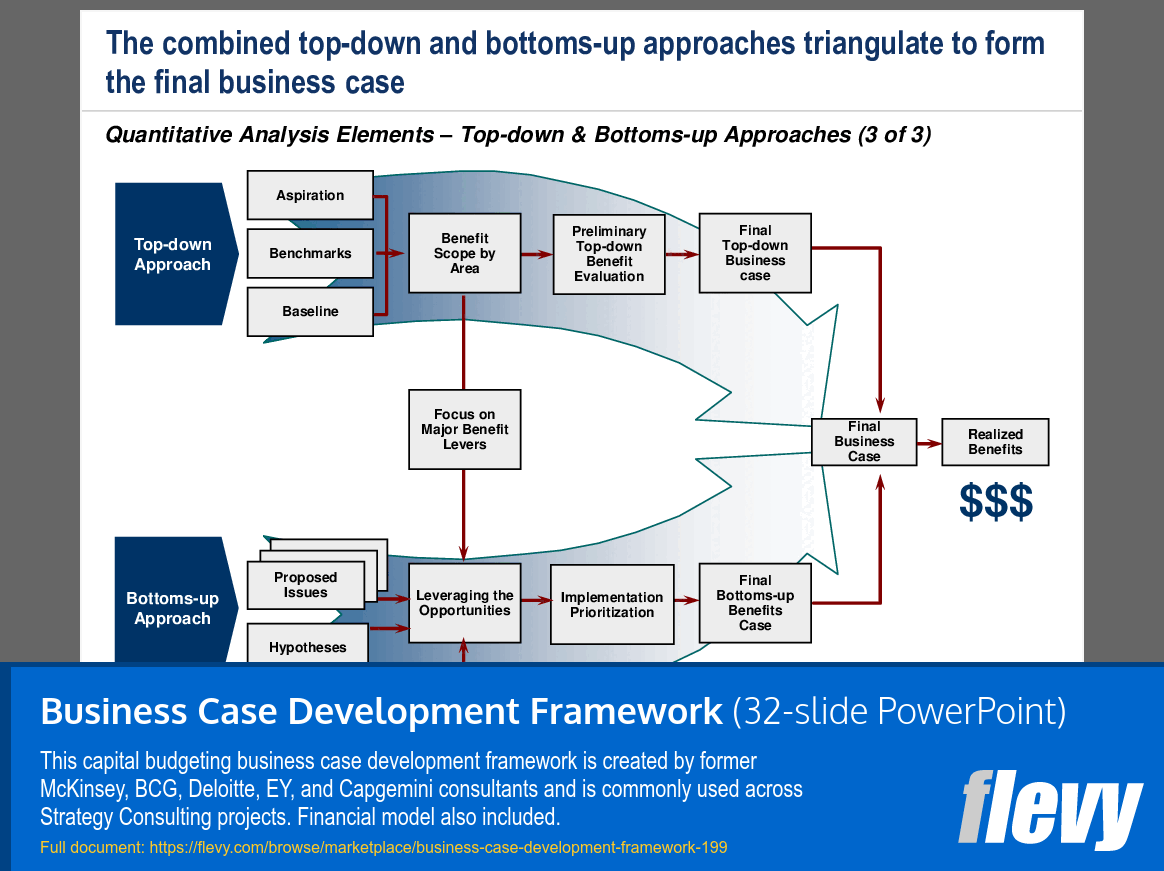
The document also delves into various quantitative analysis elements, such as financial analysis, business modeling, and both top-down and bottoms-up business cases. Each analytical element is designed to address specific business questions and challenges, using a range of techniques from ratio analysis to scenario modeling. By combining these approaches, the framework provides a holistic view of the business case, ensuring that all potential benefits and impacts are thoroughly evaluated and quantified.
Got a question about the product? Email us at support@flevy.com or ask the author directly by using the "Ask the Author a Question" form. If you cannot view the preview above this document description, go here to view the large preview instead.
Executive Summary
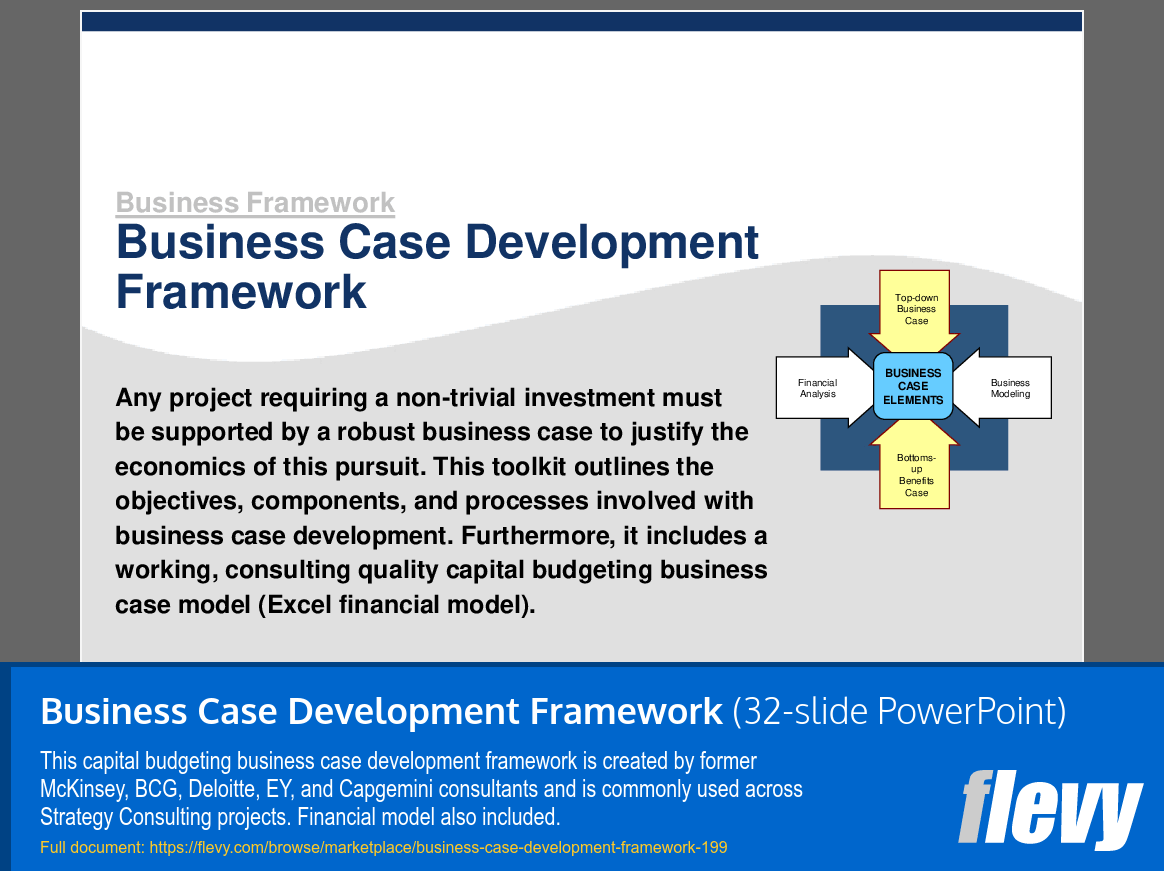
The Business Case Development Framework is an essential toolkit for any project requiring significant investment, designed to justify the economic rationale behind such pursuits. This framework embodies a McKinsey, Bain, or BCG-quality approach (consulting-grade; not affiliated) and serves as a comprehensive guide to creating a robust business case. It includes a detailed capital budgeting model in Excel, enabling users to quantify financial metrics such as Net Present Value (NPV), Return on Investment (ROI), and Payback Period. By utilizing this framework, executives and project managers can effectively track project progress against initial financial projections and assumptions, ensuring informed decision-making throughout the project lifecycle.
Who This Is For and When to Use
• Corporate executives overseeing capital budgeting decisions
• Project managers responsible for justifying investment proposals
• Financial analysts conducting quantitative assessments of projects
• Strategy consultants developing business cases for client projects
Best-fit moments to use this deck:
• When preparing a business case for a new project requiring substantial investment
• During the initial phases of project planning to establish financial viability
• For ongoing project management to track financial performance against projections
Learning Objectives
• Define the core components of a business case and their significance
• Build a comprehensive financial model to support investment decisions
• Establish a framework for quantifying benefits and costs associated with projects
• Validate financial assumptions and metrics to ensure stakeholder buy-in
• Develop strategies for tracking project benefits throughout implementation
• Identify common pitfalls in business case development and how to avoid them
Table of Contents
• Overview (page 3)
• Executive Summary (page 4)
• Objectives (page 5)
• Business Case Stream Charter (page 7)
• Quantitative Analysis Elements (page 8)
• Business Case Modeling (page 14)
• Sample Business Case Model (Excel document) (page 23)
• Final Words (page 29)
• Dos and Don’ts (page 30)
• Common Pitfalls (page 31)
• Rules of Thumb (page 32)
Primary Topics Covered
• Business Case Objectives - The framework outlines core objectives, including quantifying improvement opportunities and ensuring resource allocation to high-leverage areas.
• Quantitative Analysis Elements - This section details the 4 interlinked elements of business case analysis: financial analysis, business modeling, top-down business case, and bottoms-up benefits case.
• Business Case Stream Charter - A structured approach to identifying revenue and cost assets, quantifying improvement potential, and validating findings.
• Financial Modeling - Guidance on creating a comprehensive financial model to project key metrics such as NPV and ROI.
• Common Pitfalls - Identifies frequent mistakes in business case development and strategies to avoid them.
• Rules of Thumb - Practical tips to enhance the effectiveness of business case development activities.
Deliverables, Templates, and Tools
• Business case stream charter template for organizing project objectives and deliverables
• Quantitative analysis framework to assess financial and non-financial impacts
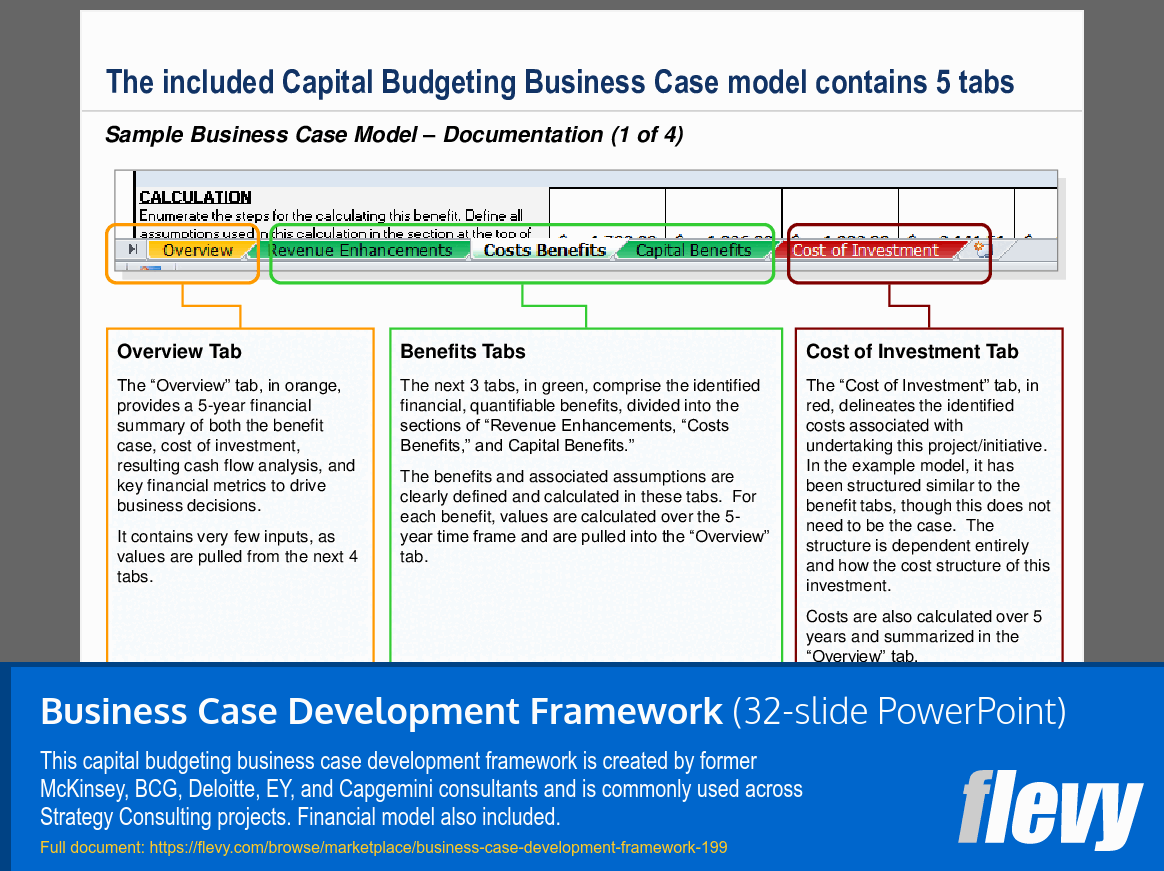
• Sample Excel business case model for financial projections and metrics
• Guidelines for validating assumptions and calculations in business cases
• Checklist for dos and don’ts during business case development
• Common pitfalls reference guide to streamline the business case creation process
Slide Highlights
• Overview of business case objectives and their importance in project justification
• Detailed breakdown of quantitative analysis elements and their interdependencies
• Visual representation of the business case development approach, highlighting key phases
• Sample financial model showcasing NPV, ROI, and Payback Period calculations
• Common pitfalls and rules of thumb to guide effective business case development
Potential Workshop Agenda
Business Case Overview Session (60 minutes)
• Introduce the framework and its significance in project management
• Discuss core objectives and deliverables of a business case
• Review the quantitative analysis elements and their applications
Financial Modeling Workshop (90 minutes)
• Hands-on session to build a sample business case model in Excel
• Walk through key financial metrics and their calculations
• Validate assumptions and discuss common pitfalls in financial modeling
Business Case Validation and Tracking (60 minutes)
• Explore strategies for validating identified benefits and costs
• Discuss methods for tracking project performance against the business case
• Share best practices for stakeholder engagement and communication
Customization Guidance
• Tailor the financial model assumptions to reflect specific project conditions and requirements
• Adjust the business case stream charter to align with organizational priorities and resources
• Incorporate relevant industry metrics and benchmarks into the quantitative analysis elements
Secondary Topics Covered
• Stakeholder engagement strategies for securing buy-in on business cases
• Techniques for conducting effective financial analysis and modeling
• Importance of aligning business cases with organizational strategy and goals
• Methods for quantifying both financial and non-financial benefits
• Best practices for maintaining and updating business cases throughout project lifecycles
FAQ
What is the purpose of a business case?
A business case justifies the economic rationale for a project requiring significant investment, outlining potential benefits and costs to support decision-making.
How do I quantify benefits in a business case?
Benefits can be quantified using financial metrics such as NPV, ROI, and Payback Period, alongside qualitative assessments of non-financial impacts.
What are common pitfalls in business case development?
Common pitfalls include making unsubstantiated claims, failing to validate assumptions, and neglecting to engage stakeholders throughout the process.
How can I ensure stakeholder buy-in for my business case?
Engage stakeholders early in the process, validate assumptions, and present clear, quantifiable benefits to gain their support.
What financial metrics should I include in my business case?
Key metrics include NPV, ROI, Payback Period, and cash flow analysis, which provide a comprehensive view of the project's financial viability.
How often should I update my business case?
Regular updates are recommended throughout the project lifecycle to reflect changes in assumptions, progress against projections, and emerging risks.
What is the difference between top-down and bottoms-up approaches in business cases?
Top-down approaches focus on strategic alignment and overall financial impacts, while bottoms-up approaches emphasize operational details and specific benefit quantification.
What tools can I use to develop a business case?
Utilize templates, financial modeling software, and analytical frameworks to streamline the business case development process.
Glossary
• Business Case - A document outlining the justification for a project, including financial and non-financial benefits.
• Net Present Value (NPV) - A financial metric used to assess the profitability of an investment by calculating the present value of future cash flows.
• Return on Investment (ROI) - A performance measure used to evaluate the efficiency of an investment, expressed as a percentage of profit relative to the total investment.
• Payback Period - The time it takes for an investment to generate enough cash flow to recover its initial cost.
• Quantitative Analysis - The process of evaluating financial data to inform decision-making.
• Financial Decomposition - Breaking down financial data to understand economic drivers and identify opportunities for improvement.
• Stakeholder Engagement - The process of involving individuals or groups with an interest in the project to ensure their needs and concerns are addressed.
• Assumptions Validation - The process of confirming the accuracy and reliability of assumptions used in financial modeling.
• Cost of Investment - The total expenses associated with undertaking a project or initiative.
• Benefits Matrix - A tool used to categorize and organize identified benefits based on their financial and non-financial impacts.
• Common Pitfalls - Frequent mistakes made during business case development that can undermine the credibility of the project.
• Rules of Thumb - Practical guidelines to enhance the effectiveness of business case development activities.
Source: Best Practices in Business Case Development, Financial Modeling, Business Case Example PowerPoint Slides: Business Case Development Framework PowerPoint (PPT) Presentation Slide Deck, LearnPPT Consulting
|
Download our FREE Strategy & Transformation Framework Templates
Download our free compilation of 50+ Strategy & Transformation slides and templates. Frameworks include McKinsey 7-S, Balanced Scorecard, Disruptive Innovation, BCG Curve, and many more. |