
This framework is developed by a team of former McKinsey and Big 4 consultants. The presentation follows the headline-body-bumper slide format used by global consulting firms.
This product (Agentic AI Primer) is a 32-slide PPT PowerPoint presentation slide deck (PPTX), which you can download immediately upon purchase.
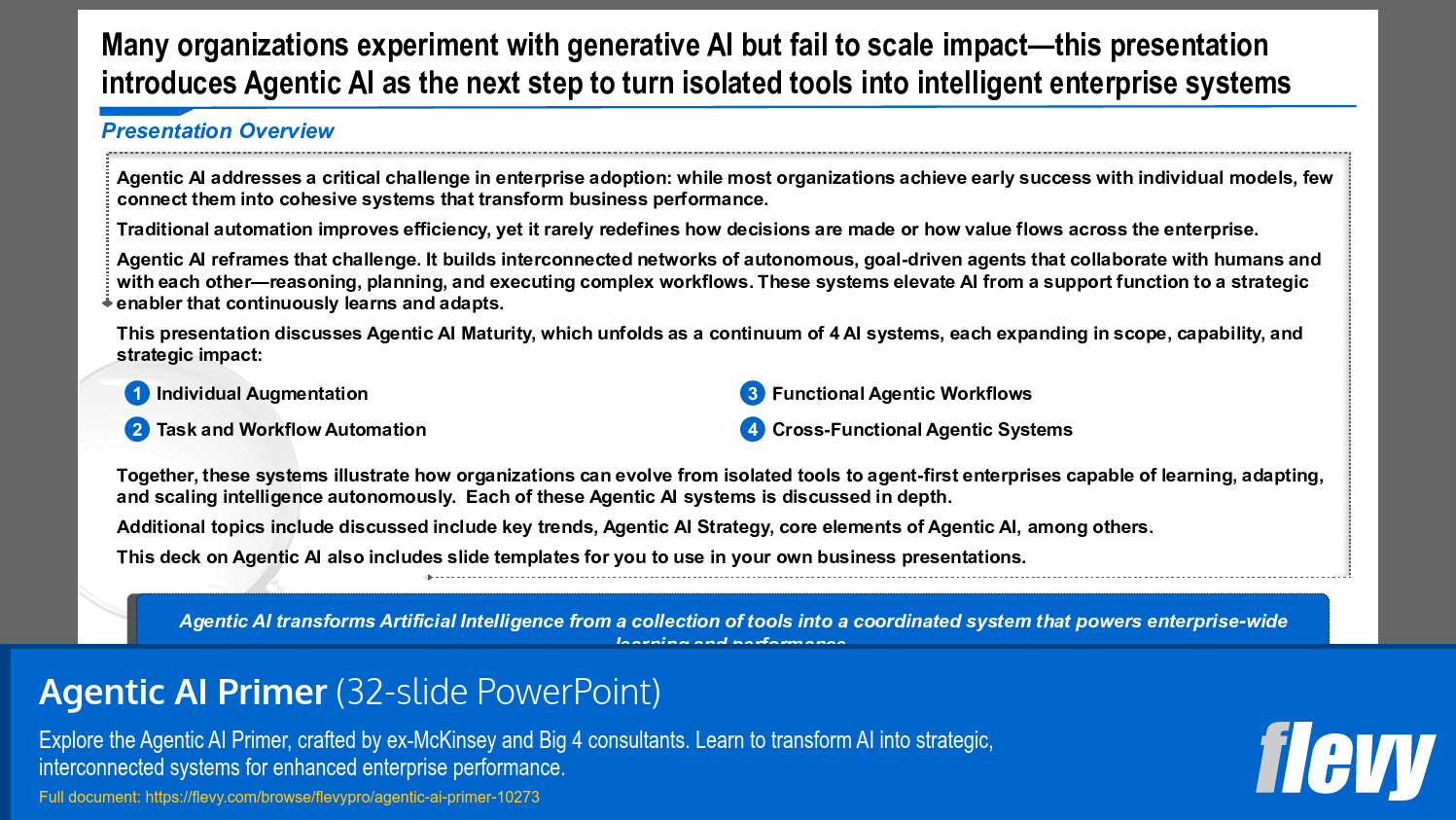
Agentic AI addresses a critical challenge in enterprise adoption: while most organizations achieve early success with individual models, few connect them into cohesive systems that transform business performance.
Traditional automation improves efficiency, yet it rarely redefines how decisions are made or how value flows across the enterprise.
Agentic AI reframes that challenge. It builds interconnected networks of autonomous, goal-driven agents that collaborate with humans and with each other—reasoning, planning, and executing complex workflows. These systems elevate AI from a support function to a strategic enabler that continuously learns and adapts. Agentic AI transforms Artificial Intelligence from a collection of tools into a coordinated system that powers enterprise-wide learning and performance.
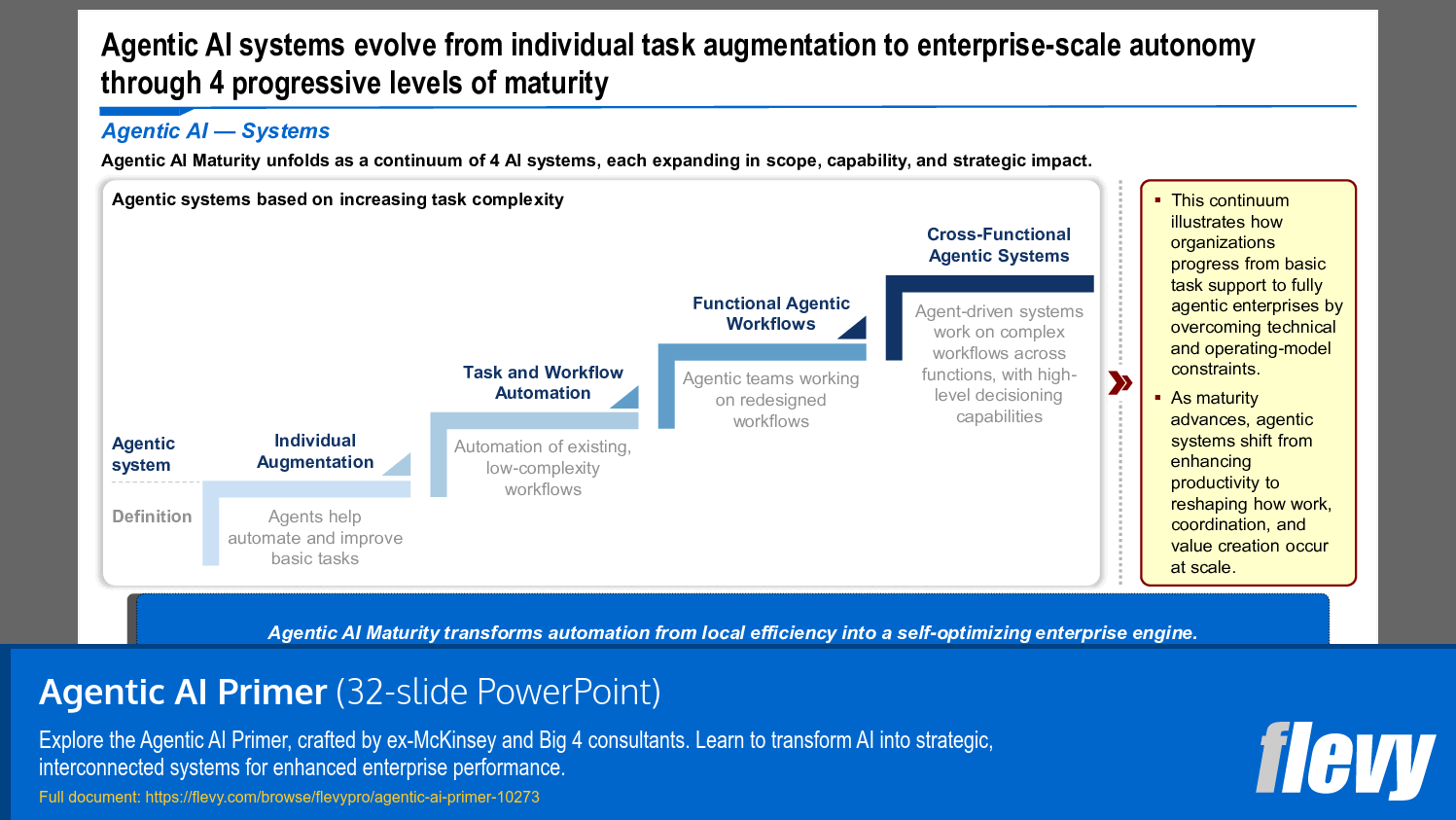
This PPT presentation discusses Agentic AI Maturity, which unfolds as a continuum of 4 AI systems, each expanding in scope, capability, and strategic impact:
1. Individual Augmentation
2. Task and Workflow Automation
3. Functional Agentic Workflows
4. Cross-Functional Agentic Systems
Together, these systems illustrate how organizations can evolve from isolated tools to agent-first enterprises capable of learning, adapting, and scaling intelligence autonomously. Each of these Agentic AI systems is discussed in depth.
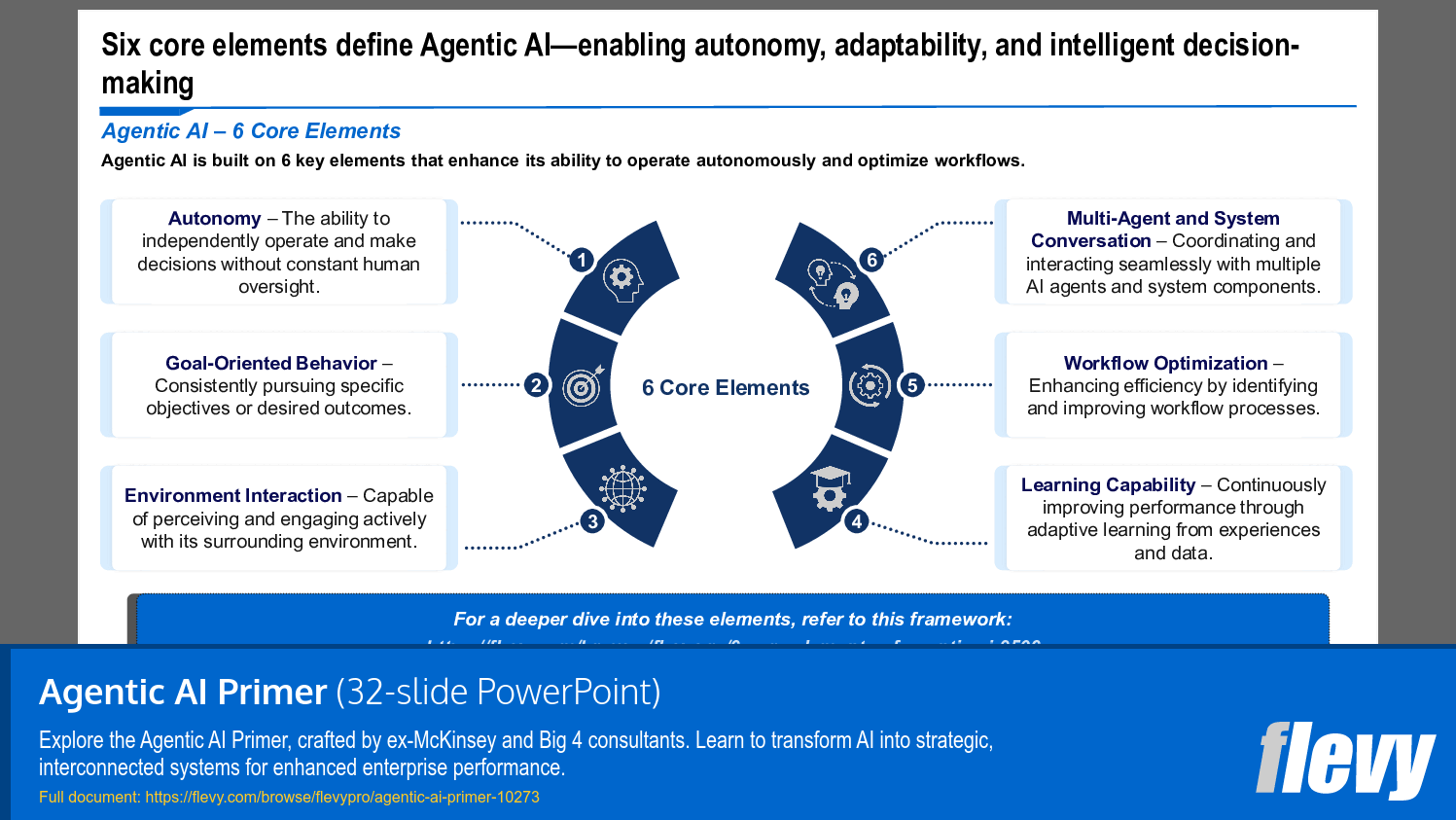
Additional topics include discussed include key trends, Agentic AI Strategy, core elements of Agentic AI, among others.
This deck on Agentic AI also includes slide templates for you to use in your own business presentations.
Source: Best Practices in Artificial Intelligence, Automation, Agentic AI PowerPoint Slides: Agentic AI Primer PowerPoint (PPTX) Presentation Slide Deck, LearnPPT Consulting
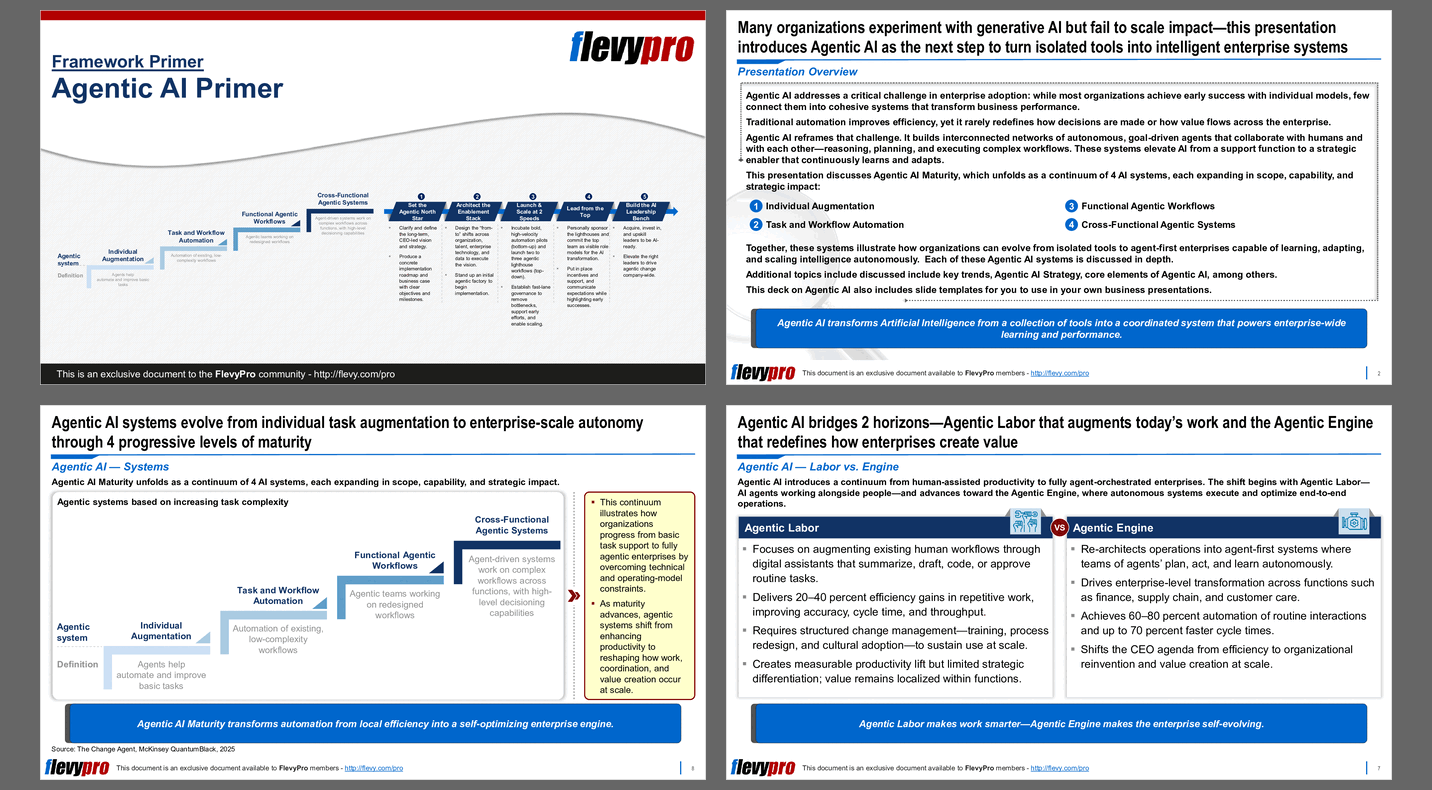
This PPT slide outlines the evolution of agentic AI systems from basic task support to enterprise-scale autonomy. It presents a four-level maturity model, each stage expanding in scope, capability, and strategic impact. The progression begins with simple agent systems that automate basic tasks and advances toward cross-functional, agent-driven systems capable of managing complex workflows across multiple functions.
The first level, labeled "Agentic system," focuses on agents that help automate and improve straightforward tasks. The second stage, "Individual Augmentation," involves agents that assist individual users, increasing efficiency, but still limited in scope. The third level, "Task and Workflow Automation," introduces automation of existing, low-complexity workflows, enabling more streamlined operations. The final stage, "Cross-Functional Agent Systems," features agent-driven systems working on complex workflows across functions, with high-level decision-making capabilities.
A yellow sidebar on the right explains the significance of this continuum. It notes that as systems mature, they shift from technical support to fully autonomous entities managing enterprise-wide processes. The evolution reflects a move from improving productivity to reshaping work, coordination, and value creation at scale. The slide emphasizes that this progression is driven by increasing task complexity and strategic impact, highlighting the importance for organizations to understand where they are on this continuum and how to advance.
The bottom blue banner references a resource called "Agentic AI Primer," crafted by McKinsey and Big 4 consultants, designed to help organizations understand and implement these AI systems. Overall, the slide offers a clear framework for assessing AI maturity and planning strategic investments in automation and autonomy at an enterprise level.
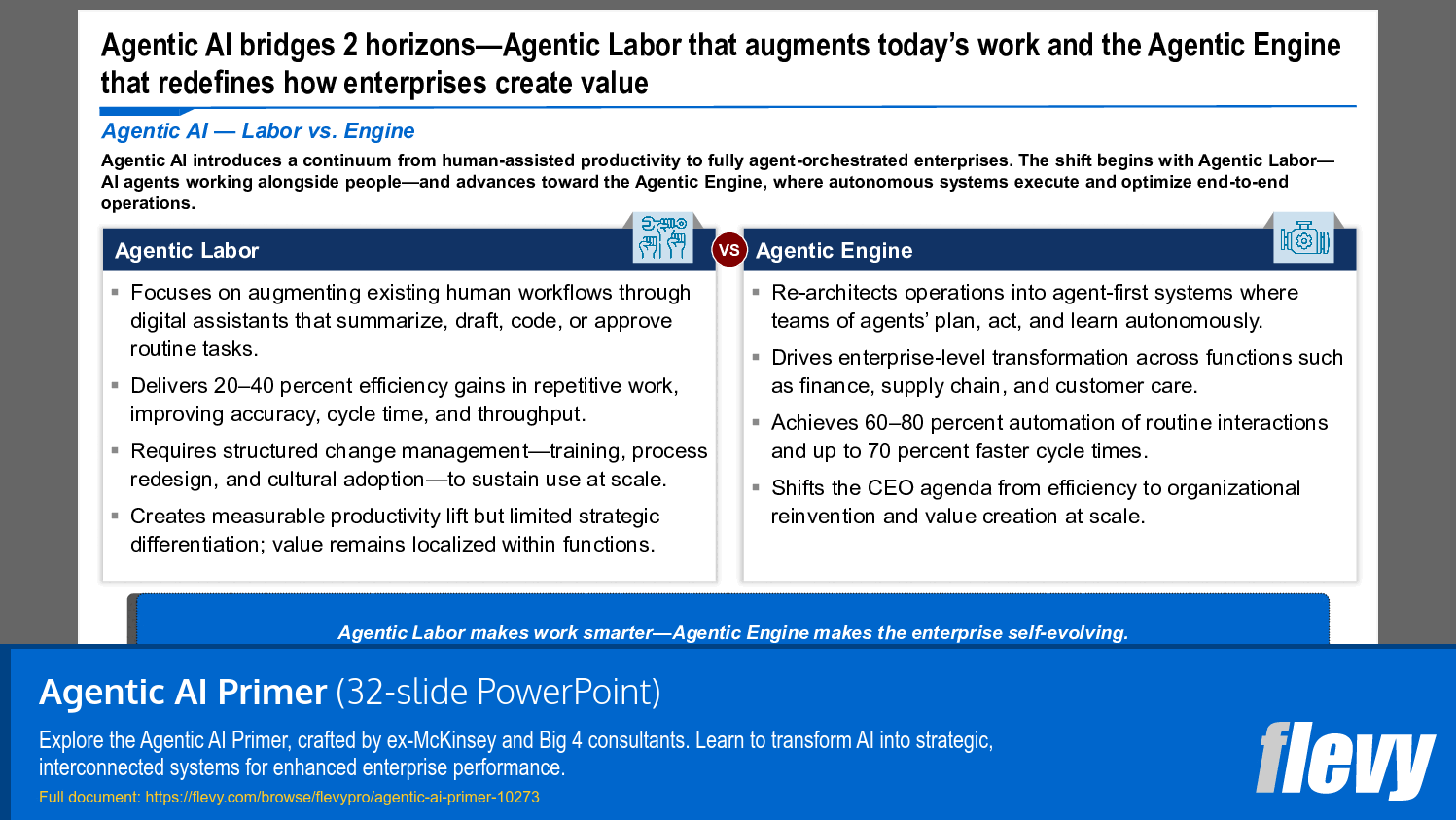
This PPT slide compares 2 forms of enterprise automation: Agentic Labor and Agentic Engine. It emphasizes how Agentic AI is bridging the gap between current human-assisted productivity and fully autonomous systems. The core idea is that organizations are shifting from augmenting human workflows to deploying autonomous systems that can execute end-to-end operations.
The left side describes Agentic Labor as focusing on enhancing existing workflows through digital assistants that handle routine tasks like summarizing, drafting, or approving. It highlights efficiency gains of 20-40 percent,, but notes that this approach still requires structured change management and cultural adaptation. The benefits are primarily in productivity lift,, but strategic differentiation remains limited because these systems operate within functional silos.
The right side introduces the Agentic Engine as a more transformative approach. It re-architects operations into autonomous, agent-first systems capable of learning and acting independently. This enables enterprise-wide transformation across functions such as finance, supply chain, and customer care. The engine achieves significantly higher automation levels—up to 80 percent—and accelerates cycle times by up to 70 percent. It shifts the CEO agenda from efficiency to broader organizational reinvention and value creation, signaling a move toward self-evolving enterprise systems. The slide underscores the evolution from incremental productivity improvements to fundamental operational reengineering driven by AI.
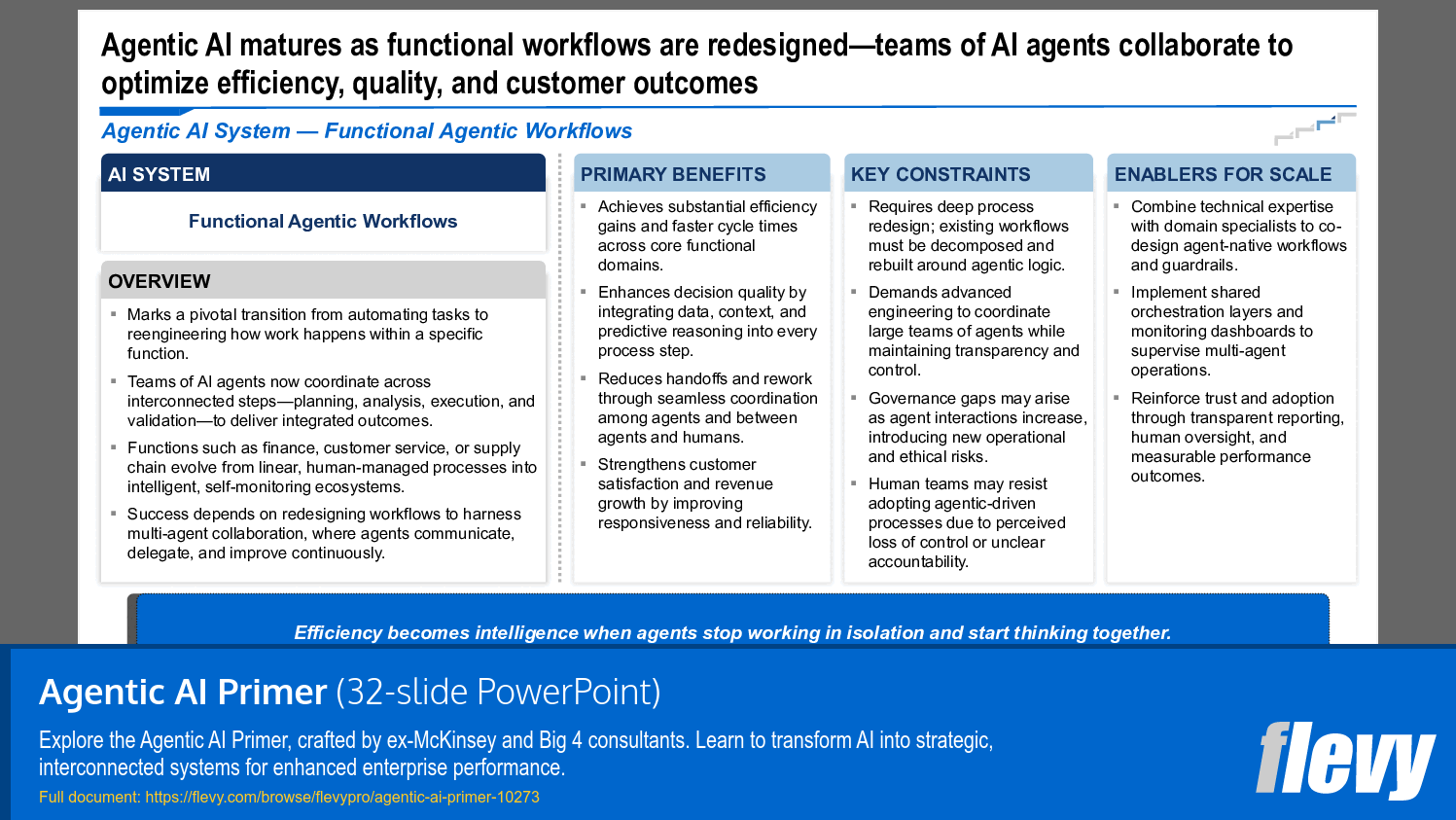
This PPT slide explains how AI systems, specifically functional agent workflows, are evolving to improve operational efficiency and decision-making. It starts with a clear definition of the system, emphasizing teams of AI agents working together to optimize various aspects of business functions. The overview highlights the transition from manual task automation to interconnected AI agents that coordinate across different steps like planning, analysis, and validation, aiming for seamless outcomes. The focus is on the shift toward intelligent, self-monitoring ecosystems that can adapt and improve continuously.
The primary benefits section underscores the gains from this approach. It states that these workflows deliver faster cycle times and significant efficiency improvements within core functional domains. Decision quality is also enhanced through better data integration, contextual understanding, and reasoning at each process step. The reduction of handoffs and rework is a key point, as seamless coordination among agents and humans minimizes delays and errors. Customer satisfaction and revenue growth are expected to improve due to increased responsiveness and reliability, which are critical in customer-facing or revenue-generating functions.
Key constraints reveal the challenges involved in redesigning these workflows. Deep process redesign is necessary, and existing workflows must be deconstructed and rebuilt based on agent logic. Advanced engineering is required to coordinate large teams of AI agents while maintaining transparency and control. Governance gaps may arise as agent interactions increase, introducing new operational and ethical risks. Human teams might resist adopting these agent-driven processes because of perceived loss of control or unclear accountability. The slide emphasizes that overcoming these constraints is essential for scaling AI workflows effectively, with technical expertise and governance frameworks being central to success.
Overall, the slide presents a comprehensive view of how functional AI workflows are maturing, highlighting both the benefits and the hurdles to wider adoption in enterprise settings.
This framework is developed by a team of former McKinsey and Big 4 consultants. The presentation follows the headline-body-bumper slide format used by global consulting firms.
For $24.50 more, you can download this document plus 2 more FlevyPro documents. That's just $13 each.
ABOUT FLEVYPRO
This document is part of the FlevyPro Library, a curated knowledge base of documents for our FlevyPro subscribers.

FlevyPro is a subscription service for on-demand business frameworks and analysis tools. FlevyPro subscribers receive access to an exclusive library of curated business documents—business framework primers, presentation templates, Lean Six Sigma tools, and more—among other exclusive benefits.
The average daily rate of a McKinsey consultant is $6,625 (not including expenses). The average price of a Flevy document is $65.
Trusted by over 10,000+ Client Organizations
Since 2012, we have provided best practices to over 10,000 businesses and organizations of all sizes, from startups and small businesses to the Fortune 100, in over 130 countries.
Read Customer Testimonials
"The wide selection of frameworks is very useful to me as an independent consultant. In fact, it rivals what I had at my disposal at Big 4 Consulting firms in terms of efficacy and organization."
– Julia T., Consulting Firm Owner (Former Manager at Deloitte and Capgemini)
"One of the great discoveries that I have made for my business is the Flevy library of training materials.
As a Lean Transformation Expert, I am always making presentations to clients on a variety of topics: Training, Transformation, Total Productive Maintenance, Culture, Coaching, Tools, Leadership Behavior, etc. Flevy
It is well worth the money to purchase these presentations. Sure, I have the knowledge and information to make my point. It is another thing to create a presentation that captures what I want to say. Flevy has saved me countless hours of preparation time that is much better spent with implementation that will actually save money for my clients.
"
– Ed Kemmerling, Senior Lean Transformation Expert at PMG
"Last Sunday morning, I was diligently working on an important presentation for a client and found myself in need of additional content and suitable templates for various types of graphics. Flevy.com proved to be a treasure trove for both content and design at a reasonable price, considering the time I
saved. I encountered a download issue during the ordering process. However, a quick email to Flevy's support team, even on a Sunday (!!!), resulted in assistance within less than an hour, allowing me to download the content I needed. Fantastic job, Flevy! I give 5 stars for both content/price and customer service. Thank you!
"
– M. E., Chief Commercial Officer, International Logistics Service Provider
"I have used FlevyPro for several business applications. It is a great complement to working with expensive consultants. The quality and effectiveness of the tools are of the highest standards."
– Moritz Bernhoerster, Global Sourcing Director at Fortune 500
"FlevyPro provides business frameworks from many of the global giants in management consulting that allow you to provide best in class solutions for your clients."
– David Harris, Managing Director at Futures Strategy
"Flevy.com has proven to be an invaluable resource library to our Independent Management Consultancy, supporting and enabling us to better serve our enterprise clients.
The value derived from our [FlevyPro] subscription in terms of the business it has helped to gain far exceeds the investment made, making a subscription a no-brainer for any growing consultancy – or in-house strategy team."
– Dean Carlton, Chief Transformation Officer, Global Village Transformations Pty Ltd.
"As a consultant requiring up to date and professional material that will be of value and use to my clients, I find Flevy a very reliable resource.
The variety and quality of material available through Flevy offers a very useful and commanding source for information. Using Flevy saves me time, enhances my expertise and ends up being a good decision."
– Dennis Gershowitz, Principal at DG Associates
"I am extremely grateful for the proactiveness and eagerness to help and I would gladly recommend the Flevy team if you are looking for data and toolkits to help you work through business solutions."
Download our FREE Digital Transformation Templates
Download our free compilation of 50+ Digital Transformation slides and templates. DX concepts covered include Digital Leadership, Digital Maturity, Digital Value Chain, Customer Experience, Customer Journey, RPA, etc.