
This framework is developed by a team of former McKinsey and Big 4 consultants. The presentation follows the headline-body-bumper slide format used by global consulting firms.
This product (Agentic AI: Model Context Protocol [MCP]) is a 28-slide PPT PowerPoint presentation slide deck (PPTX), which you can download immediately upon purchase.
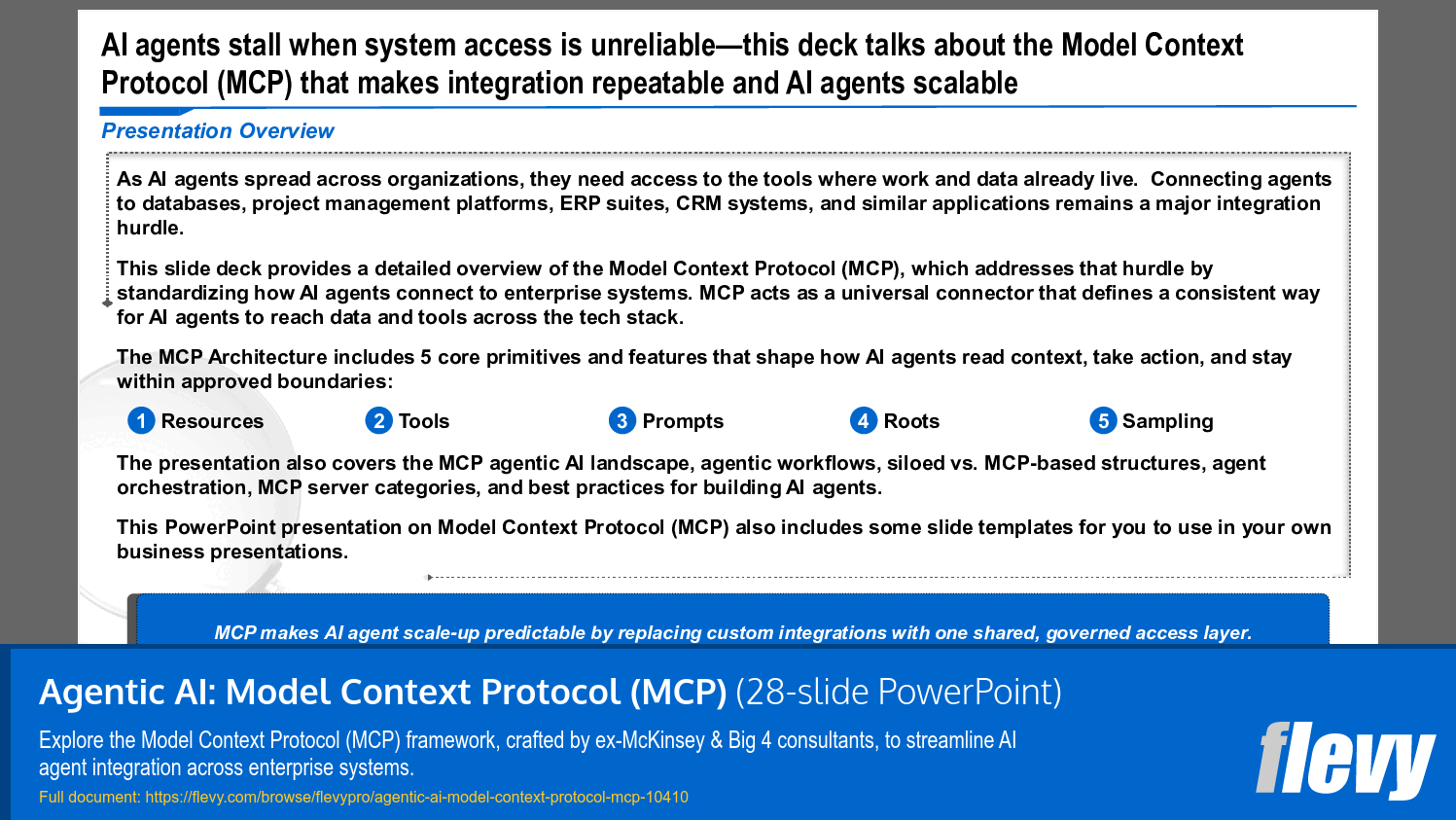
As AI agents spread across organizations, they need access to the tools where work and data already live. Connecting agents to databases, project management platforms, ERP suites, CRM systems, and similar applications remains a major integration hurdle.
This slide deck provides a detailed overview of the Model Context Protocol (MCP), which addresses that hurdle by standardizing how AI agents connect to enterprise systems. MCP acts as a universal connector that defines a consistent way for AI agents to reach data and tools across the tech stack. MCP makes AI agent scale-up predictable by replacing custom integrations with one shared, governed access layer.
The MCP Architecture includes 5 core primitives and features that shape how AI agents read context, take action, and stay within approved boundaries:
The PPT presentation also covers the MCP agentic AI landscape, agentic workflows, siloed vs. MCP-based structures, agent orchestration, MCP server categories, and best practices for building AI agents.
This PowerPoint presentation on Model Context Protocol (MCP) also includes some slide templates for you to use in your own business presentations.
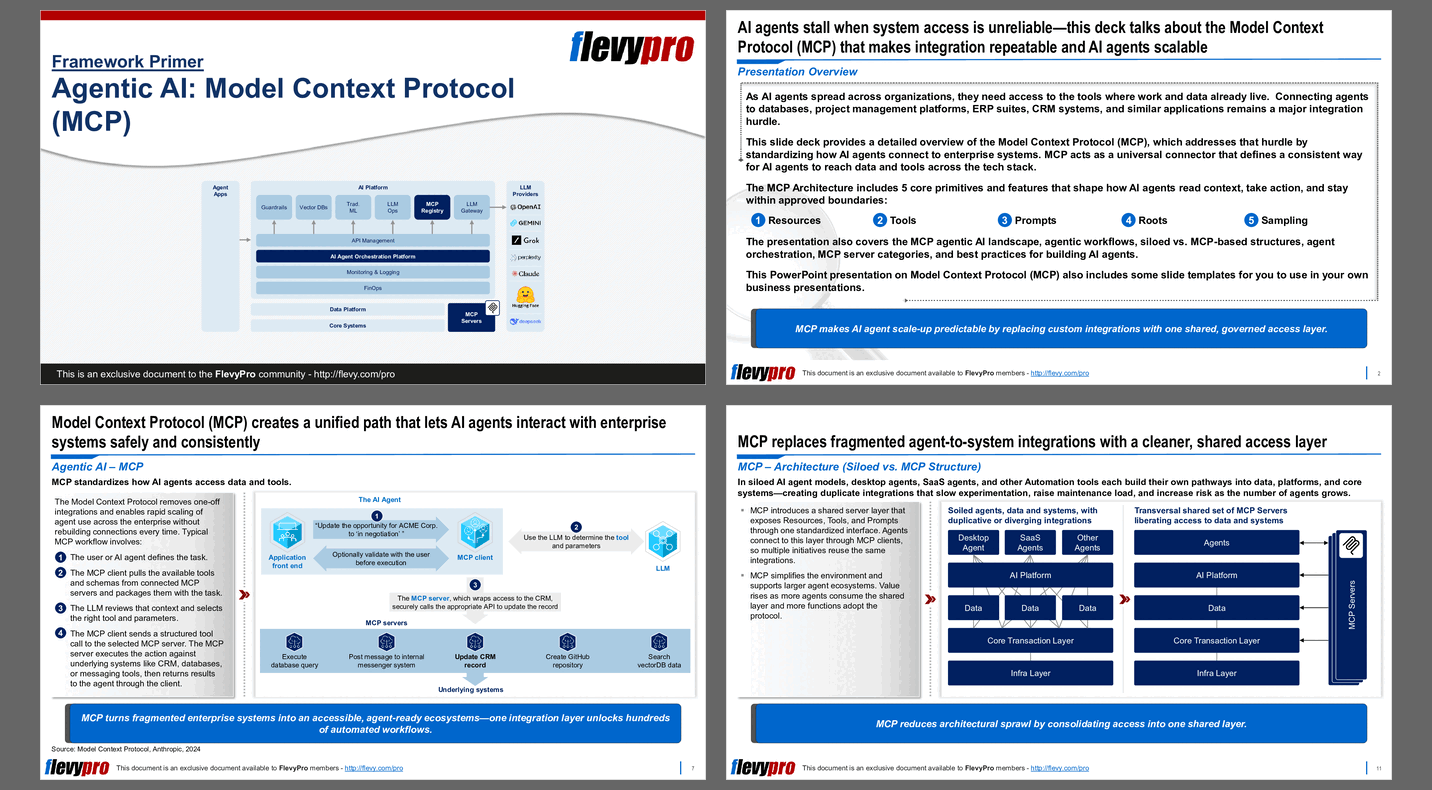
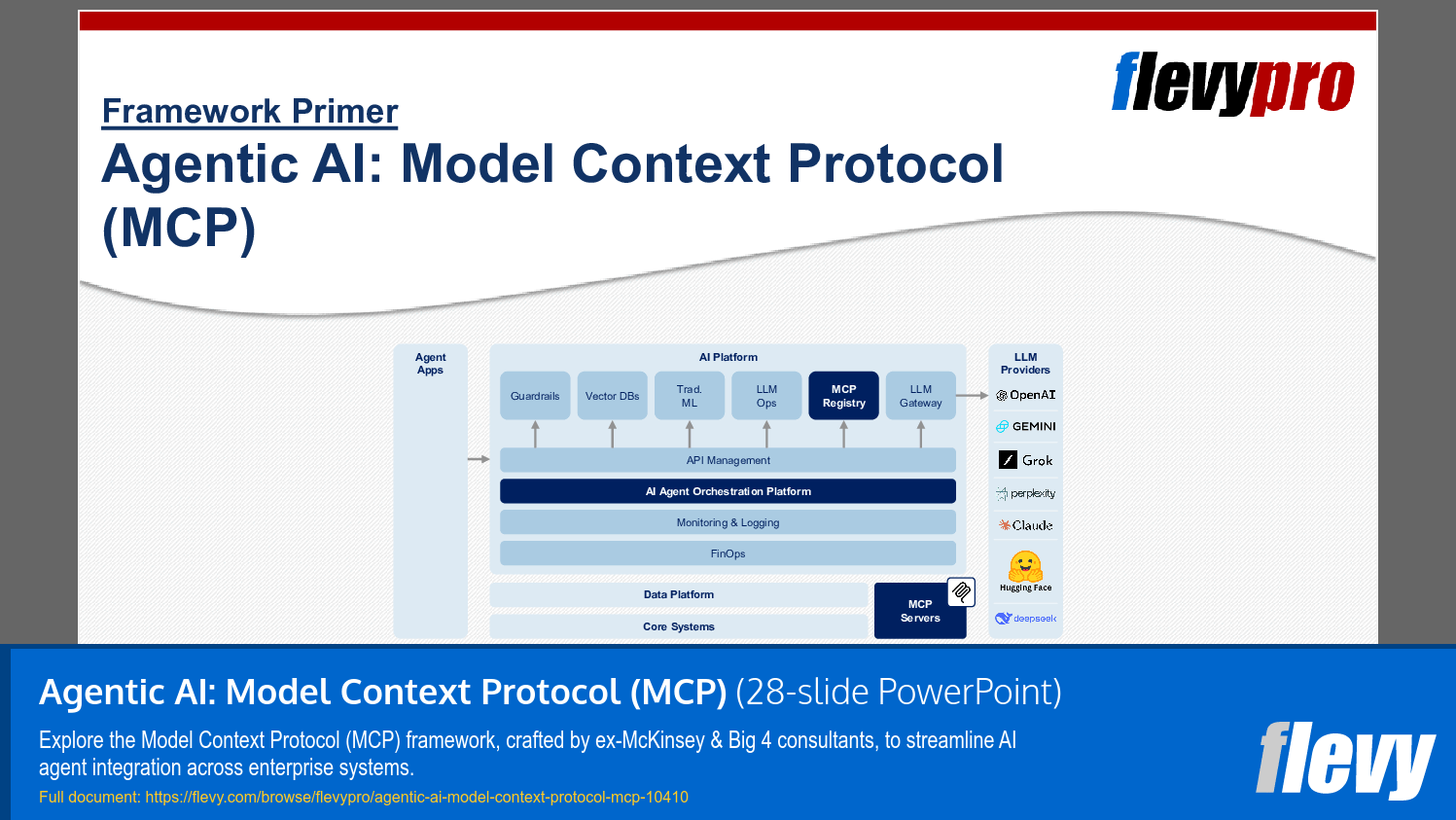
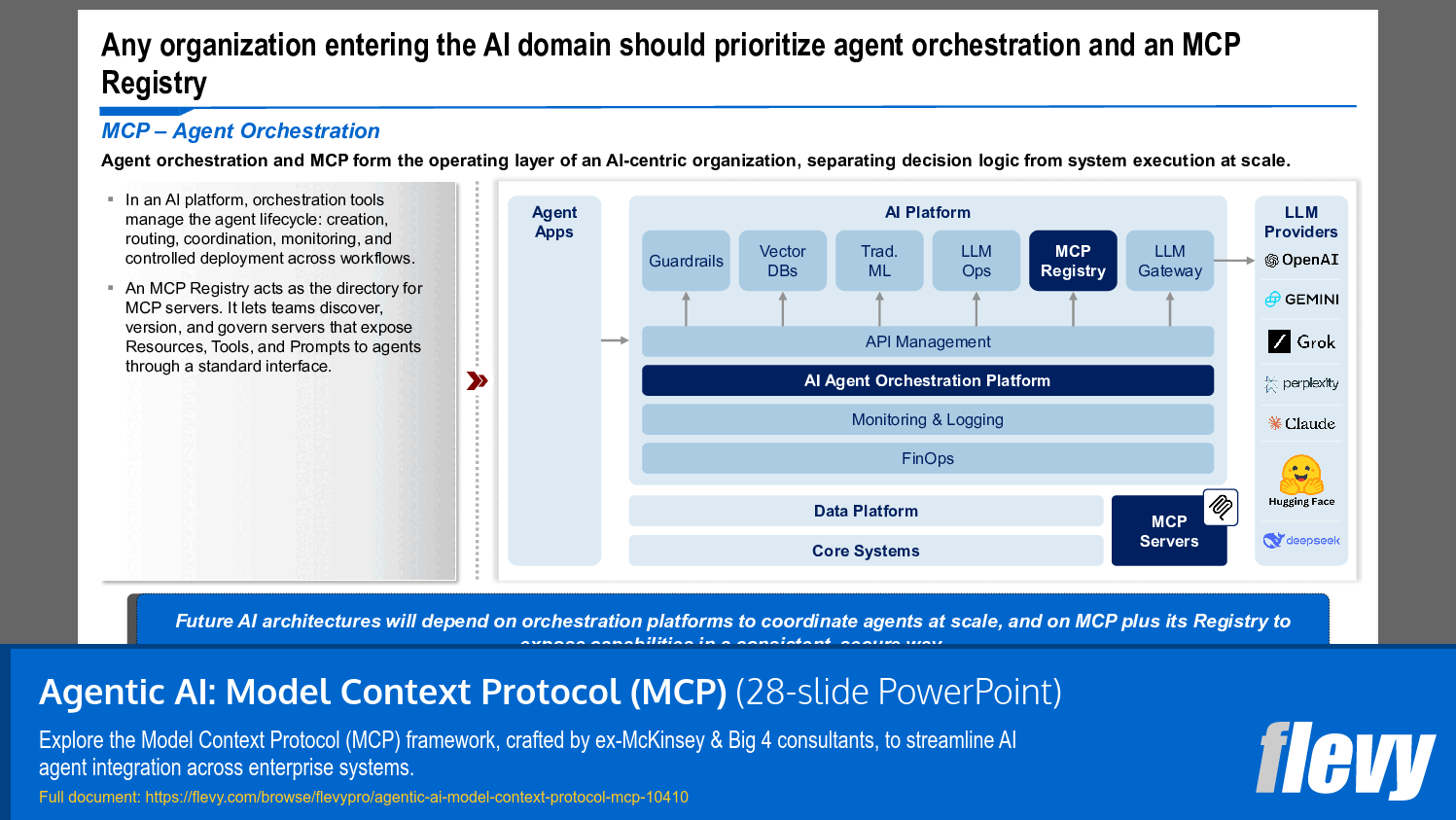
This PPT slide emphasizes the importance of establishing a dedicated agent orchestration layer and an MCP registry when entering the AI domain. It explains that agent orchestration manages the lifecycle of AI agents, including creation, routing, and deployment, while the MCP registry serves as a central directory for MCP servers. The diagram illustrates how these components fit within an AI platform, highlighting their roles in supporting various AI tools like guardrails, vector databases, and translation ML, all managed through a unified API.
The slide suggests that a clear separation between decision logic and system execution is crucial at scale. It underscores that the MCP registry enables teams to discover, version, and govern servers efficiently, which is vital for scaling AI operations. The visual also shows how these elements interact with core systems, data platforms, and third-party LLM providers, emphasizing the need for a structured architecture to coordinate AI agents effectively.
A key takeaway is that organizations should prioritize agent orchestration and registry setup early in their AI journey. This approach simplifies managing complex workflows, improves governance, and ensures scalable deployment. The slide hints at future architectures relying heavily on orchestration platforms to coordinate agents at scale, with the registry acting as a backbone for discovery and governance. For executives, this underscores the need to invest in these foundational components to support long-term AI scaling and operational consistency.
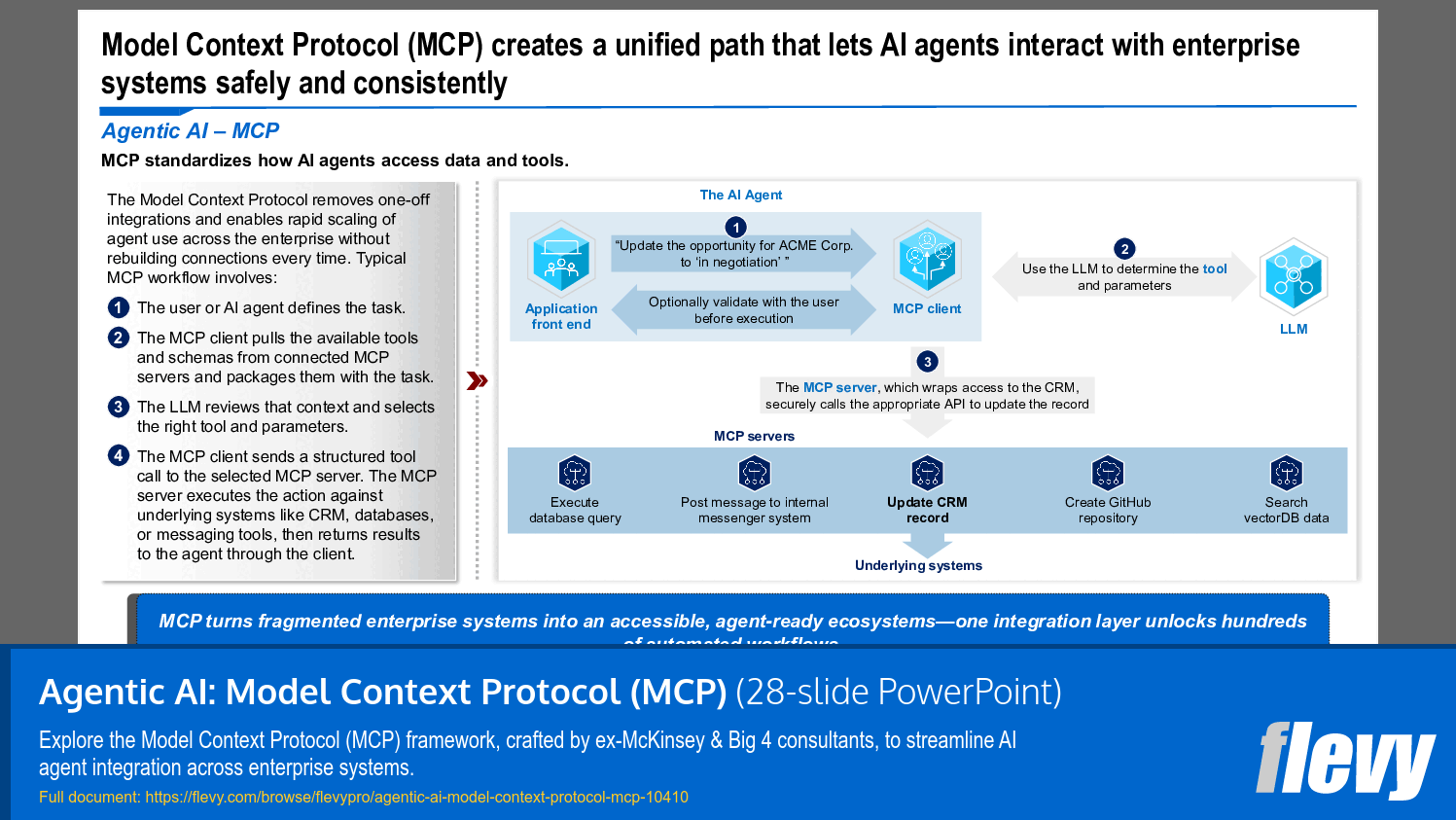
This PPT slide introduces the Model Context Protocol (MCP), emphasizing its role in creating a unified pathway for AI agents to interact with enterprise systems securely and reliably. It explains that MCP removes the need for repetitive integrations, enabling rapid scaling of AI use cases across the organization without rebuilding connections each time. The process involves several steps, starting with the user or AI agent defining a task, then the MCP client pulling tools and schemas from connected servers, and the LLM reviewing context to select appropriate tools and parameters.
The diagram on the right illustrates how the AI agent interacts with MCP components. The agent updates opportunities, validates with the user if needed, and communicates with the MCP server, which manages API calls to underlying enterprise systems. These systems include databases, CRM, and repositories, with actions like executing queries, updating records, or creating repositories. The flow highlights how MCP acts as a bridge, wrapping access to various enterprise tools and data sources, ensuring secure and consistent interactions.
This slide underscores the importance of MCP in transforming fragmented enterprise systems into accessible, agent-ready ecosystems. It points out that MCP’s architecture simplifies AI integration, reducing complexity and enabling automation at scale. For executives, the key takeaway is that adopting MCP can streamline AI deployment, improve system interoperability, and support more dynamic, responsive enterprise operations. The focus remains on security, standardization, and rapid scalability, critical for organizations looking to leverage AI effectively.
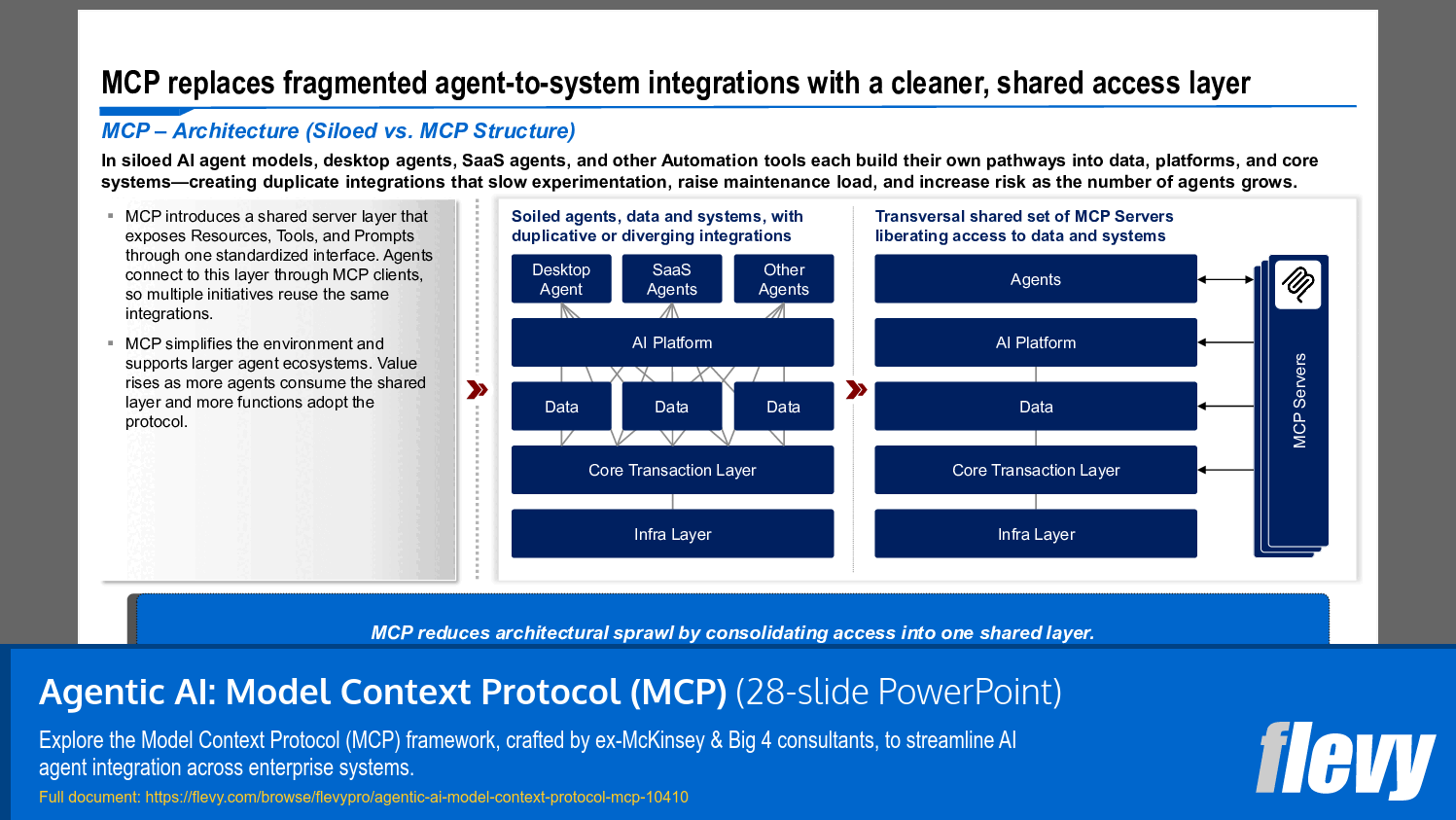
This PPT slide presents an overview of the Model Context Protocol (MCP) and its role in replacing fragmented agent-to-system integrations with a unified, shared access layer. It emphasizes how MCP consolidates multiple AI agent models—such as desktop agents, SaaS agents, and other automation tools—into a common architecture. The diagram illustrates how these agents connect through a shared server layer, which exposes resources, tools, and prompts via a standardized interface, simplifying the environment and supporting larger ecosystems.
The left side of the slide explains the core function of MCP: creating a shared server layer that reduces redundant integrations. It highlights that multiple initiatives often reuse the same integrations, which MCP streamlines by providing a common platform. This reduces complexity and supports scalability as more agents adopt the shared protocol. The diagram on the right visualizes this structure, showing how data, AI platforms, and agents are interconnected through a common MCP server infrastructure, with data flowing seamlessly across layers.
The bottom section underscores the architectural benefit MCP provides—reducing sprawl by consolidating access into a single shared layer. This approach simplifies the environment, making it easier to manage and scale automation efforts. The slide also references a detailed document for further exploration, indicating that MCP is crafted by experienced consultants to improve enterprise system integration. For decision-makers, this slide signals a strategic move toward more efficient, unified AI agent management that can support larger, more complex automation ecosystems.
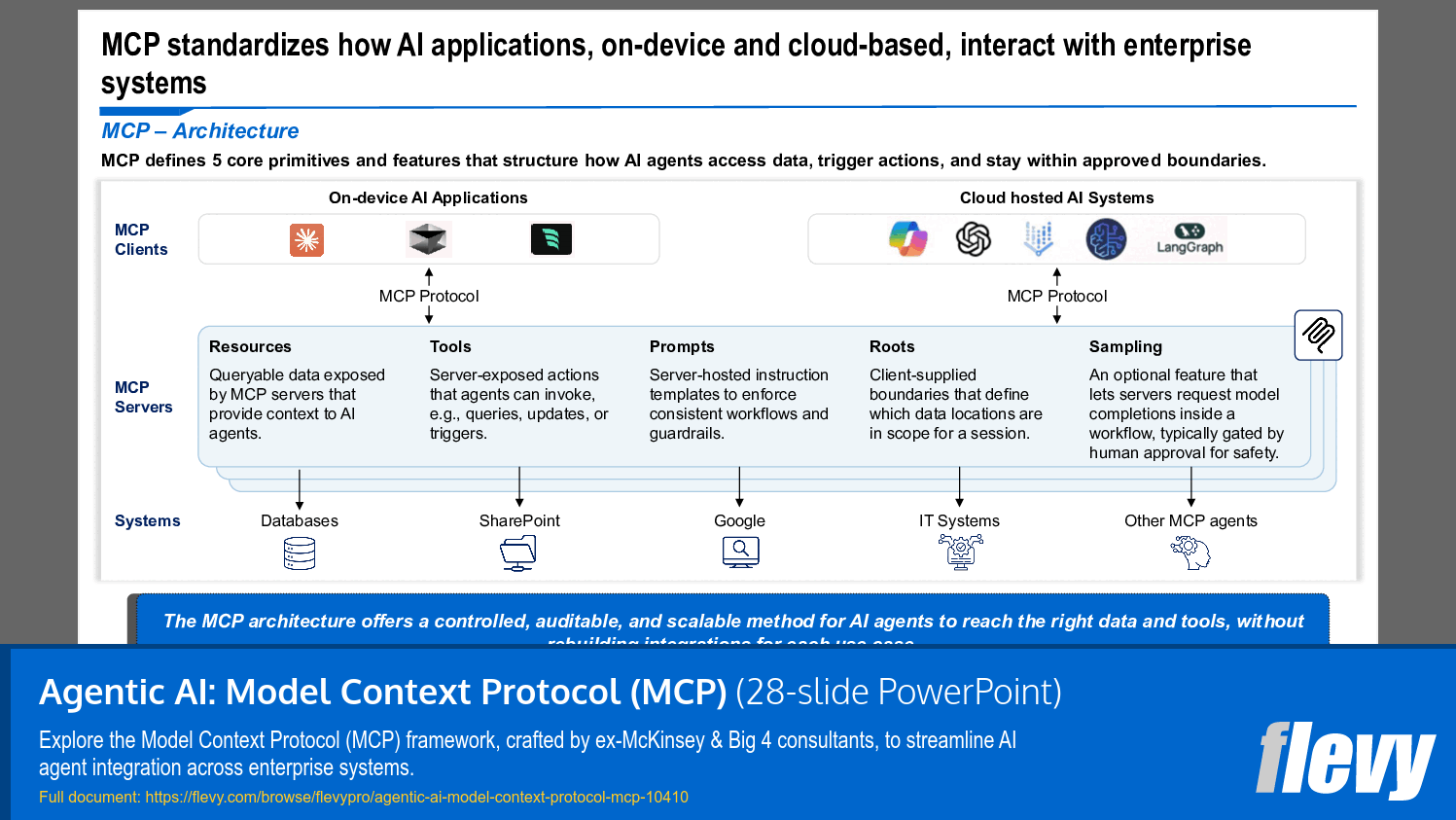
This PPT slide explains how the Model Context Protocol (MCP) standardizes AI applications across enterprise systems, both on-device and cloud-based. It begins by defining MCP as a framework that structures how AI agents access data, trigger actions, and stay within approved boundaries. The diagram illustrates 2 main categories: on-device AI applications and cloud-hosted AI systems, each with distinct components and features.
On the left, on-device AI applications are shown with 3 icons representing different types of AI models, all communicating via the MCP protocol with MCP clients. These clients connect to MCP servers, which expose resources like data, tools, prompts, roots, and sampling features. Each resource has a specific role, such as providing queryable data, server-exposed actions, or instruction templates. The servers interface with underlying systems like databases, SharePoint, Google, and IT systems, enabling AI to operate within the enterprise environment.
On the right, cloud-hosted AI systems are depicted with multiple icons, indicating various AI providers or platforms. These systems also communicate through the MCP protocol, ensuring consistent interaction with enterprise resources. The diagram emphasizes that both on-device and cloud-based applications rely on a common protocol, which enforces controlled, scalable, and auditable AI integration. The slide concludes with a note that MCP offers a controlled, auditable, and scalable method for AI agents to access data and tools without building custom integrations for each use case.
The overall message is that MCP creates a unified architecture that simplifies AI deployment across enterprise systems, providing structure and control while supporting diverse AI applications. The reference link at the bottom directs to a detailed document for further exploration.
This framework is developed by a team of former McKinsey and Big 4 consultants. The presentation follows the headline-body-bumper slide format used by global consulting firms.
For $10.00 more, you can download this document plus 2 more FlevyPro documents. That's just $13 each.
ABOUT FLEVYPRO
This document is part of the FlevyPro Library, a curated knowledge base of documents for our FlevyPro subscribers.

FlevyPro is a subscription service for on-demand business frameworks and analysis tools. FlevyPro subscribers receive access to an exclusive library of curated business documents—business framework primers, presentation templates, Lean Six Sigma tools, and more—among other exclusive benefits.
The average daily rate of a McKinsey consultant is $6,625 (not including expenses). The average price of a Flevy document is $65.
Trusted by over 10,000+ Client Organizations
Since 2012, we have provided best practices to over 10,000 businesses and organizations of all sizes, from startups and small businesses to the Fortune 100, in over 130 countries.
Read Customer Testimonials
"FlevyPro provides business frameworks from many of the global giants in management consulting that allow you to provide best in class solutions for your clients."
– David Harris, Managing Director at Futures Strategy
"FlevyPro has been a brilliant resource for me, as an independent growth consultant, to access a vast knowledge bank of presentations to support my work with clients. In terms of RoI, the value I received from the very first presentation I downloaded paid for my subscription many times over! The
quality of the decks available allows me to punch way above my weight – it's like having the resources of a Big 4 consultancy at your fingertips at a microscopic fraction of the overhead.
"
– Roderick Cameron, Founding Partner at SGFE Ltd
"As a consultant requiring up to date and professional material that will be of value and use to my clients, I find Flevy a very reliable resource.
The variety and quality of material available through Flevy offers a very useful and commanding source for information. Using Flevy saves me time, enhances my expertise and ends up being a good decision."
– Dennis Gershowitz, Principal at DG Associates
"The wide selection of frameworks is very useful to me as an independent consultant. In fact, it rivals what I had at my disposal at Big 4 Consulting firms in terms of efficacy and organization."
– Julia T., Consulting Firm Owner (Former Manager at Deloitte and Capgemini)
"My FlevyPro subscription provides me with the most popular frameworks and decks in demand in today’s market. They not only augment my existing consulting and coaching offerings and delivery, but also keep me abreast of the latest trends, inspire new products and service offerings for my practice, and educate me
in a fraction of the time and money of other solutions. I strongly recommend FlevyPro to any consultant serious about success.
"
– Bill Branson, Founder at Strategic Business Architects
"As a small business owner, the resource material available from FlevyPro has proven to be invaluable. The ability to search for material on demand based our project events and client requirements was great for me and proved very beneficial to my clients. Importantly, being able to easily edit and tailor
the material for specific purposes helped us to make presentations, knowledge sharing, and toolkit development, which formed part of the overall program collateral. While FlevyPro contains resource material that any consultancy, project or delivery firm must have, it is an essential part of a small firm or independent consultant's toolbox.
"
– Michael Duff, Managing Director at Change Strategy (UK)
"I have used Flevy services for a number of years and have never, ever been disappointed. As a matter of fact, David and his team continue, time after time, to impress me with their willingness to assist and in the real sense of the word. I have concluded in fact
that it is not at all just a repository of documents/resources but, in the way that David and his team manage the firm, it is like dealing with consultants always ready to assist, advise and direct you to what you really need, and they always get it right.
I am an international hospitality accomplished senior executive who has worked and lived during the past 35 years in 23 countries in 5 continents and I can humbly say that I know what customer service is, trust me.
Aside from the great and professional service that Flevy's team provide, their wide variety of material is of utmost great quality, professionally put together and most current.
Well done Flevy, keep up the great work and I look forward to continue working with you in the future and to recommend you to a variety of colleagues around the world.
"
– Roberto Pelliccia, Senior Executive in International Hospitality
"[Flevy] produces some great work that has been/continues to be of immense help not only to myself, but as I seek to provide professional services to my clients, it gives me a large "tool box" of resources that are critical to provide them with the quality of service and outcomes they are expecting."
– Royston Knowles, Executive with 50+ Years of Board Level Experience
Download our FREE Digital Transformation Templates
Download our free compilation of 50+ Digital Transformation slides and templates. DX concepts covered include Digital Leadership, Digital Maturity, Digital Value Chain, Customer Experience, Customer Journey, RPA, etc.