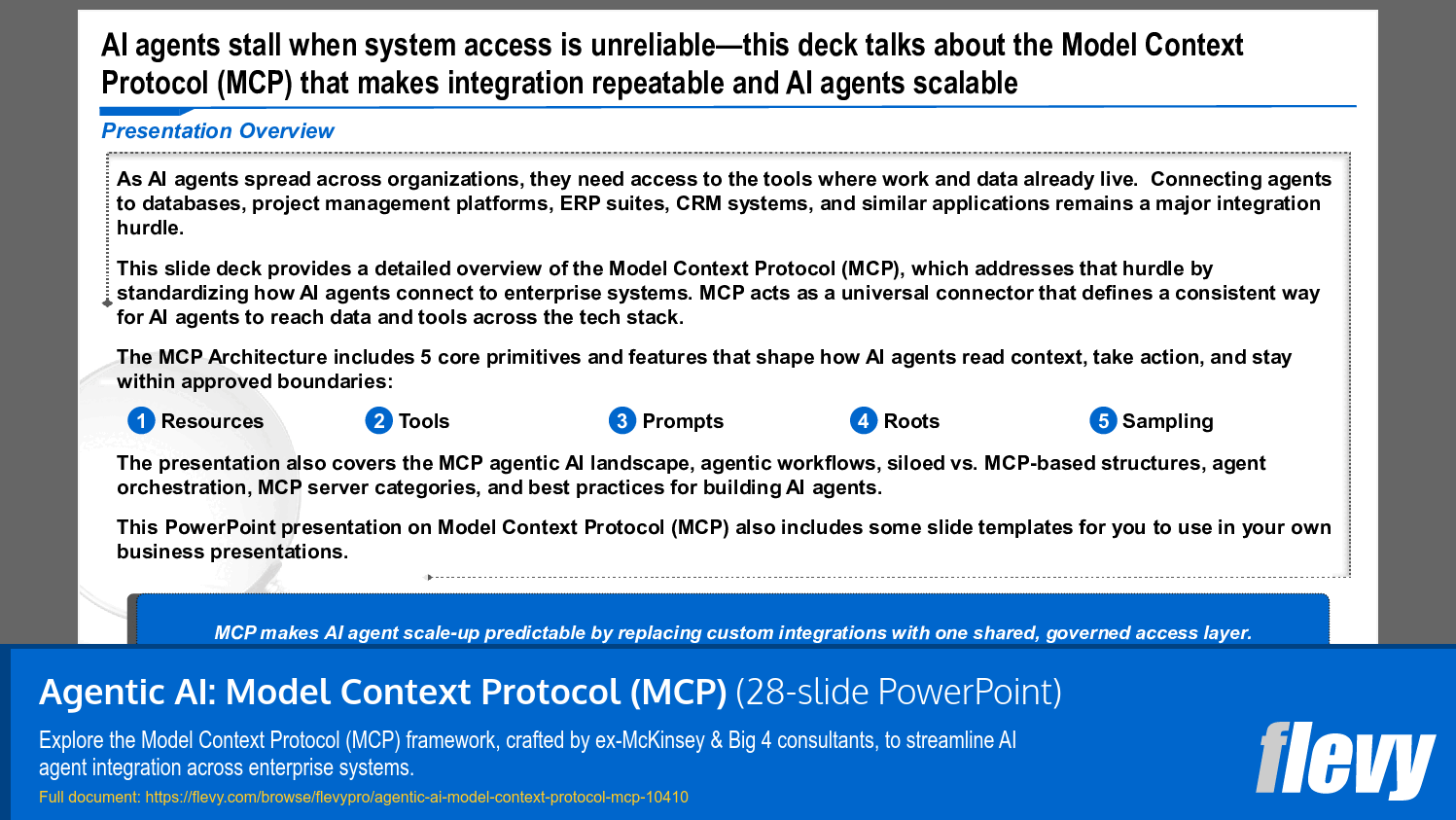

As AI agents spread across organizations, they need access to the tools where work and data already live. Connecting agents to databases, project management platforms, ERP suites, CRM systems, and similar applications remains a major integration hurdle.
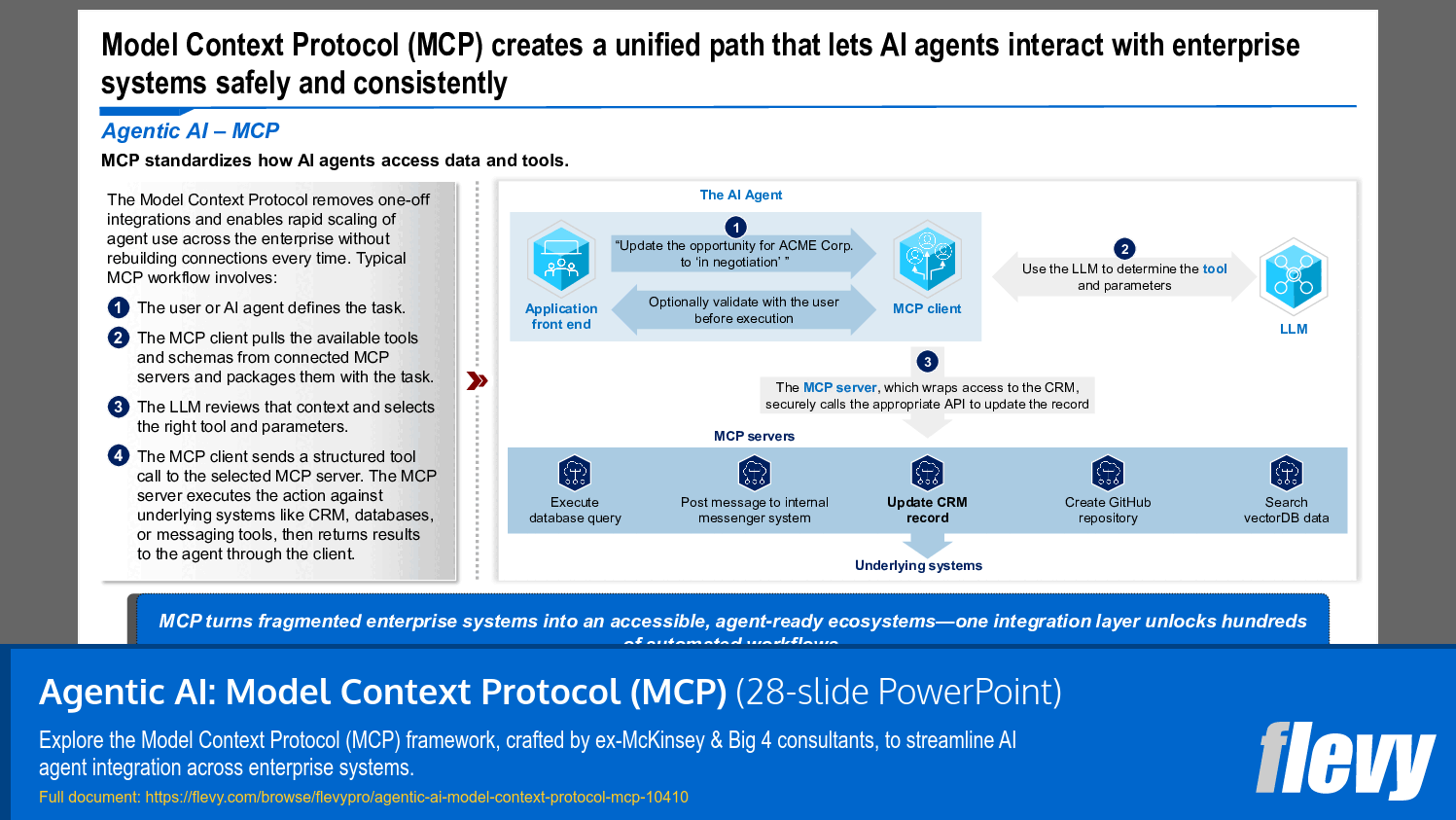
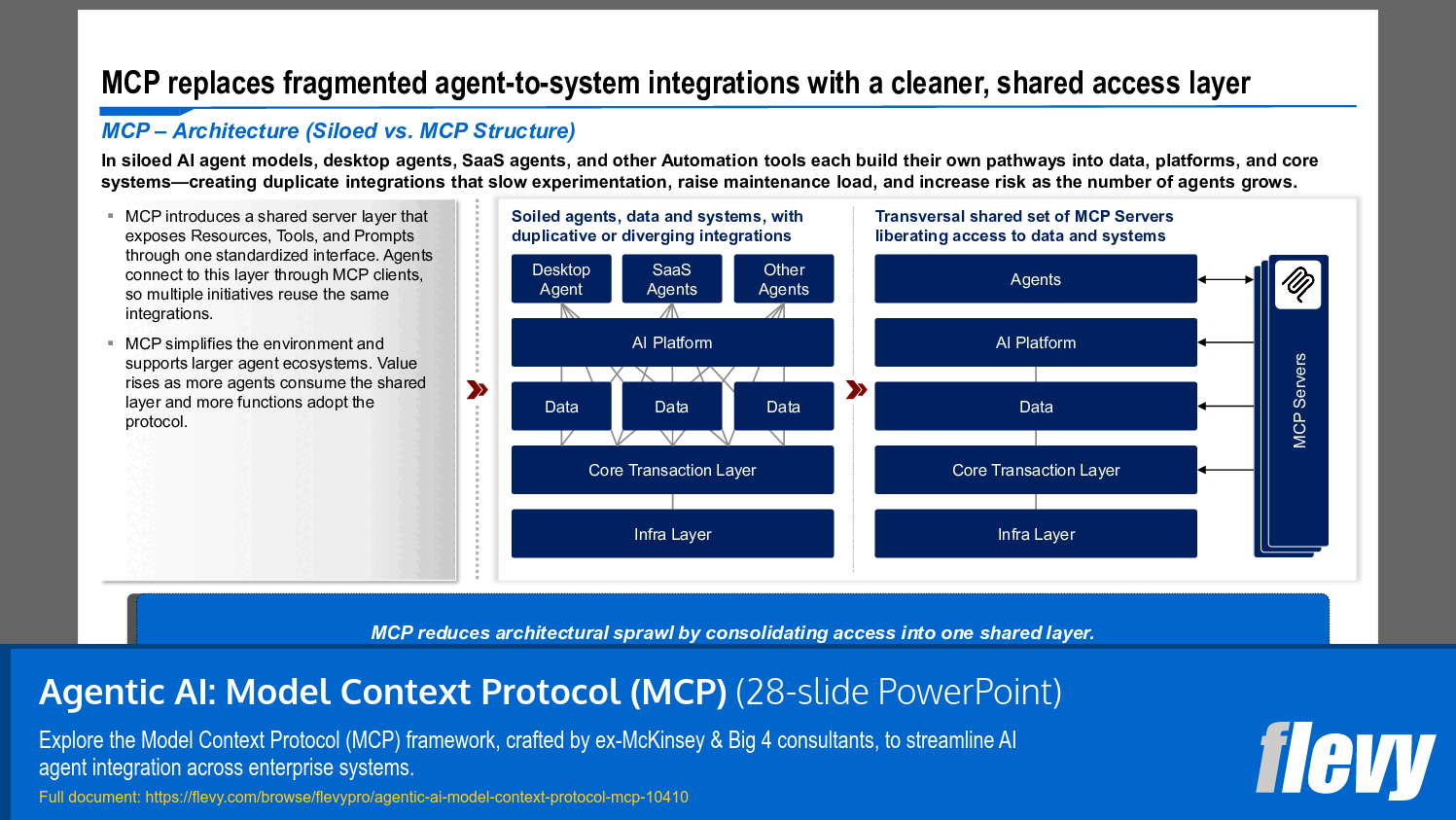
This slide deck provides a detailed overview of the Model Context Protocol (MCP), which addresses that hurdle by standardizing how AI agents connect to enterprise systems. MCP acts as a universal connector that defines a consistent way for AI agents to reach data and tools across the tech stack. MCP makes AI agent scale-up predictable by replacing custom integrations with one shared, governed access layer.
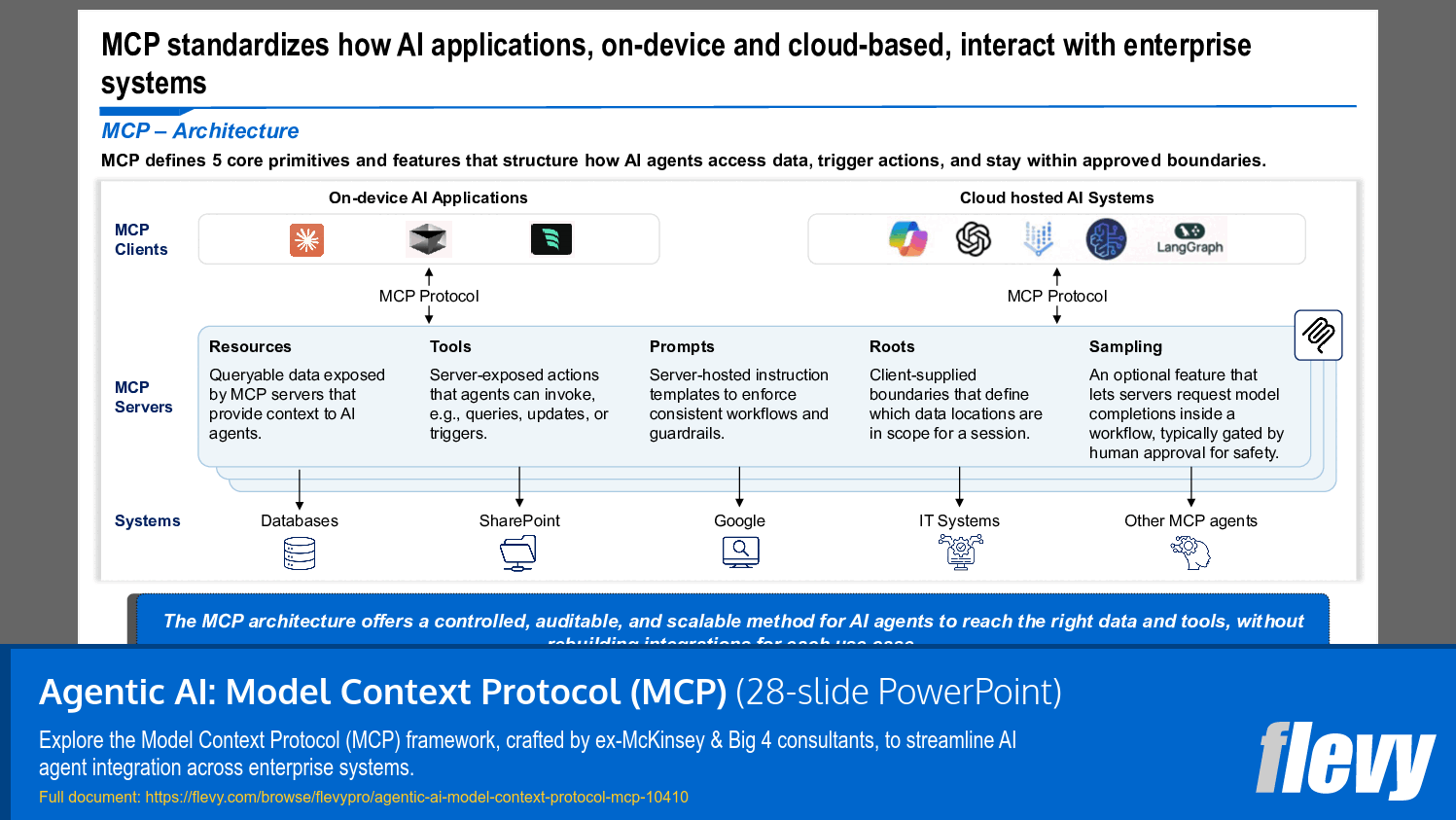
The MCP Architecture includes 5 core primitives and features that shape how AI agents read context, take action, and stay within approved boundaries:
1. Resources
2. Tools
3. Prompts
4. Roots
5. Sampling
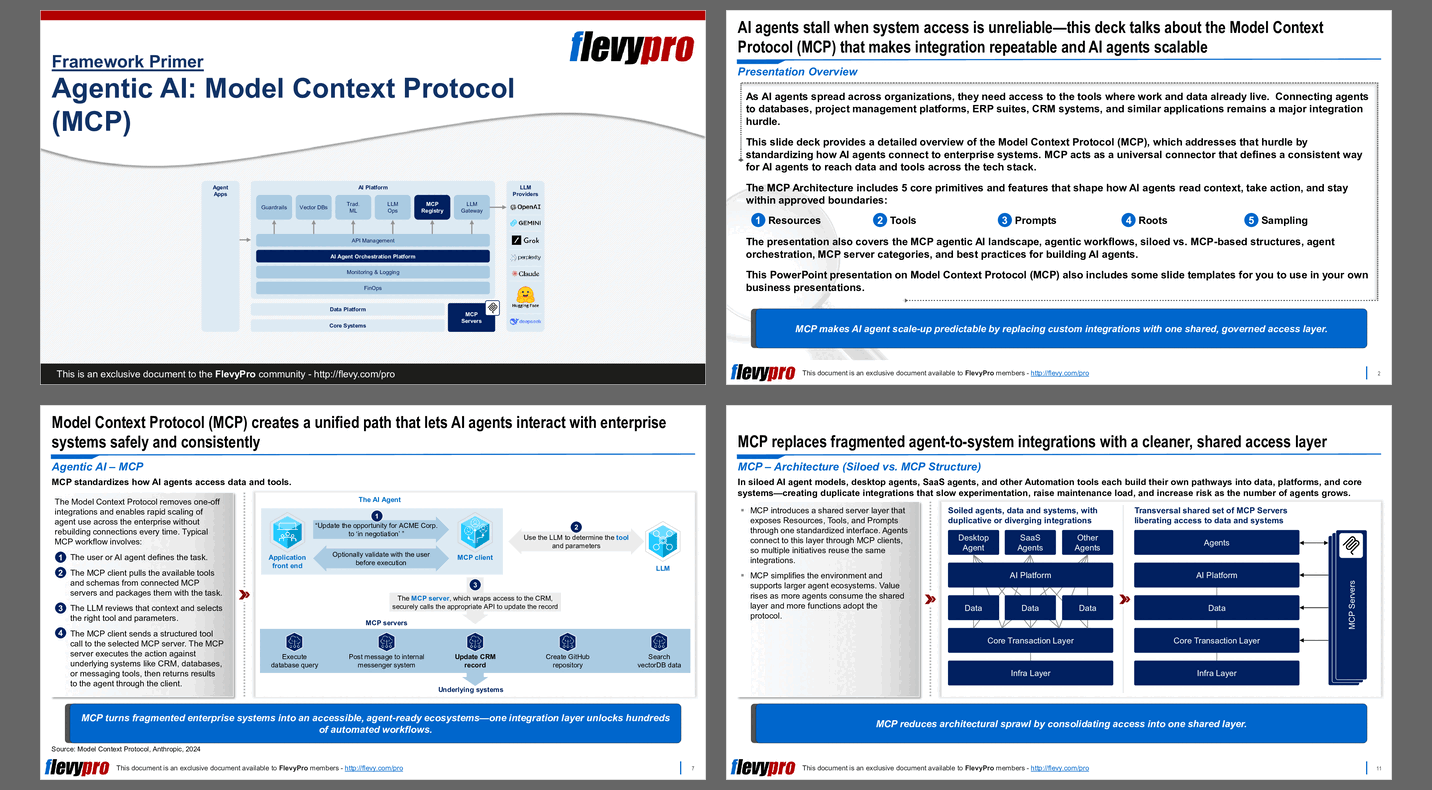
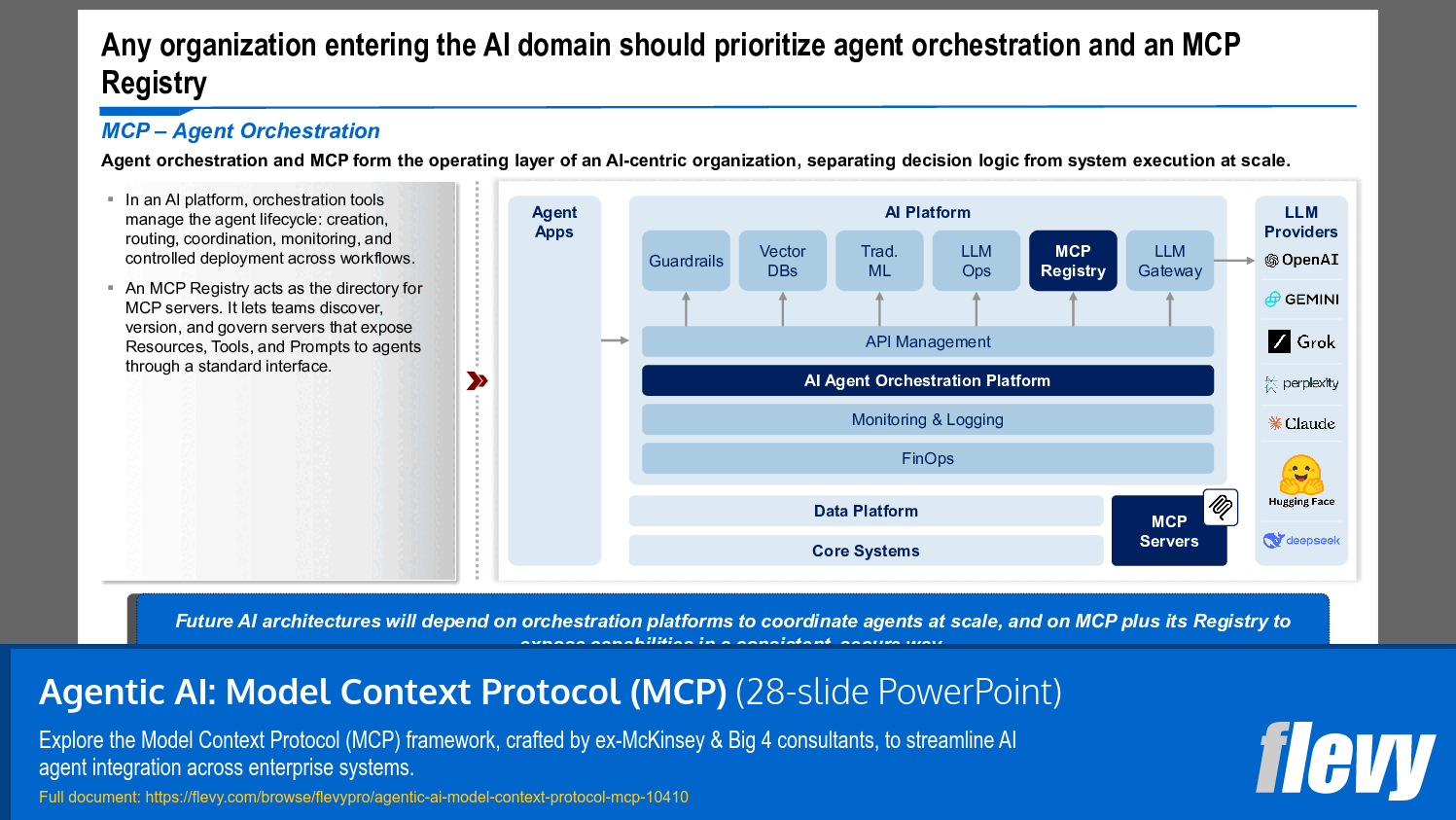
The PPT presentation also covers the MCP agentic AI landscape, agentic workflows, siloed vs. MCP-based structures, agent orchestration, MCP server categories, and best practices for building AI agents.
This PowerPoint presentation on Model Context Protocol (MCP) also includes some slide templates for you to use in your own business presentations.
Got a question about this document? Email us at flevypro@flevy.com.
Executive Summary
The "Agentic AI: Model Context Protocol (MCP)" presentation provides a comprehensive framework designed to facilitate the integration of AI agents across enterprise systems. Developed by experts from Anthropic, the MCP acts as a universal connector, streamlining how AI agents access and interact with various tools and data sources. This presentation outlines the architecture of MCP, highlighting its core features, including resources, tools, prompts, roots, and sampling. By standardizing integrations, MCP enables organizations to scale AI agent deployments efficiently, reducing technical debt and improving operational predictability.
Who This Is For and When to Use
• Corporate executives overseeing digital transformation initiatives
• Integration leaders responsible for AI deployment across enterprise systems
• IT teams tasked with managing AI infrastructure and integrations
• Consultants advising organizations on AI strategy and implementation
Best-fit moments to use this deck:
• During strategic planning sessions for AI integration
• When evaluating new AI tools and their compatibility with existing systems
• In workshops focused on operationalizing AI capabilities across departments
Learning Objectives
• Define the Model Context Protocol (MCP) and its significance in AI integration
• Illustrate how MCP standardizes access to enterprise systems for AI agents
• Identify the core primitives of MCP and their roles in agent workflows
• Develop a roadmap for implementing MCP within an organization
• Assess the impact of MCP on reducing integration complexity and technical debt
• Establish best practices for building and deploying AI agents using MCP
Table of Contents
• Overview (page 2)
• Agentic AI (page 5)
• Model Context Protocol (MCP) (page 9)
• Slide Design Structure & Templates (page 18)
Primary Topics Covered
• Agentic AI Overview - Explains the concept of Agentic AI and its transformative impact on various industries, enhancing automation and decision-making.
• Model Context Protocol (MCP) - Describes MCP as a client-server architecture that simplifies how AI agents connect to enterprise systems, promoting scalability and efficiency.
• MCP Architecture - Outlines the 5 core primitives of MCP that structure agent interactions with enterprise systems.
• Agentic Workflows - Details how MCP rationalizes agent actions through a consistent and governed workflow.
• Best Practices for Building AI Agents - Provides guidelines for operationalizing AI agents within organizations using MCP.
• MCP Servers - Discusses the categories of MCP servers available, enhancing the integration capabilities of AI agents.
Deliverables, Templates, and Tools
• MCP architecture diagram template for visualizing integrations
• Workflow templates for standardizing agent interactions with enterprise systems
• Best practices checklist for implementing MCP in organizational settings
• Slide templates for presenting MCP concepts to stakeholders
• Integration roadmap template for planning AI agent deployments
Slide Highlights
• Overview of the MCP architecture illustrating its core components and functionalities
• Agentic AI landscape slide showcasing the role of AI agents in modern enterprises
• Workflow diagram detailing the MCP-enabled agentic workflow process
• Best practices slide outlining essential disciplines for building MCP-driven AI agents
• MCP server categories slide summarizing available integrations for various enterprise functions
Potential Workshop Agenda
Introduction to Agentic AI and MCP (30 minutes)
• Overview of Agentic AI and its significance
• Introduction to the Model Context Protocol
MCP Architecture and Workflows (60 minutes)
• Deep dive into MCP architecture
• Discussion on agentic workflows and their benefits
Best Practices for Implementing MCP (45 minutes)
• Review of best practices for building AI agents
• Group activity to outline an implementation roadmap
Customization Guidance
• Tailor the MCP architecture diagram to reflect your organization's specific systems and tools
• Adjust the best practices checklist to align with your organizational policies and procedures
• Modify the workflow templates to incorporate your unique operational processes
Secondary Topics Covered
• Ethical considerations in deploying Agentic AI
• Integration challenges and solutions in enterprise environments
• Future trends in AI and their implications for businesses
Topic FAQ
Document FAQ
These are questions addressed within this presentation.
What is the Model Context Protocol (MCP)?
MCP is a standardized framework that allows AI agents to connect securely and consistently to enterprise systems, facilitating easier integration and scalability.
How does MCP improve AI agent deployment?
MCP reduces the need for custom integrations by providing a universal access layer, allowing organizations to scale AI agent usage more efficiently.
What are the core components of MCP?
MCP consists of 5 core primitives: Resources, Tools, Prompts, Roots, and Sampling, each playing a crucial role in agent interactions.
Can MCP be integrated with existing systems?
Yes, MCP is designed to work with various enterprise systems, making it easier to incorporate into existing infrastructures.
What industries can benefit from Agentic AI and MCP?
Industries such as manufacturing, healthcare, finance, retail, and transportation can leverage Agentic AI and MCP to enhance efficiency and drive innovation.
How does MCP impact technical debt?
By standardizing integrations, MCP minimizes the complexity and maintenance burden associated with multiple custom connections, thereby reducing technical debt.
What best practices should be followed when implementing MCP?
Organizations should prioritize structured orchestration frameworks, evaluate legal and security impacts, and keep toolsets manageable to ensure effective implementation.
Is there a roadmap for deploying AI agents using MCP?
Yes, the presentation includes templates and guidelines for creating a deployment roadmap tailored to your organization's needs.
Glossary
• Agentic AI - AI systems capable of making autonomous decisions and taking actions with minimal human intervention.
• Model Context Protocol (MCP) - A framework that standardizes how AI agents connect to enterprise systems.
• MCP Architecture - The structural design of MCP, including its core components and functionalities.
• Agentic Workflow - A repeatable process that governs how AI agents interact with enterprise systems.
• MCP Servers - Servers that provide access to various enterprise tools and data for AI agents.
• Resources - Queryable data exposed by MCP servers that provide context to AI agents.
• Tools - Actions that agents can invoke through MCP servers, such as queries or updates.
• Prompts - Instruction templates hosted by servers to enforce consistent workflows.
• Roots - Boundaries defined by clients that specify which data locations are in scope for a session.
• Sampling - A feature allowing servers to request model completions within a workflow, typically requiring human approval.
• Ethical AI - Considerations regarding the responsible implementation of AI technologies.
• Integration Complexity - The challenges associated with connecting multiple systems and tools within an organization.
• Technical Debt - The implied cost of additional rework caused by choosing an easy solution now instead of a better approach that would take longer.
Source: Best Practices in Enterprise Architecture, Automation, Agentic AI PowerPoint Slides: Agentic AI: Model Context Protocol (MCP) PowerPoint (PPTX) Presentation Slide Deck, LearnPPT Consulting
Did you need more documents?
Consider a FlevyPro subscription from $39/month. View plans here.
For $10.00 more, you can download this document plus 2 more FlevyPro documents. That's just $13 each.
|
Download our FREE Digital Transformation Templates
Download our free compilation of 50+ Digital Transformation slides and templates. DX concepts covered include Digital Leadership, Digital Maturity, Digital Value Chain, Customer Experience, Customer Journey, RPA, etc. |